Review · BERLIN
Alternative Berlin Private Tour with Jacob – Graffiti and Squats
Berlin’s alternative side is not confined to one district. This private tour connects graffiti and squats with LGBTQ history, Cold War landmarks, street food, nightlife, and public art. Guide Jacob leads the way, helping you see how Berlin’s rough-edged cultural life fits beside grand monuments and rebuilt city squares.
I like the one-group format, which lets you ask questions and adjust the conversation to your interests. I also like the practical extras: pickup from your hotel, apartment, station, or airport, plus a subway map and an A3 picture folder to help you make sense of the city. The main consideration is that public transport costs extra, and the tour covers a lot of ground in less than three hours.
Key points to know
- Jacob connects Berlin’s street art with its political and social history, rather than treating graffiti as decoration alone.
- The private format gives you personal attention, with space for questions about art, memorials, nightlife, and city life.
- The route covers nine different places, including Haus Schwarzenberg, Kreuzberg, Warschauer Strasse, and the East Side Gallery.
- Hotel, apartment, station, and airport pickup is included, but public transport costs 3 to 11 euros per person.
- A group of up to 15 can book together, though groups larger than six should contact the provider first.
- The pace suits active visitors, with nearly three hours of walking and moving between central Berlin districts.
Berlin beyond the postcard
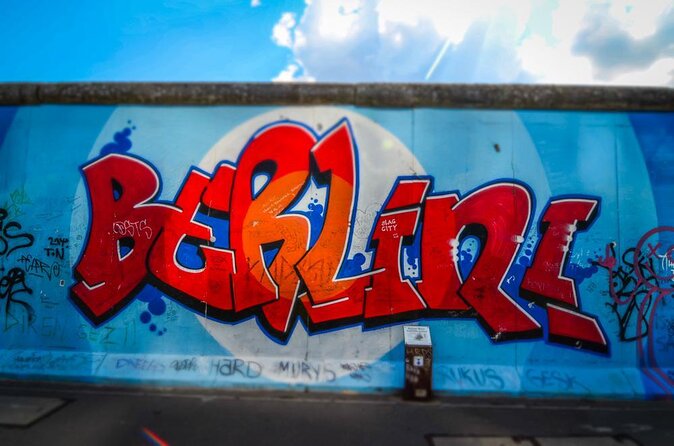
This is a tour for seeing Berlin as a working city rather than a collection of famous buildings. You will visit major landmarks, but the central idea is the city’s alternative culture: painted walls, former squats, LGBTQ life, nightlife districts, public memorials, and the everyday food that fuels Berlin’s streets.
The route is private, so your guide can spend more time on the subjects that interest you. Ask about the artistic side of Berlin, the city’s divided past, or the social groups that shaped its neighborhoods. Jacob also provides WhatsApp availability for questions or help with your wider Berlin visit, which is a useful touch if you are still working out subway routes or sightseeing plans.
The tour lasts about 2 hours and 45 minutes. That is long enough for a strong introduction, but not enough for a slow visit at every stop. You should expect a brisk outing with several short explanations, outdoor viewing, and movement between districts.
More Alternative Street Art Tours in Germany
- Berlin: Street Art and Alternative Tour
★ 4.7 · 98 reviews - Street Art and Alternative Tour of Berlin in French
★ 5.0 · 49 reviews - Berlin Alternative Street Art Tour
★ 4.0 · 26 reviews
Victory Column and Berlin’s LGBTQ community
The first stop is the Victory Column, where the tour introduces Berlin’s gay parade and LGBTQ community. This gives the outing a social starting point instead of opening with another standard monument lecture.
You will have about 15 minutes here, with no admission charge. The short stop means you should expect context and discussion rather than a long visit inside a museum or tower. The subject fits the tour’s wider purpose: Berlin’s public identity has been shaped by communities that made room for new forms of expression.
For an active visitor, this is a useful early orientation. You begin with a landmark and a modern social story, then carry that idea into the city’s art districts. If LGBTQ history is a major reason for choosing the tour, tell Jacob when you meet so the conversation can give that topic the attention you want.
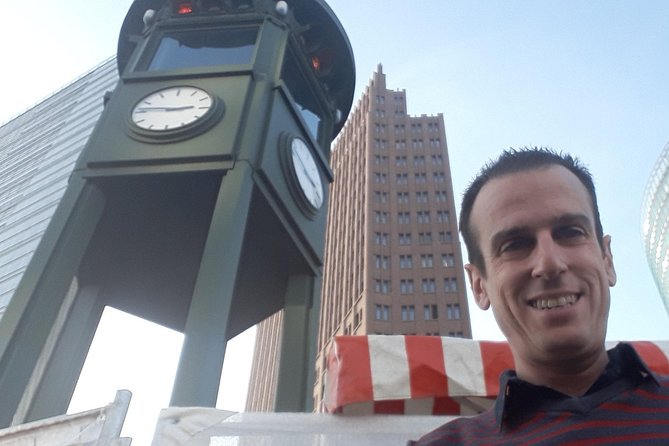
Potsdamer Platz, from cinema to business
Potsdamer Platz shows another side of Berlin. The focus here is the area as a center of culture, cinema, and business, with about 20 minutes to take in the setting.
This is a good contrast to the rawer art spaces later in the tour. Potsdamer Platz represents a polished, rebuilt part of the city, while the later stops show artistic work that is often less formal and more openly political. Seeing both helps you understand that Berlin’s identity is not only about old walls and alternative neighborhoods.
There is no entrance fee at the stop, but the time is limited. I would treat this as a guided orientation, not a chance to explore every corner of the square. Listen for how Jacob links the area’s public image to Berlin’s larger cultural life.
Brandenburg Gate, the Wall, and the hippies
At Brandenburg Gate, the discussion turns to the Berlin Wall and the hippies. Around 20 minutes gives you time to take in the monument while hearing how Berlin’s divided past and counterculture overlap.
The Brandenburg Gate is one of the city’s most photographed sights, so it can be easy to see it quickly and move on. The value here comes from the story around it. The Wall is not simply a vanished barrier. It still shapes how Berlin presents itself, how neighborhoods are understood, and how visitors read the city’s memorials and street art.
The reference to hippies keeps the conversation from becoming a standard Cold War stop. Berlin’s alternative reputation did not come only from painted walls. It also grew through people who challenged social rules and used the city as a place for new ideas.
More Graffiti Tours in Germany
- Berlin: Graffiti Workshop at the Berlin Wall
★ 4.6 · 234 reviews - Berlin Street Art & Graffiti Walking Tour
★ 5.0 · 109 reviews - Berlin Street Art Tour with Graffiti, Murals, and Urban Culture
★ 4.5 · 12 reviews - Private Alternative Berlin Tour -Murals, Graffiti and Squats
★ 4.8 · 5 reviews
Hackesche Höfe and the night side of Berlin
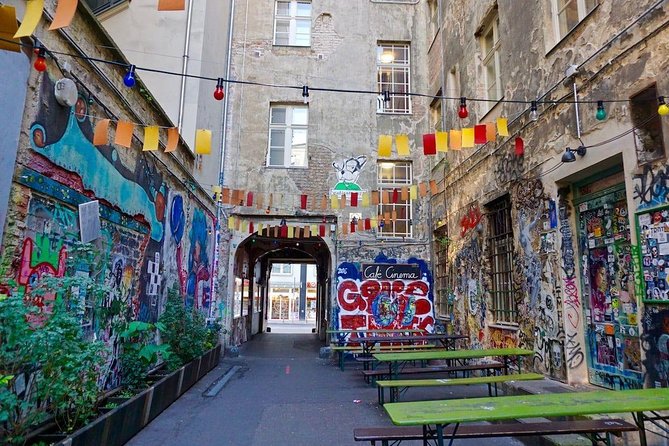
Hackesche Höfe brings you into a different setting: renovated courtyards and nightlife. The stop lasts about 20 minutes and has no admission fee.
The courtyards are useful for seeing how older urban spaces can be cleaned up, reused, and folded into the modern city. That creates an important question for a tour about squats and alternative culture: what happens when rough, independent districts become popular and commercial?
You may find this stop more polished than Haus Schwarzenberg or Kreuzberg. That contrast is part of its value. I like tours that show both the finished version of Berlin and the less tidy places that helped create its reputation. Here, Jacob can explain the link between renovated spaces, evening culture, and the city’s changing social life.
Hackescher Markt and Berlin’s street food
At Hackescher Markt, the subject shifts to two Berlin staples: currywurst and döner kebab. You get about 20 minutes to learn about the city’s street food culture.
Food stops can add welcome texture to a walking tour, even when eating is not listed as an included feature. The important point is that the tour introduces the dishes as part of Berlin’s daily life, not as a formal tasting session. If you want to eat, budget separately and ask Jacob where the practical options are.
Currywurst and döner kebab also tell a wider story about Berlin’s changing population and fast, affordable city life. This is a short stop, so do not expect a full food crawl. Think of it as a chance to learn what to order later and why these foods matter in Berlin.
Haus Schwarzenberg, Tacheles, and the Dead Chickens
Haus Schwarzenberg is likely the heart of the tour for anyone choosing it for graffiti and squats. The visit lasts about 30 minutes, the longest stop on the route.
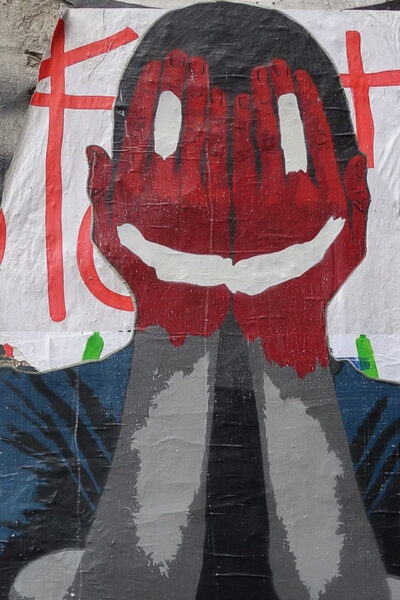
The focus includes Tacheles and the Dead Chickens squats. These names point to Berlin’s history of independent art spaces, improvised communities, and buildings used in ways their owners may not have planned. Here, the subject is not simply colorful paint on a wall. It is the relationship between art, empty or repurposed property, politics, and the people who claim space for themselves.
This is where Jacob’s local perspective matters most. A guide can help you read the work rather than just photograph it. One especially useful approach is to ask how the city’s alternative culture changed as Berlin became more popular and property became more valuable.
The stop is free and outdoors, but conditions at street art sites can change. Do not arrive expecting a formal gallery with a fixed collection. The appeal is the setting and the ideas attached to it. A reader who loves local artist work and memorials connected to the Second World War will likely find this part especially rewarding.
Warschauer Strasse and the art of hanging out
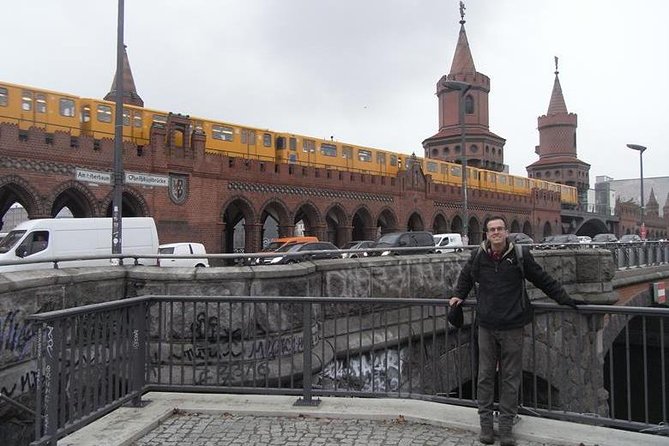
Warschauer Strasse is described as Berlin’s hanging out area, and the tour gives it about 20 minutes. This is less about one monument than about how people use public space.
The stop helps you notice Berlin’s social rhythm: meeting friends, moving between neighborhoods, finding nightlife, and spending time outside. It is also a bridge between the city’s alternative art spaces and the larger entertainment districts.
You should keep your expectations practical. The tour does not promise entry to clubs, a nightlife event, or a guided evening out. Instead, you get a local introduction to the area and its role in Berlin’s social life. If you are planning a night out later, this orientation may help you decide where to return.
Kreuzberg’s murals and graffiti
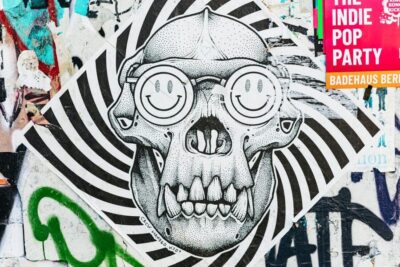
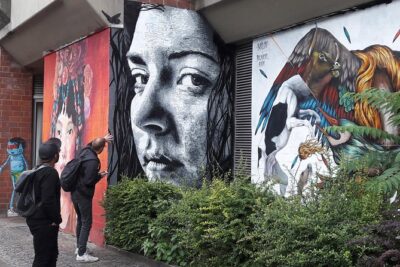
Kreuzberg receives a shorter 10-minute stop focused on murals and graffiti. That may seem brief, but it works as a quick look at the district’s visual character after the longer discussion at Haus Schwarzenberg.
Kreuzberg is a place to keep your eyes moving. Large walls, smaller pieces, and changing public art can make a neighborhood feel like an open-air gallery, but the tour’s short schedule means Jacob will need to select key examples rather than cover the entire area.
I would use this stop to ask focused questions. Which artists or styles matter here? How do murals differ from tags? What happens when public art becomes a reason for people to visit? The tour data does not promise specific artists or a fixed set of works, so the exact material may vary.
East Side Gallery and the longest gallery in the world
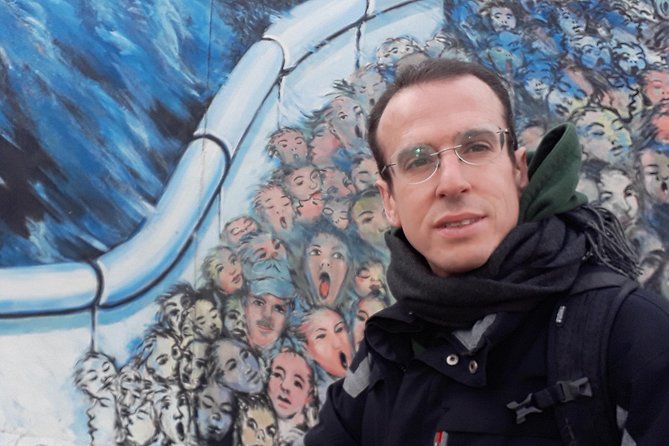
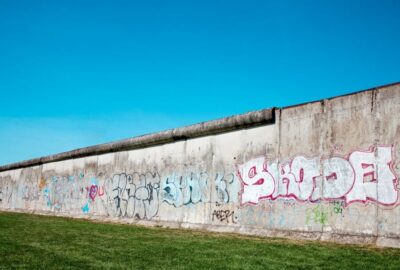
The final stop is the East Side Gallery, described as the longest gallery in the world, with about 10 minutes allocated to it.
This is one of Berlin’s clearest places to see the meeting point between the Wall and public art. The painted sections are not just a backdrop for photos. They connect political memory with artistic expression, making the site a natural ending for a tour that has moved from monuments to murals and squats.
Ten minutes is enough for a concise introduction, but not for a thorough examination of every painting. If the East Side Gallery is your main reason for booking, you may want to return on your own. The tour gives you context and a starting point, while a separate visit lets you set your own pace.
What the 310 dollar group price means
The listed price is 310 dollars for a group of up to 15 people. That makes the value depend heavily on your group size.
For two people, it is a costly private experience, though the hotel pickup, personal guide, route planning, and practical Berlin help add service beyond a standard group walk. For a larger family or friend group, the per-person price drops sharply. A group of six divides the base cost to about 52 dollars each, before public transport. At the maximum group size, the price is much lower per person, though groups larger than six should contact the provider before booking.
Public transport is not included and costs 3 to 11 euros per person for a single or daily ticket. Ask about the day’s transport needs before setting your budget. A private van and driver can be arranged on request, but that is an extra service.
Pickup is offered from a Berlin hotel, apartment, Airbnb, train station, or airport. This can save time and remove the stress of finding a meeting point, especially on your first day. The tour starts in Berlin, and you should provide your preferred start time when booking.
Who will get the most from this tour
I would choose this for an active visitor who wants a private introduction to Berlin’s alternative culture and does not want a large group. It is a good fit if you are curious about:
- Graffiti, murals, and independent art spaces
- Former squats and Berlin’s counterculture
- LGBTQ life and the city’s gay parade
- The Berlin Wall and public memorials
- Street food such as currywurst and döner kebab
- Nightlife districts and local hangouts
It is less suitable if you want long museum visits, a relaxed meal, or detailed time at each major sight. The route moves quickly, and several stops last only 10 or 20 minutes.
Most people can participate, the tour is near public transportation, and service animals are allowed. Since it is a walking-focused experience, wear shoes you can use comfortably for nearly three hours. The provider lists a group limit of 15, but asks you to contact them for bookings larger than six, so do not assume a big party can book without checking first.
Should you book Alternative Berlin Private Tour with Jacob?
Book it if you want Berlin explained through its walls, art spaces, social groups, and everyday food rather than through monuments alone. The strongest reasons are the private format, hotel pickup, Jacob’s local guidance, and the substantial 30-minute visit at Haus Schwarzenberg.
Think twice if you want a slow, detailed tour of each landmark or if public transport and a 310 dollar base price do not fit your budget. For a larger group, the cost becomes easier to justify. For two people, the value depends on how much you care about a private route and personal discussion.
The tour has a small review base, but the available feedback gives special weight to local artist work, Second World War memorials, and Jacob’s attentive guidance. That matches the tour’s best use: ask questions, stay curious, and treat the outing as an introduction to Berlin’s alternative side, not a complete survey of every graffiti wall in the city.
Free cancellation is available up to 24 hours before the start time. Changes or cancellations made inside that window are not accepted for a refund.
FAQ
How long is the Alternative Berlin Private Tour?
The tour lasts approximately 2 hours and 45 minutes.
What is the price of the tour?
The price is 310 dollars per group of up to 15 people.
Is the tour private?
Yes. Only your group participates in the activity.
Is hotel pickup included?
Yes. Pickup is offered from hotels, apartments, Airbnb accommodations, train stations, and airports in Berlin.
Is public transportation included?
No. Public transport costs 3 to 11 euros per person, depending on whether you use a single or daily ticket.
Can I request a private van and driver?
Yes. A private van and driver are available upon request, but they are not included in the listed price.
Which places are visited?
The route includes the Victory Column, Potsdamer Platz, Brandenburg Gate, Hackesche Höfe, Hackescher Markt, Haus Schwarzenberg, Warschauer Strasse, Kreuzberg, and the East Side Gallery.
Who leads the tour?
The experience is provided by Nadav Jacobs Berlin experience, and the guide identified for the tour is Jacob.
Can I cancel for a full refund?
Yes. You can cancel at least 24 hours before the experience starts for a full refund. Cancellations or changes made less than 24 hours before the start time are not refunded or accepted.
More Alternative Street Art Tours in Berlin
- Berlin: Alternative Street Art Tour
★ 4.4 · 18 reviews - Alternative Berlin & Street Art Tour
★ 4.5 · 14 reviews - Berlin: Alternative & Street Art Tour
★ 4.5 · 10 reviews - Budapest: Street Art and Underground Movements Walking Tour
★ 5.0 · 365 reviews
More Private Street Art Tours in Germany
- Berlin: Private Kreuzberg Street Art Walking Tour
★ 4.8 · 57 reviews - Berlin Private Street Art Tour – Off The Grid
★ 5.0 · 9 reviews - Alternative Berlin / Street art tour – Private group
★ 5.0 · 6 reviews - Street Art Workshop & Tour – Private Group
★ 5.0 · 2 reviews
Freshly painted around Berlin
- Graffiti Workshop Berlin with professional graffiti artists★ 4.0 · 4 reviews
- Open graffiti workshop in the Mauerpark in Berlin★ 5.0 · 2 reviews
- Alternative Berlin & Street Art Tour★ 4.5 · 14 reviews
- Private Alternative Berlin Tour -Murals, Graffiti and Squats★ 4.8 · 5 reviews
- Street Art Workshop & Tour – Private Group★ 5.0 · 2 reviews
- Street Art & Berlin Gay, Queer, Trans History + Free Gay Map★ 4.9 · 15 reviews
- Berlin : Private Street Art Walking Tour (Private Tour)★ 5.0 · 2 reviews
- Mega Street Art, Mural, Graffiti Private Tour★ 5.0 · 2 reviews
Berlin Street Art Tours, compared.

East Meets West: Berlin Food Culture & Street Art
Read our review →