
Review · BERLIN
East Meets West: Berlin Food Culture & Street Art
Berlin’s best food story is not found in one restaurant. It is spread across immigrant kitchens, old working-class streets, market halls, coffee counters, and walls covered in political art. This small-group walk follows that story from Friedrichshain across the former Berlin Wall and into Kreuzberg, with food along the way.
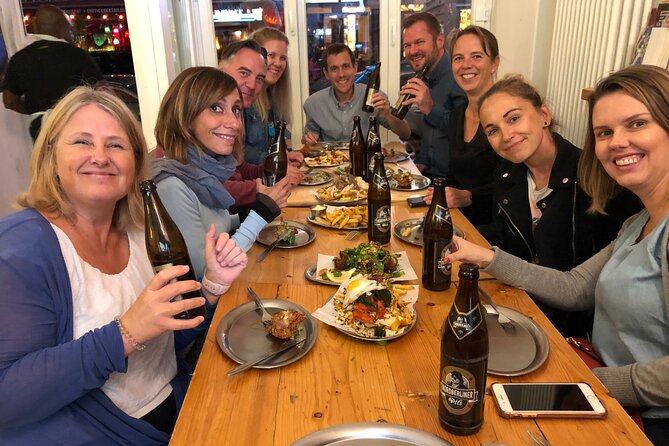
I like the small maximum of eight people, which gives guides such as Lee, Elena, Tiago, and Will room to answer questions and adjust the pace. I also like the mix of Turkish, Ukrainian, German, Chinese, coffee, beer, and vegan treats, rather than a tour built around only sausages and schnitzel. The main thing to consider is the price: at $169.38, you are paying as much for context and local guidance as for the six tastings, and one past experience found the food value less convincing.
Key points to know before you book
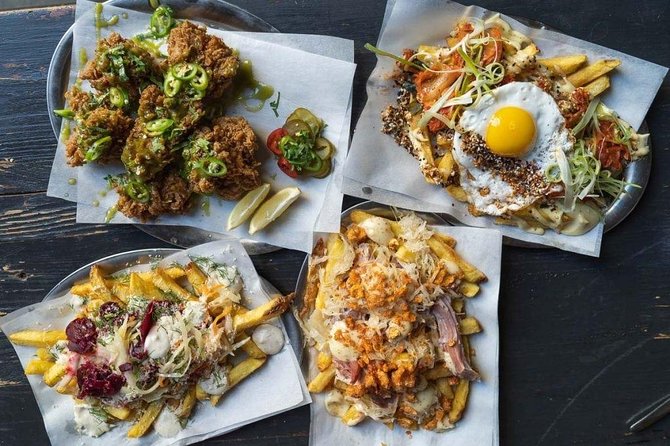
- Six tastings across two of Berlin’s most creative districts, with food ranging from Berlin-style schnitzel and currywurst to Turkish street food and Ukrainian soul food.
- East Side Gallery is an early stop, so you see a surviving section of the Berlin Wall before crossing toward former West Berlin.
- The route links food with hard history, including Nazi Germany, Communist East Berlin, migration, and the post-Wall creative scene.
- The group is limited to eight people, a useful advantage on narrow streets and inside small food businesses.
- You finish near U Kottbusser Tor, with access to the U1 and U8 lines.
- Come hungry, since the portions can add up to a full meal, not just a few dainty samples.
Berlin food culture from Friedrichshain to Kreuzberg
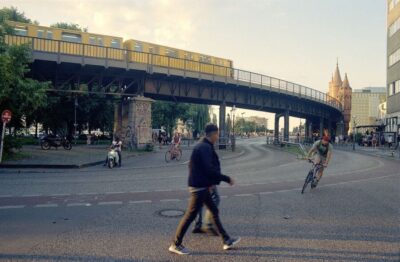
The tour begins at noon outside Industriepalast Hostel on Warschauer Strasse in Friedrichshain. The route is designed as a walk through changing Berlin, not a simple restaurant crawl. You start in a former East Berlin district, see the Wall, cross into the old West, and finish in Kreuzberg, where Turkish influence and newer food ideas sit side by side.
That route matters. Berlin’s food culture makes more sense when you see the city’s political split and reunification at street level. Friedrichshain carries the memory of East Berlin and its rebellious young residents. Kreuzberg reflects decades of Turkish immigration, working-class life, artistic energy, and later food experimentation.
The tour lasts about three and a half hours. You should expect a moderate amount of walking, with stops that break up the distance. Comfortable shoes are a must. Berlin weather can turn unpleasant quickly, so bring a rain jacket or poncho if the forecast looks doubtful.
More Street Art Tours around Berlin:
- Berlin: City Street Art Guided Walking Tour
★ 4.8 · 1,051 reviews - Berlin: 3-Hour Street Art Tour
★ 4.7 · 778 reviews - Berlin Street Art Walking Tour – Off The Grid
★ 5.0 · 270 reviews
Friedrichshain and the first taste of East Berlin
Friedrichshain is the opening chapter. The neighborhood is associated with revolutionary East Berliners, and your guide sets up the political and social changes that shaped the area. This is where the tour begins to show that food is tied to people and place.
The early part of the walk can help you get your bearings in a district that has changed quickly. You may see the contrast between older East Berlin traces and the cafés, bars, and creative businesses that now draw visitors. The point is not to turn Friedrichshain into a museum. It is to explain how a once-divided city became a center for artistic and culinary experimentation.
The tour’s guides have received especially warm praise for their history and food knowledge. Lee is described as good at taking the group to unusual places, while Elena has been singled out for explaining the people and culture of the neighborhoods. Tiago and Will have also been praised for making the history easy to follow. Your guide will vary, but the experience depends heavily on that person’s ability to connect each stop to the larger story.
East Side Gallery and the Wall that remains
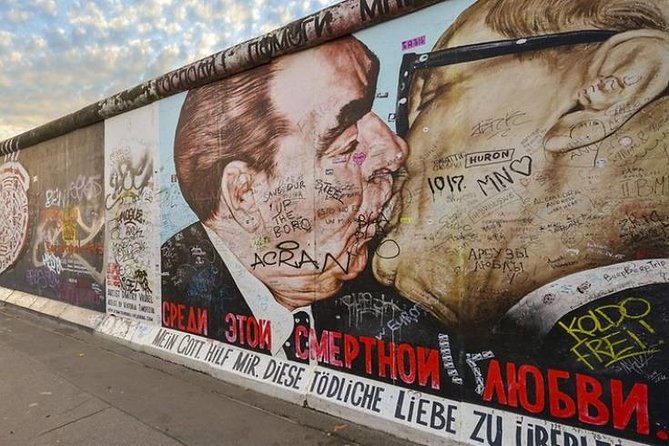
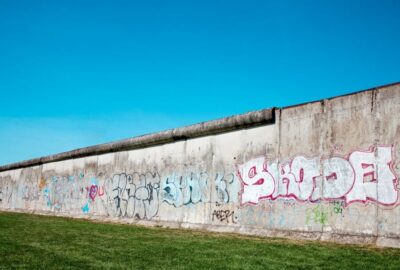
East Side Gallery is one of Berlin’s most direct reminders of the Cold War. Here, you touch an actual surviving section of the Berlin Wall and see murals painted on the longest remaining stretch of the former barrier.
The stop is brief, around 20 minutes, so do not expect a full museum visit or an exhaustive explanation of every mural. What you get is a focused look at the Wall as both a political object and an outdoor art surface. Your guide also explains how the artwork reflects the political mood of reunification and the years that followed.
This is one of the stronger parts of the route because it links the city’s past to its present creative identity. Berlin’s street art is not merely decoration. Much of it grew from the city’s open spaces, political divisions, abandoned buildings, and post-1989 freedom to experiment.
A practical note: East Side Gallery can be busy, and the Wall stretches along an open urban route rather than a quiet gallery. Keep your group in sight and be ready to walk soon after the main explanation.
Crossing into Kreuzberg
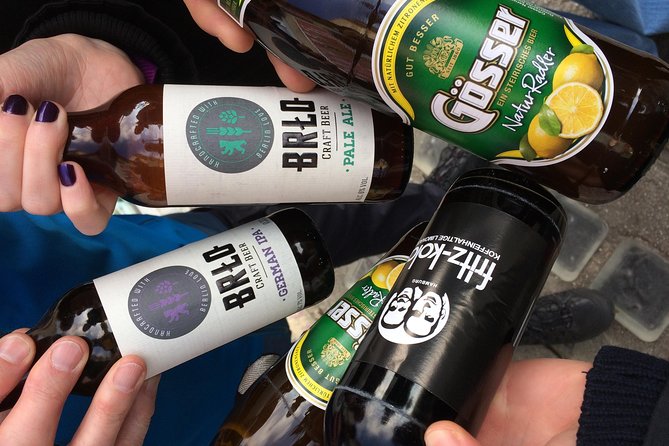
After the Wall, the route moves toward Kreuzberg, the former West Berlin district known for its immigrant communities, bars, food businesses, and street art. The crossing is more than a change of neighborhood. It gives you a physical way to think about the old border between East and West.
Kreuzberg’s character is hard to reduce to one label. It has working-class roots, a major Turkish presence, a long connection to alternative culture, and a food scene that now attracts people from all over Berlin. Your guide explains how the district changed through the 1980s and 1990s, including the role of Turkish residents in rebuilding and reshaping the area.
This is also where the walking route becomes more food-focused. The stops are not all formal sit-down meals. Some are quick tastings, so you spend enough time to sample each item and hear its story before moving on.
Same walls, a different way in:
- Berlin: Graffiti Workshop at the Berlin Wall
★ 4.6 · 234 reviews - Berlin Street Art & Graffiti Walking Tour
★ 5.0 · 109 reviews - Berlin: Street Art and Alternative Tour
★ 4.7 · 98 reviews - Berlin: Private Kreuzberg Street Art Walking Tour
★ 4.8 · 57 reviews
Schnitzel, currywurst, and Berlin comfort food
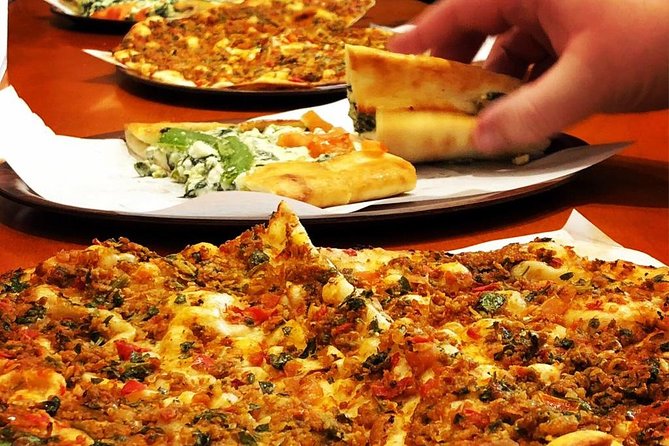
At Scheers Schnitzel, you try a Berlin-style version of a German classic. The stop is short, about 15 minutes, but it gives you a familiar reference point before the tour moves into less expected food traditions.
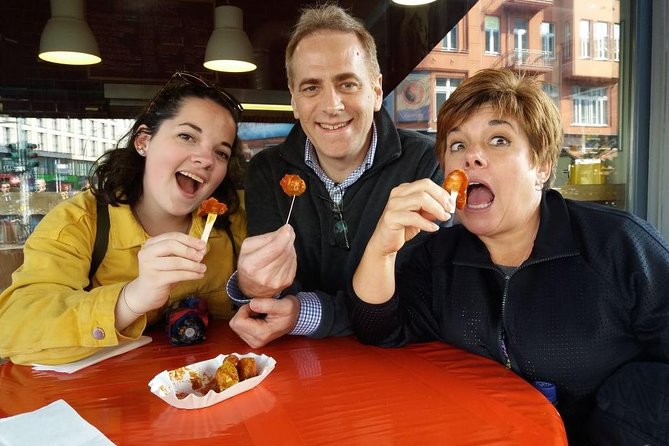
Later, Ketels Curry introduces the story of currywurst, one of Berlin’s signature fast foods. The dish has a fascinating local story, and the tour treats it as more than sausage with sauce. You learn how currywurst changed Berlin’s eating habits and became part of the city’s everyday identity.
These two stops are useful because they prevent the tour from treating Berlin food as only immigrant cuisine or only trendy café fare. You get a taste of traditional German comfort food, then see how a simple street dish became a cultural symbol.
The portions can be generous across the full afternoon. Several people have found that skipping breakfast is sensible, and some have had enough food to reconsider dinner plans. That is useful advice, especially if you prefer tasting many foods rather than eating one large meal.
Street art, Nazi history, and the city’s difficult past
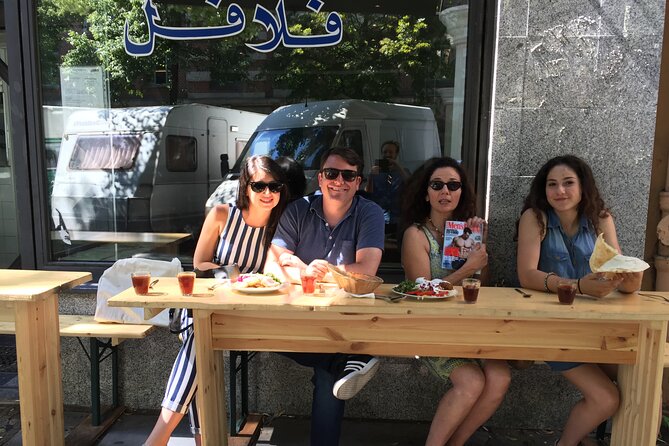
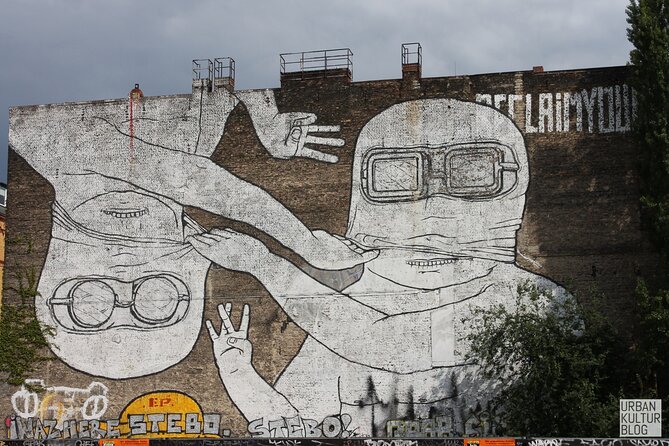
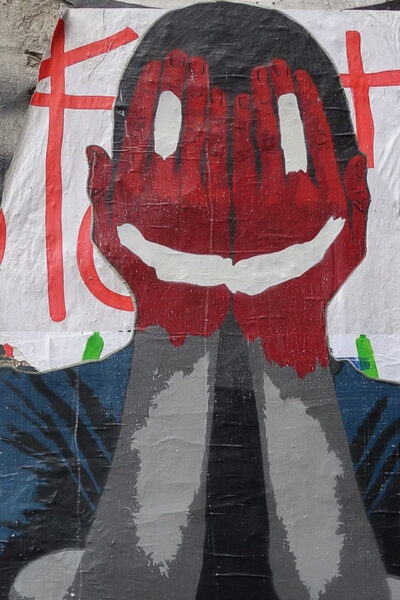
The street-art portion takes place in a neighborhood widely regarded as one of Europe’s major centers for urban art. Your guide points out a well-known mural and explains how the walls carry stories about East and West, the past, and the future.
The tour also brings in darker history. You hear about Nazi Germany and trace streets once used by SS soldiers. This gives the walk more weight than a simple search for attractive murals. Berlin’s creative image exists beside painful reminders of dictatorship, war, division, and displacement.
The balance here depends on your guide. A strong guide can explain the past without turning every street corner into a lecture. The most useful feedback about this experience praises the personal explanations and the way guides answer questions. One less positive experience found the historical commentary too basic, so if detailed historical interpretation is your main goal, set your expectations accordingly.
Ukrainian soul food at Slava Berlin
Slava Berlin introduces a newer part of Berlin’s food story. The restaurant presents Ukrainian soul food and nalivanki, with a focus on a modern Ukrainian presence in the city and an immigrant women-led business.
This stop broadens the tour beyond the better-known German and Turkish influences. You are not simply sampling old Berlin specialties. You are also seeing how newer communities bring their own dishes, drinks, and business ideas into the city.
The stop lasts about 20 minutes. Since it is one of several tastings, expect a sample rather than a long meal. Still, this is the sort of place that makes the tour feel connected to present-day Berlin instead of frozen in a postcard version of the city.
Markthalle Neun and Berlin’s independent food scene
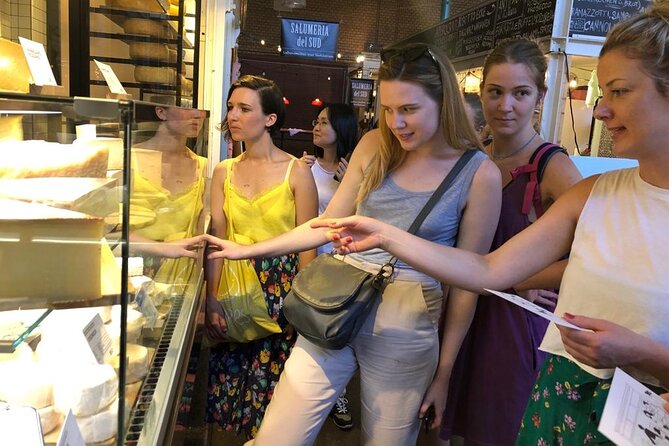
Markthalle Neun is housed in a refurbished market hall dating from the early 1900s. It survived wartime destruction and later pressure from commercial development, and it now serves as one of Berlin’s best-known food gathering places.
The market hall is important because it connects small food producers, drink makers, and independent food businesses with the city. Your 30-minute stop gives you time to understand how the hall works and how its events have helped Berlin’s food culture move beyond standard restaurant dining.
You should not expect a long free period to shop your way around every stall. The group has a schedule and several more tastings ahead. Instead, think of Markthalle Neun as a window into how Berlin’s food scene is organized and promoted.
This stop may be especially valuable if you are considering where to eat later in your visit. The market’s event calendar changes, so the exact atmosphere can vary, but the hall itself is a useful place to understand Berlin’s independent food movement.
Turkish street food and Little Istanbul
The Turkish influence on Kreuzberg is one of the tour’s central themes. Berlin has the largest Turkish community outside Turkey, and Kreuzberg’s identity was shaped in large part by Turkish residents who built businesses and helped remake the neighborhood during the 1980s and 1990s.
At Leylak, you taste street-food recipes associated with Anatolia. This is not a token international stop added for variety. It is tied directly to the social history of Kreuzberg and to the people who gave the district much of its current character.
The route may also be described as visiting Little Istanbul. That phrase is useful as a quick orientation, but the neighborhood is not a theme park version of Turkey. It is a real part of Berlin, shaped by migration, family businesses, changing rents, and several generations of residents.
For many people, this is one of the most rewarding food sections because the dish comes with an explanation of why the cuisine is here in the first place. You get a stronger sense of place than you would from ordering Turkish food without any local context.
Coffee, vegan doughnuts, and Berlin’s newer tastes
The tour includes a stop at one of Friedrichshain’s fashionable coffee shops, described as a hipster café with a strong local following. Coffee is a small detail, but it helps show how Berlin’s food culture has expanded from traditional German staples into specialty drinks and café life.
At Brammibal’s Donuts near Maybachufer, you finish with vegan doughnuts. Berlin has a strong reputation for vegan food, and this stop shows how plant-based eating has moved from a niche choice into a polished part of the city’s food scene.
The final tasting is playful and sweet, but it also makes a point. Berlin’s food identity includes old market halls and currywurst stands, yet it also includes modern bakeries, immigrant-owned restaurants, specialty coffee, and meat-free cooking.
The published experience includes six local tastings, beverages, and Berliner Pilsner. The named stops total more than six locations, so some stops function mainly as short cultural or historical visits while others provide food. That distinction matters if you expect a full serving at every location.
Is $169.38 a fair price?
At $169.38 per person, this is not a cheap way to grab lunch. You are paying for a small group, a three-and-a-half-hour guided walk, six tastings, drinks, beer, and the guide’s interpretation of Berlin’s neighborhoods.
The value is strongest if you want a ready-made introduction to Friedrichshain and Kreuzberg and would otherwise spend time choosing places on your own. You also get a useful route across former East and West Berlin, plus context about Turkish migration, Ukrainian food, street art, Nazi Germany, Communism, and currywurst.
The value is weaker if your main goal is the largest possible amount of food. One less positive experience found the tastings inexpensive and felt the price did not match the food alone. That is a fair concern. This is a culture walk with food, not a luxury tasting menu.
Group size helps justify some of the cost. With no more than eight people, you should have more access to the guide than on a large coach tour. The guides most often praised, including Lee, Elena, Tiago, and Will, were valued for answering questions and adding personal insight.
Who should book this Berlin food walk?
I would recommend it to first-time Berlin visitors who want a quick orientation to the city’s eastern and western neighborhoods. It suits people who like history in manageable portions and want to eat their way through several cultures rather than spend three hours in one restaurant.
It is also a good fit for curious eaters who want German, Turkish, Ukrainian, Chinese, vegan, coffee, and beer influences in one afternoon. Vegetarian food is available if you request it when booking, and you should provide any other dietary needs in advance.
I would be more cautious if you want a formal historical tour, a long visit at East Side Gallery, or a high-end food experience. The walking pace is moderate, but the schedule moves through many stops, and the historical detail may vary with the guide.
The tour starts at noon at Industriepalast Hostel, Warschauer Strasse 43, and ends near U Kottbusser Tor, served by the U1 and U8 lines. The operator may change the meeting time or place by season and will reconfirm before departure. Public transport is not included, so plan for your own BVG ticket.
FAQ
How long does the Berlin food and street art tour last?
The experience lasts approximately 3 hours and 30 minutes.
Where does the tour start?
It starts at Industriepalast Hostel, Warschauer Strasse 43, 10243 Berlin, Germany. The listed start time is 12:00 pm, but the operator may reconfirm a different time or meeting point depending on the season.
Where does the tour end?
The tour ends at U Kottbusser Tor, near the U1 and U8 lines.
How many people can join the tour?
The maximum group size is eight travelers.
How many food tastings are included?
Six local tastings are included, along with beverages, food tasting, and local Berliner Pilsner beer.
Is a vegetarian option available?
Yes. A vegetarian option is available, but you need to advise the operator when booking. You should also report any other dietary requirements at that time.
Is public transportation included?
No. A BVG transport ticket is not included. Comfortable walking shoes are recommended, and a rain jacket or poncho may be useful depending on the weather.
Should you book it?
Book this tour if you want Berlin explained through neighborhoods, migration, political change, street art, and food, all in one compact afternoon. The small group and wide range of tastings are its strongest points.
Skip it if you are judging the $169.38 price mainly by the amount of food on the plate. For the right person, the real value is the connection between the food and the city around it. Go hungry, wear good shoes, and treat the tastings as part of a guided introduction to modern Berlin.
Freshly painted around Berlin
- Graffiti Workshop Berlin with professional graffiti artists★ 4.0 · 4 reviews
- Open graffiti workshop in the Mauerpark in Berlin★ 5.0 · 2 reviews
- Alternative Berlin Private Tour with Jacob – Graffiti and Squats★ 5.0 · 6 reviews
- Alternative Berlin & Street Art Tour★ 4.5 · 14 reviews
- Private Alternative Berlin Tour -Murals, Graffiti and Squats★ 4.8 · 5 reviews
- Street Art Workshop & Tour – Private Group★ 5.0 · 2 reviews
- Street Art & Berlin Gay, Queer, Trans History + Free Gay Map★ 4.9 · 15 reviews
- Berlin : Private Street Art Walking Tour (Private Tour)★ 5.0 · 2 reviews
Berlin Street Art Tours, compared.
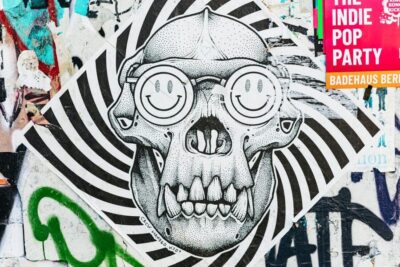
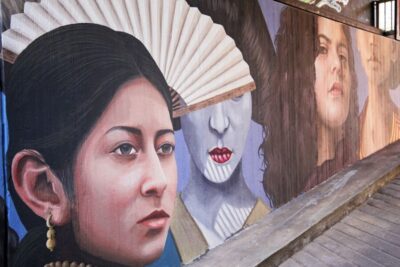
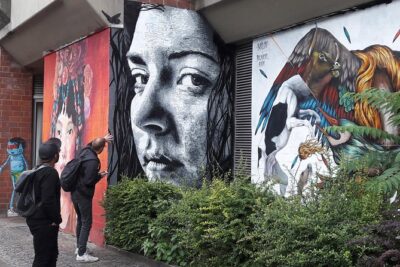
Street Art & Berlin Gay, Queer, Trans History + Free Gay Map
Read our review →Browse the lists this tour appears in