
Review · BUDAPEST
Budapest: Street Art and Underground Movements Walking Tour
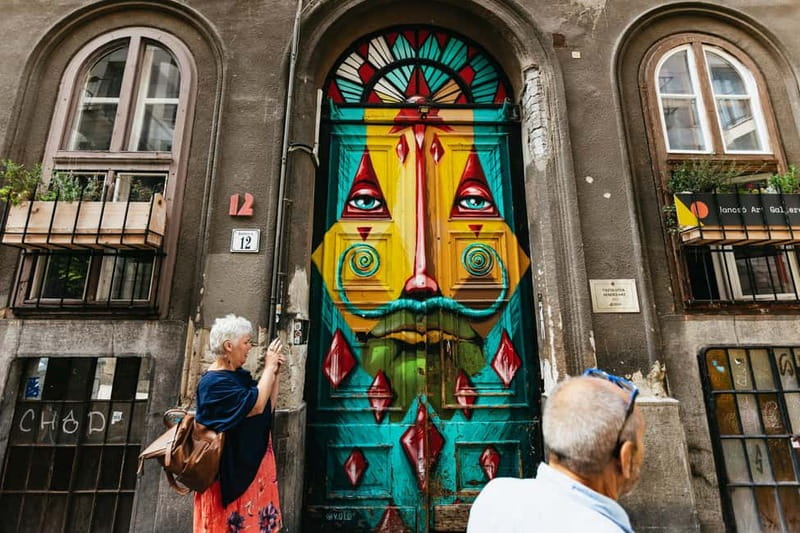
Budapest’s street art is easy to miss until somebody points it out. This two-hour walk with ET or Suzie shifts your attention from grand buildings to stickers, paste-ups, graffiti, small sculptures, and public art tucked into the streets of the Jewish and Elizabeth quarters. The art is only half the story. You also learn how local artists use walls and doorways to comment on politics, culture, identity, and city life.
I like the small group of no more than eight, which gives you room to ask questions and keeps the walk personal. I also like the follow-up summary, including artist names and useful places to explore later. The main consideration is that street art changes quickly, and this is a walking conversation about a living art form, not a fixed museum collection. Cold, rain, or a group that wants only giant murals could affect your enjoyment.
Key points at a glance
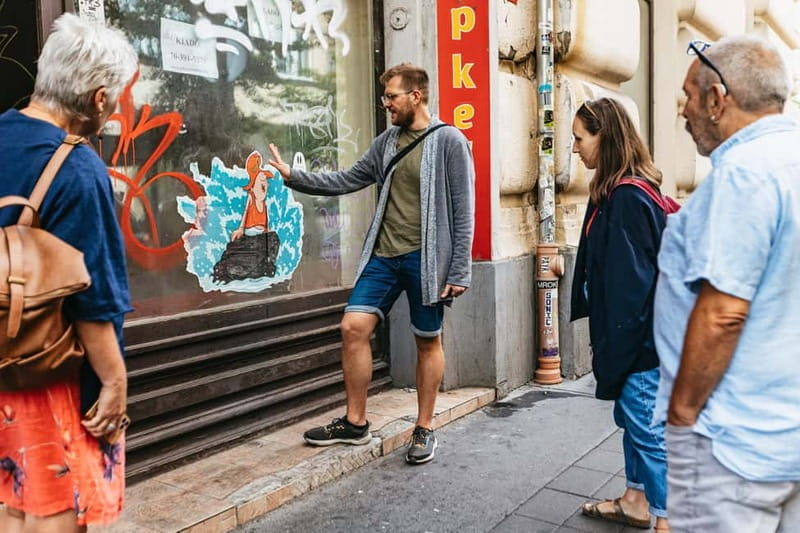
- Small-group format: A maximum of eight people makes it easy to hear the guide and join the discussion.
- More than murals: Look for stickers, paste-ups, lettering, graffiti, public art, and small sculptures.
- Local voices: ET and Suzie connect the works to Budapest’s artists, history, social issues, and underground culture.
- Useful starting point: The tour begins at Telep-Art Galéria, a distinctive bar covered with stickers.
- Helpful finish: You receive a summary after the walk, with artist details and further ideas for seeing the city.
- Good early activity: The tour helps you notice details and find interesting places for the rest of your Budapest stay.
Why this Budapest art walk feels different
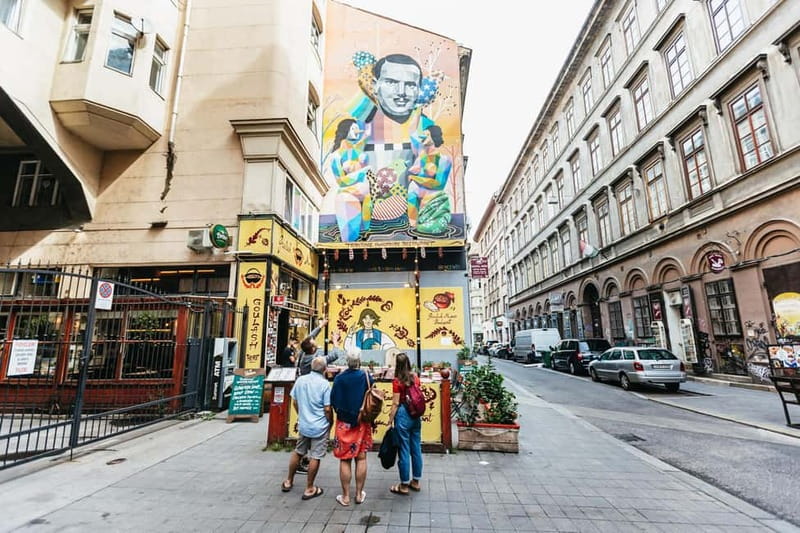
Many city art walks focus on the biggest painted walls. This one asks you to look lower, closer, and sometimes behind the obvious sights. A tiny sticker on a post may have as much meaning as a large mural, and a small sculpture can carry a sharp joke about modern Budapest.
That wider view is one of the tour’s best features. You may see work by local and international artists, but the focus remains on how art functions in the city. ET explains techniques, artists, and the messages behind the work. Suzie also leads the walk, and her approach has been described as friendly and well informed.
I especially like the way the experience treats street art as communication rather than decoration. You learn why a work was made, how it relates to its setting, and what it says about the people who live there. The result is not a list of photographs. You leave with a better habit of looking.
The tour also introduces underground movements and alternative culture without turning the subject into a lecture. The atmosphere is interactive. You can ask questions, compare art scenes from other cities, and discuss what belongs in a public space.
More Alternative Street Art Tours in the world:
- Berlin: Street Art and Alternative Tour
★ 4.7 · 98 reviews - San Antonio E-Bike Tour: Murals, Street Art and Hidden Gems
★ 5.0 · 88 reviews - Amsterdam’s Hidden Gems and Street Art Bike Tour
★ 5.0 · 65 reviews
Starting at Telep-Art Galéria
The meeting point is Telep-Art Galéria, a bar with stickers covering the walls. It is a fitting place to begin because you start seeing the city’s visual language before the walk even gets going.
Allow a little time to find the venue and arrive ready to walk. The exact route can change because street art is constantly added, painted over, removed, or moved elsewhere. That flexibility is useful, but it also means you should not expect a guaranteed checklist of famous pieces.
At the beginning, ET or Suzie sets the tone and gets the group talking. Several people have appreciated the relaxed pace and the chance to ask questions. That matters here. Street art can be hard to understand from a quick photo, so a guide who stops to explain context makes the small details much more rewarding.
The group size helps. With up to eight participants, you are not trying to hear a quiet explanation over a crowd. The guide can respond to different interests, from graffiti technique to political symbolism or the history of the neighborhood.
Through Budapest’s Jewish and Elizabeth quarters
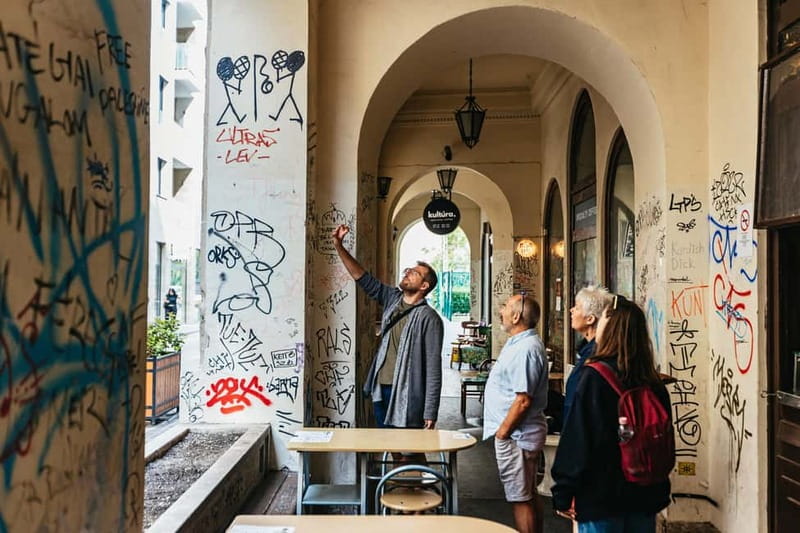
The walk spends time around Erzsébetváros, also called the Elizabeth Quarter, and the old Jewish Quarter. This is a particularly useful setting because the area brings together nightlife, historic streets, creative businesses, public art, stickers, and many layers of urban change.
You may pass pieces that look playful at first but carry a pointed message. Others may be simple tags or visual experiments. The guide helps separate the different forms, so you understand that street art is not one single style or movement.
The route can include small stickers and paste-ups, which are easy to walk past without noticing. It can also include larger murals, public art, lettering, and sculptures. That variety makes the tour work for people who are curious about urban culture but do not know much about graffiti.
The neighborhood context matters. A work placed beside a ruin bar, residential building, or busy street means something different from the same work in a gallery. ET connects the art to local culture and contemporary concerns, helping you see why artists choose public spaces.
You will also hear about artists and movements beyond the exact works seen during the walk. The city changes too quickly for any street art tour to be completely fixed. A work may disappear, while another appears nearby. That is a small drawback for anyone hoping to photograph a permanent collection, but it is also what makes the subject feel current.
The stories behind stickers, sculptures, and public art
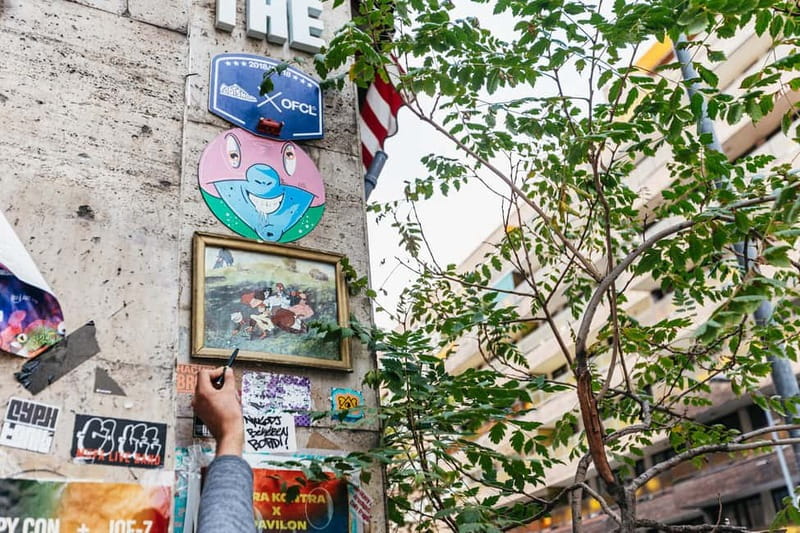
The most useful part of the walk is the explanation behind the objects. A sticker may identify an artist, signal support for a cause, or form part of a wider visual conversation. A small sculpture may be humorous, political, or connected to a local story.
One particularly useful follow-up is the information sent after the tour. You can receive artist names and material for finding their work later. A map showing the locations of Kolodko mini sculptures has also been provided, giving you a self-guided activity for the rest of your stay.
This is where the tour offers value beyond its two hours. You are not simply shown a few walls and then sent away. You gain names, references, and a way to continue looking on your own.
The guide may also point out places worth visiting after the walk. Some past routes have included a local bookshop, a cafe, and a ruin bar. Access to Szimpla Kert during a quiet daytime period has been an especially popular addition, since you can examine its unusual interior without the usual nighttime crowd.
These stops should be treated as possible parts of the route rather than guaranteed promises. The supplied plan describes a secret stop and a finish at Központ, while the exact art and side stops can shift. That uncertainty is normal for a street-based experience.
More Street Art Walking Tours in the world:
- London: Street Art and Graffiti Guided Walking Tour
★ 4.9 · 1,354 reviews - Berlin: City Street Art Guided Walking Tour
★ 4.8 · 1,051 reviews - Naples Spanish Quarters Walking Tour Street Art, Folklore & Sweet
★ 5.0 · 797 reviews - Lisbon: Kickstart Street Art Walking Tour
★ 4.9 · 717 reviews
A thoughtful look at Budapest’s underground culture
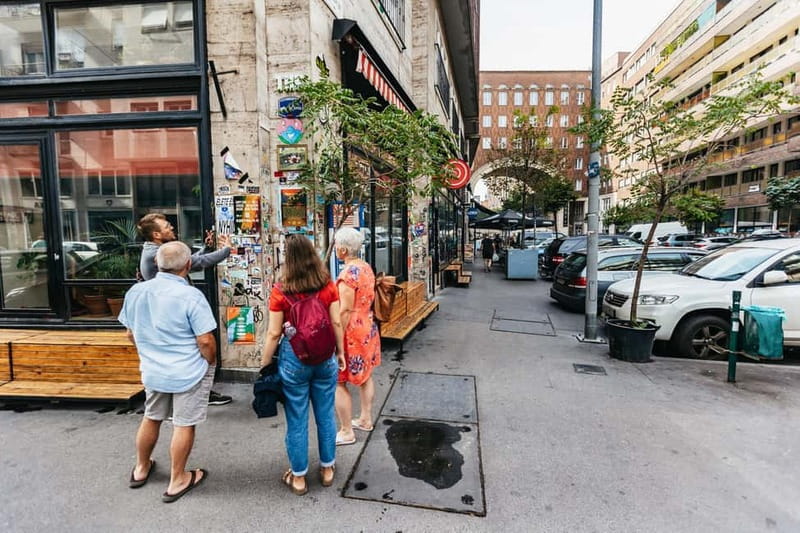
The word underground can sound dramatic, but here it covers a broad range of work and ideas. You look at art made outside traditional gallery spaces and consider how people use public surfaces to express themselves.
The tour also places street art beside wider questions about Budapest. Who controls public space? Which messages are welcomed, removed, or ignored? How does a neighborhood change when nightlife, tourism, local residents, and artists occupy the same streets?
You are not required to have an art background. In fact, the walk may be most useful if you usually notice murals but are unsure what else counts as street art. The guide covers techniques and movements in plain language, then gives you time to form your own view.
The social side is strong, too. ET encourages discussion among people from different countries, and the small group creates an easy setting for conversation. Families can take part, and the tour is described as interactive rather than formal.
Still, you should know what you are booking. This is not an art-history lecture with a long list of dates. It is also not a fast sightseeing walk that races from one major mural to another. The emphasis is on observation, local voices, and discussion.
ET and Suzie as your guides
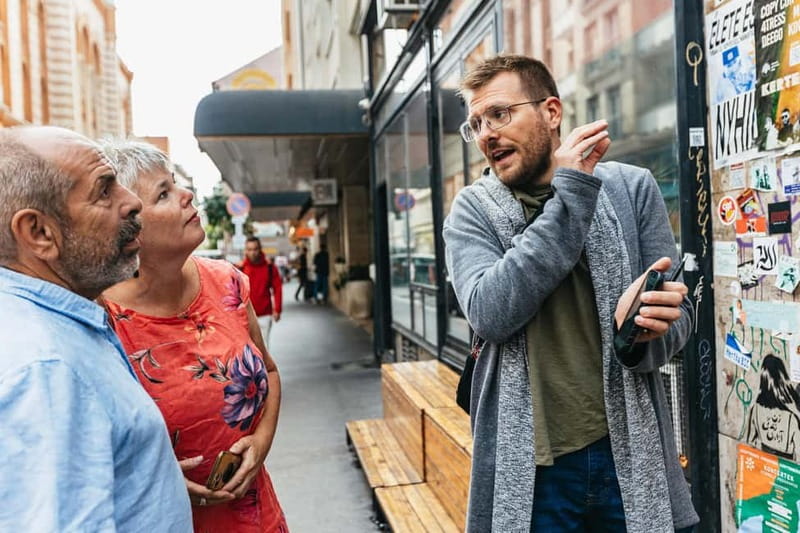
ET is the main guide highlighted in the experience, and he brings academic study, personal experience, and connections within the art scene to the subject. His background helps explain why the tour goes beyond surface descriptions.
His style is friendly and energetic. He is happy to answer questions, adjust to the group, and add local suggestions. One playful touch mentioned by several people is his ability to complete a Rubik’s Cube, but that is a small extra rather than the reason to book.
Suzie also leads the walk and has been praised for her friendly approach and strong command of the subject. The important point is that both guides can connect the art to Budapest’s culture instead of treating it as a series of anonymous walls.
The tour is in English. If you enjoy conversation, this is a strength. If you prefer quiet sightseeing or a tightly scripted route, the interactive style may feel less structured than expected.
What $28 buys you
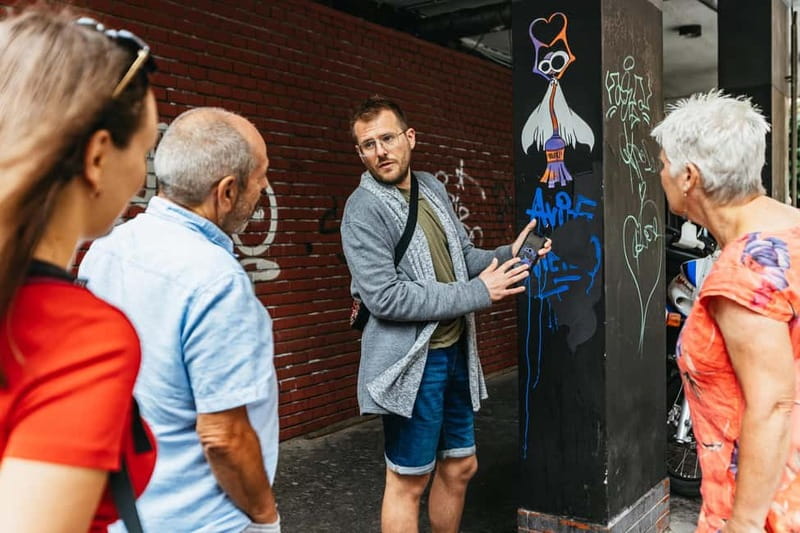
At $28 per person, the tour is reasonably priced for a two-hour guided experience in central Budapest, especially with a group limited to eight. You are paying for access to local interpretation, not for admission to a museum or a large attraction.
The value comes from what you would probably miss alone. You can walk through the Jewish Quarter and see plenty of walls, but without context you may overlook a sticker, misunderstand a symbol, or fail to notice a sculpture entirely.
The post-tour material adds value. Artist names, an interactive map, local suggestions, and a summary give you tools for exploring after the guide leaves. Occasional extras, such as a coffee stop, a small gift, or daytime access to Szimpla Kert, may also appear, though they should not be treated as guaranteed inclusions.
Food and drinks are not included, so bring money if you want something during a stop. The tour itself does not require a separate attraction ticket based on the information provided.
You can cancel up to 24 hours before the start for a full refund, and the reserve-now, pay-later option keeps your plans flexible. Those terms are useful if your Budapest schedule is still changing.
Who should book this walk
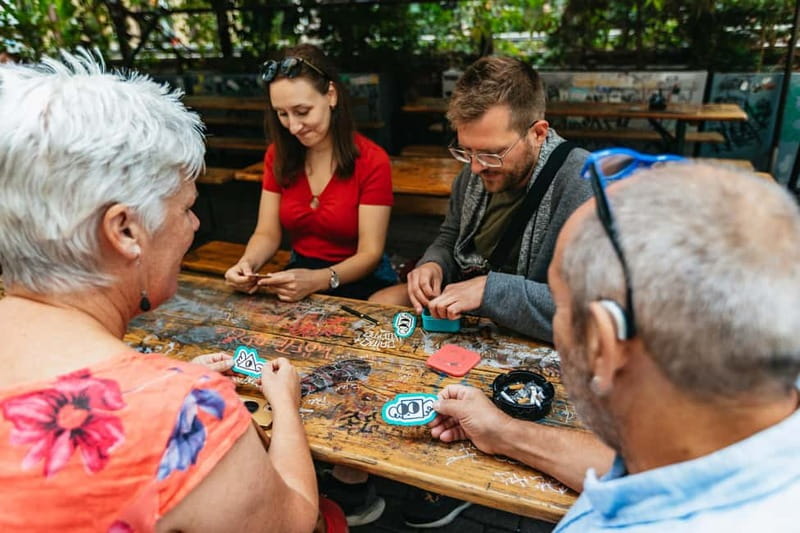
I would choose this tour early in a Budapest stay. Once you learn the signs and styles, you will begin spotting stickers, mini sculptures, and small pieces of public art on your own. Suggestions from the guide can also help shape the rest of your visit.
It suits:
- People interested in graffiti, stickers, murals, and public art
- Visitors who want a side of Budapest beyond major monuments
- Families looking for an interactive activity
- Solo visitors who enjoy meeting a small group
- Anyone curious about local social and political messages
- Repeat visitors who have already seen the main sights
It is less suitable if you want a classic sightseeing route, a guaranteed list of major murals, or an indoor activity protected from the weather. The walk is also not the place for someone who wants only polished gallery art.
The experience is wheelchair accessible, which broadens its usefulness. Since the route is outdoors and street art can appear in different places, it is still sensible to confirm practical route details when booking if you have specific mobility needs.
A few practical ways to enjoy it more
Wear comfortable shoes. Two hours is not a long walk, but you will spend time standing while examining details and listening to explanations.
Bring a phone or camera if you want to record artist names and pieces. Do not rely only on photographs, though. The follow-up summary is valuable because a small sticker may not be clear in a quick snapshot.
Dress for the forecast. The tour has continued in cold weather, but winter conditions can make an outdoor discussion less comfortable. Warm layers will help you concentrate on the art rather than the temperature.
Arrive ready to look at small things. The most rewarding moment may not be a giant mural. It may be a tiny image beside a doorway, a line of lettering, or a sculpture you would have walked past without a guide.
Finally, ask questions. The guide’s strength is the conversation. If you are curious about censorship, local artists, technique, public space, or the difference between graffiti and street art, speak up.
Should you book the Budapest Street Art and Underground Movements Walking Tour?
Book it if you want to see Budapest through its smaller visual clues and understand the ideas behind them. The strongest reasons are the small group, the local perspective, and the useful follow-up information that lets you keep exploring after the walk.
I would especially recommend it as one of your first activities in the city. The tour changes how you look at the Jewish and Elizabeth quarters, and that new habit can improve every later walk.
Skip it if your main goal is a fixed collection of famous murals or a conventional history tour. For everyone else, $28 is a fair price for two hours with ET or Suzie, a close look at Budapest’s alternative art culture, and a fresh way to read the city streets.
FAQ
How long does the tour last?
The walking tour lasts two hours.
How much does the experience cost?
The price is $28 per person.
Where does the tour begin?
The meeting point is Telep-Art Galéria, a bar known for its sticker-covered walls.
Where does the tour finish?
The tour finishes at Központ.
What language is the tour in?
The live tour is conducted in English.
How large is the group?
The group is limited to eight participants.
Is the tour wheelchair accessible?
Yes, the activity is listed as wheelchair accessible.
Are food and drinks included?
No. Food and drinks are not included in the tour price.
Can I cancel the booking?
Yes. You can cancel up to 24 hours in advance for a full refund. You can also reserve now and pay later.
Freshly painted around the world
- Xochimilco floating gardens, Coyoacan and UNAM murals★ 4.0 · 6 reviews
- Your Own Belgrade: Street Art and Hidden Gems Walking Tour★ 5.0 · 2 reviews
- Wynwood Walls Street Art & Neighborhood Walking Tour★ 4.9 · 9 reviews
- Vancouver: Street Art & Craft Beer Walking Tour with Tasting★ 4.8 · 14 reviews
- Vancouver: Street Art & Craft Coffee Walking Tour w/ Tasting★ 4.8 · 11 reviews
- Zagreb Street Art Private Walking Tour with a Local Artist★ 5.0 · 12 reviews
- Urban Canvas: Osaka Street Art Bike Tour★ 5.0 · 10 reviews
- UNAM: Murals & Revolution★ 4.9 · 8 reviews
Budapest Street Art Tours, compared.
Budapest Vibe: Ruin Bars, Street Art and Culture Tour
Read our review →
Original Budapest Alternative Street Art & Jewish Tour
Read our review →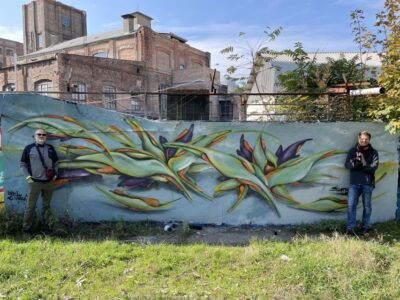
Budapest: Ruin Bars, Street Art, and Jewish Quarter Tour
Read our review →
Budapest Urban Art – Private Street Art Tour with a Drink in a Ruin Bar
Read our review →
Browse the lists this tour appears in