
Review · LONDON
London: Street Art and Graffiti Guided Walking Tour
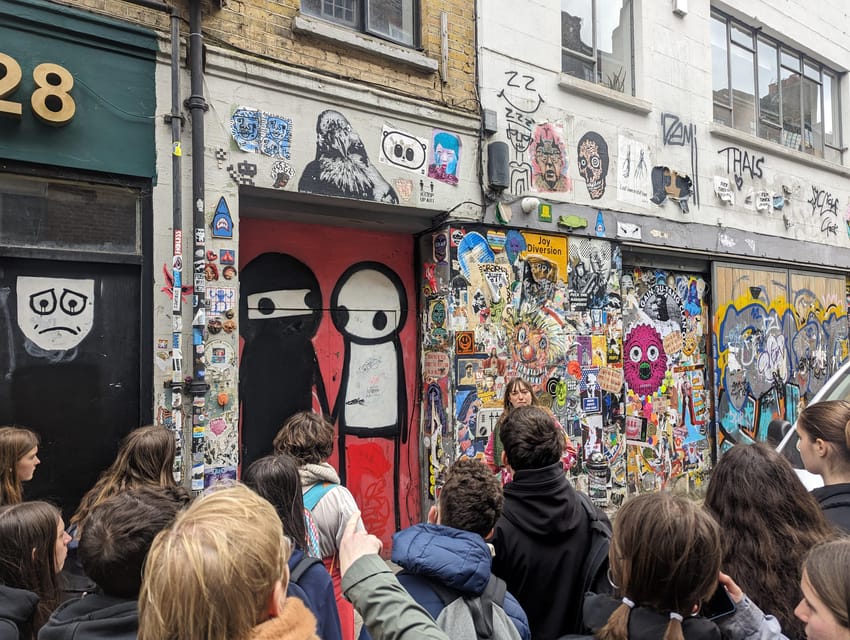
East London’s street art is not displayed in neat museum rooms. It appears on shutters, walls, signs, rooftops, pavement, and tiny corners you could pass without seeing. This two-hour walk from Old Spitalfields Market through Brick Lane and Shoreditch helps you read that visual world, with guides such as Eva, Josh, Laura, Gabi, and Natalie bringing their own experience of the scene.
I like the way the tour links the artwork to the East End’s past, rather than treating every painted wall as a photo stop. I also like the range, from large murals to stickers and small pieces by artists including Banksy, ROA, Invader, Shepard Fairey, and Stik. The main consideration is that street art changes quickly, so a particular piece may have been painted over, removed, or replaced by the time you visit.
Key points at a glance
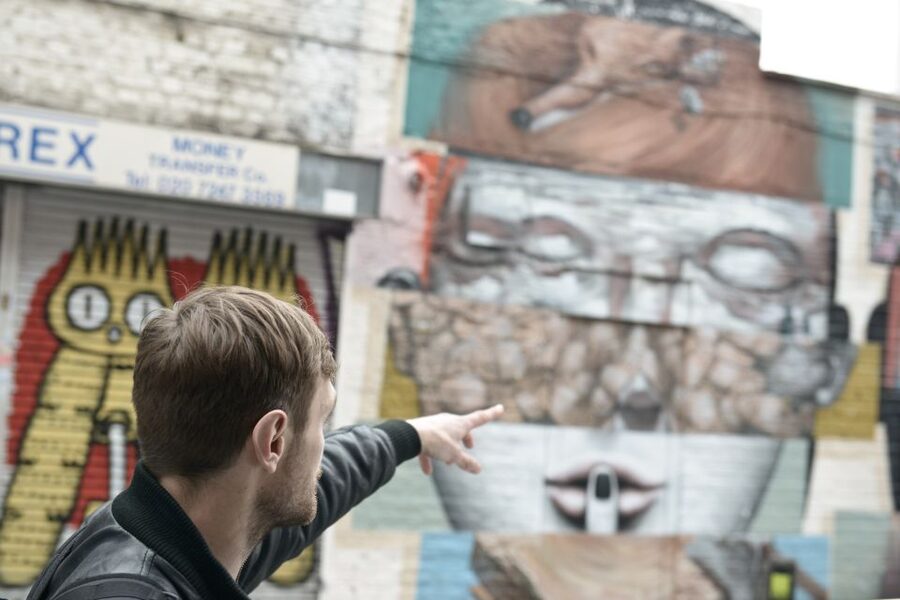
- Look beyond the famous names: You may see Banksy, but the walk also introduces roughly 40 local and international artists.
- Start at Old Spitalfields Market: Meet under the White Goat Statue on Brushfield Street, close to Liverpool Street Station.
- Hear the stories behind the walls: Guides explain artistic methods, materials, tagging culture, and the meaning behind individual works.
- Walk through Brick Lane and Shoreditch: The route combines major murals with small pieces tucked into side streets and overlooked surfaces.
- Expect a changing experience: The tour adapts as new work appears and older work disappears.
- Good for mixed groups: The relaxed pace suits first-time visitors, art fans, and families with teenagers.
Why East London is the right place for this walk

If you only see street art from a passing taxi or on the way to lunch, you miss most of it. East London rewards slow looking. A painted door may be part of a larger work, a sticker may belong to a known artist, and a plain-looking wall may have a story tied to the neighborhood’s changing identity.
The tour begins just outside the City of London, London’s historic financial district. That location gives you a useful contrast. You start near offices, old market buildings, and formal city architecture, then move toward the more openly experimental streets of Spitalfields, Brick Lane, and Shoreditch.
I find that contrast useful because street art is not simply decoration. It can be playful, political, commercial, personal, temporary, or all of those at once. A guide helps you separate a commissioned mural from an illegal tag, a carefully placed sticker from random damage, and a work made for quick impact from one designed to reward close inspection.
The tour also places the art within East London’s social story. Guides explain how the area’s culture shaped the art and how the art, in turn, helped change the way people see the neighborhood. You are not just collecting photographs. You are learning why this part of London became such a productive setting for graffiti and street art.
More Street Art Walking Tours in the UK
- Street Art Walking Tour and Workshop in London
★ 5.0 · 58 reviews - London East End – Guided Walking Tour 12 guests 2,5h
★ 5.0 · 14 reviews - London Street Art Tour of the East End Exclusive Walking Tour
★ 5.0 · 12 reviews
Meeting under the White Goat Statue
The meeting point is under the White Goat Statue on Brushfield Street, outside Old Spitalfields Market. Liverpool Street Station is the closest station, and the walk from the station is short but worth planning before you arrive.
Exit onto Bishopsgate, walk left, then turn right onto Brushfield Street between Pizza Express and the RBS building. Continue about 100 meters, and look for the statue with the white goat on top. Arrive 10 minutes before the start, since the tour moves off on time.
This is a practical meeting place, but the surrounding area is also a good early introduction. Old Spitalfields Market sits beside one of East London’s most heavily visited areas, so you can easily combine the tour with food, shopping, or more independent wandering afterward.
The experience is conducted in English. It is wheelchair accessible, although the walk takes place on public streets and the exact route can change as the art changes. Bring rain gear. London weather can turn a pleasant wall-watching walk into a damp one with little warning.
From Spitalfields toward Brick Lane
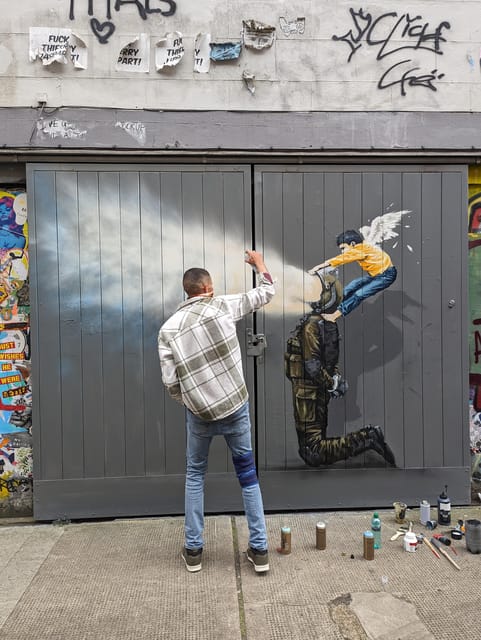
The first part of the route moves away from the market and toward Brick Lane. This transition matters. You begin by learning how to look, then gradually encounter more layers of art as the streets become a stronger focus for murals, tags, stickers, and paste-ups.
Your guide may point out work that is easy to miss at eye level or above it. Pieces can appear on signs, shutters, roofs, walls, and even the floor. Some are large enough to dominate a building. Others are tiny and placed where only people walking slowly are likely to notice them.
This is where the guides’ individual backgrounds make a difference. Natalie, for example, has worked as a street artist and is familiar with the local area. Ava also brings an artist’s perspective. Guides such as Josh, Eva, Laura, and Gabi have been praised for explaining the scene clearly while adjusting the conversation for people who know little about graffiti as well as those already familiar with hip-hop and street art culture.
You can expect explanations of materials and methods, not just artist names. Spray paint, stickers, paste-ups, and other techniques each create a different kind of relationship with the street. The guide may also explain the rules and unwritten habits of graffiti culture, which gives you a better sense of why a work is placed where it is.
Brick Lane, where the details get smaller
Brick Lane is the part of the walk most people picture when they think of East London street art. It offers large, colorful walls, but its best moments may be smaller. A sticker partly covered by another sticker can reveal a chain of artists working over time. A narrow passage may contain a piece that is less polished but more revealing of the local scene.
The tour covers work by around 40 artists, including local and international names. Banksy may be among the artists you see, but the experience is not built around a single famous stencil. That is a strength. If one well-known piece has disappeared, the walk still has plenty to discuss.
ROA, Invader, Shepard Fairey, and Stik are among the artists connected with the route. Each represents a different approach to public art. Your guide can help you notice recurring symbols, visual habits, scale, placement, and the way each artist uses the street.
Do not expect a museum-style collection where everything is preserved. The art may be weathered, partly covered, moved, or gone. That temporary quality is part of the subject. The guide works with what is present on the day, and this helps keep the route current rather than fixed around an old list of stops.
More Graffiti Tours in London:
- Shoreditch Street Art and Graffiti Tour (Private Group Booking)
★ 5.0 · 108 reviews - ADVANCED GRAFFITI STREET ART TOUR / SHOREDITCH / EAST LONDON
★ 5.0 · 23 reviews - London: East End Instagrammable Street Art & Graffiti Tour
★ 4.9 · 22 reviews - East End London Instagrammable Street Art and Graffiti Tour
★ 5.0 · 16 reviews
Shoreditch and the larger murals
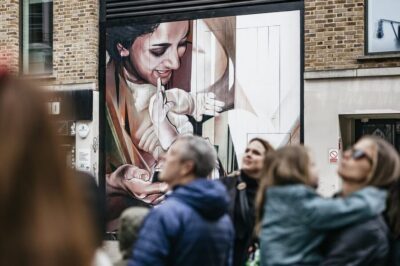
As the walk continues into Shoreditch, the scale often grows. Larger murals are easier to photograph, but they can also be harder to understand without context. A guide may explain who made the work, which materials were used, what the image may mean, and how the piece fits into the artist’s wider practice.
The guides are especially useful here because a large wall can seem straightforward at first glance. You may notice the colors and composition but miss the technical decisions or local references. The walk gives you a framework for looking, so you start noticing how art interacts with brick, windows, doors, signs, and the shape of a building.
The route is described as relaxed, and the available feedback points to a steady pace. One recent participant found the walk took about an hour and a half, while the advertised duration is two hours. Allow the full two hours, since timing can depend on the group, questions, street conditions, and how much art the guide stops to explain.
The walk is not a race from mural to mural. That is important for anyone who wants photographs of every piece, since the guide may pause for discussion rather than rushing onward. If you prefer a fast sightseeing circuit, this may feel slow. If you want to understand what you are seeing, the pace works in your favor.
The East End story behind the paint
The best part of the tour is often the connection between art and place. Guides do not treat East London’s history as a separate lecture. Instead, they use the streets and artwork to explain how the area developed and why its culture matters to the art scene.
You may hear about different periods of the East End and how they affected the people, buildings, and creative activity of the area. That background helps explain why Brick Lane and Shoreditch have become associated with alternative culture, but it also keeps the tour from reducing the neighborhood to a fashionable art district.
I like this approach because it gives you something useful after the tour ends. You begin to recognize forms of street art elsewhere in London. You may notice a sticker campaign, identify an artist’s style, or look more carefully at a wall that you previously dismissed as random graffiti.
The guide’s role is not to tell you that every mark is great art. Instead, the stronger explanations show how value, intention, risk, technique, and setting can differ from one piece to the next. That wider view is especially useful if you arrive unsure where graffiti ends and street art begins.
What guides bring to the experience
The tour provider, Alternative London, uses guides with different strengths. Eva is praised for clear explanations and for giving people pointers for exploring further. Josh has been recognized for making the subject accessible to both newcomers and people who already know hip-hop and graffiti culture.
Laura is described as able to adapt the walk to the interests of the group. Gabi has been noted for explaining artists, paints, stickers, and the history of the area in detail. Natalie’s experience as a street artist adds a personal view of the scene, while Ava’s own artistic interest helps her explain the work with energy and care.
Guide assignments can change, so you should not book expecting one particular person unless the booking information confirms it. What seems consistent is the emphasis on first-hand insight, questions, and an informal teaching style rather than a memorized list of dates.
The strongest guides make the walk feel like a conversation. They explain without sounding smug, welcome questions, and connect technical details with the culture behind the work. That matters because the subject can easily become either too academic or too superficial.
Who will get the most from two hours
This is a good choice if you have already visited London’s major sights and want a different side of the city. It also works well early in a London stay, since you can use what you learn to spot more art during the rest of your trip.
You do not need prior art knowledge. The guides explain the basics and introduce terms and customs as you go. At the same time, the tour can satisfy people who already know the scene because the commentary includes artist background, techniques, placement, and local context.
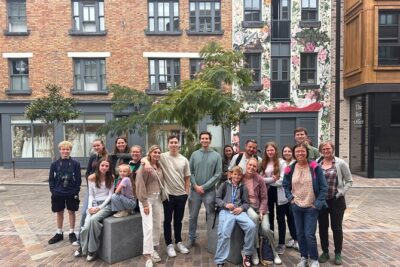
Families with teenagers should consider it seriously. One family used the walk during a school break and found it a good alternative to standard sightseeing. Another group said the experience gave teenagers ideas for their own art projects. The tour is also a sensible choice for couples looking for something more distinctive than another museum visit.
It may not suit you if you dislike walking, want a fully indoor activity, or need a guaranteed list of famous works. You also need to accept that the route is exposed to rain and city traffic, and that street art cannot be preserved like a painting in a gallery.
Is $33 good value?
At $33 per person, the tour costs more than wandering around Brick Lane with a map, but the comparison is not quite fair. You can see plenty of art for free. What you cannot easily reproduce is the guide’s knowledge of where to look, how to interpret small pieces, and how to connect the artwork with East End history.
The value is strongest for first-time visitors to the area. Without guidance, you may notice a few large murals and miss the work on shutters, signs, rooftops, and pavement. You may also see Banksy or another famous name without understanding why the piece matters or how it fits into a larger culture.
At the same time, this is not a full-day activity. Two hours is a compact commitment, and the route finishes in an area where you can continue exploring independently. For many visitors, that makes the price reasonable, especially if you treat the tour as an introduction to the neighborhood rather than the whole East London experience.
Free cancellation up to 24 hours ahead and reserve-now, pay-later booking add flexibility. These terms are useful when London plans are still moving, but the main value comes from the interpretation, not from the booking conditions.
Tour or workshop?
There are related street art and spray-painting workshop options if you want to make art rather than only study it. A shorter workshop lasts about 45 minutes to one hour and is available for people over 10. A longer version lasts about two hours with a break and is for people over 12.
You can book the walking tour and workshop separately on the same day if some people in your group want to walk while others create. Anyone under 16 joining the workshop must be accompanied by an adult throughout.
Choose this walking tour if your main goal is understanding the artists, culture, history, and streets. Choose the workshop if you want a hands-on activity. For a family with mixed interests, booking the two parts separately may be the most practical plan.
Should you book the East London street art tour?
Book it if you want to see Brick Lane and Shoreditch with a trained eye rather than simply take a few mural photographs. The strongest reasons are the guides’ first-hand experience, the mix of famous artists and overlooked pieces, and the way the walk explains East End history alongside the art.
I would especially recommend it to first-time street art visitors, curious teenagers, couples seeking an unusual London activity, and anyone who enjoys local culture more than standard sightseeing. Bring rain gear, arrive early at the White Goat Statue, and allow the full two hours.
Skip it if you need a fixed route, guaranteed Banksy sighting, or a dry indoor attraction. Street art changes, and that uncertainty is part of the deal. For $33, you are paying for the eyes and stories of the guide, which is exactly what makes this walk more useful than exploring the same streets alone.
FAQ
Where does the London street art tour meet?
Meet under the White Goat Statue on Brushfield Street, outside Old Spitalfields Market. The address is White Goat Statue, Brushfield Street, London E1 6AA.
What is the closest station?
Liverpool Street Station is the closest station. From the station, exit onto Bishopsgate, walk left, turn right onto Brushfield Street, and continue about 100 meters.
How long does the tour last?
The advertised duration is two hours. The exact timing can vary with the pace of the group, questions, and the current artwork along the route.
Which areas does the walking tour visit?
The route starts near Old Spitalfields Market and continues toward Brick Lane and Shoreditch in East London.
Which artists might I see?
The tour can include work by about 40 local and international artists, including Banksy, ROA, Invader, Shepard Fairey, and Stik. Street art changes, so individual pieces are not guaranteed.
Is the tour offered in English?
Yes. The live tour guide conducts the experience in English.
Is the activity wheelchair accessible?
Yes, the activity is listed as wheelchair accessible.
What should I bring?
Bring rain gear. The tour takes place outdoors on city streets.
Can children join the walking tour?
The walking tour information does not give a separate minimum age. Related workshop options have age rules: the shorter workshop is for ages over 10, and the longer workshop is for ages over 12.
Can I cancel the booking?
You can cancel up to 24 hours in advance for a full refund. Reserve-now, pay-later booking is also available.
More Street Art Walking Tours in London
- London: Markets, Street Art, and Camden Town Walking Tour
★ 5.0 · 5 reviews - London : Shoreditch Street Art Walking Tour
★ 3.3 · 4 reviews - Berlin: City Street Art Guided Walking Tour
★ 4.8 · 1,051 reviews - Naples Spanish Quarters Walking Tour Street Art, Folklore & Sweet
★ 5.0 · 797 reviews
Freshly painted around London
- London Street Art Tour of the East End Semi-Private 12ppl Max★ 5.0 · 23 reviews
- The Great Street Art Experience★ 5.0 · 2 reviews
- Private Royal London Bike Tour with pub & street art★ 5.0 · 2 reviews
- Shoreditch Street Art Private Photography Tour including Brick Lane★ 5.0 · 5 reviews
- 3-Hour Private Tour of East London Graffiti & Street Art★ 4.5 · 5 reviews
- London Street Art Tour of the East End Exclusive Walking Tour★ 5.0 · 12 reviews
- London Unexpected Private Tour – Markets, Street Art & Camden Town★ 5.0 · 2 reviews
- East End London Instagrammable Street Art and Graffiti Tour★ 5.0 · 16 reviews
London Street Art Tours, compared.

London Bike Tour: Landmarks, Secret Gems, Pub Stop & Street Art
Read our review →
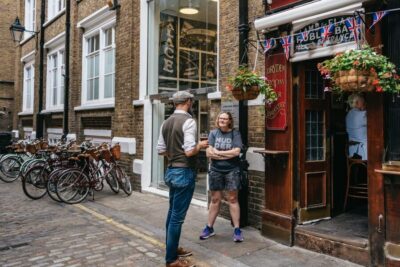
London: Landmarks & Secrets Bike Tour with Pub & Street Art
Read our review →
London: East End Street Art Tour and Spray Painting Workshop
Read our review →
Shoreditch Street Art and Graffiti Tour (Private Group Booking)
Read our review →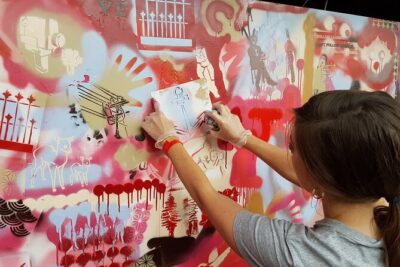
Browse the lists this tour appears in