Review · MEXICO CITY
Mexico City: Diego Rivera’s Murals Guided Walking Tour
Mexico’s history is written on public walls, and Diego Rivera gave those walls a voice. This 3.5-hour walking tour connects his murals to the Mexican Revolution, working life, politics, religion, and national identity. You are not simply looking at large paintings. You are learning why these paintings were placed where they are and who they were meant to reach.
I especially like the three-stop structure, which lets you see Rivera’s work in different settings, and the patient, personal guiding style reported from guides such as Jorge, David, Laila, and Francisco. The main consideration is timing: a late start can feel rushed when museums close around 5:30 or 6:00.
Key points at a glance
- See Rivera’s murals in several settings: Move from the Secretaría de Educación Pública to the Palace of Fine Arts and the Diego Rivera Mural Museum.
- Connect art with revolution: Your guide explains how post-Revolution Mexico used public art to educate and shape national identity.
- Expect strong guiding: Jorge, David, Laila, Leila, Francisco, and Lily have each been praised for clear explanations, warmth, flexibility, and enthusiasm.
- Allow for schedule changes: Museum closures and security rules can alter the route, sometimes leading to an alternate mural program.
- Plan for a real walk: Wear comfortable shoes, bring identification, and remember that transport and food are not included.
- Good value for serious art and history fans: At $78, the tour costs more than visiting a single museum alone, but the connections between sites are the point.
Why Rivera’s murals make such a good walking tour
Diego Rivera is often reduced to a few familiar facts: famous Mexican painter, husband of Frida Kahlo, political firebrand. That shorthand misses what makes his murals so compelling. Rivera painted for public spaces, not just private collectors. His walls were meant to reach workers, students, government employees, and ordinary people passing through a building.
That public purpose matters when you see the murals in person. A guide can point out how Rivera combines historical figures with farmers, craftsmen, soldiers, indigenous people, industrial workers, and political symbols. A scene that first looks crowded begins to read like a carefully arranged argument.
The tour also places Rivera among José Clemente Orozco and David Alfaro Siqueiros, the three artists often grouped as Mexico’s great mural painters. The focus remains on Rivera, but that wider frame helps you understand that muralism was not simply decoration. It was a major cultural response to a country rebuilding itself after revolution.
I would choose this experience if you want history explained through art rather than delivered as a string of dates. It suits you especially well if you like asking questions, comparing artistic styles, or understanding how national identity gets shaped.
More Mural Tours in Mexico
- CDMX: Xochimilco, Coyoacan, Frida Kahlo Museum & Murals Tour
★ 4.4 · 3,025 reviews - Cancun Street Food Tour with Food Stalls, Local Market and Murals
★ 5.0 · 723 reviews - Mexico City; ART NACO : Murals & Street Art Bike Tour
★ 5.0 · 284 reviews
Starting at Museo Vivo del Muralismo
The meeting point is Museo Vivo del Muralismo, which also serves as the return point. This gives the tour a clear beginning and end, though you must arrange your own way to the starting location. Transportation, meals, and drinks are not included.
From there, the route moves into central Mexico City and the buildings connected with Rivera’s mural work. You should arrive ready to walk and spend long stretches standing in front of large artworks. The tour is wheelchair accessible, but comfortable shoes still make sense for everyone.
Bring a passport or ID card. That small requirement is easy to overlook, especially if you are spending the day sightseeing, but it is listed as necessary for the experience.
The guide assigned to you may be Jorge, David, Laila, Leila, Francisco, Lily, or another member of the team. The strongest reports consistently point to guides who explain clearly, welcome questions, and adjust the pace to the group. That flexibility matters here because a mural tour can become either a thoughtful conversation or a hurried scan of painted walls.
Secretaría de Educación Pública: Rivera’s most rewarding stop
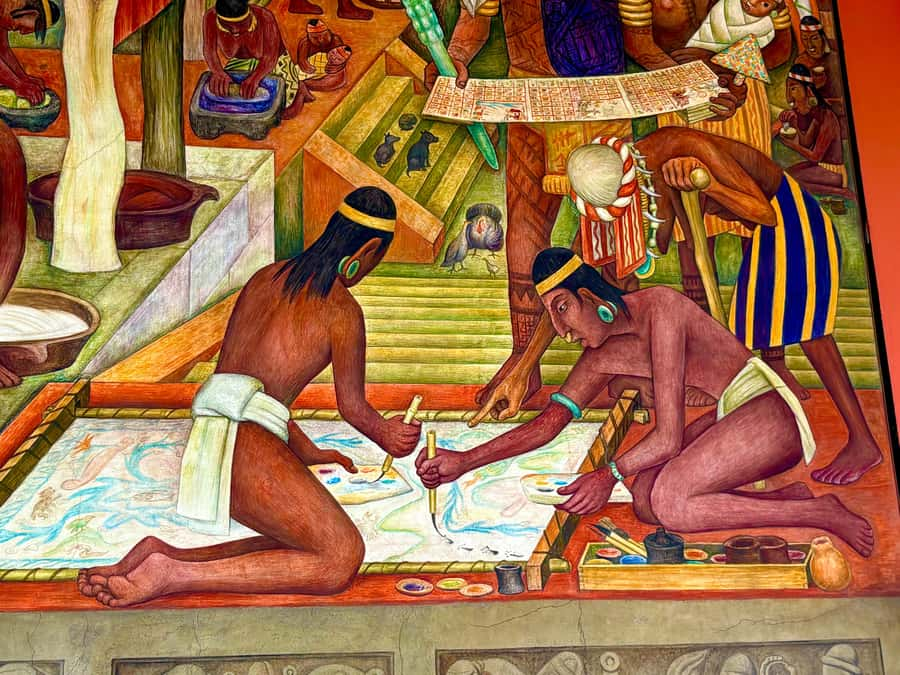
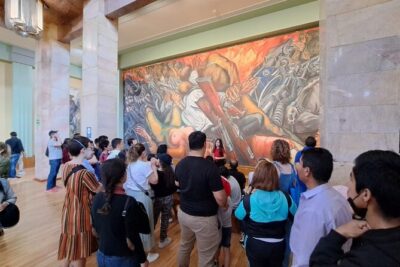
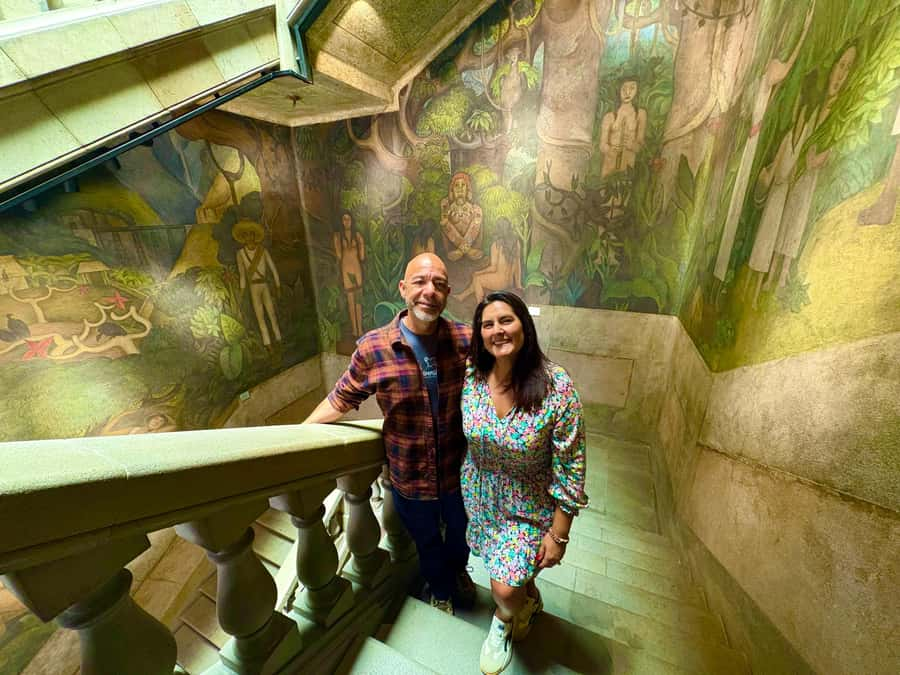
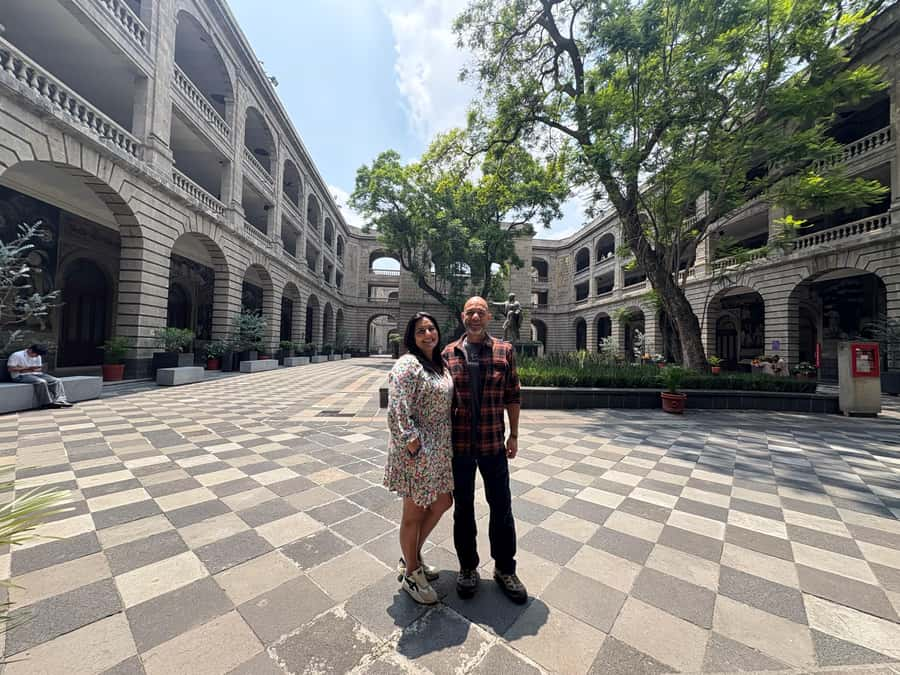
The Secretaría de Educación Pública, or SEP, is scheduled for about 90 minutes and is likely the most important stop for understanding Rivera’s approach. The building contains an extensive series of murals, so this is where you get the sustained look at how he used architecture as a setting for history.
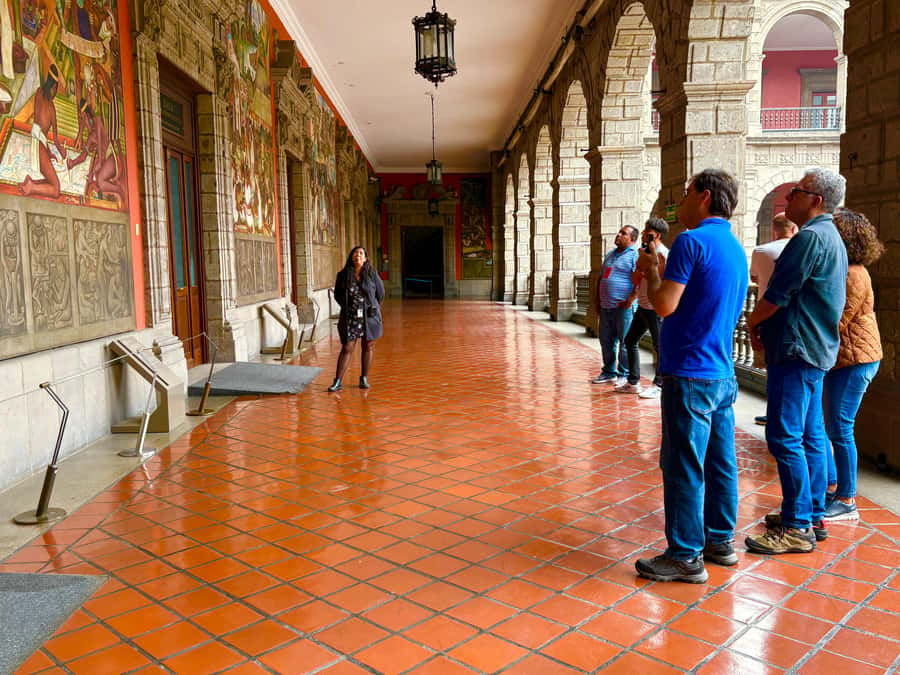
This is not a quick photo stop. Your guide can help you follow recurring ideas across the walls and explain how Rivera moved between scenes of labor, political struggle, rural life, and Mexican traditions. The amount of work here also shows why going alone can be difficult. Without help, you may notice the scale and color but miss the links between separate panels.
The setting adds to the experience. These paintings are integrated into a public building rather than isolated in a white-walled gallery. That changes how you read them. Rivera wanted art to be encountered as part of daily civic life, and the SEP helps make that goal visible.
The first stop is also where the tour’s political side becomes clearest. Rivera believed art could teach. His murals put history in front of people who might never enter an art museum, and the guide’s job is to explain both the idealism and the controversy in that project.
Plan on spending the full 90 minutes here. If you try to rush through, you will lose the benefit of the tour’s careful sequence. One useful feature of the guiding style is the willingness to answer questions beyond the basic subject, including Rivera’s relationship with Frida Kahlo and the cultural setting in which he worked.
Palace of Fine Arts and the shift from public building to museum
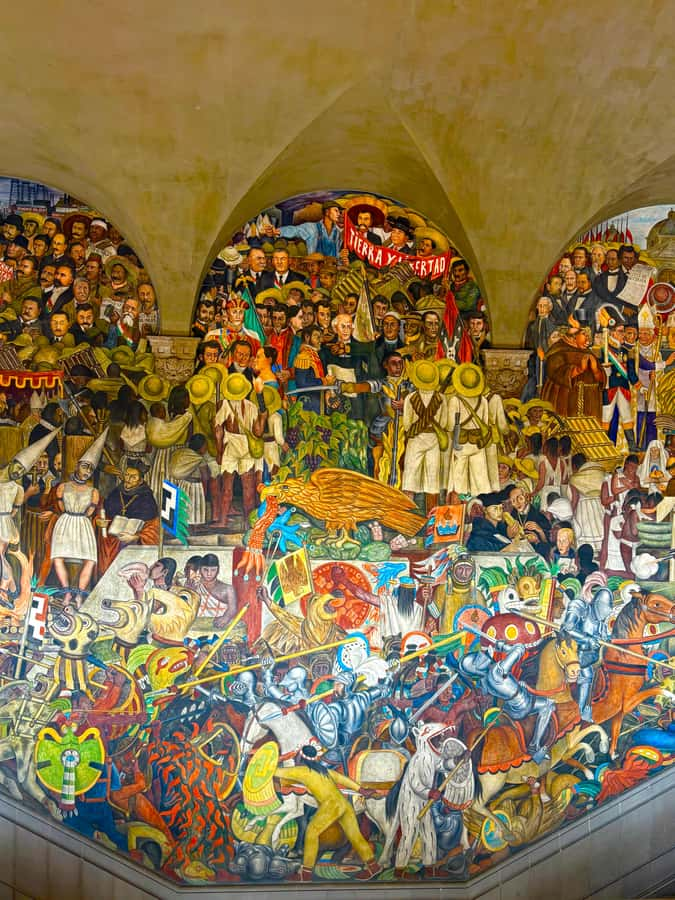
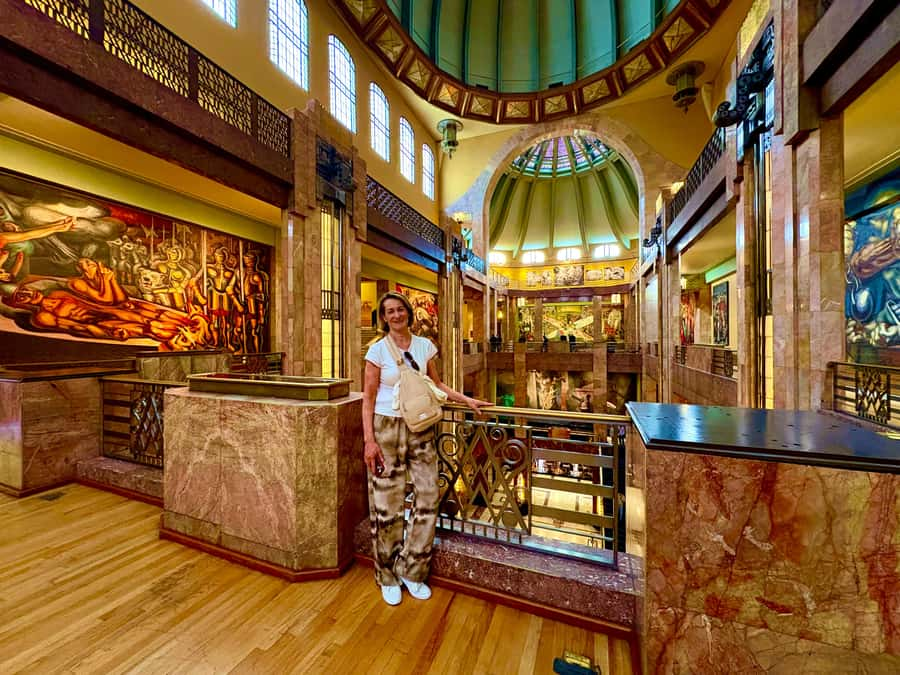
The next scheduled stop is the Palace of Fine Arts, with about 40 minutes inside. Its role in the tour is different from the SEP. Instead of walking through a broad sequence of murals in a working public building, you encounter Rivera’s art within one of Mexico City’s major cultural institutions.
Forty minutes is enough for a focused visit, but not enough for every corner of the building. That is useful to know. You are getting a guided look at selected works and their meaning, not an exhaustive tour of the entire palace.
This stop helps you compare Rivera’s presentation in different contexts. At the SEP, the murals spread through a building and speak directly to public life. At the Palace of Fine Arts, the setting places the work within a formal arts institution. Your guide can help you notice what changes when Rivera’s paintings are viewed as part of a national cultural collection.
The Palace of Fine Arts also makes this a good tour for people who are interested in architecture as well as painting. You will see how the building itself frames the experience, even though the main subject remains Rivera and the mural movement.
Keep an eye on the clock here. Several scheduling problems reported for this experience came from late starts, closures, or restricted access at major cultural sites. If you choose a starting time around 3:00, the planned 3.5 hours may run close to closing time. A 2:30 start is a safer choice when available.
More Mural Tours in Mexico City
- Walking Tour – Impressive murals in Historical Center of Mexico City
★ 5.0 · 224 reviews - Muralist Art Semi Private Walking Tour in Mexico City Downtown
★ 5.0 · 188 reviews - Mexico City: Art Naco, murals & street art bike tour
★ 4.7 · 166 reviews - Xochimilco floating gardens, Coyoacan and UNAM murals
★ 4.0 · 53 reviews
Diego Rivera Mural Museum and the final comparison
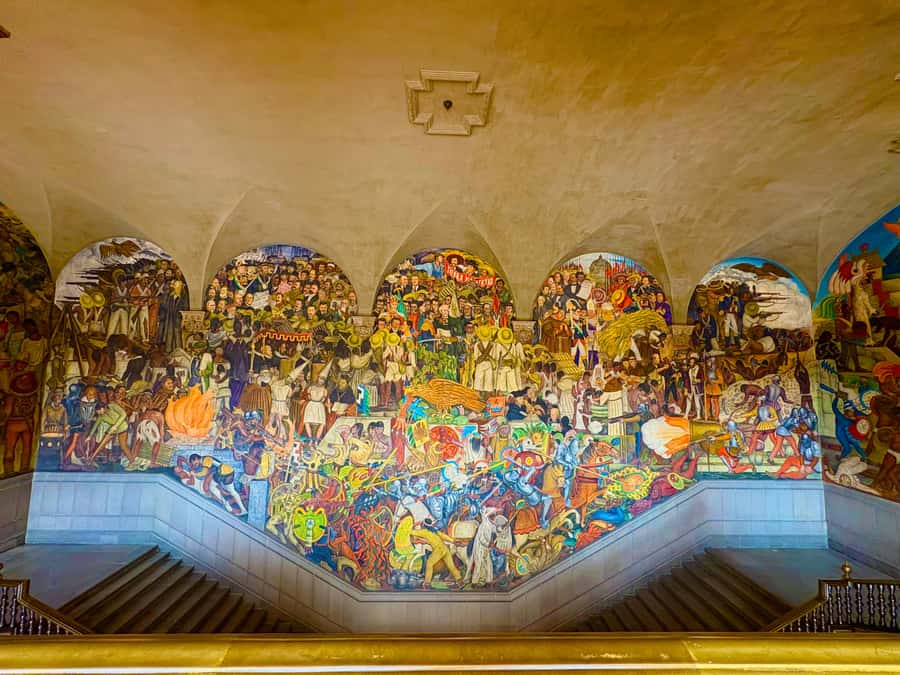
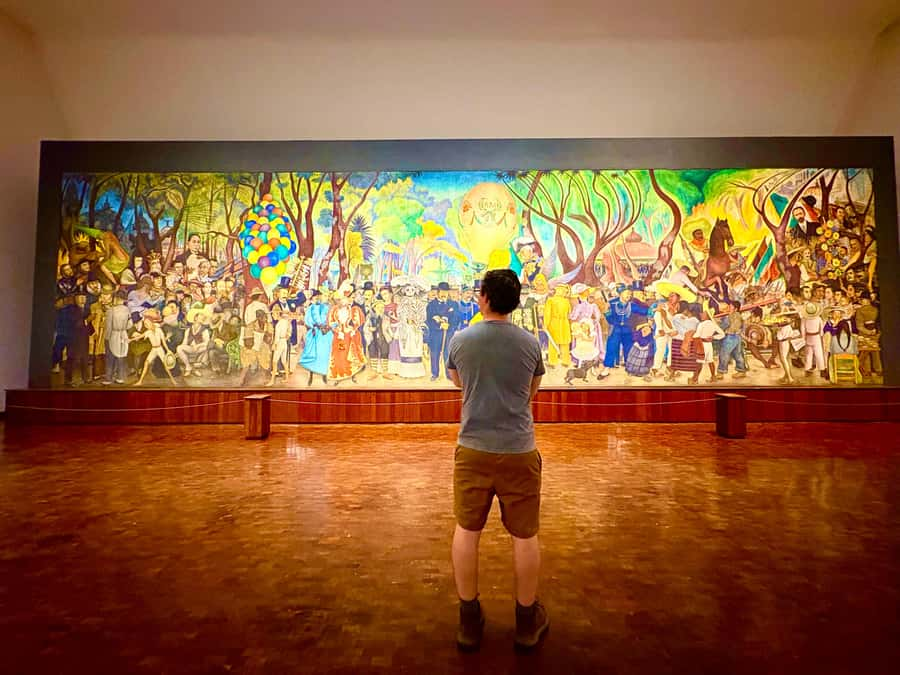
The Diego Rivera Mural Museum is scheduled for roughly 25 minutes. That may sound brief, but it gives the tour a compact final stop after the larger collections earlier in the route.
The museum is especially useful as a place to bring the story together. By this point, you have seen Rivera’s work in more than one setting and can better understand changes in his style and subject matter. The guide can point out ideas that carry from one site to another rather than treating each mural as an unrelated masterpiece.
This is also where you may appreciate the tour’s progression. You begin with a broad look at public muralism, move through major works in a formal cultural setting, then finish with a more concentrated museum visit. The schedule is busy, but it has a clear artistic logic.
Do not expect a long, leisurely museum visit at this stage. The 25-minute stop is a focused conclusion. If you prefer to study every work at your own pace, you may want to return independently later. The value here comes from having someone explain what to notice before you continue.
The history behind the walls
The Mexican Revolution is not just background information on this tour. It explains why mural painting became such a powerful tool. After the Revolution, Mexico needed ways to tell a shared national story and to bring public education into everyday spaces. Murals offered a large, direct form of communication.
Rivera’s art often presents history from the viewpoint of workers and ordinary people rather than only presidents and generals. That choice reflects the political debates of his time. His murals celebrate labor, criticize inequality, and place indigenous and rural life within the story of the nation.
The guide’s context turns visual details into useful clues. You may begin to ask who is shown, who is missing, which events are praised, and which institutions are criticized. That is a much better way to look at Rivera than simply searching for recognizable faces.
You will also hear about Rivera as an artist with strong political convictions and a complicated personal life. His connection with Frida Kahlo may come up, but the tour’s larger value is that it does not treat him as a celebrity separated from his country’s struggles.
What the guides add to the experience
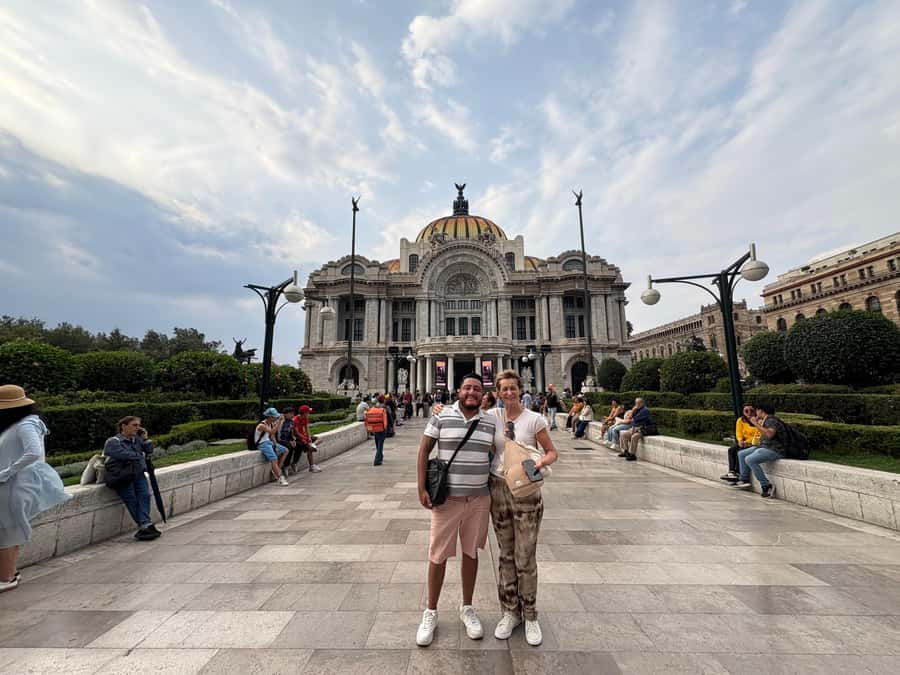
The guide is the deciding factor here. The tour covers a lot of art and history in a short time, so a guide who can organize the material clearly makes a major difference.
Jorge is described as patient, witty, generous, and good at adjusting the tour to a group’s interests. David is repeatedly praised for his broad command of Rivera and Mexican history, relaxed manner, flexibility, and willingness to continue a discussion beyond the scheduled time. Laila and Leila are described as warm, well prepared, and easy to talk with. Francisco is noted for clear speaking, careful preparation, and strong explanations. Lily is praised for making her enthusiasm for the art contagious.
You should still remember that guides vary. The assigned person is not guaranteed, and the exact pace will depend on your group. That said, the range of positive experiences suggests that the operator has several strong guides rather than relying on one individual.
The best approach is to ask questions. If you want more on Rivera’s politics, Frida Kahlo, other muralists, or Mexican culture, say so early. This is not a silent audio-guide route. Its value comes from conversation.
Timing, closures, and route changes
The published duration is 3.5 hours, with visits of about 90 minutes at the SEP, 40 minutes at the Palace of Fine Arts, and 25 minutes at the Diego Rivera Mural Museum. Walking between sites and moving through entrances takes the remaining time.
That schedule is workable, but it leaves little room for delays. Venues can close early, holidays can affect access, and security procedures may block entry to a planned location. In one case, a guide created an alternate Rivera mural route when the Museo de Muralismo was closed. In another, restricted access to the National Palace led to a return visit the next day.
Those examples show both the risk and the benefit of booking a guided experience. You might not see every planned room, but a good guide can sometimes adjust the route or help you find another way to experience Rivera’s work. No substitute is guaranteed, so keep your expectations flexible.
I would book an earlier start when possible. You will have more breathing room, especially if you want time for questions. A late afternoon departure may work, but it can turn the final part into a race against closing hours.
Is $78 a fair price?
At $78 per person, this is not the cheapest way to see Rivera’s murals. The ticket price reflects entry to all the museums and a live guide in Spanish, English, French, or German. You also avoid having to research the sites, connect the historical events, and work out what deserves your attention once inside.
The value is strongest if you are new to Mexican muralism. A self-guided visit may cost less, but you could easily miss the political message, the links between buildings, and the changes in Rivera’s style. The tour also brings you to places you might skip if you were choosing only the most famous museum.
For someone who already knows Rivera’s work well and prefers long, quiet viewing time, $78 may feel less attractive. You are paying for interpretation and a planned route, not unlimited time in each room.
The included admissions make the price easier to justify, particularly if you take advantage of the full route. Since food and transportation are separate, budget for getting to the meeting point and for any meal before or after the walk.
Who should book this mural tour?
I would recommend it to first-time visitors to Mexico City who want a strong introduction to Rivera and the mural movement. It also suits art students, history fans, and anyone who wants more than a quick photograph in front of a famous painting.
Families can make it work too. A guide handled a group that included an older woman, three children, and a stroller with patience and attention to safety. Still, three and a half hours of walking and looking at art may be demanding for very young children.
The tour is a good fit for solo visitors because the guide provides structure and conversation. It is also useful for couples or small groups who want to ask specific questions and shape the discussion around their interests.
You may want to skip it if you dislike guided visits, need a very slow pace, or want to spend most of your time at one museum. In that case, independent visits may give you more control.
Should you book it?
Book this tour if you want to understand why Rivera painted, not just where he painted. The combination of SEP, the Palace of Fine Arts, and the Diego Rivera Mural Museum gives you a useful range of settings, while a strong guide can connect the murals to revolution, politics, labor, and Mexican identity.
Choose an earlier time, wear comfortable shoes, carry identification, and leave room for schedule changes. At $78, it is a solid buy for context and access, especially if Rivera is a main reason you are visiting Mexico City.
FAQ
How long does the Diego Rivera mural tour last?
The tour lasts 3.5 hours, including visits to the Secretaría de Educación Pública, Palace of Fine Arts, and Diego Rivera Mural Museum.
Where does the tour begin and end?
It begins and ends at Museo Vivo del Muralismo.
Which museums are included?
The route includes the Secretaría de Educación Pública, the Palace of Fine Arts in Mexico City, and the Diego Rivera Mural Museum. Admission tickets to the museums are included.
What languages are available?
Live guides are available in Spanish, English, French, and German.
Is the tour wheelchair accessible?
Yes, the activity is listed as wheelchair accessible.
What should I bring?
Bring a passport or ID card. Comfortable shoes are also important because this is a walking tour.
Are food and transportation included?
No. Transportation to and from the meeting point, meals, and drinks are not included.
More Street Art Walking Tours in Mexico City
- Mexico City: Historic Center Walking Tour with Murals
★ 5.0 · 6 reviews - Mexico City: The Murals of Mexico Semiprivate Walking Tour
★ 5.0 · 2 reviews - Mexico City: History on Walls. Mexican Murals Walking Tour
★ 5.0 · 2 reviews
More Street Art Walking Tours in Mexico
- History and Murals: Walking Tour Guadalajara
★ 5.0 · 237 reviews - Guided Walking Tour Describing UNAM Murals and Revolution
★ 5.0 · 8 reviews - Street Art Walk
★ 4.5 · 7 reviews - Private Walking Tour Guadalajara History and Murals with Guide
★ 5.0 · 6 reviews
Freshly painted around Mexico
- Xochimilco floating gardens, Coyoacan and UNAM murals★ 4.0 · 6 reviews
- UNAM: Murals & Revolution★ 4.9 · 8 reviews
- Street Art & Cemetery Cultural Tour – half day★ 5.0 · 3 reviews
- Graffitis & Munchies biketour Playa del Carmen★ 4.5 · 18 reviews
- Street Art Walk★ 4.5 · 7 reviews
- Diego Rivera’s murals, hidden treasures★ 5.0 · 21 reviews
- Tour Women Muralists : Strokes that resist Mexico City★ 5.0 · 7 reviews
- Private Street Art Tour in Rome★ 4.0 · 4 reviews
Mexico City Street Art Tours, compared.

Xochimilco, Coyoacan and Frida Kahlo with Optional Lunch
Read our review →
CDMX: Xochimilco, Coyoacan, Frida Kahlo Museum & Murals Tour
Read our review →
Mexico City; ART NACO : Murals & Street Art Bike Tour
Read our review →
Walking Tour – Impressive murals in Historical Center of Mexico City
Read our review →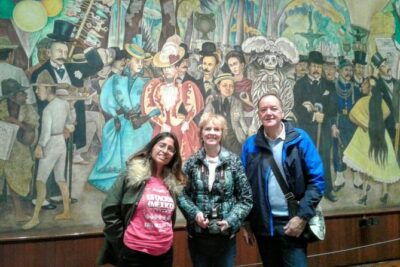
La Catrina & Muralism: Diego Rivera’s Legacy & Frida Kahlo
Read our review →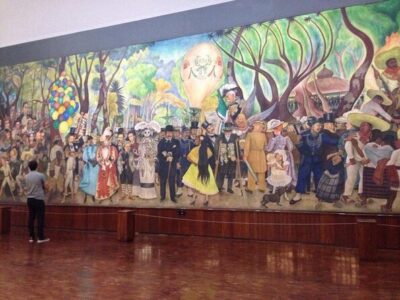
Muralist Art Semi Private Walking Tour in Mexico City Downtown
Read our review →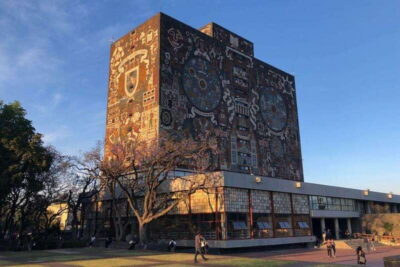
Xochimilco floating gardens, Coyoacan and UNAM murals
Read our review →