Review · MEXICO CITY
Mexico City: The Murals of Mexico Semiprivate Walking Tour
Mexico’s murals are not just wall decoration. They were a public classroom after the Revolution, carrying messages about identity, politics, work, progress, and national pride to people who might never enter a formal art museum. This three-hour walk puts that story at the center, with stops at three major cultural buildings.
I like the small group of eight or fewer, which gives you a better chance to hear the guide and ask about details on the walls. I also like that admission to all three museums is included. The main consideration is that the tour stays focused on mural art, so anyone hoping for a broad survey of Mexico City history may find the subject narrow.
Key points
- See the roots of Mexico’s mural movement in buildings tied to the country’s post-Revolution cultural program.
- Visit Antiguo Colegio de San Ildefonso, the Secretaría de Educación Pública, and Museo del Palacio de Bellas Artes.
- Learn to recognize artistic techniques, so you can identify an artist’s work in other buildings later.
- Walk only about 1.5 kilometers, but expect to be on your feet for three hours.
- Travel in a group capped at eight, with an English-speaking professional guide.
- Pay $52 per person, including museum admissions but not photography permits.
Why Mexico’s murals matter
The mural movement grew in the 1920s, after the Mexican Revolution. The new government and artists were looking for ways to express a shared Mexican identity, and large public paintings offered a direct route to ordinary people.
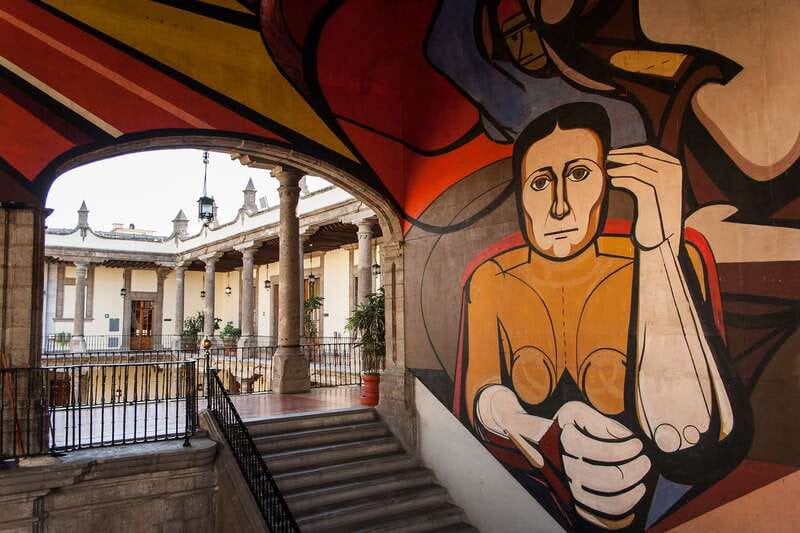
This matters when you look at the murals in person. You are not simply admiring color and scale. You are reading public statements about a country trying to define itself. The walls address culture, politics, education, work, and progress, often in a way meant to be understood without specialist training.
The tour also explains why murals became so important as a public art form. A painting in a private gallery reaches a limited audience. A mural on a government or educational building can speak to anyone who walks through the doors.
A line associated with Siqueiros captures the idea behind the movement: art should communicate plainly, without forcing people to guess what the artist means. That approach gives the tour a useful focus. Your guide is not only pointing out famous pictures. You are learning how the artwork was meant to function.
More Mural Tours in Mexico
- CDMX: Xochimilco, Coyoacan, Frida Kahlo Museum & Murals Tour
★ 4.4 · 3,025 reviews - Cancun Street Food Tour with Food Stalls, Local Market and Murals
★ 5.0 · 723 reviews - Mexico City; ART NACO : Murals & Street Art Bike Tour
★ 5.0 · 284 reviews
Starting at Santo Domingo Square
The meeting point is on the corner of Santo Domingo Square and República de Cuba Street, just outside Domingo Santo Hotel Boutique. This is a practical location in the historic center, but you should allow enough time to find the exact corner before the start.
There is no hotel pickup or drop-off. You make your own way to the meeting point, and the walking tour begins there. Since the tour takes place rain or shine, check the forecast and dress for changing weather. Comfortable shoes are essential, even though the total walking distance is modest.
The distance can be misleading. You walk about 1.5 kilometers, or roughly one mile, but the three-hour schedule includes time inside several cultural buildings. You will likely spend more time standing and looking than covering ground.
Antiguo Colegio de San Ildefonso
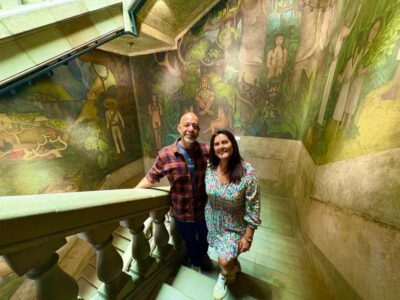
One of the included stops is Antiguo Colegio de San Ildefonso. This former college is one of the places where you begin to see how mural art developed in an institutional setting.
The building gives the guide room to explain the early goals of the movement and how artists used architecture as part of the experience. Here, scale matters. Murals occupy walls and corridors rather than small frames, so the building itself becomes part of the message.
I find this kind of stop more useful than looking at reproductions. A photograph can show the image, but it cannot fully convey how a mural relates to a staircase, doorway, ceiling, or long passage. The walk lets you consider how people encountered the art as part of their daily surroundings.
The guide also helps you look beyond the subject matter. You will be introduced to differences in technique, composition, and visual language. Those details become useful later, when you see another mural and want to work out which artist created it.
Reading the walls at the Secretaría de Educación Pública
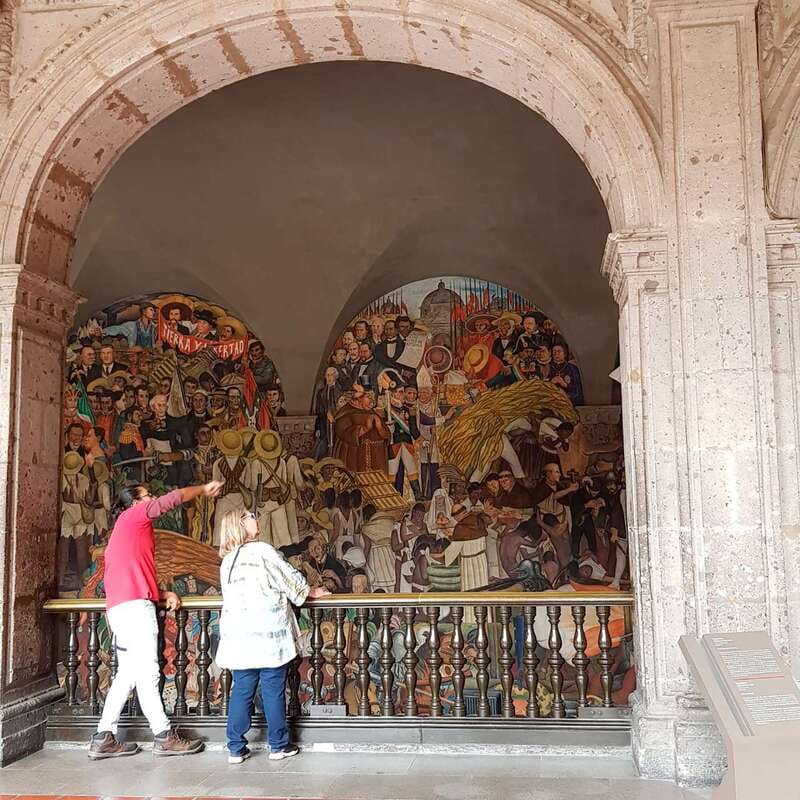
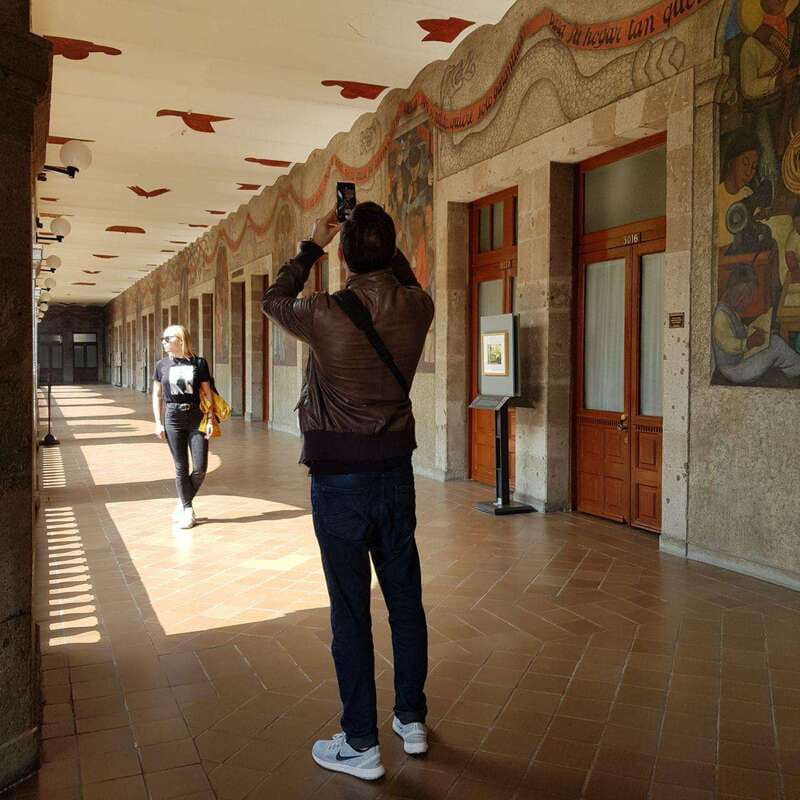
The building of the Secretaría de Educación Pública is another central stop. Its connection with public education fits the mural movement’s original purpose: bring history and civic ideas to a wide audience.
Expect the guide to connect the paintings with the political and social concerns of early 20th-century Mexico. The art is meant to inform, not simply decorate. That makes this stop especially helpful if you want to understand why murals became such a strong part of Mexican national identity.
You may find that the number of images and the density of the subject matter require concentration. The guide’s explanations help you sort the larger story from the smaller details. This is also where the small-group format has real value. With no more than eight people, it should be easier to keep up and ask a question without breaking the flow of the walk.
The tour’s goal is not to make you memorize every mural. It is to give you a visual toolkit. Once you understand how different artists handled figures, movement, scale, and political themes, you can look at public art elsewhere with more confidence.
More Mural Tours in Mexico City
- Walking Tour – Impressive murals in Historical Center of Mexico City
★ 5.0 · 224 reviews - Muralist Art Semi Private Walking Tour in Mexico City Downtown
★ 5.0 · 188 reviews - Mexico City: Art Naco, murals & street art bike tour
★ 4.7 · 166 reviews - Xochimilco floating gardens, Coyoacan and UNAM murals
★ 4.0 · 53 reviews
Museo del Palacio de Bellas Artes
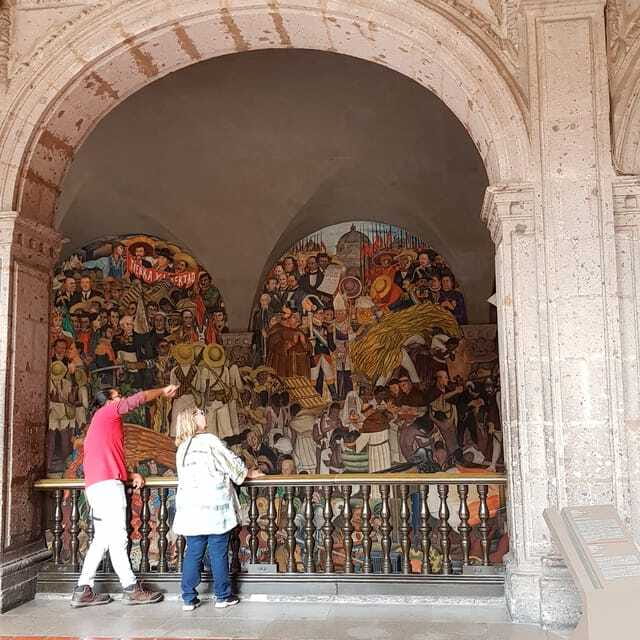
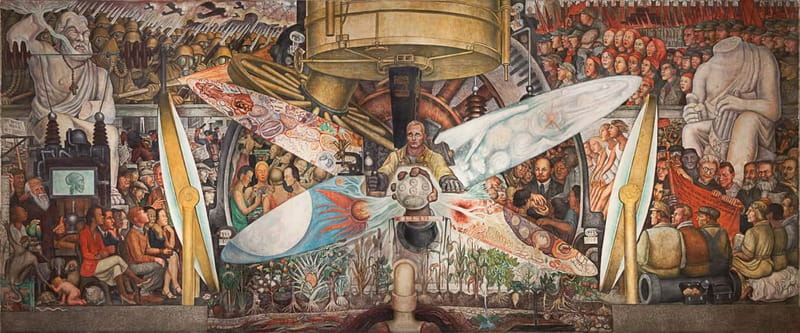
The final listed museum stop is Museo del Palacio de Bellas Artes, one of Mexico City’s best-known art institutions. The tour includes admission, so you do not need to arrange a separate museum ticket for this visit.
Here, the mural story reaches a grand setting. The museum allows the guide to place the mural movement within a wider artistic context and to compare different approaches in one of the city’s major cultural buildings.
The value of this stop is partly practical. If you are planning to visit Bellas Artes anyway, the tour helps you see it with a clear purpose rather than wandering through without a plan. You can focus on the murals, the artists’ methods, and the way public art fits into Mexico’s modern identity.
Photography permits are not included. If you want to take pictures inside the museums, you can buy a permit at the box office. That is worth knowing before you arrive, particularly if documenting the murals matters to you. Museum rules and permits can affect how freely you photograph, so do not assume that admission automatically includes photography.
Learning to recognize the artists
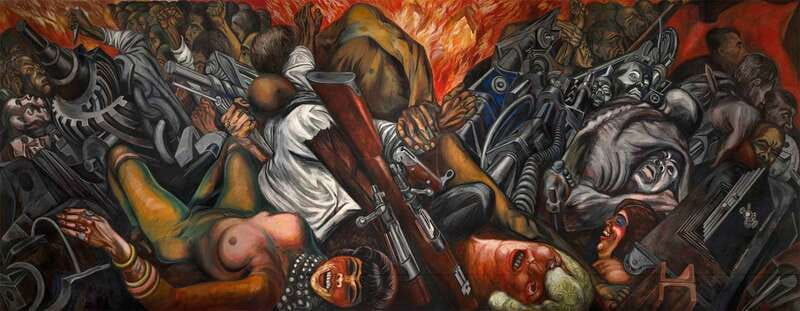
The most useful promise of the walk is not simply seeing well-known murals. It is learning to identify an artist’s work later.
The guide introduces the techniques used by different muralists and explains how those methods help separate one artist from another. You might find yourself paying closer attention to the handling of figures, the arrangement of scenes, or the way a large wall guides your eye.
The tour highlights the work of major mural artists and includes discussion of Siqueiros. An experience with Orosco was also singled out as a discovery, suggesting that his work can make a strong impression for someone encountering it through this focused route. The supplied information does not provide a full artist list, so you should treat the tour as an introduction to several artists rather than a guaranteed catalog of every major muralist.
That distinction matters. If you want a complete academic history of Mexican muralism, three hours will not cover everything. If you want a solid way to begin recognizing artists and understanding their public purpose, the format makes good sense.
Three hours, one mile, and a small group
The tour lasts three hours and covers about 1.5 kilometers. That is a gentle walking distance for many people, but the experience is not physically effortless. You will likely stand inside museums, move through public buildings, and spend time looking closely at large works.
The small group is limited to eight participants. I consider that one of the strongest practical features. A guide can explain details without shouting, and you can ask for clarification when a mural’s imagery becomes hard to follow.
The tour is wheelchair accessible, according to the activity details. Still, access within historic buildings can vary, so anyone with specific mobility needs should confirm the current arrangements before booking. The experience is not suitable for people with visual impairments because its main content depends on seeing and comparing artworks.
The walk operates rain or shine. Bring comfortable shoes and clothing suited to the weather. You do not need to prepare for a long trek, but you should be ready for a substantial period on your feet.
What the $52 price includes
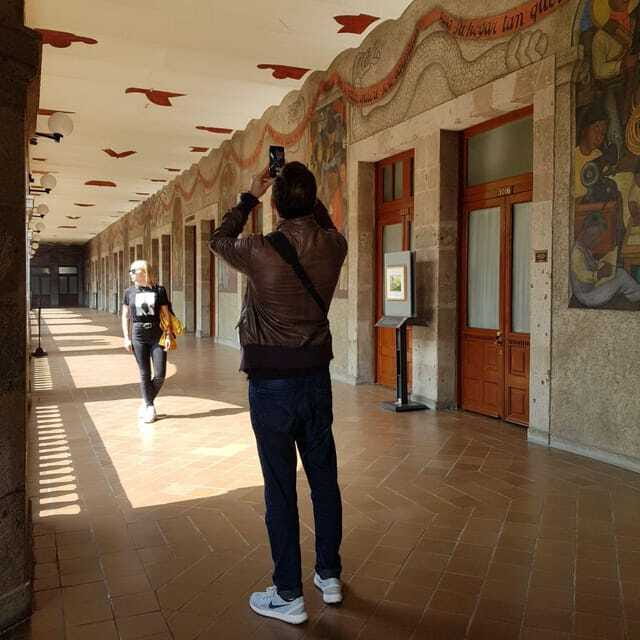
At $52 per person, the price needs to be judged against what you receive rather than the walking distance alone. The fee includes a professional English-speaking guide and admission to all the museums visited during the tour.
That makes the price more reasonable for anyone who already wants to visit the three named sites. You are paying for access, structure, and interpretation instead of arranging several museum visits and trying to connect the mural story on your own.
The guide’s role is especially important here. Without context, murals can become a stream of impressive but confusing images. The tour gives you a sequence: the movement’s origins, its public purpose, the differences in artistic technique, and the way the art expresses early 20th-century Mexico.
The cost does not include photography permits, hotel transportation, food, or other personal expenses. Since the route is only about one mile, the strongest part of the value is the guided interpretation and included museum entry, not transportation.
Who will get the most from this walk
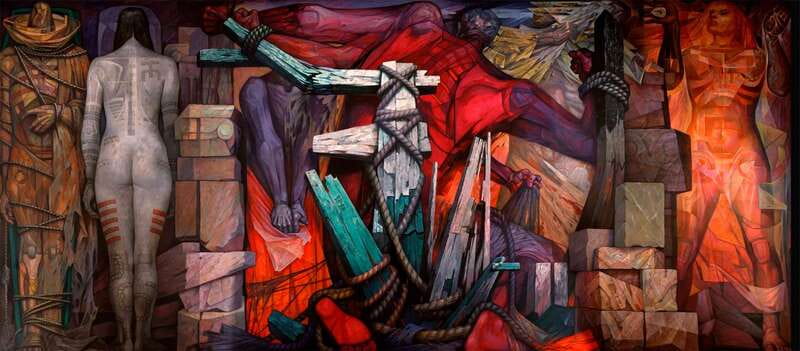
I would recommend this tour to someone who wants a focused introduction to Mexican muralism and prefers learning through actual buildings rather than a lecture. It should suit art lovers, first-time visitors to Mexico City, and anyone interested in how politics and culture appear in public art.
It also works well for people with limited time. In three hours, you visit three important locations without needing to plan a separate route between them. The guide gives the experience a clear theme, which can help you decide what to revisit later.
You may want to skip it if murals are not a major interest, if you want a general historic-center walking tour, or if you prefer exploring museums at your own pace. The schedule is built around explanation and comparison, not unstructured browsing.
The English-language format is useful for visitors who want detailed interpretation without relying on translations. The group size also keeps the experience personal without making it a private tour.
Booking, cancellation, and practical details
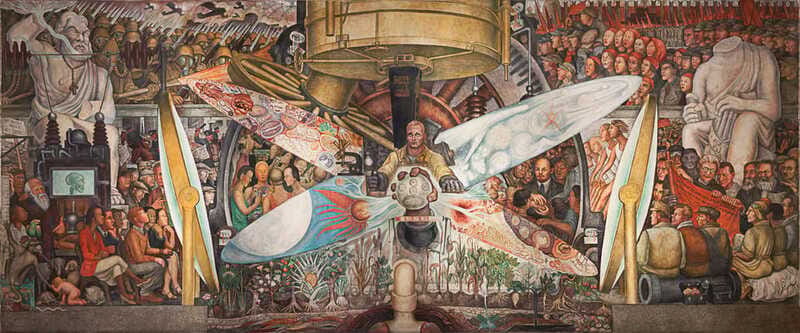
You can reserve now and pay later, which is helpful if your Mexico City schedule is still changing. Free cancellation is available up to 24 hours in advance for a full refund.
Starting times vary, so check availability for your preferred date. The tour is offered in English with a live guide.
Meet outside Domingo Santo Hotel Boutique at Santo Domingo Square and República de Cuba Street. Bring comfortable shoes, prepare for rain or sun, and remember that photography permits inside the museums must be purchased separately at the box office.
Should you book the murals tour?
Book this experience if you want a focused, three-hour introduction to the art that helped shape modern Mexican identity. The combination of three museum stops, included admission, a group of eight or fewer, and an English-speaking guide gives the tour a strong practical case at $52.
The best reason to choose it is the chance to learn a method for reading murals, not just to collect photographs. You should pass if you want a broad Mexico City overview or dislike standing indoors for extended periods.
For an art-minded visitor with comfortable shoes and a free half day, this is a useful way to see the city’s public art with purpose.
FAQ
How long is the Mexico City mural tour?
The tour lasts three hours.
How far will I walk?
You will walk about 1.5 kilometers, or one mile.
What is the price per person?
The price is $52 per person.
Where does the tour meet?
Your guide will wait at the corner of Santo Domingo Square and República de Cuba Street, outside Domingo Santo Hotel Boutique.
Is the tour conducted in English?
Yes. The experience includes a live professional guide in English.
How large is the group?
The tour is limited to eight participants.
Which museums are included?
Admission is included for Antiguo Colegio de San Ildefonso, the building of the Secretaría de Educación Pública, and Museo del Palacio de Bellas Artes.
Are photography permits included?
No. Photography permits are not included, but they can be purchased at the box office.
Is the tour wheelchair accessible?
The activity is listed as wheelchair accessible. It is not suitable for people with visual impairments.
More Street Art Walking Tours in Mexico City
- Mexico City: Historic Center Walking Tour with Murals
★ 5.0 · 6 reviews - Mexico City: History on Walls. Mexican Murals Walking Tour
★ 5.0 · 2 reviews
More Street Art Walking Tours in Mexico
- History and Murals: Walking Tour Guadalajara
★ 5.0 · 237 reviews - Mexico City: Diego Rivera’s Murals Guided Walking Tour
★ 5.0 · 49 reviews - Guided Walking Tour Describing UNAM Murals and Revolution
★ 5.0 · 8 reviews - Street Art Walk
★ 4.5 · 7 reviews
Freshly painted around Mexico
- Xochimilco floating gardens, Coyoacan and UNAM murals★ 4.0 · 6 reviews
- UNAM: Murals & Revolution★ 4.9 · 8 reviews
- Street Art & Cemetery Cultural Tour – half day★ 5.0 · 3 reviews
- Graffitis & Munchies biketour Playa del Carmen★ 4.5 · 18 reviews
- Street Art Walk★ 4.5 · 7 reviews
- Diego Rivera’s murals, hidden treasures★ 5.0 · 21 reviews
- Tour Women Muralists : Strokes that resist Mexico City★ 5.0 · 7 reviews
- Private Street Art Tour in Rome★ 4.0 · 4 reviews
Mexico City Street Art Tours, compared.

Xochimilco, Coyoacan and Frida Kahlo with Optional Lunch
Read our review →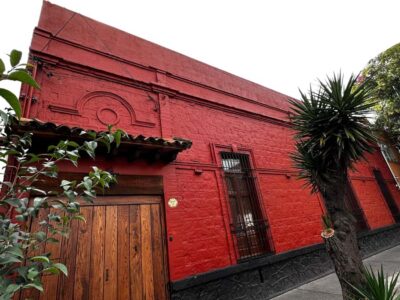
CDMX: Xochimilco, Coyoacan, Frida Kahlo Museum & Murals Tour
Read our review →
Mexico City; ART NACO : Murals & Street Art Bike Tour
Read our review →
Walking Tour – Impressive murals in Historical Center of Mexico City
Read our review →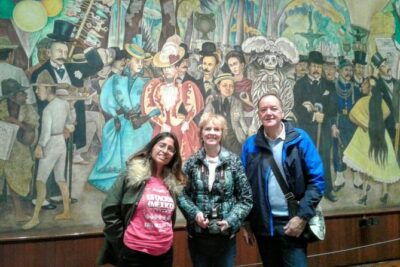
La Catrina & Muralism: Diego Rivera’s Legacy & Frida Kahlo
Read our review →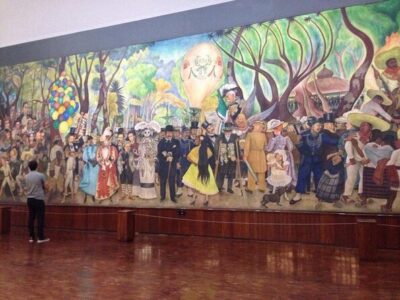
Muralist Art Semi Private Walking Tour in Mexico City Downtown
Read our review →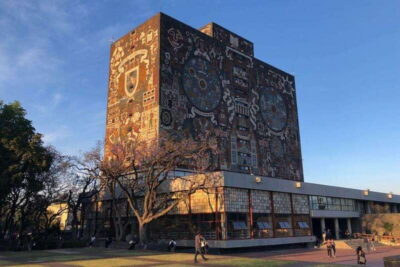
Xochimilco floating gardens, Coyoacan and UNAM murals
Read our review →