
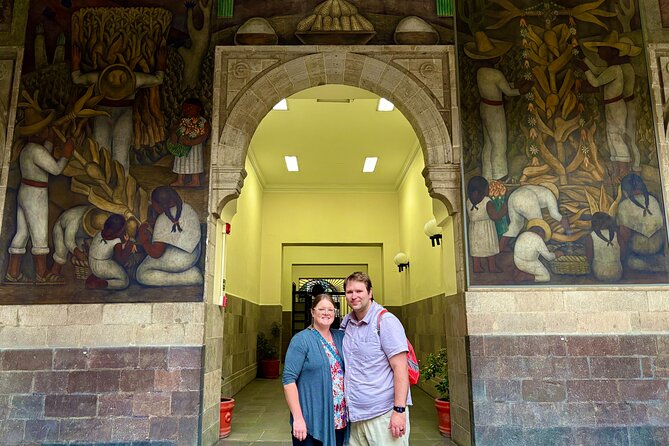
Review · MEXICO CITY
Diego Rivera’s murals, hidden treasures
Mexico City’s best Rivera experience is not one painting in one museum. It is the way this tour connects three very different mural settings: a former government school, the grand Palacio de Bellas Artes, and a compact museum built around one sweeping scene of Mexican history. You see Rivera’s art, but you also see what he thought Mexico should remember.
I like the tour’s tight focus and its small maximum of 15 people. I also like the human touch reported from guides David and Laila, who explain the pictures rather than simply point at them. The main drawback is timing: three one-hour stops can feel brisk, especially at the Public Education Secretariat, where there is a great deal to absorb.
Key points to know before booking
- The Public Education Secretariat holds the tour’s biggest mural collection, with works by Rivera and several other Mexican artists.
- Bellas Artes shows the replica of Man at the Crossroads, the famous mural destroyed in New York after a dispute with the Rockefeller family.
- The Diego Rivera Mural Museum centers on one major mural, a packed visual account of Mexican history.
- David and Laila are named guides associated with strong tour experiences, including clear explanations and flexible help.
- The $80.60 price includes admission and a guide, making the cost easier to judge as a museum-focused half-day outing.
- The tour lasts about three hours and returns to its starting point, with a maximum group size of 15.
Three stops that explain Rivera better than one museum can
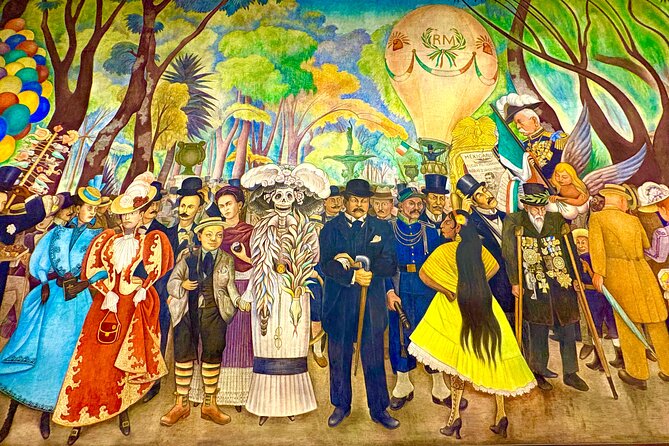
This tour works because each stop gives you a different way to read Diego Rivera. At the Museo Vivo del Muralismo, you see murals in a setting tied to public education and national identity. At Bellas Artes, you see Rivera’s work in Mexico’s grandest cultural setting. At the Diego Rivera Mural Museum, you get one concentrated painting that gathers people and events from Mexico’s past.
That order also gives the experience a useful rhythm. The first stop is broad and full of material. The second supplies a famous controversy and a dramatic setting. The third brings the focus back to one mural and its cast of historical figures.
I would not book this simply to collect photographs of Rivera paintings. The value is in understanding the ideas behind them: labor, inequality, revolution, education, identity, and the way ordinary people appear in national stories.
More Mural Tours in Mexico
- CDMX: Xochimilco, Coyoacan, Frida Kahlo Museum & Murals Tour
★ 4.4 · 3,025 reviews - Cancun Street Food Tour with Food Stalls, Local Market and Murals
★ 5.0 · 723 reviews - Mexico City; ART NACO : Murals & Street Art Bike Tour
★ 5.0 · 284 reviews
Start at República de Argentina 28
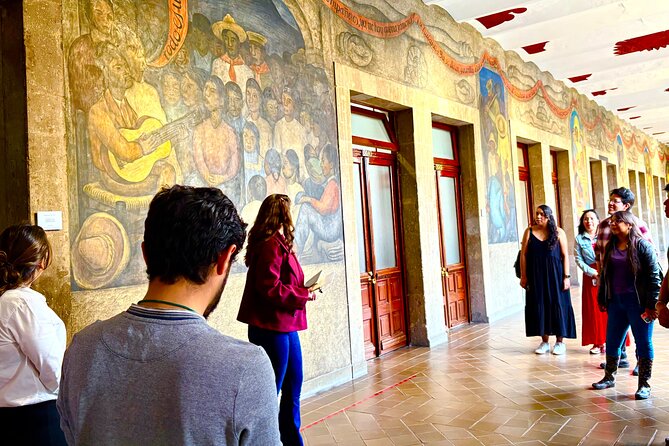
The tour begins at the Museo Vivo del Muralismo, at República de Argentina 28 in Mexico City’s Centro Histórico. The activity ends at this same meeting point, so you do not need to arrange a separate pickup or figure out a distant final stop.
The location is near public transportation, which helps if you are moving around central Mexico City on your own. Confirmation arrives at booking, and the tour is offered in English. One supplied experience was a Spanish-language booking, so if language matters especially to you, check the language selected when reserving.
With a maximum of 15 people, the group is small enough for a guide to keep the explanation personal. That matters in mural museums, where a large group can block sightlines or make it hard to hear. Still, the published three-hour length leaves little room for a long independent look at every work.
The Museo Vivo del Muralismo: Rivera’s broad public vision
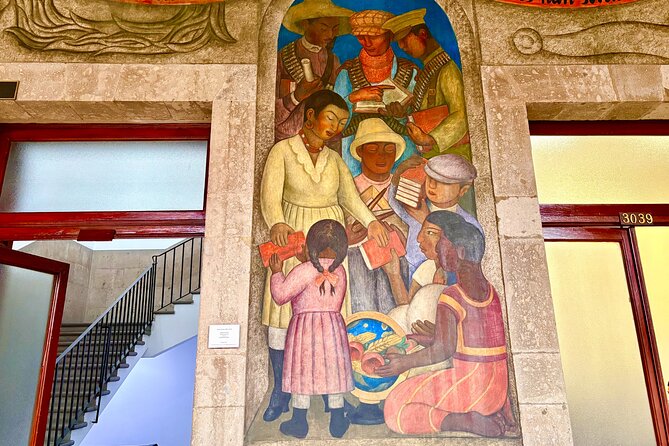
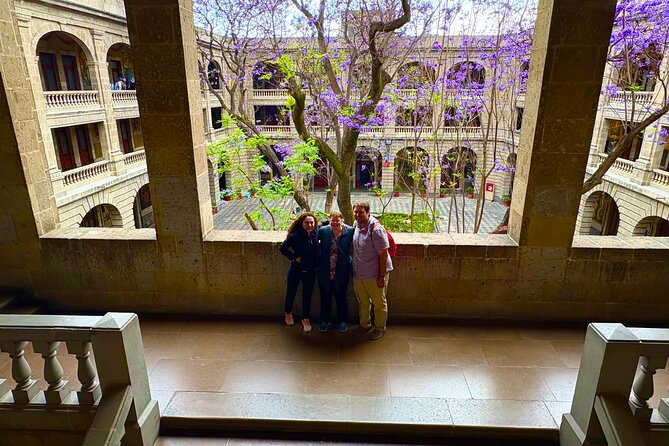
The first stop lasts about an hour and is the tour’s main source of Rivera murals. The Museo Vivo del Muralismo, located in the Public Education Secretariat, contains the largest number of Diego Rivera murals on this route.
This is not just a room of isolated paintings. The murals address the struggles and hopes of Mexican people through scenes of trades, festivals, traditions, education, cultural missions, revolution, inequality, and identity. Those subjects give your guide plenty to explain, and they show why muralism was designed for public places rather than only for private collectors.
You can expect the discussion to place Rivera’s work in the setting of his return from Europe. The tour presents this site as a way to understand how he saw Mexico after coming home, including his interest in the country’s workers, communities, and national story.
Rivera is not the only artist represented here. Works are also associated with David Alfaro Siqueiros, Roberto Montenegro, Amado de la Cueva, Jean Charlot, Federico Canessi, and Manuel Felguérez. That makes this stop useful even if you already know Rivera’s name well. You get a wider view of Mexican muralism rather than treating Rivera as an isolated genius.
The possible snag is the admission arrangement. Entry to the Museo Vivo del Muralismo depends on availability at the scheduled date and time and can change without notice because of circumstances outside the tour operator’s control. The tour lists admission here as free, but you should still understand that access is not presented as an absolute guarantee.
Give this stop your full attention. It is the place where the tour’s themes are introduced, and the one hour can pass quickly. If you enjoy social history, public art, or the way governments use art to shape a national story, this will likely be your most rewarding stop.
Bellas Artes and the mural that caused a public fight
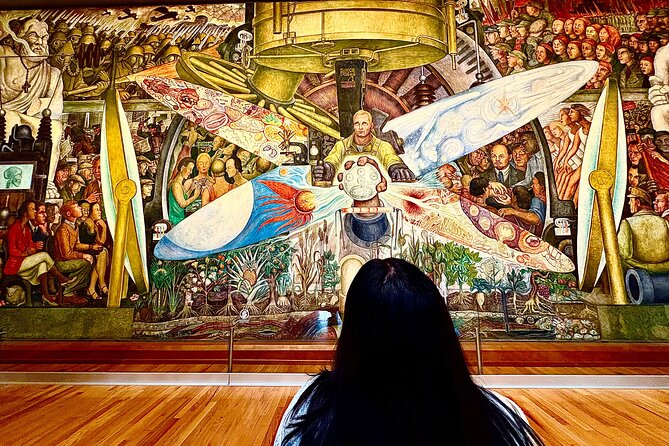
The second stop is Palacio de Bellas Artes, Mexico’s most important cultural site, and admission is included. You spend about an hour here, looking at the replica of Rivera’s controversial Man at the Crossroads mural.
The original was destroyed in New York after the Rockefeller family objected to its political content. Its replacement in Mexico City gives you a chance to see the composition and understand why the work caused such a dispute. The subject, a man controlling the universe, links art with questions about power, technology, politics, and who gets to control the future.
This is a different experience from the SEP murals. The first stop asks you to read many scenes across a public building. Bellas Artes gives you a single famous work with a dramatic backstory. Your guide can help connect the image to Rivera’s political outlook and to the larger question of whether public art should challenge the people who pay for it.
The setting also matters. Bellas Artes is a major cultural landmark, so the hour here is not only about Rivera. You are seeing his work in a formal national arts center, a sharp contrast with the more direct public purpose of the murals at the Public Education Secretariat.
The tradeoff is that this stop may feel less intimate than the first and third. You are visiting a major cultural site, not a small private room. Your experience will depend on how much time the group has and how the guide handles the explanation. If you want to study every detail of the mural at length, three hours for the full tour may not be enough.
Still, this is an essential stop for anyone interested in the clash between art, money, and politics. The destroyed New York mural is not merely a footnote in Rivera’s career. It gives the whole tour a clear example of how his images could carry ideas that powerful patrons did not want on their walls.
More Mural Tours in Mexico City
- Walking Tour – Impressive murals in Historical Center of Mexico City
★ 5.0 · 224 reviews - Muralist Art Semi Private Walking Tour in Mexico City Downtown
★ 5.0 · 188 reviews - Mexico City: Art Naco, murals & street art bike tour
★ 4.7 · 166 reviews - Xochimilco floating gardens, Coyoacan and UNAM murals
★ 4.0 · 53 reviews
The Diego Rivera Mural Museum: one wall, many chapters of Mexico
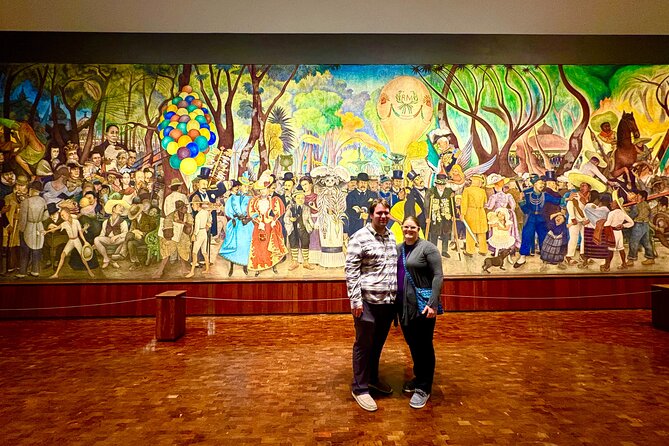
The final stop is the Museo Mural Diego Rivera, where the focus narrows to one major mural. The museum houses Rivera’s History of Mexico, a work that brings figures from Mexican history together in one scene.
After the large collection at the SEP and the political drama of Bellas Artes, this is a good closing stop. You can look at a single composition and consider how Rivera arranged people, events, and symbols into one account of the nation.
The appeal is not simply the number of characters. Rivera’s method asks you to see history as something made by people, not just by dates and famous names. The tour’s earlier subjects, including revolution, inequality, identity, and the yearnings of the Mexican people, give you useful questions to carry into this final mural.
This museum is described as a hidden treasure in Mexico City, but the practical point is more important than the label: it provides a concentrated encounter with Rivera’s storytelling. If you prefer one powerful work to a large collection, this may be your favorite stop.
You have about an hour here. That is enough for a guided explanation and a considered look, but do not expect a leisurely museum afternoon. The tour ends back at the original meeting point, so you can continue exploring central Mexico City afterward.
What the guides add to the paintings
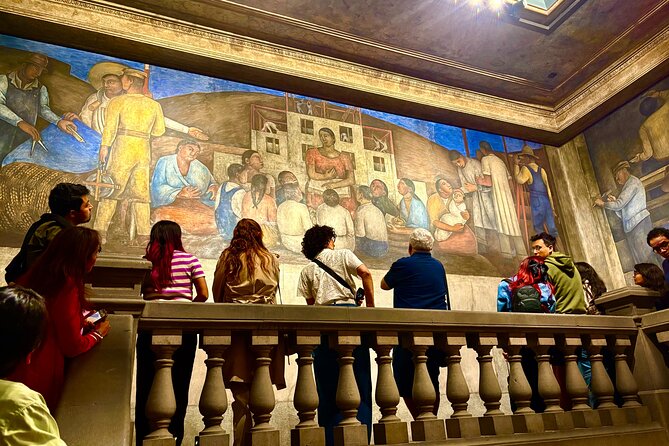
The strongest part of this experience is the guide’s role. David is praised for being an excellent ambassador, flexible, engaging, and able to make the history feel alive. Laila is also associated with a spirited explanation of Rivera’s life and the meaning of the murals. One Spanish-language experience included suggestions for food and museums around the city, along with small gifts.
Those details point to the kind of guide who can make this tour more than a sequence of entrances. Rivera’s murals are crowded with people and symbols. Without context, you may notice the colors and scale but miss why a worker, teacher, soldier, or political figure appears where he does.
A good guide also helps link separate works. After this tour, paintings by Rivera that you have already seen may make more sense because you can place them within his larger view of Mexican society. That is the real reason to choose a guided visit instead of walking into the museums alone.
Guide quality can vary on any scheduled departure, so I would not assume that David or Laila will lead your particular group. Their names are useful because they show the level of subject knowledge and personal attention the experience can provide, not because they are guaranteed assignments.
Is $80.60 a fair price?
The cost is $80.60 per person. That includes all listed entrance fees and the guide, while tips are not included.
For a three-hour activity, the price is not a bargain if you are measuring only time. You are paying a premium over visiting a single museum independently. The better question is what the guide adds: a planned route through three Rivera sites, explanations of the political and social themes, and admission handled as part of the experience.
The value is strongest if you are new to Mexican muralism or want a clear framework for Rivera’s work. It is also useful if you have limited time in Mexico City and would rather see three connected sites than spend a full day arranging museum visits yourself.
The value is weaker if you already know Rivera’s work well, prefer to read wall text at your own pace, or want long stretches of quiet viewing. The one-hour limit at each stop can feel short for serious art study.
The small group size helps justify the price. A maximum of 15 people is more manageable than a large coach group, especially when the guide is explaining busy mural scenes. I would view the fee as payment for interpretation and structure, not simply transportation or entry.
Who should book this mural tour?
I recommend it for first-time visitors to Mexico City who want an introduction to Rivera without spending a full day in one museum. It also suits art lovers who want social and political context rather than a basic list of dates and titles.
The tour is a good fit if you enjoy:
- Public art with a political message
- Mexican history presented through people and daily work
- Small-group guiding
- Seeing several central cultural sites in one outing
- A clear three-hour plan with admissions included
It may not suit you if you want to linger over each mural, avoid guided explanations, or need a completely fixed first stop. Admission to the Museo Vivo del Muralismo is subject to availability, and the tour can change if circumstances outside the operator’s control affect access.
Most people can participate, and service animals are allowed. The activity is near public transportation, but the supplied details do not specify a private vehicle, hotel pickup, or the amount of walking between sites. Ask before booking if those details are important to you.
Free cancellation is available when you cancel at least 24 hours before the start time. Cancellations or changes made less than 24 hours ahead are not accepted for a refund.
Should you book it?
Book this tour if you want Rivera’s murals explained as part of Mexico’s public life, not just admired as large paintings. The best reasons are the three-site route, the included admission, the small group limit, and the chance to see Man at the Crossroads alongside Rivera’s broader work.
I would skip it if you want an unhurried museum day or already have a strong grasp of Rivera and Mexican muralism. For everyone else, $80.60 buys a focused introduction with enough variety to show why Rivera’s art still sparks arguments about power, identity, and who gets to tell a country’s story.
FAQ
How long does the Diego Rivera mural tour last?
The tour lasts approximately three hours.
Where does the tour begin?
It begins at the Museo Vivo del Muralismo, República de Argentina 28, Centro Histórico de la Ciudad de México, Centro, Cuauhtémoc, 06020 Ciudad de México, CDMX, Mexico.
Where does the tour end?
The activity ends back at the original meeting point.
Is admission included in the price?
Yes. All listed entrance fees are included.
Is a guide included?
Yes. A guide is included with the experience.
What language is the tour offered in?
The tour is offered in English. One supplied experience was booked in Spanish, so check the selected language when making your reservation.
How many people can join the tour?
The activity has a maximum group size of 15 people.
Is the Museo Vivo del Muralismo always available?
Admission is subject to availability on the scheduled date and time. It may vary or change without notice because of circumstances beyond the operator’s control.
Can I cancel for a full refund?
Yes, if you cancel at least 24 hours before the experience start time. Cancellations or changes made less than 24 hours before the start time are not accepted for a refund.
More Muralism Tours around Mexico
- Xochimilco, Coyoacan and Frida Kahlo with Optional Lunch
★ 4.5 · 7,320 reviews - La Catrina & Muralism: Diego Rivera’s Legacy & Frida Kahlo
★ 4.5 · 197 reviews - Mexico City: Diego Rivera’s Murals Guided Walking Tour
★ 5.0 · 49 reviews - Mexico City: Xochimilco Coyoacan, Frida Kahlo & UNAM Murals
★ 4.8 · 16 reviews
Freshly painted around Mexico
- Xochimilco floating gardens, Coyoacan and UNAM murals★ 4.0 · 6 reviews
- UNAM: Murals & Revolution★ 4.9 · 8 reviews
- Street Art & Cemetery Cultural Tour – half day★ 5.0 · 3 reviews
- Graffitis & Munchies biketour Playa del Carmen★ 4.5 · 18 reviews
- Street Art Walk★ 4.5 · 7 reviews
- Tour Women Muralists : Strokes that resist Mexico City★ 5.0 · 7 reviews
- Private Street Art Tour in Rome★ 4.0 · 4 reviews
- Private Street Food & Mural Art Tour in Mexico City★ 3.5 · 3 reviews
Mexico City Street Art Tours, compared.

Xochimilco, Coyoacan and Frida Kahlo with Optional Lunch
Read our review →
CDMX: Xochimilco, Coyoacan, Frida Kahlo Museum & Murals Tour
Read our review →
Mexico City; ART NACO : Murals & Street Art Bike Tour
Read our review →
Walking Tour – Impressive murals in Historical Center of Mexico City
Read our review →
La Catrina & Muralism: Diego Rivera’s Legacy & Frida Kahlo
Read our review →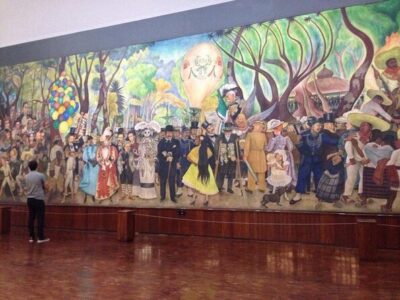
Muralist Art Semi Private Walking Tour in Mexico City Downtown
Read our review →
Xochimilco floating gardens, Coyoacan and UNAM murals
Read our review →
Mexico City: Diego Rivera’s Murals Guided Walking Tour
Read our review →Browse the lists this tour appears in