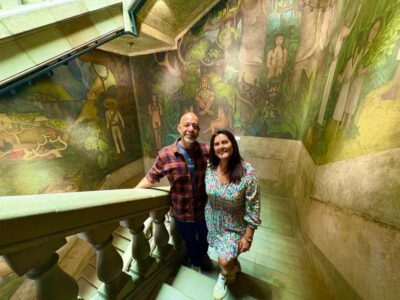
Review · MEXICO CITY
Guided Walking Tour Describing UNAM Murals and Revolution
UNAM’s campus is more than a university. It is an open-air lesson in Mexican art, architecture, politics, and student life. This two-hour walk brings that story together through Juan O’Gorman’s Biblioteca Central, murals by Siqueiros, Chávez, Eppens, and others, plus the stadium linked to the 1968 Olympic Games.
I like the focused route and the chance to hear the campus explained by a bilingual guide rather than simply wandering past its artwork. I also like the small maximum group of 15, which should make it easier to hear explanations and ask questions. The main drawback is the short running time: UNAM is a large campus, so this tour gives you a selected introduction rather than a complete visit.
Key points about this UNAM walking tour
- O’Gorman’s Biblioteca Central: Begin with one of Mexico City’s most recognizable university buildings and its striking exterior artwork.
- Major muralists in one walk: See work connected with Siqueiros, Chávez, Eppens, and other artists.
- 1968 at the Olympic stadium: Connect the university with the Olympic Games and Diego Rivera’s mural.
- A guide-led history lesson: Fernando is noted for explaining the university’s construction, development, and political past.
- Small-group format: The tour accepts no more than 15 people, a useful limit for a walking discussion.
- Simple two-hour plan: The route starts and ends at the same meeting point, with no admission fees listed for the stops.
Why UNAM works so well as a walking tour
The National Autonomous University of Mexico, usually called UNAM, offers a rare mix of public art and living academic space. You are not visiting a single museum with objects arranged behind glass. You are walking through a functioning university campus where architecture, murals, sports, and national memory share the same setting.
That matters because the art makes more sense when you see its surroundings. A mural on a university building is tied to education, public life, and political ideas. The stadium is not just a sports venue. It opens a discussion about Mexico in 1968 and the way major national events intersected with the university.
I find this kind of tour useful when a place seems difficult to read on your own. A campus can feel spread out, and the meaning of large murals is not always obvious from a quick glance. A guide can point out what deserves attention, then connect separate buildings into one story.
The tour is offered in English, and the included guide is bilingual. Fernando is identified as one guide for the experience, with a particular strength in explaining the university’s construction, later development, and the events associated with 1968. If you want art history with a wider social and political frame, that focus should suit you well.
More Mural Tours in Mexico
- CDMX: Xochimilco, Coyoacan, Frida Kahlo Museum & Murals Tour
★ 4.4 · 3,025 reviews - Cancun Street Food Tour with Food Stalls, Local Market and Murals
★ 5.0 · 723 reviews - Mexico City; ART NACO : Murals & Street Art Bike Tour
★ 5.0 · 284 reviews
Biblioteca Central and Juan O’Gorman’s bold first chapter
The first stop is UNAM Biblioteca Central, with about 20 minutes devoted to the building. Admission is free, so your time here goes toward looking and listening rather than dealing with a ticket line.
The building is described as an important architectural work by Juan O’Gorman. That makes it a strong opening stop. You begin with a structure that can be appreciated visually, then use the guide’s explanation to understand why it belongs in a tour about revolution, art, and the development of the university.
Give yourself time to look beyond the basic shape of the building. The value of a guided visit here is not only identifying the architect. It is learning how the library fits into the university’s larger vision and how architecture can carry ideas about education and Mexican identity.
Twenty minutes is enough for an introduction, but it is not a long architectural study. If you are especially interested in O’Gorman, you may want to return to the library after the tour and spend more time observing it at your own pace. The organized visit helps you get oriented, while a second look lets you linger.
This is also a practical first stop because it gives the group a clear point of reference. The tour begins near the Rectoría de la UNAM, at Ciudad Universitaria in Coyoacán, and the library helps establish the scale and character of the campus before the route moves into its wider mural program.
One hour with Siqueiros, Chávez, Eppens, and more
The longest part of the experience is the mural section, planned for about one hour. That tells you where the tour places its main emphasis. Instead of treating the murals as a quick photo stop, the route gives the guide time to discuss several artists and explain how their work fits into the university setting.
You will see murals associated with David Alfaro Siqueiros, José Chávez Morado, Francisco Eppens, and others. The supplied details do not identify every individual mural or building, so I would not book this expecting a precise catalog of every artwork on campus. Book it for a guided introduction to the mural tradition at UNAM.
The range of artists is a strong point. Different muralists can bring different styles and concerns, and seeing several works in one walk gives you a better sense of how public art functions across the university. The guide’s role is especially useful here because large murals can be visually overwhelming. You may notice color and scale first, while the explanation helps you consider subject, purpose, and setting.
This part should appeal to you if you enjoy art with a civic purpose. It is not presented as a narrow art lecture detached from daily life. The murals are part of the university, and the tour links them to the institution’s construction and development.
Still, keep the timing in mind. One hour sounds generous, but a campus mural route can cover a fair amount of ground. Some people will want to stop for photographs or study details closely. If that is your style, you may feel the schedule moving faster than you prefer. The benefit is that the guide keeps the route coherent and prevents the visit from becoming an unplanned search for buildings.
The Olympic stadium and Mexico in 1968
The final stop is Estadio Olímpico Universitario, with about 30 minutes set aside for it. Here the guide discusses the 1968 Olympic Games and Diego Rivera’s mural, giving the tour a clear historical close.
This stop broadens the experience. You are no longer looking only at buildings and murals. You are considering how UNAM relates to a major international event and to a charged period in Mexico’s modern past. The supplied description specifically connects the stadium with 1968, so the discussion is an important part of the tour rather than an optional aside.
Diego Rivera’s mural adds another artistic connection. Earlier, you have encountered work by Siqueiros, Chávez, Eppens, and others. At the stadium, Rivera becomes part of the story, helping tie the campus’s public art together across different sites and artists.
Thirty minutes is a sensible amount of time for a focused explanation, but again, it is not enough for every possible subject. If you want a full study of the Olympics, Rivera, or the events surrounding 1968, you will need additional time elsewhere. This tour gives you a foundation and a set of reference points.
I especially like the way this final stop gives the walk a clear arc. You start with architecture, move through mural art, and finish with a stadium where sport, art, and national history meet. That structure makes the two-hour experience feel purposeful rather than like a series of unrelated campus stops.
More Mural Tours in Mexico City
- Walking Tour – Impressive murals in Historical Center of Mexico City
★ 5.0 · 224 reviews - Muralist Art Semi Private Walking Tour in Mexico City Downtown
★ 5.0 · 188 reviews - Mexico City: Art Naco, murals & street art bike tour
★ 4.7 · 166 reviews - Xochimilco floating gardens, Coyoacan and UNAM murals
★ 4.0 · 53 reviews
What the two-hour format means for your day
The tour lasts approximately two hours and returns to its original meeting point. That makes it easy to fit into a Mexico City day, especially if you want a guided introduction without committing to a full-day excursion.
The meeting point is listed at Rectoría de la UNAM, Ciudad Universitaria, in Coyoacán. The site is near public transportation, which is helpful because you can plan your arrival around the campus rather than relying on a private vehicle. The exact route between stops is not described in detail, so allow enough time to reach the starting point and avoid arriving at the last minute.
This is a walking experience, so wear shoes you can use comfortably for two hours. That is simple advice, but it matters more on a large university campus than it would on a short museum visit. The tour details do not promise a break, a meal, or transportation between stops.
The maximum group size is 15 people. That is not a private tour, but it is small enough to preserve a conversational feel. You should have a better chance of hearing the guide than you would in a large group, and questions should be manageable. The tradeoff is that the pace may be set by the group as a whole.
Most people can participate, according to the activity information. No special accessibility details are supplied, so if you have specific mobility needs, confirm the route before booking. The tour includes the bilingual guide, while tips are not included.
Is the $53.46 price fair?
At $53.46 per person, this is not the cheapest way to see a university campus. Its value depends on how much you want interpretation rather than simple access.
The stops themselves have no admission charge listed. You are paying mainly for the guide’s time, the planned route, and the explanations connecting architecture, murals, the Olympics, and 1968. If you already know UNAM well and are comfortable researching the murals on your own, the price may feel high for a two-hour walk.
I think the price makes more sense for a first visit. UNAM can be hard to understand as a collection of separate buildings and artworks. The tour gives you a clear introduction and helps you decide which parts deserve a longer return visit. A good guide also saves you from spending time finding the right locations without context.
The strongest value comes if you care about Mexican muralism, modern architecture, or the political story of the university. Fernando’s approach, as described, includes the construction and development of UNAM as well as the 1968 events. That wider framing gives the walk more substance than a route focused only on taking pictures.
Who should book this experience?
I would choose this tour if you want an efficient first look at UNAM and prefer learning through conversation. It fits visitors who enjoy public art, architecture, Mexican history, and the connection between cultural institutions and national events.
It should also work well for people who do not want a long excursion. Two hours is enough to gain a sense of the campus without using an entire morning or afternoon. The English offering is useful if you want the explanations in English, while the bilingual format supports the guide’s ability to discuss the setting in both languages.
Families and mixed-interest groups may find the route useful because it covers several subjects. One person can focus on murals, another on architecture, and another on the Olympics. The walk does not depend on having a specialist background.
I would be more cautious if you want a slow, highly detailed art study or a private pace. The group can include up to 15 people, and the itinerary covers three major sections in two hours. Serious art students may want longer with each mural, while independent visitors may prefer to explore without a fixed schedule.
The experience is booked, on average, about 20 days ahead. That does not guarantee availability on every date, but it suggests that planning ahead is sensible, especially if your Mexico City schedule is tight.
Should you book the UNAM mural and revolution tour?
Book it if you want a compact, guided introduction to UNAM’s art and political story. The combination of O’Gorman’s library, murals by major Mexican artists, and the Olympic stadium gives the route a useful range. The guide’s attention to construction, university development, and 1968 is the feature I would value most.
Skip it if you mainly want free time for photography or an exhaustive study of every mural. The two-hour schedule is selective, and the price is for interpretation rather than admission.
For most first-time visitors interested in Mexico City’s architecture and public art, this is a sensible way to make UNAM readable. Just arrive ready to walk, keep your expectations focused, and remember that the tour is an introduction, not the final word on the campus.
FAQ
How long is the UNAM mural and revolution tour?
The experience lasts approximately two hours.
Where does the tour start and finish?
It starts at Rectoría de la UNAM, Ciudad Universitaria, in Coyoacán, Mexico City. The activity ends back at the meeting point.
Is the tour offered in English?
Yes. The experience is offered in English and includes a bilingual guide.
What places are included?
The route includes UNAM Biblioteca Central, the university murals, and Estadio Olímpico Universitario.
Are admission tickets included?
The listed stops have no admission ticket charge. The experience includes the bilingual guide, but tips are not included.
How many people can join the tour?
The maximum group size is 15 people. Most people can participate, and the meeting point is near public transportation.
More Street Art Walking Tours in Mexico City
- Mexico City: Historic Center Walking Tour with Murals
★ 5.0 · 6 reviews - Mexico City: The Murals of Mexico Semiprivate Walking Tour
★ 5.0 · 2 reviews - Mexico City: History on Walls. Mexican Murals Walking Tour
★ 5.0 · 2 reviews
More Street Art Walking Tours in Mexico
- History and Murals: Walking Tour Guadalajara
★ 5.0 · 237 reviews - Mexico City: Diego Rivera’s Murals Guided Walking Tour
★ 5.0 · 49 reviews - Street Art Walk
★ 4.5 · 7 reviews - Private Walking Tour Guadalajara History and Murals with Guide
★ 5.0 · 6 reviews
Freshly painted around Mexico
- Xochimilco floating gardens, Coyoacan and UNAM murals★ 4.0 · 6 reviews
- UNAM: Murals & Revolution★ 4.9 · 8 reviews
- Street Art & Cemetery Cultural Tour – half day★ 5.0 · 3 reviews
- Graffitis & Munchies biketour Playa del Carmen★ 4.5 · 18 reviews
- Street Art Walk★ 4.5 · 7 reviews
- Diego Rivera’s murals, hidden treasures★ 5.0 · 21 reviews
- Tour Women Muralists : Strokes that resist Mexico City★ 5.0 · 7 reviews
- Private Street Art Tour in Rome★ 4.0 · 4 reviews
Mexico City Street Art Tours, compared.

Xochimilco, Coyoacan and Frida Kahlo with Optional Lunch
Read our review →
CDMX: Xochimilco, Coyoacan, Frida Kahlo Museum & Murals Tour
Read our review →
Mexico City; ART NACO : Murals & Street Art Bike Tour
Read our review →
Walking Tour – Impressive murals in Historical Center of Mexico City
Read our review →
La Catrina & Muralism: Diego Rivera’s Legacy & Frida Kahlo
Read our review →
Muralist Art Semi Private Walking Tour in Mexico City Downtown
Read our review →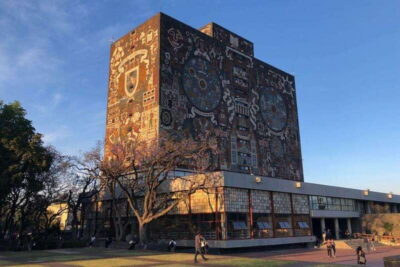
Xochimilco floating gardens, Coyoacan and UNAM murals
Read our review →