
Review · LISBON
Lisbon Street Art Lovers Walk
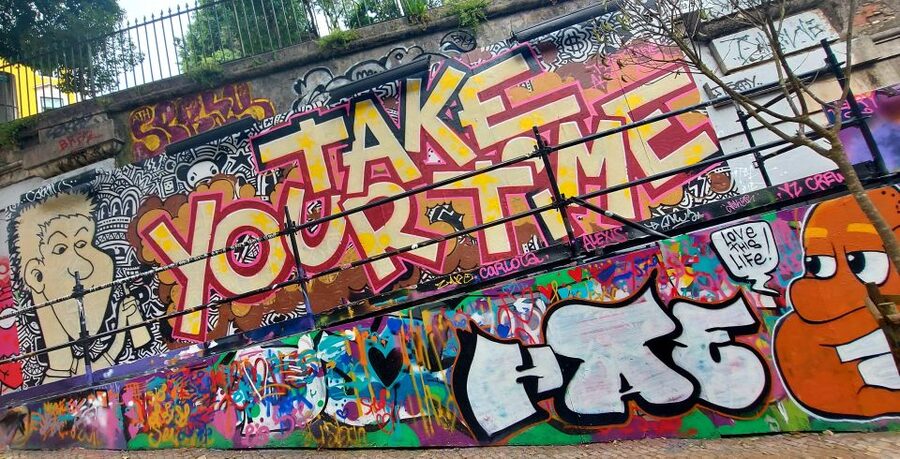
Lisbon’s walls tell a second story of the city. This walk takes you from the old Mouraria quarter toward Graça, pointing out legal murals, quick graffiti pieces, large wall paintings, and the social issues behind them. I like the small groups of up to eight and the way the route mixes famous names such as Vhils and Shepard Fairey with local artists and lesser-known work.
I also like that your fee helps support the yesyoucan.spray street art collective, rather than treating the city’s art as a free backdrop. The main drawback is the uphill walking: Lisbon’s seven hills are not a polite metaphor, and you should expect stairs, slopes, sunshine, and nearly a full day’s steps.
Key points at a glance
- Mouraria to Graça: Follow a route through two of Lisbon’s most characterful old neighborhoods, ending near the Miradouro da Graça.
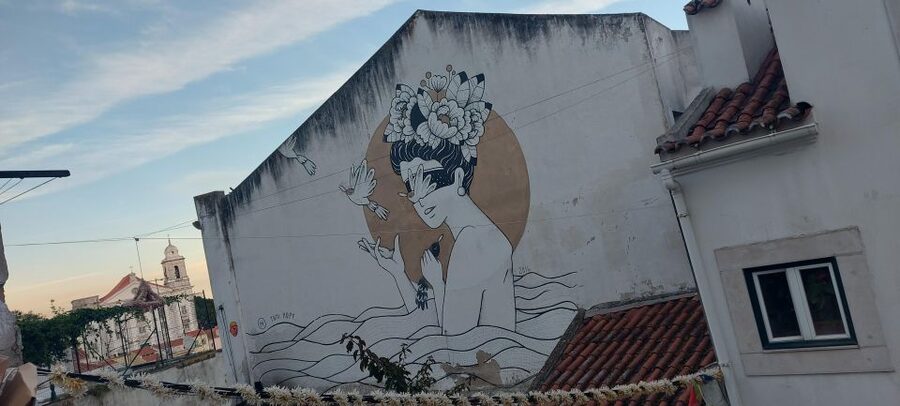
- Artists with very different styles: See and discuss work linked to Vhils, Shepard Fairey, Bordalo II, Add Fuel, PichiAvo, Camilla Watson, and others.
- Art with a social message: The guide explains political, economic, and social issues behind Lisbon’s street art and graffiti.
- A true walking tour: The route covers alleys, squares, stairs, and hills, so comfortable shoes and water matter.
- Small and personal: Groups are limited to eight, with live guiding in English or French.
- Useful extras: You receive a #whatsuplisboa card, city guide suggestions, and support for new projects through yesyoucan.spray.
Why Lisbon’s street art deserves a closer look
Lisbon is often sold through tiled façades, yellow trams, lookout points, and pastel buildings. Those are worth your time, but the city’s street art adds another layer. Here, walls can speak about migration, housing, politics, city change, local identity, and the everyday character of a neighborhood.
That makes this more than a photo walk. You are not simply stopping at colorful walls and moving on. The guide explains how different artists use stencils, spray paint, tile-like patterns, large-scale painting, collage, and sculptural materials. You begin to notice the difference between a carefully planned mural and a quick piece painted for the moment.
I especially like the educational but relaxed approach. You learn while walking, rather than standing through a formal lecture. The tour is designed for several kinds of people: a serious street art fan, someone seeing Lisbon for the first time, or a curious visitor who simply wants a fresh way to understand the city.
The 4.8 rating from 57 reviews reflects the tour’s strongest qualities: clear explanations, enthusiastic guides, and a route that shows Lisbon away from the standard sightseeing circuit. One guide named Ben is himself an artist, which gives him a useful connection to the work. His ability to explain both the pictures and the artists adds weight to the walk.
More Street Art Tours around Lisbon:
- Lisbon: Street Art Tour
★ 4.9 · 1,324 reviews - Lisbon: Kickstart Street Art Walking Tour
★ 4.9 · 717 reviews - Lisbon: Street Art Tuk Tuk Tour
★ 4.9 · 372 reviews
Starting in Mouraria, where the city feels most human
The route begins in or around Mouraria, depending on the option you book. This old, multicultural district is a fitting place to start because its streets bring together many parts of Lisbon’s identity. Small pieces may appear beside larger paintings, and Portuguese traditions sit alongside newer influences from many communities.
Mouraria is not arranged like an outdoor gallery. You move through ordinary streets, alleys, and squares. Some art may be tucked above eye level or placed on a wall you could otherwise ignore. That is part of the appeal. The guide trains your eyes to look at the whole street, not just the obvious painted wall.
Expect the first part of the walk to focus on how the neighborhood’s people and traditions shape its visual character. The art is treated as part of daily life, not a separate attraction sealed off from the rest of Lisbon.
This also means conditions can vary. Pavement, stairs, slopes, and narrow passages are part of the route. If you have limited mobility, ask about the private options before booking. A stroller is not recommended because of the stairs.
Reading the walls with the guide
The value of the walk depends heavily on the person leading it. You receive a live guide in English or French, and the group limit of eight should make it easier to ask questions or stop without losing the thread.
The guide covers both internationally known and Lisbon-based artists. Names connected with the route include Shepard Fairey, Vhils, Bordalo II, Andrea Tarli, Ozearv, PichiAvo, Add Fuel, Camilla Watson, and Mario Belem. You should not expect every artist to appear on every version of the route, since work changes and the exact path depends on the option booked.
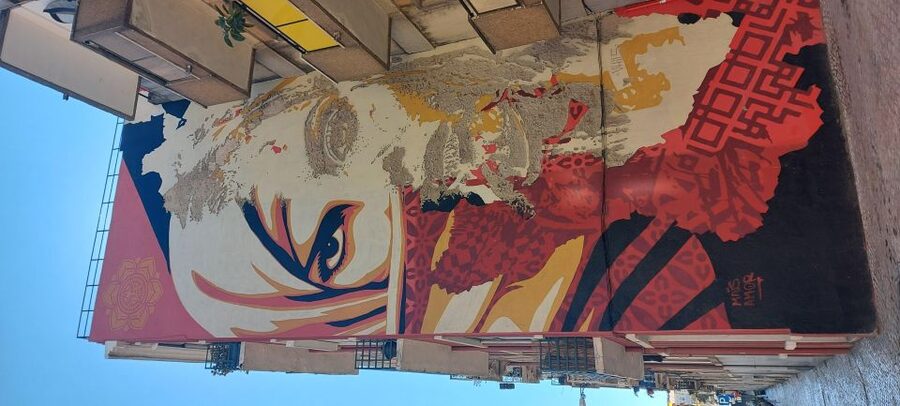
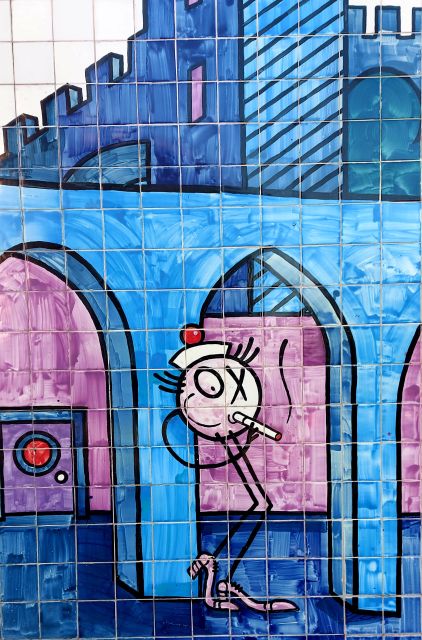
Shepard Fairey is known for bold graphic work with political force. Vhils is associated with carving and cutting into surfaces, turning the wall itself into part of the image. Bordalo II often works with discarded materials and animals, linking public art with environmental concerns. Add Fuel draws on Portuguese tile traditions while giving them a modern graphic twist.
These different approaches make the walk useful even if you know little about street art. You can compare technique, scale, subject, and purpose. A large wall may be designed for a broad public message, while a smaller piece may feel more personal or temporary.
The tour also includes legal and illegal work. That distinction matters. Street art is not all commissioned painting, and graffiti is not all the same thing. The guide helps you understand the tension between city regulation, artistic freedom, property rights, and the desire to keep public space open to creative expression.
From Mouraria up toward Graça
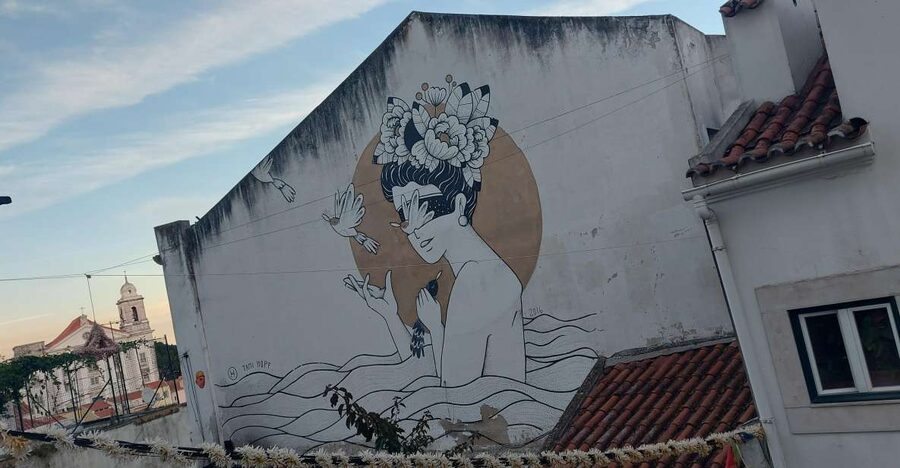
The itinerary gives about 90 minutes to the Graça Historic District and about 90 minutes to Mouraria, though the full walk lasts between 150 and 210 minutes depending on the option. The timing allows for stops, explanations, and photographs rather than a brisk march from wall to wall.
As you move uphill, the route becomes part walking tour and part neighborhood study. You learn about Lisbon’s development through what appears on the walls. Buildings, empty surfaces, old streets, new projects, and changing uses of public space all help explain why some images appear where they do.
The uphill section is the physical challenge. Lisbon can make a short distance feel longer, especially when stairs and uneven streets enter the picture. Bring water, use sunscreen, and wear shoes with a good grip. The company runs the tour in rain or sunshine, so check the forecast and dress for the conditions.
This is not the right choice if you want a seated cultural activity or a gentle stroll on flat ground. It is a good match if you like to connect art with place and do not mind working for the views.
Same walls, a different way in:
- LISBON Street Art Tour
★ 5.0 · 371 reviews - 3-Hour Guided Street Art Walking Tour of Lisbon
★ 5.0 · 278 reviews - Lisbon Street Art Walking Tour
★ 5.0 · 141 reviews - Lisbon: 3-Hour Street Art Tuk Tuk Tour
★ 4.8 · 86 reviews
Famous artists, local voices, and changing walls
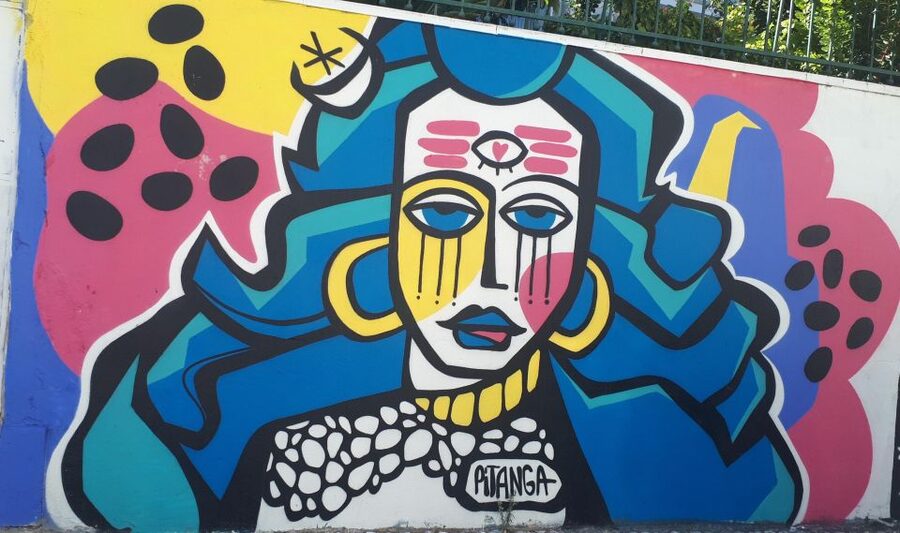
A strong feature of this tour is its range. You may encounter internationally recognized artists, Portuguese creators, artists working across several countries, and pieces that may not last long. That range keeps the focus on Lisbon’s scene rather than turning the walk into a list of celebrity names.
The guide explains the stories behind selected paintings and the artists who made them. You may learn how a technique works, why a certain subject appears in public art, or how a wall relates to the neighborhood around it. The supplied information also points to artists such as Andrea Tarli, Ozearv, PichiAvo, Camilla Watson, and Mario Belem, so the route reaches beyond the most familiar names.
Street art changes. A piece can fade, be painted over, damaged, or replaced. That is not a flaw in the tour. It is part of the subject. If you return to Lisbon later, the walls may tell a different story, which is one reason a local guide can be more useful than a fixed list of addresses.
The guide’s own artistic experience can also help you notice practical details: how paint behaves on a surface, how a design fits a wall, or why a piece looks different from a distance than it does up close. Ben received particular praise for explaining both individual works and their creators in detail.
Finishing at Miradouro da Graça

The walk ends close to one of Lisbon’s best viewpoints, the Miradouro da Graça. This final stop gives you a chance to step back from the close-up detail of walls and see the wider city.
The viewpoint is listed as a short photo stop of about 10 minutes. That is enough time to take pictures and catch your breath, but it is not a long rest period. If your legs are tired, use the viewpoint as a pause before continuing your day.
The surrounding Graça area also gives the tour a satisfying ending. You have moved from narrow streets and close walls to an open view over Lisbon. The contrast helps connect the city’s physical shape with its art. The hills, rooftops, and neighborhoods are not just scenery. They are the setting in which the city’s public art develops.
Drop-off points may include Graça, the Moorish Quarter, or Largo da Graça 13. Check the exact option when booking because the meeting point and end point can vary.
What the $23 price really buys you
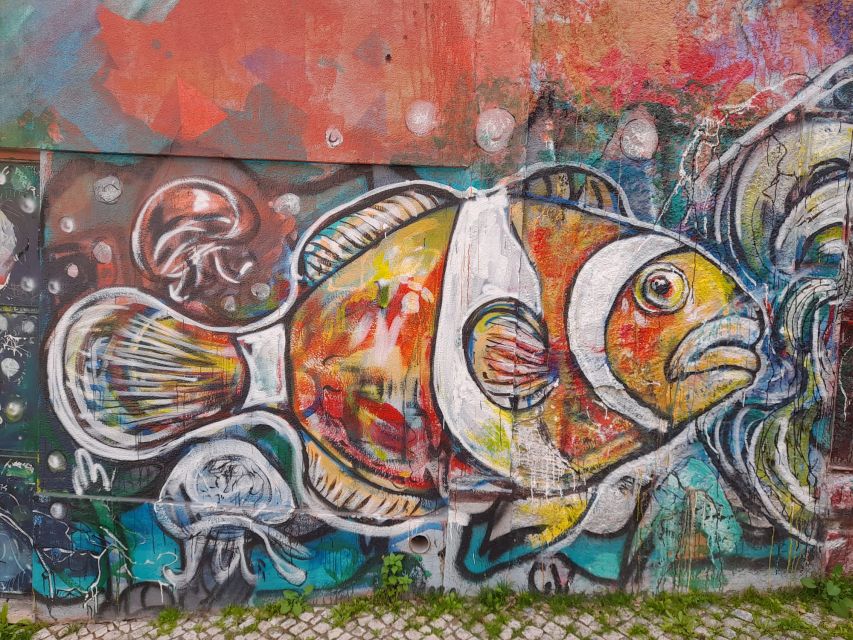
At $23 per person, this is reasonably priced for a 150 to 210 minute guided walk, particularly with a small group limit of eight. You are paying for a specialist route, a live guide, time to discuss the art, and a city walk that combines culture with neighborhood history.
The value is strongest if you would otherwise wander past the walls without understanding them. Lisbon has plenty of free public art, but finding the best pieces, knowing who made them, and understanding their setting takes time. A guide can make a three-hour walk feel more focused and useful than an unplanned search.
You also receive a #whatsuplisboa card with special deals from local partners and access to more city suggestions through the #whatsuplisboa guide. The exact savings depend on which offers you use, so I would treat this as a bonus rather than the main reason to book.
Part of the experience supports the yesyoucan.spray street art collective. That money helps emerging artists fund new projects and helps preserve room for creative work in Lisbon. If supporting local art matters to you, this adds real value beyond the walk itself.
Free cancellation up to 24 hours before the start time and reserve-now, pay-later booking make it easier to fit the tour into an uncertain schedule. Still, confirm the meeting location for your selected option. There are several possible starting points, and the booking choice matters.
Who will enjoy this walk most
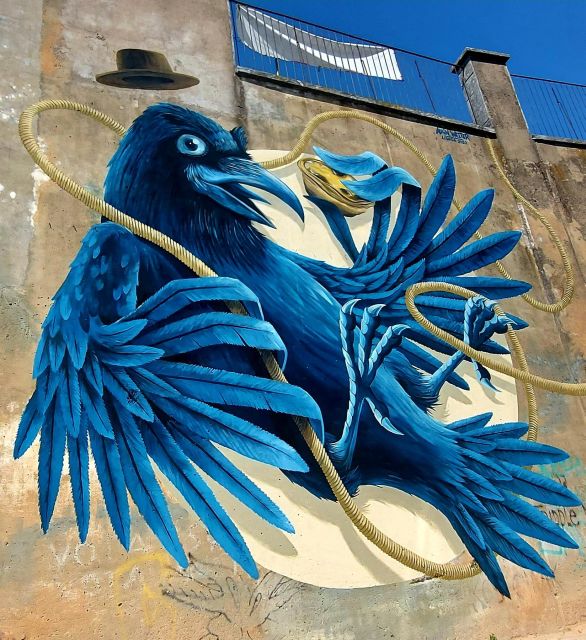
I would recommend this tour to anyone who wants a different introduction to Lisbon. It suits first-time visitors who have already seen the main sights, repeat visitors looking for a new angle, photographers, design fans, art students, and people who like city walks with a social point.
It is also a good choice for solo visitors and couples who prefer a small group. With only eight participants, you should have a better chance to hear the guide and ask about a particular artist or technique.
Families can take part, but the hills and stairs deserve careful thought. A stroller is not recommended, and young children may lose interest during the longer explanations. Dogs are welcome, provided you tell the company in advance.
You should skip this tour if you dislike walking uphill, need a fully accessible route, or want a quick introduction lasting less than two hours. You should also bring realistic expectations about street art. Some work may be large and polished, while other pieces may be faded, illegal, small, or partly hidden.
Practical advice for a better outing
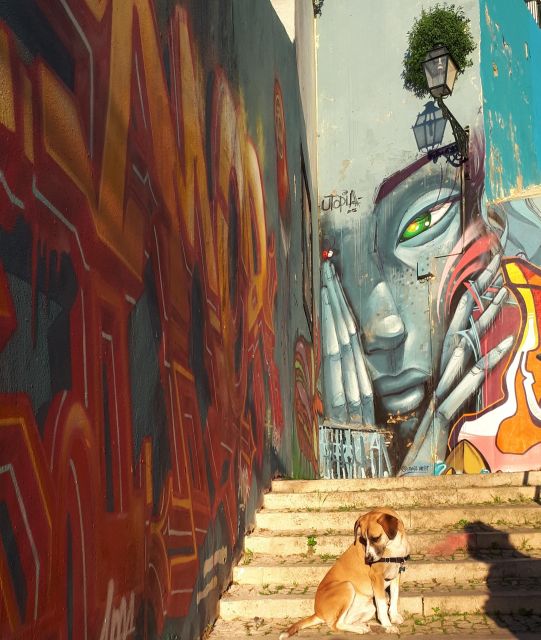
Wear comfortable shoes with solid support. The route crosses Lisbon’s slopes and includes stairs, so sandals or smooth soles may leave you wishing you had packed differently.
Bring water and sunscreen. The company runs the walk in all weather, and some sections may leave you exposed to the sun. A light rain layer is sensible on unsettled days.
Allow the full 210 minutes when planning your day. The shorter 150-minute version may fit a tight schedule, but the longer option gives more room for explanations and stops. Check the starting time and language before paying.
Keep your phone ready for photographs, but listen before photographing. The point of the route is not only to collect images. You are learning how the work connects to the street, the neighborhood, and the city’s changing identity.
If you are staying near the center, plan extra time to reach the meeting point. The listed locations can vary by option, and the walk ends in Graça rather than returning you to the start.
Should you book the Lisbon Street Art Lovers Walk?
Book it if you want Lisbon explained through its walls, not just its monuments. The small group, artist-focused guide work, Mouraria to Graça route, and final viewpoint make this a strong value at $23.
The best reason to go is the combination of art and local context. You will see work by major names, but you will also learn how public art reflects city change, social concerns, and neighborhood life. The yesyoucan.spray contribution gives the booking a useful local purpose.
Skip it if steep streets are a serious problem or if you want a flat, relaxed stroll. For everyone else, bring water, wear good shoes, and expect Lisbon’s walls to keep catching your eye long after the walk ends.
FAQ
How long does the Lisbon Street Art Lovers Walk last?
The walk lasts between 150 and 210 minutes, depending on the option you select. The itinerary includes guided time in Mouraria and Graça, plus a short stop at Miradouro da Graça.
What languages are available?
Live guiding is available in English and French. Open tours take place on fixed days and in fixed languages.
How large is the group?
The tour is limited to eight participants, making it a small-group walking experience.
Where does the tour begin and end?
The meeting point depends on the option booked. The route includes Mouraria and Graça, and possible drop-off points include Graça, the Moorish Quarter, and Largo da Graça 13.
Is the route physically demanding?
You should expect a moderate level of walking up and down Lisbon’s hills, along with stairs. Comfortable shoes, water, and sunscreen are recommended. A baby stroller is not recommended because of the stairs.
Can I bring my dog?
Yes. Dogs are welcome, but you should let the company know in advance.
Freshly painted around Lisbon
- Lisbon Street Art and Lookout Point Tour★ 5.0 · 17 reviews
- Street Art Tour by Tuk Tuk Joy★ 5.0 · 2 reviews
- Private Tuk Tuk of the Old Town Lisbon and Street Art Highlights★ 5.0 · 20 reviews
- Street Art – Tuk Tuk Tour★ 5.0 · 17 reviews
- Lisbon Street Art – Private Tuk Tuk Tour with pickup★ 5.0 · 17 reviews
- Lisbon Street Art Walk★ 5.0 · 17 reviews
- Discover Lisbon’s Best Street Art★ 5.0 · 6 reviews
- Street Art at Lisbon★ 5.0 · 2 reviews
Lisbon Street Art Tours, compared.

3-Hour Guided Street Art Walking Tour of Lisbon
Read our review →


Lisbon Street Art – Private Guided Tour in a Electric Tuk Tuk
Read our review →
Browse the lists this tour appears in