
Review · LISBON
Lisbon Street Art Walk
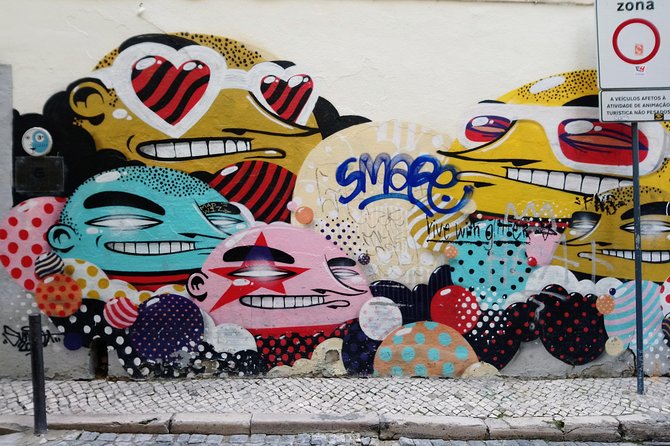
Lisbon’s street art is not confined to one gallery or a single famous wall. It appears on worn façades, down narrow lanes, and beside centuries-old streets. This walk gives you a way to read the city through its paintings, stencils, and public art, with guide Igor explaining the stories and details you might otherwise miss.
I like the small group limit of eight, which should make it easier to ask questions and keep the walk personal. I also like the included artistic souvenir, a modest but useful touch that gives you something to take home beyond photos. The main consideration is physical effort: this is a roughly three-hour walk through old neighborhoods, with uneven streets and likely hills, so moderate fitness is required.
Key points
- See Lisbon through street art: The route links art with old neighborhoods rather than treating murals as isolated photo stops.
- Guide Igor adds context: He explains the art and the history of the districts in calm, clear English.
- Small groups matter: A maximum of eight people allows more room for questions and discussion.
- Walk through Bairro Alto and Mouraria: You see both well-known central areas and narrow streets where the city feels more local.
- Finish near São Cristóvão: The route ends at Escadinhas de São Cristóvão, a useful place to continue exploring on foot.
- An artistic souvenir is included: You leave with a small reminder of the experience.
Why Lisbon works so well for a street art walk
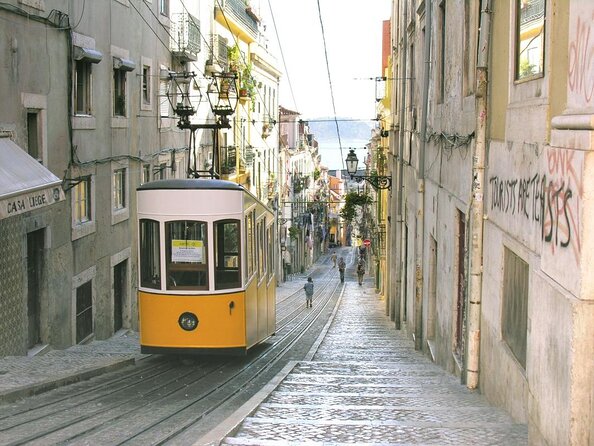
Lisbon has the right mix of old stone streets, painted façades, steep lanes, and changing neighborhoods. Street art here does not sit apart from daily life. It shares space with tiled buildings, cafés, doorways, balconies, and the marks of a city that has changed over many years.
That setting gives this walk more purpose than simply hunting for colorful backgrounds. You are learning to notice placement, scale, style, and the way artists respond to a building or street. A plain wall can become part of the story, especially when your guide points out details that are easy to miss while you are rushing between major sights.
I find this especially useful early in a Lisbon visit. Once you understand how to look at the city’s public art, you may begin spotting pieces on your own in other neighborhoods. One person who arrived knowing little about street art came away noticing work that might previously have gone unseen. That is a useful skill to carry into the rest of your trip.
The tour also gives you a view of Lisbon’s older districts without turning the walk into a standard monument checklist. You pass through areas with historical importance, but the focus stays on how art and local streets fit together.
More Street Art Walking Tours in Lisbon:
- Lisbon: Kickstart Street Art Walking Tour
★ 4.9 · 717 reviews - 3-Hour Guided Street Art Walking Tour of Lisbon
★ 5.0 · 278 reviews - Lisbon Street Art Walking Tour
★ 5.0 · 141 reviews
Starting near Largo da Graça
The meeting point is the bandstand of Graça, at Largo da Graça, 1170-165 Lisboa. You should allow time to reach the starting point and find the bandstand before the scheduled departure. Hotel pickup and drop-off are not included, so getting there is your responsibility.
Graça is a fitting place to begin. It is one of Lisbon’s older hilltop neighborhoods, and simply reaching the meeting point may involve an uphill approach. That first bit of effort is worth keeping in mind if you have mobility concerns or are not comfortable walking on slopes and old paving.
The exact order of the named stops may vary in practice, but the experience connects Graça and central Lisbon with Bairro Alto, Baixa Chiado, and Mouraria. The walk ends at Escadinhas de São Cristóvão, 1100 Lisboa, rather than returning you to the starting point.
That point-to-point design is useful if you want to keep exploring after the tour. It is less convenient if you need to return to a hotel near Graça immediately. Plan your next stop from the ending location instead of assuming you will finish where you began.
Bairro Alto, street art among old city walls
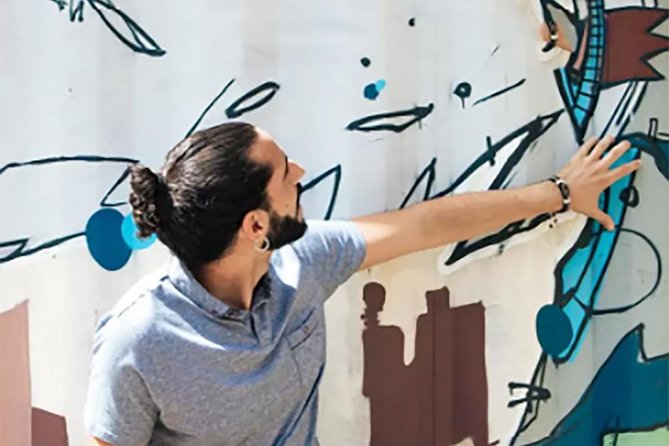
The first listed neighborhood stop is Bairro Alto, with about an hour devoted to seeing street art around the district. Bairro Alto is known for its old streets and lively evening scene, but during this walk you look at it with an artist’s eye.
Expect to spend time examining work on walls and façades rather than simply taking a quick group photo. Your guide can explain how individual pieces relate to the neighborhood and point out details that are hard to understand from a passing glance.
This is where the personal format should help. With no more than eight people, you can ask why a particular piece matters, how different forms of street art work, or what to look for elsewhere in Lisbon. A larger group would make that kind of conversation harder, especially on narrow streets.
Bairro Alto is also a good reminder that street art changes. Some pieces may be temporary, painted over, or affected by the weather. The experience is therefore less about seeing one permanent set of works and more about learning how to notice what is present during your visit.
The drawback is that old central streets can be crowded or tight, and the walking surface is not always smooth. Wear practical shoes. This is not a relaxed stroll on flat pavement.
From Praça Dom Pedro IV through Baixa Chiado
The route also passes Praça Dom Pedro IV, commonly known as Rossio, and Baixa Chiado. This part takes about 30 minutes and provides a useful shift in setting.
Rossio is a major central square, while Baixa Chiado connects grander city spaces with busy commercial streets and older lanes. Here, the street art may feel more integrated into a larger public setting than it does in the quieter corners of Mouraria.
This stop helps place Lisbon’s art within the city rather than presenting it as a separate attraction. You get a sense of how public art appears beside established streets and well-known urban landmarks. The brief timing suggests that this is a connecting section, not a long gallery-style examination of every work.
I like that balance. A street art tour should show you art, but it should also help you understand where the art sits. Moving through Rossio and Baixa Chiado gives you a clearer feel for central Lisbon and breaks up the more concentrated exploration of narrow neighborhood streets.
If you want lengthy visits inside monuments, museums, or art galleries, this is not the right format. Entrance fees to monuments and galleries are not included, and the walk does not appear designed around indoor visits. The value comes from the streets, the guide’s explanations, and the access to less obvious corners.
More Street Art Tours around Lisbon:
- Lisbon: Street Art Tour
★ 4.9 · 1,324 reviews - Lisbon: Street Art Tuk Tuk Tour
★ 4.9 · 372 reviews - LISBON Street Art Tour
★ 5.0 · 371 reviews - Lisbon: 3-Hour Street Art Tuk Tuk Tour
★ 4.8 · 86 reviews
Mouraria and the narrow streets around Centro Comercial Mouraria
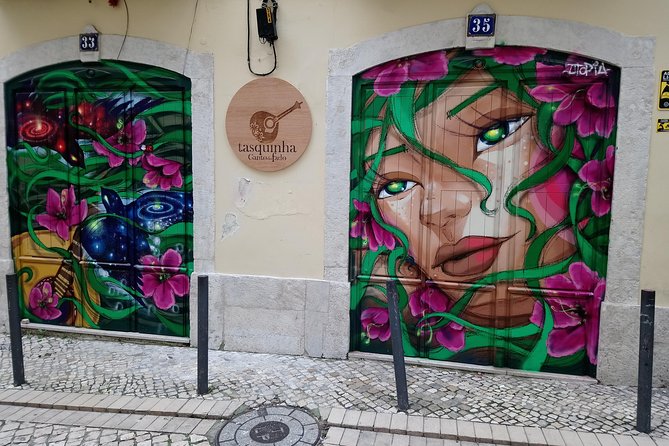
The longest portion of the experience is in Mouraria, with about two hours set aside for street art and the area’s narrow streets. This is likely to be the most distinctive part of the walk.
Mouraria offers a closer look at old Lisbon’s irregular street plan. You may find yourself turning through lanes that feel confusing at first, which is part of the appeal. The goal is not to race from one landmark to another. It is to see how art appears in the everyday spaces between homes, shops, and older walls.
The description of becoming totally lost in the narrow streets should not be read as a promise that you will actually lose your guide. It points to the maze-like character of the district and the chance to leave the obvious central routes behind. A local guide is valuable here because the streets can be difficult to understand on your own.
This is also the section where the tour’s two themes come together best: public art and Lisbon’s old neighborhoods. Igor explains the art while giving you a broader picture of the historic area. His calm speaking style is helpful if English is not your first language. A 13-year-old on the tour was able to follow his explanations, which suggests he can adjust his pace and language for younger participants.
Two hours is a generous share of a three-hour walk, but it also means you should be ready for sustained walking. The route may include slopes, steps, cobblestones, and narrow passages. The supplied guidance calls for moderate physical fitness, so this is not ideal for someone seeking a short, flat city activity.
What guide Igor adds to the experience
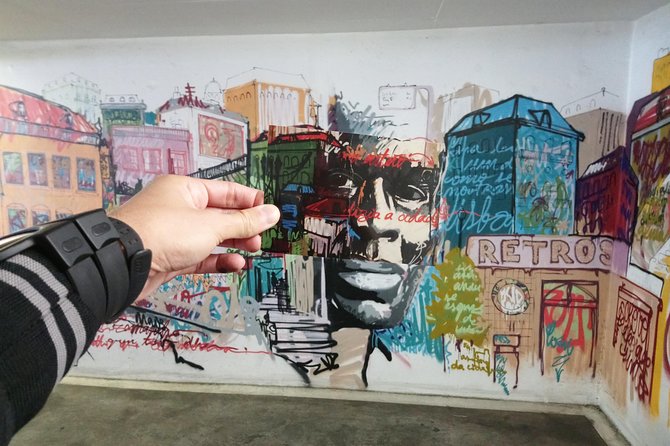
A street art walk depends heavily on the guide. Without context, you can see a wall painting, take a picture, and move on. With Igor, the focus is on understanding the work and the place around it.
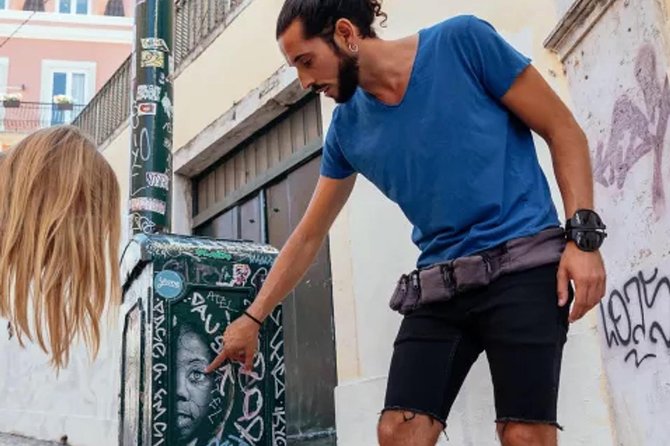
He is described as friendly, communicative, and very comfortable with the subject. His explanations include anecdotes, which can make the art easier to remember than a list of dates or artist names. The review evidence also points to clear, unhurried English, an important detail for families and for anyone who does not speak English with ease.
You should expect a conversational experience rather than a formal lecture. The private guide format means the group can ask questions and spend more time on a piece that catches your attention. Since the group can be as large as eight, the experience is small but not necessarily one-on-one.
The tour has also benefited from good timing for local street art events. One outing coincided with a street art festival, creating an extra layer of activity. That cannot be guaranteed on your date, but it shows how the walk can change with what is happening in Lisbon at the time.
The value of $40.84 for three hours
At $40.84 per person, this is not the cheapest way to spend three hours in Lisbon. You can walk through central neighborhoods on your own for no charge, and the public art itself does not require an admission ticket.
The price makes more sense if you want interpretation, direction, and access to places you might not find easily by yourself. You are paying for a private guide, a small group, a planned route through several districts, local context, and an artistic souvenir. The guide’s ability to connect the artwork with Lisbon’s old neighborhoods is the main part of the value.
I would compare it with the cost of a standard guided walking tour, but keep your expectations focused. This is not a broad introduction to every major Lisbon sight. You are not paying for monument admissions, gallery tickets, transportation, or hotel pickup. You are paying for a focused street-level experience.
For someone who already follows street art, the price may feel fair because the tour offers an insider’s view and a chance to see work in context. If you have little interest in public art, a general Lisbon walking tour may give you more useful coverage for the same amount of time.
Who should book this walk

I would recommend it most strongly to:
- Street art fans who want more than a list of photo locations
- First-time Lisbon visitors who want to understand older neighborhoods
- Families with older children or teenagers who can manage three hours of walking
- People who prefer small groups and time for questions
- Visitors who enjoy local streets more than indoor attractions
- Anyone who wants a guide to point out details they might otherwise miss
It can also work well for people who know very little about street art. You do not need to arrive with an art background. The guide’s role is to give you the tools to look, and the experience can change how you see public art later in your trip.
I would be cautious if you have difficulty with hills, steps, or uneven paving. The walk requires moderate fitness, and the old neighborhoods are not designed like a smooth pedestrian promenade. I would also choose another activity if you want lots of time inside museums or monuments.
The English-language format suits people who can follow spoken English comfortably. The guide has been able to speak slowly enough for a young teenager to understand, but you should still consider your own language needs when booking.
Practical details before you reserve
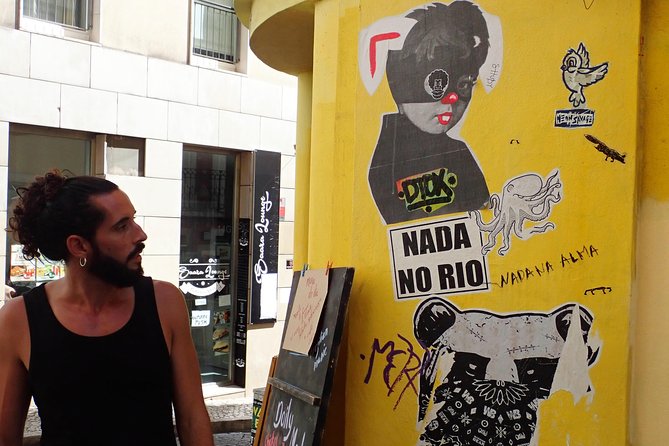
The tour lasts about three hours and accepts a maximum of eight people. That limit is one of its strongest practical features, but a full group will feel different from a private outing for two. If you want the quietest possible experience, check the group size for your date when booking.
You receive confirmation at the time of booking. The ticket is mobile, so you can use it from your phone. Keep the meeting and ending points handy, since the tour begins at Largo da Graça and finishes at Escadinhas de São Cristóvão.
Wear shoes that handle cobblestones and slopes. Bring water, and leave room in your schedule after the walk in case you want to continue exploring Mouraria or central Lisbon from the finish point.
The activity depends on good weather. If poor weather causes cancellation, you are offered another date or a full refund. You can also cancel for a full refund up to 24 hours before the start time. Changes or cancellations made less than 24 hours before the start are not accepted for a refund.
Should you book the Lisbon Street Art Walk?
Book it if you want to understand Lisbon through its walls, side streets, and older neighborhoods, and if you value a guide who can explain what you are seeing. The small group, Igor’s clear approach, and the long Mouraria section give the walk a personal feel that a self-guided route may not match.
Skip it if street art is only a passing interest, if you need a flat and easy walk, or if your main goal is visiting indoor galleries and monuments. For the right person, $40.84 buys more than a few mural photos: it gives you a new way to notice Lisbon after the tour is over.
FAQ
How long is the Lisbon Street Art Walk?
The walk lasts approximately three hours.
What language is the tour offered in?
The tour is offered in English.
Where does the tour start?
It starts at the bandstand of Graça, Largo da Graça, 1170-165 Lisboa, Portugal.
Where does the tour end?
It ends at Escadinhas de São Cristóvão, 1100 Lisboa, Portugal.
How many people can join the tour?
The group has a maximum of eight travelers.
Is cancellation allowed?
Yes. You can cancel up to 24 hours before the experience begins for a full refund. Poor weather or failure to reach the minimum number of participants may also lead to a different date or a full refund.
Freshly painted around Lisbon
- Lisbon Street Art and Lookout Point Tour★ 5.0 · 17 reviews
- Street Art Tour by Tuk Tuk Joy★ 5.0 · 2 reviews
- Private Tuk Tuk of the Old Town Lisbon and Street Art Highlights★ 5.0 · 20 reviews
- Street Art – Tuk Tuk Tour★ 5.0 · 17 reviews
- Lisbon Street Art – Private Tuk Tuk Tour with pickup★ 5.0 · 17 reviews
- Street Art at Lisbon★ 5.0 · 2 reviews
- Discover Lisbon’s Best Street Art★ 5.0 · 6 reviews
- Authentic Lisbon: 4h Tuk Tuk Tour of Lisbon and Belém Secret Gems★ 5.0 · 11 reviews
Lisbon Street Art Tours, compared.


3-Hour Guided Street Art Walking Tour of Lisbon
Read our review →


Lisbon Street Art – Private Guided Tour in a Electric Tuk Tuk
Read our review →
Browse the lists this tour appears in