

Review · LISBON
Lisbon: Street Art Tour
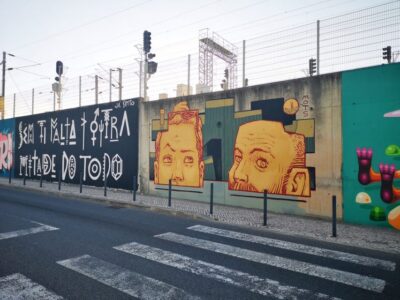
Lisbon’s street art is not just decoration pasted onto old walls. It can explain a neighborhood, reflect Portugal’s politics and past, or give you a quick lesson in how artists work with rough stone, tiles, shutters, and empty building facades. This three-hour walk takes you from Bairro Alto to Graça, with guides such as Erica, Maria, and Laith bringing the art and local stories together.
I like the way the route combines large, famous murals with tiny pieces you could easily miss, and I like that it moves through several neighborhoods instead of keeping you in one tourist zone. The main consideration is the walking: Lisbon is hilly, some ground is uneven, and three hours on foot will feel like exercise if you are not used to the city’s slopes.
Key things to know before you book
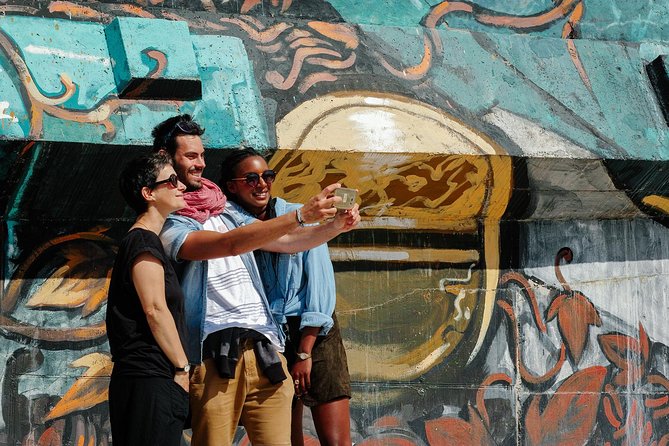
- The art comes with context: You learn about artists, techniques, Portuguese history, social issues, and the communities around the work.
- The route crosses five Lisbon areas: Bairro Alto, Chiado, Baixa, Mouraria, and Graça each give the art a different setting.
- Guides make the difference: Erica, Erika, Maria, and Laith are praised for clear English, warmth, strong storytelling, and serious interest in street art.
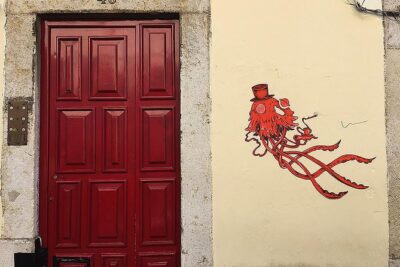
- Small details matter: The tour includes major walls, street sculptures, and little works that are easy to walk past without a trained eye.
- Wear proper shoes: You need to handle hills, cobbled streets, and unpaved or uneven ground.
- The price is reasonable for a specialist walk: At $40, you are paying for three hours of guiding rather than just a map of mural locations.
Why Lisbon’s street art makes a good walking tour
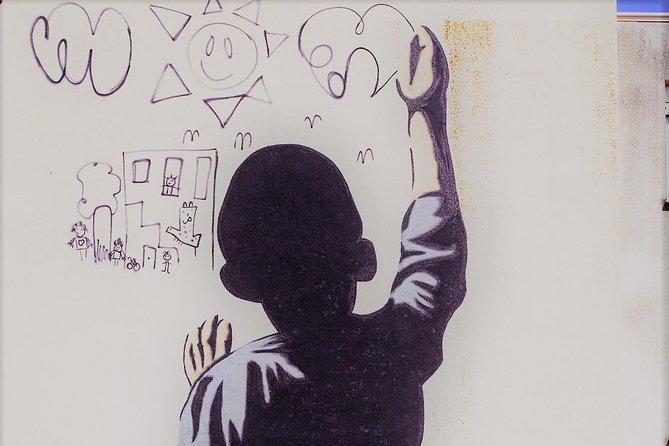
A mural can be impressive on its own, but it becomes more interesting when you know why it is there and how it relates to the street around it. Lisbon’s art scene gives you plenty to work with: large painted walls, small stencils, pasted images, sculptural pieces, and works tucked into corners that do not announce themselves.
That is the strength of this tour. It treats street art as part of city life rather than as a string of photo stops. You hear about the artists and their methods, but you also connect the work to Lisbon’s culture, political changes, neighborhood identity, and everyday streets.
The guides also explain that street art is more than graffiti. You might look at a mural for its color and scale, then learn about the artist’s technique, the idea behind it, or the local response to it. The effect is practical: after three hours, you start looking above shopfronts, around side streets, and at walls you would once have ignored.
The tour has earned a 4.9 rating from 1,324 reviews, and the praise is unusually consistent. The strongest points are the guides’ storytelling, their command of both art and Portuguese culture, and the way they draw attention to less obvious works. That does not mean every stop will suit your taste. Street art is personal, and some works may feel political, rough, or temporary. That variety is part of the point.
More Street Art Tours around Lisbon:
- Lisbon: Kickstart Street Art Walking Tour
★ 4.9 · 717 reviews - Lisbon: Street Art Tuk Tuk Tour
★ 4.9 · 372 reviews - LISBON Street Art Tour
★ 5.0 · 371 reviews
Starting in Bairro Alto at R. Luz Soriano 67
Meet your guide in front of the Interpress building at R. Luz Soriano 67. This is in the Bairro Alto area, so arrive ready to walk rather than expecting a formal entrance or indoor introduction.
Bairro Alto is a fitting place to begin. Its streets have a lively, creative feel, and the art sits close to old buildings, nightlife spots, and everyday Lisbon life. The first hour is the longest single section of the tour, giving your guide time to explain how to read a piece instead of rushing from one wall to the next.
This is also where you get a feel for your guide’s style. Erica is praised for clear explanations, a sharp eye for small details, and an easy way of answering questions. Maria is described as warm and well informed about both art and the city. Laith is especially good at linking artists and the local scene, with an engaging style that combines serious ideas and humor.
The group size can vary, but several bookings have been private or small-group experiences. That matters here. A good street art walk works best when you can stop, look closely, and ask why a piece is painted in one place rather than another. A large crowd would make that harder.
Chiado and Baixa: art among Lisbon’s grand streets
The route continues into Chiado, with about 20 minutes set aside for the area. Chiado is more polished and heavily visited than some of the later neighborhoods, so the contrast is useful. Here, street art shares space with handsome historic buildings, shops, cafes, and well-used pedestrian routes.
You can expect this part to be compact rather than a long gallery visit. The guide helps you notice how contemporary art interacts with a more formal city center. A small stencil or painted surface can look very different here than it does on a neglected wall in a residential lane.
From Chiado, the tour reaches Baixa de Lisboa, also for about 20 minutes. Baixa’s broad streets and central location make it a natural place to compare the city’s planned, open spaces with the tighter streets you will encounter later. This section is less about staying in one art pocket and more about seeing how creative work appears in a central district.
Do not expect every stop to be a huge mural. One of the useful lessons from this route is that the best discovery may be a small, overlooked work. The guide points out details you might pass without noticing, which is one reason this tour can change how you explore Lisbon after it ends.
Mouraria and the city’s social voice
The route then heads into Mouraria, with around 30 minutes of guiding. This neighborhood adds social and cultural weight to the walk. The art here is not presented as decoration separate from the community. Instead, your guide connects it to local identity and the changing life of Lisbon.
This is where the tour’s wider subject becomes clear. You are not simply collecting pictures of painted walls. You are looking at who gets to speak in public spaces, how artists respond to their surroundings, and how a neighborhood receives or lives with the work.
The guide may also place the art within Portuguese history and explain links to current social and political ideas. Several guides have been praised for explaining these connections without turning the walk into a dry lecture. The best moments come when a story about one work opens a larger question about the city.
Mouraria is also useful for understanding that Lisbon has no single street art style. You may see different approaches, levels of polish, and artistic aims close together. Some work is carefully planned and large-scale. Other pieces are quick, small, or easy to overlook. The tour gives you a way to tell those forms apart.
Same walls, a different way in:
- 3-Hour Guided Street Art Walking Tour of Lisbon
★ 5.0 · 278 reviews - Lisbon Street Art Walking Tour
★ 5.0 · 141 reviews - Lisbon: 3-Hour Street Art Tuk Tuk Tour
★ 4.8 · 86 reviews - Lisbon: Street Art Walk
★ 5.0 · 79 reviews
Finishing in Graça with views and larger walls
The final major section is Graça Historic District, with about an hour of guiding. Graça brings the route uphill and gives the walk a strong finish. It is one of the reasons you should take the footwear warning seriously. The city’s slopes and uneven surfaces are part of the setting, but they can be tiring.
This neighborhood offers a different pace from the central areas. You move through older streets and quieter corners, with the chance to see how art works outside the main shopping and sightseeing routes. The combination of street art and city views gives this section a sense of discovery, but you still need to pay attention to the ground underfoot.
The route can finish with some of Lisbon’s larger murals, which gives you a useful contrast with the tiny works shown earlier. Large-scale art is easy to photograph, but the guide’s explanation helps you see the choices behind it: composition, technique, the scale of the wall, and the way the piece changes the feel of its surroundings.
The tour ends in Graça rather than returning you to the starting point. That is not a problem, but it is worth planning for. One helpful guide even gave directions for crossing town afterward, including a tram option because Graça does not have a metro stop. Ask your guide for help if you are unsure how to continue.
What the guides add to the experience

The most important feature here is not a particular mural. It is the person explaining what you see. The guides are English-speaking and include Erica, Erika, Maria, and Laith, with names sometimes spelled differently in booking details.
Erica is often singled out for her storytelling, art background, careful eye, and ability to connect individual pieces to Lisbon’s wider identity. Maria brings a friendly, thoughtful approach and can discuss art, neighborhood history, and local culture. Laith is praised for his links to the art scene and his ability to make the walk feel personal rather than packaged.
That does not mean you will receive the same guide every time. The practical takeaway is to expect a guide-led experience with a strong focus on explanation, not an audio-guide route where you simply follow a pin on a map.
The guides also make space for questions. You can ask about technique, artist intent, local politics, or the history of a neighborhood. If you are curious, this is the kind of tour where questions improve the experience.
How much walking is involved?
The advertised duration is three hours, with the route spread across five districts. The walk is described as manageable at a steady pace, but several parts of Lisbon are hilly. You need to be able to walk on unpaved or uneven ground, and the tour is not suitable for wheelchair users.
Wear comfortable shoes with good support. This is not the place for dress shoes, thin sandals, or footwear that makes cobblestones unpleasant. Bring water if you normally need it on a long city walk, though food and drinks are not included.
The pace seems designed to keep the group moving while still allowing time to examine each piece. You will not stand at every wall for half an hour. Instead, the guide builds a sequence of stops that mixes major works with smaller discoveries.
Rain does not necessarily ruin the experience. The walk has gone ahead in wet conditions, but poor weather can make Lisbon’s slopes and stone streets less comfortable. A light rain layer is sensible if the forecast is uncertain.
Oversize luggage is not allowed. Leave large bags at your accommodation rather than trying to manage them through narrow streets and uphill sections.
Is $40 a fair price?
At $40 per person, this is more expensive than wandering around Lisbon with a free street art map, but it offers something a map cannot. You get three hours of explanation, a planned route through several neighborhoods, and help spotting art that you would likely miss alone.
The value is strongest if you are new to street art or want to understand it rather than simply photograph it. The guides explain styles and techniques, identify the cultural setting, and show how the art connects to Portuguese history and modern city life.
It is also a useful first or second-day activity. You get your bearings across several central districts, learn how the hills fit together, and finish with ideas for places to explore on your own. One guide even offered recommendations for nightlife and local events after the walk.
The value is weaker if you already know Lisbon’s street art scene well, dislike walking, or want a fixed list of only the largest murals. The route includes smaller works and discussion, so it rewards attention more than speed.
Free cancellation up to 24 hours ahead and reserve-now, pay-later terms make the booking less rigid. Starting times vary, so check availability for your date.
Who should take this tour?
I would choose this walk if you like art, local culture, photography, city history, or simply finding a different way into a familiar destination. You do not need a background in art. The guides explain terms and techniques in plain English, and the range of work keeps the subject open to beginners.
It also suits people who have already taken a standard Lisbon history walk and want another angle. Street art can fill in parts of the city story that monuments and museums do not show as clearly, especially when the guide discusses public voices, neighborhood change, and current culture.
Families with older children and active adults may enjoy it, provided everyone can manage three hours of walking and hills. It is less suited to anyone with mobility limits, anyone carrying luggage, or anyone who wants a short, flat stroll.
Take the tour early in your Lisbon stay if you can. Afterward, you will start spotting pieces on your own, and you may want time to revisit a neighborhood or look for art that was not on the route.
Should you book the Lisbon Street Art Tour?
Book it if you want to see Lisbon through its walls rather than only through its monuments. The best reason to go is the combination of strong guides, varied neighborhoods, and real cultural context. You will see major murals, but the lasting benefit is learning to notice the small work and understand why it belongs where it is.
Skip it if three hours on steep or uneven streets sounds unpleasant, or if you need wheelchair access. Otherwise, $40 is a fair price for a focused, personal introduction to one of Lisbon’s most creative sides. Bring good shoes, arrive at Interpress on time, and leave room in your schedule to keep exploring Graça after the final stop.
FAQ
Where does the Lisbon Street Art Tour start?
Meet the guide in front of the Interpress building at R. Luz Soriano 67.
How long does the tour last?
The advertised duration is three hours.
Which Lisbon neighborhoods does the route visit?
The route includes Bairro Alto, Chiado, Baixa de Lisboa, Mouraria, and Graça Historic District.
What language is the tour offered in?
The live tour guide speaks English.
What is included in the price?
The price includes the walking tour and a live guide.
Are food and drinks included?
No. Food and drinks are not included.
Is hotel pickup provided?
No. Hotel pickup and drop-off are not included.
What should I bring?
Bring comfortable shoes. You should be prepared for unpaved or uneven terrain.
Is the tour suitable for wheelchair users?
No. The tour is not suitable for wheelchair users.
Can I bring oversize luggage?
No. Oversize luggage is not allowed.
Can I cancel for a full refund?
Yes. You can cancel up to 24 hours in advance for a full refund.
Do I have to pay when I book?
The reserve-now, pay-later option lets you reserve a place without paying immediately.
Freshly painted around Lisbon
- Lisbon Street Art and Lookout Point Tour★ 5.0 · 17 reviews
- Street Art Tour by Tuk Tuk Joy★ 5.0 · 2 reviews
- Private Tuk Tuk of the Old Town Lisbon and Street Art Highlights★ 5.0 · 20 reviews
- Street Art – Tuk Tuk Tour★ 5.0 · 17 reviews
- Lisbon Street Art – Private Tuk Tuk Tour with pickup★ 5.0 · 17 reviews
- Lisbon Street Art Walk★ 5.0 · 17 reviews
- Discover Lisbon’s Best Street Art★ 5.0 · 6 reviews
- Street Art at Lisbon★ 5.0 · 2 reviews
Lisbon Street Art Tours, compared.
3-Hour Guided Street Art Walking Tour of Lisbon
Read our review →

Lisbon Street Art – Private Guided Tour in a Electric Tuk Tuk
Read our review →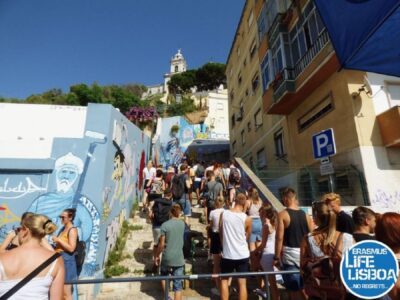

Browse the lists this tour appears in