
Review · BOGOTA
Bogotá: La Candelaria Graffiti & Urban Art Guided Tour
Bogotá’s street art is more than colorful decoration. In La Candelaria, murals tell stories about indigenous ancestry, political conflict, gender, the environment, and the changing identity of the city. This walking tour gives you the background needed to read those walls instead of simply photographing them.
I especially like the small groups of up to 10 people, which make it easier to ask questions, and the stop at Café Herencia for coca leaf tea. The main consideration is that the tour may run in English and Spanish at the same time, so some explanations could take longer or feel less detailed.
- Meet at Chorro de Quevedo Square: Find the guide beside the fountain and yellow umbrella at 10 a.m. or 2 p.m.
- See major local artists: Look for work connected with 3 Manos, Ledania, Carlos Trilleras, Wosnan, Ocio 4, Bastardilla, and Vera.
- Learn how graffiti reflects Colombia: Your guide explains the social and political ideas behind the murals, tags, and spray-painted works.
- Walk through three key city spots: The route includes La Candelaria, La Concordia Market, and Journalist’s Park.
- Finish with a local drink: Café Herencia serves coca leaf tea and supports local artists.
- Plan for weather and pavement: Bring water, sunscreen, comfortable shoes, and clothing suited to changing conditions.
Why La Candelaria Is the Right Place for a Graffiti Walk
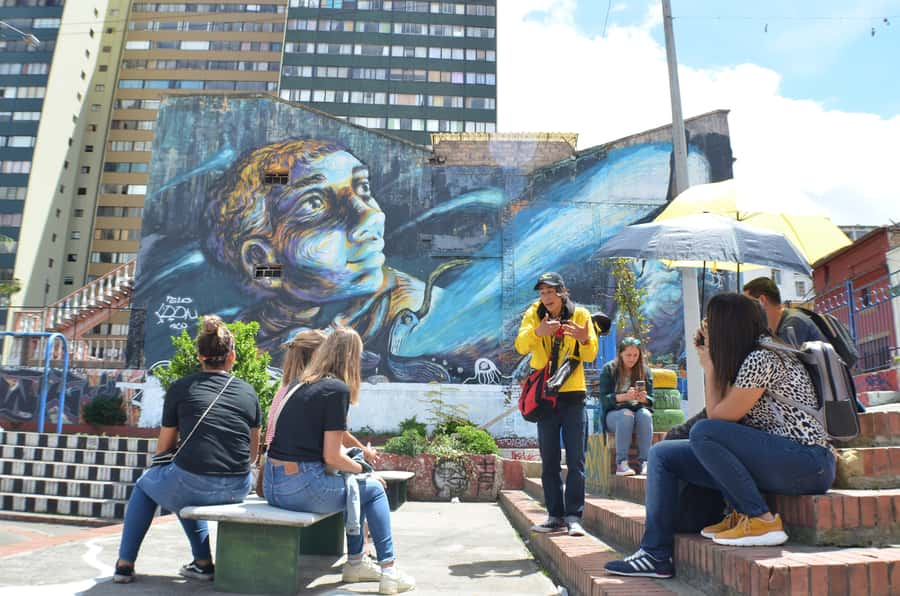
La Candelaria is Bogotá’s old central district, but this tour is not a standard colonial walking tour with a few painted walls added on. The focus is the art itself and the ideas behind it.
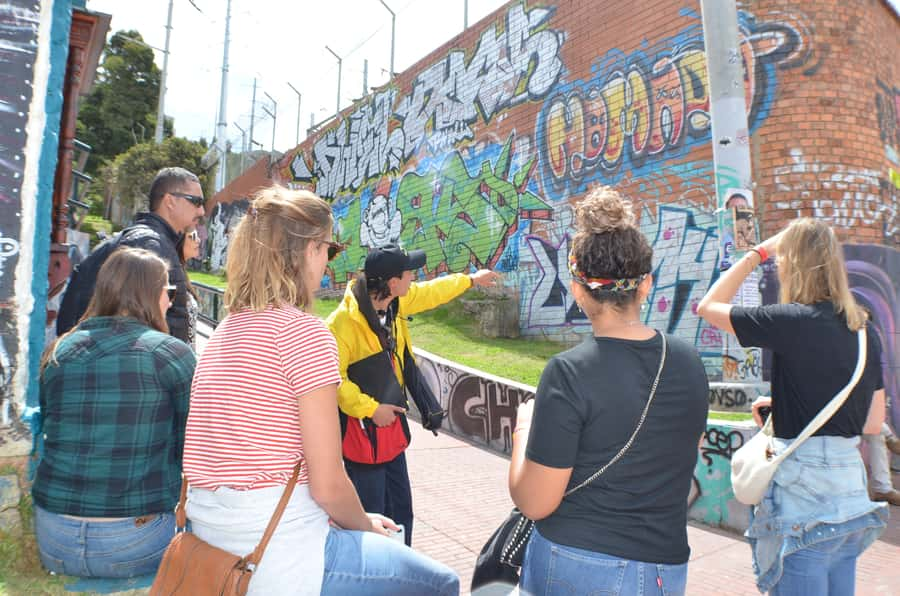
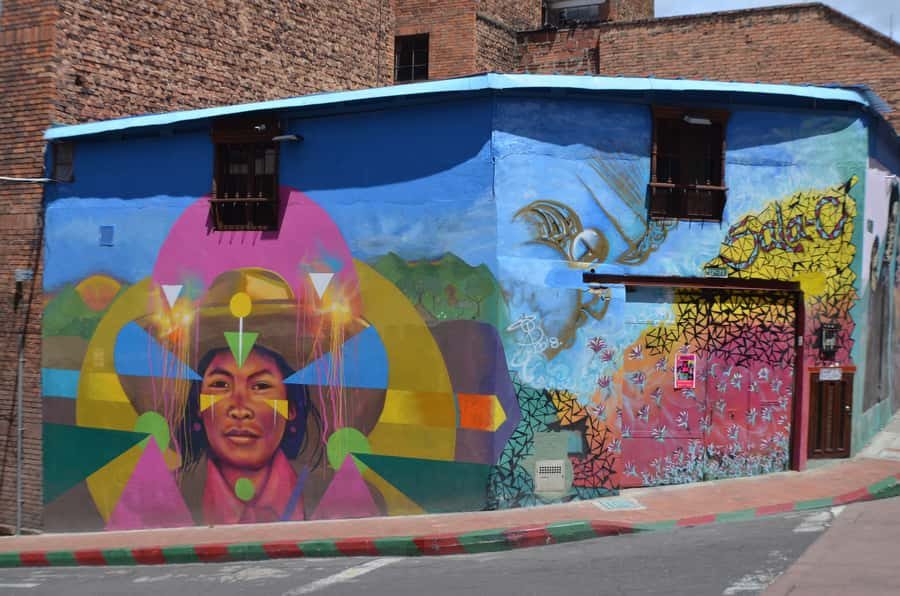
As you walk, you see how artists use public walls to talk about Colombia’s past and present. Indigenous symbols appear alongside modern city imagery. Some works address political issues or environmental concerns. Others show how artists respond to one another and to the streets where they work.
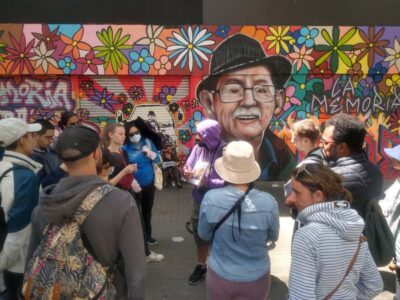
That context matters. From a distance, a mural can look like a large, attractive picture. With an explanation of the artist’s choices, the same work may become a statement about identity, memory, inequality, or cultural survival.
The route also introduces the difference between large murals, smaller graffiti pieces, and tags. That helps you look at Bogotá’s walls with a more careful eye. You are not asked to like every piece. Instead, you get a way to understand why the city’s street art has become such an important part of its public life.
Starting at Chorro de Quevedo Square
The tour begins at Plazoleta del Chorro de Quevedo, one of La Candelaria’s best-known gathering places. Look for the guide by the fountain and the yellow umbrella. Departures are offered daily at 10 a.m. and 2 p.m.
This is a useful meeting point because it places you right in the district where the walking begins. You do not need to arrange transportation between neighborhoods, and the tour quickly moves into the streets lined with painted walls.
The early part of the walk introduces the local graffiti scene and sets up the themes you will see later. Guides such as Juana, Luis, Christian, Lorena, Bernardo, Myra, and Jose have led this experience at different times. The guide you receive will vary, but the strongest feedback consistently points to clear explanations, good English or Spanish, and a willingness to answer questions.
If you have only a short time in Bogotá, this is a useful first or second-day activity. It gives you a visual introduction to the city while showing you corners and works you might pass without noticing on your own.
More Graffiti Tours in Colombia:
- Medellin: Comuna 13 Graffiti Tour, Cable Car & Street Food
★ 4.8 · 9,046 reviews - Medellín: Comuna 13 Tour with Snacks And Your Own Graffiti
★ 4.9 · 311 reviews - Medellín: Comuna 13 and Graffiti Guided Tour with a Local
★ 4.9 · 239 reviews
Reading La Candelaria’s Murals
The main section takes you through streets packed with graffiti and large-scale urban art. You will see works associated with artists including Carlos Trilleras, Wosnan, Ocio 4, and 3 Manos.
The appeal here is variety. Some pieces are bold and easy to spot. Others are tucked into the street scene and need a guide’s eye. The route does not treat the walls as one uniform art style. Your guide explains different approaches, including the role of tags, the making of murals, and the way artists work within Bogotá’s public spaces.
The tour also gives attention to women in the local art scene. Works connected with Bastardilla, Vera, and Ledania help broaden the story beyond the names most often associated with graffiti. This is an important part of the experience, especially if you want to understand how women have helped shape the city’s public art.
A good guide may use additional images or short videos to explain how a mural was made. That kind of material can help you see the difference between a finished wall and the process behind it. You may also hear about the artists’ ideas, methods, and connections with one another.
Bring a camera, but do not spend the whole walk looking through it. The explanations are the point. A quick photo is fine, then look up and listen.
La Concordia Market and the Ideas of Downtown
The route passes through La Concordia Market, with about 15 minutes set aside for a guided visit and sightseeing. This adds a useful change of pace to the mural viewing.
The market is not presented as a separate food tour. Instead, it helps explain the social setting around the art. Markets, plazas, and public streets bring different communities and ideas together. That exchange has helped shape the identity of central Bogotá, and street artists draw on those same influences.
You may have time to look around as the guide explains the area. Keep your attention on the group, since the tour specifically asks participants not to walk away. The market stop is brief, so it is better for getting a feel for the place than for a long shopping visit.
This is one reason I prefer the guided route to simply downloading a street-art map. The walk links murals to the public spaces around them. You get a sense of how art, daily life, and local history overlap.
Journalist’s Park and Bogotá’s Public Conversation
Journalist’s Park is another important stop. The area has long served as a meeting point in central Bogotá, and the tour uses it to discuss the ideas and influences that appear in the city’s street art.
The stop is not just a photo break. It helps connect the art to public debate. Graffiti can be personal, playful, political, or all three at once. A guide can point out details that are easy to miss, explain repeated symbols, and show how an image relates to Colombian culture.
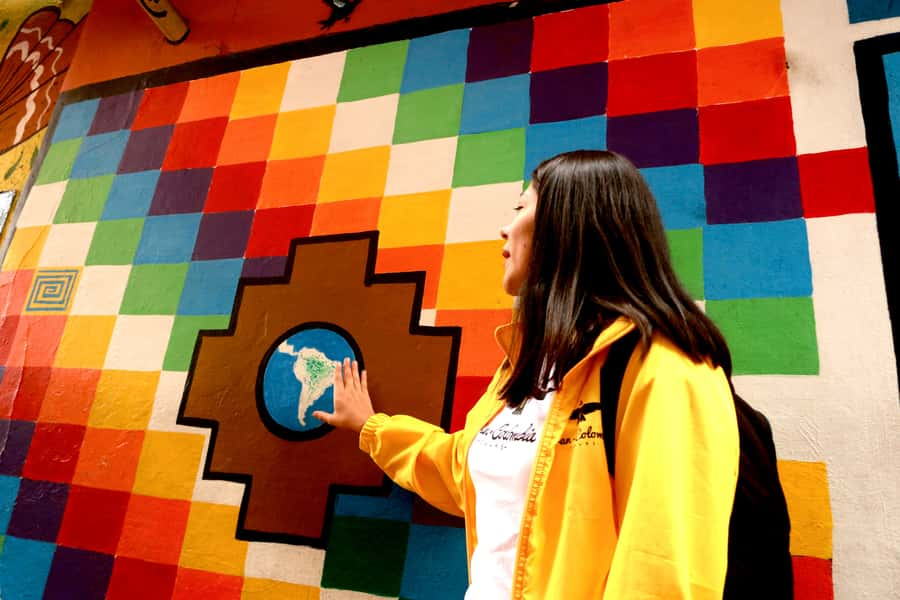
This is also where the tour’s social and political focus becomes clearest. You hear how artists retell stories of indigenous ancestry and connect those stories to modern Bogotá. You may also encounter themes involving current issues and the environment.
The experience works best if you come ready to discuss rather than simply receive facts. Several guides have used questions to draw people into a conversation about art and culture. That approach makes the walk feel less like a lecture and more like a shared reading of the city.
More guided art walks around Colombia:
- London: Street Art and Graffiti Guided Walking Tour
★ 4.9 · 1,354 reviews - Berlin: City Street Art Guided Walking Tour
★ 4.8 · 1,051 reviews - Palermo: Graffiti and Street Art Guided Tour in English
★ 4.8 · 684 reviews - Glasgow: Street Art Guided Walking Tour
★ 4.8 · 385 reviews
A Closer Look at Women Artists and Indigenous Themes
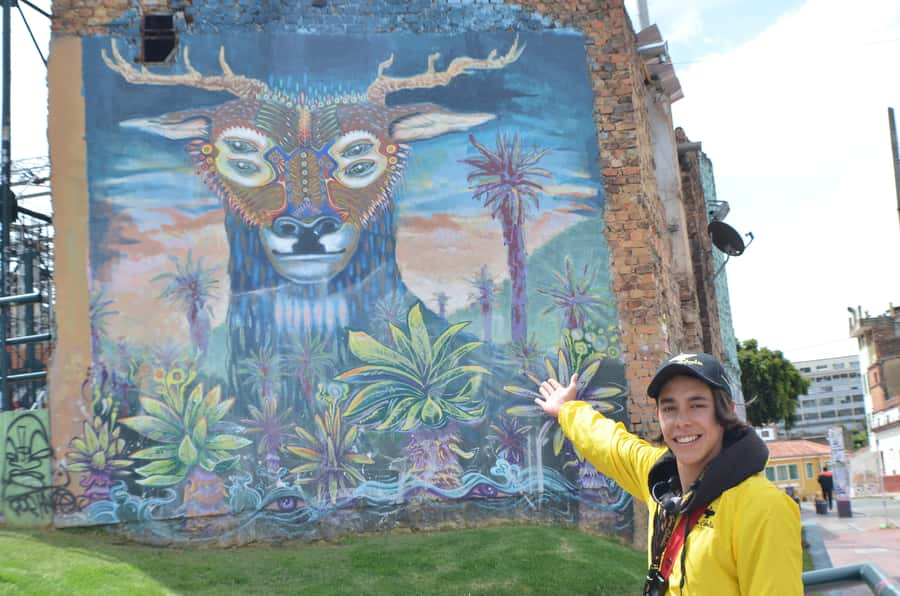
One of the tour’s strongest features is its effort to show more than the usual collection of famous names. The work of Bastardilla, Vera, and Ledania gives you a chance to consider how women have contributed to the spread and development of graffiti in Bogotá.
You also hear about indigenous ancestry and the ways artists bring it into urban work. These themes can be easy to overlook when you are focused on color, scale, and technique. The guide’s comments help you see that the murals may carry cultural memory as well as visual impact.
The selection is broad enough to include social issues, environmental concerns, local identity, and artistic process. It is not a course in Colombian politics, and the time is limited. Still, the tour gives you enough background to understand why public art carries such weight in this city.
If you already follow street art, you will probably appreciate the discussion of styles and artists. If you know little about graffiti, you will get a useful framework without needing an art background.
Ending at Café Herencia With Coca Leaf Tea
The walk finishes at Café Herencia, a coffee shop that supports local artists. Here you taste coca leaf tea, along with a small local treat as part of the experience.
Coca leaf tea deserves a little context. The tour presents it as a Colombian drink connected to local culture, not as a novelty to rush through. The café setting also gives you time to pause after the walk and look at more art in a less hurried way.
Do not confuse this with a full meal or coffee tasting. The tea is a modest final stop, but it gives the tour a pleasant sense of closure. It also brings you into a business linked to the artistic community you have been learning about.
Some guides have included other local tastes during the visit, but the stated inclusion is Colombian tea tasting. If you have dietary concerns or want more food, plan a separate meal.
What the $16 Price Gets You
At $16 per person, this is a strong value if you want interpretation rather than a self-guided photo walk. The price includes a Gran Colombia Tours guide, the street-art route, the social and political background, coca leaf tea, risk insurance, and an umbrella if it rains.
The biggest value is the guide’s local knowledge. Bogotá’s murals can be seen for free, but finding the right works and understanding their references on your own takes time. A good guide can also point out pieces that you would probably walk past.
Transportation is not included. That is not a major issue if you are already in La Candelaria, but you need to reach Chorro de Quevedo Square yourself. The tour returns to the same square, so there is no complicated end point to locate.
The tour lasts 150 minutes and is limited to 10 participants. That is long enough for a serious introduction without taking up an entire day. The small group also helps when the guide stops on a narrow street or when several people want to ask questions.
Practical Tips for a Better Walk
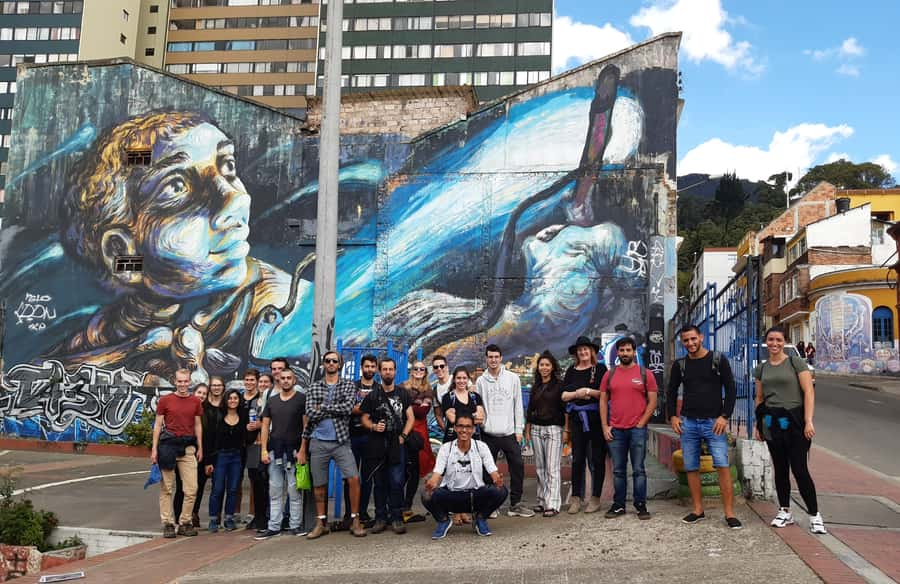
Wear comfortable shoes. You will be on foot for most of the experience, and the route includes several stops across central streets rather than one concentrated gallery.
Use sunscreen and bring water. Bogotá’s weather can change, so bring a light layer or rain protection suited to the day. An umbrella is available in case of rain, but weather-appropriate clothing will make the walk easier.
Keep your camera ready, but stay with the group. The instructions specifically warn against walking away, especially around busy public areas. This is good common sense for any city walk.
If you speak English and Spanish, tell the guide. The tour can run in both languages at once depending on the group. That arrangement makes the activity accessible to mixed-language parties, but it may mean that each explanation takes longer.
For the clearest experience, ask questions about the artists and symbols as you go. Guides such as Juana, Luis, Christian, Lorena, and Bernardo have been praised for being patient and engaging, but the quality of any walking tour depends partly on how actively you take part.
The booking terms are flexible. You can reserve and pay later, and cancellation is free up to 24 hours before the start time. That helps if your Bogotá plans depend on weather or a changing schedule.
Who Should Book This Bogotá Art Tour?
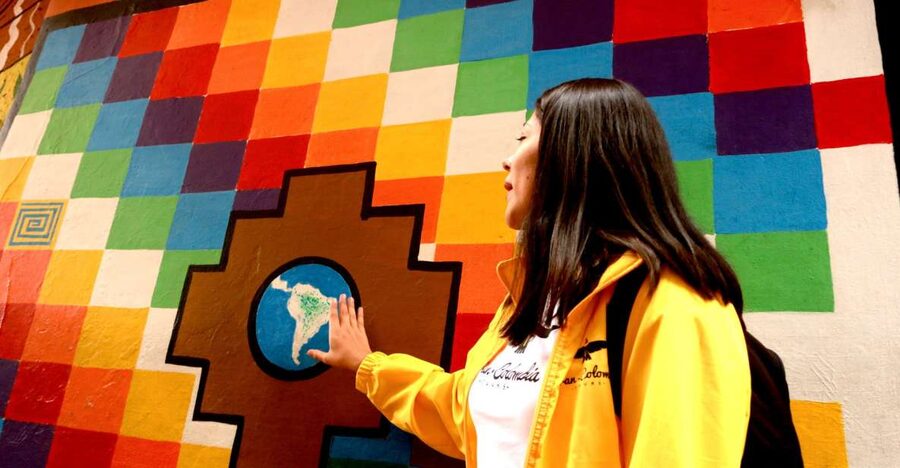
I would choose this tour if you want to understand Bogotá’s street art instead of simply collect photographs. It suits first-time visitors, anyone interested in public art, and people who want a cultural activity that does not require a full day.
It is also a good match for visitors with limited time. The route covers several major parts of central Bogotá in 150 minutes, then returns to the starting square.
You may want something else if you dislike walking, want a private experience guaranteed in one language, or prefer a tour focused on food, architecture, or museums. The route is built around street art and discussion, so the value depends on your interest in those subjects.
Should You Book the La Candelaria Graffiti Tour?
Book it if the idea of seeing Colombia through murals appeals to you. The strongest reasons are the well-chosen range of artists, the attention to women and indigenous themes, and the explanations of political and cultural ideas behind the images.
The coca tea at Café Herencia is a nice finish, but it is not the main reason to go. Book for the guide’s interpretation, the small group, and the chance to find art you might miss while wandering alone.
At $16, the tour offers a practical introduction to one of Bogotá’s most distinctive cultural scenes. Just arrive ready for a long walk, changing weather, and the possibility of a bilingual group.
FAQ
Where does the Bogotá graffiti tour begin?
It begins at Plazoleta del Chorro de Quevedo, beside the fountain and the yellow umbrella.
What time does the tour start?
The tour meets every day at 10 a.m. and 2 p.m.
How long does the tour last?
The experience lasts 150 minutes.
Which languages are available?
The live guide service is available in English and Spanish. Depending on the group, both languages may be used during the same tour.
How large is the group?
The tour is limited to 10 participants.
Is transportation included?
No. You need to make your own way to Chorro de Quevedo Square, and transportation is not included in the price.
What is included in the experience?
The price includes the Gran Colombia Tours guide, explanations of the social and political context of Bogotá’s street art, visits to downtown graffiti, Colombian tea tasting, risk insurance, and an umbrella in case of rain.
Can I cancel the booking?
Yes. You can cancel up to 24 hours before the tour for a full refund. You can also reserve now and pay later.
Freshly painted around Colombia
- Comuna 13 Neighborhood & Street Art Private Tour★ 4.7 · 12 reviews
- Medellin: Graffiti Tour Comuna 13★ 4.1 · 14 reviews
- Medellín Comuna 13 local guides snacks and your own graffiti★ 4.9 · 13 reviews
- Comuna 13: Recorrido de Arte Urbano, Cultura y Resiliencia★ 5.0 · 3 reviews
- Fun Graffiti Workshop: The Art of Aerosol and Color★ 5.0 · 3 reviews
- Graffiti Tour: a fascinating walk through a street art City★ 5.0 · 5 reviews
- Comuna 13: Graffiti Tour with Tasting, Live Show, & Gallery★ 5.0 · 4 reviews
- Complete Tour in Comuna 13: Graffiti, History and Street Delights★ 5.0 · 11 reviews
Bogota Street Art Tours, compared.
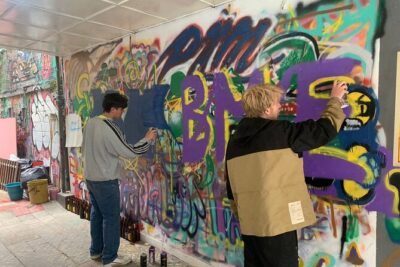
Fun Graffiti Workshop: The Art of Aerosol and Color
Read our review →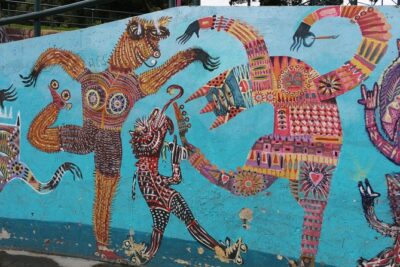
Graffiti Tour in La Candelaria Bogotá with Transportation
Read our review →
Bogotá: Graffiti Tour el mejor recorrido de arte urbano
Read our review →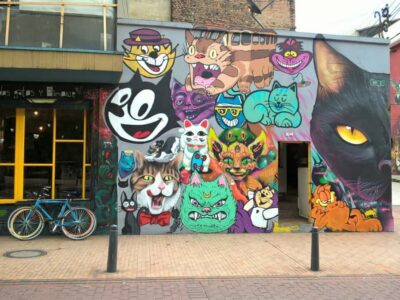
Graffiti Tour: a fascinating walk through a street art City
Read our review →Browse the lists this tour appears in