
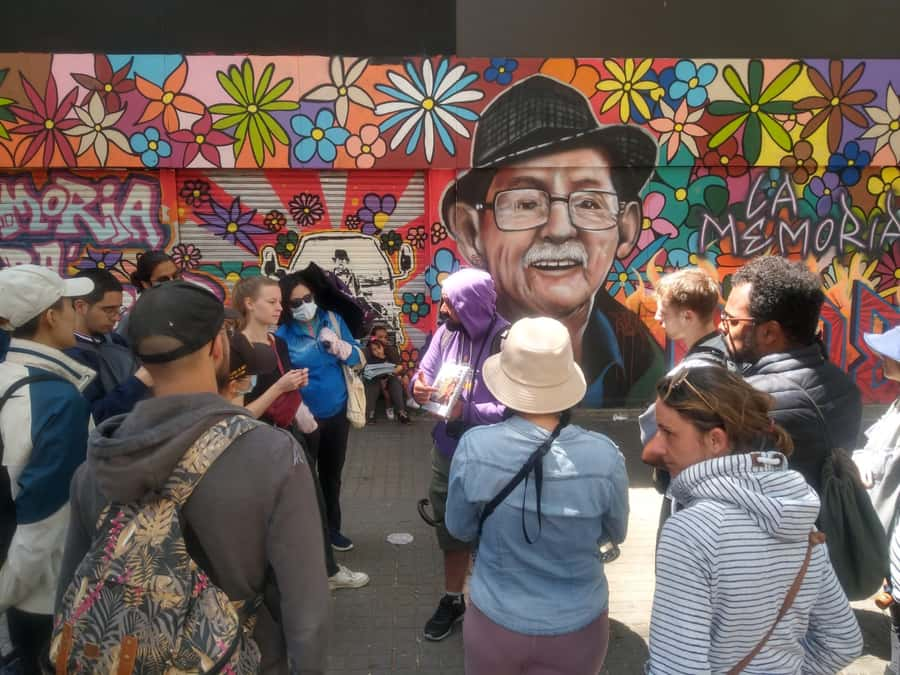
Review · BOGOTA
Graffiti Tour: a fascinating walk through a street art City
Bogotá’s street art is not just decoration. It is a public record of protest, memory, peace, and hope, and this 150-minute walking tour takes you straight into that conversation. You’ll see the country’s tallest illegal graffiti and political posters that respond to current social issues.
I like the tour’s social purpose: part of the money supports local artists and community leaders who help fund and manage new murals. I also like that the guides are artists, not simply people reciting dates. The main consideration is that this is a serious, discussion-heavy walk, so it may feel less like a casual photo stop and more like a lesson on Colombia’s recent struggles.
Key points to know before you go
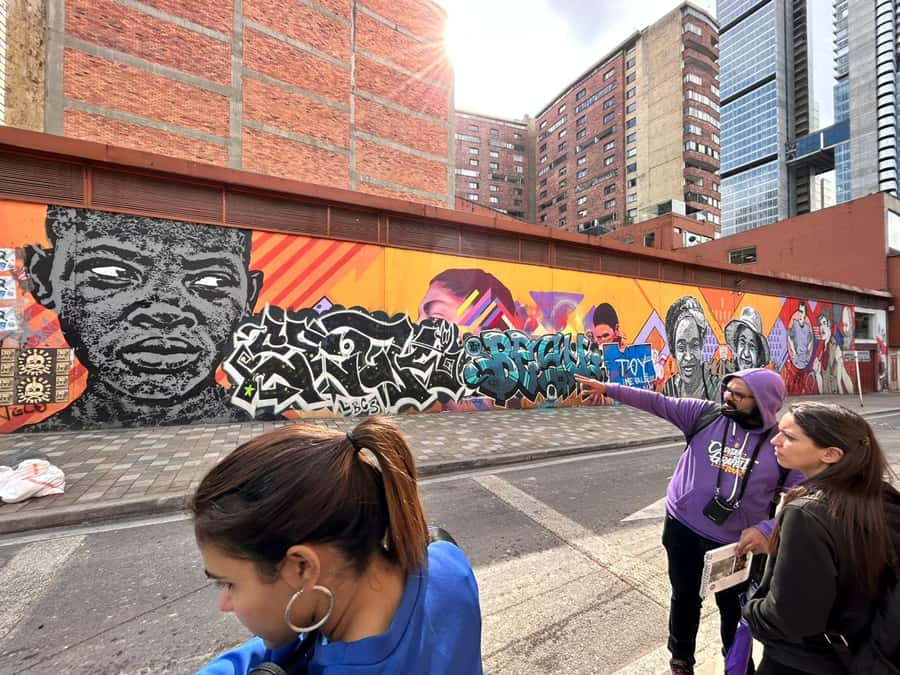
- The tallest illegal graffiti in Colombia gives the walk a dramatic centerpiece and a clear sense of the scale of Bogotá’s street art.
- Political posters and murals address current social issues, the peace process, and the city’s hopes for a better future.
- Community resilience after false positives is part of the story, connecting public art with painful experiences and local strength.
- Artist-guides explain technique and context, including the cultural, political, historical, and geographical meaning behind the work.
- The $15 shared option supports the guides’ work, with no extra payment required at the end.
- Meeting beside the Gold Museum makes the starting point easy to find, especially with the guide’s purple hoodie, cap, or umbrella.
Why Bogotá’s graffiti deserves a guided walk
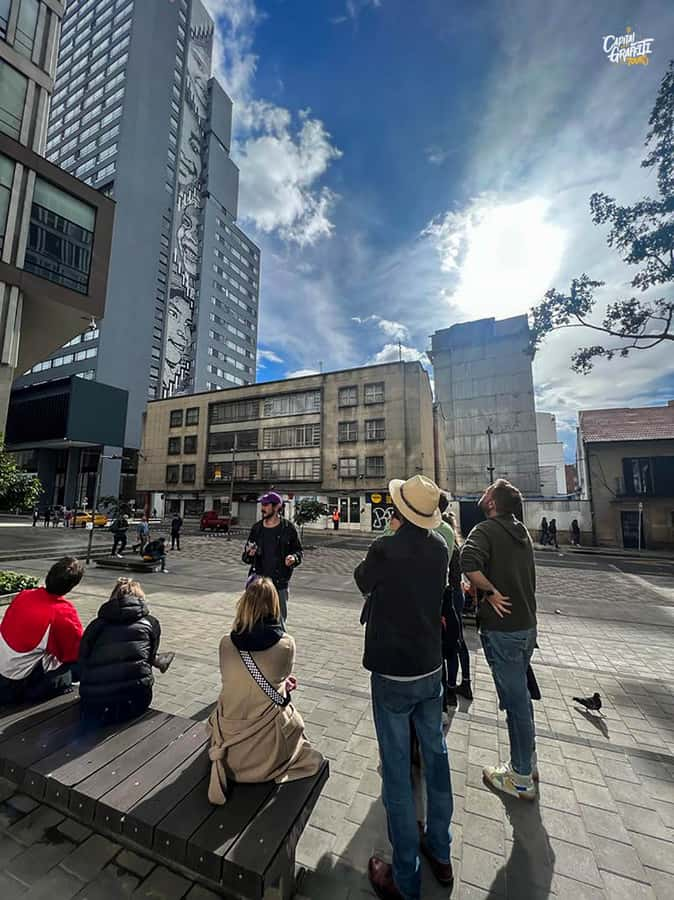
You can see Bogotá’s murals on your own. You can also photograph them without understanding why they are there. This tour is for the second problem.
The art belongs to the street, but its subjects reach well beyond paint and concrete. Your guide places each work within Bogotá’s complex past, its current peace process, and its hopes for a fairer future. That context matters because political graffiti can be blunt, symbolic, or difficult to interpret if you only glance at it while passing by.
The tour is run by Capital Graffiti Tours, a group that works with artists and community leaders. Its aim is not simply to show finished murals. The company reinvests in the creation and management of new works, helping public art remain an active part of local life.
That gives the walk a useful edge. You are not only looking at a wall. You are learning how artists use a wall to make an argument, preserve a memory, or ask a question that may not receive much space elsewhere.
More Graffiti Tours in Colombia:
- Medellin: Comuna 13 Graffiti Tour, Cable Car & Street Food
★ 4.8 · 9,046 reviews - Medellín: Comuna 13 Tour with Snacks And Your Own Graffiti
★ 4.9 · 311 reviews - Bogotá: La Candelaria Graffiti & Urban Art Guided Tour
★ 4.7 · 250 reviews
Meeting beside the Gold Museum
The meeting point is next to the Gold Museum at Carrera 6 #15-88. Look for a guide wearing a purple hoodie or cap, or carrying a purple umbrella.
This is a practical starting point in central Bogotá. Give yourself enough time to reach the museum area without rushing. The tour lasts 150 minutes, and you will be on foot for much of that time, so comfortable shoes are sensible.
The meeting instruction is unusually clear, which helps in a busy city center. Still, do not rely only on a phone screen when you arrive. Spotting the purple clothing or umbrella will be the quickest way to connect with your guide.
The tour does not include valuables, so take only what you need. A small bag, water, and a phone or camera are reasonable choices, but avoid carrying items you would worry about during a city walk.
The first murals: learning how to read street art
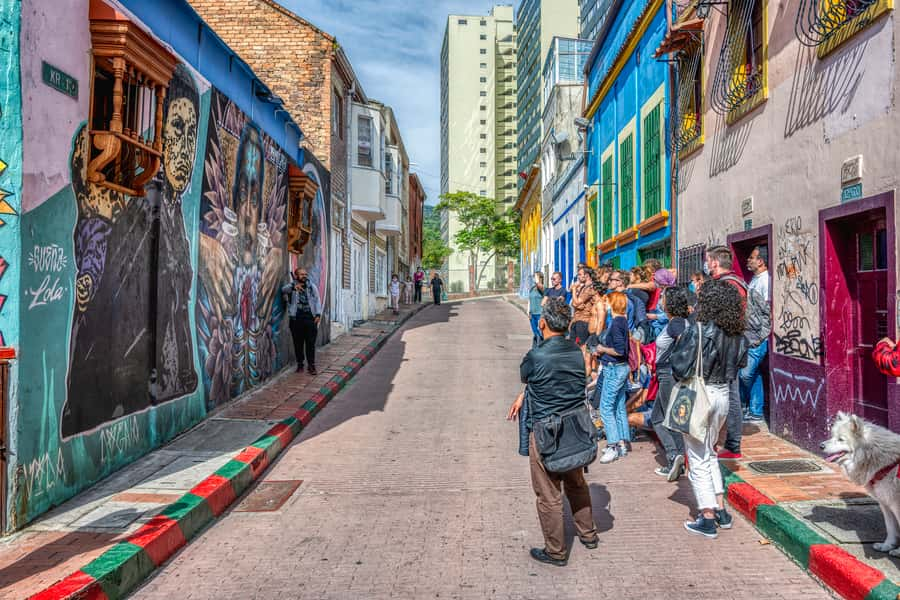
Early in the walk, your guide introduces the basic language of Bogotá’s street art. You will encounter several techniques and different approaches to making images in public space.
The guide explains who created the work, what inspired it, and how its technique affects the message. A large painted mural communicates differently from a quickly placed poster or a smaller piece hidden among other marks. Looking at process helps you notice the decisions behind the final image.
This is one of the tour’s strongest features. Instead of treating every wall as a colorful background, the guide points out the cultural and political details that give the art weight. You may find yourself looking at color, scale, lettering, and placement in a more careful way.
The experience is also useful for people who already like street art. Bogotá’s streets contain enough work to reward an informed eye, and an artist-guide can connect individual pieces to wider movements and concerns.
The country’s tallest illegal graffiti
One of the clearest highlights is the tallest illegal graffiti in Colombia. The scale alone makes it memorable, but its importance also comes from the question of permission.
The piece represents a form of public expression created outside official approval. That does not automatically make every illegal work meaningful, of course, but it shows why Bogotá’s street art can carry a different energy from commissioned public art. The act of painting can itself be part of the message.
Your guide uses this stop to explain the work and the artists behind it. Because the tour provides political, cultural, historical, and geographical context, you get more than a quick look upward and a photograph.
The drawback is simple: large graffiti is not always easy to take in at once. You may spend time looking at one section, then another, while the guide explains the whole piece. If you prefer a fast series of photo stops, this part may feel slow. If you want to understand how size changes public art, it earns the time.
More Street Art Tours around Colombia:
- Medellín: Comuna 13 and Graffiti Guided Tour with a Local
★ 4.9 · 239 reviews - Historical Shared Tour Salsa, Graffiti & Resistance in Cali
★ 5.0 · 107 reviews - Medellín: Private Comuna 13 Street Art Tour
★ 4.8 · 88 reviews - Fun Graffiti Workshop: The Art of Aerosol and Color
★ 5.0 · 73 reviews
Political posters and current social issues
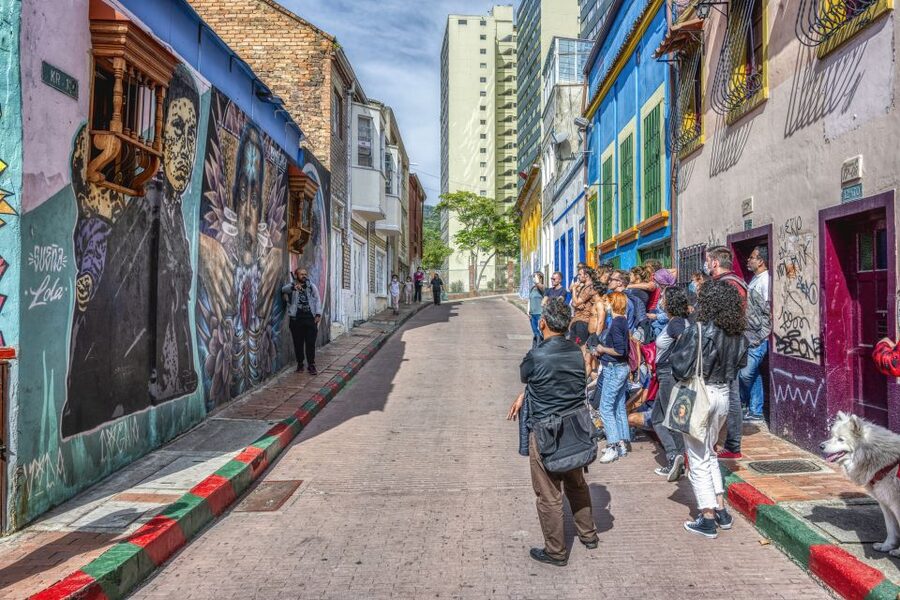
The tour also enters an area known for political posters. These works address current social issues and give the walk a sharper tone than a standard art outing.
Posters can feel immediate because they often use direct words and simple images. They do not need the polish of a gallery display. Their purpose may be to provoke, criticize, inform, or keep an issue visible in public view.
Your guide helps connect these messages with Colombia’s recent past and present peace process. That does not mean the tour turns into a formal political lecture. Instead, the public art becomes a way to discuss how a city remembers conflict and expresses hopes for change.
You should come ready to listen, not just photograph. Some subjects may be difficult, especially when the art refers to false positives and the resilience of communities affected by them. The tour treats these themes as part of a broader story about endurance, justice, and the power of public expression.
False positives and community resilience
The reference to false positives gives this walk a serious human focus. The subject concerns painful events, and the tour uses community response and street art to show how people continue to confront that past.
You should not expect a lighthearted art stroll from this section. The value comes from seeing how a neighborhood and its artists respond to difficult realities. Murals and posters can give public space to stories that might otherwise be ignored.
The guides explain this material within the city’s larger history and present-day aspirations. That approach allows you to see resilience not as a vague slogan, but as something expressed through images, remembrance, and organized community activity.
This is also where the tour’s cultural purpose becomes clearest. Capital Graffiti Tours presents street art as a tool for education and social change. The company’s work with community leaders supports the idea that murals are not finished products only. They can be part of an ongoing local effort.
How the peace process shapes the art
Bogotá’s graffiti reflects a country trying to understand its past while building a different future. The tour links murals and posters to the peace process, helping you recognize why public walls can become places for debate.
You may see art that deals with loss, political disagreement, or the desire for a better society. The guide provides the background needed to avoid reading those images as isolated slogans. A symbol may refer to a local event, a national debate, or a shared memory.
This is especially valuable if you are new to Colombia. The tour does not assume that you already know the country’s recent history. It gives you enough political and geographical context to follow the discussion without turning the walk into a textbook lesson.
I appreciate that the experience connects art with daily civic life. You are not being asked to admire a mural simply because it is large or colorful. You are being shown how its subject, location, and audience can shape its meaning.
Artists, techniques, and the value of a local guide
The guides are artists themselves, and that changes the way the tour is presented. They can discuss technique as well as subject, and they introduce you to a range of local artists and creative methods.
That matters because street art is not one single style. A mural may depend on detailed painting, bold lettering, layered images, or a fast application suited to working in public. The tour helps you see the work as a series of choices rather than one broad category.
A guide can also explain how inspiration moves from an artist’s personal experience into a public image. The tour’s stated approach includes cultural, historical, political, and geographical context, giving you several ways to interpret what you see.
The language choice is another strength. Live tours are offered in English, Spanish, Italian, French, and German. You will have a better chance of following complex subjects when the guide can explain them in a language you understand comfortably.
No individual guide names are provided, so you should not book expecting a particular person. The reliable detail is the guide’s role as an artist and the purple clothing or umbrella used at the meeting point.
Shared, private, and small-group choices
The shared option is priced at $15 per person. The amount is treated as the suggested tip for the guides’ work, minus commission, and you do not need to pay anything extra at the end, even if other people in the group choose to add more.
That arrangement makes the price easy to judge. For two and a half hours, you are paying for an English-speaking or multilingual guide, several street art locations, and the cultural work behind the walk. You are also supporting a company that reinvests in murals and community projects.
A shared group is likely the best value if you enjoy meeting other people and want an affordable introduction to Bogotá’s street art. Private and small-group options make more sense if you want to ask many questions, need a slower pace, or prefer a more personal discussion of political subjects.
The available information does not specify the maximum group size, so ask when booking if the size of the group is important to you. The tour is wheelchair accessible, which is useful, though the precise walking route and surface conditions are not provided.
Timing, pace, and what to bring
The walk lasts 150 minutes, long enough to cover several locations without turning the experience into a rushed checklist. The pace will depend on the guide, the group, and the time spent discussing individual works.
Plan for an outdoor city walk rather than a gallery visit. Wear comfortable shoes and carry only necessary items. Valuables are not allowed, so keep your belongings simple.
You can cancel up to 24 hours in advance for a full refund. The reserve-now, pay-later option also lets you hold a place without paying today, which is helpful if your Bogotá schedule is still changing.
Starting times vary, so check availability before you book. Since the meeting point is beside the Gold Museum, you can pair the tour with other central activities, but leave enough time to locate the purple-clad guide.
Who will enjoy this tour most
I would choose this experience if you want art with a clear social and political purpose. It suits visitors who enjoy asking why a work exists, who made it, and what its location says about the surrounding community.
It is also a good choice for first-time visitors who want a guided introduction to Bogotá’s cultural life. You receive background on the city, its past, the peace process, and current social issues without needing to arrange several separate visits.
Families with older children and teenagers may find the visual side engaging, although the subjects are serious. Anyone looking for only cheerful murals and quick photographs should choose carefully.
Art students, photographers, and visitors interested in public space may get particular value from the explanations of technique and scale. The tour also suits people who want their spending to support local creative work rather than only commercial sightseeing.
Should you book Capital Graffiti Tours?
Book this tour if you want Bogotá’s street art explained as part of the city’s political and social life. The tallest illegal graffiti, the political posters, and the discussion of false positives give it more substance than a simple mural walk.
At $15, the shared option offers good value for 150 minutes, especially because the price supports guide work and the creation of new murals. Choose a private or small-group format if discussion and personal attention matter more than the lowest cost.
Skip it if your ideal outing is a light, purely visual stroll. This experience asks you to think about conflict, peace, public expression, and community resilience. For the right visitor, that seriousness is the point.
FAQ
Where does the graffiti tour meet?
It meets next to Bogotá’s Gold Museum at Carrera 6 #15-88. Look for a guide wearing a purple hoodie or cap, or carrying a purple umbrella.
How long does the tour last?
The tour lasts 150 minutes.
How much does the shared tour cost?
The shared option costs $15 per person.
What does the tour include?
It includes an experienced English-speaking guide and visits to multiple street art and graffiti locations.
Which languages are available?
Live guides are available in English, Spanish, Italian, French, and German.
Is the tour wheelchair accessible?
Yes, the activity is listed as wheelchair accessible.
Can I book a private or small-group tour?
Yes. Private and small-group options are available.
Can I cancel for a refund?
Yes. You can cancel up to 24 hours in advance for a full refund.
Freshly painted around Colombia
- Comuna 13 Neighborhood & Street Art Private Tour★ 4.7 · 12 reviews
- Medellin: Graffiti Tour Comuna 13★ 4.1 · 14 reviews
- Medellín Comuna 13 local guides snacks and your own graffiti★ 4.9 · 13 reviews
- Comuna 13: Recorrido de Arte Urbano, Cultura y Resiliencia★ 5.0 · 3 reviews
- Fun Graffiti Workshop: The Art of Aerosol and Color★ 5.0 · 3 reviews
- Comuna 13: Graffiti Tour with Tasting, Live Show, & Gallery★ 5.0 · 4 reviews
- Complete Tour in Comuna 13: Graffiti, History and Street Delights★ 5.0 · 11 reviews
- Comuna 13: Graffiti tour & Street Food/drink with telesferic★ 4.4 · 19 reviews
Bogota Street Art Tours, compared.
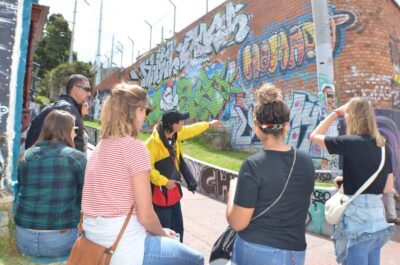
Bogotá: La Candelaria Graffiti & Urban Art Guided Tour
Read our review →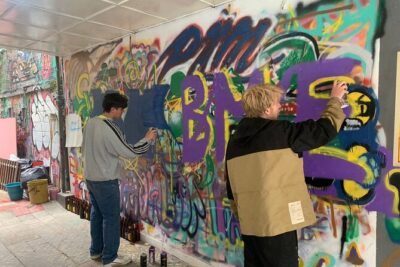
Fun Graffiti Workshop: The Art of Aerosol and Color
Read our review →
Graffiti Tour in La Candelaria Bogotá with Transportation
Read our review →
Bogotá: Graffiti Tour el mejor recorrido de arte urbano
Read our review →
Browse the lists this tour appears in