

Review · LISBON
LISBON Street Art Tour
Lisbon’s street art is not confined to one gallery or one famous wall. It spreads across old lanes, stairways, façades, and overlooked corners, often sitting beside laundry, tiled houses, and everyday neighborhood life. This tour uses that art to explain Mouraria, Graça, and São Vicente, including the local roots of fado and the city’s changing identity.
I like the small group limit of 10, which gives you a fair chance to ask questions. I also like the guide’s artist-led approach. Guides such as Diogo, Vero, Vera, Luisa, Ben, and Diego have explained technique, politics, community projects, and the difference between approved street art and illegal graffiti.
The catch is the walking. You will climb steep streets and many stairs, sometimes in heat or rain, so this is not a gentle sightseeing stroll. Good shoes are essential, and you should eat beforehand because the tour uses most of its three hours.
Key things to know before you book
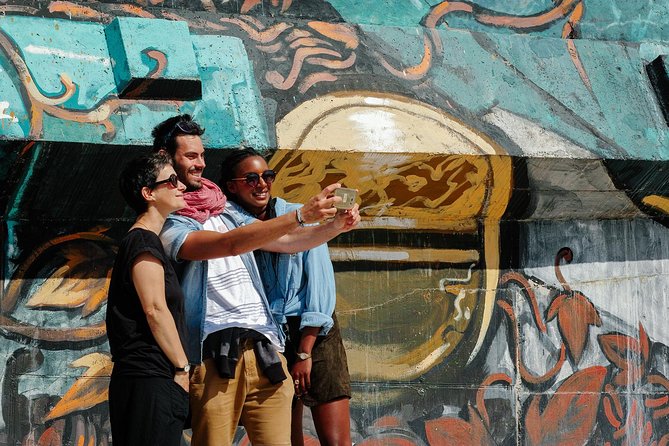
- Mouraria gives the art a local setting: You see street art beside fado history, old lanes, and daily life rather than in a polished gallery.
- The route climbs through Graça: The views are excellent, but the hills and stairs require moderate fitness.
- The guide adds artistic context: Expect discussion of methods, artists, social issues, and the difference between graffiti and street art.
- The art keeps changing: Some pieces may be painted over, tagged, or replaced, so the route can differ from one visit to the next.
- The group is capped at 10 people: That matters when you want to ask about a mural or stop for a photograph.
- The $24.20 price is fair: You get about three hours of guiding through several neighborhoods, with no extra admission fees.
Why Lisbon’s street art works best on foot
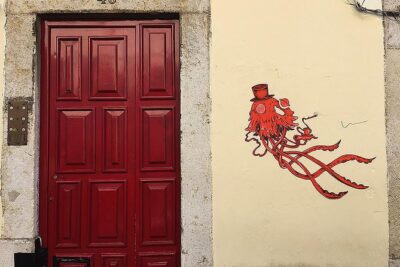
Lisbon can tempt you to focus on grand viewpoints, tiled churches, and the main tourist streets. This walk shifts your attention to the walls around you. A small stencil, a painted doorway, or a large façade mural can reveal just as much about the city as a formal monument.
The useful thing here is the connection between artwork and place. In Mouraria, the walls reflect the character of one of Lisbon’s most distinctive neighborhoods. In Graça and São Vicente, large commissioned murals sit alongside smaller pieces and passing additions. You are not simply counting murals. You are seeing how art responds to a community.
The guides also help you read what is in front of you. A practicing artist can point out technique and materials. A guide connected with Lisbon’s art scene can explain how artists work together, how city-approved projects differ from unsanctioned marks, and how a piece may carry a social or political message.
That context makes the price easier to judge. At $24.20 per person, you are paying less for admission to a set attraction and more for three hours of interpretation, neighborhood walking, and local orientation. There are no ticketed sights along the route, but the guide’s explanations are the main service.
More Street Art Tours around Lisbon:
- Lisbon: Street Art Tour
★ 4.9 · 1,324 reviews - Lisbon: Kickstart Street Art Walking Tour
★ 4.9 · 717 reviews - Lisbon: Street Art Tuk Tuk Tour
★ 4.9 · 372 reviews
Starting at Largo da Graça
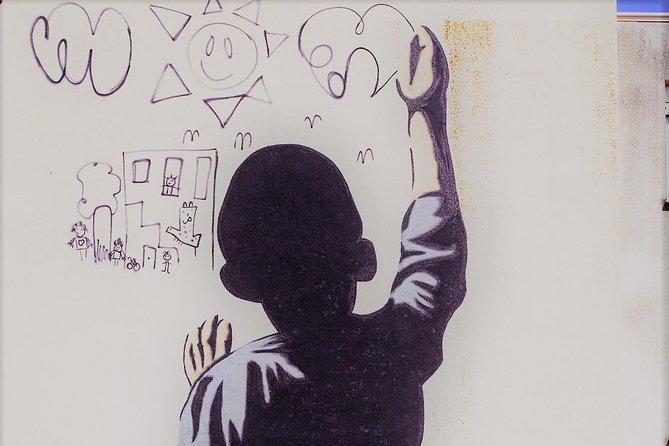
The meeting point is Largo da Graça 13, a central spot in the Graça area. Starting here makes practical sense because you are already near one of Lisbon’s hilltop neighborhoods, rather than spending the first part of the tour crossing the city.
The group is limited to 10 people. That is small enough for the guide to speak with everyone and adjust the pace within reason. If you are curious about a particular artist or want help locating a piece on a paper map, this format is more useful than a large group where questions get lost.
The tour is offered in English and uses a mobile ticket. Confirmation arrives when you book. It is also close to public transportation, though the details of your route to the meeting point depend on where you are staying.
You should arrive ready to walk. This is not a hop-on, hop-off art circuit. You will spend the full outing on foot, moving through slopes, staircases, and uneven urban streets.
Mouraria and the Escadinhas de São Cristóvão
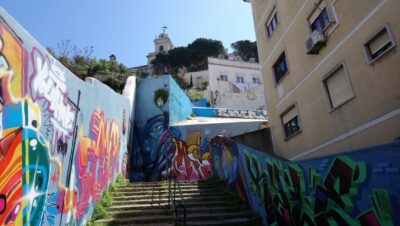
The first main stop is the Escadinhas de São Cristóvão, in Mouraria. The setting feels like an open-air gallery, but the neighborhood matters as much as the art.
Mouraria is closely tied to the beginnings of fado, and the tour uses that connection to explain local culture. You may see photography and painted scenes that reflect the neighborhood’s people and character. The art is not presented as decoration floating apart from its surroundings. It is part of a district with its own memories, music, and daily rhythms.
Allow about an hour here. That gives the guide time to point out both major works and smaller details. You may pass art that you would otherwise walk past without noticing, especially pieces tucked into stairways or placed high on walls.
This is also one of the strongest sections for photographs. The narrow streets, old façades, and changing elevations create a more textured setting than a single purpose-built mural wall. Bring a phone or camera, but do not let the search for the perfect picture keep you from listening. The stories behind the works are a large part of what makes this stop worthwhile.
The climb to Miradouro da Graça
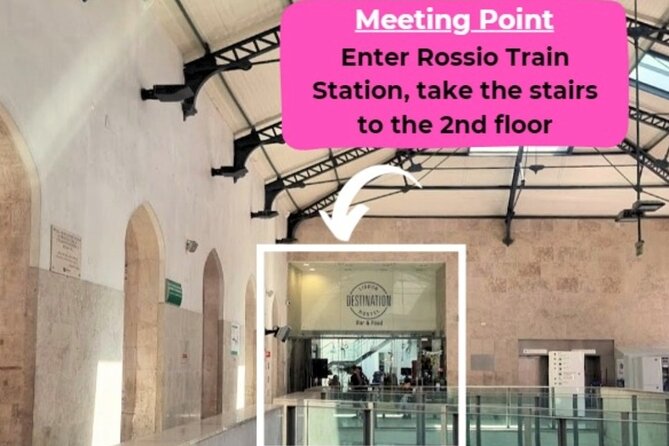
From Mouraria, the route heads uphill toward Miradouro da Graça, also known as the Sophia de Mello Breyner Andresen viewpoint. The listed stop lasts about 15 minutes, but reaching it is part of the experience.
The climb can be demanding. Lisbon’s hills are not a minor detail here, and several people find the combination of stairs and uphill streets tiring, especially in warm weather. The reward is a strong view over the city and another way to understand how Graça sits above the older neighborhoods.
This stop is short, so do not expect a long viewpoint break. Think of it as a chance to catch your breath, take photographs, and see the city’s setting before continuing through the neighborhood.
If you have limited mobility or dislike steep climbs, this is the clearest warning point. The tour provider asks for moderate physical fitness, and that advice is worth taking seriously. The route includes steep uphill and downhill stretches, not just level sidewalks.
Same walls, a different way in:
- 3-Hour Guided Street Art Walking Tour of Lisbon
★ 5.0 · 278 reviews - Lisbon Street Art Walking Tour
★ 5.0 · 141 reviews - Lisbon: 3-Hour Street Art Tuk Tuk Tour
★ 4.8 · 86 reviews - Lisbon: Street Art Walk
★ 5.0 · 79 reviews
Graça and São Vicente’s large murals

The longest section covers Graça and São Vicente, with roughly an hour and a half devoted to streets, façades, and larger murals. This is where the tour feels most like a moving exhibition.
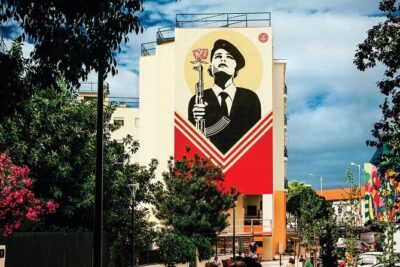
Graça has an especially strong mix of local and international work. Large paintings cover building fronts, while smaller marks appear in spaces that are easy to miss. The guide can help you tell the difference between a legal commission, a community project, a temporary work, and graffiti added without permission.
The route also passes the group’s own Walls of Fame. This adds a personal link to the local art community and gives you a better sense of how artists contribute to the area rather than simply arriving as outside observers.
Do not expect the exact same collection every time. Street art is temporary by nature. A mural may fade, be painted over, or acquire new marks. A piece that was present recently may no longer be there, while an unexpected new work may appear. That change is not a flaw, but it does mean the experience cannot be treated like a fixed museum checklist.
The guides’ backgrounds matter most here. Diogo has been praised for detailed explanations, while Vero has brought an anthropological view of Portuguese culture and the human stories connected to the art. Luisa has been noted for spotting small artistic details, and Ben has made the walk accessible and lively for people who simply enjoy art.
You may also hear about artists and movements that you would not encounter on a standard city tour. The subject can move from painting methods to women’s role in the art community, from neighborhood change to political ideas expressed through images. If you are willing to ask questions, the small group makes this section especially rewarding.
Jardim Botto Machado and the azulejo wall
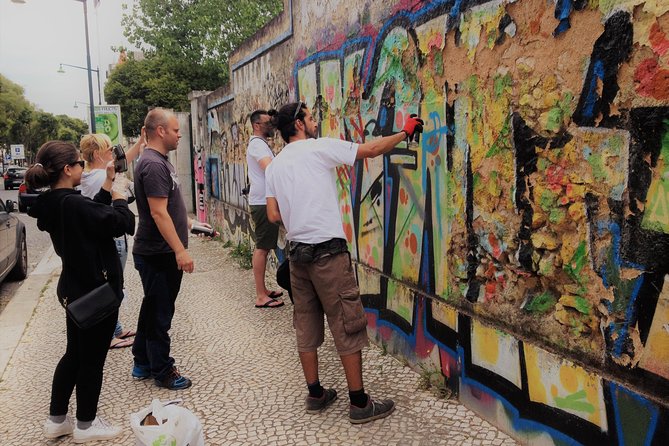
The final listed stop is Jardim Botto Machado, near the São Vicente side of the route. Here you see a long azulejo wall described as the world’s longest. It is a colorful, highly Portuguese counterpoint to the painted murals and graffiti seen earlier.
The wall links contemporary street-art exploration with the country’s traditional tile work. That contrast is useful. Lisbon’s public art is not only spray paint and large figures. The city’s visual language also includes patterned tiles, bold color, and images built into the architecture.
The stop lasts about 15 minutes, giving you time to look closely and photograph the wall. It is a fitting final piece because it shows that public art in Lisbon has older roots than the current street-art movement.
The walk may finish somewhere in Graça or Alfama, depending on the time available and the group’s energy. The stated meeting location is also the starting point, but you should not assume you will return to the exact same spot. That flexible ending is worth noting if you have a timed reservation afterward.
What the guide adds to the experience

The guide is the difference between seeing a wall and understanding why it is there. You can certainly walk around Graça on your own, but you are likely to miss smaller works, artist connections, and the meaning behind images that look simple at first glance.
The best part of the guiding is the separation of street art from graffiti. Those terms are often treated as interchangeable, but the tour explains that they can involve different aims, permissions, methods, and relationships with the city.
You also get a local view of change. A native guide can point out how neighborhoods have shifted and how public art fits into that process. One guide has worked with an art collective and recognized new pieces connected to approved city projects. That kind of immediate knowledge is hard to reproduce with a map or guidebook.
The tone appears to be informal rather than academic. Guides have answered questions, recommended places to eat, and suggested other parts of Lisbon for finding more art. Some tours may include a guide’s dog, but that is not something you should count on for your own departure.
Walking, weather, and what to bring

Plan this as an active outing. Wear shoes with good grip and support. The route includes stairs, uphill streets, steep downhill sections, and frequent walking between works.
A snack or breakfast is sensible because the activity can take the full three hours. Some groups have gone longer when there were only a few people and plenty of questions, so avoid scheduling lunch or another ticketed visit too tightly afterward.
Weather affects the experience. An umbrella is useful in January, and hot days can make the hills harder. The tour does stop often, which helps, but regular breaks do not remove the physical demand.
A phone or camera is worth bringing. You will have repeated photo opportunities, from Mouraria’s stairways to Graça’s large murals and the azulejo wall at Jardim Botto Machado. Keep your hands free enough for stairs, and pay attention to the guide rather than trying to photograph every surface.
Service animals are allowed. The activity is near public transportation, and the provider recommends moderate physical fitness. Those details make the tour workable for many people, but not for anyone who cannot manage substantial stairs.
Who gets the most from this tour
I would choose this for someone who has already seen Lisbon’s main monuments and wants a different way to read the city. It also works well early in a stay because the guide may point you toward neighborhoods and additional art areas to explore later.
Art lovers will get the most obvious value, especially anyone interested in public art, political imagery, photography, or the boundary between sanctioned and unsanctioned work. You do not need formal art training. The tour is designed to explain what you are seeing in plain terms.
It is also a good fit for solo visitors. The small group encourages conversation, and the guide makes an effort to include everyone. Couples and families can enjoy it too, provided everyone is prepared for hills and a full three hours of walking.
I would skip it if you want a flat route, a short photo stop, or a fixed collection of famous works. The art changes, the route can vary, and the physical effort is real. Someone with serious mobility limits should choose a different activity.
Cancellation, timing, and overall value
The tour costs $24.20 per person and lasts about three hours. With a maximum of 10 people, that is a reasonable price for a guided walk across several historic neighborhoods, especially when the guide brings direct experience of Lisbon’s street-art scene.
It is commonly booked about 20 days ahead, so planning early is sensible if your schedule is tight. Free cancellation is available up to 24 hours before the start time for a full refund. Cancellations or changes made within 24 hours are not refunded or accepted.
The main value comes from access to interpretation, not entry tickets. You pay for a local route, an artist’s eye, historical context, and the chance to notice work you would probably miss alone. If you are happy to walk uphill and let the city’s walls guide the story, the cost is modest.
Should you book the Lisbon Street Art Tour?
Book it if you want to see Lisbon through neighborhood art rather than only through monuments and viewpoints. The strongest reasons are the small group, the artist-led explanations, the Mouraria fado connection, and the mix of major murals with tiny pieces that demand a closer look.
Bring sturdy shoes, water, a snack, and weather protection. Give yourself spare time after the walk, since the route can run long and may finish in Graça or Alfama.
Skip it if stairs are a problem or if you prefer a predictable, low-effort sightseeing route. For everyone else, this is a practical, fairly priced way to see a more personal side of Lisbon, one wall and one steep street at a time.
FAQ
How long does the Lisbon Street Art Tour last?
The tour lasts approximately three hours, although the finish can vary with the group’s pace, energy, and questions.
Where does the tour start?
It starts at Largo da Graça 13, 1170-364 Lisboa, Portugal.
Where does the tour finish?
The tour may finish at the starting point or somewhere in Graça or Alfama, depending on the available time and the group’s energy.
Is the tour suitable for people with limited mobility?
The tour requires moderate physical fitness and includes hills, steep downhill areas, and many stairs. It may not suit anyone who cannot manage substantial walking or stair climbing.
How many people can join the tour?
The maximum group size is 10 people.
What is the cancellation policy?
You can cancel at least 24 hours before the start time for a full refund. Cancellations or changes made less than 24 hours before the start time are not refunded or accepted.
Freshly painted around Lisbon
- Lisbon Street Art and Lookout Point Tour★ 5.0 · 17 reviews
- Street Art Tour by Tuk Tuk Joy★ 5.0 · 2 reviews
- Private Tuk Tuk of the Old Town Lisbon and Street Art Highlights★ 5.0 · 20 reviews
- Street Art – Tuk Tuk Tour★ 5.0 · 17 reviews
- Lisbon Street Art – Private Tuk Tuk Tour with pickup★ 5.0 · 17 reviews
- Lisbon Street Art Walk★ 5.0 · 17 reviews
- Discover Lisbon’s Best Street Art★ 5.0 · 6 reviews
- Street Art at Lisbon★ 5.0 · 2 reviews
Lisbon Street Art Tours, compared.

3-Hour Guided Street Art Walking Tour of Lisbon
Read our review →

Lisbon Street Art – Private Guided Tour in a Electric Tuk Tuk
Read our review →
Browse the lists this tour appears in