Review · LISBON
Lisbon: Street Art Tuk Tuk Tour
Lisbon’s best street art is not all in the center. This private tuk-tuk tour takes you toward Marvila, where huge murals cover factory buildings and hillsides, then adds old convents, palaces, workers’ villages, and art deco warehouses to the picture. You get more than a wall-by-wall art outing. You see how Lisbon is changing.
I like the way the tuk-tuk links far-flung works that would be tiring to reach on foot, and I like the guides’ personal connection to the city. Tiago, Mario, Frederico, Raquel, and other guides are praised for explaining both the artists and the social story behind the art. The main drawback is the ride itself: a tuk-tuk can be bumpy, and the tour is not suitable for young children, wheelchair users, pregnant women, or people with back problems.
Key points at a glance
- Marvila’s open-air gallery: See around 15 enormous works on buildings high above the city, with the Tagus in the distance.
- A wider view of Lisbon: The route combines international graffiti with convents, palaces, old factories, workers’ homes, and vegetable gardens.
- A private tuk-tuk: Your driver guide can adjust the pace and respond to the kind of art and history you want to see.
- Strong local guiding: Tiago, Mario, Frederico, Raquel, Nuno, Flavio, and others are praised for humor, city knowledge, and passion for the subject.
- Two hours or four: The shorter option gives you a focused art tour. Four hours makes more sense if you want wider neighborhood coverage and extra stops.
- A tour for curious adults and older children: It suits people who want Lisbon beyond the usual center, but it is not designed for every body or age.
Why Marvila makes this more than a mural tour
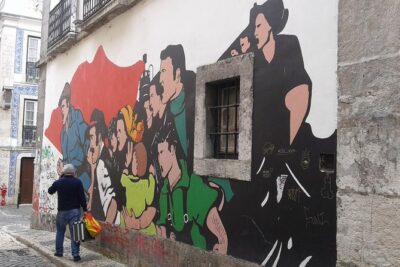
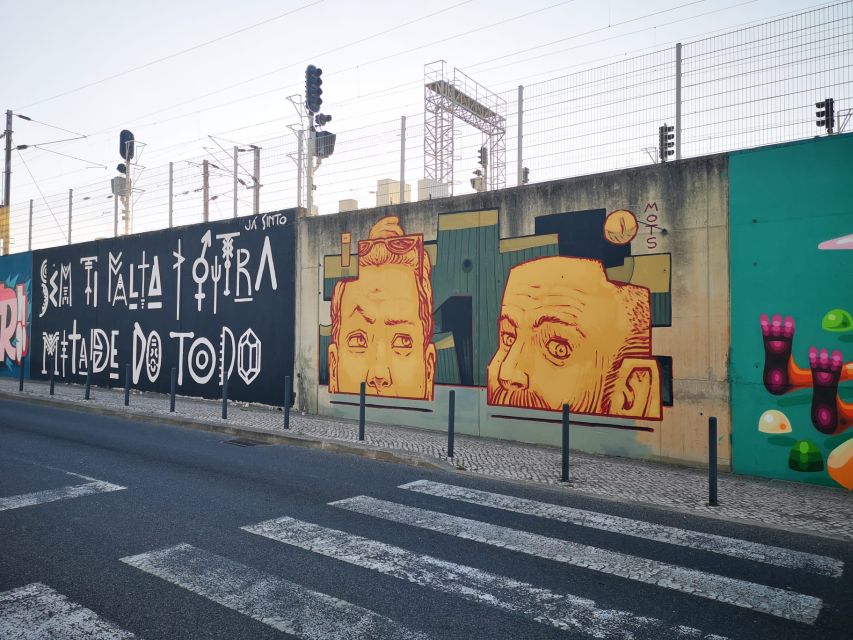
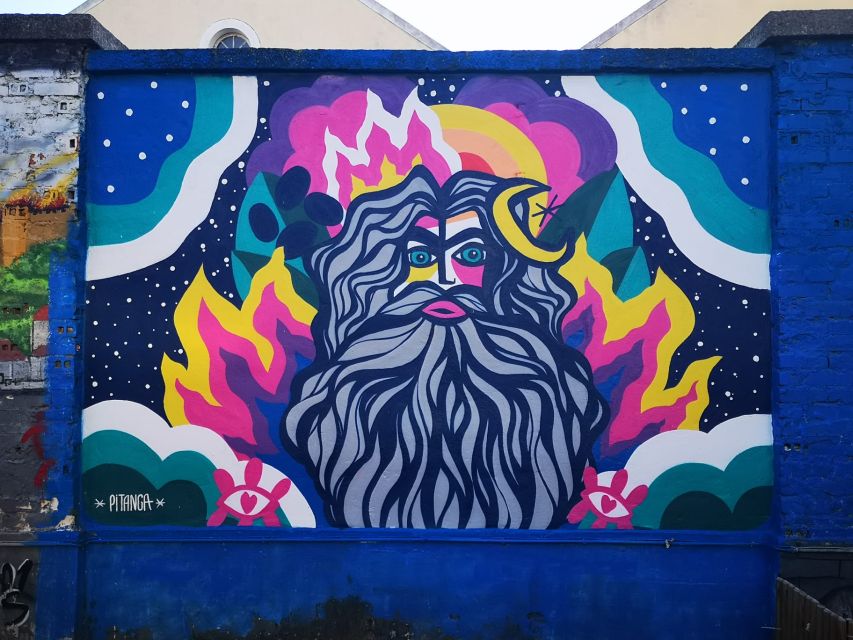
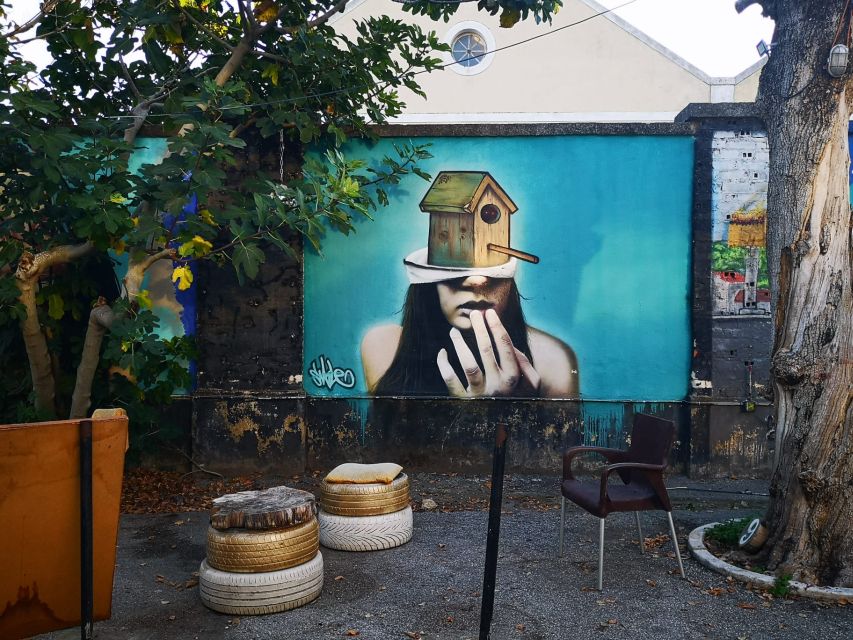
The main draw is Marvila, a former industrial area east of Lisbon’s central tourist streets. Here, large-scale art appears on the sides of buildings rather than in a tidy museum setting. The walls become a record of Lisbon’s creative life, with artists from Portugal and abroad contributing work tied to Ibero-American culture and the city’s changing neighborhoods.
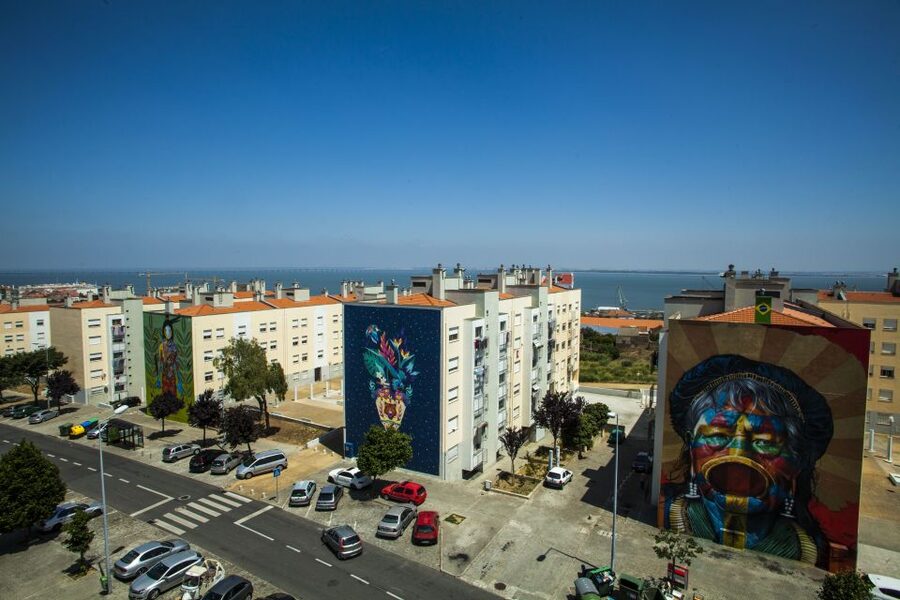
You can expect to see about 15 huge pieces spread across buildings on a hill. The height matters. You are not simply standing in front of a painted wall. You are also looking across the city toward the Tagus, with the art set against Lisbon’s broad urban view.
The tuk-tuk is useful here because the works are spread across several areas. You can cover ground quickly, then get out to look closely and take pictures. Several guides, including Mario and Frederico, make a point of giving you time outside the vehicle instead of treating the tour as a nonstop drive-by.
I would not book this expecting every mural to be explained like a formal museum exhibit. Street art changes. Paint fades, new pieces appear, and local conditions can affect what you see. The value lies in having someone who knows where to go now, not in following a fixed collection that never changes.
More Street Art Tours by Tuk-Tuk and Taxi in Lisbon
- Lisbon: 3-Hour Street Art Tuk Tuk Tour
★ 4.8 · 86 reviews - Lisbon Street Art – Private Guided Tour in a Electric Tuk Tuk
★ 5.0 · 72 reviews - Mon Ami Maravilha – Lisbon Street Art Private Tuk Tuk Tour
★ 5.0 · 42 reviews
Reading the artists, not just the walls
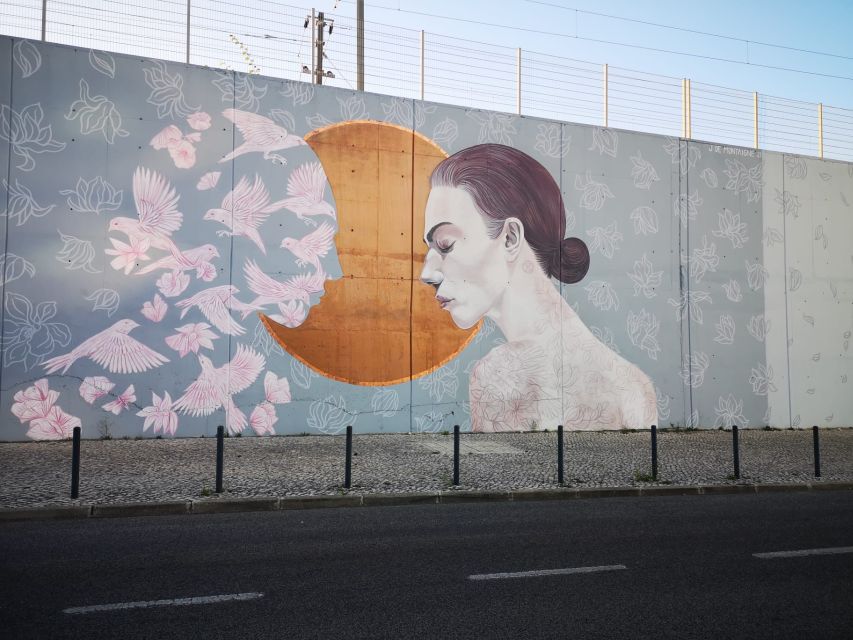
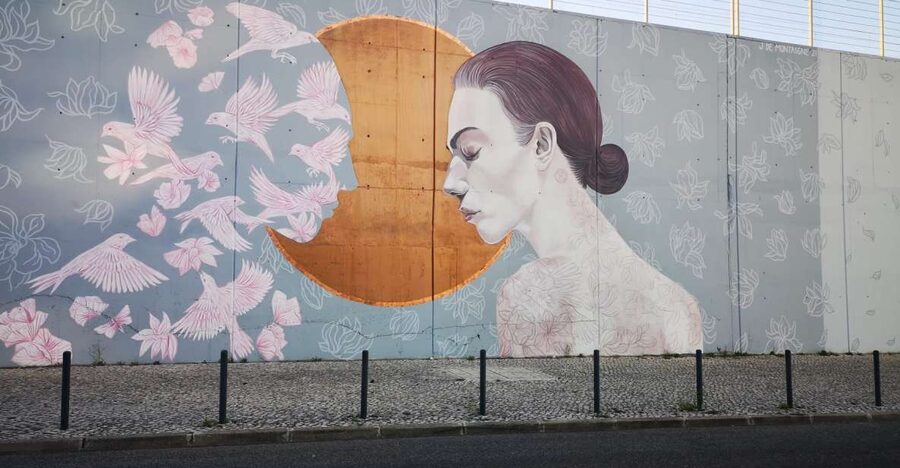
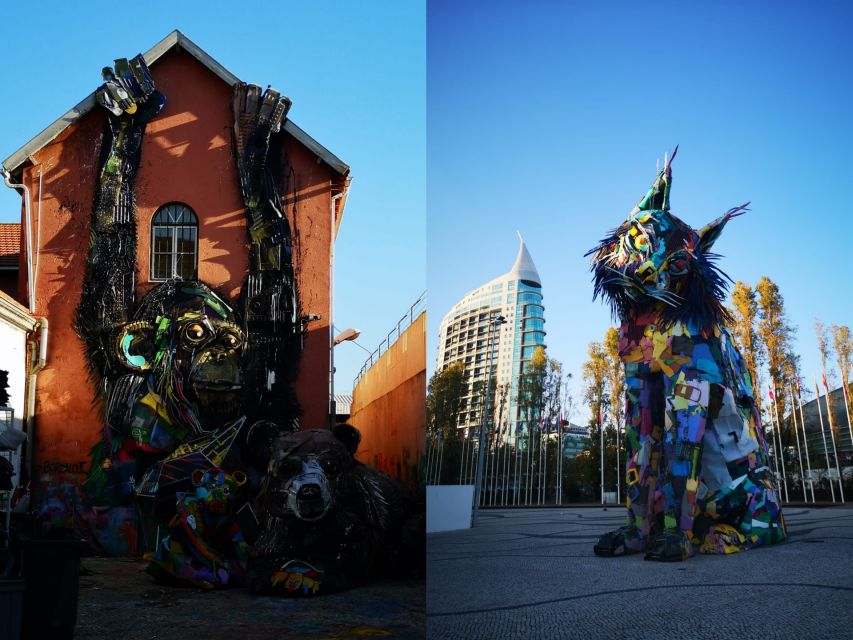
A good street art tour helps you notice more than color and size. Your guide can explain who made the work, what style or idea it reflects, and how a building or neighborhood affects the piece. Artists associated with the wider route include Okuda San Miguel, Vhils, Bordalo II, OzeArv, Daniel Eime, Isa Silva, PichiAvo, Shepard Fairey, and Jaqueline de Montaigne.
That list gives you a sense of the range. Some works may use bold graphic shapes, some may focus on portraiture, and others may make use of discarded materials or the texture of the building itself. The tour is particularly useful if you are new to street art and want help distinguishing artists rather than seeing every mural as one large category.
Tiago receives repeated praise for his ability to connect the art to Lisbon’s housing and economic changes. That is an important part of the outing. The walls are not decoration floating apart from daily life. They sit in neighborhoods shaped by factories, relocation, redevelopment, and new interest from artists and visitors.
Your guide may also tailor the route to your taste. If you prefer large painted walls over small tags, or want more background on one artist, say so at the start. The private format makes that conversation easier than it would be in a large group.
Convents, palaces, and the older Lisbon around them
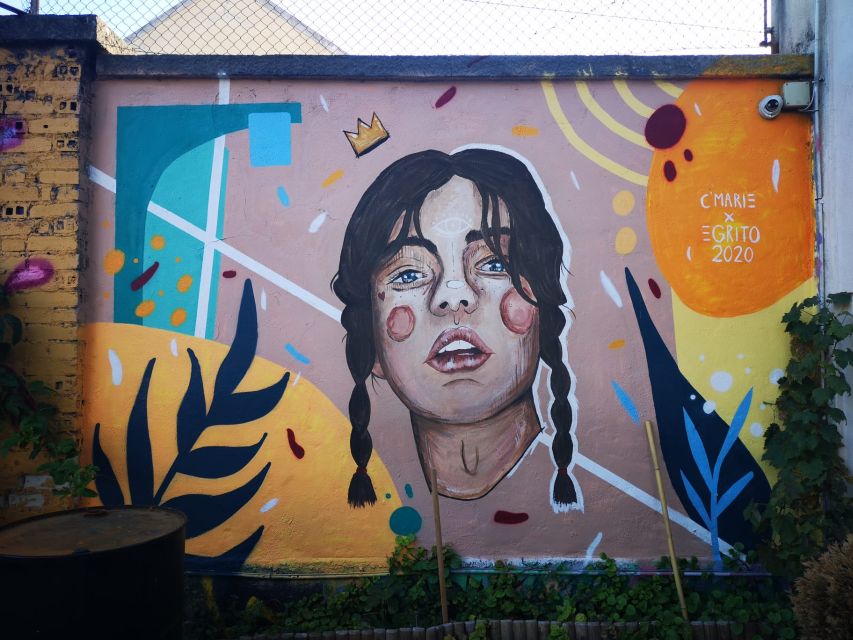
The art is only half the point. The route also passes 17th and 18th-century convents and palaces, giving you a useful contrast between formal historic Lisbon and newer public art.
These buildings help explain why the city cannot be reduced to its postcard center. A neighborhood can contain religious buildings, grand residences, industrial structures, modest homes, and painted walls within a short distance. The changing styles are part of what makes the ride interesting.
I like this combination because it gives the art a setting. A mural beside an old industrial building feels different from one in a purpose-built art district. A former convent or palace can also act as a reminder that Lisbon’s outskirts have long had their own story, even if most sightseeing routes skip them.
Do not expect entrance visits to the monuments. Admission fees are not included, and the experience is primarily viewed from the tuk-tuk and during short walks. If you want a museum-heavy day, this is the wrong choice. If you want to see the outside of lesser-visited sites while moving between murals, it works well.
Art deco warehouses and factory workers’ villages
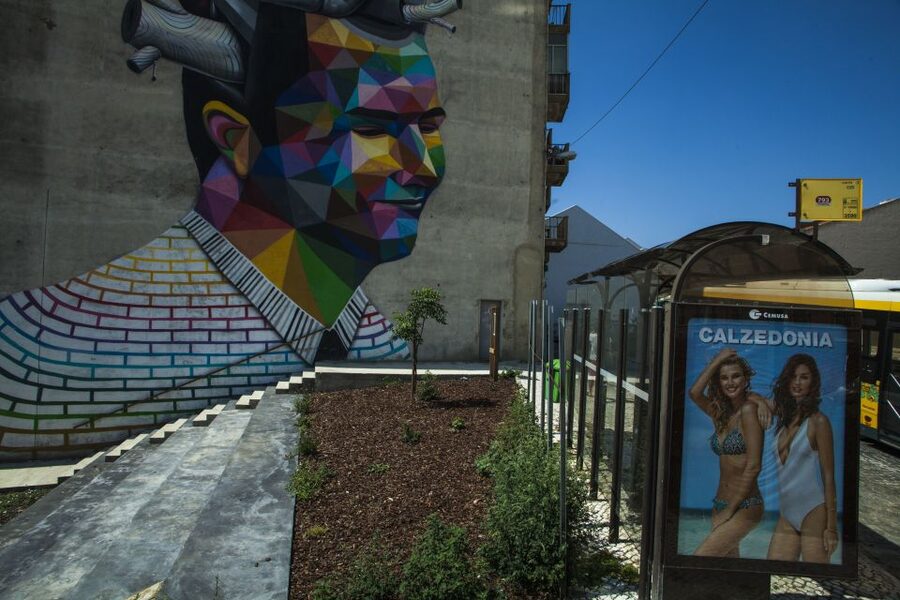
One of the most useful parts of the route is the attention to Lisbon’s industrial past. Art deco warehouses and other old factory buildings show how the city once worked. Nearby vilas, or small housing areas built for factory workers, add a more personal layer.
You may also see urban vegetable gardens. These details can seem modest beside a giant mural, but they make the route feel grounded. You get a look at how people lived, worked, and used leftover urban space, not just a succession of large images.
The guides bring different strengths. Mario is often described as warm, flexible, and closely connected to Lisbon. Frederico is praised for combining art explanations with broader Portuguese history and for driving carefully while allowing time for photographs. Raquel is noted for her charm and attention to Portuguese life. Nuno has led longer tours with detailed discussion of artists and how public art can change a neighborhood.
The exact guide cannot be guaranteed from the information available, but these names show the character of the guiding team. The strongest part of the experience is not simply the tuk-tuk. It is having a local person explain why these particular streets matter.
More Street Art Tours by Tuk-Tuk and Taxi in Portugal
- Lisbon: Street Art TukTuk Tour
★ 4.8 · 37 reviews - Private Tuk Tuk of the Old Town Lisbon and Street Art Highlights
★ 5.0 · 20 reviews - Street Art – Tuk Tuk Tour
★ 5.0 · 17 reviews - Lisbon Street Art – Private Tuk Tuk Tour with pickup
★ 5.0 · 17 reviews
What the two-hour and four-hour options mean
The tour lasts between two and four hours, depending on the option and availability. For most people, two hours is enough for a strong introduction to Lisbon’s street art and a look at Marvila. It is also a good fit if you have limited time or want to keep your afternoon open.
The four-hour version gives the route room to breathe. You can spend longer looking at major works, cover more outlying districts, and give greater attention to the old buildings and local neighborhoods. If street art is a main reason for your Lisbon visit, I would favor four hours.
A longer tour is not automatically better for everyone. The tuk-tuk ride can be rough in places, and sitting for four hours may be tiring if you have back trouble. You also need to be comfortable with a mix of riding and brief walks rather than a single long stop.
The private setup is especially useful for couples or a small party of up to two people at the stated price. At $165 per group, the cost may look high beside a standard city walk, but the comparison is not quite fair. You are paying for a private vehicle, a driver guide, coverage of neighborhoods that are awkward to connect on foot, and the chance to shape the conversation.
What the tuk-tuk adds, and what it does not
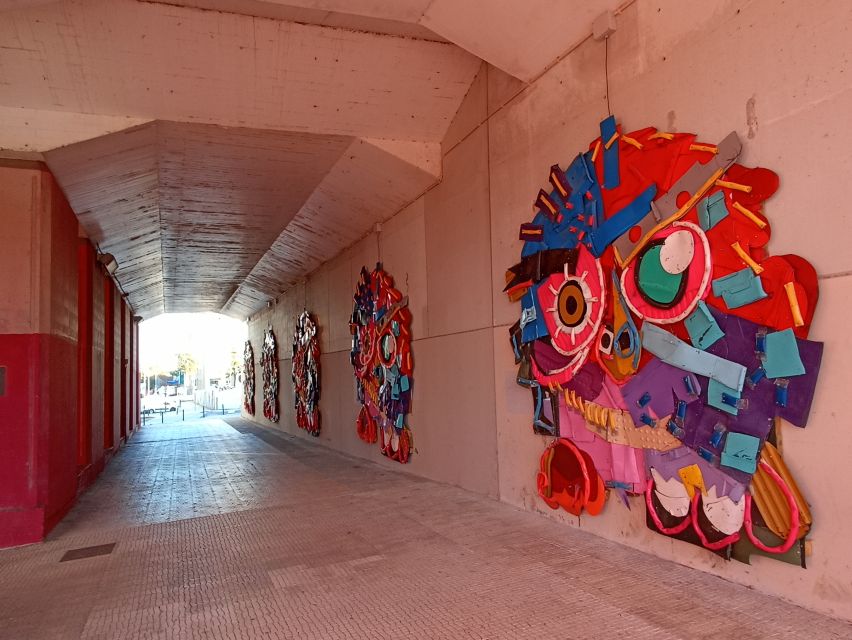
Lisbon’s hills and spread-out districts make the tuk-tuk practical. It saves time between walls and lets you reach parts of the city that are easy to miss if you stay near the central squares. Door-to-door pickup is offered for locations within the city center, which can make the start simple.
If your lodging is too far outside the pickup area, you will be contacted about a meeting point. Confirm that detail before booking if convenience matters to you.
The vehicle also gives you a good viewing position while moving through the streets. Still, this is not a smooth luxury ride. One person specifically notes the bumps, and that is worth taking seriously. The tour is not suitable for people with back problems, pregnant women, wheelchair users, or children under five.
You should also bring a practical attitude toward weather and photography. The information provided does not promise indoor shelter or a specific camera setup. Wear comfortable clothes, keep your belongings secure, and expect to get out of the tuk-tuk at selected points to see and photograph the art more closely.
The guide can shape the day
The strongest descriptions of this outing focus on the guides. Tiago is repeatedly praised for humor, passion, and his ability to explain how street art connects with Lisbon’s housing and economic issues. Mario is described as friendly and adaptable, with a strong feel for the city. Frederico is valued for safety, historical context, and giving people time to look.
Flavio has been praised for making the outing broader than an art tour, adding city culture and music. Nuno has led a three-hour version with detailed artist background. These are not interchangeable qualities. If you want art criticism, ask for that focus. If you want a wider introduction to Lisbon, say so before setting out.
Guides have also helped with practical plans after the tour, including restaurant suggestions and ideas for the rest of a Lisbon stay. That is a useful side benefit, especially if you schedule this early in your visit. You can use what you learn to decide which neighborhoods or meals to explore next.
I would book this near the start of a Lisbon trip if possible. The tour can give you a better sense of the city beyond the main monuments, and it may help you understand what you are seeing during later walks.
Who should book this street art tour?
This is a strong match for you if you:
- Want large-scale graffiti and murals by Portuguese and international artists
- Prefer working neighborhoods to a standard center-city sightseeing loop
- Like history, local culture, and urban change alongside visual art
- Want a private guide who can answer questions and adjust the pace
- Have only a short time but still want to reach several distant areas
It is less suitable if you want museum interiors, a completely smooth ride, or a tour focused only on famous central attractions. It is also a poor fit for anyone affected by the listed mobility, age, pregnancy, or back-related restrictions.
The tour works for older children and teenagers who enjoy art, provided they meet the age and physical requirements. One family found the art engaging enough that their teenagers began following the artists afterward. That says something about the route’s ability to make public art feel current rather than academic.
Should you book it?
Book this tour if you want to see a less familiar side of Lisbon and understand why street art matters in places shaped by industry, housing, and renewal. The art is large and photogenic, but the better reason to go is the context: old convents beside warehouses, workers’ housing near new murals, and a guide who can connect those layers.
Choose two hours for a focused introduction. Choose four if you want time for more neighborhoods and slower stops. At $165 for a private group of up to two, it is best value when you care about personal guiding and access to places you would not easily link on your own.
FAQ
Where does the Lisbon Street Art Tuk Tuk Tour take place?
The tour takes place in the Lisbon District, with a major focus on Marvila and other neighborhoods outside the usual tourist center.
How long does the tour last?
The available duration is between two and four hours. Starting times depend on availability.
How much does the tour cost?
The listed price is $165 per group of up to two people.
What is included?
A driver guide and transportation in a tuk-tuk are included.
Are museum or monument entrance fees included?
No. Entrance fees to museums or monuments, along with food and drinks, are not included.
Which languages are available?
The live tour guide is available in English, Portuguese, and Spanish.
Is pickup available from my accommodation?
Pickup is included for locations within the city center. If your location is too far away, you will be contacted to arrange a suitable meeting point.
Freshly painted around Lisbon
- Lisbon Street Art and Lookout Point Tour★ 5.0 · 17 reviews
- Street Art Tour by Tuk Tuk Joy★ 5.0 · 2 reviews
- Private Tuk Tuk of the Old Town Lisbon and Street Art Highlights★ 5.0 · 20 reviews
- Street Art – Tuk Tuk Tour★ 5.0 · 17 reviews
- Lisbon Street Art – Private Tuk Tuk Tour with pickup★ 5.0 · 17 reviews
- Lisbon Street Art Walk★ 5.0 · 17 reviews
- Discover Lisbon’s Best Street Art★ 5.0 · 6 reviews
- Street Art at Lisbon★ 5.0 · 2 reviews
Lisbon Street Art Tours, compared.


3-Hour Guided Street Art Walking Tour of Lisbon
Read our review →


Lisbon Street Art – Private Guided Tour in a Electric Tuk Tuk
Read our review →