
Review · MEXICO CITY
La Catrina & Muralism: Diego Rivera’s Legacy & Frida Kahlo
Diego Rivera’s murals turn public walls into history lessons, and this tour gives you a clear way into that world. You begin at the former College of San Ildefonso, visit the Museo Vivo del Muralismo, then follow Rivera’s work to the Diego Rivera Mural Museum and the Palace of Fine Arts. I especially like the focus on La Catrina and the story of where Rivera and Frida Kahlo first met. The main consideration is pace: three hours covers several important places, so you will get a strong introduction rather than a slow, exhaustive study of every mural.
I also like that a local art guide explains symbolism, social criticism, and painting methods instead of simply pointing out famous names. Guides including Sam, Jesús, Aldo, and Luís have been praised for patience, clarity, and enthusiasm, with Jesús making the tour work well for children aged 10 and 12. Bring walking shoes and sunscreen, and remember that large bags, food, flash photography, and baby carriages are not allowed.
Key points at a glance
- Start at San Ildefonso: Begin at a major early center of Mexican muralism and learn why Rivera’s art belongs in public spaces.
- Follow the Rivera and Kahlo story: Hear about the passionate relationship that began in an amphitheater connected with San Ildefonso.
- Meet La Catrina: See Rivera’s famous depiction of the Day of the Dead figure and learn why it became an international symbol.
- Compare several mural settings: Move from a former college to a dedicated mural museum and the grand Palace of Fine Arts.
- Use public transport like a local: The route includes a 20-minute transfer between stops, adding a practical slice of Mexico City life.
- Choose a guide-led introduction: Spanish and English tours help you read symbols, politics, and technique that are easy to miss alone.
Why Rivera’s murals make a good first Mexico City art tour
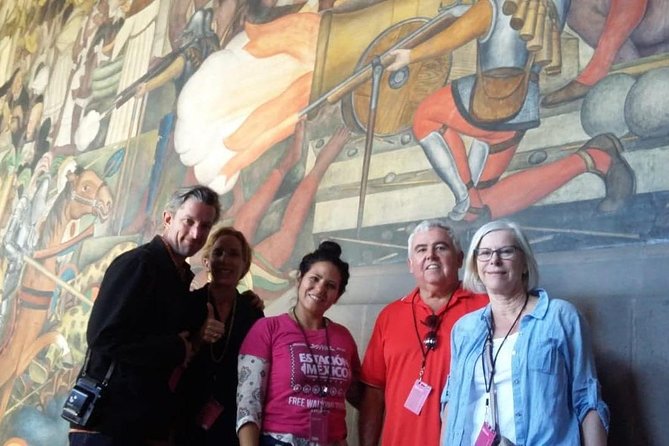
Rivera’s work is not only about paint on a wall. His murals explain Mexico through workers, Indigenous traditions, political struggle, religion, education, and national memory. You do not need a background in art to follow the tour, because the guide links what you see to the events and ideas behind it.
That context is the real value here. A mural can look impressive at first glance, yet its smaller figures and symbols often carry the sharper message. The tour is designed to help you notice what lies beneath the surface, including the social critique and cultural references that can be missed during a quick solo visit.
I would choose this experience early in a Mexico City stay. It gives you names, themes, and visual clues that can make later visits to museums and historic buildings easier to understand. It also places Rivera alongside the wider mural movement, rather than treating him as an isolated celebrity.
More Muralism Tours around Mexico:
- Xochimilco, Coyoacan and Frida Kahlo with Optional Lunch
★ 4.5 · 7,320 reviews - CDMX: Xochimilco, Coyoacan, Frida Kahlo Museum & Murals Tour
★ 4.4 · 3,025 reviews - La Catrina & Muralism: Diego Rivera’s Legacy & Frida Kahlo
★ 4.5 · 197 reviews
San Ildefonso, where the story begins
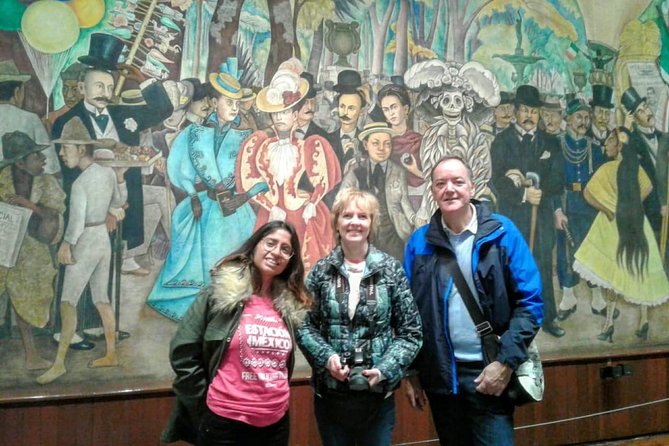
Meet your guide in front of the entrance to the former College of San Ildefonso. Look for the pink shirts and umbrellas. This detail matters in a crowded city, since a clear meeting point and visible guide can save you from wandering around the wrong entrance.
San Ildefonso is presented as the birthplace of muralism, so the visit sets the artistic and historical frame for the rest of the morning. You learn about Rivera’s background, his artistic vision, and his role in shaping Mexico’s cultural identity. The point is not just to see an old institution. It is to understand why large public murals became such a powerful way to reach ordinary people.
This stop also connects art with Rivera’s personal life. The tour explains where his romance with Frida Kahlo began, a relationship that was affectionate, difficult, and closely tied to the way both artists are remembered. That human element helps keep the tour from becoming a string of dates and art terms.
The former college is a strong opening stop for families and first-time visitors because it gives you a story to follow. Children can focus on the people and scenes in the murals, while adults can pay closer attention to politics, technique, and symbolism. The guide makes a difference here. Jesús, for example, was praised for keeping younger children involved while explaining Mexico’s culture through the artwork.
Reading the Museo Vivo del Muralismo
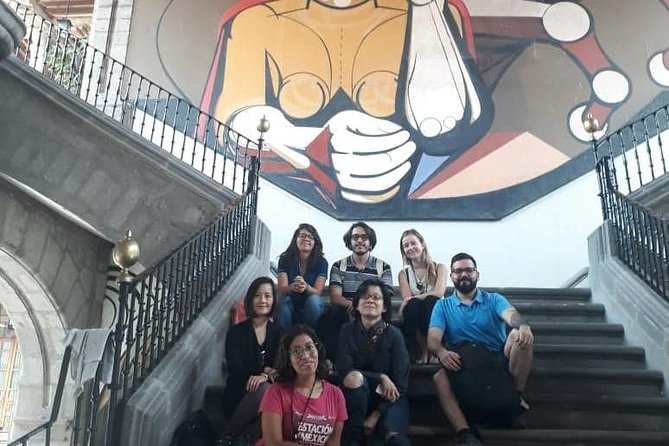
The Museo Vivo del Muralismo continues the introduction to Mexico’s mural movement. Here, your guide helps you look at murals as both art and public record. You can expect discussion of the movement’s early work, its historical setting, and the methods artists used to create large compositions.
A good guide-led visit is useful because mural painting can be visually overwhelming. You may notice a dramatic central figure, while the guide draws your attention to a worker in the corner, a political reference, or a repeated symbol. This is where the tour’s emphasis on meaning pays off.
The museum also gives you a chance to consider muralism as a collective cultural project. Rivera is the main thread, but the tour places his work within a broader Mexican tradition. That makes the experience more useful than a narrow biography, especially if you want to understand why muralism became part of Mexico’s public identity.
Allow yourself to listen closely rather than rushing ahead for photographs. Flash photography is not allowed, and the tour is built around looking, hearing, and discussing. If you prefer to move independently and spend a long time with one work, a group tour may feel brisk. If you want help deciding what deserves your attention, the guided format is a good trade.
The 20-minute public transport connection
Between the Museo Vivo del Muralismo and the Diego Rivera Mural Museum, the tour uses public transport for about 20 minutes. Transportation to the starting point is not included, but this transfer is part of the planned route.
I see this as a practical feature rather than a nuisance. You get a short break from indoor viewing and a glimpse of how the city connects its cultural sites. It also means you should wear shoes that are comfortable for steady walking and be ready to keep your belongings compact.
Large bags and luggage are not allowed, and the information also lists bags among the prohibited items. Read that as a warning to travel light. A small, practical setup is best, though the exact permitted bag size is not specified. Food is also not allowed during the experience.
The tour is described as wheelchair accessible, but it still includes walking and public transport. If you use a wheelchair, confirm the day’s route and transfer arrangements before booking, since the supplied details do not explain the access conditions at each stop.
More Street Art Tours around Mexico:
- Cancun Street Food Tour with Food Stalls, Local Market and Murals
★ 5.0 · 723 reviews - Mexico City; ART NACO : Murals & Street Art Bike Tour
★ 5.0 · 284 reviews - History and Murals: Walking Tour Guadalajara
★ 5.0 · 237 reviews - Walking Tour – Impressive murals in Historical Center of Mexico City
★ 5.0 · 224 reviews
La Catrina at the Diego Rivera Mural Museum
The Diego Rivera Mural Museum is one of the clearest reasons to book this experience. It provides a focused setting for Rivera’s work, including his famous depiction of La Catrina, the skeleton figure associated with the Day of the Dead.
La Catrina is more than a seasonal decoration. On this tour, you learn how the image connects to Mexican identity, memory, and social commentary. Its international fame has grown through films and Mexico City’s famous Day of the Dead parade, but the guide brings the figure back to its artistic and cultural setting.
This stop is particularly rewarding if your knowledge of Day of the Dead comes mainly from popular images. The guide can explain how a recognizable figure carries ideas about class, mortality, tradition, and national culture. You get a better sense of why La Catrina continues to appear in public celebrations and visual art.
The museum is also a good place to return to Rivera’s technique. Large murals must organize many figures, actions, and symbols within one composition. Your guide points out how the scene works as a whole and how individual details contribute to the message. Bernard specifically praised Sam’s explanation of symbolism beneath the surface, which is exactly the kind of guidance that helps here.
Palace of Fine Arts and the final mural focus
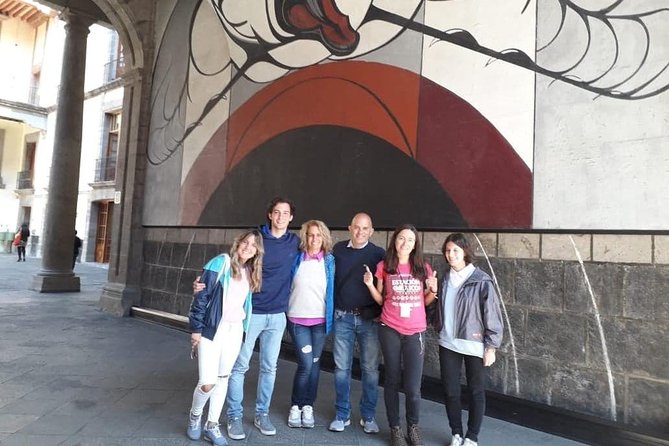
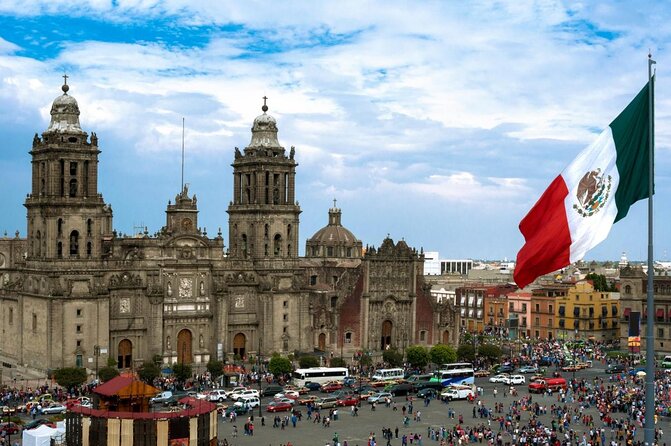
The last major stop is the Palace of Fine Arts, where the tour finishes. The building gives the experience a grand closing setting and lets you consider Rivera’s work alongside one of Mexico City’s best-known cultural landmarks.
Your guide continues to explain the stories, techniques, and historical references inside the murals. This final stop is not simply a photo opportunity. It helps tie together the themes introduced earlier: public art, Mexican history, social criticism, and the role of memory.
The tour ends at Palacio de Bellas Artes, so you are left in a central cultural area rather than returned to the original meeting point. That can be convenient if you plan to continue sightseeing, but you should account for it when arranging your next activity. The information provided does not include a return transfer.
Three hours is enough to create a connected route through several important sites. It is not enough for a slow, museum-style examination of every painting. I would think of the Palace of Fine Arts visit as a strong final chapter and a useful guide to what you may want to revisit later.
What the guides add to the experience
The guide is the heart of this tour. Spanish and English are available, and the experience is led by a local art enthusiast. That local perspective matters because Rivera’s work is tied to Mexican politics, education, Indigenous culture, religion, and public life. A basic audio guide could name the paintings, but a live guide can adjust the explanation to your questions and interests.
The strongest praise has centered on clarity, patience, and passion. Sam was singled out for explaining symbolism. Jesús was described as patient and engaging with a family whose children were 10 and 12. Aldo was praised for explaining Mexican history, showing major Rivera paintings, and connecting the artwork with the amphitheater where Rivera met Kahlo. Luís was noted for making Mexican history and culture clear through Rivera’s art.
That range suggests the experience suits different kinds of visitors. You can ask for more historical detail, more attention to technique, or a simpler explanation for children. The tour works best when you listen actively and ask questions, since the meaning of the murals is one of its main rewards.
Is $58 a fair price for three hours?
At $58 per person, this is not a budget walk, so value depends on how much guidance you want. You are paying for a three-hour route through four significant art and cultural stops, live interpretation in Spanish or English, and help connecting Rivera’s work with Frida Kahlo, La Catrina, and Mexican muralism.
For a first visit to Mexico City, I think the price can make sense. You get a structured introduction instead of spending your first day trying to work out which murals matter and how the sites relate to one another. The tour also saves you from treating each stop as a disconnected museum visit.
The value is lower if you already know Rivera’s work well or prefer to read wall text at your own pace. You may want longer at one museum than the schedule allows. In that case, use this as an orientation and return independently to the work that catches your eye.
The high rating of 4.9 from 13 reviews supports the idea that the guide quality is a major part of the purchase. Still, the small number of ratings means I would not treat the score as the whole decision. Choose it for the route, the local explanation, and the chance to see La Catrina in context.
Who should book this mural tour?
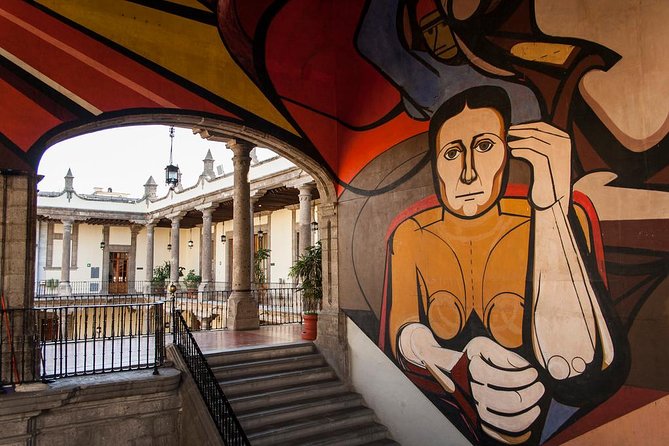
I would recommend it to first-time Mexico City visitors, families with older children, and anyone interested in Mexican culture but unsure how to approach muralism. The route covers enough ground to feel substantial, yet the guide keeps the focus on stories and visual details rather than academic theory.
It is also a good match for visitors who already plan to see the Palace of Fine Arts but want more meaning from the murals. The Rivera and Kahlo connection adds a personal thread, while La Catrina gives the tour a symbol that many people recognize before they understand its background.
You should think twice if you dislike walking, need a large bag, want a private pace, or hope to spend a full afternoon at one museum. The tour includes public transport, bans luggage and large bags, and moves through several stops in three hours. Comfortable shoes, sunscreen, and a light day setup will make the experience easier.
Free cancellation up to 24 hours before the start and the option to reserve now and pay later add useful flexibility. Starting times vary, so check availability when choosing your date.
Final verdict: a smart introduction to Rivera
Book this tour if you want Diego Rivera explained as part of Mexico’s culture, not just presented as a famous painter. The best parts are the connected route, the La Catrina focus, the Rivera and Kahlo story, and the guides’ ability to explain symbolism in plain language.
I would not book it expecting an unhurried museum study. I would book it to get your bearings, understand why muralism matters, and leave with a clearer eye for public art across Mexico City. For $58, that is a fair exchange, especially at the start of a three-day visit.
FAQ
Where does the tour begin?
It begins in front of the entrance to the former College of San Ildefonso. Look for guides wearing pink shirts and carrying umbrellas.
Where does the tour end?
The tour ends at Palacio de Bellas Artes, also known as the Palace of Fine Arts.
How long does the experience last?
The tour lasts three hours.
What languages are available?
The live tour guide is available in Spanish and English.
Is transportation to the starting point included?
No. Transportation to the starting point is not included. The route itself includes a public transport segment of about 20 minutes.
Does the tour include food or drinks?
No. Meals and drinks are not included.
What should I bring?
Bring comfortable shoes and sunscreen. The tour involves walking.
Can I bring luggage or a large bag?
No. Luggage and large bags are not allowed. Bags are also listed among the prohibited items.
Is the tour wheelchair accessible?
Yes, the activity is described as wheelchair accessible. Since it includes walking and public transport, confirm the specific arrangements if you need detailed access information.
Can I cancel the booking?
Yes. You can cancel up to 24 hours in advance for a full refund. You can also reserve now and pay later.
Freshly painted around Mexico
- Xochimilco floating gardens, Coyoacan and UNAM murals★ 4.0 · 6 reviews
- UNAM: Murals & Revolution★ 4.9 · 8 reviews
- Street Art & Cemetery Cultural Tour – half day★ 5.0 · 3 reviews
- Graffitis & Munchies biketour Playa del Carmen★ 4.5 · 18 reviews
- Street Art Walk★ 4.5 · 7 reviews
- Diego Rivera’s murals, hidden treasures★ 5.0 · 21 reviews
- Tour Women Muralists : Strokes that resist Mexico City★ 5.0 · 7 reviews
- Private Street Art Tour in Rome★ 4.0 · 4 reviews
Mexico City Street Art Tours, compared.

Xochimilco, Coyoacan and Frida Kahlo with Optional Lunch
Read our review →
CDMX: Xochimilco, Coyoacan, Frida Kahlo Museum & Murals Tour
Read our review →
Mexico City; ART NACO : Murals & Street Art Bike Tour
Read our review →
Walking Tour – Impressive murals in Historical Center of Mexico City
Read our review →
La Catrina & Muralism: Diego Rivera’s Legacy & Frida Kahlo
Read our review →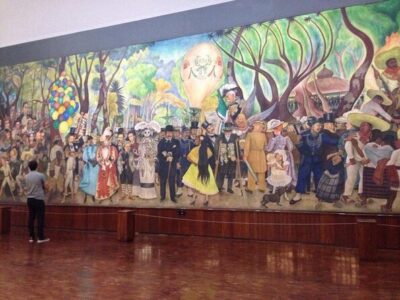
Muralist Art Semi Private Walking Tour in Mexico City Downtown
Read our review →
Xochimilco floating gardens, Coyoacan and UNAM murals
Read our review →
Mexico City: Diego Rivera’s Murals Guided Walking Tour
Read our review →Browse the lists this tour appears in