
Review · MEXICO CITY
Exploring Mexican Muralism: A Journey through Bellas Artes Palace
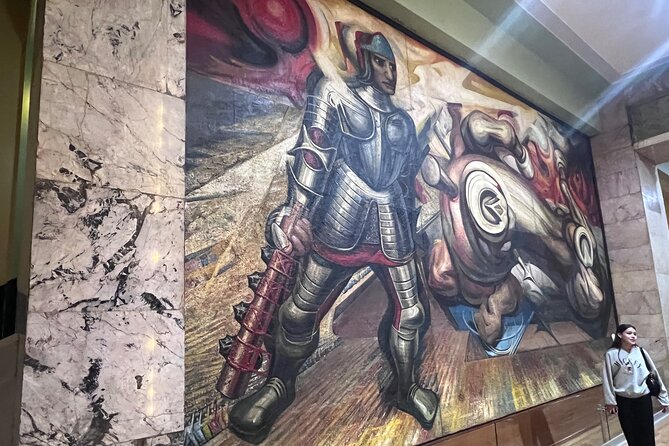
At Palacio de Bellas Artes, Mexico’s story is painted on the walls. Diego Rivera, José Clemente Orozco, David Alfaro Siqueiros, and Rufino Tamayo turn a short museum visit into a lesson in revolution, labor, mythology, and national identity. The art is grand, but the real reward is learning how to read it.
I like the small maximum of six people, which gives Mercedes room to answer questions. I also like the clear progression from the palace exterior to its major murals, especially the way the tour connects different artists and periods instead of treating each painting as an isolated object.
The main limitation is time. Ninety minutes goes quickly inside a building with major works and plenty of historical detail. If you want a slow museum visit or time to see every room at your own pace, you will need to return on your own.
Key points to know before booking
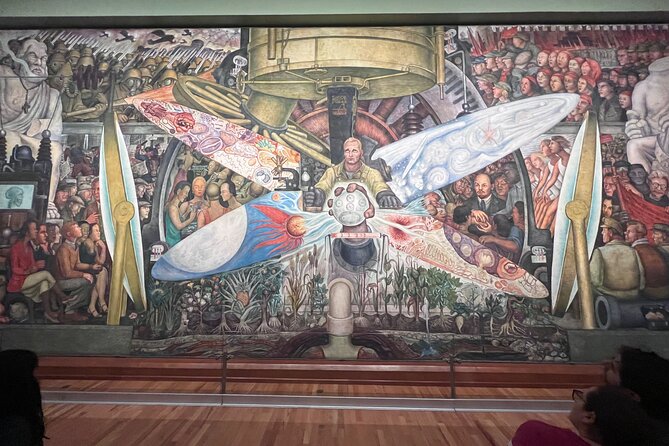
- Four major muralists in one visit: See work by Diego Rivera, José Clemente Orozco, David Alfaro Siqueiros, and Rufino Tamayo.
- A small English-speaking group: The tour accepts no more than six people, making questions and discussion easier.
- The building comes first: The opening 10 minutes focus on Palacio de Bellas Artes and its distinctive facade.
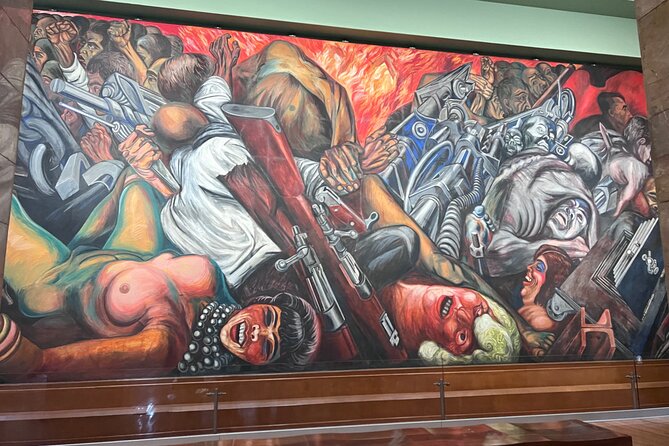
- Art tied to national change: The murals address the Mexican Revolution, labor struggles, mythology, industrialization, and social change.
- Mercedes leads the tour: Her approach brings together art, politics, culture, and economics.
- A useful central meeting point: Start at the Madero Monument at 11:00 a.m. and finish back there.
Why Bellas Artes rewards a guided visit
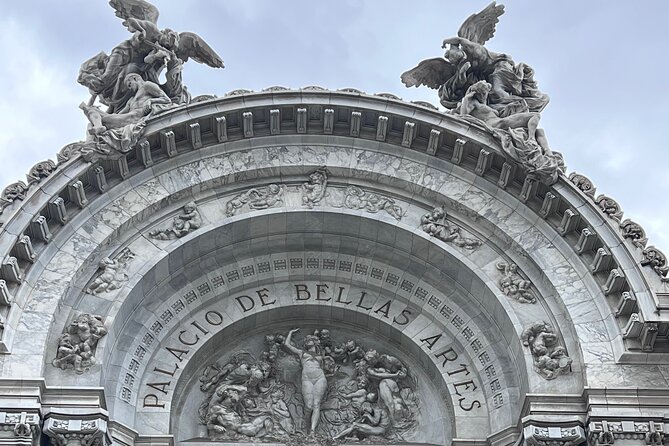
Palacio de Bellas Artes is not simply a container for famous paintings. The building itself introduces the subject. Its facade, architectural details, and unusual elements give you a first look at how Mexico City combines European artistic traditions with a distinctly Mexican cultural purpose.
That matters because the murals inside are large, public statements. They were not made merely to decorate private rooms. They present ideas about who Mexico was, who held power, how ordinary people lived, and how the country changed.
I find this kind of museum visit more useful with a guide because the images can feel overwhelming at first. Huge figures, crowded scenes, symbols, machinery, landscapes, and historical references compete for your attention. Mercedes helps sort those details into a chronology, then explains how the artists’ styles and concerns differ.
The tour is offered in English, which makes it a practical choice if you want more than a quick look at the pictures. It is also capped at six people. That small group size is one of the best features here. You are not trying to hear a guide over a large crowd, and there is room to ask why a particular figure, color, or scene matters.
More Muralism Tours around Mexico:
- Xochimilco, Coyoacan and Frida Kahlo with Optional Lunch
★ 4.5 · 7,320 reviews - CDMX: Xochimilco, Coyoacan, Frida Kahlo Museum & Murals Tour
★ 4.4 · 3,025 reviews - La Catrina & Muralism: Diego Rivera’s Legacy & Frida Kahlo
★ 4.5 · 197 reviews
Starting at the Madero Monument at 11 a.m.
The experience begins at the Madero Monument in the Centro area at 11:00 a.m. This gives you a clear place to meet before heading to the palace. The area is near public transportation, so the starting point is reasonably convenient for a day in central Mexico City.
Be ready to identify the meeting point and arrive with enough time to settle in. The supplied details do not specify a hotel pickup, so you should plan to reach the monument independently.
The tour ends back at the meeting point. That makes it easy to continue exploring central Mexico City afterward, though the experience itself does not include a wider walking tour of the surrounding neighborhood.
The timing is also worth considering. A late-morning start avoids an early wake-up, but it places the museum visit in the middle of your day. If you want to combine it with other sights, allow extra time before or after rather than trying to squeeze another major attraction into the same 90-minute block.
The first 10 minutes: reading the palace facade
The opening section lasts about 10 minutes and focuses on the outside of Palacio de Bellas Artes. You will examine the architecture, the elements that make the facade distinctive, and smaller details that are easy to miss when you are simply walking toward the entrance.
This short introduction is not filler. It gives you a way to think about the building before the murals take over. The palace is part of the cultural argument being made inside: art belongs in a public setting, and national identity can be expressed through grand architecture as well as painting.
Ten minutes is enough for an introduction, not a full architectural tour. If you are especially interested in the building’s design, you may want to spend additional time looking at it after the guided portion. The tour’s main focus is the mural collection, so architecture receives a useful but brief treatment.
There is no admission charge listed for this first stop. The palace admission is included for the interior portion, which keeps the experience simple once the tour begins.
The next 80 minutes: four artists, several versions of Mexico
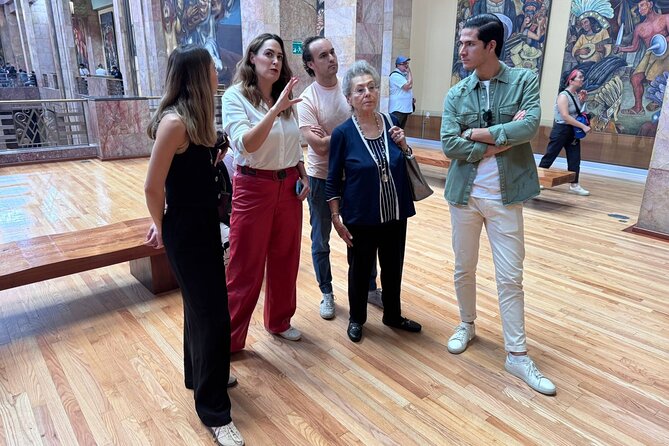
Most of the experience takes place inside the palace and lasts about 1 hour and 20 minutes. This is where the tour earns its price. Instead of pointing out a few famous names, Mercedes builds a connected account of Mexican muralism.
The murals cover several broad subjects:
- The Mexican Revolution
- Labor struggles
- Mythology
- Social evolution
- Rural and urban life
- Nature and industrialization
- The pre-Hispanic past and the modern present
These themes help you see why muralism matters. The paintings are not only about individual artistic style. They are also records of political ideas and social tension. Mexico’s transformation appears through workers, machines, communities, historical figures, symbols, and scenes of daily life.
Diego Rivera, José Clemente Orozco, David Alfaro Siqueiros, and Rufino Tamayo do not speak in the same visual language. A good tour should help you notice those differences, and this one is built around that comparison.
Rivera’s work can be considered through its attention to society, labor, and the forces shaping modern Mexico. Orozco brings a more severe and dramatic tone to questions of conflict and human suffering. Siqueiros is associated with forceful movement and political urgency. Tamayo offers another perspective, linking modern painting with Mexican identity and older cultural references.
The point is not to memorize four names. It is to learn how a single building can hold competing views of a country. One mural may emphasize workers and industry, while another focuses on violence, myth, or the uneasy cost of progress.
More Street Art Tours around Mexico:
- Cancun Street Food Tour with Food Stalls, Local Market and Murals
★ 5.0 · 723 reviews - Mexico City; ART NACO : Murals & Street Art Bike Tour
★ 5.0 · 284 reviews - History and Murals: Walking Tour Guadalajara
★ 5.0 · 237 reviews - Walking Tour – Impressive murals in Historical Center of Mexico City
★ 5.0 · 224 reviews
How the tour connects politics, culture, and economics
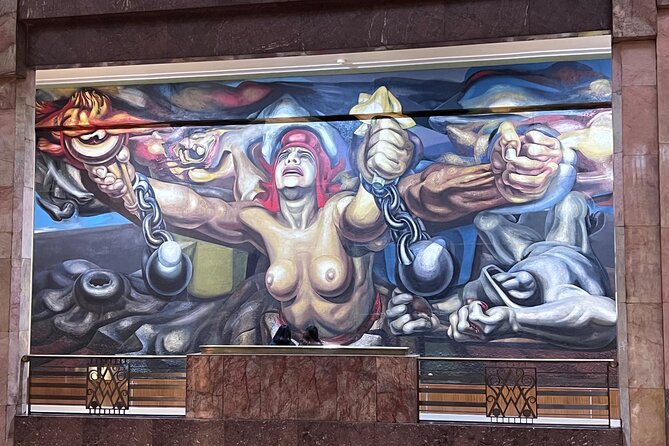
The strongest part of this experience is the context. Mercedes does not treat the paintings as pretty backdrops. She links them to political change, culture, and economic transition, which gives you a better sense of what the artists were trying to do.
That approach is especially helpful if you are new to Mexican muralism. The images can be packed with symbols, but symbols only help when you know what question to ask. Is this scene about power? Class? National pride? Religious belief? The clash between older traditions and industrial development?
You will also look at the chronology of the murals. That lets you consider how Mexico’s national story changes from one work to the next. The country appears as rural and urban, ancient and modern, hopeful and troubled. The murals do not offer one tidy answer about Mexican identity. Their value comes partly from the arguments between them.
I like that the tour leaves room for questions. The experience is not presented as a one-way lecture. The available feedback describes Mercedes as patient, generous with her time, and willing to explore different questions. That is important in a museum where a single image can raise several possible readings.
Her personal affection for Mexico City also adds something useful. A guide who cares about the city can connect the palace to the wider culture without turning the visit into a dry list of dates and names.
What the small group changes
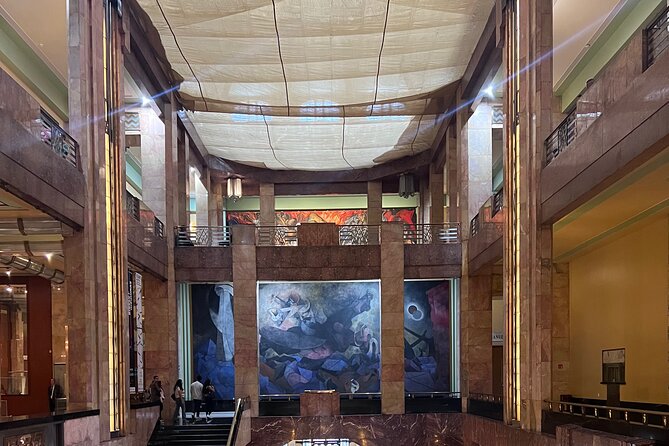
A group limit of six is a real advantage at this price. At $60 per person, you are paying for a focused guide-led experience rather than simply paying for entry to a building.
A large group can make art tours tiring. People stand at different angles, questions get lost, and the guide may need to repeat basic information. With six or fewer people, you have a better chance of hearing the explanation clearly and discussing a detail that catches your attention.
The small format may also suit couples and solo visitors who want a more personal session. The experience can respond to your interests, at least within the fixed 90-minute schedule. One person may want more political context, while another may care about technique or symbolism.
There is a limit, of course. A small group does not create extra time. The tour still has to cover the facade and the interior murals within roughly an hour and a half. If you like to linger in front of one painting for 20 minutes, the schedule may feel tight.
Is $60 a fair price?
The $60 cost is reasonable if you want interpretation rather than independent sightseeing. Admission is included for the palace portion, and the guide provides an organized account of several important artists and themes.
The value is strongest for first-time visitors who might otherwise see large murals without understanding their political and cultural setting. You are paying for structure, comparison, and the ability to ask questions. The small group also makes the fee easier to justify than a large, general museum talk.
It is less compelling if you already know Mexican muralism well or prefer to read labels and move at your own pace. In that case, you may value the palace admission more than the guided explanation, and the fixed schedule may feel restrictive.
I would also think about your wider plans in Mexico City. This is a concentrated art and history experience, not a full-day city tour. It works best when you want one strong cultural stop and still plan to explore the rest of Centro on your own.
Who will get the most from this experience?
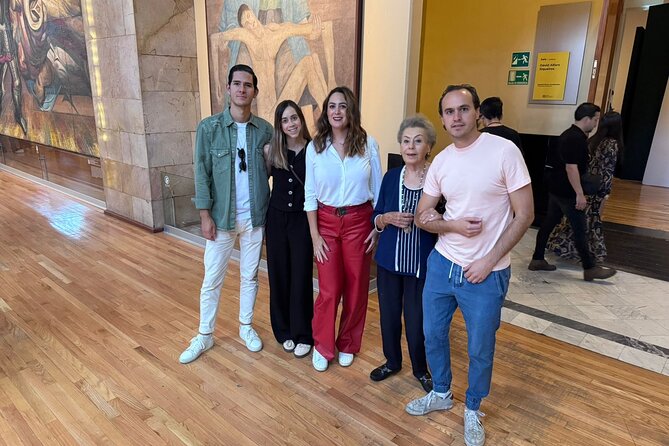
I would recommend this tour to you if you:
- Want to understand the ideas behind Mexican murals, not just photograph them
- Prefer a small group over a large museum tour
- Enjoy political, cultural, and economic context
- Are visiting Palacio de Bellas Artes for the first time
- Want an English-language explanation
- Like asking questions during a guided visit
- Have about 90 minutes available in the late morning
It should also suit couples and small groups who want a private-feeling experience without booking a fully private tour. Most people can participate, and the palace is near public transportation, so the basic logistics are straightforward.
You may want a different plan if your main goal is architecture, if you need a long unhurried museum visit, or if you already have a strong background in the muralist movement. The tour gives the facade only 10 minutes and directs most of its time toward the murals and their historical meaning.
Practical details that affect your day
Confirmation is provided when you book. The start time is 11:00 a.m., and the activity returns to the Madero Monument when it finishes.
The tour is offered in English only. Make sure that matches what you want from a museum visit, especially if you are hoping to discuss fine points of art or politics.
The activity can be canceled for a full refund up to 24 hours before the start time. Cancellations or changes made less than 24 hours before the start time are not accepted for a refund. The cut-off follows local Mexico City time.
The experience is often booked about 17 days ahead. That does not guarantee that every date will sell out, but it is a useful hint if your Mexico City schedule is fixed. The six-person limit makes advance planning sensible.
Should you book Exploring Mexican Muralism?
Book it if you want Palacio de Bellas Artes to make sense, not simply look impressive. The combination of Mercedes’s personal, question-friendly approach and the small group makes this a strong choice for anyone curious about how art reflects revolution, labor, national identity, and social change.
The main trade-off is pace. Ninety minutes is enough for a well-organized introduction, but not enough for a leisurely examination of every mural and architectural detail. At $60, the tour is best value when you want expert guidance and context. If you prefer independent viewing, use the palace admission as part of a longer visit instead.
FAQ
How long does the Bellas Artes mural tour last?
The experience lasts approximately 1 hour and 30 minutes. About 10 minutes are spent examining the exterior, followed by about 1 hour and 20 minutes inside the palace.
What time does the tour start?
The tour starts at 11:00 a.m.
Where does the tour meet?
You meet at the Madero Monument in Colonia Centro, Centro, Cuauhtémoc, Mexico City.
Where does the experience end?
The activity ends back at the meeting point, the Madero Monument.
Is admission to Palacio de Bellas Artes included?
Admission is included for the interior portion of the tour. The exterior portion has no admission charge.
How many people can join the tour?
The activity has a maximum of six participants. It is offered in English, and most people can participate.
Freshly painted around Mexico
- Xochimilco floating gardens, Coyoacan and UNAM murals★ 4.0 · 6 reviews
- UNAM: Murals & Revolution★ 4.9 · 8 reviews
- Street Art & Cemetery Cultural Tour – half day★ 5.0 · 3 reviews
- Graffitis & Munchies biketour Playa del Carmen★ 4.5 · 18 reviews
- Street Art Walk★ 4.5 · 7 reviews
- Tour Women Muralists : Strokes that resist Mexico City★ 5.0 · 7 reviews
- Diego Rivera’s murals, hidden treasures★ 5.0 · 21 reviews
- Private Street Art Tour in Rome★ 4.0 · 4 reviews
Mexico City Street Art Tours, compared.

Xochimilco, Coyoacan and Frida Kahlo with Optional Lunch
Read our review →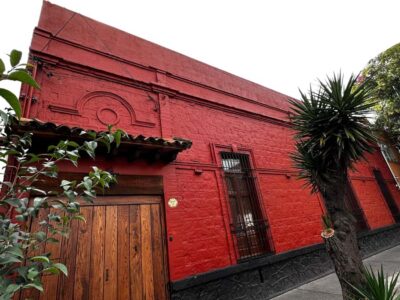
CDMX: Xochimilco, Coyoacan, Frida Kahlo Museum & Murals Tour
Read our review →
Mexico City; ART NACO : Murals & Street Art Bike Tour
Read our review →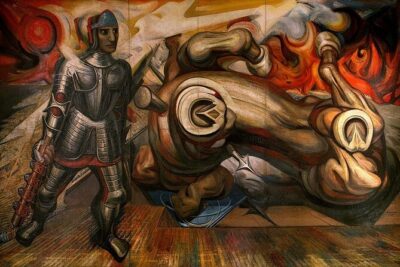
Walking Tour – Impressive murals in Historical Center of Mexico City
Read our review →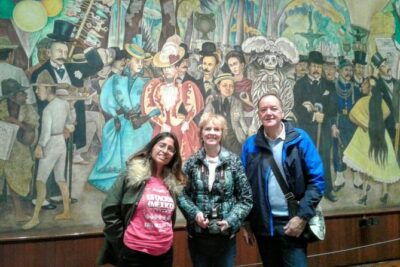
La Catrina & Muralism: Diego Rivera’s Legacy & Frida Kahlo
Read our review →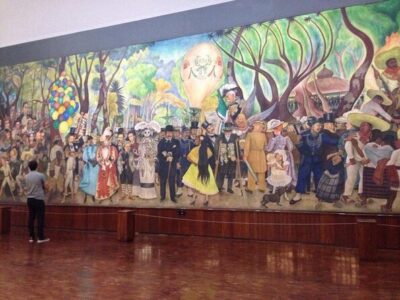
Muralist Art Semi Private Walking Tour in Mexico City Downtown
Read our review →
Xochimilco floating gardens, Coyoacan and UNAM murals
Read our review →
Mexico City: Diego Rivera’s Murals Guided Walking Tour
Read our review →Browse the lists this tour appears in