
Review · CAPE TOWN
Cape Town: Woodstock Street Art & Culture Tour
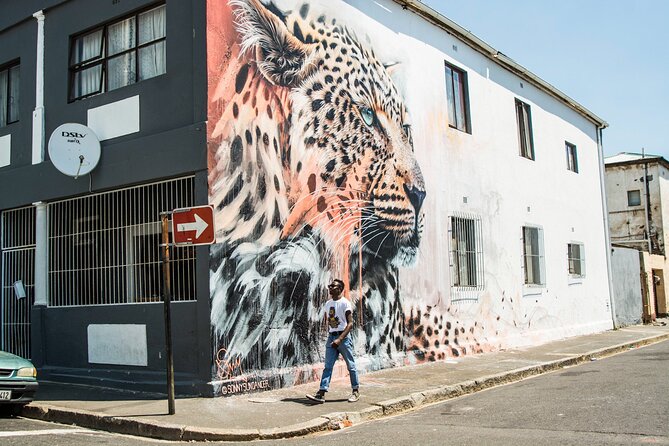
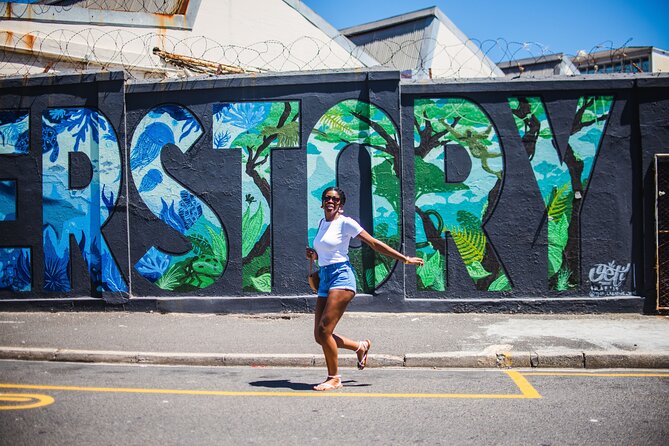
Cape Town’s street art is not just decoration. In Woodstock and Salt River, murals open a door into local politics, social change, youth culture, and the city’s growing creative scene. This two-hour walk takes you through neighborhoods many visitors skip, with guides who know the artists and the area personally.
I like the local point of view and the chance to hear why a mural exists, not just admire its colors. I also like the mix of art and everyday community life, including the chance to meet artists or locals when the route allows. The main drawback is that the art is only part of the story, so anyone wanting a fast gallery-style tour may find the social discussion takes up more time than expected.
Key points at a glance
- Woodstock and Salt River neighborhoods: See street art in areas shaped by major social and economic change.
- Murals with a purpose: Learn about artists, techniques, festivals, political ideas, and community concerns.
- Local guides: Guides including Chandy, Terrence, Shipo, and Shandy have led walks, with some living in the area.
- A small-group feel is possible: The maximum group size is 30, though the actual group may be smaller.
- A two-hour walking tour: Plan for conversation and close looking rather than a quick list of photo stops.
- Good value at $38.65: The price makes most sense if you want art explained through Cape Town’s modern social story.
Why Woodstock street art tells a larger story

The best reason to take this walk is that you are not simply hunting for colorful walls. You are learning how public art can change the way people see a neighborhood and how a neighborhood sees itself.
Woodstock and Salt River have their own identities, pressures, and communities. The tour uses street art as a way to discuss social and economic issues, the new South Africa, and the city’s creative work. That gives the walk more weight than a standard photo stop.
I like this approach because murals often lose their meaning when you see them alone. A guide can explain the artist’s motivation, the technique, and the local issue behind the image. You may look at the same wall differently once you know why it was painted and who it was meant to reach.
The tone is not only serious. The tour also points to the positive side of Cape Town’s creative scene. You get a picture of a city where art can bring attention to local concerns, support artists, and shift outside views of a community.
More Street Art Tours around the world:
- Medellin: Comuna 13 Graffiti Tour, Cable Car & Street Food
★ 4.8 · 9,046 reviews - CDMX: Xochimilco, Coyoacan, Frida Kahlo Museum & Murals Tour
★ 4.4 · 3,025 reviews - Amsterdam: Streetart Museum STRAAT Entrance Ticket
★ 4.8 · 2,137 reviews
Walking through Woodstock and Salt River
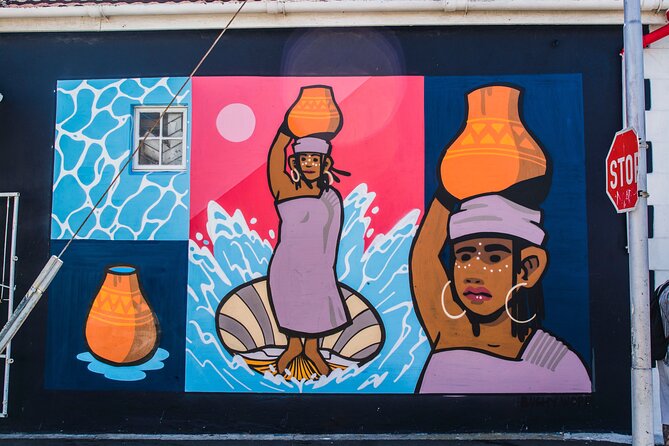
The route spends about two hours in Woodstock and Salt River. The exact sequence of stops is not set out in detail, so you should expect a guided neighborhood walk rather than a fixed museum route with numbered rooms.
That flexibility can be a strength. Street art changes. New work appears, old murals fade, and access to artists or particular locations can vary. A local guide can spend more time where the conversation is strongest instead of rushing through a rigid checklist.
One area highlighted on the walk is Salt Circle, where several mural works can be found. Some of the art there formed part of a festival or exhibition, so the area gives you a clear look at how organized public art projects can shape a neighborhood.
You will likely stop often to examine individual pieces. The guide can talk through images, color, technique, and meaning, then connect them to the people and issues around you. Wear comfortable shoes and allow yourself to walk at a steady pace while listening.
This is not presented as a strenuous hike. Still, it is a walking tour on city streets, and the experience works best when you are happy to remain on your feet for two hours.
The art comes with names, motives, and methods
A major strength is the attention given to the artists themselves. You are not left with a wall full of attractive shapes and no context. The guide discusses who made the work, what drove the project, and how different artists use public space.
The explanations can also cover different techniques. That matters if you are interested in how street art is made, not just how it looks in a photograph. You may find yourself noticing scale, placement, line work, or the way a piece interacts with nearby buildings.
The tour can include contact with artists themselves, which is a special feature when it happens. It is not a guarantee for every departure, but the experience is designed around real connections in the local creative scene.
Guides named in the feedback include Chandy, Terrence, Shipo, and Shandy. Their roles are not limited to pointing at walls. Chandy is described as thoughtful and patient, while Terrence has been praised for encouraging questions and explaining both the artwork and the community. Shipo has led detailed explanations of the stories behind paintings.
You should treat the guide’s personality as part of the experience. This is a discussion-based walk, so a guide who welcomes questions can make the two hours much more useful. If you want to know why a work was commissioned, what an image means, or how local artists approach a public wall, ask.
The social story behind the murals
The art is a starting point for talking about South Africa’s past and present. The walk addresses political and social concerns, the economic pressures facing the neighborhoods, and life for young people in modern South Africa.
That wider discussion is one of the tour’s most valuable features. You are not being handed a polished, postcard version of Cape Town. You are encouraged to think about how a neighborhood is represented, who gets heard, and how creative work can offer a different view.
The conversation may sometimes feel more like a local culture walk than a pure street-art tour. That is worth knowing before you book. If you want wall after wall with little discussion, this may feel slow. If you want to understand the setting, the extra context is the point.
I especially like that the tour makes room for positive stories as well as difficult subjects. Social issues are not treated as the whole identity of Woodstock or Salt River. The focus also falls on artists, community energy, new ideas, and the ways public creativity can change perceptions.
Same walls, a different way in:
- Belfast: Murals Taxi Tour
★ 4.9 · 2,047 reviews - Wynwood Graffiti Golf Cart Small-Group Tour
★ 5.0 · 1,646 reviews - London: Street Art and Graffiti Guided Walking Tour
★ 4.9 · 1,354 reviews - Lisbon: Street Art Tour
★ 4.9 · 1,324 reviews
Why the local setting matters
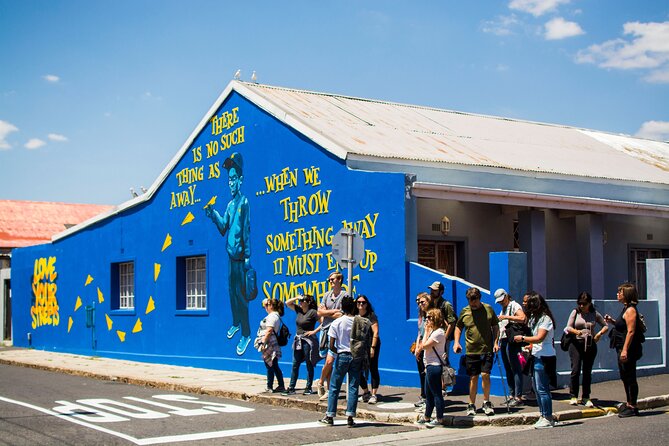
Woodstock and Salt River are not simply backdrops for the murals. The neighborhoods give the art its meaning.
A work painted in a gallery can be viewed in isolation. A mural on a city street is part of daily life. People pass it, live near it, respond to it, and sometimes help shape the project. Seeing the art in place helps you understand why public walls matter.
The walk also takes you beyond Cape Town’s usual visitor circuit. That does not mean every street will feel polished or designed for sightseeing. The value is in seeing a part of the city through local eyes and hearing how the area is changing.
You should keep your expectations grounded. This is not a tour of grand monuments, formal galleries, or carefully staged attractions. It is a neighborhood experience built around public art and conversation. The surroundings may feel ordinary in places, and that is part of the point.
Guide quality can shape the whole morning
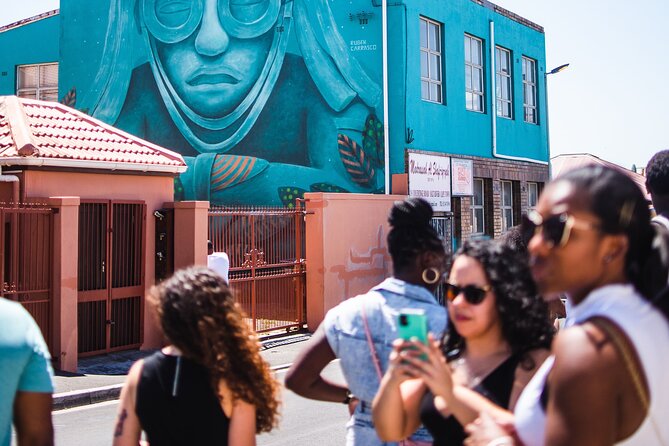
The guide is central here. The route itself is important, but the explanations turn a mural walk into a cultural experience.
The named guides have different strengths. Chandy is known for a calm, thoughtful approach. Terrence has been described as personable and willing to answer questions, sometimes working alongside a trainee. Shipo has focused on the stories and history behind the painted works. Shandy has also led tours praised for patience and clear explanations.
Because the provider is One Day Africa, guide assignments may vary. You should not book expecting one particular person unless the operator confirms it. Still, the consistent pattern is clear: the tour depends on local knowledge, conversation, and an ability to connect art with community life.
A maximum of 30 people is allowed. That is not a tiny private walk, and a full group could make it harder to hear or ask questions. On the other hand, the tour’s discussion format may work well with a shared group conversation. If you want a private art lesson, this is not that product.
What $38.65 gets you
At $38.65 per person, this is priced above a casual self-guided mural walk, but the comparison is not quite fair. You are paying for interpretation, local access, and the time needed to connect the art with wider issues.
A free map or independent walk might show you the same walls. It would not tell you which artists made them, what inspired the work, how a festival shaped the area, or how the murals relate to changing views of the neighborhood.
The value is strongest if you are interested in more than taking photographs. Students of art, culture, politics, and urban change should get plenty from the conversation. It also suits anyone who has already seen Cape Town’s major sights and wants a different angle on the city.
The price may feel less worthwhile if you are looking only for a large number of murals in a short period. Two hours can pass quickly, especially when the guide spends time on social context. In this case, fewer well-explained works are more useful than a hurried list of walls.
Practical details before you go

The experience lasts about two hours and uses a mobile ticket. Confirmation is received when you book, so keep the booking details easy to reach on your phone.
The tour is near public transportation, which is useful because Woodstock and Salt River are outside the most concentrated sightseeing areas. The exact meeting-point information deserves care. One participant lost about 30 minutes because the correct meeting point was unclear, so check the instructions closely and confirm anything that looks vague before setting out.
Most people can participate, and service animals are allowed. No special fitness level is stated, but you should be prepared for a walking route and time spent standing at murals.
The tour can be booked up to about 15 days ahead on average. That does not mean you must reserve that early, but it suggests planning ahead if the walk is important to your schedule.
Free cancellation is available until 24 hours before the start time. A cancellation made inside that window is not refunded, and changes are not accepted during the final 24 hours. The cut-off follows local Cape Town time.
Who will enjoy this walk most
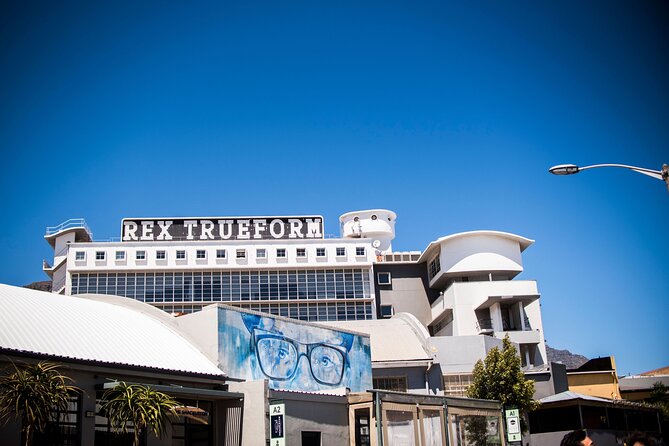
I would choose this tour if you want to connect contemporary art with real city life. It works especially well for:
- People who enjoy public art and want the story behind each piece.
- Visitors interested in South Africa’s political and social questions.
- Anyone looking for a neighborhood experience away from Cape Town’s main sightseeing route.
- Photographers who also enjoy hearing about artists and techniques.
- First-time visitors who want a guided introduction to the city’s creative scene.
- Repeat visitors who have already covered the standard attractions.
You may want something else if your main aim is a fast, highly visual route with minimal talking. The tour’s best moments come from the guide’s explanations, so someone who is not interested in discussion may find the pace too thoughtful.
Families and mixed-age groups can participate, though the social subject matter may suit older children and adults better. Since most people can take part and service animals are allowed, the experience is broadly accessible, but the walking format still calls for sensible footwear.
My call: book it for context, not just color
Book the Woodstock Street Art and Culture Tour if you want to understand why the murals matter. You will see strong public art, but you will also hear about the artists, local concerns, South Africa’s changing identity, and the positive role of creative work.
The guide makes the difference. Chandy, Terrence, Shipo, and Shandy have each brought warmth and clear local insight to the walk, though your guide may be someone else. Check the meeting point carefully, allow the full two hours, and expect conversation rather than a quick mural checklist.
At $38.65, it is a fair buy for a well-explained introduction to Woodstock and Salt River. I would skip it only if you want a self-guided photo hunt or prefer formal galleries. For a thoughtful look at Cape Town’s street art and the communities around it, this is a worthwhile choice.
FAQ
How long does the Woodstock Street Art and Culture Tour last?
The tour lasts approximately two hours.
Where does the tour take place?
The walk explores the Woodstock and Salt River neighborhoods in Cape Town, including an area known as Salt Circle.
What does the tour focus on besides street art?
The guide discusses the artists, their motivations, artistic techniques, local social and economic issues, South Africa’s modern creative scene, and the ways art can affect views of local communities.
How many people can join the tour?
The maximum group size is 30 people.
Is the tour accessible by public transportation?
The experience is located near public transportation.
Can I cancel for a full refund?
Yes. You can cancel at least 24 hours before the start time for a full refund. Cancellations or changes made less than 24 hours before the experience are not accepted for a refund.
Freshly painted around the world
- Xochimilco floating gardens, Coyoacan and UNAM murals★ 4.0 · 6 reviews
- Your Own Belgrade: Street Art and Hidden Gems Walking Tour★ 5.0 · 2 reviews
- Wynwood Walls Street Art & Neighborhood Walking Tour★ 4.9 · 9 reviews
- Vancouver: Street Art & Craft Beer Walking Tour with Tasting★ 4.8 · 14 reviews
- Zagreb Street Art Private Walking Tour with a Local Artist★ 5.0 · 12 reviews
- Urban Canvas: Osaka Street Art Bike Tour★ 5.0 · 10 reviews
- Vancouver: Street Art & Craft Coffee Walking Tour w/ Tasting★ 4.8 · 11 reviews
- UNAM: Murals & Revolution★ 4.9 · 8 reviews
Cape Town Street Art Tours, compared.

Cape Town: Street Art Walking Tour in Woodstock
Read our review →
Cape Town: Inspiring sustainable change through Street Art
Read our review →Browse the lists this tour appears in