
Review · CAPE TOWN
Cape Town: Inspiring sustainable change through Street Art
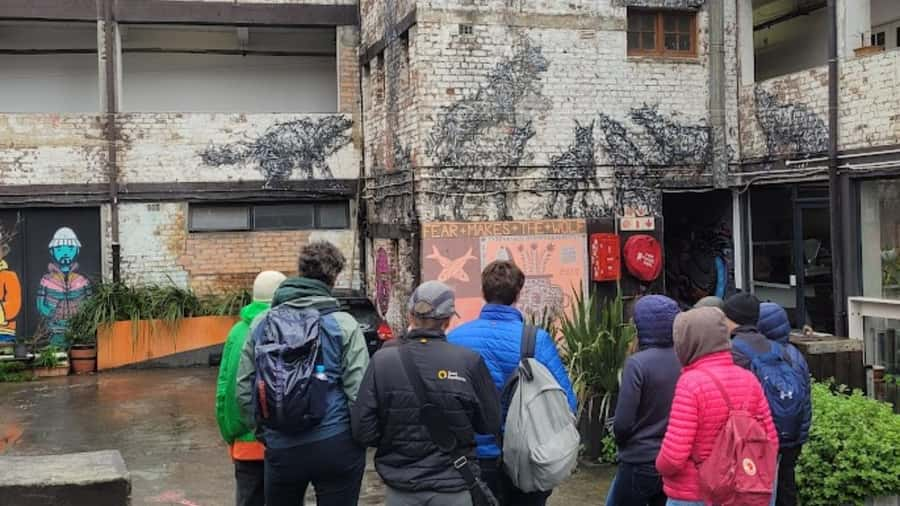
Cape Town’s Woodstock and Salt River street art turns an ordinary walk into a lesson in public ideas, local identity, and creative protest. Murals cover walls, galleries add another layer, and your guide explains the artists, methods, and messages behind the work rather than leaving you to admire the paint without context.
I like two things here: the tour brings you into local creative communities, and it treats street art as more than decoration. I also like the practical touch of pickup and transfer, especially when Gail provides a fresh bottle of water before taking you to the walking route.
The main consideration is simple: this is a 150-minute walking tour in a local neighborhood, so comfortable shoes matter. Drinks, food, souvenirs, and personal costs are not included, and the experience is conducted in English.
Key points at a glance
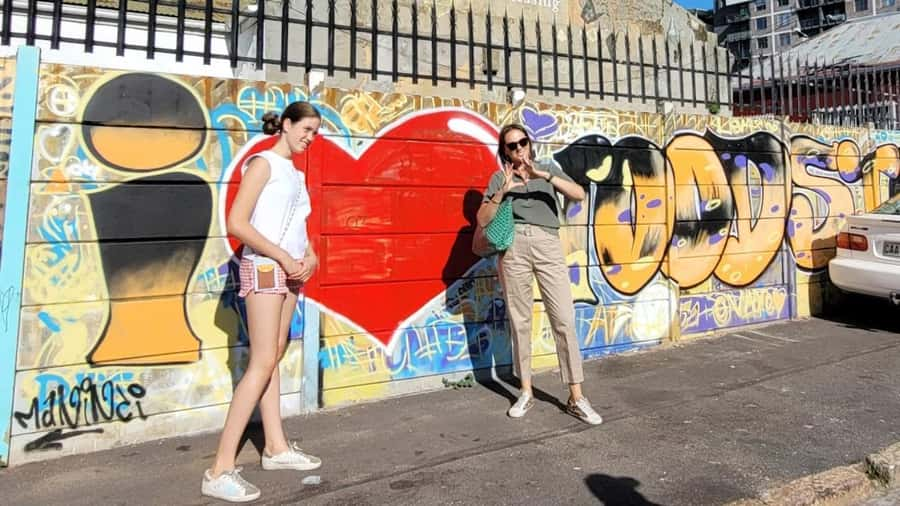
- Woodstock and Salt River on foot: See murals, street pieces, and galleries in two Cape Town neighborhoods with a guide beside you.
- Artists and messages take center stage: Learn who made the work, what it communicates, and which techniques bring it to life.
- A look at creative subcultures: The tour connects public art with local people and Cape Town’s wider cultural scene.
- Gail handles the transfer: Pickup includes a comfortable transfer to the meeting point, with water provided according to the tour details.
- Dauriq leads the walk: He explains the pieces and takes care with the group while moving through Woodstock.
- Good value for art-minded visitors: At $48 per person, you pay for transport, a live English guide, and two and a half hours of local interpretation.
Why Woodstock and Salt River make a strong art walk
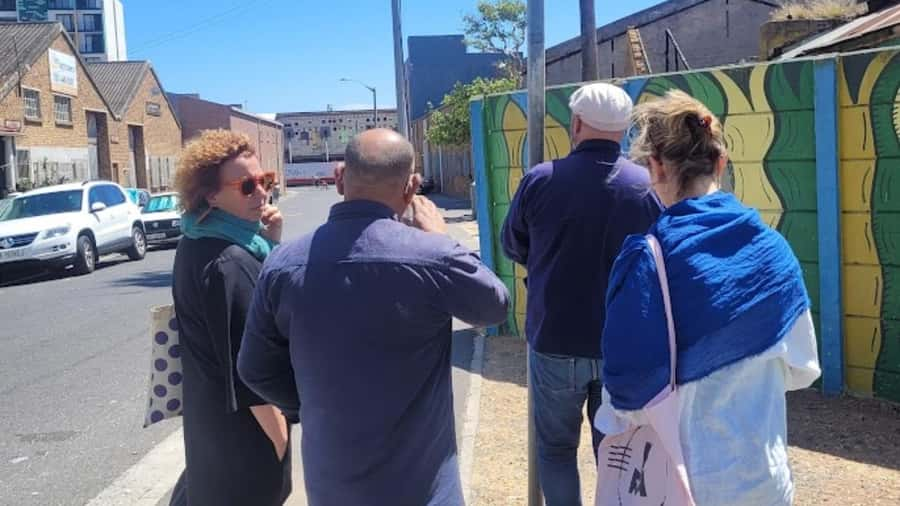
Street art works best when you see it in its proper setting. In a gallery, a mural can become a framed object. In Woodstock or Salt River, it remains part of the neighborhood, sharing space with homes, businesses, roads, and daily life.
That setting gives the art a practical edge. A wall may carry a social message, celebrate local culture, or simply bring color and energy to a public space. Your guide helps you read those choices and understand how artists use scale, symbols, lettering, and different painting methods.
The tour also offers a useful counterpoint to Cape Town’s better-known sights. You are not spending the morning ticking off monuments. Instead, you are looking at the city through its creative subcultures and the people who shape them.
I would choose this experience if you want to understand something about present-day Cape Town. It gives you a closer look at how neighborhoods express themselves, rather than presenting the city only through formal attractions.
More Street Art Tours around the world:
- Medellin: Comuna 13 Graffiti Tour, Cable Car & Street Food
★ 4.8 · 9,046 reviews - CDMX: Xochimilco, Coyoacan, Frida Kahlo Museum & Murals Tour
★ 4.4 · 3,025 reviews - Amsterdam: Streetart Museum STRAAT Entrance Ticket
★ 4.8 · 2,137 reviews
What the 150-minute route feels like
The experience begins with pickup and transfer to the meeting point. Gail handles this part, and the tour details note that she provides a fresh bottle of water and delivers you comfortably to the start of the walking portion.
That small service matters. You can begin the walk without first worrying about finding the meeting point on your own, and water is useful in Cape Town’s sun. The transfer is included, but food and drinks beyond that are not, so bring anything else you will need for the full 150 minutes.
From there, the route moves through Woodstock and Salt River on foot. The exact order of murals, galleries, and street pieces is not specified, so you should expect a flexible neighborhood walk rather than a fixed museum-style sequence.
Your guide introduces the work as you go. Instead of looking at a wall for a few seconds and moving on, you learn about the artist, the idea behind the image, and the technique used to make it. That extra explanation is the main reason to book a guided walk rather than explore the streets alone.
The route also includes contact with local people and a chance to see the area’s creative subcultures. This is not presented as a performance or staged cultural show. You are walking through an active neighborhood, so the experience depends on paying attention to the setting and showing courtesy to people who live and work there.
Reading the murals, not just photographing them
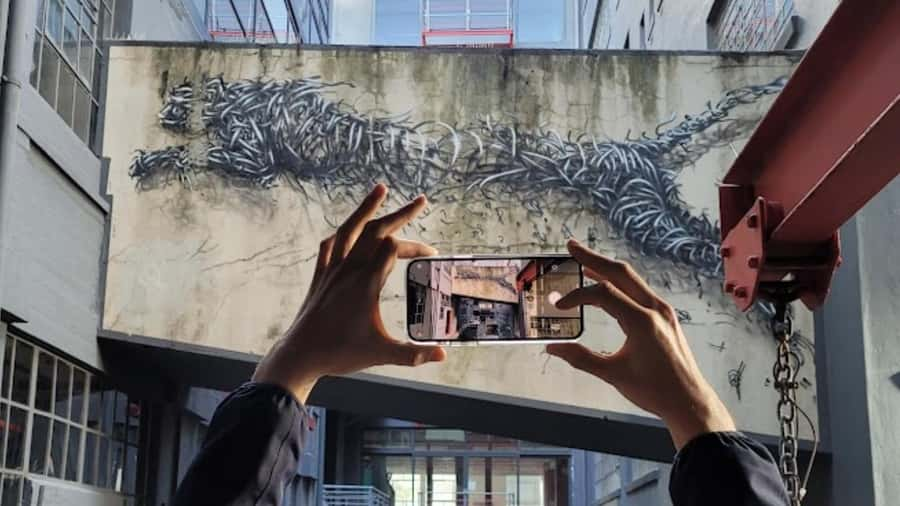
The strongest part of this tour is its focus on meaning. Street art can be easy to consume quickly: take a photo, admire the colors, and continue down the road. The guide slows that process down and gives you tools for looking.
You will learn about the artists behind the murals and the messages they are trying to communicate. The available details do not name every artist or promise a particular set of walls, so do not book this expecting a guaranteed checklist of famous pieces.
Instead, think of the route as an introduction to a changing public art scene. Murals can change, fade, or be painted over. That means the value lies partly in the explanation and the neighborhood context, not just in seeing one specific image.
The guide also discusses technique. You might consider how an artist uses a large wall, handles outlines, builds color, or places text within a composition. These details help you understand why a piece works in a public space and how it catches the eye from the street.
I especially like this approach for people who usually feel uncertain around modern art. You do not need a background in art criticism. A good explanation of an artist’s purpose and method gives you a practical way to decide what you think.
Meeting local people and seeing the creative side of Cape Town
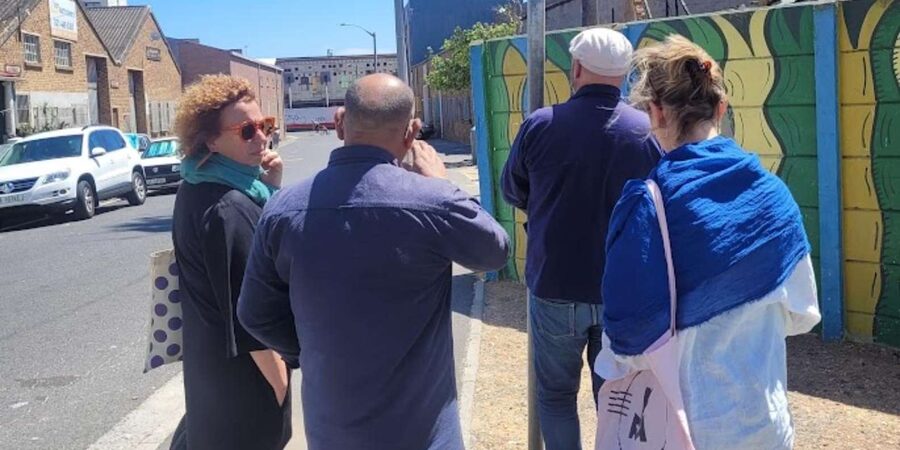
The tour is designed to put you in contact with local life, not just painted walls. The neighborhoods are presented as places where artists, residents, galleries, and other creative groups overlap.
That matters because street art is rarely only about the artist. It can influence how a place is seen, how residents express local concerns, and how outsiders understand the area. Your guide explains these connections while you walk, giving the artwork a social setting.
Keep your camera ready, but use it with care. The instructions specifically ask you to ask people before photographing them. That is good advice anywhere, and especially important on a neighborhood walk where people are not there to be part of a tourist display.
You should also bring biodegradable sunscreen and comfortable clothes. The walking route takes place outdoors, and the combination of pavement, sun, and two and a half hours on foot makes sensible clothing more important than dressing for a formal attraction.
Same walls, a different way in:
- Belfast: Murals Taxi Tour
★ 4.9 · 2,047 reviews - Wynwood Graffiti Golf Cart Small-Group Tour
★ 5.0 · 1,646 reviews - London: Street Art and Graffiti Guided Walking Tour
★ 4.9 · 1,354 reviews - Lisbon: Street Art Tour
★ 4.9 · 1,324 reviews
Gail, Dauriq, and the value of a local guide
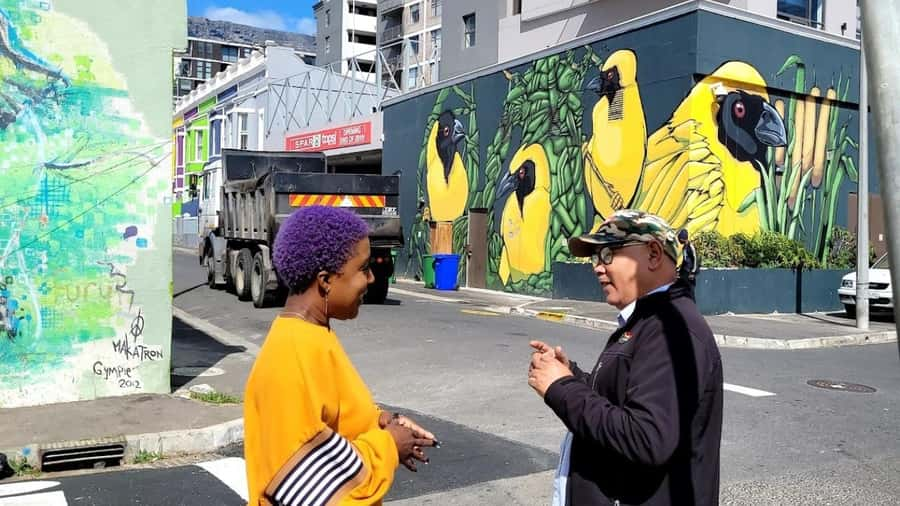
The experience includes a transfer with Gail and a walking tour led by Dauriq. Those details give the outing a more personal feel than a self-guided street-art map.
Gail’s role begins before the art walk, with pickup, water, and transport to the meeting point. A smooth start is valuable in Cape Town, where a visitor may not know which local streets are best reached by transfer.
Dauriq guides the walking portion and explains the unique pieces in Woodstock. The available feedback highlights his care while leading the group, which is particularly useful on a route where you need to listen, look up at walls, and keep moving through a working neighborhood.
The tour is offered in English. If you want detailed discussion of artists, messages, and techniques, language ability will matter. English-speaking visitors should be able to follow the central explanations without needing to rely on captions or printed material.
A guide cannot guarantee that every piece will suit your taste. That is part of the point. You are seeing a range of public work and learning how it functions in place, rather than visiting a gallery where every object has already been selected for a single audience.
Is $48 a fair price?
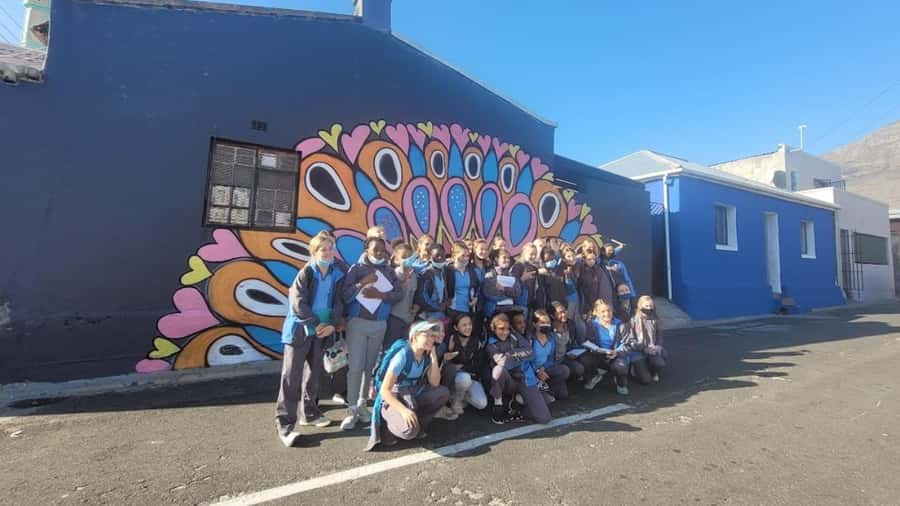
At $48 per person, this is not the cheapest way to see walls in Cape Town. You can walk through a neighborhood without paying for a guide. The question is what you want from the experience.
Here, the price includes transfer and a 150-minute guided walk in English. You are paying for transportation, local interpretation, and the chance to learn about artists and techniques as the route unfolds.
I think the price makes reasonable sense if you value context. A self-guided visit may show you the colors, but it will not necessarily explain the artists’ messages or connect the work with local creative groups.
The value is also stronger if you are short on time. In two and a half hours, you can focus on Woodstock and Salt River without spending part of your day working out where to go or how to connect the different pieces.
It is less suitable if you only want a quick photo stop or a tightly timed sightseeing circuit. The walk is the attraction, and the neighborhood setting requires attention. You should be comfortable spending a substantial part of the experience on foot.
Who will enjoy this experience most
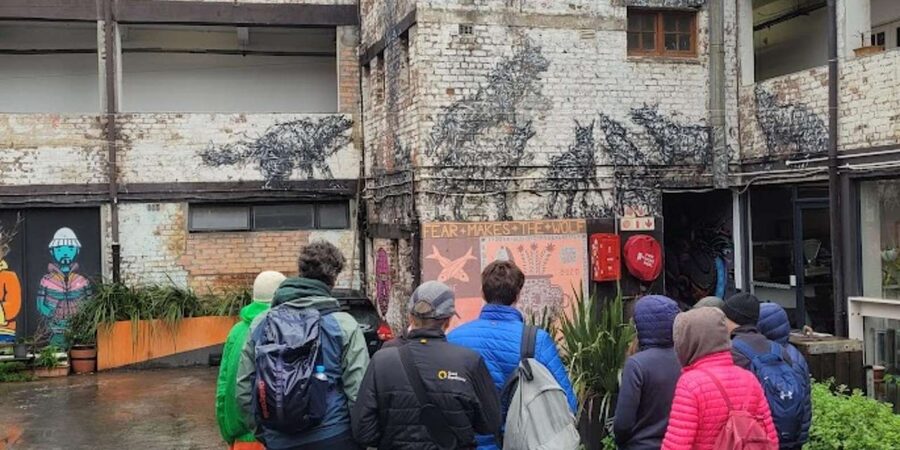
I would recommend the tour to visitors who enjoy photography, design, social history, and contemporary art. It also suits anyone who wants to see a less formal side of Cape Town and learn how public creativity shapes local identity.
It is a good choice for first-time visitors who want an introduction to Woodstock and Salt River. A local guide gives you an easier entry into streets and creative spaces that may be difficult to understand from a quick drive past.
Art students and practicing artists could find the discussion of technique useful. The tour does not promise a workshop, but it does offer a chance to study how public pieces are made and why particular methods work on a large scale.
Families and mixed-age groups may also appreciate the visual nature of the route, provided everyone can manage a 150-minute walk. The tour is wheelchair accessible, which broadens its appeal, although the supplied information does not describe the exact pavement or route conditions, so it is sensible to confirm any specific mobility needs before booking.
I would hesitate to recommend it to someone who wants a seated activity, a meal, or a formal gallery tour. None of those are included. You get a guided walk, not a comfort-focused excursion.
Useful preparation before you go
Wear shoes you can walk in for the full duration. The tour is outdoors and moves through streets, so fashion footwear that pinches or lacks support is a poor choice.
Bring a camera, but remember the request to ask permission before photographing people. The murals are public, but residents are not part of the scenery.
Biodegradable sunscreen and comfortable clothing are listed as essentials. You should also plan for your own food and drinks because those are not included.
The tour includes free cancellation up to 24 hours before the start time, and you can reserve now and pay later. Those policies are useful if your Cape Town schedule is still moving around, but check the available starting times when you book because the duration alone does not tell you when the walk runs.
The experience is wheelchair accessible. Since the route is a street walk rather than an indoor venue, ask the provider about any particular access concern that matters to you.
Should you book the Woodstock street art walk?
Book it if you want public art explained in its neighborhood setting, not simply photographed from a vehicle. The combination of transfer, local guiding, murals, galleries, and discussion of artists gives you a clear way to spend 150 minutes in Woodstock and Salt River.
The strongest reasons to go are Dauriq’s guided interpretation, Gail’s helpful transfer service, and the chance to meet local people while learning how art affects a community. The main limits are the walking time, the English-only format, and the fact that food and personal expenses are extra.
For art lovers, photographers, and curious visitors who want a more local view of Cape Town, $48 is a fair price for the access and explanation provided. If you prefer famous landmarks, fixed schedules, or a short photo stop, choose another activity.
FAQ
Where does the street art tour take place?
The walking tour takes place in Woodstock and Salt River in Cape Town, Western Cape, South Africa.
How long does the experience last?
The experience lasts 150 minutes, or two and a half hours.
What language is the tour offered in?
The live tour guide conducts the experience in English.
Is transportation included?
Yes. Transfer is included, and pickup is provided. You meet at the reception before being taken to the walking meeting point.
Is the tour wheelchair accessible?
Yes, the activity is listed as wheelchair accessible.
What should I bring?
Bring comfortable shoes, a camera, biodegradable sunscreen, and comfortable clothes.
Are food and drinks included?
No. Food and drinks are not included. Souvenirs and personal expenses are also extra.
Can I cancel the booking?
Yes. You can cancel up to 24 hours in advance for a full refund. You can also reserve the activity and pay later.
Freshly painted around the world
- Xochimilco floating gardens, Coyoacan and UNAM murals★ 4.0 · 6 reviews
- Your Own Belgrade: Street Art and Hidden Gems Walking Tour★ 5.0 · 2 reviews
- Wynwood Walls Street Art & Neighborhood Walking Tour★ 4.9 · 9 reviews
- Vancouver: Street Art & Craft Beer Walking Tour with Tasting★ 4.8 · 14 reviews
- Vancouver: Street Art & Craft Coffee Walking Tour w/ Tasting★ 4.8 · 11 reviews
- Zagreb Street Art Private Walking Tour with a Local Artist★ 5.0 · 12 reviews
- Urban Canvas: Osaka Street Art Bike Tour★ 5.0 · 10 reviews
- UNAM: Murals & Revolution★ 4.9 · 8 reviews