
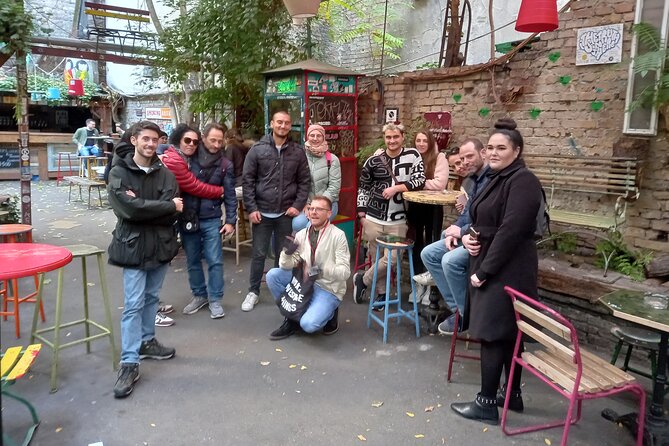
Review · BUDAPEST
Street Art and Alternative Tour in Budapest
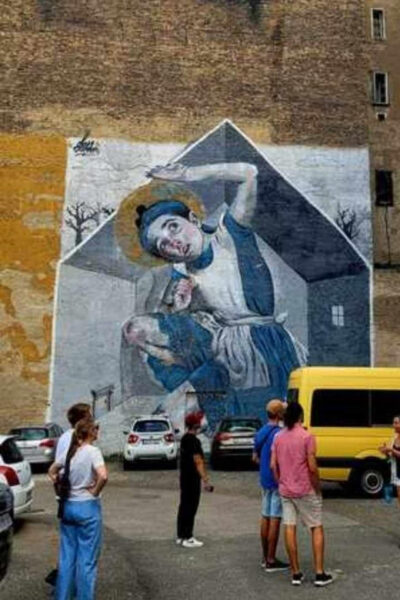
Budapest’s street art is not only about big, colorful walls. On this walk, ET points out stickers, small public artworks, murals, and political images that are easy to miss if you hurry through District VII. He explains what the art may be saying and connects it to the changes taking place around the neighborhood.
I like the small group limit of eight because it gives you room to ask questions and keep pace on narrow streets. I also like that ET is involved in Budapest’s art scene himself, so the walk reaches beyond the obvious photo stops and includes details even local people may pass without noticing.
The main drawback is simple: this is a two-hour walk with plenty of slow street wandering, so comfortable shoes matter. It also suits people who enjoy discussion and ideas more than those looking only for pretty murals.
Key points at a glance
- District VII from an art insider’s view: Explore a part of Budapest known for its creative energy, ruin bars, stickers, murals, and changing streets.
- More than wall paintings: ET may show you bronze sculptures, smart-art images, stickers, large murals, and smaller pieces tucked into the urban fabric.
- Art with something to say: Political events, social questions, and local change are central to the conversation.
- A genuinely small group: The tour is capped at eight people, making it easier to hear the guide and join the discussion.
- A useful first-day walk: You finish at Szimpla Kert, one of Budapest’s best-known ruin bars, in the heart of District VII.
- Good value for curious walkers: At $36.20 per person, the price is reasonable if you want local context rather than a quick photo tour.
Seeing Budapest through its smaller street details
The most useful change this tour gives you is not a list of artworks. It teaches you where to look.
Budapest’s street art can sit on a broad wall, but it can also appear on a utility box, a sticker, a small sculpture, or a piece of smart art that blends into the street. ET slows the walk down and helps you notice these details. Afterward, you may find yourself scanning walls and street corners for work you would have ignored before.
That change in pace matters. District VII can feel easy to rush through. You may be on your way to a café, a ruin bar, or another sightseeing stop, while a small image nearby carries a political message or a joke about daily life. This tour gives those pieces time and attention.
The walk is also about interpretation. You are not simply told that an artwork exists. ET explains possible meanings, the background of the artist or movement when available, and the social or political questions behind the work. The result is less like a standard sightseeing route and more like a guided conversation on the city’s public voice.
More Alternative Street Art Tours in the world:
- Budapest: Street Art and Underground Movements Walking Tour
★ 5.0 · 365 reviews - Berlin: Street Art and Alternative Tour
★ 4.7 · 98 reviews - San Antonio E-Bike Tour: Murals, Street Art and Hidden Gems
★ 5.0 · 88 reviews
ET and the value of a local art guide
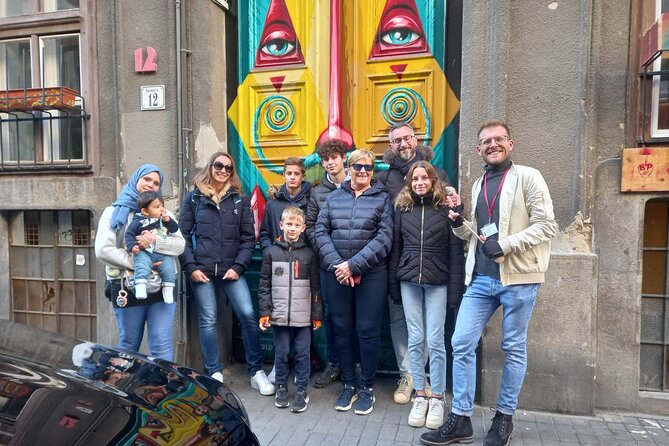
The guide, ET, brings clear enthusiasm to the walk. He is involved in Budapest’s art scene and has a strong interest in street artists from Budapest and elsewhere in Europe. That makes a difference because the tour is not delivered as a fixed list of famous walls.
The route can change according to the group and the current art scene. A piece may disappear, a new work may appear, or the group may spend more time on a question that catches everyone’s attention. One useful detail is that weekday walks can be smaller, allowing ET to shape the discussion around the people who are there.
You can expect an interactive experience rather than a long lecture. The group may compare reactions, ask about the artist’s message, or discuss how the area is changing. The small size helps here. With no more than eight people, you should be able to hear ET on the narrow streets and speak up without interrupting a large crowd.
That format is especially helpful if you want to ask about politics, public space, or the line between art and advertising. ET’s style is warm and conversational, and the tone welcomes people with different levels of art knowledge. You do not need to know street-art vocabulary before you arrive.
From Telep-Art Galéria into District VII
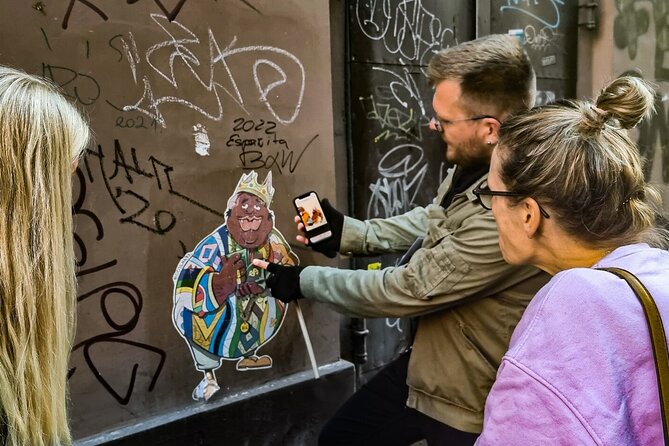
The meeting point is Telep-Art Galéria at Madách Imre út 8. Starting at an art gallery sets the tone well, though the main experience takes place outdoors as you move into the surrounding streets.
The itinerary is deliberately unhurried. You walk slowly through thin streets while ET points out different kinds of street art. The wording of the route is broad rather than fixed, which reflects the nature of the subject. This is not a museum tour with a set sequence of numbered rooms. It is a street walk where the guide responds to what is currently visible.
Expect to stop often. You may look at a large wall painting, then shift your attention to a sticker or a small object nearby. The contrast is part of the appeal. Large murals are easy to spot, but smaller works can carry just as much meaning. The walk gives both types of art a place.
The route also introduces you to a less polished side of central Budapest. District VII is not presented only as a historic center or nightlife zone. You see a neighborhood where new creative work, public criticism, tourism, and local change sit close together.
The tour does not promise a single beautiful view at every stop. Some works may be rough, strange, temporary, or politically pointed. That is useful to know before booking. If you want only classic Hungarian architecture, this is not the right walk. If you want to see how people use public space to express an opinion, it is a much better match.
Murals, stickers, sculptures, and smart art
One of the strongest parts of the route is its range. You may see:
- Large-scale wall paintings
- Stickers placed in unexpected spots
- Bronze sculptures
- Smart-art images
- Small public works that blend into the street
- Pieces shaped by political and social concerns
This variety keeps the two hours from becoming repetitive. A mural gives you scale and color. A sticker makes you look closer. A sculpture changes how you read the pavement or street corner. A smart-art image may ask you to think about technology, media, or the way an image works in public space.
The tour also helps correct a common assumption. Street art is not always made to beautify a neighborhood. Some pieces are attractive, but the main point may be protest, humor, criticism, or a question about power. ET draws attention to those messages and explains why the art may matter in its setting.
That makes the walk a good choice for people interested in politics and modern culture. You do not need to agree with every message. The value is in seeing how artists respond to events and how public art can start a conversation without entering a gallery.
The focus on meaning also makes this a stronger experience for repeat visitors to Budapest. If you have already seen the major sights, the walk offers another way to understand the city. It does not replace the Parliament, Buda Castle, or the historic baths. It adds a present-day layer.
More Street Art Tours around the world:
- Medellin: Comuna 13 Graffiti Tour, Cable Car & Street Food
★ 4.8 · 9,046 reviews - CDMX: Xochimilco, Coyoacan, Frida Kahlo Museum & Murals Tour
★ 4.4 · 3,025 reviews - Amsterdam: Streetart Museum STRAAT Entrance Ticket
★ 4.8 · 2,137 reviews - Belfast: Murals Taxi Tour
★ 4.9 · 2,047 reviews
Why the small group size matters
A maximum of eight people is more than a comfort detail. It affects what you can get from the guide.
Street art often requires standing close to a wall, looking at a small image, or gathering on a narrow pavement. A large group could block the street or make it hard to hear. Eight people is a practical limit for this kind of walk.
The group size also supports conversation. You can ask why a piece was made, how the local art scene works, or what has changed in District VII. ET can spend more time on a work if the group is interested, rather than moving everyone along to keep a large crowd together.
For families, the relaxed pace and visual subject can work well. Art has no age limit, and younger people may enjoy searching for stickers and small details. Still, remember that the walk lasts about two hours and includes steady walking. The tour is best for anyone who can manage that pace and remain interested in discussion.
The group may include people with different backgrounds and art interests. That can add to the experience, since a political image may look different to someone from another country or generation. The tour encourages that exchange rather than requiring one correct response.
Finishing at Szimpla Kert
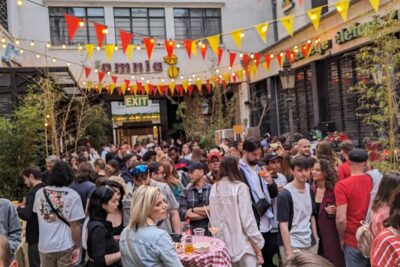
The route ends at Szimpla Kert on Kazinczy Street, the oldest ruin bar in Budapest and one of the city’s symbols. This is a useful ending point, especially if you are exploring District VII for the first time.
Szimpla Kert is not simply a final address on the route. It connects the street-art walk with another part of the district’s identity: alternative culture, nightlife, reused spaces, and the creative atmosphere that draws people to the area. You can finish the tour and continue exploring on your own, or use the location as a convenient reference point for your next stop.
The ending is also practical. You are not returned to the starting gallery, so plan your afternoon from Kazinczy Street rather than Madách Imre út. The two points are both in District VII, but the tour is one-way.
Do not expect the guide to turn the final stop into a full ruin-bar tour. Szimpla Kert is the endpoint and a city symbol, while the main subject remains street art. Its presence gives the walk a fitting finish, but you should allow extra time if you want to explore the bar itself.
Is $36.20 a fair price?
At $36.20 per person, this is not the cheapest way to walk around Budapest. You can wander District VII for free, and you can find many murals without a guide.
The value comes from the explanation. Without ET, you may notice the larger paintings but miss the stickers, objects, and smaller works that make the area interesting. You may also see political art without understanding its context. Two hours of guided attention can turn a casual walk into a clearer picture of the local scene.
The small group makes the price easier to justify. You are not paying for a large crowd and a fixed speech. You are paying for access to a guide who can answer questions, adjust the route, and point out work you might otherwise pass.
This is best value for a first visit, a repeat visit focused on modern culture, or anyone who wants a more local view of District VII. It is less useful if you dislike walking, prefer formal museums, or want a general Budapest history tour.
The tour is often booked about 25 days ahead, so popular dates may fill before your trip. Confirmation is provided when you book. You can cancel for a full refund up to 24 hours before the start time, but changes or cancellations inside that window are not accepted.
Practical details before you go
The tour is offered in English and lasts about two hours. It begins at Telep-Art Galéria, Madách Imre út 8, and ends at Szimpla Kert, Kazinczy u. 14.
Wear shoes suitable for walking and expect to move through narrow streets at a relaxed pace. The walk is not described as difficult, but the amount of walking is worth taking seriously. If you have a tight schedule, allow a little time after the stated duration before booking another activity.
The meeting point is near public transportation, which makes it easier to reach from other parts of Budapest. Service animals are allowed, and most people can take part. Since the experience is outdoors and art can change, the exact pieces you see may vary.
You should also arrive ready to look closely. The best moments may not be the obvious mural stops. Keep an eye on street furniture, walls, boxes, corners, and small objects. ET’s main lesson is that Budapest’s public art often rewards patience.
Who should book this Budapest walk?
I would choose this tour if you enjoy contemporary art, social questions, local politics, photography, or seeing a city from a less polished angle. It is especially useful early in your stay because it gives you a new way to read the streets for the rest of your visit.
Artists and creative people will find plenty to discuss, but you do not need an art background. Families can join, and the small group helps keep the walk personal. English speakers who want a guide-led experience will find the format straightforward.
I would skip it if your priority is grand architecture, royal history, or a quick route between major sights. I would also think twice if two hours of walking sounds tiring or if you want guaranteed murals in a fixed order.
Should you book the Street Art and Alternative Tour?
Book it if you want Budapest to speak in its own informal voice. ET’s walk shows you art that can be colorful, odd, political, funny, or easy to miss. The strongest feature is the connection between the artwork and the changing life of District VII.
The price makes sense for a small, discussion-based walk with a guide who knows the local scene. Just bring comfortable shoes, expect plenty of stops, and remember that the art is not all decorative. If you are open to messages as well as murals, this is one of the more distinctive ways to spend two hours in central Budapest.
FAQ
How long is the Street Art and Alternative Tour in Budapest?
The tour lasts approximately two hours.
Where does the tour start?
It starts at Telep-Art Galéria, Madách Imre út 8, Budapest 1075, Hungary.
Where does the tour finish?
The tour ends at Szimpla Kert, Kazinczy u. 14, Budapest 1075, Hungary. Szimpla Kert is described as the oldest ruin bar in Budapest and one of the city’s symbols.
What language is the tour offered in?
The tour is offered in English.
How many people can join the tour?
The group has a maximum of eight people.
Can I cancel for a full refund?
Yes. You can cancel at least 24 hours before the experience start time for a full refund. Cancellations or changes made less than 24 hours before the start time are not accepted for a refund.
Freshly painted around the world
- Xochimilco floating gardens, Coyoacan and UNAM murals★ 4.0 · 6 reviews
- Your Own Belgrade: Street Art and Hidden Gems Walking Tour★ 5.0 · 2 reviews
- Wynwood Walls Street Art & Neighborhood Walking Tour★ 4.9 · 9 reviews
- Vancouver: Street Art & Craft Beer Walking Tour with Tasting★ 4.8 · 14 reviews
- Zagreb Street Art Private Walking Tour with a Local Artist★ 5.0 · 12 reviews
- Urban Canvas: Osaka Street Art Bike Tour★ 5.0 · 10 reviews
- Vancouver: Street Art & Craft Coffee Walking Tour w/ Tasting★ 4.8 · 11 reviews
- UNAM: Murals & Revolution★ 4.9 · 8 reviews
Budapest Street Art Tours, compared.
Budapest: Street Art and Underground Movements Walking Tour
Read our review →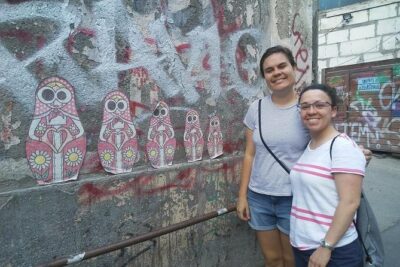
Budapest Vibe: Ruin Bars, Street Art and Culture Tour
Read our review →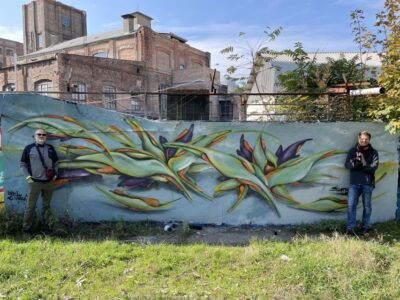
Budapest: Ruin Bars, Street Art, and Jewish Quarter Tour
Read our review →
Budapest Urban Art – Private Street Art Tour with a Drink in a Ruin Bar
Read our review →Browse the lists this tour appears in