Review · BERLIN
Mega Street Art, Mural, Graffiti Private Tour
Berlin’s street art is not confined to one famous wall or a single neighborhood. This three-hour private tour crosses the city from west to east, moving between giant murals, illegal graffiti, pasteups, stencils, and small works tucked into courtyards and backstreets. You get the broadest picture of Berlin’s urban art scene in one outing.
I like the historical range, from the late 1970s and 1980s through the street-art surge of the early 2000s and into today. I also like the guide’s connection to the scene. Adrian, named by one booking guest, leads this kind of tour with personal insight rather than a script lifted from a museum label.
The main consideration is the pace and the transport. You will cover a lot of ground, and an AB public-transport ticket is required. If you prefer a slow walk in one neighborhood, this is not the right fit. If you want to see how Berlin’s art scene connects across the city, it makes good sense.
Key points at a glance
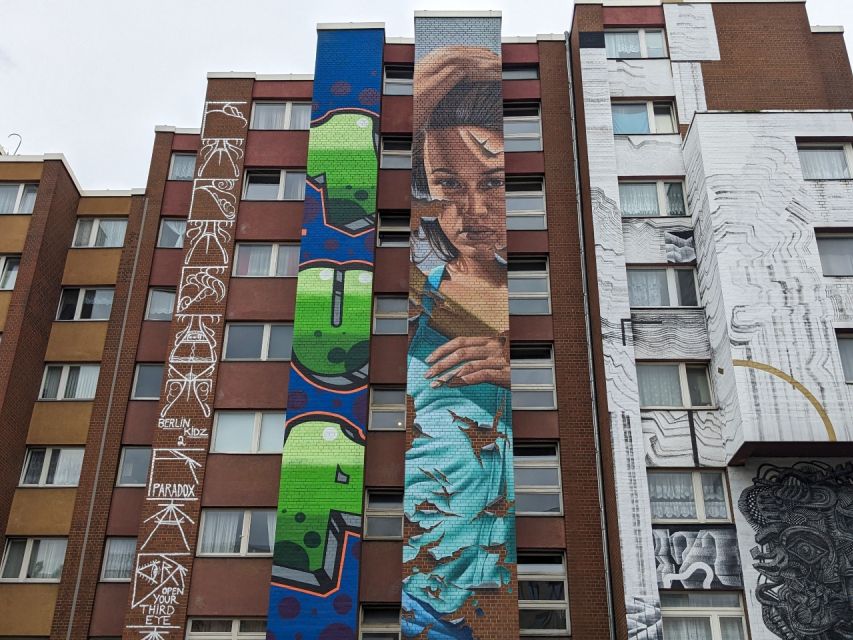
- More than 35 works in three hours: Expect murals, legal walls, illegal graffiti, pasteups, stencils, and small installations.
- A west-to-east route: The tour links areas outside and inside central Berlin instead of staying with one familiar attraction.
- A clear timeline: Learn about graffiti in Schöneberg and Kreuzberg, the influence of hip hop and street gangs, and the art boom of the 2000s.
- A guide with scene experience: Your English-speaking guide is an active member of Berlin’s urban-art world and brings more than 17 years of guiding experience.
- A private format for up to 20 people: You can book the whole group, which is useful for families, friends, school groups, or creative communities.
- Practical extras: Local tips and free stickers are included, while your Berlin AB ticket is not.
Berlin’s street art is a citywide story
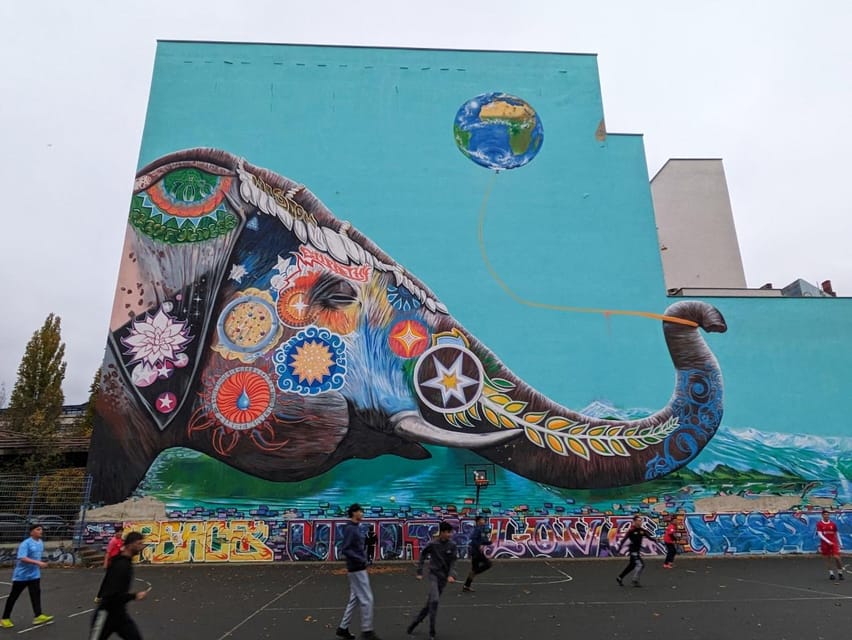
The biggest strength of this tour is its range. You are not simply taken to one famous mural, photographed, and sent on your way. The route is designed to show how different forms of urban art share the same city.
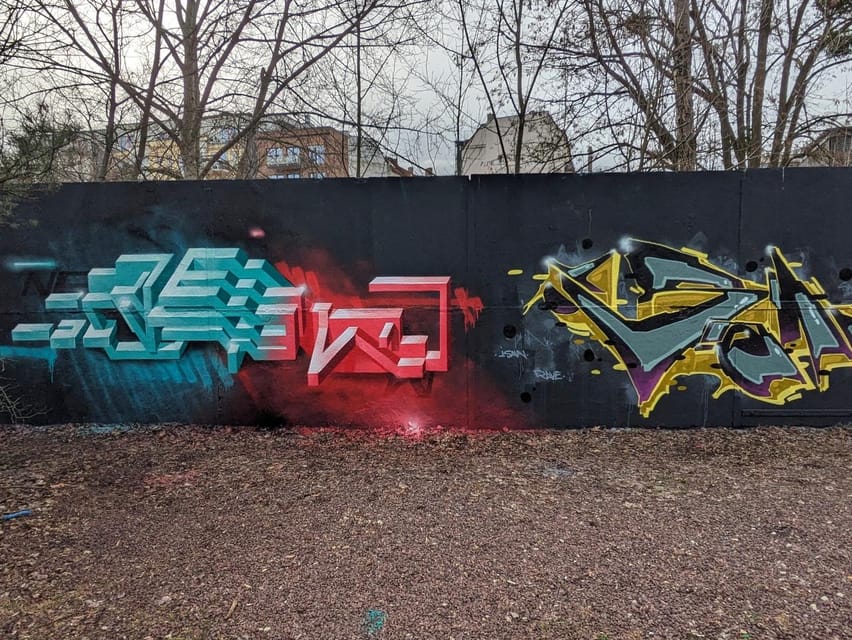
You may see a giant painting covering much of a building, then turn into a quieter space for a stencil or pasteup. A graffiti tag can be made quickly and secretly, while a large commissioned mural may take days or weeks and require equipment, permission, and planning. Seeing these forms together helps you understand why Berlin’s street art is not one tidy style.
The tour also treats graffiti as part of Berlin’s modern culture, not just decoration. You hear about the reasons artists paint rooftops, trains, walls, and legal spaces. The guide explains the difference between a tag, a larger piece, an organized mural, and smaller street installations, along with the motives and backgrounds of the people making them.
That context matters. Without it, a wall can look colorful but anonymous. With it, you begin to notice technique, placement, risk, scale, and the conversation between one piece and the next.
More Graffiti Tours in Germany
- Berlin: Graffiti Workshop at the Berlin Wall
★ 4.6 · 234 reviews - Berlin Street Art & Graffiti Walking Tour
★ 5.0 · 109 reviews - Berlin Street Art Tour with Graffiti, Murals, and Urban Culture
★ 4.5 · 12 reviews
From Schöneberg and Kreuzberg to the 1980s scene
The historical section begins with the origins of graffiti in Berlin during the late 1970s and 1980s, with particular attention to Schöneberg and Kreuzberg. These neighborhoods are important to the story because graffiti developed alongside music, youth culture, street groups, and changing urban life.
You will hear about crews, styles, and techniques, as well as the effect of hip hop on Berlin’s graffiti culture. The tour also addresses the influence of street gangs, a useful point because graffiti is often explained too simply as either vandalism or fine art. The reality is more complicated, and the guide’s approach allows room for those tensions.
The route continues through the 1990s and then into the major street-art expansion of the early 2000s. This period brought more artists, more large-scale public work, and greater international attention to Berlin. You learn who helped shape that growth, why the scene expanded, and how artists from Berlin and elsewhere added to the city’s modern folklore.
I appreciate that the story reaches the present rather than treating Berlin’s street art as a finished chapter. The city’s walls keep changing. A piece may disappear, be painted over, or be replaced, which is part of the nature of this art.
More than 35 stops, from giant murals to tiny pasteups
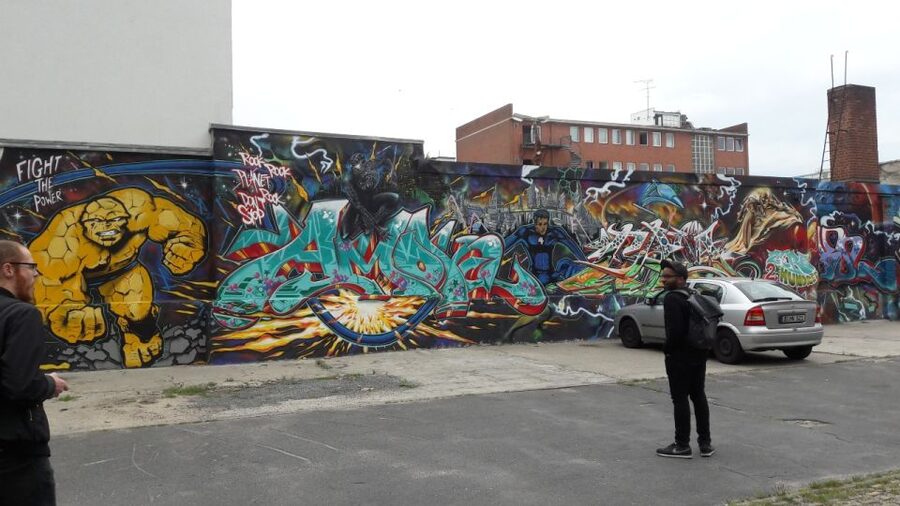
The advertised total is more than 35 murals, graffiti walls, street installations, and stencil works. That is a lot to take in during three hours, so expect a moving survey rather than a long lecture at every stop.
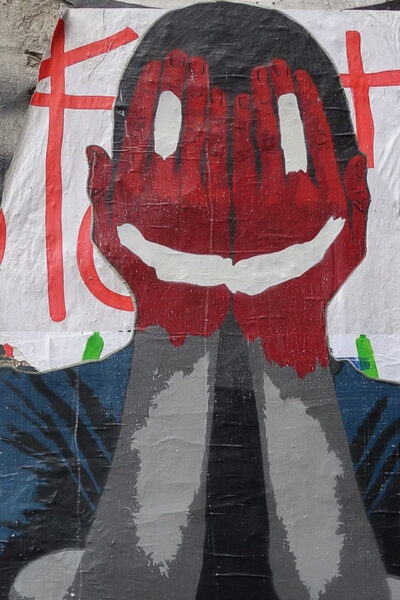
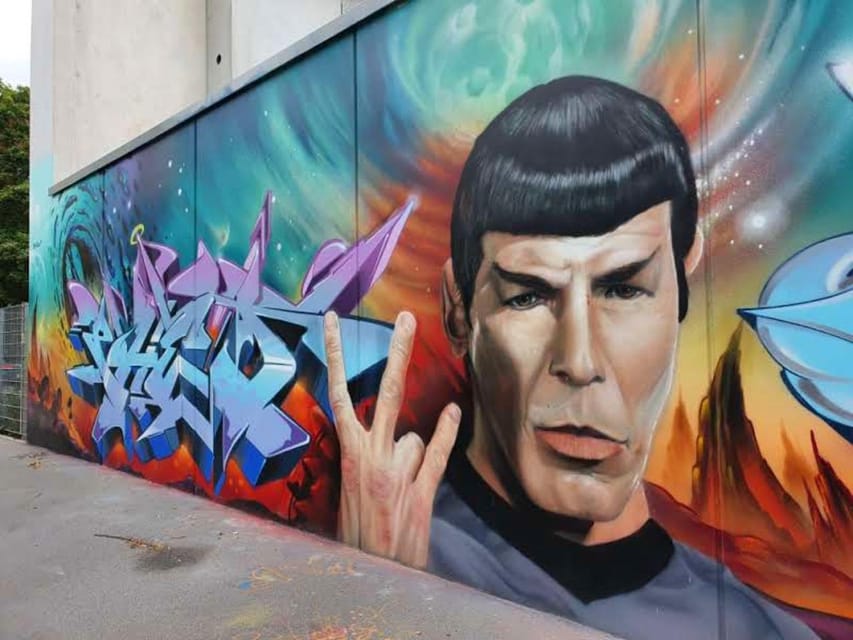
The giant murals provide the obvious photo moments. They can dominate a building or shape the view from a street, making it easy to see why Berlin became famous for large-scale urban art. Your guide puts these major works into context by discussing their creators, subjects, and place in the wider scene.
The smaller works reward closer attention. Pasteups, stencils, tags, and tiny installations can be easy to miss when you are walking around on your own. You might find political comments, jokes about daily life, or visual ideas that make more sense once the guide points out how and where they were placed.
The route includes both legal and illegal work. That distinction is important. A commissioned mural may have an owner’s approval and a planned production process. Illegal graffiti often depends on speed, secrecy, and access. The tour explains both sides without pretending they are the same thing.
Bring a camera, but keep your eyes open too. The best image may be a large wall, yet the most memorable detail could be a small stencil beside a doorway or a work partly hidden in a quiet courtyard.
A route that crosses Berlin instead of circling one block
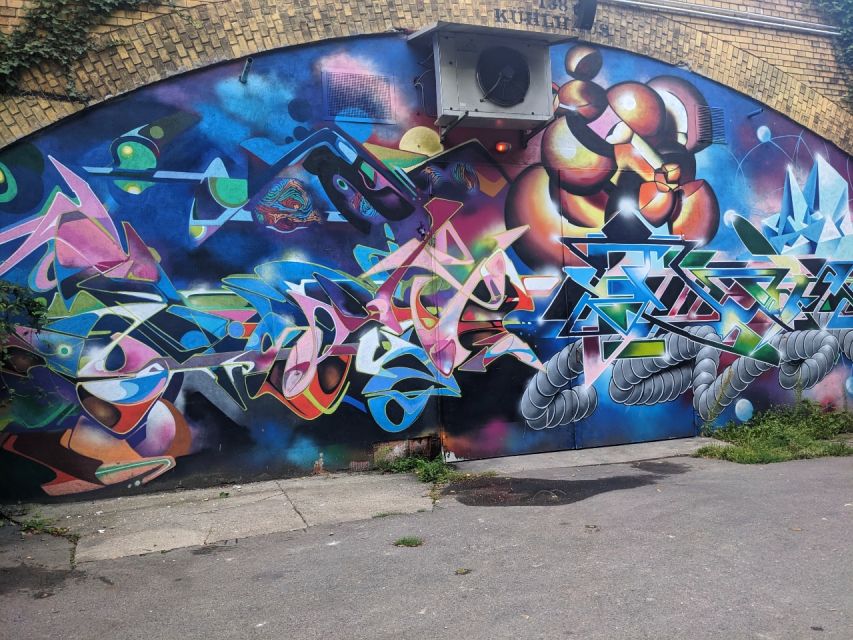
This is not a compact walking tour in a single district. The guide takes you from the west of Berlin to the east, mixing central areas with locations outside the city center. You move through public spaces, quieter courtyards, and backstreets.
That reach is valuable because Berlin’s urban art is spread out. You see how the mood and setting can change from one part of the city to another. The route also gives you a better sense of the scale of the scene: it is not just a tourist strip, but something woven through ordinary neighborhoods.
You need an AB public-transport ticket for the tour. The price of that ticket is not included, so plan for it when working out the total cost. The ticket requirement is a minor inconvenience, but it is also what makes the broad route possible. Walking between all the locations would take far longer than three hours.
Because the exact stops can change with the art, access, and route conditions, you should think of this as a guided city circuit rather than a fixed checklist. That flexibility is useful in a medium that changes constantly. It also means you should not book expecting every stop to look exactly the same months later.
More Private Street Art Tours in Germany
- Berlin: Private Kreuzberg Street Art Walking Tour
★ 4.8 · 57 reviews - Berlin Private Street Art Tour – Off The Grid
★ 5.0 · 9 reviews - Alternative Berlin Private Tour with Jacob – Graffiti and Squats
★ 5.0 · 6 reviews - Alternative Berlin / Street art tour – Private group
★ 5.0 · 6 reviews
Why a private group changes the experience
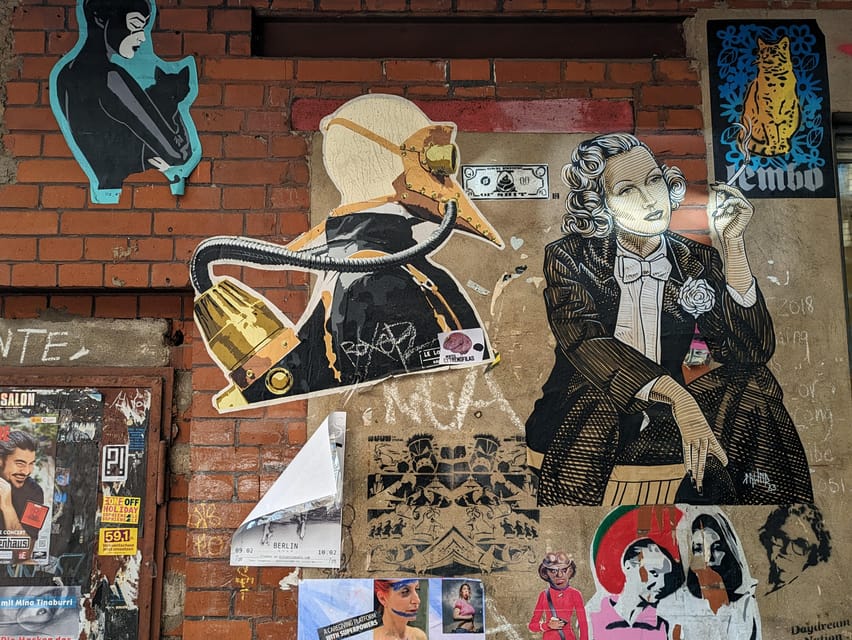
The $176 price covers a private group of up to 20 people. For a full group, the per-person cost can be quite reasonable, especially compared with paying separately for a small public tour. For only one or two people, it is a bigger outlay, so the value depends on how much you care about private guiding and the broad route.
A private format lets your group stay together and gives the guide one audience to work with. You can ask about a style, artist, neighborhood, or technique as you go. That is especially helpful if your group includes people who already know graffiti as well as people seeing it for the first time.
The format suits a family, group of friends, school group, design class, photography club, or creative team. It can also work for a mixed-age group because the subject has several entry points: history, politics, photography, drawing, music, architecture, and local culture.
The group limit is generous. Twenty people is still a fairly large private party, so it may feel less intimate than a tour for six or eight. The benefit is that you can share the cost across a large group without giving up a private booking.
What the guide adds to the walls
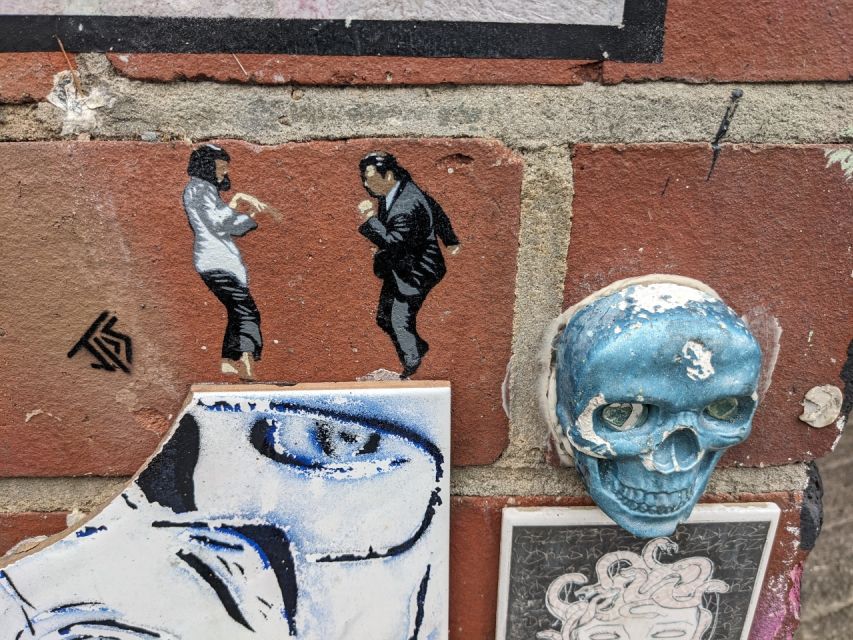
The guide is central to the value here. The experience is described as being led by an active member of Berlin’s street-art scene, with more than 17 years of guiding experience. That background should give the tour more substance than a simple list of artists and dates.
You will hear stories about how tags are made while most people are asleep, why artists choose rooftops or trains, and how legal and illegal work coexist. The guide also explains the motivations behind different kinds of painting, from personal expression to political commentary and commissioned work.
Adrian is the guide name connected with this experience. One booking in German specifically singled out Adrian as a great street-art guide, while another praised the route through different parts of Berlin and the guide’s quality. Those details point to the two things you most want from this tour: a guide who can explain the art and a route that genuinely covers more than one familiar area.
Still, scene knowledge does not mean every stop will appeal to every person. Some people prefer polished murals. Others are more interested in rough tags, illegal pieces, and the politics around them. The tour includes all of these, so go in ready for variety.
Making the most of the three-hour format
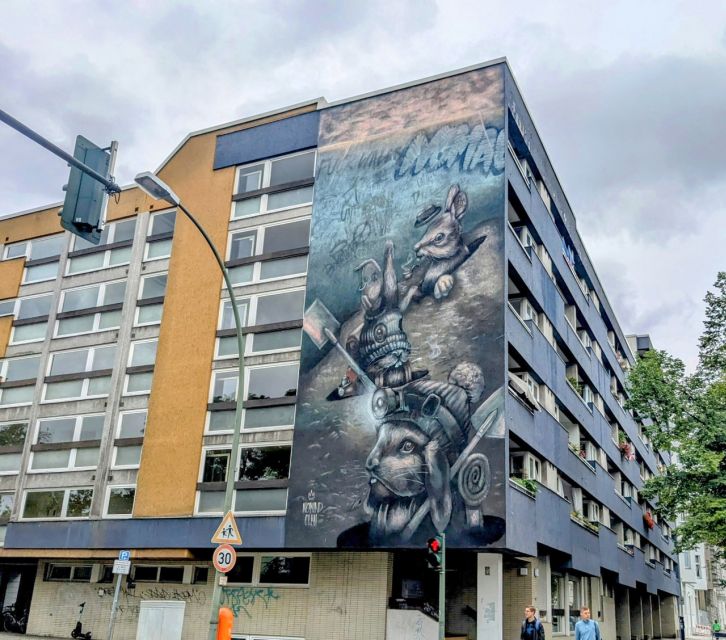
Three hours is long enough for a serious introduction but short enough to fit into a busy Berlin day. You will cover a large amount of material, so wear comfortable shoes and expect frequent movement between locations.
If photography is a priority, keep your camera ready. The tour includes major murals with strong photo potential, but the route also features smaller pieces where you may need to stop, look closely, and frame the work carefully. A phone is enough for casual pictures, though a camera gives you more control over large walls and distant details.
Take notes if the history interests you. The tour moves from the late 1970s and 1980s to the 1990s, early 2000s, and present day. That is a lot of cultural change in one session, and names, styles, and dates can blur together.
The guide provides local tips and free stickers. The stickers are a small extra, but they fit the subject and give you a physical reminder of the experience. The local tips may also help you decide where to look for more street art after the tour, though no specific follow-up locations are provided in the tour details.
Accessibility and booking facts worth knowing
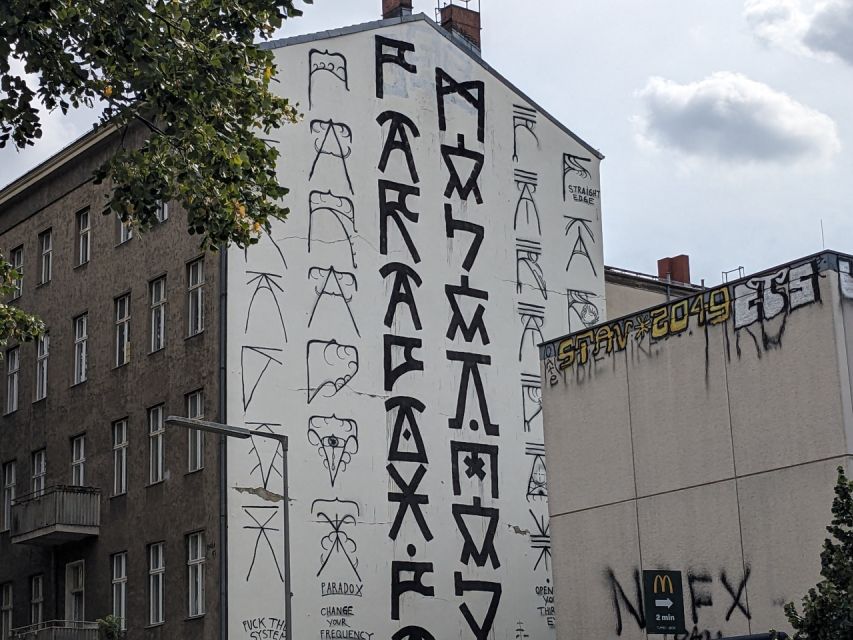
The tour is wheelchair accessible, which is useful for a route moving through public spaces and city streets. Since the experience crosses Berlin and includes courtyards and backstreets, it is still sensible to ask the provider about the current route if your group has particular mobility needs.
The tour is offered in English with a live guide. It is not described as a self-guided experience, audio tour, or multilingual tour. If your group needs another language, you should not assume it is available.
You can cancel up to 24 hours before the start for a full refund. You can also reserve now and pay later, which gives you some flexibility when building a Berlin schedule. Starting times vary, so check availability for the date you want.
The only required extra clearly stated is the Berlin AB transport ticket. The tour price includes the guide, local tips, and free stickers, but not that transport ticket.
Who should book this Berlin street-art tour?
I would choose this tour if you want to understand how Berlin’s graffiti and street-art culture developed, not just photograph a few famous walls. It is particularly useful for first-time visitors who want a citywide overview and for repeat visitors looking beyond the usual historic sights.
It also suits anyone who likes variety. You will see legal murals and illegal graffiti, giant paintings and tiny installations, political and humorous work, older pieces and current art. That mix keeps the route from becoming a parade of similar walls.
You may want to skip it if you dislike public transport, prefer a slow pace, or want a narrowly focused walking tour in one neighborhood. The route covers a lot, and the 35-plus works are presented within a moving city circuit.
For a group of up to 20, $176 can be a solid value because the cost is shared while the guide remains dedicated to your party. For a solo visitor or couple, the price is harder to justify unless this is one of your main interests in Berlin.
Should you book it?
Book this private tour if you want the widest view of Berlin’s urban art scene in a single three-hour outing, with history, technique, politics, and local stories woven into the route. Adrian’s reported guiding presence, the west-to-east coverage, and the number of works make it more useful than simply hunting for murals on your own.
Before booking, make sure your group is happy to use an AB transport ticket and keep moving. If that suits you, this is a strong choice for an art-minded group that wants Berlin’s streets to be the classroom.
FAQ
How long is the Mega Street Art, Mural, Graffiti Private Tour?
The tour lasts three hours.
Where does the tour take place?
It takes place across Berlin, including areas west and east of the city center, public spaces, courtyards, and backstreets.
How many artworks will I see?
The tour includes more than 35 murals, graffiti walls, street installations, stencil works, and other urban-art pieces.
What types of art are included?
You may see giant murals, illegal graffiti, legal walls, pasteups, stencil art, tags, and small street installations.
What historical periods does the tour cover?
The discussion covers Berlin’s graffiti scene from the late 1970s, 1980s, and 1990s through the street-art growth of the early 2000s and the present day.
Is the tour private?
Yes. It is a private-group tour for up to 20 people.
What language is the tour offered in?
The live tour is offered in English.
Is public transportation included?
No. You need a Berlin AB transport ticket for the tour.
Is the tour wheelchair accessible?
Yes, the activity is listed as wheelchair accessible.
More Graffiti Tours in Berlin
- Graffiti Workshop Berlin with professional graffiti artists
★ 4.0 · 4 reviews - Open graffiti workshop in the Mauerpark in Berlin
★ 5.0 · 2 reviews - Berlin Graffiti Workshop For Groups & Team-Buildings
★ 5.0 · 2 reviews - Medellin: Comuna 13 Graffiti Tour, Cable Car & Street Food
★ 4.8 · 9,046 reviews
More Private Street Art Tours in Berlin
- Private Alternative Berlin Tour -Murals, Graffiti and Squats
★ 4.8 · 5 reviews - Street Art Workshop & Tour – Private Group
★ 5.0 · 2 reviews - Berlin : Private Street Art Walking Tour (Private Tour)
★ 5.0 · 2 reviews - Belfast: Private Black Taxi Cab Political Murals Tour
★ 4.9 · 425 reviews
Freshly painted around Berlin
- Graffiti Workshop Berlin with professional graffiti artists★ 4.0 · 4 reviews
- Open graffiti workshop in the Mauerpark in Berlin★ 5.0 · 2 reviews
- Alternative Berlin Private Tour with Jacob – Graffiti and Squats★ 5.0 · 6 reviews
- Alternative Berlin & Street Art Tour★ 4.5 · 14 reviews
- Private Alternative Berlin Tour -Murals, Graffiti and Squats★ 4.8 · 5 reviews
- Street Art Workshop & Tour – Private Group★ 5.0 · 2 reviews
- Street Art & Berlin Gay, Queer, Trans History + Free Gay Map★ 4.9 · 15 reviews
- Berlin : Private Street Art Walking Tour (Private Tour)★ 5.0 · 2 reviews
Berlin Street Art Tours, compared.

East Meets West: Berlin Food Culture & Street Art
Read our review →