Review · MEXICO CITY
UNAM: Murals & Revolution
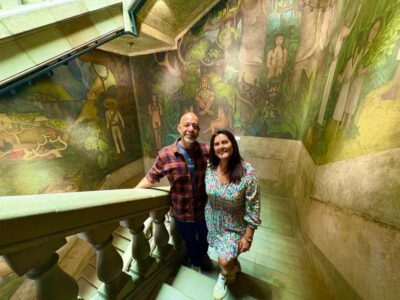
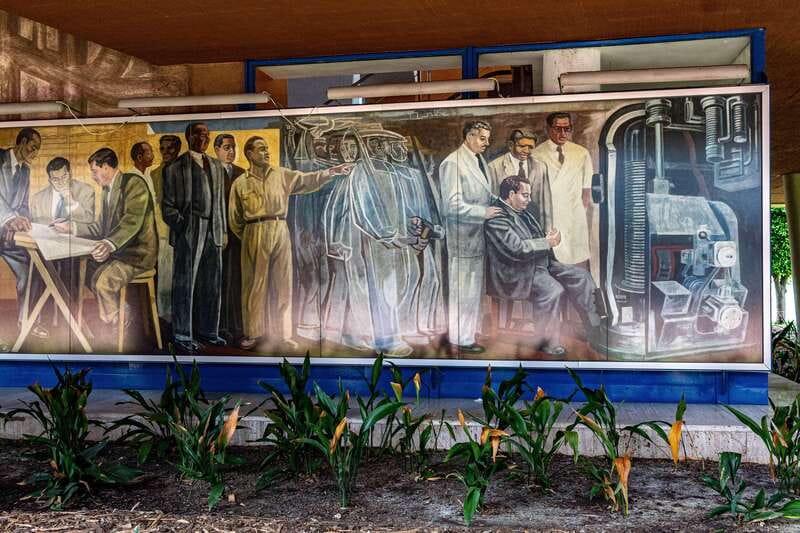
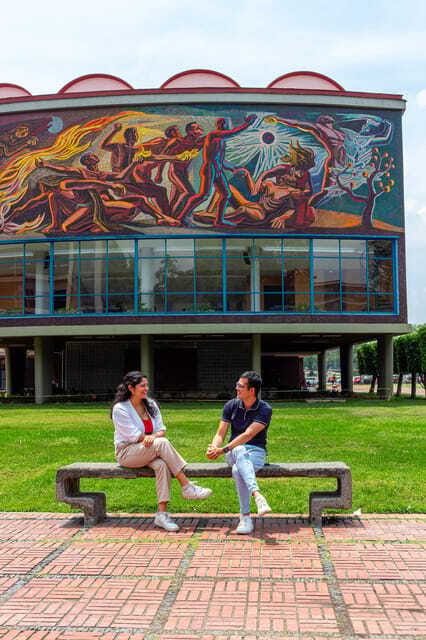
UNAM’s murals turn a university campus into a wide-open lesson in Mexican identity. In two hours, you’ll move from the Rectoría and Central Library to the outside of the Olympic Stadium, reading walls painted by O’Gorman, Siqueiros, Chávez Morado, Eppens, and Diego Rivera.
I like the clear focus on art and politics, and I like that the guide connects the paintings to education, student revolts, and Mexico today. Guides José Vicente Figueroa and Jesús are praised for their warm, engaging approach. The main drawback is the short running time: two hours gives you a strong introduction, not a full look at every corner of UNAM.
Key points to know
- UNAM’s mural tradition: Study major works by O’Gorman, Siqueiros, Chávez Morado, Eppens, and Rivera.
- A UNESCO-listed setting: Begin at the Rectoría, beside the plaque marking UNAM’s heritage status.
- A history lesson with context: Connect the artwork to Mexican education, student movements, and the university’s current role.
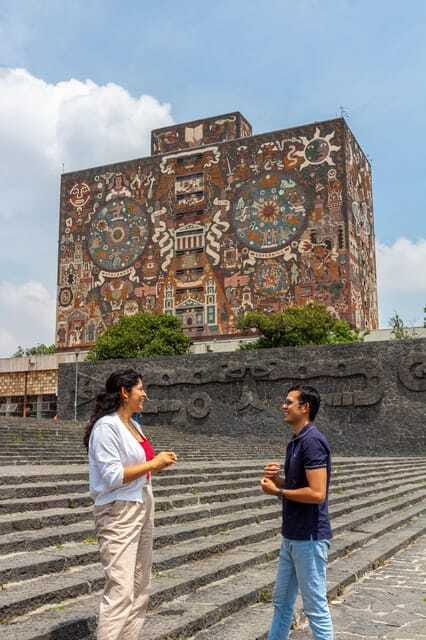
- The Central Library stop: Spend about 30 minutes with a guide at one of UNAM’s best-known buildings.
- Diego Rivera’s stadium mural: Finish outside the Estadio Olímpico Universitario with La universidad, la familia y el deporte en México.
- Several language options: Tours are offered in Spanish, English, German, Italian, and Portuguese.
Why UNAM’s murals deserve a focused visit
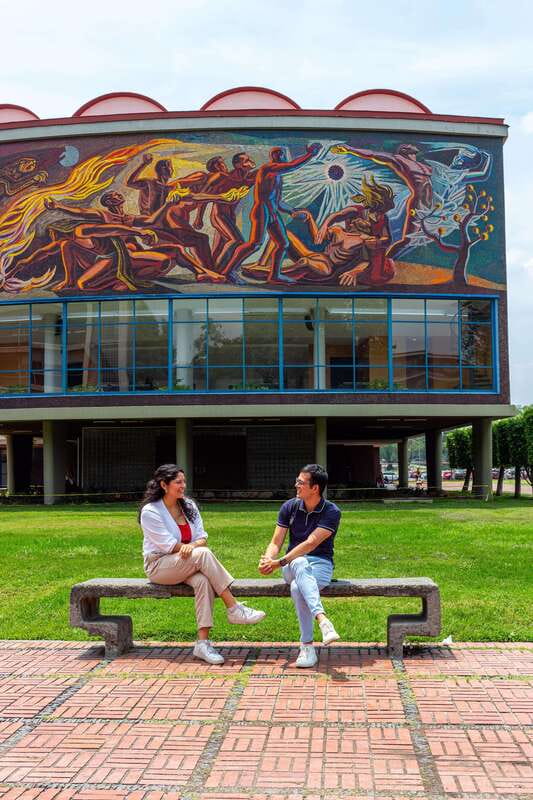
Mexico City has no shortage of museums, historic buildings, and public art. UNAM offers something different: its murals are part of a working university, not a collection arranged behind museum doors.
That setting matters. The paintings were made for public spaces and connected to ideas about education, social change, family, work, sport, and national identity. You are not simply looking at color on a wall. You are being asked to consider who education was meant to serve and how a university fits into modern Mexico.
The tour also gives you a useful frame for reading Mexican muralism. Instead of treating each artist as an isolated name, the guide links the art to the growth of education in the country and to the student revolts that shaped public life. That makes this a good choice if you want more than a quick photo stop.
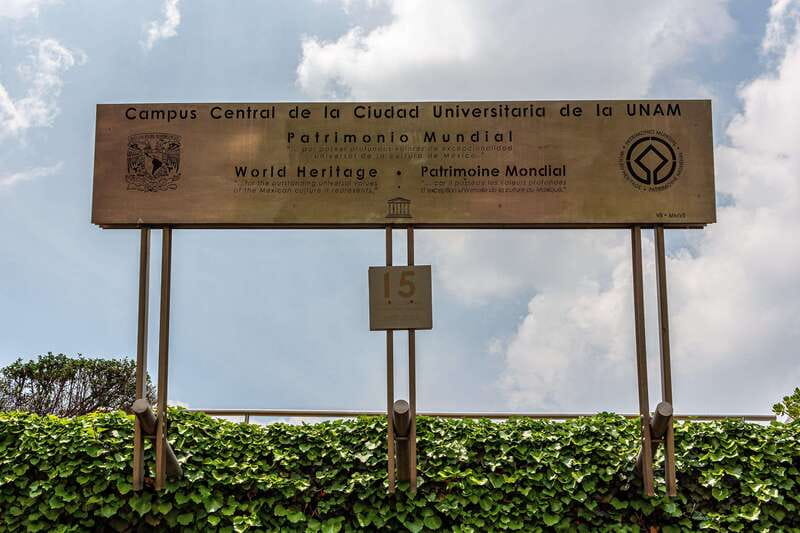
UNAM is also recognized by UNESCO, and the meeting point places that fact right at the start. You meet at the Rectoría, in front of the UNESCO commemorative plaque. It is a sensible starting point because it gives the campus a wider meaning before you begin looking closely at individual murals.
More Mural Tours in Mexico
- CDMX: Xochimilco, Coyoacan, Frida Kahlo Museum & Murals Tour
★ 4.4 · 3,025 reviews - Cancun Street Food Tour with Food Stalls, Local Market and Murals
★ 5.0 · 723 reviews - Mexico City; ART NACO : Murals & Street Art Bike Tour
★ 5.0 · 284 reviews
Meeting at the Rectoría and finding your guide
The meeting point is the Rectoría de la UNAM. Look for the guide holding a small Mexican flag. That detail is simple but useful, especially on a large campus where a vague meeting instruction could create needless confusion.
The opening setting also gives you an immediate introduction to the university’s importance. From the Rectoría, the tour moves into the campus rather than beginning with a long lecture away from the art. You can expect the guide to establish the connection between the buildings, the murals, and the university’s role in Mexico.
The provider is José Vicente Figueroa, and the guides associated with the tour include José and Jesús. José has been described as personable, and Jesús as engaging. Those qualities matter here because mural tours work best when the guide can explain symbols clearly and invite questions rather than simply reciting names and dates.
The language choice is another practical strength. You can book in Spanish, English, German, Italian, or Portuguese. Some content may be presented in its original language, so ask the guide for clarification when a title, phrase, or historical term needs translation.
Reading the Central Library murals in 30 minutes
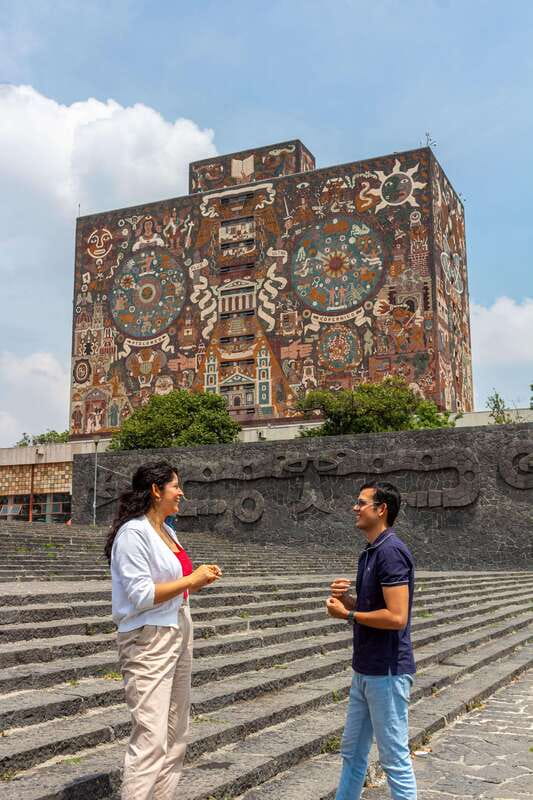
The Central Library receives about 30 minutes of guided attention. That may sound brief, but a focused half hour can work well for a first visit. The point is not to inspect every section of the building. It is to learn how to look at UNAM’s murals and understand why the campus is considered important.
The tour analyzes the work of several major artists, including Juan O’Gorman, David Alfaro Siqueiros, José Chávez Morado, and Francisco Eppens. Each artist brings a different approach to public art, and the guide’s job is to help you notice those differences.
O’Gorman is especially important to the Central Library discussion. His work is closely associated with the library’s exterior, and the building is one of the clearest examples of how UNAM uses art and architecture together. Rather than treating the mural as decoration, the tour presents it as a visual account of Mexico.
The strongest part of this stop is likely to be the explanation of subject matter. You can expect discussion of education and national development, not just a list of artistic techniques. That context helps you understand why these murals are placed on a university campus and why they remain politically meaningful.
The limitation is time. Thirty minutes will not satisfy anyone hoping for a detailed study of every image or historical reference. If the Central Library is your main reason for coming, you may want a longer independent visit before or after the tour, if your plans allow. The guided portion is best viewed as a clear introduction.
The main campus walk and its political story
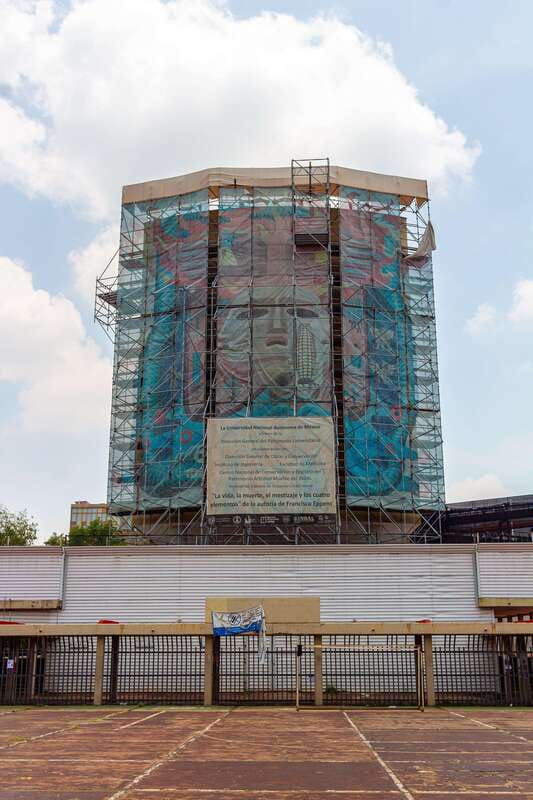
The middle portion lasts about an hour and is where the tour’s themes come together. You will continue through UNAM while examining murals by Siqueiros, Chávez Morado, and Eppens, along with the broader story of Mexican education.
This section is less about checking off a single monument and more about seeing how public art works across a university. The guide discusses the origins of education in Mexico, student revolts, and the value of UNAM in the country today. Those subjects give the murals a living context.
Student movements are particularly important to the tour’s balance. UNAM is not presented only as a grand campus with famous artwork. It is also a place shaped by debate, protest, and changing ideas about who should have access to education and how universities should serve society.
I like this part because it avoids reducing the murals to postcard images. A mural can be beautiful and still carry a pointed argument. With a good explanation, you can see how the artists addressed public life and how their work continues to speak to questions about education and citizenship.
The middle hour is also where guide quality matters most. The praise for José and Jesús centers on clear answers, strong subject knowledge, and an engaging manner. That is exactly what you need when the artwork, politics, and history begin to overlap.
Because the tour covers several artists and major themes in one hour, expect a broad view rather than a specialist seminar. You might leave with a better sense of the artists’ messages and several subjects to explore later. You will not receive a full biography of every painter or a detailed account of every student movement.
More Mural Tours in Mexico City
- Walking Tour – Impressive murals in Historical Center of Mexico City
★ 5.0 · 224 reviews - Muralist Art Semi Private Walking Tour in Mexico City Downtown
★ 5.0 · 188 reviews - Mexico City: Art Naco, murals & street art bike tour
★ 4.7 · 166 reviews - Xochimilco floating gardens, Coyoacan and UNAM murals
★ 4.0 · 53 reviews
Ending at the Olympic Stadium with Diego Rivera
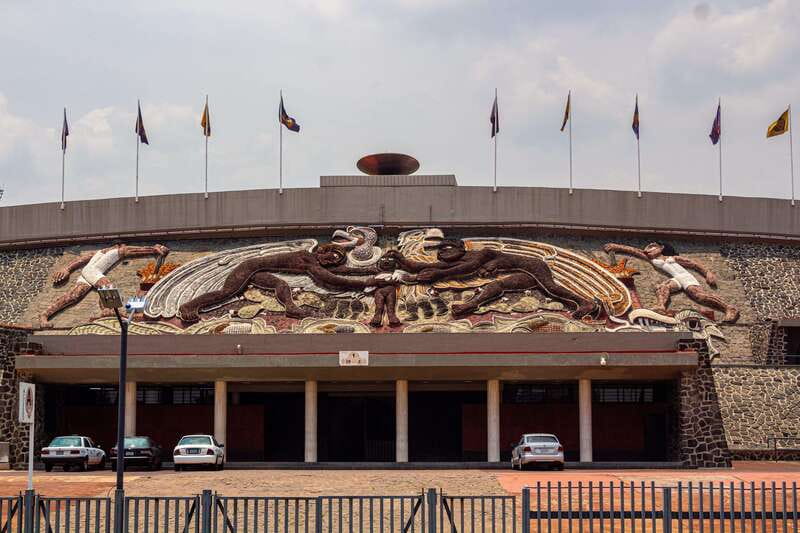
The final 30 minutes take you to the Estadio Olímpico Universitario. The visit is from outside, so you should not book this tour expecting an indoor stadium tour or access to athletic facilities.
The focus is Diego Rivera’s mural La universidad, la familia y el deporte en México. Even the title points to the tour’s central concerns: the university, family, and sport as parts of public life.
Ending here gives the tour a useful change of scale. Earlier stops focus on buildings and campus walls. At the stadium, the art is tied to a major public venue and to the idea of sport as part of national culture. The guide can bring the subjects from the earlier discussion together, especially the place of the university in everyday Mexican life.
This is also a practical point to keep in mind. If you are mainly interested in Rivera, the stadium stop may be the highlight, but it occupies only about 30 minutes and is viewed from outside. If your main goal is to study the stadium mural at length, you may find the visit too short. If you want Rivera as the final chapter in a wider story about UNAM, the structure works well.
The tour returns to the Rectoría after the stadium visit. That makes the route easy to understand, with the beginning and ending tied to the same central location.
What the $52 price buys you
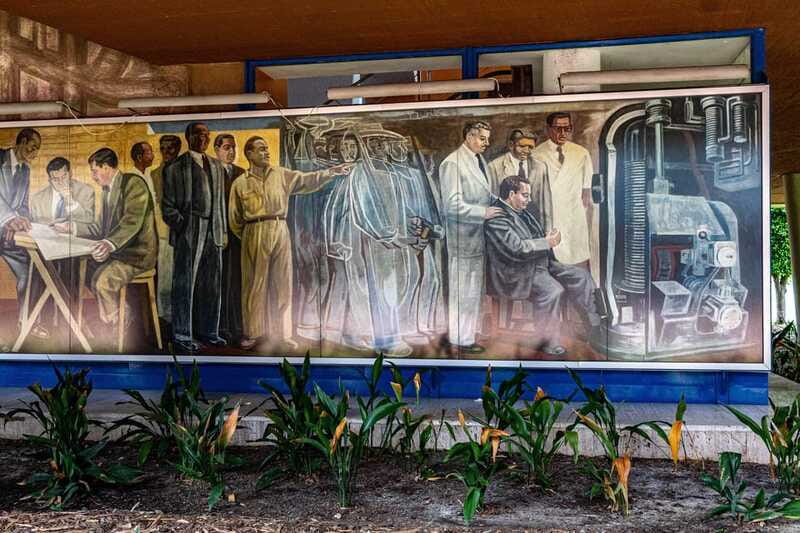
At $52 per person, this is not a casual stroll you book only for a few photographs. You are paying for a guide-led interpretation of several important murals, plus historical context that can be difficult to assemble on your own.
The value depends on your interests. If you already know UNAM well and only want to see the buildings, the price may feel high for two hours. If you are new to the campus and want the art explained in a language you understand, the cost is easier to justify.
The guide is the listed inclusion. The information provided does not list meals, transportation, or extra admissions, so plan your budget around the guided portion itself. The short duration can be a benefit if you have a busy Mexico City schedule. You get a concentrated introduction without giving up half a day.
The strongest value comes from the connections between the stops. You are not paying for three unrelated sights. The Rectoría, Central Library, campus murals, and Olympic Stadium all support a single story about art, education, politics, and public life.
Who will enjoy this UNAM tour most
This tour suits you if you like public art, Mexican history, architecture, or universities as cultural spaces. It is especially useful if you want a guide to explain what you are seeing instead of walking around the campus with only a camera.
It also suits first-time visitors to UNAM who want a compact introduction. The two-hour format leaves room for other Mexico City plans, while the five language choices make the tour accessible to a broad range of visitors.
Art students, architecture fans, and anyone interested in muralism will get the most from the named artists and the discussion of their themes. People interested in Mexico’s education system and student movements will also find the historical material worthwhile.
You might choose another activity if you want a slow, highly detailed art study, an indoor stadium visit, or a tour devoted only to Diego Rivera. This route covers a lot of ground in a short period, so its strength is connection and context rather than exhaustive detail.
Wear comfortable shoes for moving around the campus, and arrive at the Rectoría with enough time to locate the small Mexican flag. Those are simple steps, but they help you use the two hours well.
Booking flexibility and languages
You can cancel up to 24 hours before the activity for a full refund. You can also reserve now and pay later, which helps if you are still arranging a Mexico City itinerary.
Starting times vary, so check availability for your date. The duration is fixed at two hours, and the meeting and return point is the Rectoría de la UNAM.
Tours are offered in Spanish, English, German, Italian, and Portuguese. Some material may remain in its original language, so the guide may occasionally explain a Mexican title or phrase in context rather than translate every word literally.
Should you book UNAM: Murals & Revolution?
I would book this tour if you want meaning behind the murals, not just access to the campus. The guide-led format gives you a clear route through UNAM and connects the artwork to education, protest, and present-day Mexico.
The main question is pace. Two hours is enough for a well-shaped introduction, but not enough for a close study of every mural or a full campus tour. Choose it for the insight, the named artists, and the chance to finish with Rivera’s stadium mural. Skip it if you want a long, unhurried art session or interior access at the stadium.
At $52, the tour earns its price when the guide delivers the clear, personable explanations associated with José Vicente Figueroa, José, and Jesús. For a focused first look at UNAM’s art and public role, it is a strong use of a morning or afternoon in Mexico City.
FAQ
Where does the UNAM murals tour begin?
It begins at the Rectoría de la UNAM, directly in front of the UNESCO commemorative plaque.
How will I recognize the guide?
The guide will carry a small Mexican flag.
How long does the tour last?
The tour lasts two hours.
What is the price?
The price is $52 per person.
Which languages are available?
The tour is offered in Spanish, English, German, Italian, and Portuguese.
Does the tour include a guide?
Yes. A guide is included.
Does the tour visit the Central Library?
Yes. The Central Library receives about 30 minutes of guided attention.
Is the Olympic Stadium visited inside?
The Olympic Stadium is visited from outside. The tour focuses on Diego Rivera’s mural La universidad, la familia y el deporte en México.
Can I cancel for a refund?
Yes. You can cancel up to 24 hours in advance for a full refund. You can also reserve now and pay later.
More Political and Protest Mural Tours in Mexico
- Guided Walking Tour Describing UNAM Murals and Revolution
★ 5.0 · 8 reviews - Belfast’s Political Mural Taxi Tour
★ 5.0 · 1,180 reviews - Belfast: Private Black Taxi Cab Political Murals Tour
★ 4.9 · 425 reviews - Political Wall Murals and Peacewall
★ 4.9 · 247 reviews
More Muralism Tours around Mexico
- Xochimilco, Coyoacan and Frida Kahlo with Optional Lunch
★ 4.5 · 7,320 reviews - La Catrina & Muralism: Diego Rivera’s Legacy & Frida Kahlo
★ 4.5 · 197 reviews - Mexico City: Diego Rivera’s Murals Guided Walking Tour
★ 5.0 · 49 reviews - Diego Rivera’s murals, hidden treasures
★ 5.0 · 21 reviews
Freshly painted around Mexico
- Xochimilco floating gardens, Coyoacan and UNAM murals★ 4.0 · 6 reviews
- Street Art & Cemetery Cultural Tour – half day★ 5.0 · 3 reviews
- Graffitis & Munchies biketour Playa del Carmen★ 4.5 · 18 reviews
- Street Art Walk★ 4.5 · 7 reviews
- Diego Rivera’s murals, hidden treasures★ 5.0 · 21 reviews
- Tour Women Muralists : Strokes that resist Mexico City★ 5.0 · 7 reviews
- Private Street Food & Mural Art Tour in Mexico City★ 3.5 · 3 reviews
- Private Street Art Tour in Rome★ 4.0 · 4 reviews
Mexico City Street Art Tours, compared.

Xochimilco, Coyoacan and Frida Kahlo with Optional Lunch
Read our review →
CDMX: Xochimilco, Coyoacan, Frida Kahlo Museum & Murals Tour
Read our review →
Mexico City; ART NACO : Murals & Street Art Bike Tour
Read our review →
Walking Tour – Impressive murals in Historical Center of Mexico City
Read our review →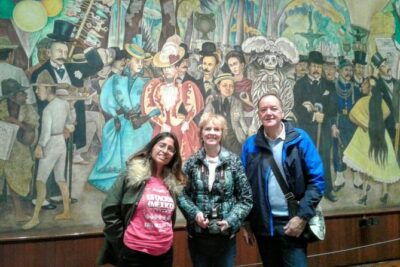
La Catrina & Muralism: Diego Rivera’s Legacy & Frida Kahlo
Read our review →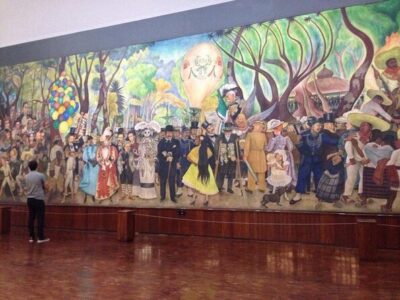
Muralist Art Semi Private Walking Tour in Mexico City Downtown
Read our review →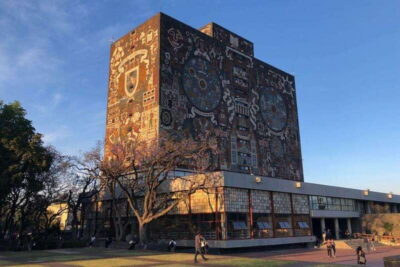
Xochimilco floating gardens, Coyoacan and UNAM murals
Read our review →