
Review · MEXICO CITY
Muralist Art Semi Private Walking Tour in Mexico City Downtown
Mexico City’s murals are not simply decoration. They are public arguments about revolution, class, religion, Indigenous identity, labor, and power. This small-group walking tour helps you read those arguments at the Ministry of Education, Antiguo Colegio de San Ildefonso, and Palacio de Bellas Artes.
I like two things right away: the tour gets you into hard-to-find mural spaces that are easy to miss on your own, and it gives you the historical tools to understand what you are seeing. Guides such as Emilio and Emiliano are praised for clear English, thoughtful interpretations, and the ability to answer detailed questions.
The main consideration is physical and intellectual. You will walk and stand for much of three and a half hours, and the political themes are serious. If you want a quick photo stop, this may feel too detailed. If you enjoy art, architecture, and Mexican history, the pace is a strength.
Key points to know before booking
- Three major mural sites: Visit the Ministry of Education, Antiguo Colegio de San Ildefonso, and Palacio de Bellas Artes.
- Small groups: The maximum is eight people, allowing plenty of room for questions and discussion.
- Major Mexican artists: See work by Diego Rivera, José Clemente Orozco, David Siqueiros, Jean Charlot, and other muralists.
- Museum entry included: Admission to the buildings visited is part of the $58.12 price.
- A serious art history walk: Expect social and political context, not just names, dates, and photo stops.
- Comfortable shoes matter: The tour lasts about three and a half hours and includes substantial walking and standing.
Why Mexican muralism deserves a guided look
Mexico City is one of the best places in the world to see art in public buildings. The murals were made for broad audiences, not only for museum specialists. They often tell stories through crowded scenes, symbols, historical figures, workers, farmers, soldiers, and political leaders.
That public purpose can make the art hard to read at first. A mural may cover an entire wall or courtyard, with several moments in Mexican history shown at once. You may recognize Rivera’s figures or Siqueiros’s forceful movement, but still miss why a particular person, tool, flag, or religious image appears in the scene.
That is where the guide earns the fee. A good explanation connects the image to the time in which it was made, the artist’s politics, and the building itself. The strongest guides on this tour, including Emilio and Emiliano when assigned, do more than deliver a prepared speech. They ask what you notice, explain different readings, and connect one mural to another.
I especially like that this is not limited to Diego Rivera. Rivera is the biggest name for many visitors, but the tour also brings in Orozco, Siqueiros, Jean Charlot, and other important artists. You begin to see the mural movement as a debate among strong personalities, not as one single style.
More Mural Tours in Mexico
- CDMX: Xochimilco, Coyoacan, Frida Kahlo Museum & Murals Tour
★ 4.4 · 3,025 reviews - Cancun Street Food Tour with Food Stalls, Local Market and Murals
★ 5.0 · 723 reviews - Mexico City; ART NACO : Murals & Street Art Bike Tour
★ 5.0 · 284 reviews
Starting at the Ministry of Education murals
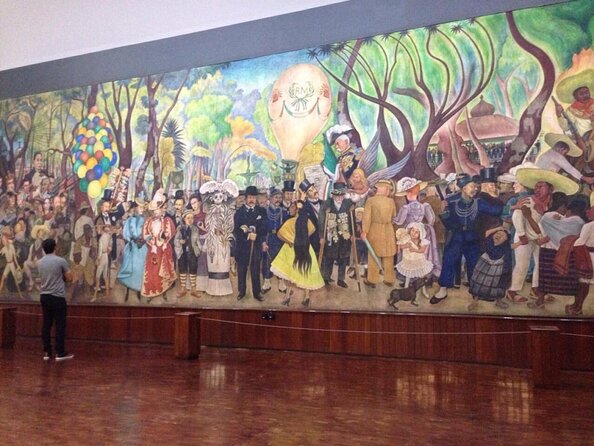
The first stop is the building of the Ministry of Education, a place many people could pass without realizing how much art it contains. Its murals by Diego Rivera and other major artists reward a slower look.
This is one of the most useful parts of the experience for anyone exploring Mexico City on a first visit. You are not only looking at isolated paintings. You are seeing art placed in a government building, where the location adds meaning to the images and the public message behind them.
Rivera’s work is often packed with workers, rural life, political ideas, and references to Mexico’s past and present. A guide can point out how the walls work together, how scenes relate across a courtyard or passage, and why the building matters as a setting.
The Ministry of Education is also a good reminder that Mexico City’s mural tradition is spread through ordinary civic spaces. You do not need a grand museum facade to encounter major art. Some of the most important work is part of the city’s daily architecture.
The drawback is that a building filled with murals can be visually tiring. You may feel that there is too much to take in. Resist the urge to photograph everything and move on. Let the guide select key images and explain how they fit into the larger program.
Antiguo Colegio de San Ildefonso, the movement’s early home
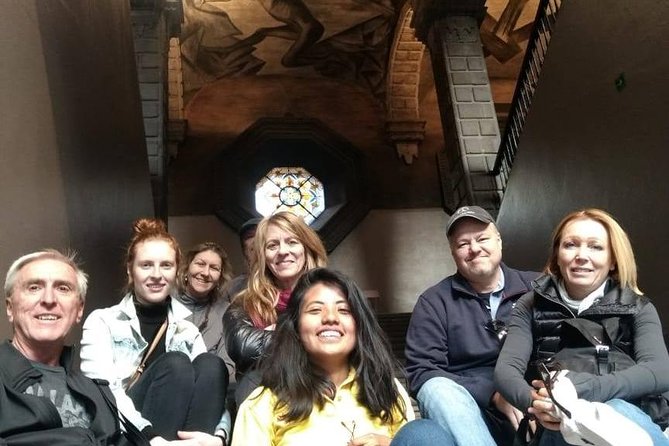
The Antiguo Colegio de San Ildefonso receives about an hour of the tour. It is described as a cradle of the Mexican muralist movement, and the building houses work by José Clemente Orozco, Diego Rivera, Jean Charlot, and other artists.
The setting matters. This is not a plain gallery with paintings hung at eye level. The murals belong to an older institutional building, and their scale and placement make you look upward, across walls, and around architectural details. The art and the building need to be read together.
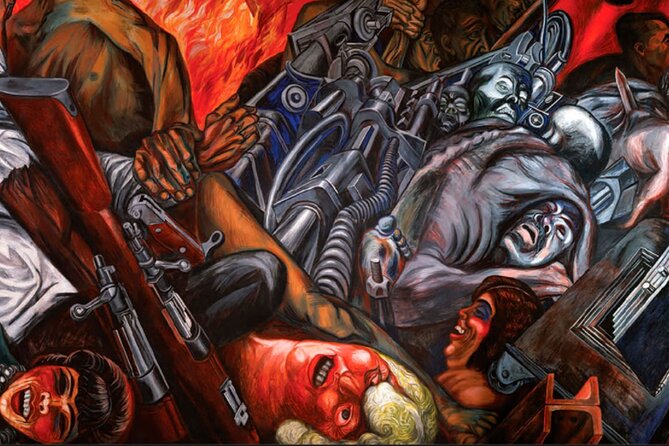
Orozco’s work gives the tour a different tone from Rivera’s. Rather than presenting only celebration or social unity, Orozco often brings conflict, suffering, and human weakness into view. That contrast helps you understand why Mexican muralism cannot be reduced to cheerful scenes of national identity.
Jean Charlot adds another piece to the story. Seeing several artists in the same building makes comparison easy. You can look at how each artist handles bodies, movement, color, politics, and historical subjects while the details are still fresh in your mind.
This is also a good place for questions. The small group limit of eight makes it easier to stop and ask about a particular figure or scene without losing the guide in a crowd. If you are an artist, art student, or simply someone who likes to look carefully, you will get more from this stop than from a quick self-guided visit.
The hour can feel short because there is so much to see. At the same time, you should expect a focused selection rather than an exhaustive study of every wall. The tour has to keep moving to reach the final museum, so tell your guide early if you have a special interest in Orozco, Rivera, or the building’s architecture.
Palacio de Bellas Artes and its 17 murals
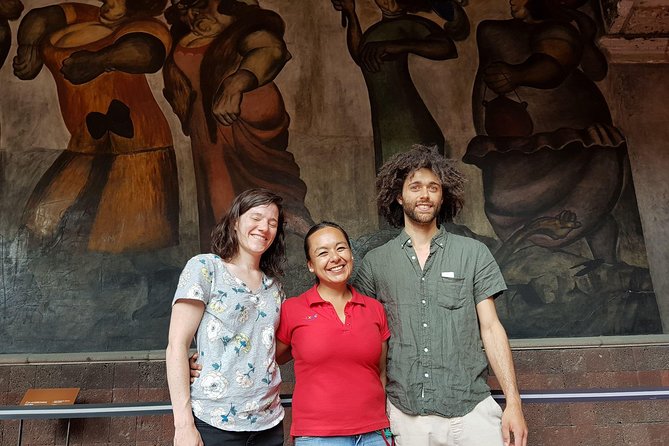
The tour ends inside the Museo del Palacio de Bellas Artes, one of Mexico City’s most famous arts buildings. The final stop includes 17 murals by different artists made across several years, giving you the broadest comparison of the day.
Bellas Artes is an important finale because the building brings together several strands of Mexican art. You see different muralists in one celebrated cultural setting, then consider how their subjects and styles fit into Mexico’s changing political and artistic life.
The number 17 is useful context. You are not visiting one famous Rivera mural and leaving. There is a substantial group of works to consider, including murals by Rivera, Orozco, Siqueiros, and other artists. Your guide can help you focus on the most important pieces instead of trying to absorb every wall at once.
This is where the tour’s art and history lessons should come together. Earlier stops introduce the movement and its major voices. At Bellas Artes, you can compare those voices more directly. Look for differences in scale, emotional force, treatment of crowds, and ideas about national identity.
You finish inside the mural museum, which is practical. There is no need to find your way back to the starting point after several hours on foot. If the tour sparks your interest, you can also use the ending location as a natural base for continuing your visit to Mexico City’s historic center.
One caution: Bellas Artes can be the most crowded and visually demanding stop. You may need patience around other people and time to find a clear view of a large mural. The guide’s explanations are valuable here, but you will still want a few quiet minutes to look for yourself.
More Mural Tours in Mexico City
- Walking Tour – Impressive murals in Historical Center of Mexico City
★ 5.0 · 224 reviews - Mexico City: Art Naco, murals & street art bike tour
★ 4.7 · 166 reviews - Xochimilco floating gardens, Coyoacan and UNAM murals
★ 4.0 · 53 reviews - Mexico City: Diego Rivera’s Murals Guided Walking Tour
★ 5.0 · 49 reviews
What the guides add to the experience
The guide is the difference between seeing murals and understanding them. The strongest feedback centers on Emilio and Emiliano, who are described as personable, patient, fluent in English, and able to connect art with Mexican political and social history.
That combination matters. A guide can memorize facts about dates and artists, yet leave you with no idea why the work matters. Here, the emphasis is on interpretation. You may be asked what you see before receiving the historical explanation, which turns the visit into a conversation rather than a lecture.
The best moments are likely to come when a mural opens into a larger question. A scene about workers can lead to a discussion of labor and class. A historical figure can bring up revolution or the construction of national identity. A religious reference can show how artists combined older Mexican traditions with modern political ideas.
You should also expect the guide to adapt to the group. With no more than eight people, the tour can respond to questions and interests. A group with an art background may spend more time on composition and style. A family or first-time visitor may need more explanation of the historical setting.
The tour is offered in English, with a certified bilingual guide. That makes it a practical choice if you want complex subjects explained clearly rather than relying on labels or translation apps.
Is $58.12 a fair price?
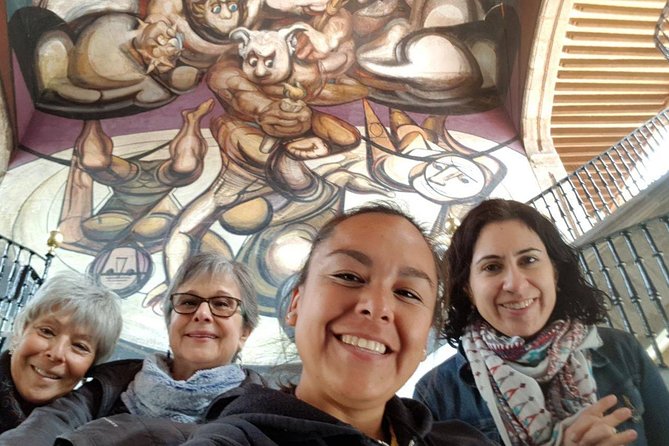
At $58.12 per person, this is not the cheapest way to walk around downtown. It is also more than the cost of entering a single museum. The value comes from combining admission to three important buildings with roughly three and a half hours of focused guidance.
You are paying for access, organization, and interpretation. The admission tickets are included, so you do not need to budget separately for the museums visited. You also avoid spending time figuring out which mural spaces are open, where to go next, and how the artists relate to one another.
The small group improves the value. A maximum of eight is very different from a large walking group where the guide speaks over a crowd and questions are difficult. The format is close enough to a private experience to feel personal, though it is not guaranteed to be private.
Group discounts may be available, which could make the price easier to justify for families or friends. The tour is booked, on average, about 20 days ahead, so I would not leave it until the last moment if it is central to your plans.
I would consider it a good buy for anyone who would otherwise visit the museums without understanding the murals. If you already have advanced training in Mexican muralism and prefer to explore silently, you may find the guided format less necessary. For most people, the explanations are the main reason to pay.
Timing, meeting point, and walking demands
The tour begins at Portal de Escribanos in the Santo Domingo area of Centro Histórico. You are responsible for getting to the meeting point, and transportation there is not included. The area is near public transportation, so plan your route ahead and allow time to arrive without rushing.
The tour ends inside the Mural Museum of Palacio de Bellas Artes on Avenida Juárez. That one-way layout is convenient because you do not have to return to Santo Domingo after the final stop.
Plan on walking and standing for about three and a half hours. Several people have found comfortable shoes essential, and that is sensible advice. Even if the route itself is manageable, the time spent looking upward and standing in front of large works can tire your legs.
Bring water and keep your schedule flexible. The stated duration is approximate, and a group with many questions may continue longer. That can be a benefit if you enjoy the discussion, but do not book a tight dinner reservation immediately afterward.
Most people can participate, and service animals are allowed. The tour is conducted in English. If you need specific mobility accommodations, the supplied information does not provide enough detail to promise that every part of the route will suit you, so ask before booking.
Who will enjoy this mural walk most?
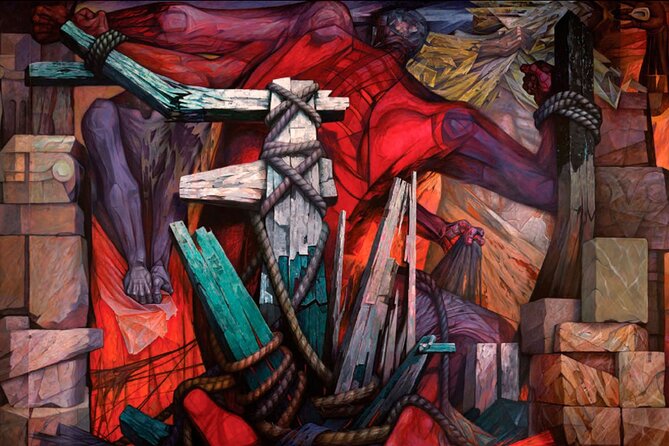
I would choose this tour for you if you like art but do not want to study every mural alone. It is also a strong match if you enjoy political history, architecture, social questions, or the way public art shapes national identity.
Families can benefit because the guide gives children and adults a way into difficult subjects. Friends and couples who want a shared cultural activity should find the small group format comfortable. Solo visitors may especially appreciate the built-in conversation and the chance to ask questions throughout the walk.
Artists and art students should find plenty to examine in style, composition, symbolism, and technique. The tour is also useful early in a Mexico City visit because it gives you a framework for noticing muralism elsewhere in the city.
I would not pick it for a visitor who wants a relaxed stroll with only brief commentary. The themes include social conflict and political problems, and the guide may spend serious time explaining them. You also need the energy for sustained walking and standing.
Booking advice and cancellation terms
The experience has a 5/5 rating based on 188 ratings, with every rating recommending it. The most consistent praise centers on the guides’ explanations, especially their ability to connect individual murals to Mexican history, politics, and culture.
Book as early as you can if the schedule matters, since the experience is commonly reserved about 20 days before the date. Confirmation arrives when you book, and mobile tickets are supported.
Free cancellation is available up to 24 hours before the start time for a full refund. Cancellations or changes made within 24 hours are not accepted for a refund, and the cut-off follows local Mexico City time.
Should you book the Mexico City mural tour?
Yes, if you want more than a series of famous names and photographs. The tour gives you three major mural settings, included admission, a small group, and an English-speaking guide who can explain why the art looks the way it does and why it was placed where it is.
The best reason to book is the chance to see the murals as connected works of public history. The main reason to skip it is simple: you need to be ready for a long period of walking, standing, and serious discussion.
For art lovers, first-time visitors, and anyone curious about Mexico’s political story, this is a strong use of half a day. Wear good shoes, leave room in your schedule, and let the guide slow you down in front of the walls that most people hurry past.
FAQ
How long does the mural tour last?
The tour lasts approximately three hours and 30 minutes.
How many people can join the tour?
The maximum group size is eight people.
Which language is the tour offered in?
The tour is offered in English with a certified bilingual guide.
Which buildings are visited?
The route includes the Ministry of Education, Antiguo Colegio de San Ildefonso, and Palacio de Bellas Artes.
Are museum admission tickets included?
Yes. Entrance tickets to all museums visited during the tour are included.
Where does the tour begin?
The meeting point is Portal de Escribanos at Santo Domingo in Mexico City’s Centro Histórico.
Where does the tour end?
The tour ends inside the Mural Museum of Palacio de Bellas Artes.
Is transportation to the meeting point included?
No. Transportation to the meeting point is not included, though the location is near public transportation.
More Street Art Walking Tours in Mexico
- History and Murals: Walking Tour Guadalajara
★ 5.0 · 237 reviews - Guided Walking Tour Describing UNAM Murals and Revolution
★ 5.0 · 8 reviews - Street Art Walk
★ 4.5 · 7 reviews - Private Walking Tour Guadalajara History and Murals with Guide
★ 5.0 · 6 reviews
More Private Street Art Tours in Mexico
- Cancun Private Street Art Tour
★ 5.0 · 30 reviews - Private Mexico City Mural Art Tour
★ 5.0 · 13 reviews - Mexico City Private Street Art Tour
★ 5.0 · 11 reviews - Mexican Muralism in Guadalajara. A Cultural PRIVATE TOUR
★ 4.5 · 6 reviews
Freshly painted around Mexico
- Xochimilco floating gardens, Coyoacan and UNAM murals★ 4.0 · 6 reviews
- UNAM: Murals & Revolution★ 4.9 · 8 reviews
- Street Art & Cemetery Cultural Tour – half day★ 5.0 · 3 reviews
- Graffitis & Munchies biketour Playa del Carmen★ 4.5 · 18 reviews
- Street Art Walk★ 4.5 · 7 reviews
- Tour Women Muralists : Strokes that resist Mexico City★ 5.0 · 7 reviews
- Diego Rivera’s murals, hidden treasures★ 5.0 · 21 reviews
- Private Street Art Tour in Rome★ 4.0 · 4 reviews
Mexico City Street Art Tours, compared.

Xochimilco, Coyoacan and Frida Kahlo with Optional Lunch
Read our review →
CDMX: Xochimilco, Coyoacan, Frida Kahlo Museum & Murals Tour
Read our review →
Mexico City; ART NACO : Murals & Street Art Bike Tour
Read our review →
Walking Tour – Impressive murals in Historical Center of Mexico City
Read our review →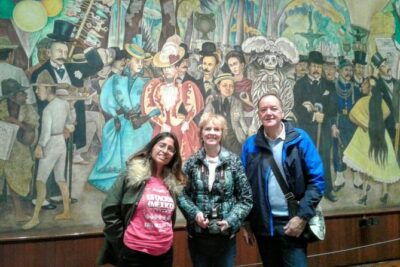
La Catrina & Muralism: Diego Rivera’s Legacy & Frida Kahlo
Read our review →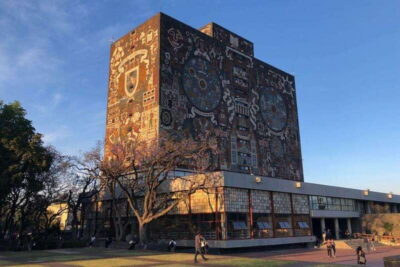
Xochimilco floating gardens, Coyoacan and UNAM murals
Read our review →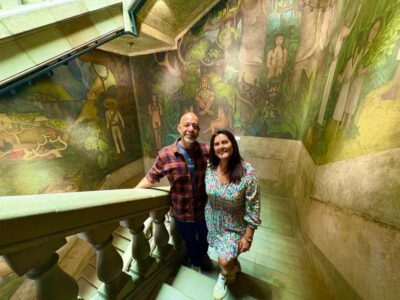
Mexico City: Diego Rivera’s Murals Guided Walking Tour
Read our review →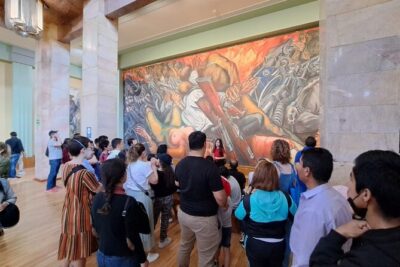
Browse the lists this tour appears in