
Review · MEXICO CITY
Diego Rivera at the Living Museum of Muralism
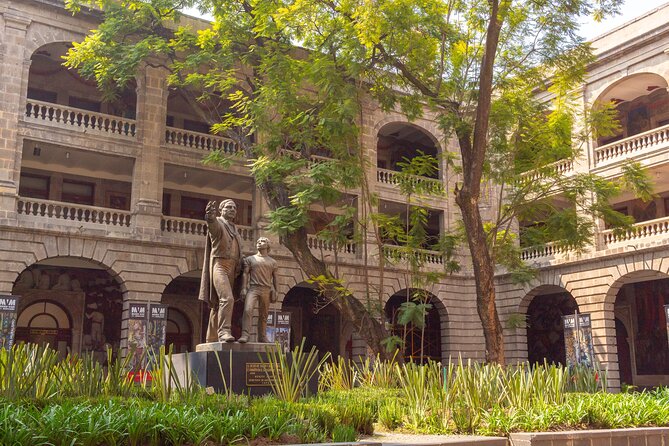
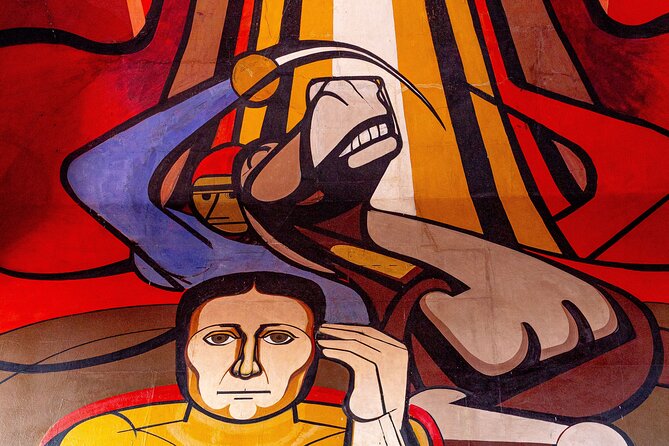
The great surprise here is that a paid guided visit takes place inside a museum with more than 280 murals, many by Diego Rivera. You walk through three floors of the former Secretary of Public Education, where art covers corridors, stairways, and walls that once served a government office.
I like the small group limit of 15, which should make it easier to hear and ask questions. I also like the chance to see Rivera alongside other Mexican muralists, including an impressive Siqueiros display on a stairway. The main thing to consider is value: admission is free, and the museum offers a free English tour at noon, so you should confirm exactly what the $53.55 booking adds.
Key points at a glance
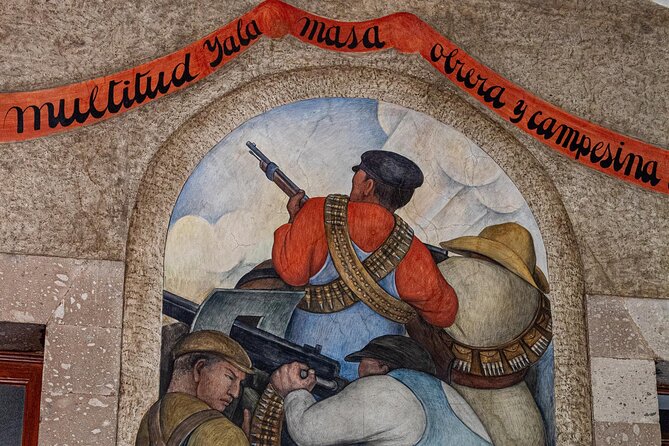
- More than 280 murals: The former government building is the main attraction, not just a collection of framed paintings.
- Three floors in about two hours: You get a focused visit without giving up a full morning or afternoon.
- Diego Rivera takes center stage: His murals cover much of the first floor, with other major artists represented elsewhere.
- Siqueiros appears on the stairway: The setting makes this more than a standard gallery visit.
- Bilingual guidance: The guide can discuss Mexican art, culture, history, and politics in more than one language.
- Free museum entry: The $53.55 price pays for the guided experience, not admission to the building itself.
A government building turned into a mural museum
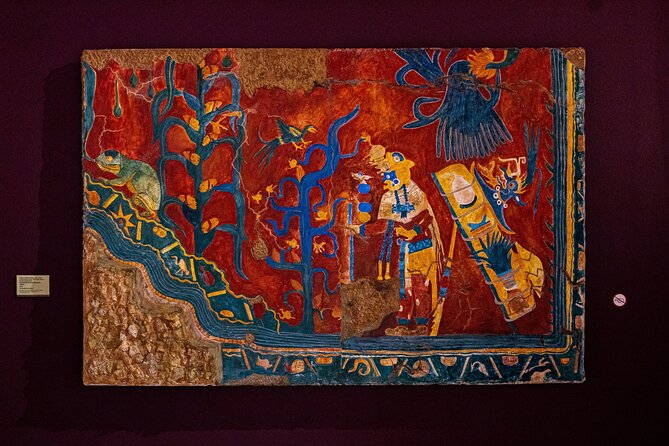
The Museo Vivo del Muralismo sits at República de Argentina 28 in Mexico City’s Centro Histórico. Its earlier life as the headquarters of the Secretary of Public Education gives the visit an unusual sense of place. This is not simply a white-walled museum where murals have been removed from their original setting and placed on display.
You move through the building itself, following art across three floors. Corridors and stairways become part of the experience. The architecture matters because Rivera and the other artists worked in a space connected to public education and government. Their paintings were made for people moving through the building, not only for art specialists arriving with a museum map.
I like this kind of setting because it gives the paintings a job to do. You are not looking at isolated images one at a time. You are seeing art in a building designed to connect public life, national identity, and education.
The location also makes practical sense for a day in the historic center. The museum is near public transportation, and the tour begins and ends at the same address. You will not need to arrange a second meeting point after the visit.
More Muralism Tours around Mexico:
- Xochimilco, Coyoacan and Frida Kahlo with Optional Lunch
★ 4.5 · 7,320 reviews - CDMX: Xochimilco, Coyoacan, Frida Kahlo Museum & Murals Tour
★ 4.4 · 3,025 reviews - La Catrina & Muralism: Diego Rivera’s Legacy & Frida Kahlo
★ 4.5 · 197 reviews
What you see on the three floors
The tour lasts about two hours, with the full visit devoted to the Museo Vivo del Muralismo. That sounds brief for a building with more than 280 murals, and it is. You should think of the experience as an introduction with expert interpretation, not a chance to study every painting closely.
The first floor is the main draw for most people. Diego Rivera’s murals cover much of this level, giving you a sustained look at his large-scale work rather than a single famous panel surrounded by unrelated exhibits.
Rivera’s murals are easier to appreciate when someone explains how the images connect to Mexican society, politics, and daily life. The guide’s role is important here. A good explanation can help you notice the people, symbols, conflicts, and public messages that might otherwise blend together in a large painted scene.
You should also expect the tour to place Rivera in conversation with other artists. This matters because Mexican muralism was never only one painter’s story. The building gives you a chance to compare Rivera’s approach with work by artists such as David Alfaro Siqueiros.
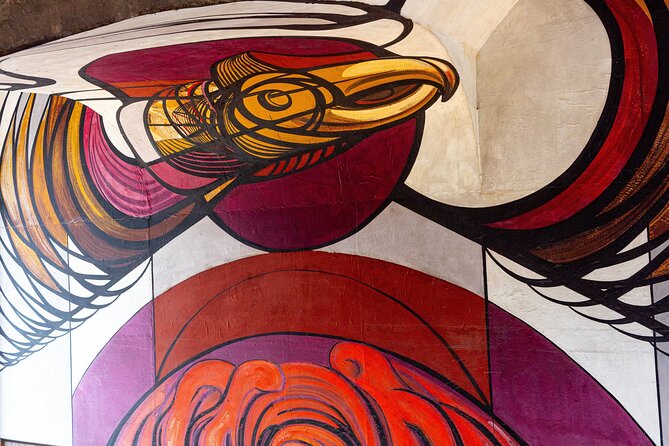
The second-floor stairway is a particularly memorable part of the visit. It includes an exhibit of Siqueiros, and the placement makes the art feel connected to movement through the building. You are not just stopping in front of a wall and moving on. The stairway becomes part of the viewing experience.
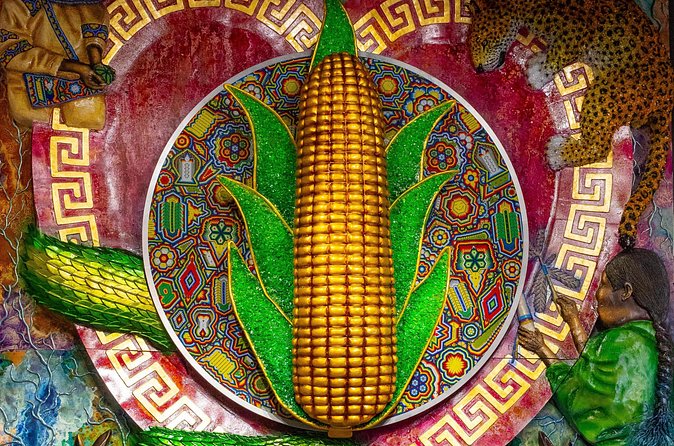
The remaining areas give the guide room to discuss other works and the building’s role. Since the museum contains so much art, the exact order and emphasis may depend on the guide. That is one reason a good guide can matter more here than a printed description.
Why the guide changes the experience
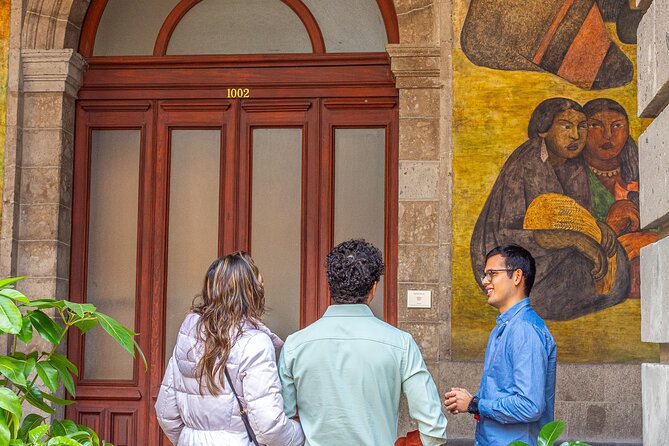
The tour includes a bilingual guide, and the strongest descriptions of the experience point to the guide’s teaching style. José is specifically praised for being prepared, welcoming, organized, and able to explain art and Mexican culture in clear English. He also speaks Italian, although you should not assume he will lead every scheduled departure.
The guide associated with the best experience is not simply pointing out names and dates. José has been described as a thoughtful teacher who connects the murals with Mexican history, politics, and culture. He encourages you to think about the images rather than accept a single easy answer.
That approach suits Rivera particularly well. The murals often carry several messages at once. A quick walk can leave you with colorful impressions, while a guided conversation can help you understand why the paintings were placed in a public building and what they were meant to communicate.
The bilingual format is also useful for mixed-language groups. Still, English is the stated language offered for this experience, so English-speaking visitors should be comfortable booking it. Other languages may depend on the guide assigned.
A group of up to 15 is small enough for questions but not private. If every place is filled, you will still be part of a group moving through public museum spaces. The advantage is that the group should remain more manageable than a large bus tour.
The free-entry question and the $53.55 price
The museum itself does not charge admission. You only need to sign the visitor log to enter, according to the available information. There is also a free English tour at noon, led by museum guides.
That fact is the central issue when judging the $53.55 price. The fee can be worthwhile if you want a reserved experience, a particular meeting arrangement, a smaller group, or a bilingual guide who spends more time explaining the murals. It is not good value if you only want basic access to the building and can attend the free noon tour.
I would compare the paid option with your schedule before booking. If you are already planning to be in the historic center around noon, the free museum tour may meet your needs. If your timing does not match, or if you prefer a tour arranged through a travel company, the paid visit offers convenience.
The description says admission is free, while the experience includes a bilingual guide. That suggests your payment is for the guided service rather than an entrance ticket. I would ask the provider what language is guaranteed, what time the guided visit begins, and how it differs from the museum’s free tour before paying.
The price is easier to defend for visitors who want context. It is harder to defend for independent art lovers who are happy to read, look slowly, and attend the free tour. This is a place where the guide can add real value, but the building itself is available without a ticket charge.
More Street Art Museums and Galleries around Mexico:
- Explore Modern Art & Murals in Mexico City’s Best Museums
★ 5.0 · 2 reviews - Mexico City: Murals at the Museum of San Ildefonso
★ 5.0 · 2 reviews - Amsterdam: Streetart Museum STRAAT Entrance Ticket
★ 4.8 · 2,137 reviews - STRAAT Museum – Museum for Street Art Amsterdam Admission Ticket
★ 5.0 · 192 reviews
How two hours feels inside the museum
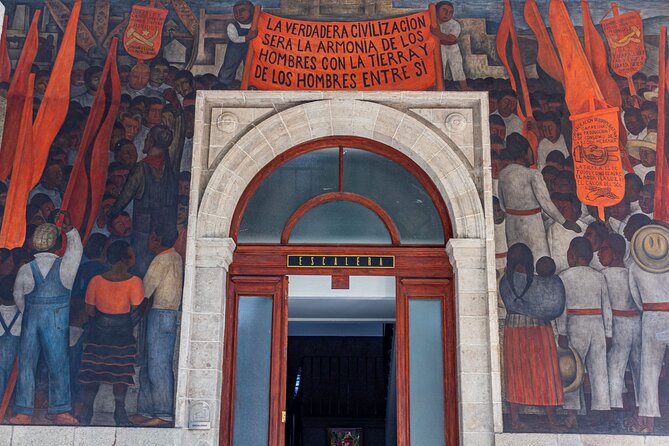
Two hours is a sensible length for a guided introduction. You have enough time to walk through all three floors without turning the visit into an exhausting marathon. You can also keep the museum as one part of a larger day in the Centro Histórico.
Do not expect to see every mural in detail. With more than 280 works, two hours requires selection. The guide will likely focus on important examples by Rivera and other artists, then use those works to explain broader themes.
I suggest arriving ready to look up and around. Murals often occupy walls and stairways at a scale that rewards stepping back. The building is part of the visual experience, so you should not rush from one painting to the next while looking only at eye level.
The pace may also feel different from a standard art museum. You are walking through an active architectural space, not following a neat sequence of numbered rooms. That can make the visit more memorable, but it may feel less tidy if you prefer a clearly labeled gallery plan.
At the end, you return to the original meeting point. There is no separate drop-off or final stop to locate, which simplifies the rest of your day.
The building, Rivera, and Mexican public art

The value of this museum lies partly in the connection between art and public life. Rivera’s murals were not created as private decorations for a small audience. They occupied a government building tied to education, so their audience included ordinary people using the institution.
That setting helps explain why the paintings can feel direct and political. The guide can discuss Mexican culture and politics without treating the murals as decoration alone. You will get more from the visit if you are willing to consider what the artists wanted the public to see and think about.
I particularly like the contrast between the building’s official purpose and the often forceful nature of mural art. Government offices can sound formal and restrained. Rivera and Siqueiros bring a more public, argumentative voice into that setting.
You do not need an art degree to follow the tour. The guide’s job is to connect what you see with a larger story in plain language. If you already know Rivera well, the building and the comparison with other muralists may still give you a fresh angle.
Who should book this experience
I would recommend the tour to first-time visitors who want an introduction to Mexican muralism without spending half a day in a large museum. It also suits anyone who likes art explained through politics, culture, and place rather than through dates alone.
It is a good match for you if:
- You want to see Diego Rivera in a working historic building rather than only in a traditional gallery.
- You value a guide who can encourage questions and discussion.
- You are interested in Mexican culture and public art.
- You prefer a small group of no more than 15 people.
- You want a two-hour activity that fits into a day in the Centro Histórico.
- You need an English or bilingual guided visit.
Independent visitors may prefer the free entry and noon English tour. The paid experience is also less attractive if your main goal is to browse at your own speed. A guide-led visit means following a set pace and listening to selected explanations.
Families and older participants can generally take part, since most travelers can participate. Still, the supplied information does not give specific details about elevators, seating, or step-free access. If those details matter to you, ask before booking, especially because the tour covers three floors and includes stairway art.
Timing, meeting point, and booking advice
The meeting point is Museo Vivo del Muralismo, República de Argentina 28, Centro Histórico de la Ciudad de México, Cuauhtémoc, 06020 Ciudad de México, CDMX. The activity ends back at that same location.
The museum is near public transportation, which helps when planning a day around central Mexico City. The details do not name a particular metro or bus stop, so check your route before setting out rather than relying on a last-minute search.
Confirmation is issued at booking, and a mobile ticket is provided. You should keep the ticket available on your phone, then arrive at the stated meeting point with enough time to find the entrance and complete any visitor registration required by the museum.
The activity is usually booked about 21 days in advance. That does not guarantee that every date sells out, but it suggests you should plan ahead if your Mexico City schedule is fixed.
Free cancellation is available up to 24 hours before the start time. Canceling within 24 hours, or making changes during that period, means you will not receive a refund. The cutoff follows local Mexico City time.
My recommendation: pay for the guide only if you need the added context
The Museo Vivo del Muralismo is worth your time because the art remains tied to its original public setting. Rivera’s first-floor murals, the Siqueiros work on the stairway, and the building’s former government role give you more to think about than a quick stop for photographs.
I would book the $53.55 experience if you want a focused English visit, appreciate discussion of Mexican culture and politics, or prefer a small organized group. José sounds like the kind of guide who can make the murals feel connected and alive, though guide assignments are not guaranteed.
I would skip the paid option if you can attend the free English tour at noon or are comfortable exploring without a guide. Since admission costs nothing, the decision comes down to timing, language, and how much you want interpretation. Check those points before booking, and this can be a rewarding two-hour addition to your Mexico City plans.
FAQ
How much does the experience cost?
The price is $53.55 per person.
How long does the tour last?
The experience lasts approximately two hours.
Where does the tour begin?
It begins at Museo Vivo del Muralismo, República de Argentina 28, Centro Histórico de la Ciudad de México, Cuauhtémoc, 06020 Ciudad de México, CDMX, Mexico.
Where does the tour end?
The activity ends back at the meeting point.
Is museum admission included?
Admission to the museum is free. The paid experience includes a bilingual guide.
What language is offered?
The experience is offered in English and includes a bilingual guide.
How many people can join the tour?
The group has a maximum of 15 participants.
Is the museum near public transportation?
Yes. The museum is near public transportation.
Can most people participate?
Yes. The available information states that most travelers can participate. Specific details about accessibility across the three floors are not provided.
Can I cancel for a full refund?
Yes. You can cancel at least 24 hours before the local start time for a full refund. Cancellations or changes made less than 24 hours before the start time are not refunded.
Freshly painted around Mexico
- Xochimilco floating gardens, Coyoacan and UNAM murals★ 4.0 · 6 reviews
- UNAM: Murals & Revolution★ 4.9 · 8 reviews
- Street Art & Cemetery Cultural Tour – half day★ 5.0 · 3 reviews
- Graffitis & Munchies biketour Playa del Carmen★ 4.5 · 18 reviews
- Street Art Walk★ 4.5 · 7 reviews
- Diego Rivera’s murals, hidden treasures★ 5.0 · 21 reviews
- Tour Women Muralists : Strokes that resist Mexico City★ 5.0 · 7 reviews
- Private Street Art Tour in Rome★ 4.0 · 4 reviews
Mexico City Street Art Tours, compared.

Xochimilco, Coyoacan and Frida Kahlo with Optional Lunch
Read our review →
CDMX: Xochimilco, Coyoacan, Frida Kahlo Museum & Murals Tour
Read our review →
Mexico City; ART NACO : Murals & Street Art Bike Tour
Read our review →
Walking Tour – Impressive murals in Historical Center of Mexico City
Read our review →
La Catrina & Muralism: Diego Rivera’s Legacy & Frida Kahlo
Read our review →
Muralist Art Semi Private Walking Tour in Mexico City Downtown
Read our review →
Xochimilco floating gardens, Coyoacan and UNAM murals
Read our review →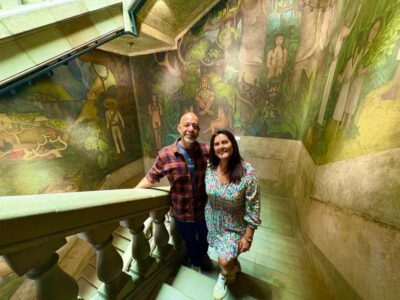
Mexico City: Diego Rivera’s Murals Guided Walking Tour
Read our review →Browse the lists this tour appears in