
Review · MEXICO CITY
2 Hours of Mexican Muralism with an Art Lover
Mexico City’s mural story is far more than a stroll past large paintings. It is a lesson in how artists such as Rivera, Orozco, Siqueiros, Camarena, and Tamayo used public walls to talk about revolution, identity, power, and everyday life. This 2.5-hour tour links four important Centro Histórico sites, giving you a useful frame before you tackle the city’s art museums on your own.
I like the route for two clear reasons: the art is tied to Mexican history, and the small group size keeps the discussion personal. I also like that the tour ends at Museo Vivo del Muralismo, where Diego Rivera’s work gets serious attention instead of being treated as a quick photo stop. The main catch is cost: the $53.74 price does not include admission to Bellas Artes or San Ildefonso, with those tickets listed at MX$150 per person.
Key points about this muralism tour
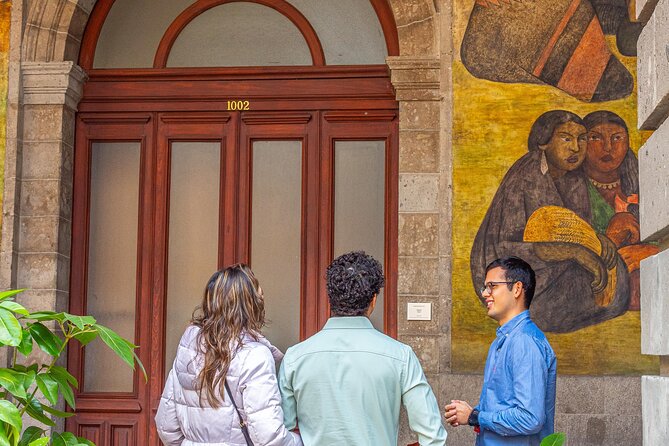
- José may guide your visit: He is praised for connecting art history with politics, anthropology, and Mexico’s past.
- Four central stops fit into about 2 hours 30 minutes: Bellas Artes receives about an hour, San Ildefonso and Museo Vivo del Muralismo about 45 minutes each.
- Bellas Artes sets the artistic stage: You discuss Rivera, Siqueiros, Orozco, Camarena, and Tamayo inside one of Mexico City’s major art venues.
- San Ildefonso shows muralism at its beginning: The former college is especially useful for understanding Clemente Orozco’s early work.
- The final museum has 248 Diego Rivera murals: Museo Vivo del Muralismo also includes temporary rooms devoted to easel art, ceramics, murals, and pre-Hispanic drawings.
- The group is capped at 15: That is a reasonable size for questions without making the tour feel like a private visit.
Why Mexican muralism deserves a focused tour
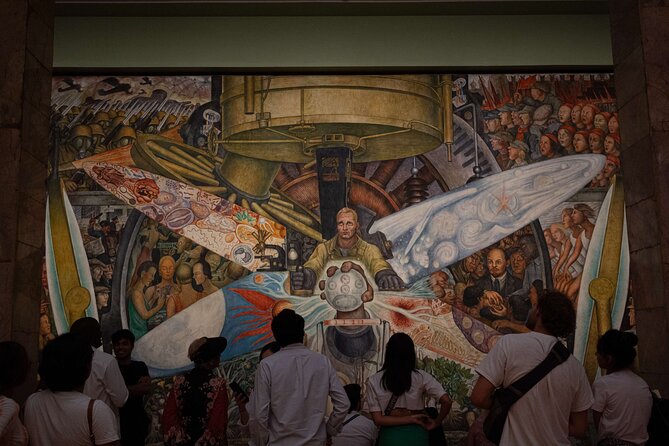
Mexican muralism can look simple from a distance: large walls, strong colors, workers, revolutionaries, indigenous figures, and scenes from daily life. The meaning becomes less obvious once you stand in front of the work. Who is being celebrated? Who is being criticized? Why was the painting placed in a public building instead of a private gallery?
That is where a guide adds real value. You can look at a mural on your own, but a good explanation connects the image to the country’s political and social changes. José, the guide named in the tour information, is described as comfortable moving from art history to politics and anthropology. That range matters because Mexican muralism rarely stays inside one subject.
The tour is also useful for first-time visitors who do not know the difference between Rivera, Orozco, and Siqueiros. You will not simply receive a list of famous names. The route introduces the movement through different stages, from early experiments at San Ildefonso to the major works shown at Bellas Artes and the later Rivera-focused museum.
This is not a general Mexico City sightseeing tour. The historic center appears along the way, but the main purpose is to read the art and understand how muralism developed.
More Muralism Tours around Mexico:
- Xochimilco, Coyoacan and Frida Kahlo with Optional Lunch
★ 4.5 · 7,320 reviews - CDMX: Xochimilco, Coyoacan, Frida Kahlo Museum & Murals Tour
★ 4.4 · 3,025 reviews - La Catrina & Muralism: Diego Rivera’s Legacy & Frida Kahlo
★ 4.5 · 197 reviews
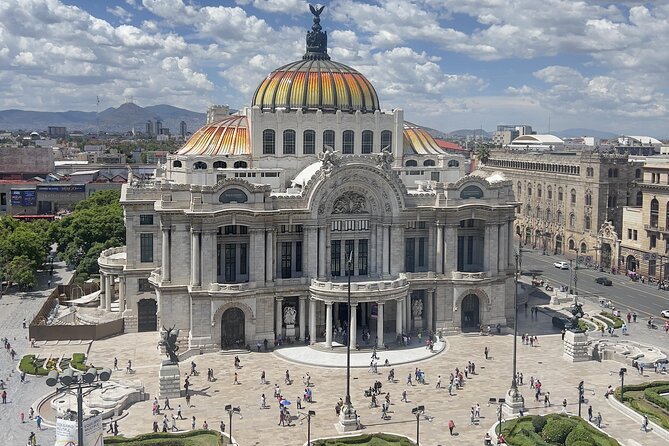
Starting beneath the dome of Bellas Artes
The meeting point is Museo del Palacio de Bellas Artes, at Avenida Juárez and Eje Central Lázaro Cárdenas. That central location is practical and easy to identify, and the museum gives the tour an impressive opening setting.
You spend about one hour here discussing Mexican muralism and viewing works by Diego Rivera, David Alfaro Siqueiros, José Clemente Orozco, Alfredo Camarena, and Rufino Tamayo. Seeing several artists in one place helps you compare their approaches instead of treating muralism as one single style.
Rivera’s work may draw the first glance, but Orozco and Siqueiros deserve careful attention too. Their paintings can carry a harder edge, with conflict, labor, political struggle, and human suffering often pushed to the front. Tamayo offers another direction, while Camarena adds to the range of artists covered.
The Bellas Artes stop is also where the tour’s larger theme becomes clear. These murals are not just decoration. They occupy a public cultural building and ask you to think about who controls the national story, how that story is displayed, and how art can reach people outside private galleries.
Admission is not included, so you should budget for the ticket separately. The listed admission charge for Bellas Artes and San Ildefonso is MX$150 per person. Since ticket prices can change, confirm the current amount when booking or before arrival.
One hour is enough for a focused introduction, but it is not enough to study every work in detail. If Bellas Artes is a major reason for your visit, you may want to return later with more time. The benefit of the guided stop is that you leave with a method for looking, not just a quick list of paintings.
Along Mexico City’s grand historic avenue
The route continues along an impressive avenue lined with baroque palaces and church facades. The precise timing for this part is not listed as a separate stop, so think of it as a connecting section rather than a full architectural tour.
Still, this part gives the murals a useful setting. Mexico City’s public buildings carry several layers of history, and the ornate facades help show how the city moved from colonial institutions toward modern national culture. You are not looking at art in isolation. You are moving through a city where churches, palaces, government buildings, museums, and archaeological remains sit close together.
This transition also breaks up the indoor museum time. If you prefer tours with a little city walking between galleries, it should suit you. If you need a seated, indoor program, keep in mind that the route includes movement through the center and does not list a private vehicle.
The central plaza and Mexico-Tenochtitlan beneath the city
The tour also reaches the central plaza of Mexico City. Here you see the government palace, the cathedral, and archaeological windows showing remains of ancient Mexico-Tenochtitlan.
This stop adds an important layer to the muralism discussion. Mexican artists often worked with ideas of indigenous identity, conquest, the colonial period, and the modern nation. Seeing archaeological remains near major civic and religious buildings makes those competing layers visible in a direct way.
You can also better understand why public art mattered so much in Mexico. A mural placed inside a government building reaches a very different audience from a painting shown in a private room. The nearby plaza reinforces that point: this is a place where political, religious, and national symbols meet.
The provided schedule does not assign a separate duration to the plaza, so the amount of time here may depend on the guide and the pace of the group. Treat it as context for the museums rather than a full archaeological visit.
More two-hour art walks around Mexico:
- 2 Hour Private Belfast Taxi Cab Tour of Troubles & Peace walls
★ 5.0 · 240 reviews - 2-Hour Food, History and Street Art Tour of Ponce City Market
★ 5.0 · 159 reviews - Vienna: 2-Hour Street Art Tour
★ 4.5 · 76 reviews - PRIVATE 2-Hour tour of Montréal in Convertible Cadillac + Murals
★ 5.0 · 73 reviews
San Ildefonso and the early muralist movement
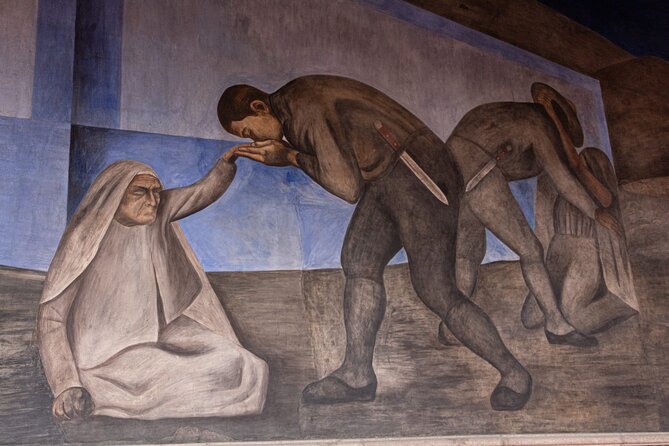
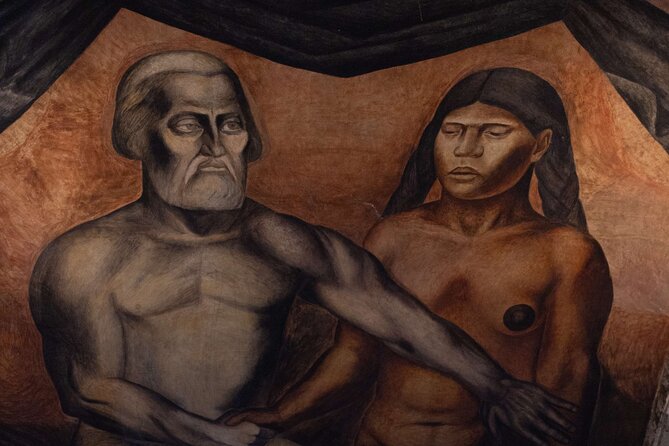
Antiguo Colegio de San Ildefonso receives about 45 minutes. This former college is especially important for learning about the early work of José Clemente Orozco and the birth of the twentieth-century muralist movement.
I find this stop valuable because it moves the tour backward in the story. At Bellas Artes, you get a broad view of major artists. At San Ildefonso, you focus more closely on the movement’s early development and Orozco’s role in it.
A forty-five-minute visit calls for selectivity. You will not have time to examine every room at a slow pace, and admission is not included. But the shorter stop works well if your goal is to understand how muralism began rather than conduct a full museum study.
The setting itself also helps. A former educational institution is a fitting place to discuss a movement that aimed to educate the public through art. Murals could carry ideas to people who might never visit a fine-art gallery. That public purpose is one of the most useful themes to carry through the tour.
If you are especially interested in Orozco, note the museum’s importance and consider returning after the tour. The guided visit gives you a starting point, while a second visit would let you spend longer with the paintings.
Ending with 248 Rivera murals
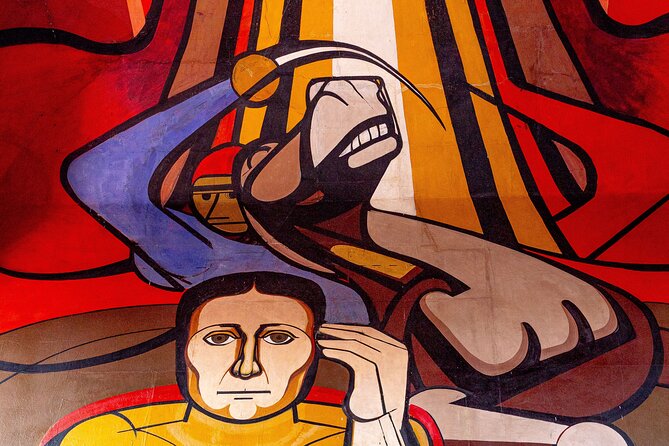
The final stop is Museo Vivo del Muralismo, at República de Argentina 28. The tour ends at the entrance, so you can continue exploring after the official program finishes.
About 45 minutes are set aside here. The museum contains 248 Diego Rivera murals, along with three floors and temporary rooms covering easel art, mural painting, ceramics, and pre-Hispanic drawings. That variety makes the final stop broader than its Rivera focus might suggest.
I like ending here because you arrive after hearing the larger story. By this point, you have discussed several artists, walked past major civic and religious buildings, and considered the older layers of Mexico City. The Rivera murals can then be read as part of a national conversation rather than as isolated famous images.
The free admission is a helpful part of the value. Unlike Bellas Artes and San Ildefonso, this final museum does not add a listed entrance fee. You should still allow more time if the collection interests you, since 45 minutes is only an introduction to three floors and temporary rooms.
The museum also gives you a chance to compare mural painting with easel art and ceramics. That matters because the muralist movement was not limited to one format. The temporary exhibitions may change, so the exact material on display can vary.
José and the value of the guide
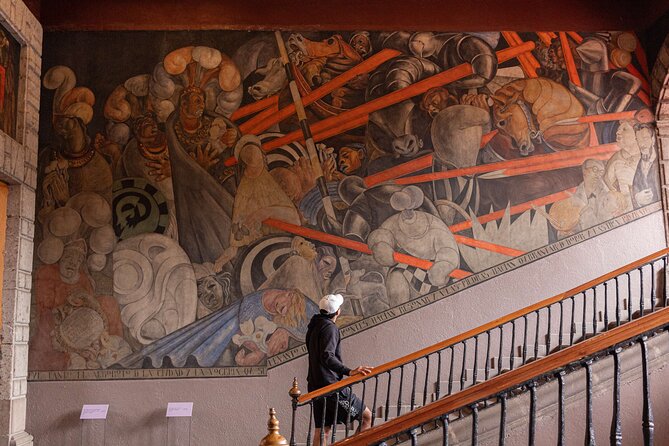
The strongest part of this experience is likely the guide’s interpretation. José is specifically identified in the tour information, and his praised strengths are useful to know before booking. He is described as able to discuss art history, general history, anthropology, and politics, and as willing to engage with questions.
That mix is important here. A guide who only identifies artists and dates would leave out the reasons muralism mattered. A guide who can connect paintings to politics and society can help you see why the work was placed where it was and why certain subjects appear again and again.
The tour is offered in English and includes a bilingual guide. Since the language listing says English and the inclusion says bilingual, confirm the language arrangements when you book if you need a fully English-led visit.
The group maximum is 15 people. That is not private, but it is small enough to make questions practical. With a subject this dense, the ability to ask about a figure, symbol, or political reference can make the difference between a pleasant museum visit and a useful one.
The tour has a top rating of 5 from 12 posted ratings, with 100 percent recommending it. That is a small sample, so I would not treat it as a guarantee. It does, however, match the specific praise for José’s passion and broad command of the subject.
What the $53.74 price gets you
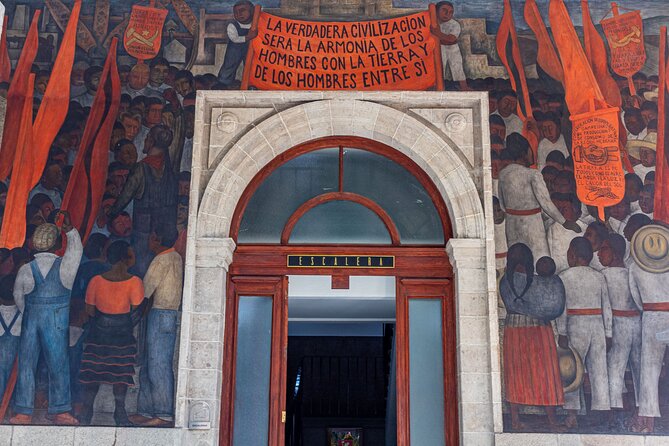
At $53.74 per person, this is not the cheapest way to see Mexico City murals. You are paying for a guided interpretation across several locations, not just admission to one museum.
The value depends on your interests. If you already know Mexican art well, you may prefer to visit the museums independently and spend longer with the artists you like. If you are new to muralism, the guide can save you from wandering through major works without knowing what to look for.
Remember to add the listed MX$150 per person for admission to Bellas Artes and San Ildefonso. Museo Vivo del Muralismo is listed as free. The total cost remains reasonable for a small-group art tour, but it is not an all-inclusive museum ticket.
The schedule is tight enough to keep the experience focused, yet short enough to fit into a day of sightseeing. You can spend the morning or afternoon with the guide, then return to one museum later if a particular artist catches your attention.
Who should book this experience
I would choose this tour if you want a clear introduction to Mexican muralism and prefer to learn through conversation. It suits you especially well if you enjoy linking art with politics, public life, archaeology, and the history of Mexico City.
It also works for people who want a small group rather than a large scheduled crowd. The 15-person limit gives the guide room to answer questions, though it does not promise a private pace.
Families and most general visitors can take part, since the activity states that most people can participate. The route is near public transportation, which helps with reaching the starting point and leaving from the final museum.
You may want to skip it if your main goal is a long, quiet museum session. Each major museum stop is limited to about 45 to 60 minutes, and the tour adds city-center transitions. This is a guided overview with serious content, not an entire day devoted to one collection.
The experience offers free cancellation up to 24 hours before the start time. Cancellations made within 24 hours are not refunded, and changes in that period are not accepted. The cut-off follows local Mexico City time.
My take: a strong choice for first-time muralism students
I recommend this tour for anyone who wants the big picture before exploring Mexico City’s art scene alone. Its best feature is the way it links Bellas Artes, San Ildefonso, the central plaza, and Museo Vivo del Muralismo into one story.
Book it if you value a guide who can move beyond labels and connect paintings with politics, anthropology, and national identity. José’s reported strength in those areas is especially relevant, and the small group gives you a fair chance to ask questions.
Skip it if you want maximum time inside each museum or if the extra admission charges make the price uncomfortable. For most first-time visitors with a serious interest in Mexican art, though, the route offers a useful foundation and ends at a free museum where you can keep learning on your own.
FAQ
How long is the muralism tour?
The experience lasts approximately 2 hours 30 minutes.
Where does the tour begin?
It begins at Museo del Palacio de Bellas Artes, at Avenida Juárez and Eje Central Lázaro Cárdenas in Mexico City’s Centro Histórico.
Where does the tour end?
The tour ends at the entrance of Museo Vivo del Muralismo at República de Argentina 28 in Centro Histórico.
Is the tour offered in English?
English is listed as an available language, and the experience includes a bilingual guide.
Is admission included?
Admission to Bellas Artes and Antiguo Colegio de San Ildefonso is not included. The listed charge is MX$150 per person for those admissions. Museo Vivo del Muralismo is listed as free.
How many people can join the tour?
The maximum group size is 15 travelers.
Who guides the experience?
The experience includes a bilingual guide. José is the named guide associated with the highly praised departures described in the tour information.
Can I cancel for a full refund?
Yes. You can cancel at least 24 hours before the start time for a full refund. Cancellations or changes made within 24 hours are not accepted and are not refunded.
Freshly painted around Mexico
- Xochimilco floating gardens, Coyoacan and UNAM murals★ 4.0 · 6 reviews
- UNAM: Murals & Revolution★ 4.9 · 8 reviews
- Street Art & Cemetery Cultural Tour – half day★ 5.0 · 3 reviews
- Graffitis & Munchies biketour Playa del Carmen★ 4.5 · 18 reviews
- Street Art Walk★ 4.5 · 7 reviews
- Diego Rivera’s murals, hidden treasures★ 5.0 · 21 reviews
- Tour Women Muralists : Strokes that resist Mexico City★ 5.0 · 7 reviews
- Private Street Art Tour in Rome★ 4.0 · 4 reviews
Mexico City Street Art Tours, compared.

Xochimilco, Coyoacan and Frida Kahlo with Optional Lunch
Read our review →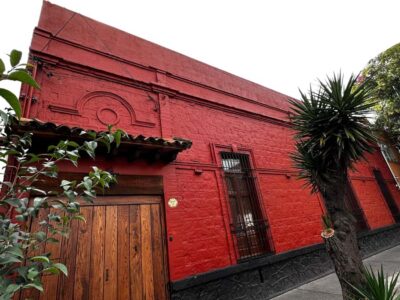
CDMX: Xochimilco, Coyoacan, Frida Kahlo Museum & Murals Tour
Read our review →
Mexico City; ART NACO : Murals & Street Art Bike Tour
Read our review →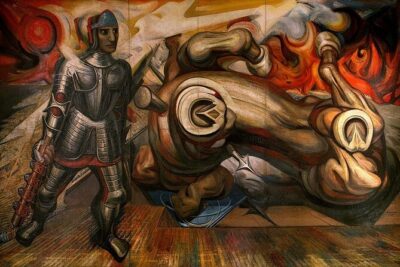
Walking Tour – Impressive murals in Historical Center of Mexico City
Read our review →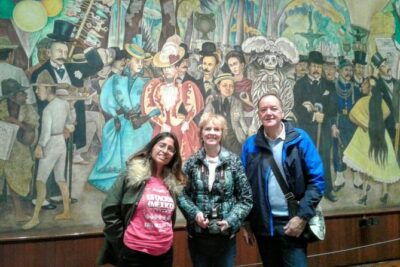
La Catrina & Muralism: Diego Rivera’s Legacy & Frida Kahlo
Read our review →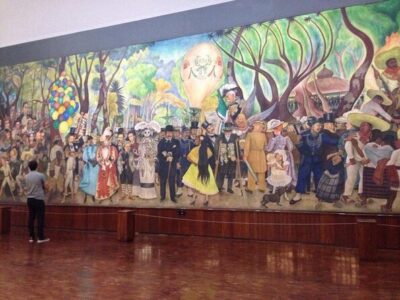
Muralist Art Semi Private Walking Tour in Mexico City Downtown
Read our review →
Xochimilco floating gardens, Coyoacan and UNAM murals
Read our review →
Mexico City: Diego Rivera’s Murals Guided Walking Tour
Read our review →Browse the lists this tour appears in