
Review · DENMARK
Street Art and Rooftops of Aarhus, Denmark
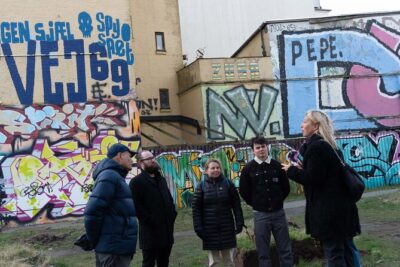
Aarhus reveals itself in layers on this walk: graffiti and murals lead you through the harbour, the old Latin Quarter, a rooftop creative hangout, and a former industrial site turned modern art space. The route finishes at a popular viewpoint opened in 2017, giving you a useful look across the city after seeing it at street level.
I like the small maximum of 10 people, which makes it easier to ask about an artist, building, or odd little detail. I also like the guide’s mix of art and local life. Marina is repeatedly named as the guide, and her stories cover everything from artistic styles to Aarhus buildings and city history. The main consideration is pace: this is a walking tour with a moderate fitness requirement, and the advertised two hours can stretch closer to three.
Key points to know before booking
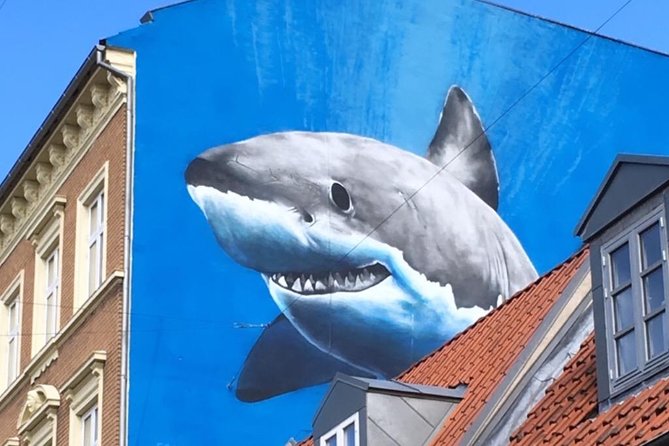
- Street art with context: You see murals, graffiti, sculptures, and installations along with the stories behind them.
- A route across several Aarhus districts: The walk connects the harbour, Latin Quarter, creative areas, City Hall, and a high viewpoint.
- Small group format: A maximum of 10 people keeps the experience personal and leaves room for questions.
- Guide Marina’s local focus: The art is used as a way to explain Aarhus culture, architecture, history, and everyday life.
- No attraction tickets required: The route includes public spaces and places where no entry fee is needed.
- Two hours on paper, possibly longer in practice: Some published experiences have lasted about three hours, so avoid booking a tight onward commitment.
Why street art is a smart way to see Aarhus
Aarhus is easy to walk, but a simple city stroll can leave you seeing only the obvious. This tour gives you a theme to follow. Instead of treating public art as decoration, the guide explains how it fits into the city and how different artists use walls, statues, installations, and buildings to make a point.
That approach suits you if you like art but do not want a formal gallery tour. You get changing scenery, local streets, old houses, public monuments, and modern creative spaces in one outing. The art also gives the walk a clear shape, so you are not just moving from one landmark to another.
I especially like the way the route includes several kinds of work. Graffiti offers one kind of energy, sculpture another. Murals can transform a plain wall, while installations may ask you to stop and think about the space around them. The guide’s job is not simply to point at each piece, but to help you notice details, styles, and possible messages.
That makes this a good first activity in Aarhus. You get a broad sense of the city while also learning what to look for during the rest of your stay. Several people who took the walk had lived near Aarhus for some time and still found places and details they had missed. That is a useful sign for both first-time visitors and returning ones.
More Street Art Tours around the world:
- Medellin: Comuna 13 Graffiti Tour, Cable Car & Street Food
★ 4.8 · 9,046 reviews - CDMX: Xochimilco, Coyoacan, Frida Kahlo Museum & Murals Tour
★ 4.4 · 3,025 reviews - Amsterdam: Streetart Museum STRAAT Entrance Ticket
★ 4.8 · 2,137 reviews
From Dokk1 and the harbour into the old city
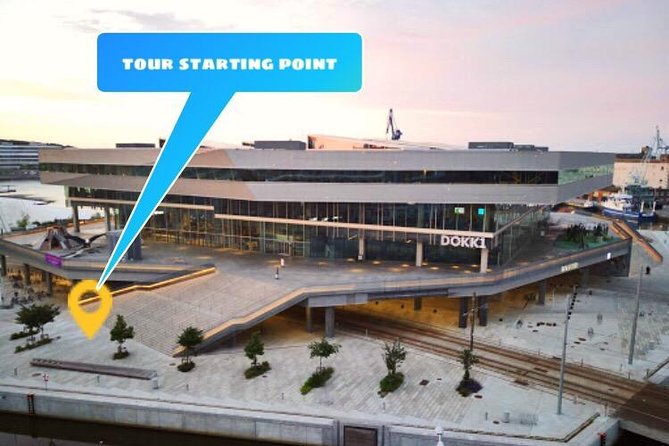
The route begins around the harbour, near Dokk1, Aarhus’s city multimedia centre. The supplied meeting information gives Europaplads 3 as the start point, while the route description identifies Dokk1 at Hack Kampmanns Plads 2. Because both addresses appear in the details, I would check the final meeting instructions carefully before setting out.
Starting near the water gives the walk a modern opening. Aarhus has a strong connection to its harbour, and the route uses that setting before turning into older parts of the city. You can expect the guide to place the art in its surroundings rather than show isolated works with no connection to the neighbourhood.
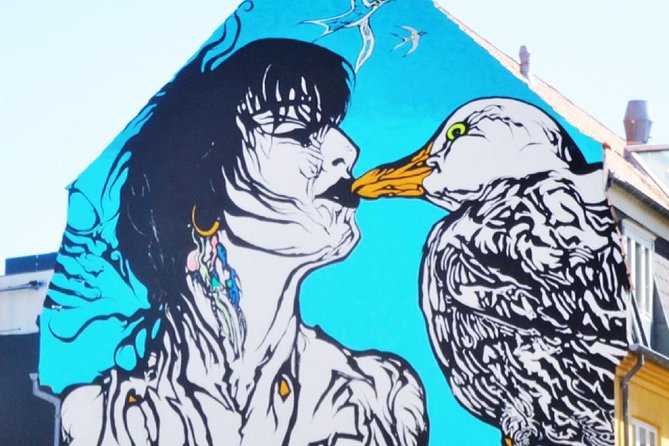
The walk then moves toward the Latin Quarter, known here for its old, charming houses. This is one of the most appealing shifts in the route. You move from open harbour space into tighter streets and older architecture, with public art appearing among buildings that give the city a very different mood.
I like this contrast because it helps you read Aarhus as a changing city. The old houses are not simply a pretty backdrop. They show the historic side of the city, while the street art and creative businesses point to a more current, experimental Aarhus.
The route is conducted in English, though a multilingual guide may lead it. Ask questions as you go. The group limit means you should have a fair chance to stop and ask about a work, an artist, or the reason a particular piece appears in that location.
The Latin Quarter and the creative side of the city
The Latin Quarter section is likely to appeal most to people who enjoy atmosphere as much as formal landmarks. The old houses create a pleasant setting for walking, but the art is what gives the area its extra layer. You are not just admiring façades. You are learning how public creativity can sit alongside older streets.
From there, the route continues to a rooftop hangout popular with freelancers and other creative people. The description presents it as a place where people enjoy coffee above the city. This is an interesting stop because it connects the art tour with Aarhus’s present-day working culture.
It is worth keeping expectations sensible. Food and drinks are not included, and the tour price does not promise a café stop with a purchase. Think of this as a creative setting and viewpoint within the walk, not as a scheduled meal break.
If you enjoy seeing how a city’s creative community spends time, this part adds useful local colour. It also gives the guide a chance to talk about the people and places that shape Aarhus beyond standard sightseeing. The emphasis is on a lived-in city, not just a checklist of monuments.
An old industrial site turned modern art space
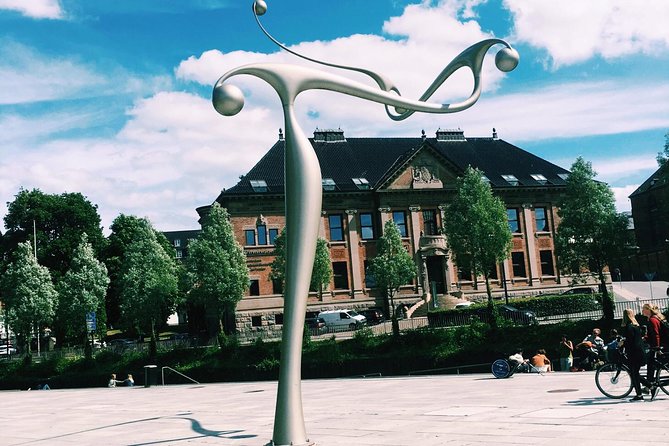
One of the route’s strongest ideas is the visit to a former industrial site that has been transformed into a modern art space. That change from working industry to creative venue says a lot about how urban areas can be reused.
You should expect this stop to feel different from the outdoor murals and sculptures. The setting itself becomes part of the experience. Industrial structures, public art, and modern creative work can create a more unusual atmosphere than a traditional museum room.
No entry tickets are required for the attractions visited on the walk. Still, the experience is not entirely outdoors, so bring a practical layer for changing conditions and shoes that work on city streets as well as indoor spaces.
This section is particularly useful if you want to understand Aarhus as more than an old Danish city. The tour connects historic streets with newer creative uses of urban space. You see how art can help draw people into areas that once served a very different purpose.
The guide also adds value here by explaining the works rather than leaving you to guess. Marina is praised for helping people notice details, understand artistic styles, and think about the messages behind the pieces. That is the difference between a pleasant walk and an art-focused tour.
Same walls, a different way in:
- Belfast: Murals Taxi Tour
★ 4.9 · 2,047 reviews - Wynwood Graffiti Golf Cart Small-Group Tour
★ 5.0 · 1,646 reviews - London: Street Art and Graffiti Guided Walking Tour
★ 4.9 · 1,354 reviews - Lisbon: Street Art Tour
★ 4.9 · 1,324 reviews
City Hall, monuments, and the official centre
The route then reaches the official city centre and the area around City Hall. Here, the mood shifts again. Instead of focusing mainly on street art and creative venues, the walk brings in monuments, public buildings, and the civic side of Aarhus.
This is where the tour’s wider city overview becomes important. You are not being shown art in isolation. You are also hearing about the buildings and public spaces around it, with stories and small facts that help explain how Aarhus works.
I like that the route includes this central section. A street-art walk could easily become too narrow, especially if you care more about the city as a whole. The City Hall area gives you a clearer sense of civic Aarhus and connects the art scene with the city’s formal identity.
The guide’s commentary appears to be one of the most valuable parts of the experience. The best use of a local guide is not just naming dates and artists. It is explaining why a place matters, pointing out quirks, and helping you see something you might otherwise pass without a second glance.
You will want to keep your attention on both sides of the street. The art may be the main subject, but the buildings and monuments around it are part of the visual lesson.
Finishing above the city at the 2017 viewpoint
The final high point is a viewpoint opened in 2017 that has already attracted millions of visitors. The exact name is not provided in the tour details, but the description makes clear why it is included: you finish with a broad view across Aarhus after walking through its streets and creative districts.
This is a strong ending. A high viewpoint helps you connect the places you have just visited. The harbour, central streets, old quarters, and newer areas make more sense when you can see their relationship from above.
The viewpoint is also a practical photo stop, but it is not only about pictures. The guide can help you understand the city’s layout, and you can look back on the route as a whole. After seeing individual artworks at close range, you get a larger view of the city that contains them.
The route then returns to the meeting point. Since the tour starts at 10 a.m., it can fit well into a morning in Aarhus, but I would not schedule a train, ship departure, or other fixed activity immediately afterward. Some descriptions of the walk place the actual duration closer to three hours, even though the stated duration is about two.
What the small group changes
The maximum group size is 10. That matters on a street-art tour because many stops may take place on ordinary city streets rather than in a controlled museum setting. A smaller group is easier to gather around a mural, and it is less awkward to ask questions.
You also get more contact with the guide. Marina is frequently identified by name, and the comments about her focus on art, local history, buildings, and amusing city stories are consistent. The tour seems to work best when you are curious and willing to ask about what you see.
A small group does not guarantee a private tour. If nobody else books, it may feel like a private outing, but the normal arrangement allows up to 10 people. The guide may also be multilingual, so the exact group dynamic can vary.
The walk is not designed for people who need a vehicle between stops. You should expect steady movement through the city and a moderate level of physical effort. Wear comfortable shoes and be prepared to spend much of the morning on your feet.
Is $63.20 a fair price?
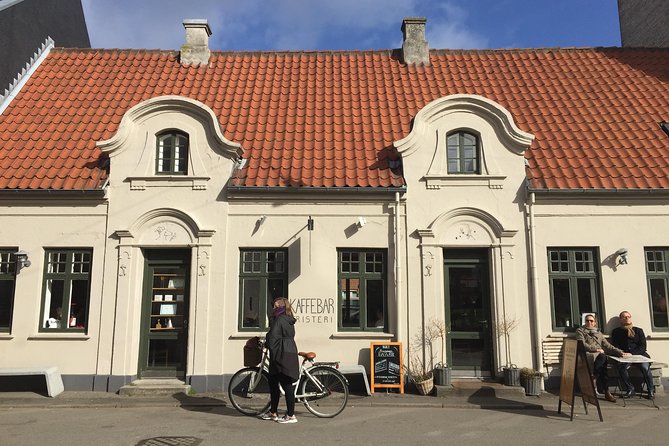
At $63.20 per person, this costs more than a basic self-guided walk, but you are paying for interpretation, route planning, and local knowledge rather than entry tickets. Since no attraction admissions are required, the main value lies in the guide’s ability to connect art with Aarhus life.
I think the price makes the most sense if you would otherwise walk past public art without understanding it. It is also useful if you have only a short time in the city and want one activity that combines neighbourhoods, architecture, creative spaces, monuments, and a viewpoint.
The value is less clear if you prefer to explore entirely at your own pace or want a long museum visit with extended time at individual works. This is a moving city walk. You will see many pieces, but the route cannot give every mural or installation the same amount of attention.
The small group improves the value. You are not paying for a large, scripted procession. The format leaves space for questions, and the guide can respond to the interests of the people present.
Who will enjoy this walk most?
I would choose this tour if you are interested in contemporary art, public space, architecture, or the way creative communities shape a city. It also suits people who want a city overview with more personality than a standard landmark tour.
It is a good match for:
- Art lovers who want murals, graffiti, sculpture, and installations in one route
- First-time visitors looking for an introduction to Aarhus
- Repeat visitors who want places beyond the usual sights
- People who enjoy local stories and informal cultural commentary
- Small groups and couples who like asking questions
- Cruise ship passengers with enough time between disembarkation and re-boarding
Cruise ship passengers must provide the ship name, docking time, disembarkation time, and re-boarding time when booking. That information helps the operator judge whether the timing works, but you should still allow a generous margin around the tour.
This may not be your best choice if you dislike walking, need a fully outdoor-free activity, or want food and drinks included. The experience is not entirely outdoors, but it is still an active city walk. Food and drinks are separate.
Practical details that affect your morning
The start time is 10 a.m. The listed meeting point is Europaplads 3, while the route information names Dokk1 at Hack Kampmann Plads 2. I would confirm the exact location in your booking confirmation so you are not searching around the harbour at the last minute.
The activity is offered in English, and a multilingual guide may operate the tour. Confirmation is received when you book. A moderate level of physical fitness is recommended.
Free cancellation is available up to 24 hours before the start time for a full refund. Cancellations or changes made less than 24 hours before the tour are not accepted for a refund, and the cut-off uses Aarhus local time.
The tour is generally presented as about two hours, but some outings have run for around three hours. Treat the longer time as possible, especially if the group asks questions or spends extra time with the art.
Should you book Street Art and Rooftops of Aarhus?
Book it if you want to see Aarhus through public art rather than only through major monuments. The route has a pleasing range: harbour views, old Latin Quarter houses, a rooftop creative setting, a reused industrial site, City Hall, and a high viewpoint.
The strongest reason to go is the guide’s art knowledge paired with local stories. Marina’s approach appears to make the works easier to read, while the route gives you a useful first picture of the city.
Skip it if you want a short, tightly timed activity or a traditional museum tour. Also think twice if a moderate walking route is difficult for you. For most art lovers and curious first-time visitors, though, the small group, broad route, and $63.20 price make this a worthwhile way to spend a morning in Aarhus.
FAQ
Where does the Street Art and Rooftops of Aarhus tour start?
The meeting information gives Europaplads 3, 8000 Aarhus, Denmark. The route description identifies the starting area as Dokk1, at Hack Kampmann Plads 2. Confirm the exact meeting point with your booking details.
What time does the tour begin?
The tour starts at 10:00 a.m.
How long does the tour last?
The stated duration is approximately two hours. Some outings have lasted about three hours, so allow extra time if your schedule is tight.
Is the tour offered in English?
Yes. The experience is offered in English, though it may be operated by a multilingual guide.
How many people can join the tour?
The maximum group size is 10 people.
Are attraction entry tickets included?
No entry tickets are required for the attractions visited on this route. Food and drinks are not included.
Can I cancel for a full refund?
Yes, if you cancel at least 24 hours before the experience start time. Cancellations or changes made less than 24 hours beforehand are not accepted for a refund.
Freshly painted around the world
- Xochimilco floating gardens, Coyoacan and UNAM murals★ 4.0 · 6 reviews
- Your Own Belgrade: Street Art and Hidden Gems Walking Tour★ 5.0 · 2 reviews
- Wynwood Walls Street Art & Neighborhood Walking Tour★ 4.9 · 9 reviews
- Vancouver: Street Art & Craft Beer Walking Tour with Tasting★ 4.8 · 14 reviews
- Zagreb Street Art Private Walking Tour with a Local Artist★ 5.0 · 12 reviews
- Urban Canvas: Osaka Street Art Bike Tour★ 5.0 · 10 reviews
- Vancouver: Street Art & Craft Coffee Walking Tour w/ Tasting★ 4.8 · 11 reviews
- UNAM: Murals & Revolution★ 4.9 · 8 reviews
Denmark Street Art Tours, compared.
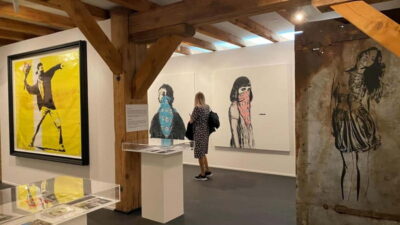
Copenhagen: MACA Museum: Banksy & Street Art Entry Ticket
Read our review →
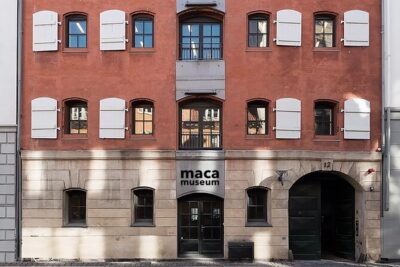
MACA Museum ‘Banksy & Street Art: The Early Years’ Art Exhibition
Read our review →
Small Group Guided Food Tour and Street Art Visit to Norrebro
Read our review →Browse the lists this tour appears in