
Review · BRAZIL
Rio Street Art Tour
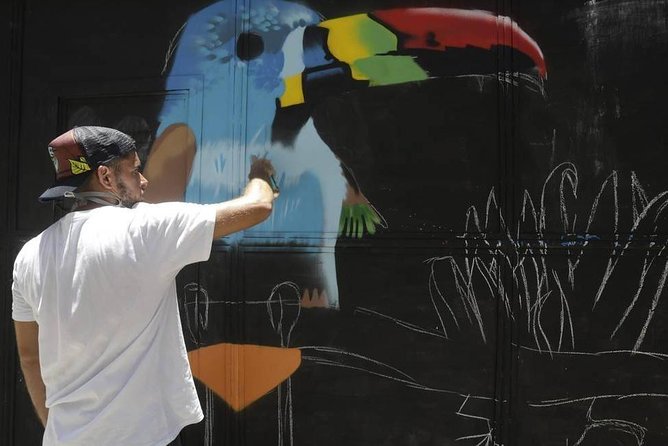
Rio’s street art is more than bright paint on concrete. It is a public record of politics, race, Carnival, and city life, and guide Wellington gives you the background needed to read it. You move through central Rio by subway, VLT, and on foot, ending beside the huge Ethnicities mural near the Museum of Tomorrow.
I especially like two things here: you see parts of Rio that many visitors skip, including Cinelândia and Little Africa, and you learn how the artwork connects with the city’s architecture and past. The main consideration is the pace. Three hours includes a lot of ground, and one section involves plenty of walking.
Key points to know
- Wellington brings the murals to life: Expect clear explanations of the art, local politics, Carnival, architecture, and Rio’s changing neighborhoods.
- The route uses local transport: You ride the subway and VLT, making this feel more like a city outing than a sightseeing loop in a vehicle.
- Selarón Steps are included: The colorful staircase adds one of Rio’s best-known sights to a route focused on less familiar areas.
- Porto Maravilha is the grand finale: The tour finishes near the Ethnicities mural, described as the largest graffiti mural in the world.
- It is a private experience: Only your group takes part, and solo bookings are accepted.
- Bring water and good walking shoes: The route is easy in general, but it covers several neighborhoods on foot.
Why Rio’s murals tell more than a pretty story
A street art tour can be little more than a hunt for good photographs. This one aims higher. Wellington explains the people and messages shown in the murals, then places the art within Rio’s political and social story.
That makes a difference in Porto Maravilha, where the large murals sit near the old port and Little Africa. The area connects to the forced arrival and enslavement of Africans in Brazil, so the art carries weight beyond its size. You are not simply looking at enormous faces. You are being asked to think about who is represented, who has been left out, and how public space can carry memory.
The guide also connects street art with architecture, samba schools, Carnival, and current events. That broad approach is one of the strongest parts of the outing. You may begin by looking at graffiti, then find yourself discussing Rio’s colonial and European architectural influences, the port district, or the city’s Carnival traditions.
Wellington is the named guide associated with the experience. His English is described as strong, and the tone appears relaxed and personal. If you enjoy asking questions, this private format gives you room to do so instead of keeping pace with a large group.
More Street Art Tours around the world:
- Medellin: Comuna 13 Graffiti Tour, Cable Car & Street Food
★ 4.8 · 9,046 reviews - CDMX: Xochimilco, Coyoacan, Frida Kahlo Museum & Murals Tour
★ 4.4 · 3,025 reviews - Amsterdam: Streetart Museum STRAAT Entrance Ticket
★ 4.8 · 2,137 reviews
Starting at the Municipal Theater and Cinelândia
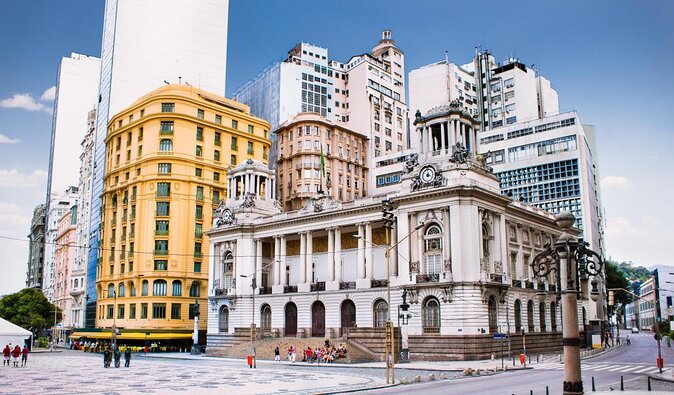
The meeting point is outside the Municipal Theater of Rio de Janeiro at Praça Floriano, in central Rio. From there, the tour moves toward Cinelândia, an area known for major civic and cultural buildings.
This is a useful opening because it gives you a quick sense of Rio beyond the beaches. The Municipal Theater, libraries, and other grand buildings show the city’s formal side, with architectural influences that contrast sharply with the improvised energy of graffiti. Wellington uses that contrast to explain how Rio developed and how public art now shares space with older institutions.
Cinelândia also helps you get your bearings. You are in central Rio, close to the city’s political and cultural core, rather than in the familiar postcard districts. The area is part of the story, not just a place to pass through on the way to a mural.
The route then uses public transportation to reach other parts of the center. That is a real advantage if you want to understand how the city works day to day. You are not sealed inside a vehicle while landmarks are pointed out. You ride the subway and VLT, then continue on foot.
One practical note: the experience description includes public transportation, and one account says Wellington handled a train ticket to prevent a possible fine. Still, I would confirm before departure exactly which fares are covered and how tickets are managed.
Selarón Steps add color and a famous landmark
The Escadaria Selarón, or Selarón Steps, is one of Rio’s best-known public art sights. The staircase is a colorful mosaic work and a natural crowd-pleaser, even for people who came mainly to see graffiti.
Here, you get a familiar landmark within a broader city walk. That balance works well. You see a place that is easy to recognize in photographs, but you do not spend the whole tour circling the usual attractions. Wellington can explain the staircase while also helping you compare it with the painted walls and large-scale murals encountered elsewhere.
The stop is listed as about 20 minutes. That is enough for a look, photographs, and a short explanation, but not a long, unhurried visit. If you want extensive time at the staircase, you may need to return independently.
The staircase can also be busy. The tour’s small private format helps, but this is still a popular Rio sight. Keep your belongings secure, stay aware of the group’s meeting point, and be ready to move when the route continues.
The first graffiti and Rio’s changing center
One early part of the route focuses on what is described as Rio’s first legalized graffiti. That detail gives you a useful entry into the city’s changing attitude toward street art.
Graffiti is often treated as a problem until officials, artists, and residents begin to see its public and cultural value. Learning about legalization helps explain why some works are protected, why others disappear, and how artists gain space in a city where walls carry political messages.
The tour also brings you through areas where older buildings and newer public art meet. I like this part because it prevents the experience from becoming a simple list of murals. You see the setting around the art, including the streets, buildings, and civic spaces that shape how the work is read.
The route can include material about Afro-Brazilian culture and Little Africa. A separate visit to that area has also been possible for some groups, so you can ask Wellington how much time the current route allows for it. The connection is especially useful if you want to understand the port district and the history of Africans in Brazil, rather than treating that subject as a passing footnote.
Same walls, a different way in:
- Belfast: Murals Taxi Tour
★ 4.9 · 2,047 reviews - Wynwood Graffiti Golf Cart Small-Group Tour
★ 5.0 · 1,646 reviews - London: Street Art and Graffiti Guided Walking Tour
★ 4.9 · 1,354 reviews - Lisbon: Street Art Tour
★ 4.9 · 1,324 reviews
Taking the VLT toward Porto Maravilha
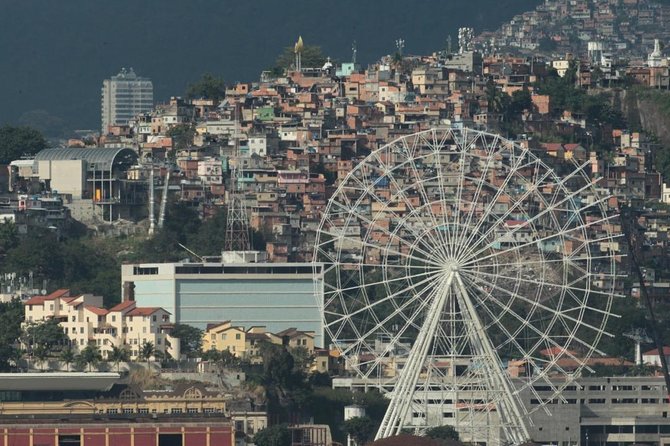
The VLT, Rio’s light rail, links the historic center with the revitalized port area. Riding it is part of the experience, not just a way to save walking time.
You get to see how central Rio connects its older districts with the newer museums and public spaces around Porto Maravilha. The movement between neighborhoods gives the tour a natural rhythm: historic streets, formal architecture, public transit, then large outdoor murals beside modern cultural buildings.
This also makes the tour more active than a standard walking route. You need to follow the guide, board the right transport, and be comfortable changing from walking to transit. The tradeoff is worthwhile for many people because you cover more ground in three hours.
The VLT portion may be less comfortable for anyone who wants a slow, uninterrupted art walk. Transit introduces waiting, boarding, and possible crowding. But it gives you a more ordinary view of Rio and helps you understand the city as residents use it.
Porto Maravilha and the Ethnicities mural
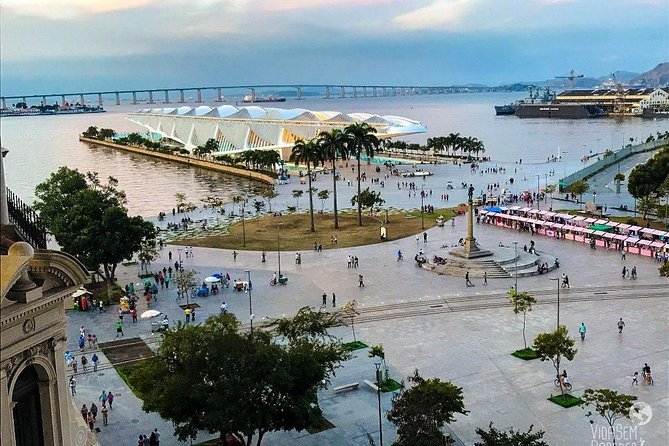
The strongest visual finish comes in Porto Maravilha. This former port area now includes major museums, open public spaces, and large pieces of public art.
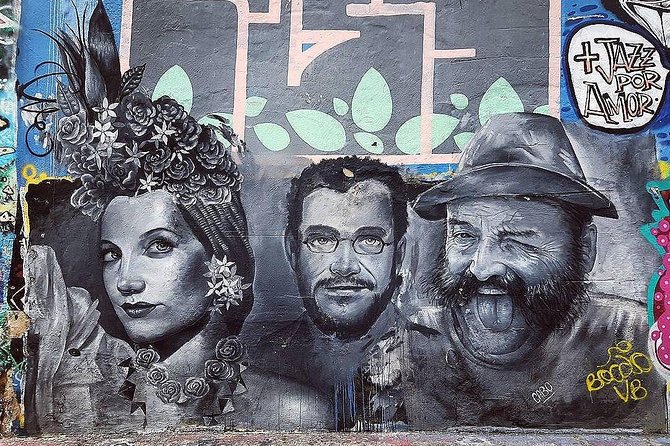
The Ethnicities mural is the tour’s centerpiece. It is described as the largest graffiti mural in the world, and its scale is difficult to grasp from a single photograph. You need to stand near it and look across its length. Wellington explains the figures and messages, giving the mural a cultural and political frame.
The work is especially meaningful beside the port district’s history. Porto Maravilha is not simply a modern redevelopment project. It sits near Little Africa and places tied to the arrival of enslaved Africans in Brazil. That connection gives the final stop more substance than a quick photo opportunity.
You are also near the Museum of Tomorrow and the Museum of Rio Art. The tour does not list admission to either museum, and the stops are outdoor visits rather than museum tours. Still, their striking buildings help show how Rio mixes contemporary design with older neighborhoods and public art.
The final stop lasts about an hour, making it the most generous part of the route. That time allows for the mural, explanations, photographs, and a look at the surrounding district. If you have extra time afterward, you can continue exploring the museums independently, subject to opening hours and admission.
What Wellington adds beyond the artwork
The most valuable part of this tour is the interpretation. Wellington does not limit the discussion to names, dates, and artists. He connects the murals with daily life in Rio, social questions, politics, Carnival, samba schools, and the city’s past.
That wider view suits you if you want to understand why a work appears where it does. It also helps if you are new to Brazilian history. The art becomes an approachable way into difficult subjects, including slavery, race, public memory, and inequality.
The experience can also be adjusted to your interests. A solo participant has taken the tour alone, and small private groups have been able to ask for more attention to Little Africa. You should discuss your priorities with Wellington early, especially if Afro-Brazilian history or Carnival matters more to you than architecture.
The guide’s personal connection to Rio is another strength. His explanations include local stories and practical suggestions, including places to eat after the tour. One group finished at a local restaurant after Wellington pointed out favorite places, though food is not part of the tour itself.
Do not expect a lecture delivered from one spot. The experience works through conversation while you walk and ride. That makes it lively, but it also means the amount of detail can depend on your questions and the time available.
Walking, weather, and the right level of comfort
The route is described as suitable for most people, and no special physical ability is listed. Still, you should be comfortable walking through central Rio for several hours, including time between public transport stops and art sites.
Wear shoes suited to pavement and bring water. The walk is generally easy, but three hours of movement can feel long in Rio’s heat. The tour requires good weather, so rain can affect the schedule.
A private tour is especially helpful for families, solo visitors, and friends who prefer a flexible conversation. You can ask for explanations to be repeated, practice Portuguese, or spend a little longer on a mural that catches your attention.
If you want a quiet, highly organized sightseeing trip, the city transit and walking may feel less polished. If you want local texture, the same features are the reason to book. You see Rio in motion, not only through its most photographed views.
Is $68.61 a fair price?
At $68.61 per person, this is not the cheapest way to see central Rio. But the price needs to be judged against the private format, the three-hour duration, the guide’s interpretation, and the range of districts covered.
You are paying for more than access to free public art. The murals themselves do not require admission, and the named stops have free entry. The value comes from connecting them into a meaningful route, handling the transitions between neighborhoods, and explaining what you are seeing.
For one person or a small group, the price can make sense because you receive direct attention. It is also a useful first or second day activity, giving you historical and practical context for the rest of your time in Rio.
The value is weaker if you only want photographs of Selarón Steps and the main mural. You could see individual sights independently. The tour earns its price when you care about the stories, the public transport experience, the port area, and the links between art and culture.
Free cancellation is available if you cancel at least 24 hours before the start time. Changes made inside that window are not accepted, and poor weather may lead to a new date or a full refund.
Who should book this Rio street art tour?
I would choose this experience if you want a cultural introduction to central Rio rather than another beach-focused outing. It suits art lovers, first-time visitors, solo explorers, families, and anyone interested in Afro-Brazilian culture or Carnival.
It is also a good choice if you like learning through neighborhoods. The route gives you architecture, transit, public squares, a famous staircase, museums from the outside, and huge murals in one compact outing.
I would think twice if you dislike walking, public transportation, heat, or a route that crosses several parts of the city. You may also want a separate museum visit if you prefer indoor collections and long, quiet stops.
For the best experience, wear comfortable shoes, bring water, ask Wellington about the current emphasis on Little Africa, and confirm transit ticket arrangements. If you want an art tour that also explains how Rio remembers, argues, celebrates, and changes, this is a strong pick.
FAQ
Where does the Rio Street Art Tour start?
The tour starts at the Municipal Theater of Rio de Janeiro, at Praça Floriano, in Centro, Rio de Janeiro.
Where does the tour finish?
The experience ends in a different location from the meeting point, in the Porto Maravilha area near the major murals and museums.
How long does the tour last?
The tour lasts approximately three hours.
What places are included?
The route includes Cinelândia, Escadaria Selarón, Boulevard Olímpico, Porto Maravilha, the Ethnicities mural, and the area near the Museum of Tomorrow.
Does the tour use public transportation?
Yes. The route uses the subway and the VLT, as well as walking between locations.
Is this a private tour?
Yes. Only your group participates in the activity.
Can one person book the experience?
Yes. Solo participants can take the private tour.
Does the price include admission tickets?
The listed stops have free admission. Public transportation is used during the route, so confirm before departure how transit tickets are handled.
What happens if the weather is poor?
The experience requires good weather. If it is canceled because of poor weather, you can receive a different date or a full refund.
Freshly painted around the world
- Xochimilco floating gardens, Coyoacan and UNAM murals★ 4.0 · 6 reviews
- Your Own Belgrade: Street Art and Hidden Gems Walking Tour★ 5.0 · 2 reviews
- Wynwood Walls Street Art & Neighborhood Walking Tour★ 4.9 · 9 reviews
- Vancouver: Street Art & Craft Beer Walking Tour with Tasting★ 4.8 · 14 reviews
- Vancouver: Street Art & Craft Coffee Walking Tour w/ Tasting★ 4.8 · 11 reviews
- Zagreb Street Art Private Walking Tour with a Local Artist★ 5.0 · 12 reviews
- Urban Canvas: Osaka Street Art Bike Tour★ 5.0 · 10 reviews
- UNAM: Murals & Revolution★ 4.9 · 8 reviews
Brazil Street Art Tours, compared.
São Paulo: Bar and Street Art Crawl with Local Guide
Read our review →

Private Street Art Tour of São Paulo with Batman´s Alley Visit
Read our review →
Sao Paulo, Pinheiros – Food & Graffiti Tour | in English
Read our review →Browse the lists this tour appears in