
Review · MADRID
Madrid: Hidden Street Art Tour
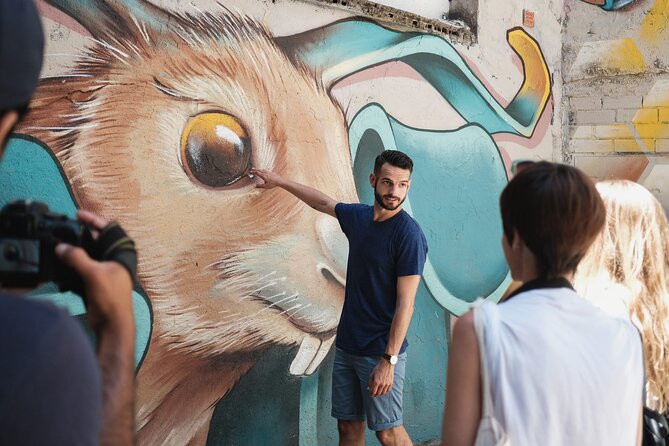
Lavapiés is the real star of this two-hour walk. You move through one of Madrid’s most colorful neighborhoods, spotting huge wall paintings, tiny ceramic details, tags, paste-ups, and urban sculpture that you could easily pass without noticing. Guides such as Roberto explain who made the work, what it means, and how street art fits into local life.
I like the small group of no more than 10 because it keeps the walk relaxed and makes it easier to ask questions. I also like the stop at a local gallery, which takes the tour beyond public walls and gives you a chance to meet artists or see their work up close. The main consideration is that this is a walking tour in an active neighborhood, so the amount and condition of art can change over time.
Key points at a glance
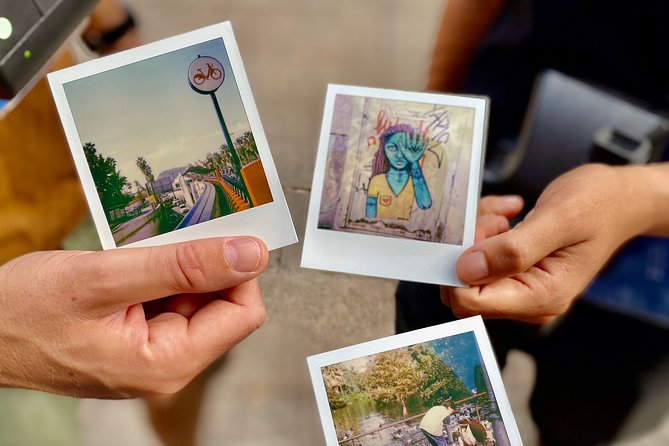
- Lavapiés is the main attraction: You see Madrid away from the grand museum circuit, in a neighborhood known for its mixed cultures and street art.
- The art comes in many sizes: Expect large façade murals alongside tags, paste-ups, ceramic work, and tiny details.
- Guides bring an artist’s eye: Guides are artists or art historians, with Roberto singled out by name for his clear explanations and friendly manner.
- The pace is manageable: The walk lasts two hours and includes time to stop, look up, and discuss the work.
- A gallery visit rounds things off: You end at a local art space rather than simply finishing on a street corner.
- Good value for art-minded visitors: At $33 per person, the cost is reasonable if you want context, not just a list of photo stops.
Why Lavapiés makes a better street art setting than a standard city tour
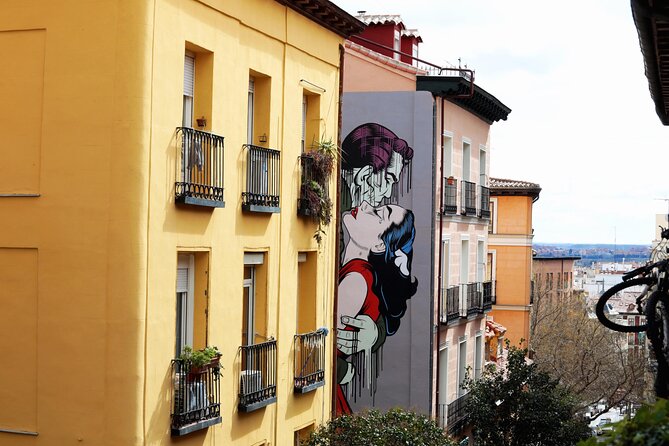
Madrid is often introduced through the Prado, the Royal Palace, grand boulevards, and elegant plazas. Those places matter, but Lavapiés shows you another side of the city. Its streets have an everyday, lived-in feel, and the art appears on walls, shutters, corners, shopfronts, and less obvious surfaces.
That setting matters. Street art is not displayed behind glass or arranged in a quiet gallery. It shares space with cafés, markets, apartment buildings, local businesses, and people going about their day. You get a better sense of how urban art works when you see it in the neighborhood that supports it.
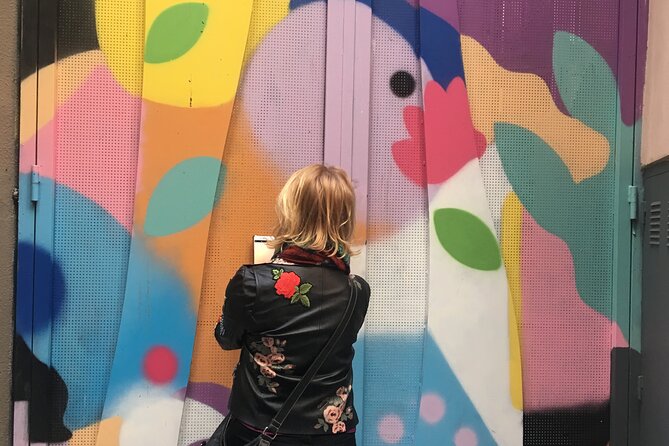
The tour is not just a hunt for large murals. Those big pieces are part of the appeal, especially if you enjoy photography, but the guide also points out small marks that would mean little without explanation. You learn to distinguish a tag from a paste-up, recognize different approaches to graffiti, and notice how an image can refer to local culture, politics, or community life.
That makes the walk useful even after it ends. Once you know what to look for, Madrid’s walls become easier to read. You may start noticing layers of paint, repeated symbols, ceramic additions, and hand-drawn details throughout the city.
More Street Art Tours around Spain:
- Barcelona Street Art and Graffitti Bicycle Tour
★ 5.0 · 361 reviews - Madrid: Street Art Tour with Local Graffiti Hunter
★ 4.8 · 270 reviews - Street Art Guided Tour in Madrid
★ 5.0 · 175 reviews
Meeting at Portomarín and getting your bearings
The meeting point is in front of the Portomarín restaurant. If you arrive early, you can stop inside for coffee or a refreshment, which is a practical touch if you are coming from another part of Madrid.
The tour begins on foot, so wear comfortable shoes and arrive ready to walk through ordinary city streets rather than a purpose-built attraction. The route is listed as wheelchair accessible, though street art walks naturally involve pavement, crossings, and changing street conditions. If you use a wheelchair, it is sensible to confirm current route details before booking.
The group is capped at 10 participants. That is small enough for a low-key walk and gives you a better chance to hear the guide in a narrow street or pause around a busy wall. It also makes the gallery visit feel less like a large organized outing.
The tour is offered in English with a live guide. Roberto has led the walk, and other guides are artists or art historians. That background is important here because the guide needs to do more than point at a painted wall. The best part of the experience is learning how to look.
Calle de Argumosa: entering the neighborhood on foot
The route includes a walk along Calle de Argumosa, one of the streets that helps you get a feel for Lavapiés before the art becomes the main focus. The walk is listed as about 10 minutes, though the exact pace depends on the group and the number of places the guide stops to discuss.
This is a useful opening because you are not dropped straight into a checklist of murals. You begin to see how the neighborhood is arranged and how public art fits into its daily rhythm. The guide can explain the area’s connection to Madrid’s creative scene while giving you the basic vocabulary for the rest of the walk.
Do not expect every piece to be polished or permanent. Street art changes. Paint fades, walls are covered, and new work appears. That is part of the point, but it also means the exact selection may vary from one date to another.
Passing the Reina Sofía and comparing street art with museum art
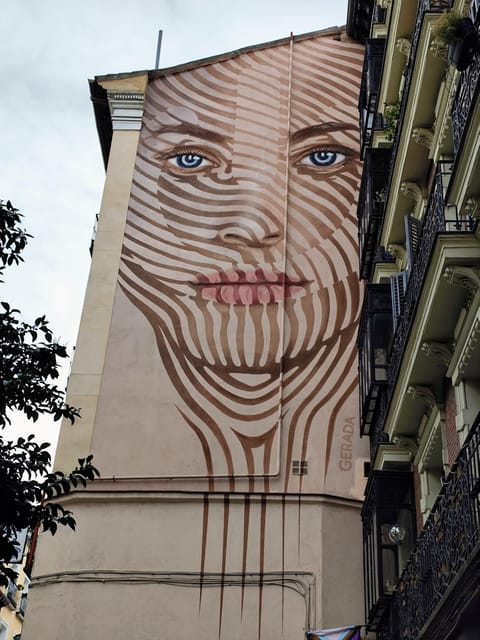
The route passes by the Museo Nacional Centro de Arte Reina Sofía for about five minutes. You do not spend the main part of the visit inside the museum, so this is not a substitute for seeing its collection.
Still, the location creates an interesting contrast. The Reina Sofía represents Madrid’s formal art world, while Lavapiés gives you art made for public streets and shared neighborhood spaces. A guide with an art background can help you think about the difference between a work made for a museum and one designed for a wall, a shutter, or an unexpected corner.
This stop is brief, so treat it as context rather than a museum visit. If you have not seen the Reina Sofía, leave time on another day for it. The street art walk works best when you see it as a separate experience, not as a compressed art museum tour.
Same walls, a different way in:
- Barcelona Street Art Tour with Exclusive Artist Studios Visit
★ 5.0 · 152 reviews - Raval Street Art and Graffiti Guided Tour in Barcelona
★ 5.0 · 81 reviews - Barcelona: Raval Street Art and Graffiti Walking Tour
★ 4.9 · 60 reviews - Barcelona: 3.5-Hour Street Art Tour by Bamboo Bike
★ 5.0 · 56 reviews
Mercado Antón Martín and the everyday side of Madrid
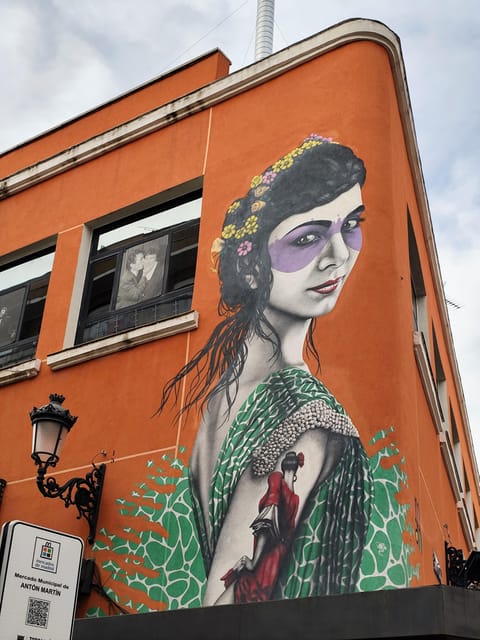
The itinerary includes a 10-minute visit and sightseeing stop at Mercado Antón Martín. Markets are useful places to understand a neighborhood because they show you local life in practical form. Here, the market adds an everyday setting to a route otherwise focused on art.
The stop also helps explain why Lavapiés feels different from Madrid’s main tourist corridors. You are not only looking at walls. You are moving through a place where people shop, eat, work, and meet. That gives the art a social setting instead of turning it into a series of disconnected photo backdrops.
Ten minutes is enough for an introduction but not a full market visit. If you want to browse every stall or stop for a meal, plan to return separately. The tour’s aim is to connect the market with the neighborhood and its public art, not to provide a market tasting experience.
Lola Gil’s ceramic trompe-l’oeil
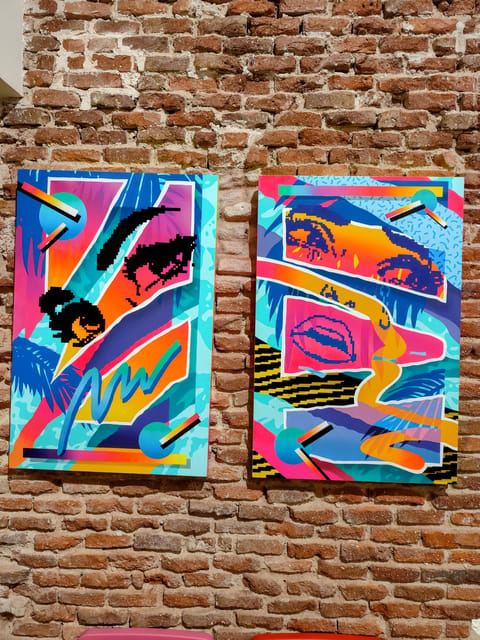
One of the named stops is Lola Gil’s Trampantojo cerámico, a ceramic trompe-l’oeil. The title points to an illusion or visual trick made with ceramic elements, offering a different experience from a painted mural.
This stop is exactly why a guide helps. Large murals announce themselves, but a ceramic work may be less obvious until someone shows you where to look and explains how it interacts with the building or street. It also broadens your idea of street art. The neighborhood’s creative work is not limited to spray paint and giant lettering.
Allow time to examine the details rather than taking one quick photo. Small pieces often reward a slower look, especially when the guide explains the artist’s method or the cultural reference behind the design.
Calle de Embajadores and the larger murals
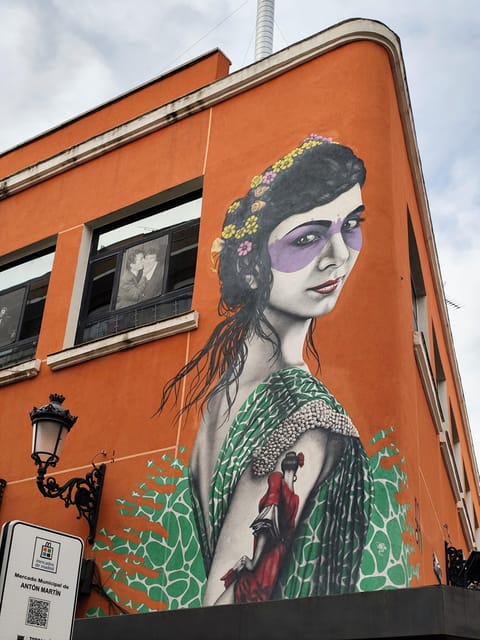
The route continues through Calle de Embajadores, with about 20 minutes of walking and sightseeing. This is where the scale of the neighborhood’s art becomes more apparent. You can expect a mix of major murals and smaller work, with the guide selecting pieces that show different styles and ideas.
The large walls are the most obvious photo opportunities. They can dominate an entire façade and give you the dramatic images many people hope to bring home. But I would not judge the tour only by its biggest mural. The smaller work often explains how the local scene functions, from quick tags to pasted images and details placed where only a careful observer will notice them.
You also learn about artists active in Madrid, what their work can symbolize, and the references behind particular images. That context keeps the walk from becoming a simple search for attractive backdrops. It helps you ask better questions: Who made this? Why here? Was it planned, permitted, temporary, or added quickly? How does it relate to the surrounding street?
The guide may also explain different graffiti styles and types of street art, including tags, paste-ups, murals, and urban sculpture. If you are new to the subject, this vocabulary is one of the most useful parts of the outing.
Ending at a neighborhood gallery
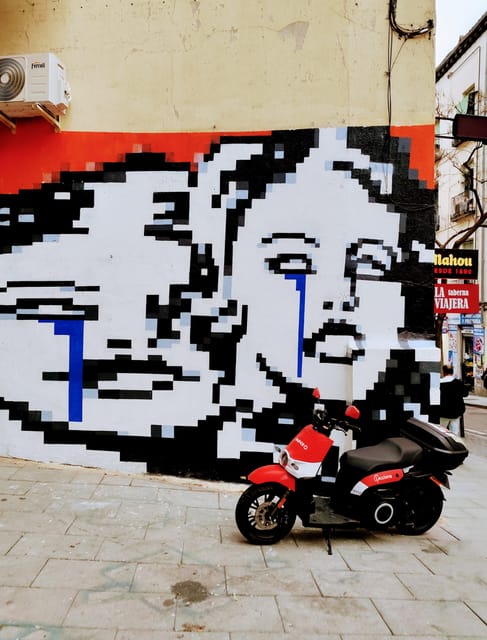
The tour ends with a visit to a local gallery in Lavapiés. This is a smart finish because it shifts the experience from public art to a more controlled space without losing the neighborhood connection.
At the gallery, you may have the chance to meet local artists and see work that is available to buy. The purchase is not included, and you should not feel pressure to leave with a piece. The value of this stop is the chance to connect street work with artists who also create in gallery settings.
For some people, this will be the highlight. It gives you a place to ask more personal questions and see how a local art scene extends beyond walls in the street. For others, the gallery may feel less exciting than the large outdoor murals. That depends on your interest in contemporary art and whether you enjoy browsing work for sale.
How the guide shapes the experience
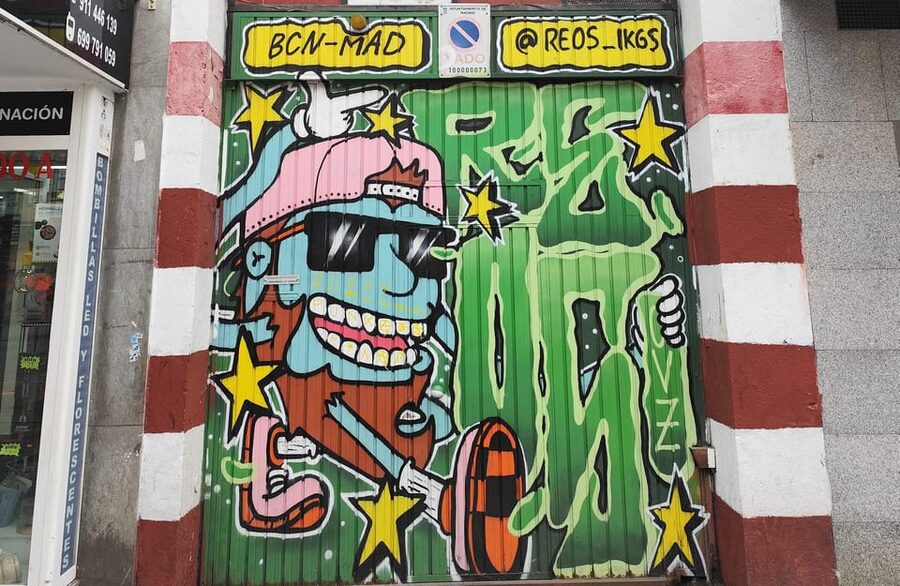
A street art tour rises or falls on the guide. Without context, you can walk through Lavapiés and see plenty of color, but you may miss the small work and fail to understand why certain pieces matter.
The guides here are artists or art historians. Roberto has been praised for showing both beautiful artwork and the history of the area, with a style that feels like being shown around by a friend. Another guide handled a hot afternoon at the right pace while explaining art, artists, culture, and local history.
That tells you what to expect from a good outing: not a rushed list of names, but a conversation as you walk. The guide should help you notice things, explain references, and leave room for questions. The small group supports that style.
The experience is in English, so it suits you best if you want a spoken explanation rather than a self-guided map. If your interest is only in taking photographs, you may find the $33 price harder to justify. If you want to understand the work, the fee makes more sense.
Price, timing, and who gets the most from it
At $33 per person for two hours, this is fairly priced for a small-group walk led by a specialist guide. You are paying for local knowledge, a selected route, interpretation, and the gallery stop. You are not paying for transport, a meal, or entry to a major museum.
I see the best value if you are new to Madrid’s street art or want an introduction that is more focused than wandering on your own. It also works well early in your stay. The guide can give you ideas for what to notice elsewhere in Madrid, and you can return to Lavapiés later for a slower look.
The tour suits:
- First-time visitors who want a break from Madrid’s main sights
- People interested in graffiti, public art, and contemporary culture
- Photographers looking for large murals and unusual details
- Art students and museum fans who want to compare formal and street settings
- Visitors who prefer small groups and a relaxed walking pace
It may be less suitable if you want a seated activity, a food tour, or a long visit inside a museum. The route is also not built around one single famous artwork. Its appeal comes from the variety of work and the guide’s explanations.
You can cancel up to 24 hours before the start for a full refund, and you can reserve now and pay later. Those terms help if your Madrid plans are still changing. Starting times vary, so check availability for the date you want.
My call: book it if you want to see Madrid at street level
I would book this tour if you want more than a mural photo. The strongest reasons are the small group, the artist or art historian guides, the mix of huge and tiny pieces, and the local gallery finish.
Roberto’s friendly, clear approach is a good sign for anyone who wants history and culture explained without a lecture. The walk also keeps a sensible pace, which matters on a hot afternoon.
Skip it if you dislike walking, want a fixed collection of famous works, or prefer to explore without a guide. Street art changes, and some pieces may be temporary or less impressive in person than in a photograph. For most art-minded visitors, though, $33 buys a useful way to read Lavapiés, not just look at it.
FAQ
Where does the Madrid Hidden Street Art Tour meet?
The meeting point is in front of the Portomarín restaurant. You can stop there for a coffee or refreshment if you arrive early.
How long does the tour last?
The tour lasts two hours.
What language is the tour offered in?
The live guided tour is offered in English.
How large is the group?
The group is limited to 10 participants.
Is the tour wheelchair accessible?
Yes, the activity is listed as wheelchair accessible.
Does the tour visit a gallery?
Yes. The tour ends at a local art gallery in Lavapiés, where you may have a chance to meet local artists. Artwork you choose to buy is not included in the tour price.
Can I cancel for a full refund?
Yes. You can cancel up to 24 hours in advance for a full refund. You can also reserve now and pay later.
Freshly painted around Spain
- Small-Group Graffiti Tour and Workshop in El Carmen★ 5.0 · 2 reviews
- Bilbao Urban and Street Art Walking Tour★ 5.0 · 2 reviews
- Barcelona Street Art, Graffiti and Tapas Tour★ 4.0 · 5 reviews
- Salamanca: Private Guided Street Art Walking Tour★ 5.0 · 2 reviews
- Private Barcelona Street Art Tour★ 5.0 · 2 reviews
- Barcelona | StreetArt Bike Tour Moco Museum★ 4.6 · 13 reviews
- Málaga: Street Art Tour in the Soho District★ 5.0 · 4 reviews
- Madrid: Private Grafitis/Street Art Segway Tour 2h★ 4.5 · 2 reviews
Madrid Street Art Tours, compared.
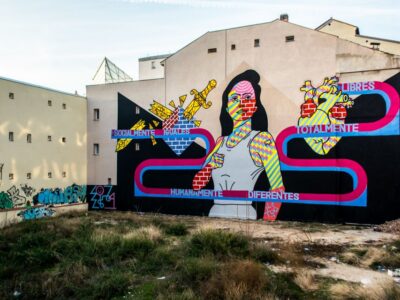
Madrid: Street Art Tour with Local Graffiti Hunter
Read our review →

Madrid Street Art Tour (Malasaña Chueca Gran Via & Lavapies)
Read our review →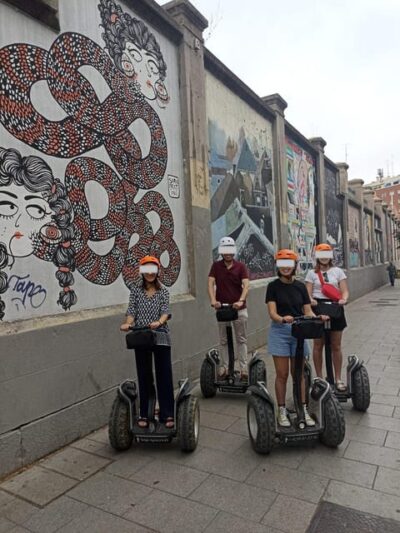
Madrid: Private Grafitis/Street Art Segway Tour 2h
Read our review →Browse the lists this tour appears in