
Review · MADRID
Madrid: Street Art Tour with Local Graffiti Hunter
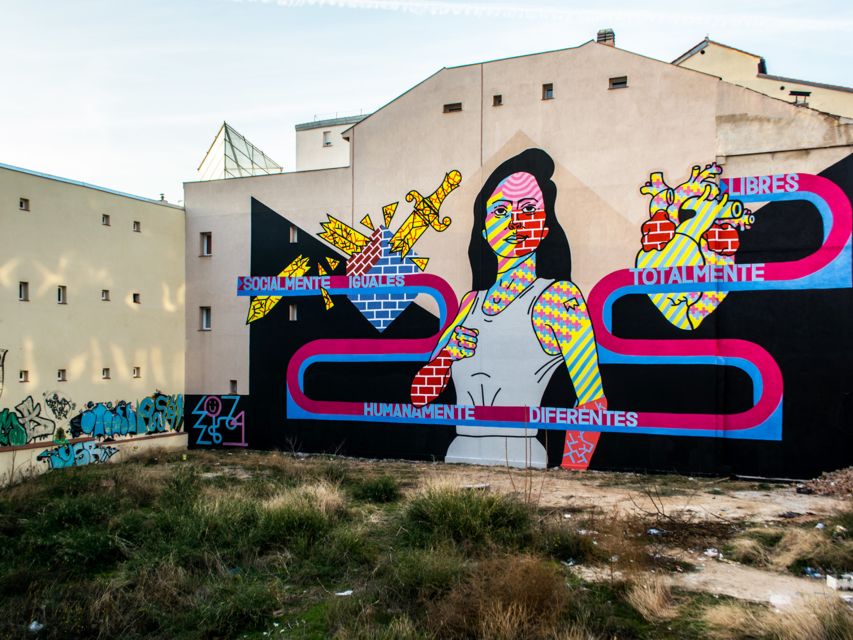
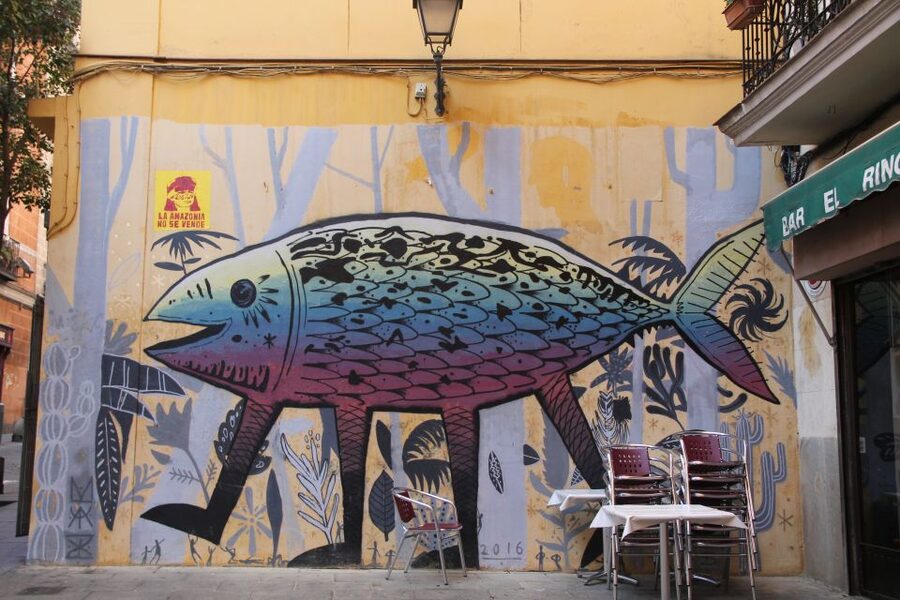
Madrid’s street art scene is not kept behind museum glass. It runs along walls, shutters, construction sites, and community spaces in Lavapiés, Embajadores, and La Latina. This two-hour walk gives you a local graffiti writer’s view of the art, with stops at La Tabacalera, Esta es una Plaza, Plaza del Sombrerete, and one of the largest murals in Madrid’s Center District.
I like two things right away: the guide brings first-hand street knowledge, and the walk gives you a reason to explore a part of Madrid beyond the usual central sights. Guides including Julien, Esther, Santiago, Javier, and Hector have been praised for clear English, humor, and lively explanations of technique, artists, and neighborhood life. The main consideration is that this is an outdoor walking tour, and rain does not cancel it.
Key points at a glance
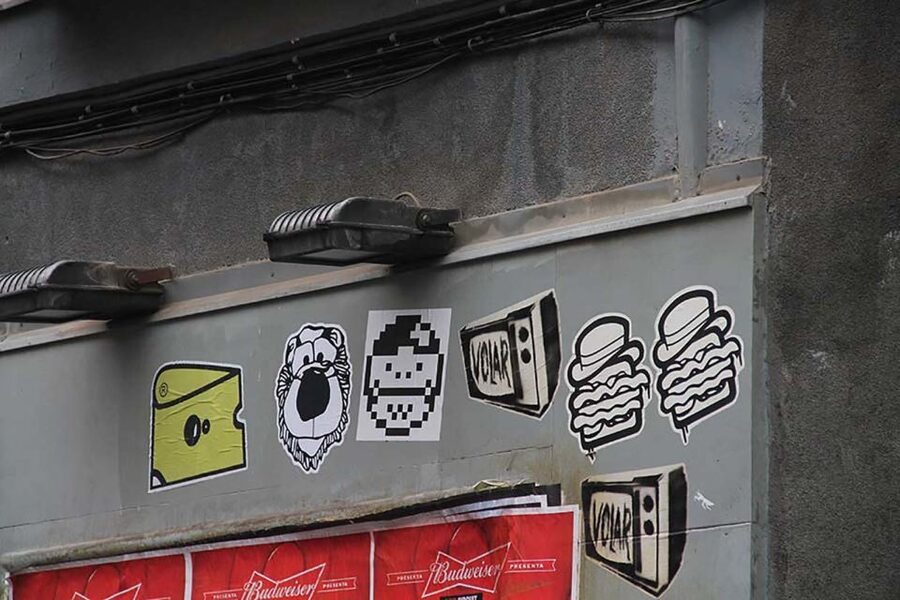
- La Tabacalera’s walls: See urban art around the former tobacco factory and hear about its workshops in photography, dance, yoga, cycling, longboarding, and more.
- A local artist’s viewpoint: The guide is a graffiti writer or street artist familiar with Madrid’s urban-art scene and local festivals.
- Lavapiés beyond the postcards: Walk through a multicultural neighborhood while learning how public art reflects local life and change.
- Small-group feel: The tour allows room for questions, discussion, and an unhurried look at individual pieces.
- A changing art collection: Murals, stencils, stickers, and painted walls can change, fade, or disappear over time.
- Good value at $29: Two hours of guided context costs less than many museum-led art experiences and includes a wider look at Madrid.
Why Lavapiés is the right place to start
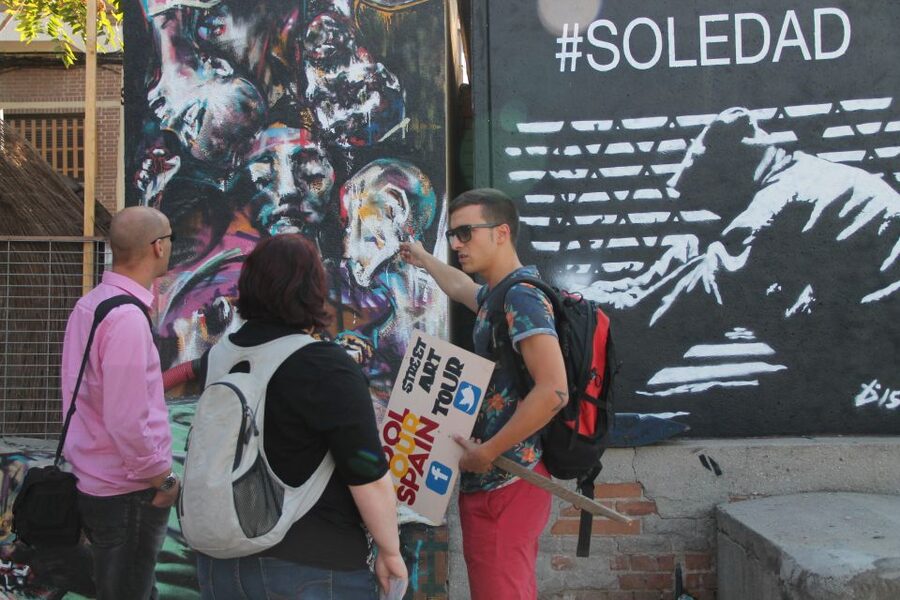
The meeting point is outside Teatro Valle-Inclán at Calle de Valencia, 1, close to Lavapiés Metro station. That location puts you beside one of Madrid’s most varied neighborhoods from the first step, rather than making you cross the city before the tour begins.
Lavapiés matters because the art is tied to the streets around it. You are not simply stopping for photographs of commissioned walls. You are walking through an area where public art, independent culture, community activity, and everyday city life sit close together.
Your guide explains the difference between graffiti, murals, stencils, stickers, and other forms of urban art. That basic framework helps you look more closely. A large painted wall may catch your eye first, but a small sticker or stencil can carry just as much meaning when you understand how it was made and where it appears.
The route also gives you a useful introduction to Madrid’s neighborhood history. Several people who took the walk praised guides such as Esther and Julian for connecting the artwork to Lavapiés itself. That balance is important. You get art instruction without losing sight of the streets, buildings, and communities around the work.
More Graffiti Tours in Spain
- Raval Street Art and Graffiti Guided Tour in Barcelona
★ 5.0 · 81 reviews - Barcelona: Raval Street Art and Graffiti Walking Tour
★ 4.9 · 60 reviews - Barcelona: Graffiti E-Scooter Tour
★ 4.4 · 9 reviews
Walking from Lavapiés toward Embajadores
The early part of the walk takes you through the streets of Lavapiés, with the guide pointing out work by local urban artists. This is where an artist-led tour earns its price. A general city guide can identify a mural, but a graffiti writer can explain choices of spray technique, placement, scale, lettering, and surface.
Guides have also used questions and discussion to keep the walk active. That suits people who are new to street art because you do not need a background in art to take part. If you already follow graffiti, you get a chance to ask about artists, styles, and the difference between legal and unauthorized work.
The pace appears to be one of the tour’s strengths. It is a casual two-hour stroll rather than a race between photo stops. You have time to listen, look, and take pictures without feeling that every pause must end quickly.
The route continues along Calle Argumosa and Calle de Embajadores. These streets lead you into the Embajadores area and toward the former tobacco factory, while giving you a broader view of how street art appears across ordinary city blocks.
Bring comfortable shoes. The walk is only two hours, but you will be on your feet and moving through urban streets. The tour is listed as wheelchair accessible, though the experience still takes place outdoors across neighborhood streets and public spaces.
La Tabacalera and Madrid’s larger murals
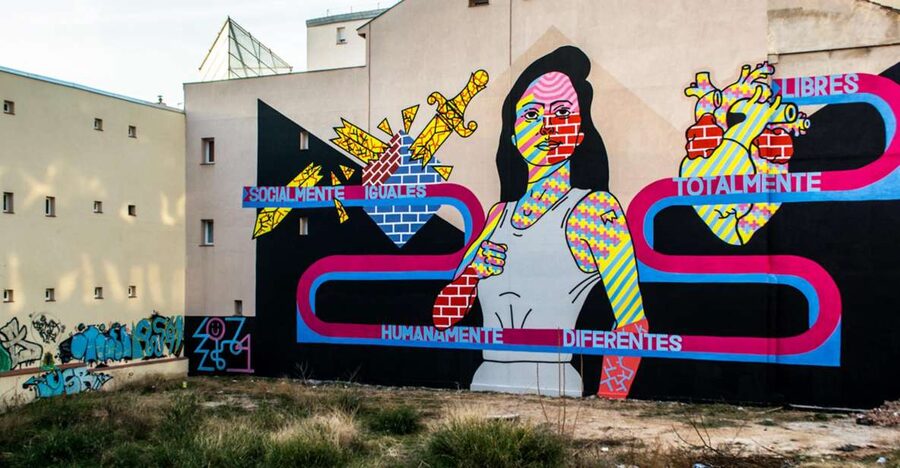
The former tobacco factory of La Tabacalera is one of the main stops. Its walls provide a strong contrast to the smaller pieces you may have seen earlier. Large-scale paintings are easier to read from a distance, and their size shows how public art can alter the feel of an entire block.
Your guide explains the role of La Tabacalera in Madrid’s street art scene and points out the work associated with urban-art festivals. The area is also linked with free workshops in photography, dance, yoga, cycling, longboarding, and other activities.
That detail makes the stop more than a mural photo opportunity. La Tabacalera represents a place where art and public participation overlap. You learn how a former industrial building can support creative activity while also seeing how its exterior walls become part of Madrid’s open-air art circuit.
The tour also offers the chance to see the biggest mural in Madrid’s Center District. The exact artwork on view can change, and street art is never as fixed as a museum collection. Paint fades, walls are repainted, and new pieces appear, so the guide’s current knowledge matters more here than a rigid list of permanent sights.
You may even encounter an artist at work. One tour group happened to see TeTous painting a new mural and briefly spoke with him. That kind of meeting cannot be promised, but it shows why a local guide can add something a self-guided walk may miss.
Esta es una Plaza and Plaza del Sombrerete
Esta es una Plaza gives the tour another useful shift in scale. The guide offers context about veteran artists and the work found in this community-oriented space. You see how street art can operate in a shared neighborhood setting rather than only on major walls.
The guide then introduces newer talent around Plaza del Sombrerete. Putting established artists and emerging names in the same walk helps you compare styles and approaches. You are encouraged to look at the art as an evolving scene, not as a finished collection with one official story.
The route through these spaces is also a good chance to notice small details. A mural may dominate one wall, while a stencil or sticker sits nearby at eye level. Your guide can explain why artists choose different tools and surfaces, and how those choices affect the message and lifespan of the work.
This is one reason I would not reduce the experience to a graffiti photo walk. The strongest part is the interpretation. You learn to ask who made the piece, why it appears there, who controls the wall, and how the neighborhood responds.
Same walls, a different way in:
- Barcelona Street Art and Graffitti Bicycle Tour
★ 5.0 · 361 reviews - Street Art Guided Tour in Madrid
★ 5.0 · 175 reviews - Barcelona Street Art Tour with Exclusive Artist Studios Visit
★ 5.0 · 152 reviews - Barcelona: 3.5-Hour Street Art Tour by Bamboo Bike
★ 5.0 · 56 reviews
The guides make the difference
The tour uses different English-speaking guides, so your exact experience depends on who leads it. Names praised in the supplied feedback include Esther, Julian, Santiago, Javier, Hector, Ana, Mario, Stefan, Yago, Diego, and Patricia.
The repeated pattern is clear: the best guides combine practical art knowledge with an easy way of speaking. Julian was praised for fluent English and a clear voice, useful when you are taking photos a short distance away. Esther was singled out for linking graffiti technique with local history and for asking questions along the way.
Hector and Stefan were both described as practicing artists, which gave their explanations a first-hand quality. Javier was praised for sharing contacts, stories, and enthusiasm. Santiago was noted for making the walk interactive and for offering a warm, personable style.
That does not mean every guide has the same personality. It does mean the tour is built around someone who understands the subject from inside Madrid’s art scene. For you, that can turn a simple wall into a discussion about technique, ethics, ownership, festivals, and community use.
The guides also appear to take care with the neighborhood itself. One account praised the way the group was kept from blocking traffic or disturbing residents. That is worth noting. Street art tours can easily become noisy photo gatherings, but a responsible approach makes the experience more respectful.
What the two hours feel like
The tour lasts two hours, which is a useful length for a first look at Madrid’s urban art. You get enough time to cover several districts and styles without giving up a full morning or afternoon.
The route is described as a stroll, not a strenuous hike. Still, you should wear comfortable shoes and expect to spend the full time outdoors. The activity is available in English, with a live guide rather than an audio recording or printed route.
A small group can make a real difference here. Several people valued having time for questions and discussion, and one praised the personal feel of a smaller group. Group size can vary, so you should not assume a private tour, but the format is intended to support conversation.
There are no beverages included. Bring what you need for the walk, especially in warm weather. The meeting point is easy to reach by Metro, with Lavapiés the nearest station.
Rain deserves special attention. The tour does not cancel because of rain, and one person described rescheduling around a poor forecast as difficult. If wet weather would spoil your afternoon, check the forecast before booking and use the free cancellation window if your plans allow.
Is $29 a fair price?
At $29 per person, this tour offers good value if you want more than a list of wall locations. The fee pays for two hours of local interpretation across three central neighborhoods, not simply a short stop at one famous mural.
You also avoid the usual cost of a museum ticket while seeing art in places where people live, work, and gather. That does not make it a replacement for the Prado or Thyssen-Bornemisza. It complements those museums by showing you how artistic expression works outside formal institutions.
The value is strongest for first-time visitors to Madrid who might otherwise stay around the Royal Palace, Plaza Mayor, and major museums. The route introduces streets you may not have chosen on your own, while the guide supplies a reason to notice them.
For dedicated street-art fans, the price is also reasonable because of the insider angle. You can ask about styles, artists, legal walls, and the role of festivals such as CALLE Lavapiés, Urvanity, and Muros Tabacalera.
The main limit is the temporary nature of the subject. The art you see is not guaranteed to remain, and there is no promise of meeting an artist or seeing every major work. You are paying for a current walk and informed guidance, not a permanent collection.
Who should book this Madrid walk?
I would choose this tour if you want to see Madrid through public art, or if you have already visited the major museums and want a different side of the city. It also suits families with older children and teenagers, especially those interested in drawing, design, photography, or questions about public space.
The walk works well for people who are new to graffiti because the guide explains the basics without assuming prior knowledge. It also has enough detail for art fans, particularly when the guide is a practicing artist such as Hector or Stefan.
You may want another activity if you dislike outdoor walks, need a guaranteed fixed collection, or prefer a tour conducted in a language other than English. The rain policy is another practical concern. This is a neighborhood walk, so weather and changing walls are part of the deal.
Plan to arrive at Teatro Valle-Inclán with comfortable shoes and an ID card or passport. The nearest Metro is Lavapiés, and beverages are not included. The tour offers free cancellation up to 24 hours before the start and a reserve-now, pay-later option, which helps if your Madrid schedule is still moving.
Should you book it?
Yes, if you want a smart, affordable introduction to Madrid’s street art and a closer look at Lavapiés, Embajadores, and La Latina. The strongest reasons are the artist-led perspective, the mix of major murals and tiny pieces, and the way the walk connects art with neighborhood life.
Book it early in your Madrid stay if possible. The route can help you get your bearings in Lavapiés and point you toward places you may want to revisit. Just remember that this is a live outdoor scene, not a fixed exhibit. Go with comfortable shoes, accept a little weather risk, and you will get a more useful view of Madrid than a simple list of Instagram stops.
FAQ
Where does the Madrid street art tour meet?
The meeting point is at the entrance of Teatro Valle-Inclán, Calle de Valencia, 1, 28012 Madrid, Spain.
Which Metro station is closest to the meeting point?
Lavapiés is the nearest Metro station.
How long does the tour last?
The walking tour lasts two hours.
What language is the tour conducted in?
The tour is conducted in English with a live English-speaking guide.
Which Madrid neighborhoods does the tour visit?
The route covers Lavapiés, Embajadores, and La Latina.
What major street art locations are included?
The tour includes the walls of the former tobacco factory of La Tabacalera, Esta es una Plaza, Plaza del Sombrerete, and the chance to see Madrid’s largest mural in the Center District.
Is the tour wheelchair accessible?
Yes, the activity is listed as wheelchair accessible.
What should I bring?
Bring a passport or ID card and comfortable shoes.
Are drinks included?
No. Beverages are not included.
Can I cancel the booking?
Yes. You can cancel up to 24 hours in advance for a full refund. A reserve-now, pay-later option is also available.
Freshly painted around Spain
- Small-Group Graffiti Tour and Workshop in El Carmen★ 5.0 · 2 reviews
- Bilbao Urban and Street Art Walking Tour★ 5.0 · 2 reviews
- Barcelona Street Art, Graffiti and Tapas Tour★ 4.0 · 5 reviews
- Salamanca: Private Guided Street Art Walking Tour★ 5.0 · 2 reviews
- Private Barcelona Street Art Tour★ 5.0 · 2 reviews
- Barcelona | StreetArt Bike Tour Moco Museum★ 4.6 · 13 reviews
- Málaga: Street Art Tour in the Soho District★ 5.0 · 4 reviews
- Madrid: Private Grafitis/Street Art Segway Tour 2h★ 4.5 · 2 reviews
Madrid Street Art Tours, compared.


Madrid Street Art Tour (Malasaña Chueca Gran Via & Lavapies)
Read our review →
Madrid: Private Grafitis/Street Art Segway Tour 2h
Read our review →Browse the lists this tour appears in