
Review · MADRID
Madrid: Street Art Bike Tour
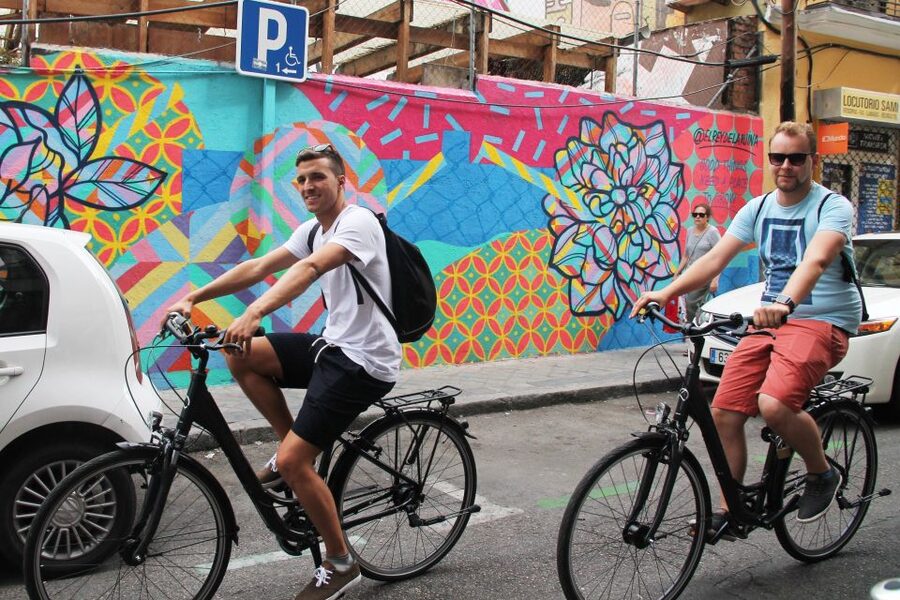
Madrid’s street art tells the story of the city in quick, colorful bursts, and this bike tour connects the pieces into a clear route. You’ll see Muelle’s preserved 1989 tag, early work by Boa Mistura, and festival art in Malasaña before pedaling into community-run spaces in Lavapiés. I like the local focus and the chance to see neighborhoods that are easy to miss on a standard sightseeing route.
I also like that a working graffiti artist leads the outing and explains both the ideas and the techniques behind the paintings, tags, shutters, and public installations. The main caution is the cycling: Madrid traffic and one uphill section can challenge anyone who is not comfortable riding in a city.
- Muelle’s 1989 tag: See a surviving mark by the young artist who helped start Madrid’s graffiti movement.
- Festival art in Malasaña: Ride through works connected with Pinta Malasaña and its colorful street installations.
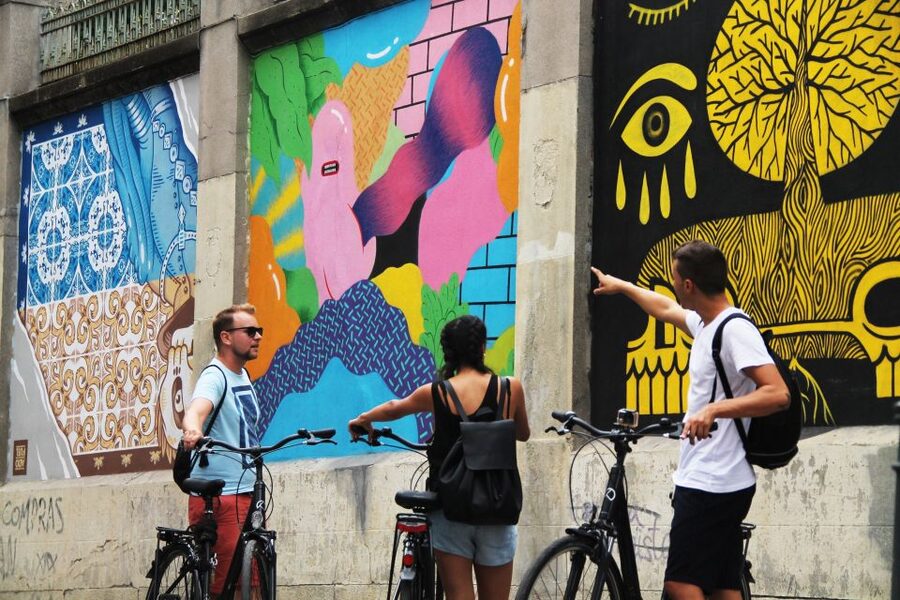
- Local artist guide: Learn how artists work on walls, metal shutters, and other city surfaces.
- Community spaces in Lavapiés: Visit Solar Antonio Grilo and Esto es una Plaza, two former vacant sites turned into neighborhood projects.
- Cycling level: The route is described as medium difficulty, with traffic and one uphill stretch to consider.
- Useful inclusions: Bike, helmet, lock, map, restroom stop, and live guiding in English or Spanish are covered.
Madrid’s graffiti story begins with Muelle
The tour starts at the entrance to the Carrefour Express at C/Montera 32, close to Gran Vía and Sol. This is a central spot, but it is also busy, so give yourself time to find the small supermarket entrance and arrive ready to listen before you get on the bike.
The first part sets up Madrid’s street art story. You learn how graffiti moved from private marks and personal tags into a larger cultural movement, and how artists use walls, metal shutters, and other ordinary city surfaces as their working material.
The key early stop is a preserved tag by Muelle. His name refers to a spring, and he is regarded as a pioneer of Madrid graffiti. The tag dates to 1989, making it more than a piece of decoration. It is a small surviving record of a young artist helping shape a new culture in the city.
I like this beginning because it gives the later murals some context. Without it, you might simply photograph colorful walls. With it, you can see the difference between an early personal tag, a planned festival project, and a community artwork.
Getting on the bike and heading toward Alonso Martínez
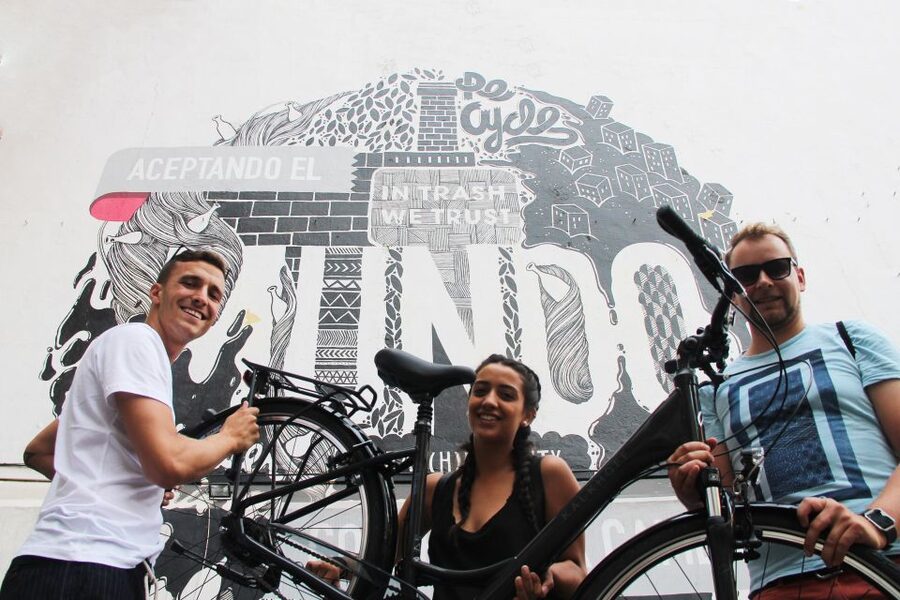
Before riding, the guide explains basic bike safety. You receive a bicycle, helmet, and lock, along with a Madrid city map. There is also a restroom break included, a useful detail on a ride lasting roughly two and a half hours.
The published duration is 2.5 hours, while the practical information describes the activity as a three-hour outing. I would allow close to three hours from start to finish, especially if the guide spends extra time explaining a work or if the group needs to move carefully through traffic.
The route heads toward Alonso Martínez, where you see the first piece created by Boa Mistura. This Madrid-born crew grew up on the outskirts of the city and later worked on projects around the world. The stop gives you a look at a more organized design approach, compared with the individual tag by Muelle.
That contrast is one of the tour’s strengths. You are not being shown one single type of street art. You move from early graffiti culture to a professional creative collective, then on to festival commissions and neighborhood projects.
More Street Art Bike Tours in Spain:
- Barcelona Street Art and Graffitti Bicycle Tour
★ 5.0 · 361 reviews - Valencia: Street Art Tour on Bicycle, E-Bike or E-Step
★ 4.8 · 31 reviews - Bilbao: Street Art Small Group E-Bike Tour
★ 4.8 · 23 reviews
Pinta Malasaña and the streets around Plaza Dos de Mayo
From Alonso Martínez, the ride continues toward Malasaña, one of Madrid’s trendiest neighborhoods. The route includes work by Spanish artists connected with the 2017 edition of Pinta Malasaña, a festival that fills the area with new art during April.
The festival setting matters. Instead of seeing isolated murals with no connection to local life, you learn how a neighborhood-wide event can change the look of streets, walls, and small urban details. The work is tied to a particular moment, so the exact pieces available can change over time. That is part of the nature of public art.
Plaza Dos de Mayo is the center of this section. One of the more unusual sights is Bolardo Voy, Bolardo Vengo, a display that turns traffic bollards into colorful art. It is playful, compact, and easy to overlook if you are walking quickly through the neighborhood.
A bike is handy here because the tour can link several works without asking you to cover the full distance on foot. At the same time, Malasaña streets can be active and tight. You should be comfortable stopping, starting, and keeping your attention on the road rather than looking only at the walls.
Lavapiés community art at Solar Antonio Grilo
The tour then reaches Solar Antonio Grilo, one of the former unused spaces that became a local community project. The site combines urban gardening and street art, showing how residents can give an abandoned place a new purpose.
This is where the experience moves beyond a standard mural hunt. You are not only looking at finished paintings. You are seeing how public art can share space with gardens, neighborhood activity, and local efforts to manage a place. The project is presented as an example other communities have studied when thinking about hybrid economic and social systems.
That may sound more serious than a bike ride, but it adds useful depth. You see street art as part of city life rather than a decoration placed for visitors. If you care about how neighborhoods shape and reuse public space, this will likely be one of the more memorable stops.
The tour also points out work by artists including El Rey de la Ruina, Cassassola, Ze Carrión, and Por Favor. The range of names reinforces the main lesson: Madrid’s street art is made by many different hands, with different styles and reasons for working in public.
Esto es una Plaza and the biggest central mural
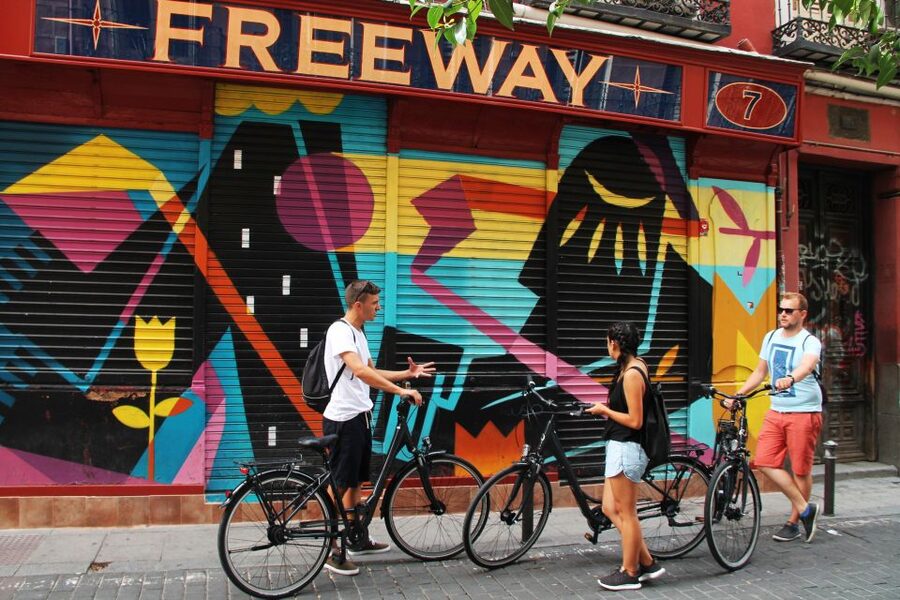
Another important stop is Esto es una Plaza, a community-created urban garden in the Lavapiés and Noviciado areas. Like Solar Antonio Grilo, it began as an abandoned place and became a shared neighborhood resource.
The two sites are valuable because they show a practical side of local culture. The art is connected to how people use the space. You can look at painted walls while also considering who maintains the garden, who gathers there, and how a neglected corner becomes useful again.
The route also includes the chance to see the biggest mural in Madrid’s Center District. The supplied details do not identify its exact location or dimensions, so I would treat this as a highlight rather than plan your independent sightseeing around a particular address.
The mix of large-scale work and small details keeps the ride interesting. A giant mural gives you a strong photographic stop, while tags, shutters, bollards, and garden walls reward closer attention.
More Street Art Tours around Spain:
- Madrid: Street Art Tour with Local Graffiti Hunter
★ 4.8 · 270 reviews - Street Art Guided Tour in Madrid
★ 5.0 · 175 reviews - Barcelona Street Art Tour with Exclusive Artist Studios Visit
★ 5.0 · 152 reviews - Raval Street Art and Graffiti Guided Tour in Barcelona
★ 5.0 · 81 reviews
What the artist guide adds
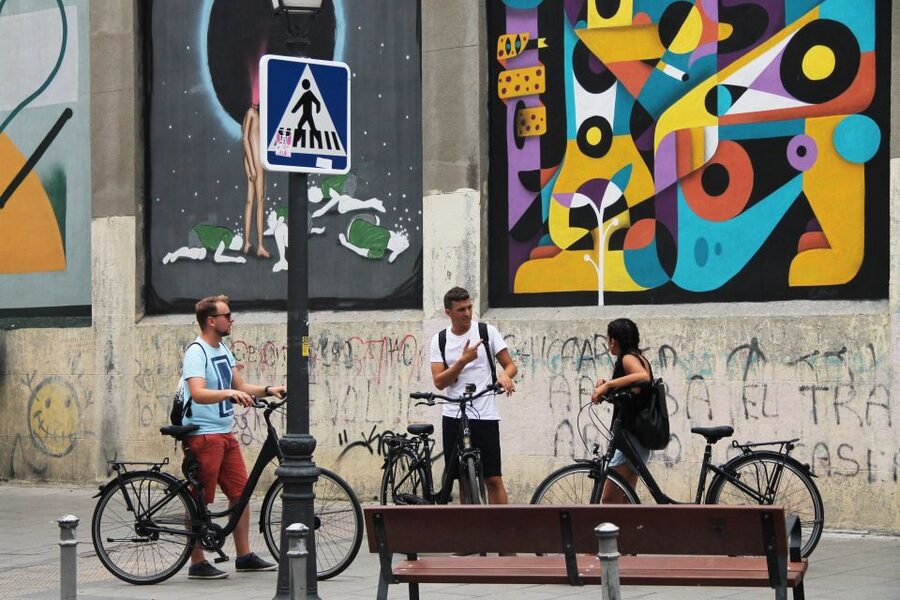
The guide is not simply there to lead the bikes. The tour is led by a local graffiti artist who explains the history of the movement and the methods artists use. That can include how they approach walls, shutters, and other pieces of the built environment.
This personal angle is a major reason to choose this outing over a self-guided search. You can find murals on your own, but it is harder to understand why certain works matter, how Madrid’s scene developed, or how festival art differs from an artist’s personal tag.
Guide Javier has been associated with this experience, and his approach has been praised for combining street art with the less obvious quarters of Madrid. If he is leading your departure, you can expect a friendly, hands-on style. The guide may also adjust the pace when someone in the group is less confident on a bike, though that does not remove the need for basic city-cycling ability.
The available guiding languages are English and Spanish. If you have a strong interest in graffiti history or technique, ask questions as you go. The value here comes from the explanations at each stop, not simply from the number of walls you see.
How difficult is the cycling?
The activity is described as medium level. It includes just one uphill section, but the city traffic is the more important consideration for many people.
You do not need to be a serious cyclist, but you should be comfortable riding in an urban setting. One participant noted that less experienced riders found the traffic and uphill portions challenging, even though the guide made adjustments where possible.
For families, the experience can work with children who already ride confidently. A seven-year-old has completed the outing on their own bike, which suggests that age alone is not the deciding factor. Skill, attention, and comfort around city traffic matter more.
Wear comfortable shoes and bring a passport or ID card. The tour provides the bike, helmet, lock, and map. Beverages are not included, so carry or buy your own drink if you need one during the ride.
Is $46 a fair price?
At $46 per person, this is not the cheapest way to see Madrid’s neighborhoods. You are paying for more than bicycle hire, though. The price includes the local artist guide, bike, helmet, lock, map, restroom break, and a planned route through several areas that would take effort to connect independently.
The value is strongest if you want interpretation. A rental bike alone will get you around, but it will not explain Muelle’s place in Madrid’s graffiti story, identify the artists behind the festival works, or connect Solar Antonio Grilo and Esto es una Plaza to community-led urban projects.
The price also makes more sense early in a Madrid stay, when a guided ride can help you understand Malasaña, Lavapiés, Noviciado, and the central districts. You can return later on foot to photograph a favorite work or explore a neighborhood at your own pace.
If you already know Madrid well and mainly want casual exercise, a self-guided ride may be better value. If you want local context and a route built around street art, the fee is reasonable for a two-and-a-half to three-hour activity.
Booking, meeting point, and timing
The meeting point is the entrance of the Carrefour Express at C/Montera 32. The nearest metro stations are Gran Vía and Sol. The tour ends back at the same location, which makes it easy to continue sightseeing or return to your hotel by public transport.
Starting times vary, so check availability for the date you want. The experience allows cancellation up to 24 hours before departure for a full refund, and you can reserve now and pay later. Those terms are useful if your Madrid schedule is still changing.
Bring identification, comfortable shoes, and any drink you want. Arrive with enough time to locate the meeting point, especially if you are unfamiliar with the busy streets around Sol and Gran Vía.
Who should book this Madrid bike tour?
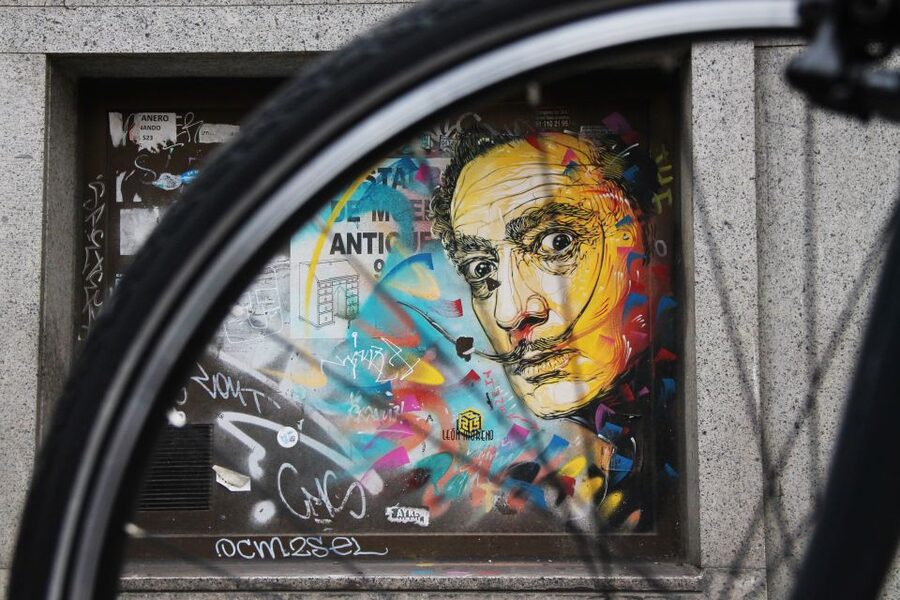
I would choose this for first-time visitors who want more than the royal palaces, major museums, and grand boulevards. It gives you a look at modern Madrid through its walls, shutters, gardens, and neighborhood projects.
It also suits anyone who enjoys photography, design, graffiti, or urban planning. Families can consider it if all riders are confident in city traffic. Spanish and English speakers have a clear language option, and the guide can explain both the cultural background and the visual techniques.
I would hesitate if you dislike cycling in traffic, struggle with frequent stops and starts, or want a relaxed walking tour. The route is not presented as a strenuous athletic ride, but it is still a medium-level city activity with one uphill section.
Should you book it?
Book this tour if you want Madrid’s street art explained by someone connected to the local scene, not simply pointed out on a map. Muelle’s 1989 tag, Boa Mistura’s early work, Pinta Malasaña, and the community spaces in Lavapiés give the ride a useful arc from early graffiti to organized festivals and neighborhood renewal.
Skip it if you are not comfortable on a city bike. For everyone else, $46 buys a focused route, practical equipment, and a side of Madrid that standard sightseeing rarely reaches.
FAQ
Where does the street art bike tour start?
It starts at the entrance of the Carrefour Express at C/Montera 32. The nearest metro stations are Gran Vía and Sol.
Where does the tour end?
The activity ends back at the original meeting point.
How long does the experience last?
The tour is listed as 2.5 hours. The practical information also describes it as a three-hour medium-level activity, so allow roughly three hours.
What languages are available?
The live guide is available in English or Spanish.
Is bike equipment included?
Yes. The experience includes bike rental, a helmet, and a lock. A Madrid city map is also provided.
What should I bring?
Bring a passport or ID card and comfortable shoes. Beverages are not included, so bring your own drink if needed.
Can I cancel for a refund?
You can cancel up to 24 hours in advance for a full refund. The booking also offers a reserve-now, pay-later option.
Freshly painted around Spain
- Small-Group Graffiti Tour and Workshop in El Carmen★ 5.0 · 2 reviews
- Bilbao Urban and Street Art Walking Tour★ 5.0 · 2 reviews
- Barcelona Street Art, Graffiti and Tapas Tour★ 4.0 · 5 reviews
- Salamanca: Private Guided Street Art Walking Tour★ 5.0 · 2 reviews
- Private Barcelona Street Art Tour★ 5.0 · 2 reviews
- Barcelona | StreetArt Bike Tour Moco Museum★ 4.6 · 13 reviews
- Málaga: Street Art Tour in the Soho District★ 5.0 · 4 reviews
- Madrid: Private Grafitis/Street Art Segway Tour 2h★ 4.5 · 2 reviews
Madrid Street Art Tours, compared.
Madrid: Street Art Tour with Local Graffiti Hunter
Read our review →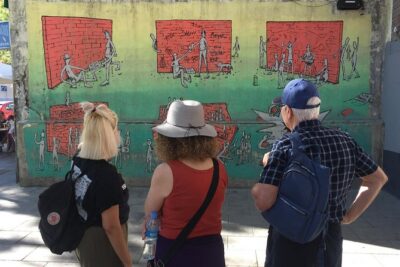
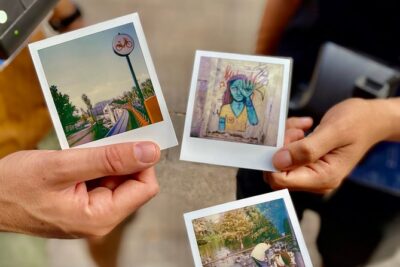

Madrid Street Art Tour (Malasaña Chueca Gran Via & Lavapies)
Read our review →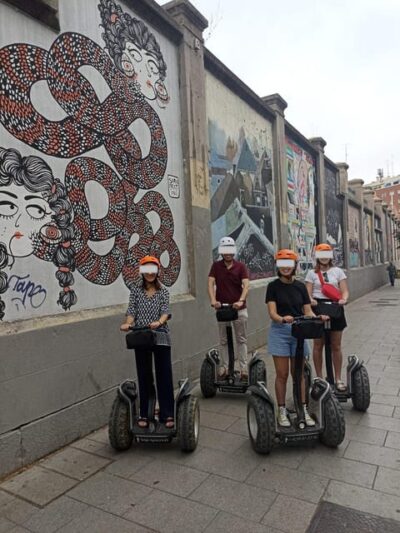
Madrid: Private Grafitis/Street Art Segway Tour 2h
Read our review →Browse the lists this tour appears in