
Review · CASABLANCA, MOROCCO
Street Art in Depth 4 days in Casablanca and Rabat
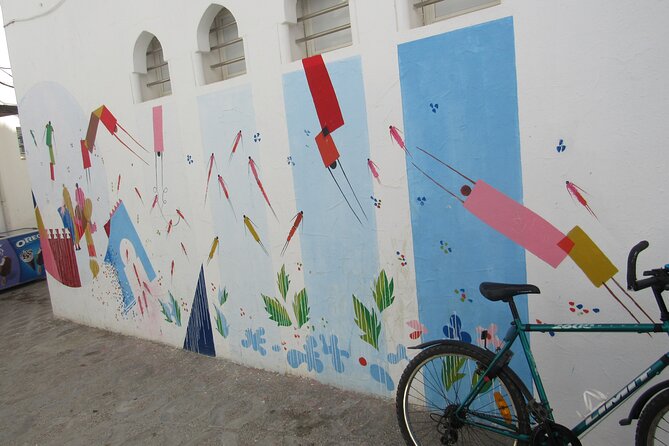
The best part of this four-day trip is the access behind the paint. You are not simply driven past finished murals. In Casablanca, you meet a member of the Sbagha Bagha team and a resident artist, then learn how a city festival supports artists as they work. In Rabat, you meet the Jidar Festival team and see how large old medina walls become public art.
I like the mix of street art and classic Morocco, especially the chance to pair murals with Place Mohammed V, the Hassan II Mosque, the Habous quarter, and Rabat’s old city. I also like the personal touch associated with Susan and Hicham, whose approach focuses on discussing your interests and showing both familiar sights and less obvious painted walls. The main drawback is the price: at $1,862.22 per person, this is a serious splurge for four days, and lunch, dinner, drinks, tips, and personal purchases are extra.
Key points to know before booking
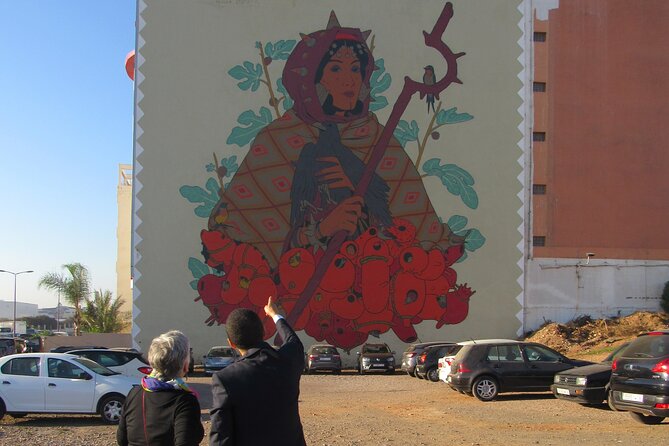
- Meet the people behind Sbagha Bagha: Learn how Casablanca’s festival is organized and how artists are supported during mural projects.
- See street art in two different cities: Casablanca offers a busy economic center, while Rabat combines an old medina with a modern capital.
- Talk with artists and festival teams: The experience includes meetings with a Sbagha Bagha representative, a resident artist, and the Jidar Festival team.
- Stay three nights in hotels or riads: Breakfast and transport are included, so you spend less time arranging local logistics.
- Use a private English-speaking driver: Your group travels privately, with pickup offered and a start time of 8:00 am.
- Budget beyond the tour price: Meals other than the included breakfasts, drinks, tips, and personal purchases are not covered.
Why this Morocco art trip feels different
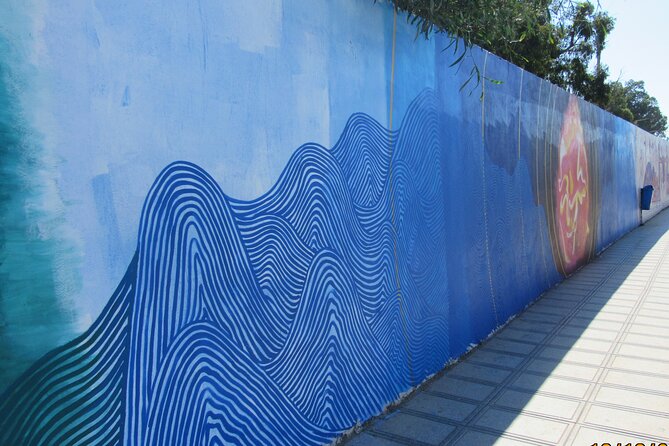
Most city tours treat street art as a quick photo stop. This one makes it the main subject. You see painted walls, but you also learn what happens before the paint appears: how artists are chosen, how festival teams work with a city, and how large walls are managed over several days.
That behind-the-scenes angle gives the art more meaning. A mural is not just decoration when you understand the people who planned it, the artist who made it, and the neighborhood where it appears. I like that the tour connects the work to daily life rather than treating it as a separate attraction.
The experience is also useful if you want a different view of Morocco. You still visit major city sights, but the focus shifts from palaces and monuments to current creative work. The result is a trip that mixes old medinas, French-colonial and Moroccan architecture, seaside views, and large public murals.
The private format matters here. Your group is the only group on the activity, so you can ask questions and spend more time on the subjects that interest you. The tradeoff is that private touring usually costs more than joining a larger group. This price also includes lodging, transport, breakfast, and several special meetings, not just guiding for a few hours.
More walls, murals and painted streets to see around the world:
- Medellin: Comuna 13 Graffiti Tour, Cable Car & Street Food
★ 4.8 · 9,046 reviews - CDMX: Xochimilco, Coyoacan, Frida Kahlo Museum & Murals Tour
★ 4.4 · 3,025 reviews - Amsterdam: Streetart Museum STRAAT Entrance Ticket
★ 4.8 · 2,137 reviews
Day 1 in Casablanca: meet Sbagha Bagha
Your first day begins in Casablanca, with about four hours devoted to the city’s street-art scene and the Sbagha Bagha festival team. The most useful part is the chance to meet a team member and a resident artist who can explain how the festival operates.
You learn what it takes to support artists who spend days painting the city. That can include the practical side of bringing artists together, working on large walls, and keeping a citywide project moving. The supplied details do not promise a set list of murals, which is sensible for a working art festival. Walls may change, and the best route can depend on current projects.
The visit includes painted walls in the old medina and across Casablanca. This is where a local art contact adds real value. You might walk past a wall without noticing its subject or context. With the right guide, you can ask why the work is there, who made it, and how it fits the neighborhood.
Susan and Hicham are associated with the experience and are described as taking time to discuss personal interests and expectations. If you have a particular interest in political murals, large-scale painting, neighborhood art, or photography, tell the team early. The private format gives you a better chance of shaping the conversation.
Admission is listed as free for this stop, but that does not mean the day has no cost. You are paying for the local access, guide support, transport arrangements, and the broader four-day program.
Day 2 in Casablanca: murals beside major landmarks
The second Casablanca day lasts about five hours and adds the city’s major sights to the art-focused program. Casablanca is Morocco’s largest and most populous city, as well as its economic and industrial center. It feels more cosmopolitan than many other Moroccan destinations, with Western clothing and modern business life more visible.
That setting makes Casablanca a good place to study public art. The city is not presented as a preserved old-town display. It is a working urban center where new murals sit alongside older architecture, busy streets, and modern development.
You visit Place Mohammed V, a central square known for its Moresque buildings, a style that blends French-colonial design with Moroccan forms. You also see the Grand Theater de Casablanca, the Habous quarter, and Ain Diab. The route includes the Hassan II Mosque, with its seaside setting and very tall minaret.
These sights give your street-art visits useful context. In the downtown area and Habous, you can compare decorative architectural details with the scale and directness of modern murals. At Ain Diab, the city’s coastal side offers a different setting from the old medina. The Hassan II Mosque is a major attraction in its own right, so this day may feel more like a general Casablanca tour than a pure art workshop.
That is both a strength and a limitation. If you want four full days devoted only to murals, this program may feel too broad. If you want to understand Casablanca through both its famous sights and its current creative scene, the balance works well.
The schedule starts at 8:00 am. An early start helps you cover a lot, but you should be ready for a full sightseeing day. The exact order of stops is not specified, so ask the local team how much time is planned for the art stops compared with the classic sights.
Day 3 in Rabat: a new city and the Jidar Festival
After Casablanca, you travel to Rabat, Morocco’s capital, for the next part of the program. The day is built around a visit with the Jidar Festival team and lasts about five hours.
The focus shifts from Sbagha Bagha in Casablanca to the way artists are selected and how they work on the old walls of Rabat’s medina. This is one of the strongest features of the trip. You are not only viewing the final images. You are learning how a large public-art event decides who participates and where major works are made.
Rabat gives the subject a different setting from Casablanca. The city is described as both very old and modern, and the program uses that contrast. Old medina walls provide a traditional urban backdrop, while large-scale murals bring a newer artistic voice to the streets.
The meeting with the Jidar team is especially useful for anyone who wants to understand the structure behind a mural festival. Artist selection affects the style and range of the work. Wall size, location, and local conditions affect how a project is made. The supplied program does not promise that artists will be actively painting during your visit, so you should think of this as a festival access and interpretation day, not a hands-on workshop.
Rabat is also the point where the trip changes pace. Casablanca is Morocco’s commercial center. Rabat, as the capital, offers a quieter setting for looking closely at walls and neighborhoods. You stay in a riad or hotel for the night, with breakfast included as part of the overall stay.
More Street Art Tours around the world:
- Belfast: Murals Taxi Tour
★ 4.9 · 2,047 reviews - Wynwood Graffiti Golf Cart Small-Group Tour
★ 5.0 · 1,646 reviews - London: Street Art and Graffiti Guided Walking Tour
★ 4.9 · 1,354 reviews - Lisbon: Street Art Tour
★ 4.9 · 1,324 reviews
Day 4 in Rabat: see the city’s murals by car
The last day is a roughly five-hour driving tour of Rabat’s street art. This is helpful because murals are spread across a city, and walking from one distant wall to another would take time away from viewing the work.
Your driver helps you see a wider selection of painted walls and understand how the art fits into the city as a whole. You get the old and modern sides of Rabat in one outing, then return to your riad in the evening.
The car-based format is practical, but it changes the way you experience the art. You may see more murals than you could on foot, yet you will need to speak up if you want to stop longer, take photographs, or examine a particular wall. Since this is a private tour, you have a better chance of asking for pauses, but the available description does not promise a fixed number of stops or a set amount of walking.
I would bring comfortable shoes anyway. Even a driving tour of murals may involve getting out of the vehicle, crossing streets, or walking around an old medina. The operator says most people can participate, but no special accessibility details are provided.
What the $1,862.22 price includes
The price is high, but it covers more than a standard four-day sightseeing package. You receive three nights in hotels or riads, daily breakfast, transportation, an English-speaking driver, city touring, and meetings with festival teams and artists.
It also includes a member of the Sbagha Bagha team for the Casablanca visit, plus the Rabat meeting with the Jidar Festival team. Those contacts are the core reason to consider this trip. If you booked separate city tours and tried to arrange festival access on your own, the planning would be harder and the results less certain.
The price is easier to justify for a solo traveler or a couple who values a private itinerary and specialist access. It is harder to justify if you are mainly looking for standard sightseeing, since Casablanca and Rabat can be explored in less expensive ways.
Remember to set aside money for lunch and dinner each day, drinks, tips, and personal purchases. These are not included. The program lists four breakfasts, while the lodging is described as three nights, so I would confirm exactly how breakfast is handled before paying. That small detail does not change the central value of the trip, but it is worth clearing up.
Lodging, transport, and the early start
You stay in a hotel or riad for three nights. The exact properties are not named, so do not book this expecting a specific level of comfort or a particular riad style. The useful point is that lodging is arranged for you, which removes one of the larger chores in a short Morocco trip.
Transportation is included, along with an English-speaking driver. Pickup is offered, and the listed start time is 8:00 am. Because the program covers two cities and includes several five-hour touring days, having transport arranged saves time and makes the move from Casablanca to Rabat simpler.
The private setup is a clear benefit. You do not share the activity with another group, and you can discuss your interests with the local team. At the same time, a private trip requires you to be ready on time and engaged with the schedule. This is not a drop-in mural walk that you can join at noon.
Who will enjoy this most
I would choose this trip if you collect street-art experiences, enjoy meeting local creative teams, or want to see Morocco beyond its standard sightseeing route. It also suits photographers and design-minded travelers who want time with murals rather than a quick list of monuments.
It is a good match for someone who values access over a packed checklist. The festival meetings and local artist contact are more important here than ticking off every possible attraction.
I would think twice if your main goal is a relaxed holiday with long afternoons free. Each day runs about four or five hours, and the early start plus travel between cities creates a structured schedule. You also need to be comfortable paying separately for most meals.
The tour should work for most people, since the operator says most participants can take part. Still, the information does not provide detailed mobility guidance, vehicle specifications, or exact walking distances. Ask before booking if you need those details.
Cancellation and booking points
You can cancel for a full refund up to 24 hours before the local start time. Changes made less than 24 hours before the start are not accepted, and cancellations inside that window are not refunded.
The experience needs a minimum number of participants. If the operator cancels because that minimum is not met, you are offered another date or experience, or a full refund. Confirmation is provided at booking, and the activity is near public transportation.
Should you book this street-art tour?
Book it if the festival access is the main attraction. The meetings with Sbagha Bagha and Jidar, the resident artist connection, the private driver, and the chance to see murals across Casablanca and Rabat create an experience that is more personal than a basic city tour.
Skip it if you want the cheapest way to see Morocco’s major sights, or if you prefer to choose your own restaurants and explore at your own pace. At $1,862.22 per person, the value depends on how much you care about the art-world connections and the convenience of included lodging and transport.
Before booking, ask for the planned hotel or riad names, clarify the four-breakfast listing, and request a rough idea of the mural stops for your dates. If those details suit you, this is a strong choice for seeing a contemporary side of Morocco while still covering the essential sights of two important cities.
FAQ
How long is the Street Art in Depth experience?
The experience lasts approximately four days.
Where does the tour take place?
It takes place in Casablanca and Rabat, Morocco.
What time does the tour start?
The listed start time is 8:00 am.
Is pickup available?
Yes. Pickup is offered.
Is this a private tour?
Yes. Only your group participates in the activity.
Is an English-speaking driver included?
Yes. An English-speaking driver is included.
Are hotels or riads included?
Yes. The package includes three nights in a hotel or riad.
Are meals included?
Breakfast is included. Lunch, dinner, drinks, tips, and personal purchases are not included. The program lists four breakfasts, so confirm that detail when booking.
Can I cancel for a full refund?
Yes. You can cancel at least 24 hours before the local start time for a full refund. Cancellations made less than 24 hours before the start are not refunded.
Freshly painted around the world
- Xochimilco floating gardens, Coyoacan and UNAM murals★ 4.0 · 6 reviews
- Your Own Belgrade: Street Art and Hidden Gems Walking Tour★ 5.0 · 2 reviews
- Wynwood Walls Street Art & Neighborhood Walking Tour★ 4.9 · 9 reviews
- Vancouver: Street Art & Craft Beer Walking Tour with Tasting★ 4.8 · 14 reviews
- Vancouver: Street Art & Craft Coffee Walking Tour w/ Tasting★ 4.8 · 11 reviews
- Zagreb Street Art Private Walking Tour with a Local Artist★ 5.0 · 12 reviews
- Urban Canvas: Osaka Street Art Bike Tour★ 5.0 · 10 reviews
- UNAM: Murals & Revolution★ 4.9 · 8 reviews