
Review · AMSTERDAM
Alternative Tour Amsterdam | Drugs Story, Street Art & More
Amsterdam’s polished postcard image is only half the story. This two-hour walking tour looks at the subjects many city tours avoid: soft drugs, prostitution, LGBTQ persecution, graffiti, houseboats, and the social forces that shaped Amsterdam’s liberal reputation.
I like the small group of up to 10 people, which should make it easier to hear the guide and ask direct questions. I also like the route’s mix of famous sights and less polished subjects, from Dam Square and the Royal Palace to the Gay Monument and street art.
The main limitation is clear: you do not enter the Red Light District. Since tour groups have not been allowed inside since 2020, the guide explains its history and policies from other points in the city. Also, arrive on time. Late participants cannot catch up with the group.
Key points to know before booking
- A counterculture-focused walk: Expect discussion of soft drugs, prostitution, LGBTQ history, graffiti, and Amsterdam’s changing social rules.
- Small group format: The tour accepts no more than 10 people, a useful size for conversation and questions.
- A central route: You begin and finish at the National Monument on Dam Square.
- One hour in the Jordaan: The neighborhood provides the longest stop, with narrow streets, cafés, studios, boutiques, and stories of working people and artists.
- No Red Light District entry: The subject is covered, but the walking route does not enter the district.
- Best for adults and supervised teens: Mature topics are part of the tour, so it is not a standard family sightseeing walk.
A different way to read Amsterdam
Many first-time visitors meet Amsterdam through canals, grand façades, bicycles, and museums. Those sights matter, but they do not fully explain the city’s easygoing public image.
This tour takes a more direct route. It asks how Amsterdam became associated with tolerance, and what that tolerance has meant for people living here. You will hear about drugs policy, prostitution, LGBTQ persecution, working-class life, street art, and the city’s houseboats.
I like that the tour does not hide behind a list of monuments. Dam Square and the Royal Palace provide the setting, but the real subject is Amsterdam as a society. That gives you useful context for the rest of your visit.
The price is listed at $3.60 per person, which is unusually low for a two-hour guided walk. At that rate, the tour offers strong value if you want interpretation rather than admission tickets or transport. The trade-off is that the experience is entirely on foot, and food, drinks, and entry fees are not included.
The walk is offered in English and led by a licensed guide. No guide name is provided in the available details, so you should book it for the subject matter and route rather than for a particular named guide.
More Alternative Street Art Tours in the Netherlands:
- Amsterdam’s Hidden Gems and Street Art Bike Tour
★ 5.0 · 65 reviews - Budapest: Street Art and Underground Movements Walking Tour
★ 5.0 · 365 reviews - Berlin: Street Art and Alternative Tour
★ 4.7 · 98 reviews
Starting beneath the National Monument
The tour begins at the National Monument on Dam Square at 1:30 pm. This is a practical meeting point because Dam Square is central, easy to locate, and close to where Amsterdam was founded.
You receive a quick introduction here before the walk begins. The stop itself lasts about five minutes, but the location gives the guide a useful opening to explain how the modern city grew around this central area.
The tour also ends at the same place. That makes the afternoon easy to plan. You can continue toward the Royal Palace, shop in the central streets, visit a museum, or make your way to another part of Amsterdam without needing to find a distant finish point.
Be precise with your arrival time. The instructions say there is no way to catch up if you are late, so you would need to book a new time slot. I would aim to arrive early rather than cutting it close in a busy central square.
The Royal Palace and Amsterdam’s official face
The Royal Palace Amsterdam is the next short stop. The building was originally constructed as a town hall and is now described as the most culturally significant building in the Netherlands.
You do not enter the palace as part of this walking tour. The guide uses it as a place to discuss the city’s formal, prosperous side, a useful contrast with later stops dealing with marginal communities and counterculture.
If you have time, a separate visit is recommended after the walk. Entry can be arranged through the Royal Palace website. Since admission is not part of this tour, check the palace’s own opening information before building it into your schedule.
The five-minute stop will not satisfy anyone hoping for a full palace visit. That is not its purpose. Think of it as a brief orientation point, not a museum tour.
One hour through the Jordaan
The Jordaan receives the largest share of the walk, about one hour. That is a good choice. The neighborhood gives the guide room to move beyond headline attractions and talk about ordinary life, social change, and the people who shaped Amsterdam from below.
You walk narrow streets lined with cafés, art studios, and independent boutiques. The area is presented through stories of rebellious artists, working-class residents, and the hardships of an earlier period.
I like this part of the route because it gives the tour texture. Amsterdam’s liberal image can seem simple when reduced to a few famous policies. The Jordaan helps show that social change develops through neighborhoods, work, politics, art, and conflict.
The amount of walking also matters. You will not spend the entire tour standing in one square while the guide talks. You should wear comfortable shoes and bring water, since drinks are not included. The tour information does not provide a detailed accessibility assessment, but it notes that most people can participate and that service animals are allowed.
The Jordaan stop may also be the best place to ask questions. A group limited to 10 people is small enough for a more personal exchange than you usually get on a large city walk.
More Street Art Tours around the Netherlands:
- Amsterdam: Streetart Museum STRAAT Entrance Ticket
★ 4.8 · 2,137 reviews - STRAAT Museum – Museum for Street Art Amsterdam Admission Ticket
★ 5.0 · 192 reviews - Urban Adventures Amsterdam Bike Tour, Graffiti and Magnet Fishing
★ 5.0 · 105 reviews - The Hague: Street Art Tour by Bike
★ 4.8 · 30 reviews
The Gay Monument and a less comfortable past
Amsterdam is often described as one of Europe’s most liberal cities. The Gay Monument complicates that image in an important way.
Here, the guide pays tribute to LGBTQ people persecuted because of their gender or sexual preference. The stop lasts about 10 minutes, but its purpose is larger than the short time suggests. It reminds you that tolerance was not always the city’s reality, and that legal or social progress does not appear without struggle.
This is one of the tour’s strongest choices. It prevents the discussion of liberal Amsterdam from becoming a cheerful slogan. You are asked to remember people who suffered, not simply admire the city’s reputation.
The subject is serious, and the tour is not designed as light entertainment. Adults should be comfortable discussing discrimination, persecution, prostitution, and drug policy. Teenagers can attend under a guardian’s supervision.
Street art, graffiti, and life on the water
The final part of the walk visits several locations connected with street art, graffiti, and houseboats. These are not treated as separate museum-style exhibits. Instead, they form part of a broader look at how people use public space and how unofficial culture becomes part of a city’s identity.
Street art and graffiti can tell you plenty about local attitudes. They also raise questions about ownership, public order, artistic freedom, and what happens when a once-rebellious style becomes part of a city’s tourist image.
The houseboats add another piece to the picture. Amsterdam’s waterways are not only scenic backdrops. They are also part of how people live and how the city presents itself to outsiders.
Because this section takes place at various locations, the exact sights may depend on the walking route and the guide’s choices. The supplied details do not promise particular murals or named houseboats. You should expect examples and explanation rather than a fixed art collection.
What you will learn about the Red Light District
The tour covers the Red Light District without entering it. That distinction matters.
Since 2020, tour operators have not been permitted to take groups inside the district. The guide still discusses prostitution, the area’s backstory, and the policies connected with it, but you will not receive an escorted walk through the windows and streets.
Some people will see this as a drawback, especially if they booked the tour mainly to see the district. I see it as a reason to set expectations correctly. You are getting social and historical context, not an on-site district visit.
The wider discussion is likely to be more useful than a quick pass through the area. It can help you understand why Amsterdam’s policies attract attention, where the city’s permissive reputation comes from, and why those policies remain open to debate.
This is also another reason the tour suits adults better than young children. Prostitution is treated as a normal subject of discussion here, not avoided or softened.
Why the small group changes the experience
A maximum of 10 people is one of the tour’s best practical features. A small group reduces the chance of being lost behind a large crowd, and it gives the guide a better chance to respond to questions.
That matters on a topic-heavy walk. Discussions about drug policy, sexuality, persecution, and counterculture work better when the guide can explain rather than simply recite.
The group size does not guarantee a private tour. You are still sharing the experience with other people, and the tour remains a planned public activity. But it is more intimate than a large sightseeing group.
The listed average booking lead time is 16 days. That suggests you should not assume you can wait until the last minute, particularly if you have a fixed afternoon in Amsterdam. The tour is inexpensive, but a small capacity can make availability more limited.
Timing, cost, and what is included
The walk lasts about two hours and begins at 1:30 pm. That timing works well as an afternoon introduction, especially if you want a morning museum visit first.
The $3.60 price is the clearest value point. You are paying for an English-speaking guide, a licensed guide’s storytelling, and an educational look at Amsterdam’s counterculture. You are not paying for palace admission, food, drinks, or transport.
You walk the entire route, so budget for ordinary city walking rather than a vehicle-based tour. Bring water. The available information does not give a precise distance, but the route includes Dam Square, the Jordaan, the Gay Monument, and other central locations over two hours.
Confirmation is provided when you book. The activity is near public transportation, and service animals are allowed. Most people can participate, but anyone who needs detailed information about surfaces, distances, or seating should contact the provider before booking.
Free cancellation is available if you cancel at least 24 hours before the start time. Cancellations made less than 24 hours before the tour are not refunded, and changes within that period are not accepted. The activity also requires a minimum number of participants. If the provider cancels because that minimum is not met, you can choose another date or experience, or receive a full refund.
Who should book this walk?
I would choose this tour if you want Amsterdam explained through social questions rather than only monuments. It is a good match for adults curious about drug policy, prostitution, LGBTQ history, street art, and the city’s counterculture.
It can also work for teenagers with a guardian, particularly if they are ready for mature subjects and a serious conversation about discrimination and public policy.
I would not choose it for a family seeking a light introduction to Amsterdam, a palace interior, or a dedicated Red Light District visit. It is also not ideal if you dislike walking or prefer a highly structured museum experience.
The low price makes it an easy addition to an Amsterdam itinerary. Just remember that the experience depends heavily on the guide’s storytelling, since the main value is interpretation rather than admission to attractions.
Should you book the Alternative Tour Amsterdam?
Book it if you want to move beyond Amsterdam’s postcard image. The route combines major landmarks with subjects that usually receive less attention, and the 10-person limit gives the guide room to make the discussion personal.
The strongest parts are the Jordaan, the Gay Monument, and the frank treatment of drugs and prostitution. The main drawback is the lack of entry into the Red Light District, but that restriction is stated clearly and the subject is still covered.
For $3.60, an English-speaking, two-hour walking tour offers excellent value for an adult interested in how Amsterdam became Amsterdam. Arrive early at the National Monument, bring water, wear comfortable shoes, and book only if you are comfortable with mature themes.
FAQ
Where does the tour start and finish?
The tour starts at the National Monument on Dam Square, 1012 JS Amsterdam. It also ends back at the same meeting point.
What time does the tour begin?
The scheduled start time is 1:30 pm.
How long does the walking tour last?
The experience lasts approximately two hours.
Is the tour conducted in English?
Yes. An English-speaking licensed guide leads the tour.
Does the tour enter the Red Light District?
No. Tour groups have not been allowed inside the Red Light District since 2020. The guide still covers its history, prostitution, and related policies from other locations.
Is the tour suitable for teenagers?
Teenagers may attend under a guardian’s supervision. The tour is recommended mainly for adults because it discusses prostitution, soft drugs, and other mature subjects.
What happens if I need to cancel?
You can cancel for a full refund up to 24 hours before the experience begins. Cancellations or changes made less than 24 hours before the start time are not accepted for a refund.
Freshly painted around the Netherlands
- Rotterdam’s Street Art Private Walking Tour★ 5.0 · 2 reviews
- Private Highlights & Art Walking Tour: Markthal, Zadkine, Street Art and Depot★ 5.0 · 2 reviews
- Eindhoven: Self guided Individual Street Art Tour★ 4.0 · 2 reviews
- Street Art Walking Tour, private local Dutch guide★ 5.0 · 7 reviews
- 1,5 hour private guided Mural Street Art tour in Arnhem★ 5.0 · 5 reviews
- Eindhoven: Self-Guided Individual Street Art Tour★ 4.0 · 4 reviews
- Rotterdam Street Art tour: Including specialised guide★ 5.0 · 5 reviews
- Amsterdam: Urban Bike Tour, Graffiti Art & Magnet Fishing★ 5.0 · 9 reviews
Amsterdam Street Art Tours, compared.

Amsterdam: Streetart Museum STRAAT Entrance Ticket
Read our review →
STRAAT Museum – Museum for Street Art Amsterdam Admission Ticket
Read our review →
Urban Adventures Amsterdam Bike Tour, Graffiti and Magnet Fishing
Read our review →
Amsterdam’s Hidden Gems and Street Art Bike Tour
Read our review →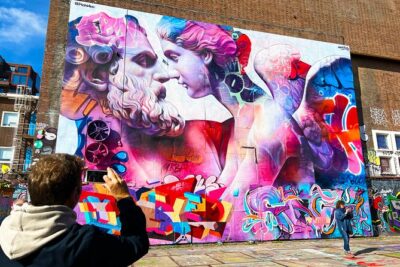
Street Art Walking Tour, private local Dutch guide
Read our review →Browse the lists this tour appears in