
Review · ITALY
San Sperate Murales Tour – Visit a Typical Sardinian Village
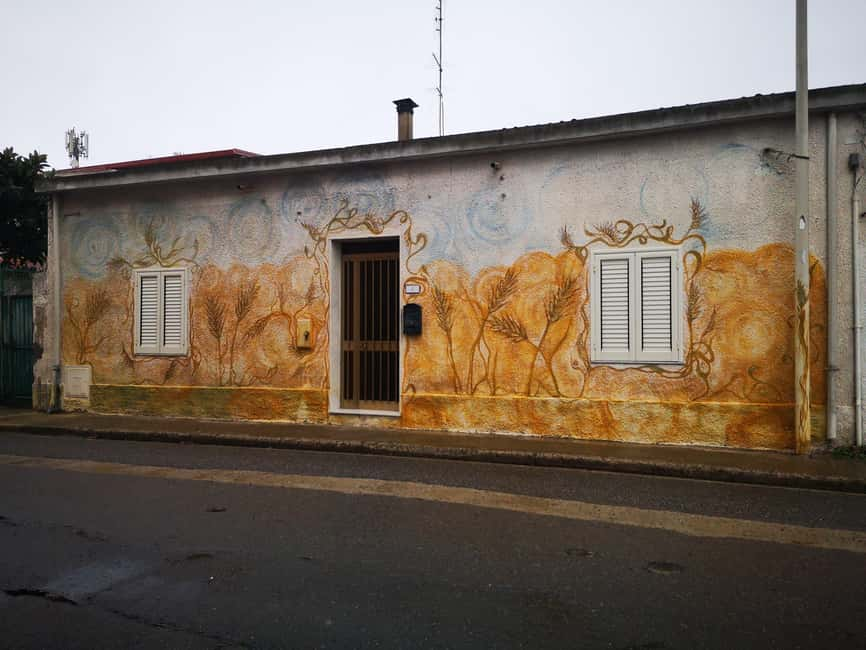
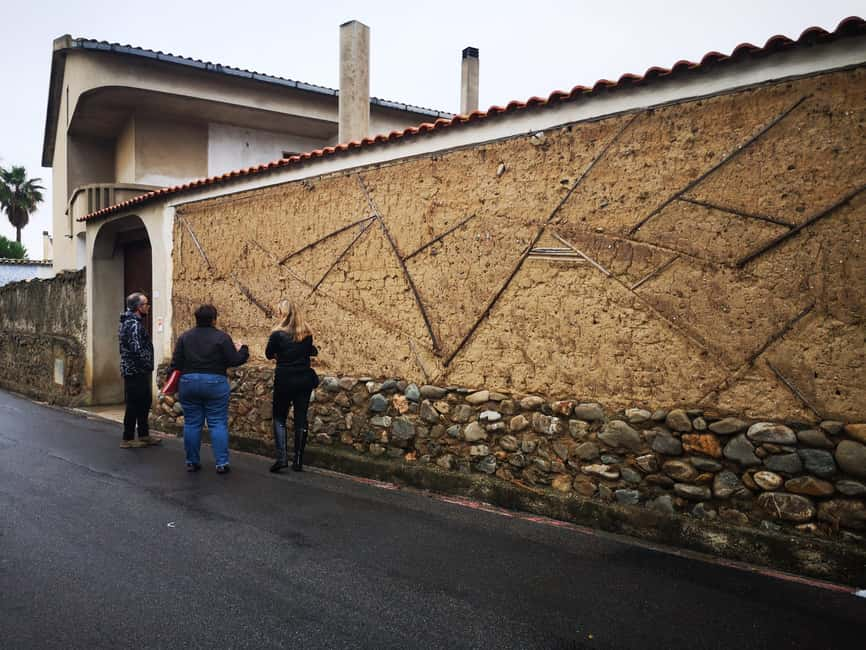
San Sperate turns ordinary village walls into an open-air art gallery. Murals cover houses and lanes with scenes of farm work, bread-making, religious celebrations, and local customs, so you are not simply looking at paintings. You are walking through a picture book about Sardinian life.
I like the small group of six and the way the three-hour walk leaves room for questions. I also like the chance to see art beside real village life, including gardens, flowers, elderly residents, and traditional streets. The main consideration is the price: at $100 per person, this is not a cheap short outing, and food and drinks are not included.
Key points to know
- San Sperate is an open-air museum: Murals and art installations appear along ordinary streets, house walls, and village corners.
- Claudia has earned special praise: She is described as an enthusiastic guide who explains both the artwork and its historical setting.
- The walking portion lasts about three hours: Comfortable shoes matter, since the heart of the experience is on foot.
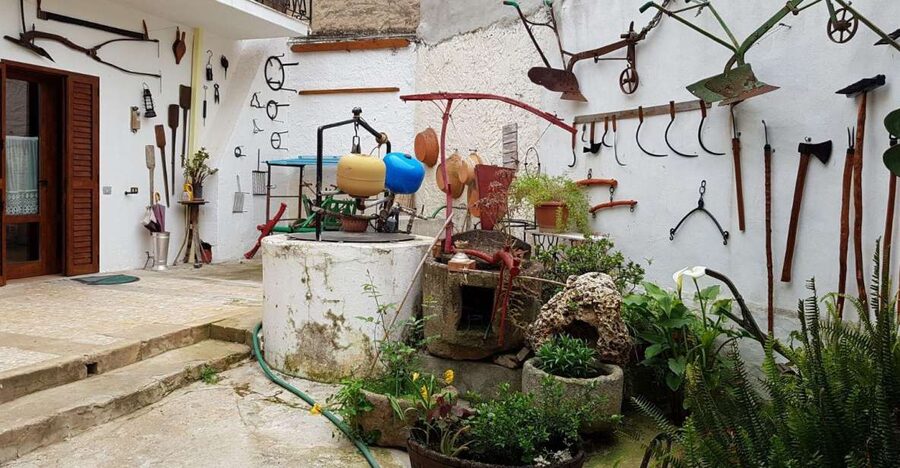
- You see more than public art: Gardens, flowers, narrow lanes, village squares, and daily routines all form part of the visit.
- Transport is simple: A comfortable air-conditioned car takes you from Cagliari to San Sperate and back, with about 30 minutes each way.
- The tour suits curious culture seekers: It is a better match for people who enjoy stories, local customs, and close-up village scenes than for those seeking a fast sightseeing stop.
Why San Sperate is more than a wall-painting stop
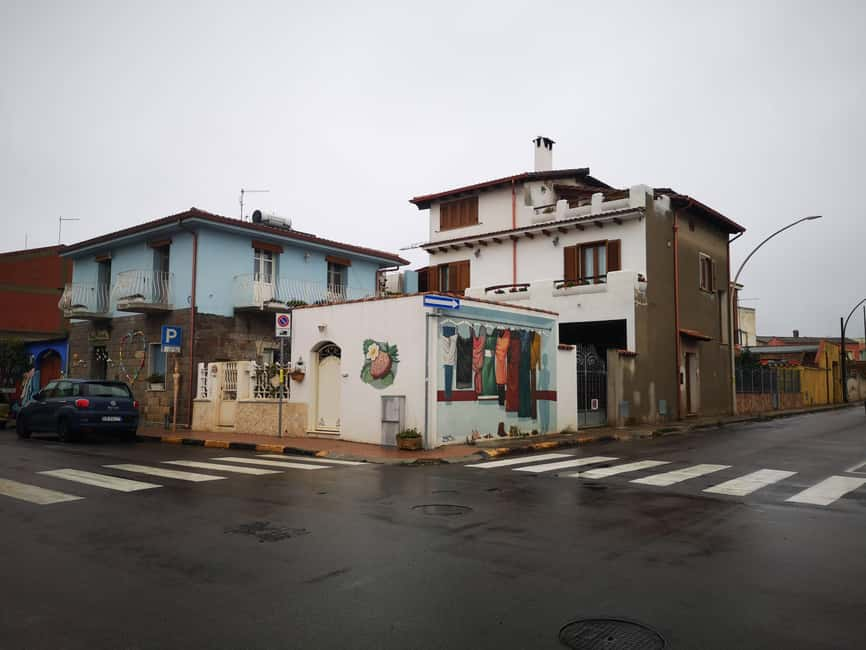
San Sperate is often described as a village-museum, but that phrase can sound more formal than the place itself. The art is not locked behind doors or arranged in a quiet gallery. It sits on house walls, beside small roads, and among the ordinary details of village life.
That setting changes how you see the murals. A painting about harvesting makes more sense when you are standing in a community shaped by farming traditions. A scene about bread-making feels less like a decorative image and more like a record of work, family, and seasonal routine.
The tour also includes traditional and contemporary installations. That mix gives San Sperate a sense of movement. You see older customs represented through art while the village continues to add new creative touches.
I like this format because it asks you to slow down. You are not racing from one famous monument to the next. You are looking at details on walls, in gardens, and along side streets. The art provides a reason to notice the village, while the village gives the art its meaning.
More Mural Tours in Italy
- 4×4 tour of Orgosolo: Murals and typical lunch at the shepherd’s
★ 5.0 · 76 reviews - Naples Murals Catacombs and Folklore Sanità District Tour
★ 4.5 · 5 reviews - Naples: Football Tour with Maradona Stadium & Mural
★ 4.4 · 5 reviews
Leaving Cagliari for a 30-minute village ride
The meeting point is on Viale La Plaia, 1, in front of the ENI Gas Station in Cagliari. From there, the tour uses a comfortable air-conditioned car for the roughly 30-minute ride to San Sperate.
That transfer is short enough to fit neatly into a half-day plan. You spend about an hour in the vehicle altogether and roughly three hours walking through the village. For a four-hour outing, that is a sensible balance.
The car also makes this easier than arranging your own connection. You do not have to work out transport to a smaller Sardinian town or worry about finding the right streets once you arrive. The group is limited to six participants, which should make conversation with the guide more natural than on a large coach tour.
Still, the meeting point is practical rather than picturesque. An ENI station is easy to identify, but it is not the sort of place where you will want to arrive hours early for sightseeing. Give yourself enough time to find Viale La Plaia and meet the guide without rushing.
Walking through San Sperate’s three-hour art route
The main part of the experience is a guided walk lasting about three hours. That is enough time to look beyond a few headline murals and get a feel for the village itself.
Expect your guide to explain what the paintings show and why the subjects matter. The artwork covers rural work, religious festivals, harvest celebrations, and everyday customs. These themes give you a useful introduction to Sardinia without turning the walk into a lecture detached from the place around you.
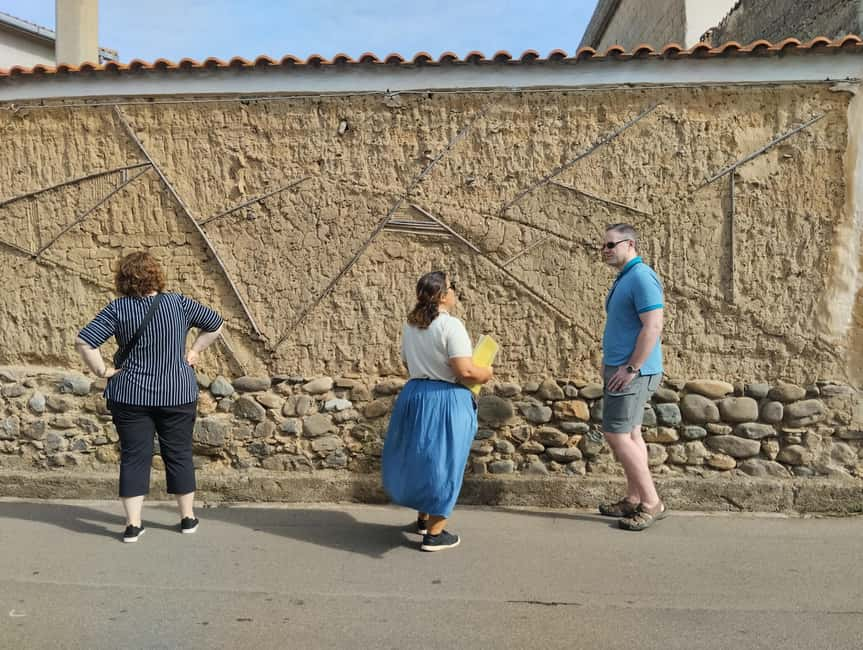
The strongest part of the route is likely the connection between the paintings and the streets. You might pass a wall showing a village tradition, then continue along a lane where people still live and work. That overlap between public art and daily routine is the reason to come here.
The narrow roads and small gardens also reward a slower pace. Flowers, house fronts, corners, and local gathering places become part of the experience. You will want comfortable shoes, not because this is described as a difficult hike, but because three hours on foot is long enough for poor footwear to spoil an otherwise pleasant outing.
The route may feel less polished than a conventional museum visit. Art in public spaces is exposed to weather and sits beside ordinary buildings, parked vehicles, and everyday activity. That is not a flaw so much as the point. San Sperate is a living village, not a staged exhibition.
What the murals tell you about Sardinian life
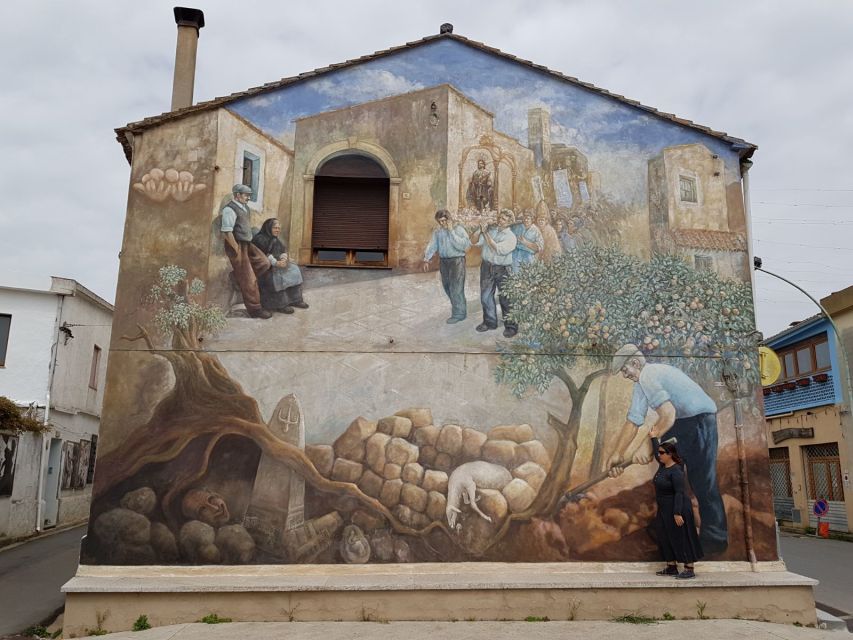
The paintings focus on subjects that help you understand the village from the inside. Bread-making, farming, harvests, and religious events are not random decorative choices. They reflect the work and celebrations that shaped community life.
I especially like the attention to seasonal customs. Religious processions and harvest activities suggest a calendar tied to the land and to local gatherings. You get a sense of how the year once moved through shared labor, feast days, and public rituals.
The tour also points to the difference between a place preserved for tourists and a place that still has its own rhythm. Elderly residents continue their routines, gather in squares, cycle through the streets, and tend to their businesses. The presence of active nonagenarians is one of the unusual details connected with this visit. It gives the village a human scale that a collection of murals alone could not provide.
You should not expect every moment to be a performance for the group. That is part of the value. Local people are described as continuing their daily lives, rather than appearing only to entertain visitors. You may also receive a welcome into local homes, offering a rare look at village life beyond the public streets. Since the exact home visits are not described in detail, treat this as a possibility within the experience, not a guaranteed scheduled stop.
More Muralism Tours around Italy:
- Naples Walking Food Tour: Street Food and Maradona Murales
★ 3.1 · 4 reviews - Xochimilco, Coyoacan and Frida Kahlo with Optional Lunch
★ 4.5 · 7,320 reviews - CDMX: Xochimilco, Coyoacan, Frida Kahlo Museum & Murals Tour
★ 4.4 · 3,025 reviews - La Catrina & Muralism: Diego Rivera’s Legacy & Frida Kahlo
★ 4.5 · 197 reviews
Meeting Claudia and learning the stories behind the art
The guide matters here. Claudia has been specifically praised for her passion and for explaining both the art and the history of the village. One account also highlights her ability to show the best of the historic center and areas beyond it.
That is important because murals can be easy to admire and easy to misunderstand. Without context, you may notice colors and figures but miss the local references. A good guide helps you read the scenes, connect them to agricultural traditions, and see how religious and community events shaped the images.
The tour is offered in English and Italian. If you choose the English option, you can ask questions about the murals, the village, and the customs represented. The small group should help here. With no more than six participants, you are less likely to lose the guide’s explanation in a crowd.
The guide also acts as a translator between art and place. You are not just collecting photographs of painted walls. You are learning why a particular subject belongs in San Sperate and how older customs remain part of the village’s identity.
Gardens, flowers, and the texture of ordinary streets
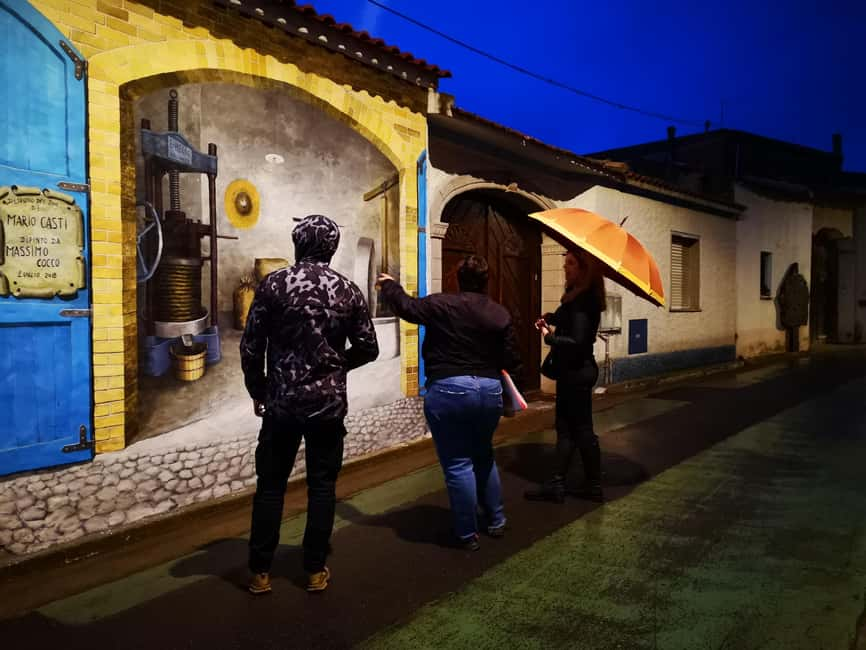
San Sperate’s appeal is not limited to its best-known walls. The experience also calls attention to gardens, flowers, and little roads. These details may sound modest, but they are what keep the walk from feeling like a checklist of murals.
I like tours that leave room for this sort of visual pause. A flower beside a doorway or a quiet lane can tell you as much about the feel of a place as a formal sight. In San Sperate, the art draws you down the street, then the setting gives you reasons to keep looking.
The village atmosphere is described as genuine and connected to the countryside. You may see traditional farming practices, residents gathering in squares, and reminders of religious processions. The experience works best if you allow yourself to notice these small scenes instead of treating the murals as the only goal.
This is also where expectations matter. San Sperate is not presented as a grand city center filled with major monuments. Its charm comes from details, local scale, and the unusual fact that art is part of the public fabric. If you need a long list of famous buildings, this may feel quiet. If you enjoy seeing how a community expresses itself, the quiet is a strength.
The value of a $100 half-day outing
At $100 per person, the tour asks you to pay for more than transportation. The fee includes a guide who explains the sites and a private-feeling transfer in an air-conditioned car. With a maximum of six people, you are also paying for a more personal setting than a large group excursion.
The value depends on what you want from a half-day. If you only want to photograph murals, you may find the price high for a three-hour village walk. San Sperate is not presented as a major ticketed monument, and food and drinks are extra.
I see stronger value if you want context. The guide’s explanations, the transport from Cagliari, the small group, and the chance to connect murals with local customs make this more than a self-guided stroll. You are paying for interpretation and ease, not just entry.
It also works well for a busy Sardinia itinerary. Four hours is long enough to visit San Sperate properly but short enough to leave most of the day free. The ride takes about 30 minutes each way, so the time is used efficiently.
The score of 4.6 from six ratings points to a very positive response, but the sample is small. The most consistent praise focuses on the guide, especially Claudia, and on the combination of art and history. That is the part of the tour I would value most.
Who should book this San Sperate tour?
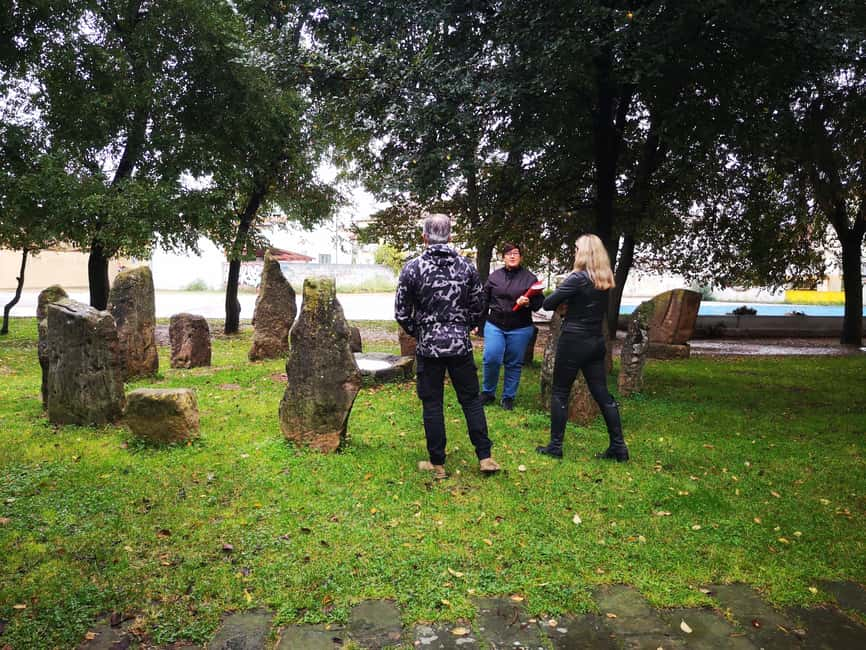
I would recommend it to you if you enjoy small towns, local stories, public art, and the chance to see a side of Sardinia beyond major coastal stops. It suits travelers who prefer a guide-led walk with cultural context rather than a quick photo visit.
It is also a good choice if you are staying in Cagliari and want an easy half-day trip without arranging your own transport. The air-conditioned car and small group remove much of the planning work.
Families and older participants should consider the three-hour walking time. The information provided does not describe accessibility details or the exact surface of every street, so you should ask the operator if mobility is a concern. Comfortable shoes are essential for anyone.
You may want to skip it if your schedule is packed, if you do not enjoy guided interpretation, or if you are looking mainly for food and drink. Neither is included, and the tour is centered on art, streets, and local culture rather than a meal.
Book at least 24 hours ahead if you want the full refund option. You can cancel up to that point, and the reserve-now, pay-later option keeps your plans flexible.
My verdict on San Sperate’s open-air art walk
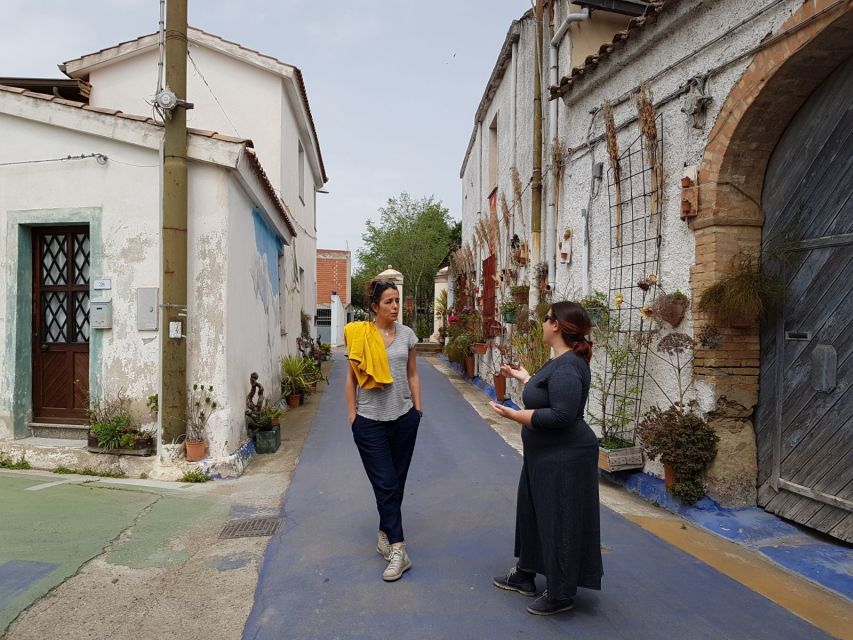
I would book this tour if I wanted a thoughtful change from Cagliari’s main sights. San Sperate offers something unusual: murals that do not sit apart from village life but share space with gardens, narrow roads, local customs, and residents going about their routines.
The strongest reason to go is the guide, particularly Claudia’s clear enthusiasm for the art and history. The small group, comfortable transport, and three-hour walk add practical value.
The price is the main question. At $100, you should want interpretation and convenience, not just a collection of painted walls. If that sounds worthwhile, San Sperate offers a memorable look at Sardinia through the eyes of an active village. If you prefer independent wandering and a lower-cost outing, you may find it easy to explore the murals on your own.
FAQ
How long does the San Sperate Murales Tour last?
The tour lasts four hours. About 30 minutes is spent traveling from Cagliari to San Sperate, about three hours is spent on a guided walk, and another 30 minutes is used for the return journey.
Where do I meet the guide?
Meet the guide at Viale La Plaia, 1, in Cagliari, in front of the ENI Gas Station.
What languages are available?
The tour is offered with a live guide in English or Italian.
How many people are in the group?
The tour is limited to six participants.
Is transportation included?
Yes. Transportation in a comfortable air-conditioned car is included between the Cagliari meeting point and San Sperate.
What should I bring?
Bring comfortable shoes for the three-hour walking portion. Food and drinks are not included.
Freshly painted around Italy
- Art & Craft: Beer Tour with Street Art in Rome★ 4.5 · 6 reviews
- Torpignattara Photo Tour: melting pot, street art and politics★ 5.0 · 5 reviews
- Naples Murals Catacombs and Folklore Sanità District Tour★ 4.5 · 5 reviews
- Street Art of Spanish Quarters and Maradona Tour★ 3.5 · 3 reviews
- The Spanish Quarters, Street Art and Local Market Tour in Naples★ 5.0 · 23 reviews
- Private Street Art Tour: Exploring Milan’s Hype Neighborhoods★ 5.0 · 2 reviews
- Street Art&Urban Vibes in Milan’s Most Exciting Rising Areas★ 4.4 · 5 reviews
- Spanish Streets – Maradona Street Art & Murals★ 5.0 · 3 reviews
Italy Street Art Tours, compared.
Naples Spanish Quarters Walking Tour Street Art, Folklore & Sweet
Read our review →
Naples: Spanish Quarters Folk Street Art w/ Sweets Tasting
Read our review →

Naples: Street Art, Wine and Food Tasting Walking Tour
Read our review →
Naples Essentials: Monuments, Local Life & Street Art
Read our review →
4×4 tour of Orgosolo: Murals and typical lunch at the shepherd’s
Read our review →
Rione Sanità tour among baroque, revival, street art & food
Read our review →
Naples: The Spanish Quarters, Street Art and Local Market
Read our review →Browse the lists this tour appears in