
Review · NAPLES
Rione Sanità tour among baroque, revival, street art & food
Rione Sanità is the Naples many visitors miss. Behind Porta San Gennaro, grand Baroque staircases, laundry lines, church art, neighborhood murals, and busy alleys tell a story of decline and renewal. The most memorable thread is the district’s pride: this is not a tour that treats Sanità as a backdrop, but as a community still shaping its future.
I like the mix of serious local history and everyday street life, especially the contrast between Palazzo dello Spagnolo and the colorful lanes around it. I also like the food stops: fried pizza, a fiocco di neve from Poppella, and coffee give the walk a proper Neapolitan finish.
The main consideration is pace. Two hours is enough for a lively introduction, but not enough to explore every church, palace, or social project in the district. You’ll also be walking through popular alleys, so this suits you best if you enjoy an active urban walk more than a quiet museum visit.
Key points to know before booking
- Porta San Gennaro is the symbolic starting point, right at the entrance to Rione Sanità.
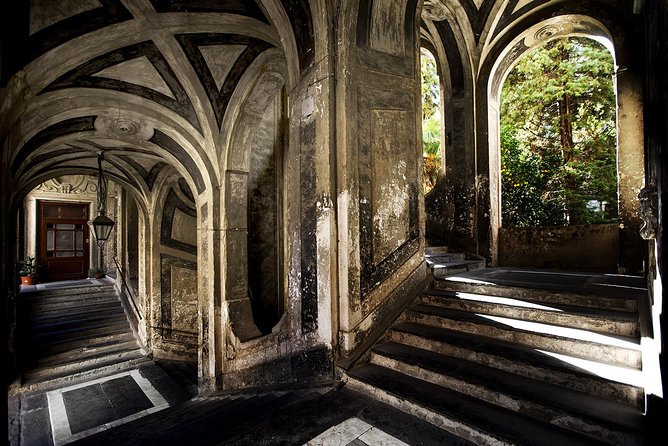
- Palazzo San Felice and Palazzo dello Spagnolo reveal the neighborhood’s striking Neapolitan Baroque style.
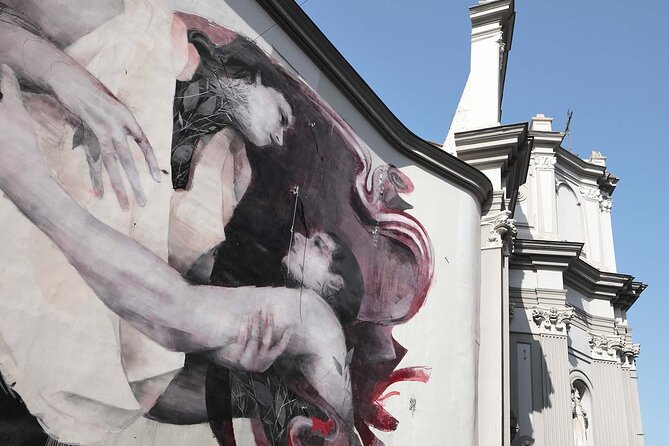
- Murals of Totò and Maradona connect local identity with two much-loved Neapolitan figures.
- The tour explains Sanità’s revival, including the work of a social cooperative to regenerate the district.
- Food is part of the route, with fried pizza, Poppella’s fiocco di neve, and coffee included.
- English, Italian, and Spanish tours last two hours and cost $47 per person.
Entering Rione Sanità through Porta San Gennaro
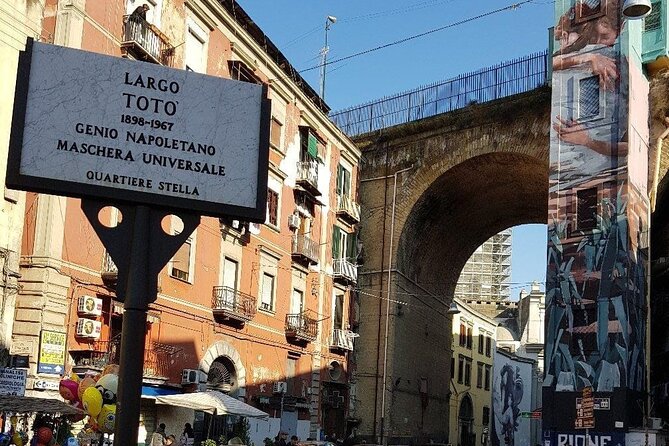
Your walk begins beside Porta San Gennaro on Via Porta San Gennaro 35. This is more than a convenient meeting point. The gate marks the symbolic entrance to Rione Sanità, so the tour starts with a clear sense of crossing from the better-known central streets into a neighborhood with its own rhythm and character.
You’ll meet the guide holding a sign with your name. Guides have included Rosa, Giovanni, Gianluca, and Giorgia, and the strongest praise has focused on their preparation, warmth, and passion for Naples. That matters here. Sanità is easier to understand when someone can explain not only what a building is, but why the neighborhood feels such a mix of pride, hardship, humor, and hope.
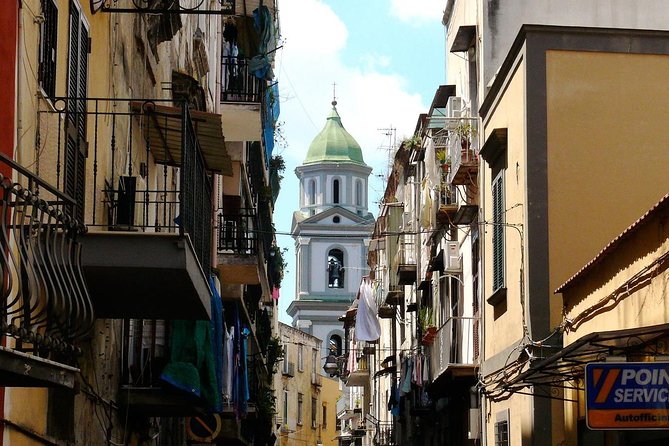
From the start, expect a walk through ordinary streets rather than a polished sightseeing zone. You might see laundry hung between buildings, bright paint, small shops, church facades, and murals sharing the same view. The visual contrasts are part of the point. Sanità’s beauty is not separated from daily life.
More Street Art Tours around Naples:
- Naples Spanish Quarters Walking Tour Street Art, Folklore & Sweet
★ 5.0 · 797 reviews - Naples: Spanish Quarters Folk Street Art w/ Sweets Tasting
★ 4.9 · 788 reviews - Naples: Street Art, Wine and Food Tasting Walking Tour
★ 5.0 · 163 reviews
Baroque staircases at Palazzo San Felice
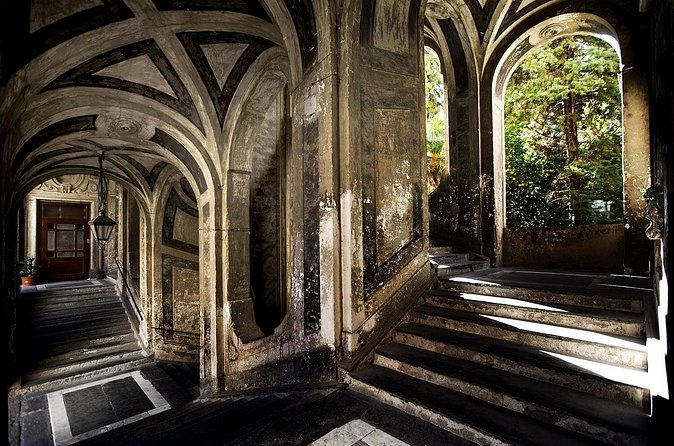
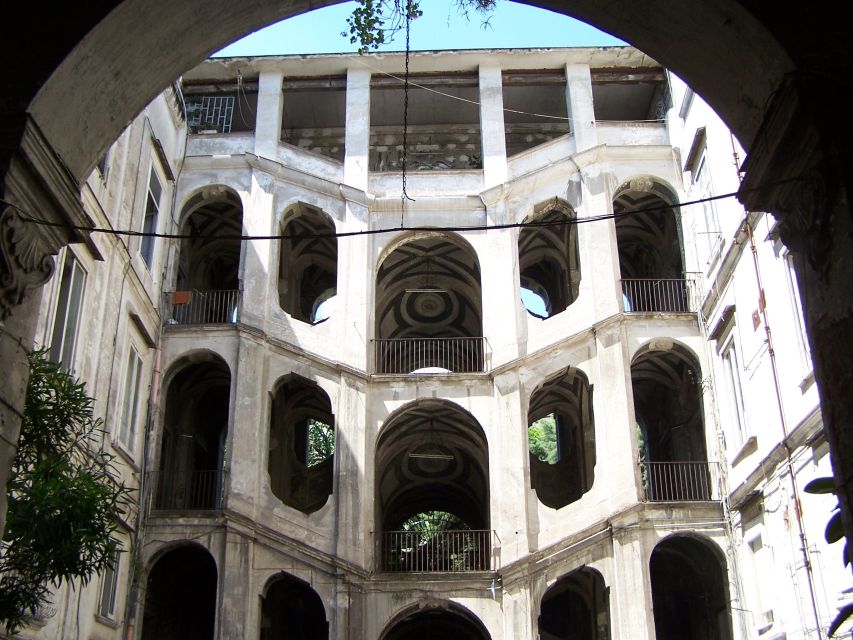
One of the first major architectural highlights is Palazzo San Felice. The palace is known for its sweeping Baroque stairway and theatrical design, the kind of architecture that turns a practical passage into a grand display.
The building helps explain Sanità’s noble past. This was not always viewed simply as a poor or neglected district. Its churches and palaces preserve a period when wealthy families and religious institutions gave the area a more imposing presence.
You’ll hear how the district’s grand architecture later existed beside signs of decline. That tension gives the building more meaning than a quick photograph can provide. The elegant lines and worn surroundings are not a contradiction to be edited out. They show how Naples carries different periods together, often within a few steps.
The tour does not focus only on architecture for architecture’s sake. Your guide connects the palace to the wider story of Sanità and its effort to recover a stronger public image without losing its local identity.
Palazzo dello Spagnolo and Sanità’s twin architecture
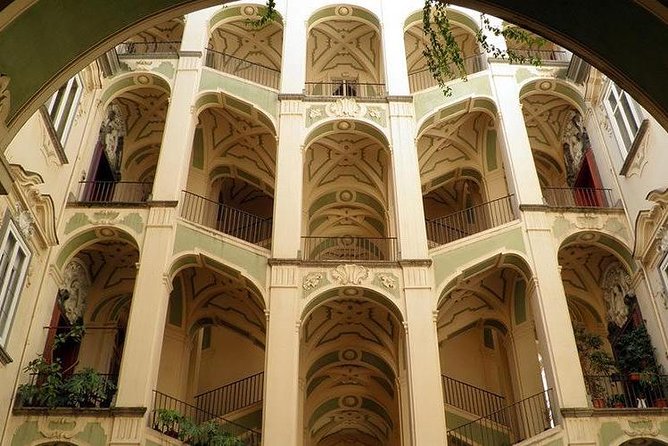
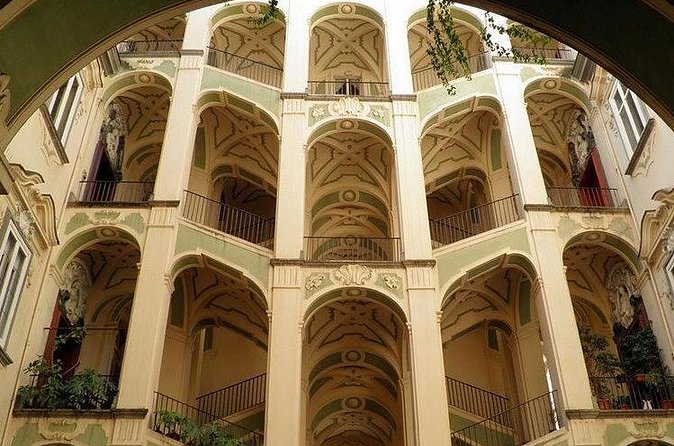
Palazzo dello Spagnolo is the other major Baroque stop. Its open staircase and ornate details make it one of the district’s most recognizable buildings. Along with Palazzo San Felice, it is often described as a twin architecture of Rione Sanità.
These palaces are especially useful stops because they challenge the easy idea that Sanità is only a gritty neighborhood. You see grandeur, but you also see the marks of time and the daily life surrounding it. The district’s past was noble, its decline was real, and its revival is still in progress.
Your guide will likely spend time on the symbolism of these buildings. They represent both what Sanità once was and what it might become again. I appreciate that the tour does not present redevelopment as a simple success story. The emphasis is on struggle, community action, and a desire to improve the area from within.
If you want a long interior visit, this is not that kind of experience. The focus is the exterior architecture, the story behind it, and the way the palaces fit into the streets around them. It is best for seeing the district as a whole rather than ticking off isolated monuments.
Murals of Totò, Maradona, and local identity
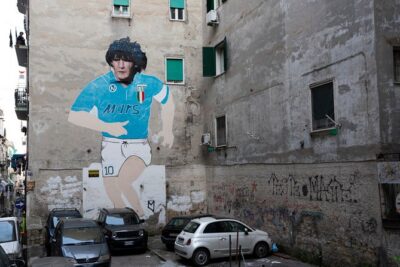
Street art adds a very different layer to the walk. Murals dedicated to Totò and Maradona bring popular Neapolitan culture into the same conversation as Baroque churches and noble palaces.
Totò, one of Naples’ most beloved comic actors, represents local humor and personality. Maradona carries a different kind of devotion, tied to the city’s football culture and collective memory. Their portraits are not random decoration. They show how Sanità expresses pride through public images that people recognize immediately.
This is one of the tour’s most approachable sections. You do not need to know much about Neapolitan art to understand the affection behind these murals. A good guide can explain why certain figures matter and how street art helps reshape the way a neighborhood is seen.
The murals also make the walk feel current. The Baroque buildings look back toward the district’s earlier status, while the wall paintings speak to modern Naples. Between them, you get a fuller picture of Sanità than either architecture or street art could provide alone.
Same walls, a different way in:
- Naples Essentials: Monuments, Local Life & Street Art
★ 4.9 · 79 reviews - Naples: The Spanish Quarters, Street Art and Local Market
★ 4.7 · 59 reviews - Street art tour of the Spanish Quarters & Maradona idol
★ 4.7 · 49 reviews - Rione Sanità Tour among Baroque, Revival, Street Art & Food
★ 5.0 · 48 reviews
Churches, the Veiled Son, and the Alley of Culture
Churches appear throughout the route, adding another layer to the district’s story. The tour points to the beauty of the religious buildings and to the art connected with Sanità’s past.
One symbolic reference is the sculpture known as the Veiled Son in the Basilica of San Severo outside the walls. The sculpture is associated with hope and universal integration in the tour’s broader story of renewal. You should understand this as a reference to the district’s cultural and social message, not necessarily as a long interior visit to every site mentioned.
The Basilica of Santa Maria alla Sanità is also highlighted for its Nativity scene. The scene is presented as a symbol of hope and inclusion, and it fits the tour’s main idea: old religious traditions can support a community’s modern effort to rebuild its reputation and opportunities.
Another unusual feature is the Alley of Culture, connected with books made available to everybody. It is a small but meaningful sign of public-minded change. The tour uses details like this to show that renewal is not only about repainting buildings or attracting visitors. It can also involve access to culture, shared spaces, and local cooperation.
Because the walk lasts two hours, the time spent at churches and cultural projects will be selective. You may want a separate visit if religious art is your main interest. For a first look at Sanità, though, the variety keeps the route moving.
Fried pizza, fiocco di neve, and Neapolitan coffee
Food is not an afterthought here. The savory stop is fried pizza, served as a takeaway tasting. It is a simple, filling Neapolitan specialty, and eating it on the route keeps the experience tied to street life rather than turning the snack into a formal restaurant break.
The food stop also gives you a chance to pause and watch the neighborhood around you. The setting is part of the experience. You are not just sampling a dish chosen for tourists, but trying a familiar local food in the district the tour is explaining.
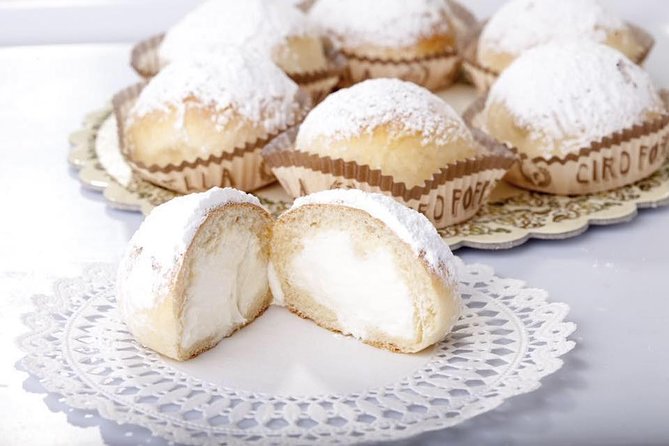
Later, you’ll taste a fiocco di neve from Poppella, one of Naples’ best-known pastry shops, along with a real Neapolitan coffee. The fiocco di neve is a small, soft sweet with a creamy center, and it provides a very different finish from fried pizza.
I like this pairing because it gives you two sides of Naples in a short time: warm, savory street food and a delicate pastry with strong local recognition. It also makes the $47 price easier to assess. You are paying for a guide, interpretation, and several tastings, not only a walk past buildings.
Still, keep your expectations sensible. These are tastings, not a full meal. If you arrive hungry, the fried pizza will help, but you may want to plan another meal afterward.
A neighborhood story built around revival
The heart of the tour is the story of change. Rione Sanità has been described as a district that moved from serious neglect toward redevelopment, with social cooperation playing a key role.
Your guide explains the work of a social cooperative and its effort to regenerate the wider neighborhood. This gives the walk a human focus. You are not simply hearing that an area has improved. You are hearing about the effort, organization, and local pride behind that improvement.
The tour’s best moments are likely to come when the guide links a physical detail to this story. A mural can show a new public identity. A bookstore alley can suggest wider access to culture. A restored or celebrated building can recall the district’s earlier importance. Together, these details create a clear sense of a neighborhood trying to write its next chapter.
Several people who took the tour praised the guides for making the experience personal and thoughtful. The strongest comments describe the walk as moving, full of useful anecdotes, and helpful for understanding a different side of Naples. That fits the subject. Sanità needs explanation, but it also needs respect. A guide who treats the area as a living community will make the tour much better.
How the two-hour format affects the experience
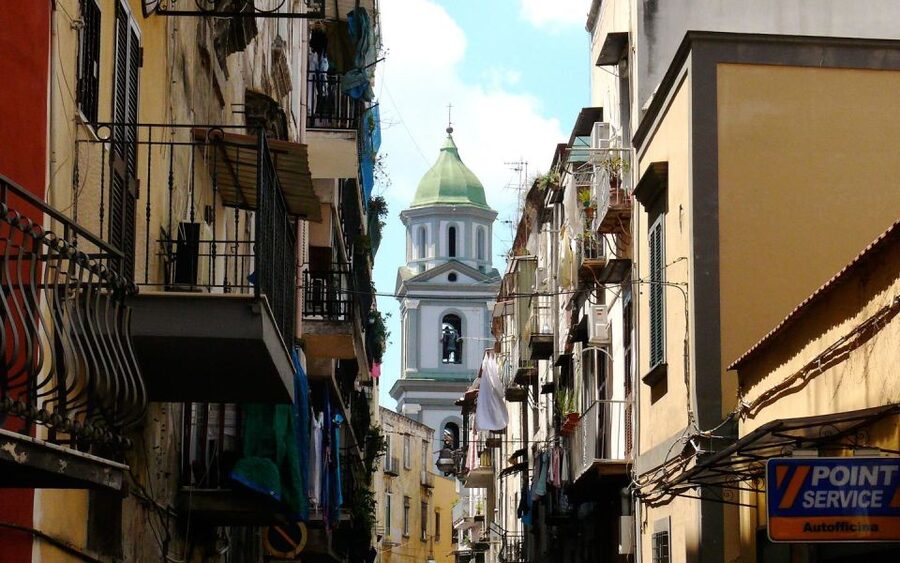
Two hours is a practical length for this route. It gives you enough time to move through the district, hear its central story, see the main architectural highlights, and stop for food without giving the walk a formal half-day structure.
The tradeoff is that the itinerary must keep moving. You will not have unlimited time at each church or palace. If you want detailed art history, long interiors, or a slow photography session, this tour may feel brisk.
For many visitors, the shorter format is a strength. You can fit it into a busy Naples schedule, perhaps before a larger museum visit or another neighborhood walk. It also works well early in your stay, since it gives you a social and historical frame for seeing the city beyond postcard Naples.
There is no transportation included. You make your own way to Porta San Gennaro and return from the route on foot. The meeting point is specific, but you should still allow enough time to find Via Porta San Gennaro 35 without rushing.
Whispers are provided from six participants onward. That can make the guide easier to hear when the group is larger or the surrounding streets are noisy. The tour is offered in English, Italian, and Spanish.
Is $47 a fair price?
At $47 per person, this is not the cheapest way to walk around Naples. You could pass through Rione Sanità without paying for a guide, and the streets themselves are open to explore.
The value comes from the explanation and the included food. You get two hours with a local tour expert, a route that links architecture with social change, and tastings of fried pizza, fiocco di neve, and coffee. If you would otherwise pay for snacks and then struggle to understand what you are seeing, the price is reasonable.
I would be less enthusiastic about the value if you already know Sanità well or speak Italian fluently and prefer to explore independently. For a first visit, particularly if you would not feel comfortable wandering into the district without context, the guide adds real value.
Free cancellation up to 24 hours before the start and the option to reserve now and pay later also reduce the risk of fitting it into a changing Naples plan.
Who should book this walk?
I would suggest this tour if you want to see a side of Naples that is not reduced to the historic center, famous pizza, or major museums. It suits you if you enjoy local stories, public art, food samples, and places where beauty sits beside visible hardship.
It is also a good choice if you want a guide to help you enter Rione Sanità with more confidence. One Australian participant specifically appreciated not having ventured into the neighborhood alone and valued the stories of change and metamorphosis. That is a useful clue about the tour’s role: it provides context and a sense of direction, not just sightseeing.
Families, couples, solo visitors, and curious first-time visitors can all find something here, provided they are comfortable with an active walk through popular urban streets. Art lovers will enjoy the Baroque details and murals. Food-focused visitors will appreciate the tastings, though this is not a full food tour.
You may want another experience if your priority is underground Naples, a long church interior visit, or an extended culinary meal. This route is about the neighborhood as a whole.
Should you book the Rione Sanità tour?
Book it if you want Naples with its edges showing: ornate palaces beside laundry, church traditions beside street art, and local food alongside a serious story of social renewal.
The strongest reasons to go are the guide-led context, the pairing of Palazzo San Felice and Palazzo dello Spagnolo, and the chance to taste fried pizza and Poppella’s fiocco di neve during the walk. The main limitation is the two-hour schedule, which offers a meaningful introduction rather than a complete study of the district.
For $47, I see it as a good-value first encounter with Rione Sanità, especially if you want help reading the neighborhood rather than simply passing through it.
FAQ
Where does the Rione Sanità tour begin?
The meeting point is next to Porta San Gennaro at Via Porta San Gennaro 35. The guide waits there holding a sign with the customer’s name.
How long does the tour last?
The tour lasts two hours.
Which languages are available?
The live tour guide is available in English, Italian, and Spanish.
What food is included?
The tour includes a savory tasting of fried pizza, served as takeaway, plus a sweet tasting of Poppella’s fiocco di neve and Neapolitan coffee.
Is transportation included?
No. Transportation is not included, so you must make your own way to the meeting point.
Can I cancel the booking?
Yes. You can cancel up to 24 hours in advance for a full refund. You can also reserve now and pay later.
Freshly painted around Naples
- Naples Murals Catacombs and Folklore Sanità District Tour★ 4.5 · 5 reviews
- Street Art of Spanish Quarters and Maradona Tour★ 3.5 · 3 reviews
- The Spanish Quarters, Street Art and Local Market Tour in Naples★ 5.0 · 23 reviews
- Rione Sanità: tour among street art, architecture, folklore★ 4.5 · 2 reviews
- Naples : Spanish Quarter & Maradona Street Art Tour★ 4.8 · 5 reviews
- Naples Walking Food Tour: Street Food and Maradona Murales★ 3.1 · 4 reviews
- Naples: Football Tour with Maradona Stadium & Mural★ 4.4 · 5 reviews
- Rione Sanità Street Art and Traditions Tour for Small Groups★ 5.0 · 27 reviews
Naples Street Art Tours, compared.
Naples Spanish Quarters Walking Tour Street Art, Folklore & Sweet
Read our review →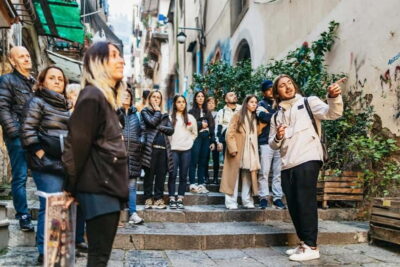
Naples: Spanish Quarters Folk Street Art w/ Sweets Tasting
Read our review →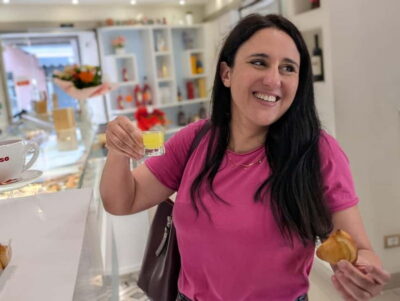
Naples: Street Art, Wine and Food Tasting Walking Tour
Read our review →
Naples Essentials: Monuments, Local Life & Street Art
Read our review →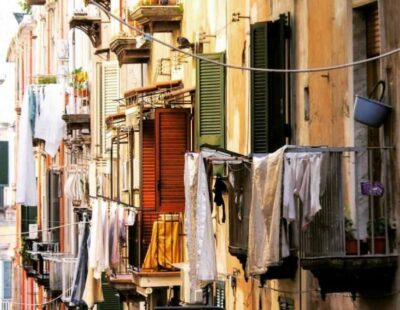
Naples: The Spanish Quarters, Street Art and Local Market
Read our review →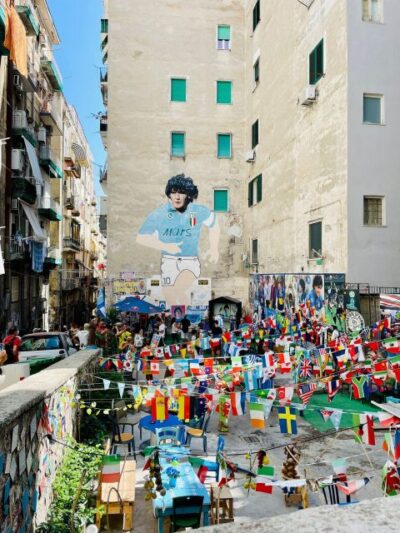
Street art tour of the Spanish Quarters & Maradona idol
Read our review →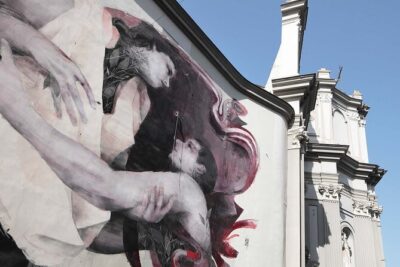
Rione Sanità Tour among Baroque, Revival, Street Art & Food
Read our review →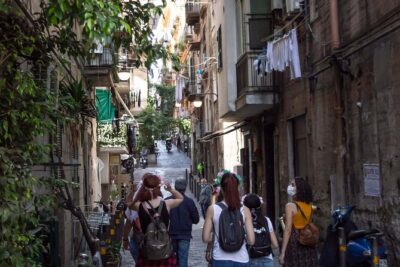
Spanish Quarter of Neaples StreetArt & Traditions, with coffee and babà
Read our review →Browse the lists this tour appears in