
Review · NAPLES
Rione Sanità Street Art and Traditions Tour for Small Groups
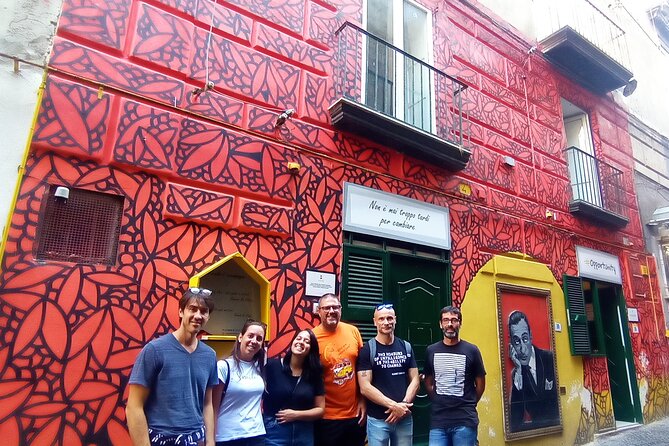
Sanità is one of Naples’ most compelling neighborhoods because its grand churches, crowded lanes, street art, social projects, and hard-edged past all sit close together. This small-group walk with local guide Valeria gives you a look at the district as a living part of Naples, not just a backdrop for photographs.
I especially like the personal angle and the modest group size, capped at 12 people. I also like the way the route links Baroque architecture, cinema, food, and urban renewal. The main drawback is that the catacombs cost an extra €11, and the experience requires good weather.
Key points to know before booking
- A local guide named Valeria leads the walk: Her connection to Sanità gives the tour a personal, neighborhood-based feel.
- The group is limited to 12 people: That makes questions and conversation easier than on a large city tour.
- You visit three major architectural sights: Palazzo dello Spagnolo, Palazzo Sanfelice, and Santa Maria della Sanità.
- The route connects Naples with Totò: You see his birthplace and learn about the district’s links with Neapolitan theatre and film.
- Coffee and a Poppella Fiocco di Neve are included: The pastry is one of Sanità’s best-known sweet treats.
- The San Gaudioso Catacombs are optional: Entry costs €11 and is paid separately at the end.
Why Sanità makes a strong setting for a walking tour
Sanità is not the Naples of polished shopping streets and grand postcard views. It is a district where layers of the city appear in quick succession. An ancient entrance to Neapolis, eighteenth-century palaces, an early Christian cemetery, local food, cinema, and public art all form part of the same short route.
That mix is the main reason I would choose this experience. You are not simply ticking off buildings. You are looking at how a neighborhood changed over time, from a burial area outside the old city walls to a refuge during the plague, then a district associated with noble families and later with social exclusion. Recent projects have brought youth cooperatives, art, and culture into that story.
The route also gives you a more thoughtful view of Naples. Sanità is not presented as a frozen old quarter. It is a place with problems, pride, humor, and efforts to build a new future. Valeria’s approach, as described through the experience, includes social and political themes as well as architecture and food. That makes the walk more meaningful than a quick procession from one photogenic facade to the next.
More Street Art Tours around Naples:
- Naples Spanish Quarters Walking Tour Street Art, Folklore & Sweet
★ 5.0 · 797 reviews - Naples: Spanish Quarters Folk Street Art w/ Sweets Tasting
★ 4.9 · 788 reviews - Naples: Street Art, Wine and Food Tasting Walking Tour
★ 5.0 · 163 reviews
Starting at the ancient entrance to Neapolis
The meeting point is at Via Porta S. Gennaro, 2. The route begins near an entrance to ancient Neapolis created in the tenth century, giving you an early reminder that Naples has been rebuilt and reshaped many times.
This is a useful place to start because Sanità can feel confusing at first. The old entrance helps place the neighborhood within the wider story of Naples. You begin close to the historic city center, then move into a district with its own identity and traditions.
The experience lasts about two and a half hours. The listed stops account for roughly 70 minutes of visit time, so the remaining time is used for walking, explanation, conversation, and the character of the streets between the main sights. Wear comfortable shoes. This is a walking tour through an urban district, not a seated museum visit.
Palazzo dello Spagnolo and the drama of Neapolitan Baroque
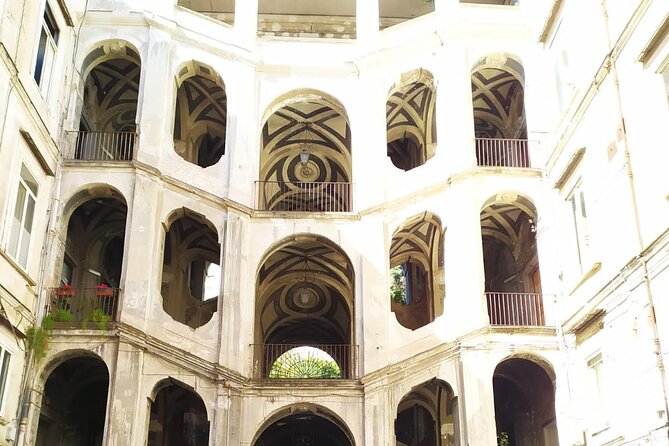
The first major stop is Palazzo dello Spagnolo, a national monument known for its eighteenth-century Neapolitan Baroque design. You have about 10 minutes here, with no admission fee.
The building is particularly useful for understanding how Naples used architecture to display status and movement. Its famous stairway and layered decorative style give you the kind of visual detail that can be missed if you only pass by on your own. This is a short stop, so do not expect a long interior visit or a full architectural lecture. Instead, expect time to take in the building and hear why it matters.
I like this part of the route because it introduces Sanità through elegance rather than through the district’s more difficult social story. The palace is a reminder that the neighborhood was once connected with noble life and grand building projects. It also gives you a strong photograph early in the walk.
Palazzo Sanfelice and the architect’s own home
A few minutes later, the tour reaches Palazzo Sanfelice. This early eighteenth-century palace was designed by the historic architect Sanfelice, and the stop lasts about 10 minutes. Admission is free.
Seen alongside Palazzo dello Spagnolo, it helps you compare two important examples of Neapolitan Baroque. The visit is not just about ornament. It also gives context for the architects and families who shaped the district.
I would pay attention to the contrast between the formal design of the palace and the active streets around it. Sanità’s architecture is not locked away from daily life. Grand facades sit beside ordinary homes, shops, walls, and street scenes. That tension is one of the most interesting parts of the walk.
The tradeoff is that the time at each palace is brief. If you want a detailed architectural study or an extended interior visit, this tour may feel too fast. If you want a clear introduction to the buildings without spending hours inside them, the timing works well.
Same walls, a different way in:
- Naples Essentials: Monuments, Local Life & Street Art
★ 4.9 · 79 reviews - Rione Sanità tour among baroque, revival, street art & food
★ 4.8 · 59 reviews - Naples: The Spanish Quarters, Street Art and Local Market
★ 4.7 · 59 reviews - Street art tour of the Spanish Quarters & Maradona idol
★ 4.7 · 49 reviews
Santa Maria della Sanità and its colorful dome
Santa Maria della Sanità receives about 20 minutes, making it the longest of the main architectural stops. The church is known for its striking design and majolica dome, which adds a burst of color to the district.
This is where the route’s architectural side becomes more atmospheric. Churches in Naples often reward a slow look, and this one offers plenty to notice in a short visit. The dome is a major visual feature, but the church’s shape and decoration also help explain the importance of religion and community life in Sanità.
The church sits above the Catacombe di San Gaudioso, so it also prepares you for the underground portion of the district’s story. That connection between the church above and cemetery below gives the stop extra weight. You are not seeing an isolated monument. You are seeing one part of a larger religious and burial complex.
Admission to the church is listed as free. As with the palaces, the visit is focused rather than exhaustive. Valeria’s storytelling is important here because the building’s details mean more when connected to the district around it.
The Catacombe di San Gaudioso: worth the extra €11?
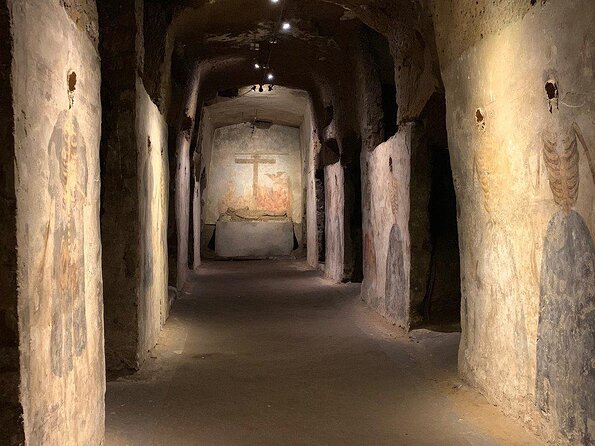
The Catacombe di San Gaudioso are described as Naples’ second early Christian cemetery, located beneath the Basilica of Santa Maria della Sanità. You may enter at the end of the walking tour for an additional €11 per person.
This is the clearest optional upgrade in the experience. If early Christian burial sites and underground history interest you, I would strongly consider adding it. The catacombs give physical depth to the story of Sanità, connecting the modern neighborhood with a much older period of Naples.
The extra cost is separate from the $50.60 tour price, so include it in your budget before booking. You are not paying twice for the walking tour. You are choosing a separate entry after the main route.
There is also a practical point here: the catacomb visit is optional, so the experience can suit people with different interests. One person in your group might prefer to finish after the street walk, while another might want the underground visit. The supplied details do not specify the length or exact format of the catacomb entry, so treat the €11 as an additional visit rather than assuming it is part of the 2.5-hour route.
Totò’s birthplace and the human side of Sanità
The Casa Natale di Totò brings the tour into the world of Italian theatre and film. Totò was born in Sanità, and the house is now in poor condition. The stop is free and lasts about 20 minutes.
That contrast is striking. Totò is an important figure in Italian popular culture, yet the building tied to his early life has not been preserved in grand fashion. The stop is therefore not a polished celebrity attraction. It is a chance to pay respect to a major Neapolitan performer while thinking about memory, neglect, and local pride.
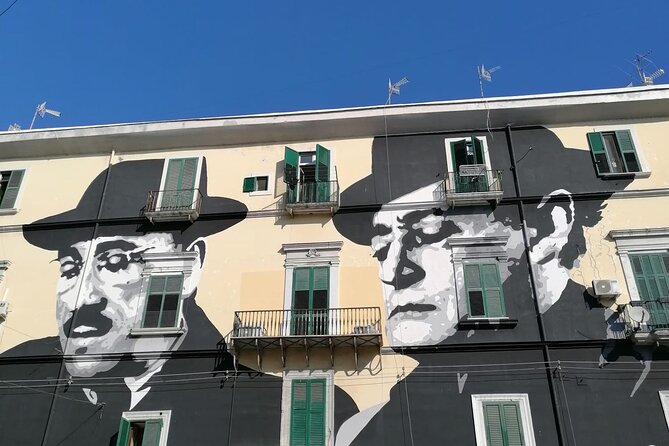
The district’s cultural links do not stop with Totò. The route also includes references to figures such as Eduardo De Filippo and Massimo Troisi, along with murals and other works connected with Neapolitan cinema and theatre. This gives the walk a distinctly local tone. You are learning how the city tells its own stories through performers, jokes, wall art, and neighborhood memory.
Street art, Jago, and a district changing in public
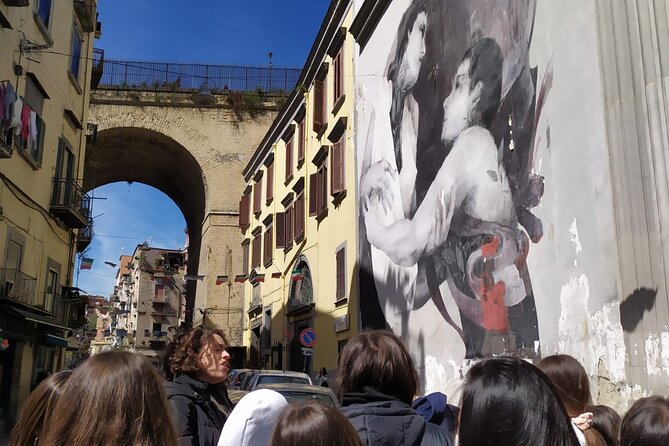
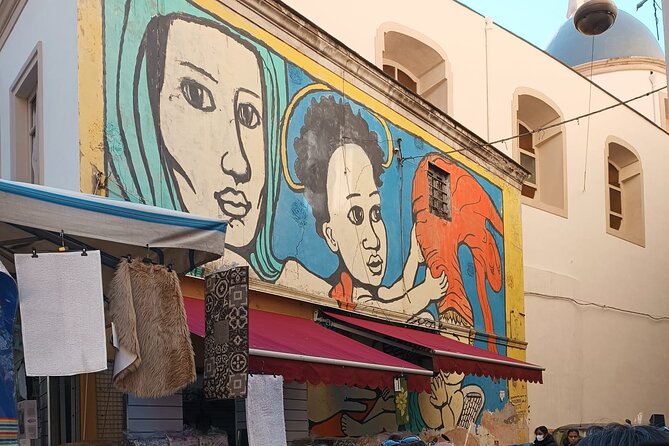
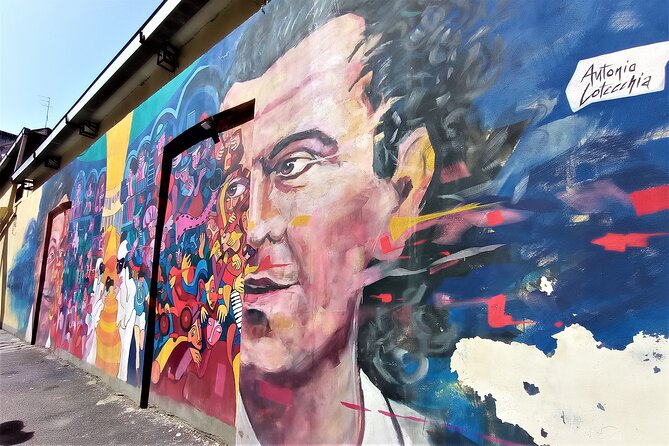
Street art is one of the reasons this tour feels different from a standard architecture walk. The route includes murals connected with Neapolitan cultural figures and sculptures by the young artist Jago, including the Veiled Son.
These works add a modern layer to the old buildings and churches. They also support the wider discussion of regeneration in Sanità. Art here is not treated as decoration alone. It is part of a district trying to reshape its public image and create reasons for people to visit, work, and stay.
You might see the neighborhood as both proud and unfinished. That is important. Regeneration does not erase the area’s difficult past, and this experience does not appear designed to hide those contradictions. Instead, it uses architecture, art, and local stories to show how change is happening.
The walk may also include encounters with local people and young residents. Details of those meetings cannot be guaranteed, but the experience is clearly built around personal contact rather than a purely scripted route. That is one reason the guide matters so much.
Coffee, a Fiocco di Neve, and the taste of Sanità
Coffee or tea and a Fiocco di Neve from Poppella are included. The Fiocco di Neve, or snowflake, is a well-known local pastry associated with the Sanità district.
This small food stop adds real value to the experience. At $50.60 per person, you are paying for a guided walk rather than a meal, but a local pastry and drink make the price feel more complete. Food also gives you a natural pause after the architecture and street art.
I would not book this expecting a food tour. The included snack is one pastry and a coffee or tea, not a series of tastings. Still, it is a useful introduction to the neighborhood’s everyday pleasures and a pleasant way to end the route.
What Valeria adds to the experience
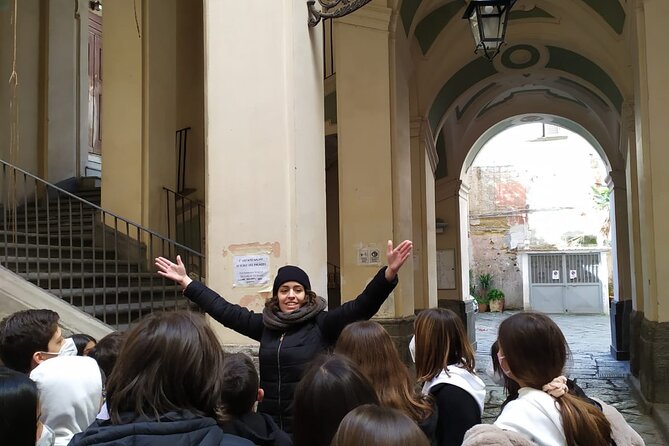
Valeria is the named guide, and the tour depends heavily on her ability to connect facts with local life. The experience is conducted in English, and her role goes beyond pointing out buildings. She brings together history, art, cinema, food, migration, urban renewal, and social questions.
The personal connection is especially important in a district like Sanità. A standard guidebook can tell you when a palace was built. It is less likely to explain how local people see the neighborhood today, why certain public artworks matter, or how old stereotypes affect the area’s future.
The small-group limit of 12 supports this style. You have a better chance to ask questions, hear the guide clearly, and take part in conversation. It is still a group tour, so you will not have the full control of a private guide. But the size is small enough to avoid the feel of a large procession.
Price, timing, and who gets the best value
The price is $50.60 per person for about two and a half hours. That is fair value if you want a guide who adds local context to places you could technically see for free. Palazzo dello Spagnolo, Palazzo Sanfelice, Santa Maria della Sanità, and Totò’s birthplace do not require admission fees, so much of your payment goes toward guiding, interpretation, group organization, and the included drink and pastry.
The catacombs cost another €11. Add that only if you want the underground visit. The total remains reasonable for a half-day experience, but the optional fee means you should compare the final cost rather than looking only at the headline price.
This tour suits you best if you:
- Want to see a part of Naples beyond the most familiar central sights.
- Enjoy local stories, social themes, architecture, and public art together.
- Prefer a small group to a large city walk.
- Like food as a small part of cultural exploration.
- Are comfortable walking through a neighborhood that is lively, imperfect, and still changing.
It may not suit you if you want a formal museum-style tour, a full food itinerary, or a route focused only on major monuments. The catacomb entry may also be less appealing if underground sites are not your thing.
The tour is near public transportation, service animals are allowed, and most people can participate. Confirmation is sent within 48 hours, subject to availability. You can cancel for a full refund up to 24 hours before the start time. Bad weather or failure to reach the minimum group size can lead to a different date or a full refund.
Should you book the Sanità walk?
I would book this tour if your idea of Naples includes local voices, layered stories, and streets that do not feel polished for visitors. Valeria’s neighborhood connection, the small group, Totò’s birthplace, the Fiocco di Neve, and the optional catacombs give the experience a clear sense of place.
Book it early if your dates are fixed, since it is often reserved well in advance. Choose the catacombs if you want the full religious and archaeological side of Sanità. Skip them if you prefer to keep the walk focused on street life, buildings, art, and food.
For a first visit to Naples, this is a useful way to see beyond the usual route. For a repeat visit, it may be even better, since you can spend two and a half hours looking at the city through the eyes of one of its own neighborhoods.
FAQ
Where does the tour begin?
The tour begins at Via Porta S. Gennaro, 2, 80138 Napoli, Italy.
Where does the tour end?
The activity ends back at the meeting point.
How long does the tour last?
The walking tour lasts approximately two hours and 30 minutes.
What language is the tour offered in?
The tour is offered in English.
How many people can join the group?
The maximum group size is 12 people.
Is entry to the Catacombe di San Gaudioso included?
No. Catacomb entry is optional and costs €11 per person, paid separately at the end of the tour.
What food and drink are included?
Coffee or tea and a Fiocco di Neve pastry from Poppella are included.
Freshly painted around Naples
- Naples Murals Catacombs and Folklore Sanità District Tour★ 4.5 · 5 reviews
- Street Art of Spanish Quarters and Maradona Tour★ 3.5 · 3 reviews
- The Spanish Quarters, Street Art and Local Market Tour in Naples★ 5.0 · 23 reviews
- Rione Sanità: tour among street art, architecture, folklore★ 4.5 · 2 reviews
- Naples : Spanish Quarter & Maradona Street Art Tour★ 4.8 · 5 reviews
- Naples Walking Food Tour: Street Food and Maradona Murales★ 3.1 · 4 reviews
- Naples: Football Tour with Maradona Stadium & Mural★ 4.4 · 5 reviews
- Spanish Quarter of Neaples StreetArt & Traditions, with coffee and babà★ 5.0 · 47 reviews
Naples Street Art Tours, compared.
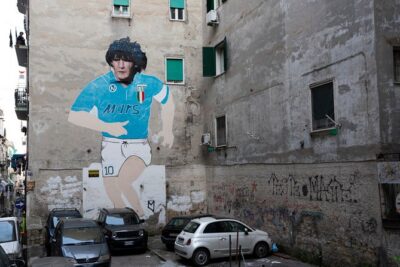
Naples Spanish Quarters Walking Tour Street Art, Folklore & Sweet
Read our review →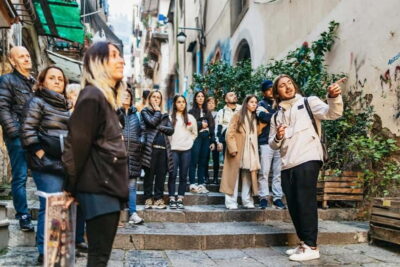
Naples: Spanish Quarters Folk Street Art w/ Sweets Tasting
Read our review →
Naples: Street Art, Wine and Food Tasting Walking Tour
Read our review →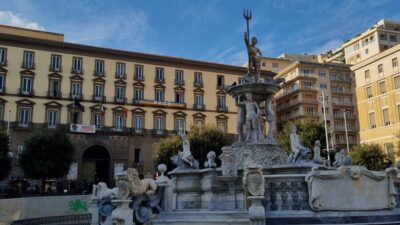
Naples Essentials: Monuments, Local Life & Street Art
Read our review →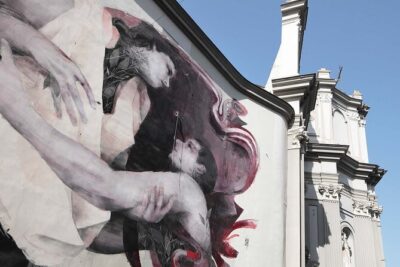
Rione Sanità tour among baroque, revival, street art & food
Read our review →
Naples: The Spanish Quarters, Street Art and Local Market
Read our review →
Street art tour of the Spanish Quarters & Maradona idol
Read our review →
Spanish Quarter of Neaples StreetArt & Traditions, with coffee and babà
Read our review →Browse the lists this tour appears in