
Review · MADRID
Madrid Street Art Tour (Malasaña Chueca Gran Via & Lavapies)
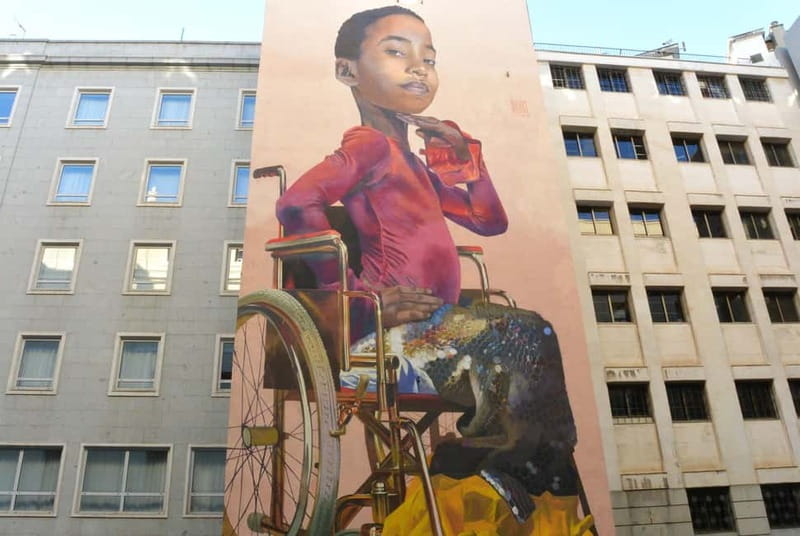
Madrid’s street art is not confined to one gallery. It appears on shutters, walls, shopfronts, stickers, mosaics, and old buildings, and this two-hour walking tour gives you a useful way to read it. You begin with graffiti’s origins, then follow an English-speaking guide through Malasaña, Chueca, Gran Vía, Sol, and Lavapiés.
I like the tour’s focus on working artists and local streets, rather than only famous monuments. I also like the pay-what-you-think-it-is-worth setup, which keeps the advertised price very low. The main caution is the amount of walking. One participant preferred a bicycle because the route felt demanding for someone not used to walking often.
Key points
- Graffiti explained first: You get a short introduction to how graffiti began before looking at Madrid’s current street art.
- Malasaña and Chueca: These neighborhoods bring together murals, stickers, mosaics, color, and independent street life.
- Modern Spanish artists: Look for work linked to names such as Okudart, Basket of Nean, El Rey de la Ruina, Done Street, and MUELLE.
- Major sights included: The route passes Puerta del Sol, Gran Vía, the Capitol building, Fuencarral Street, and Hortaleza Street.
- A street-level view of Madrid: Lavapiés adds older buildings and local character to the contemporary art focus.
- Bring walking shoes: The tour is wheelchair accessible, but you should still expect a substantial route on foot.
Why Madrid street art works best on foot
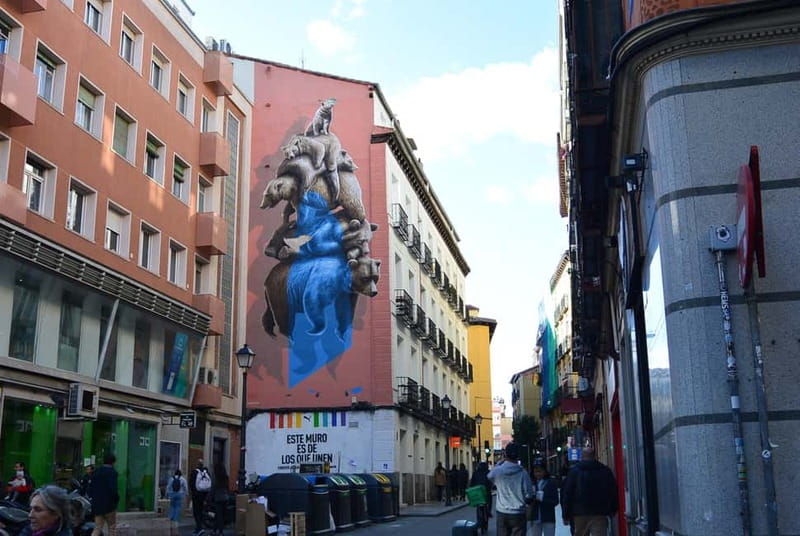
This tour is less about entering a museum and more about noticing what you would otherwise pass without a second thought. A guide can point out the difference between a large mural, a pasted poster, a sticker, a mosaic, and graffiti lettering. That context helps you see street art as part of Madrid’s daily life, not just as colorful decoration.
You also get a quick lesson in graffiti’s beginnings before the route turns to Madrid’s artists. That opening matters. Without it, a wall can look like a wall. With a little background, you begin to ask who made it, how it was placed, what style it uses, and how the city treats it.
The tour brings together national and international artists, with examples connected to the Urvanity Art Fair and Calle festivals. It also includes local names such as Okudart, Basket of Nean, El Rey de la Ruina, and Done Street. The exact works can change, since street art can be painted over, removed, or replaced, but the general subject remains useful and current.
More Street Art Tours around Spain:
- Barcelona Street Art and Graffitti Bicycle Tour
★ 5.0 · 361 reviews - Madrid: Street Art Tour with Local Graffiti Hunter
★ 4.8 · 270 reviews - Street Art Guided Tour in Madrid
★ 5.0 · 175 reviews
Meeting at Way Hostel Madrid
The meeting point is outside Way Hostel Madrid, where the guide waits at the door with the group. This is in the central Sol area, so you are starting in a part of Madrid that is easy to reach and already well suited to a walking tour.
Arrive a little early. The experience depends on joining the correct group at the right time, and the guide will not be meeting you at a large landmark such as the Puerta del Sol statue. The directions specifically place the meeting point at the hostel door.
The advertised language is English, and the tour is led by a professional guide. Diana is named in one especially positive experience, and other feedback praises the guides as friendly and effective. Guide assignments can change, so Diana should not be treated as guaranteed, but her name gives you a sense of the personal style that has worked well here.
The opening walk and first photo stops
After meeting up, you walk for about five minutes before reaching the first points of interest. The early stops include short photo visits and a guided section, giving you time to settle into the pace before the main neighborhoods begin.
These first stops are not described in detail, so do not book this expecting a fixed gallery-style sequence with every artwork named in advance. Street art routes need some flexibility. A mural may be easier to see on one day than another, and the guide may adjust the order to keep the walk moving.
The route uses short visits rather than long indoor stops. That is good for a two-hour tour, but it also means the value comes from the guide’s explanation and selection of streets, not from spending a long time at one painting.
Puerta del Sol and the Capitol building
Puerta del Sol is one of Madrid’s key central squares and a natural orientation point. Here, you are surrounded by major streets, old façades, shops, and the constant movement of the city. The stop lasts about 12 minutes, so expect a brief visit rather than a full historical tour of the square.
The Capitol building is also included among the points of interest. Its presence helps show how the tour mixes major Madrid landmarks with less formal art sites. You may arrive expecting only murals, but the route also puts those works against the city’s larger architectural setting.
This is one of the tour’s strengths. Street art makes more sense when you see the buildings around it. A painted wall beside a traditional façade tells you something different from a mural in a purpose-built arts district.
Same walls, a different way in:
- Barcelona Street Art Tour with Exclusive Artist Studios Visit
★ 5.0 · 152 reviews - Raval Street Art and Graffiti Guided Tour in Barcelona
★ 5.0 · 81 reviews - Barcelona: Raval Street Art and Graffiti Walking Tour
★ 4.9 · 60 reviews - Barcelona: 3.5-Hour Street Art Tour by Bamboo Bike
★ 5.0 · 56 reviews
Gran Vía, Madrid’s Spanish Broadway
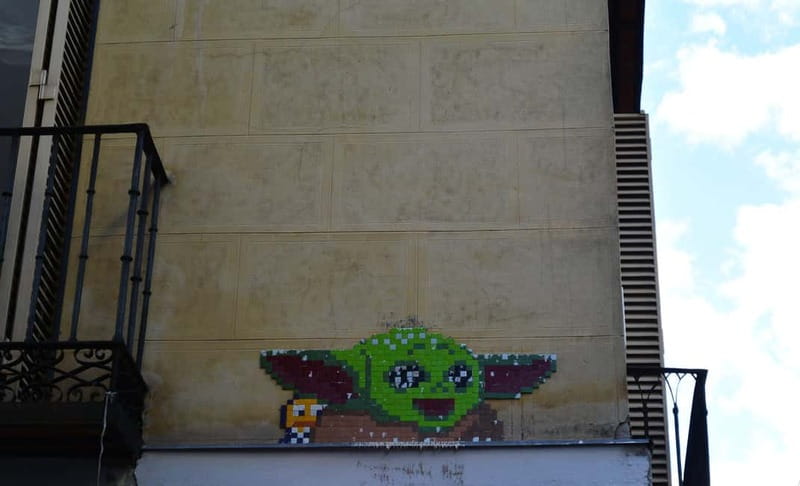
The route continues to Gran Vía, often called Madrid’s Spanish Broadway. The stop lasts about 15 minutes and gives you a look at one of the city’s most recognizable avenues, including the Capitol building area.
Gran Vía is not mainly a street-art stop in the same way as Malasaña or Lavapiés. Its value here is contrast. You see grand commercial architecture, theaters, signs, and city traffic before turning into streets where the art feels more local and improvised.
I like this change of scale. It keeps the tour from becoming a narrow hunt for painted walls. You get a sense of Madrid as a whole city, then move into neighborhoods where artists leave work on a smaller, more personal scale.
Malasaña and the protected mark of MUELLE
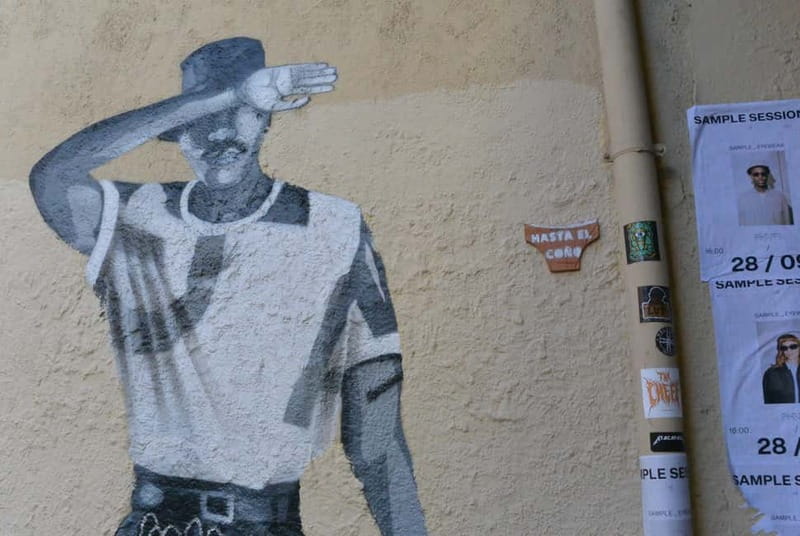
Malasaña receives about 30 minutes, making it one of the longer sections of the route. It is presented as a hip neighborhood with some of Madrid’s most notable street art and iconic streets.
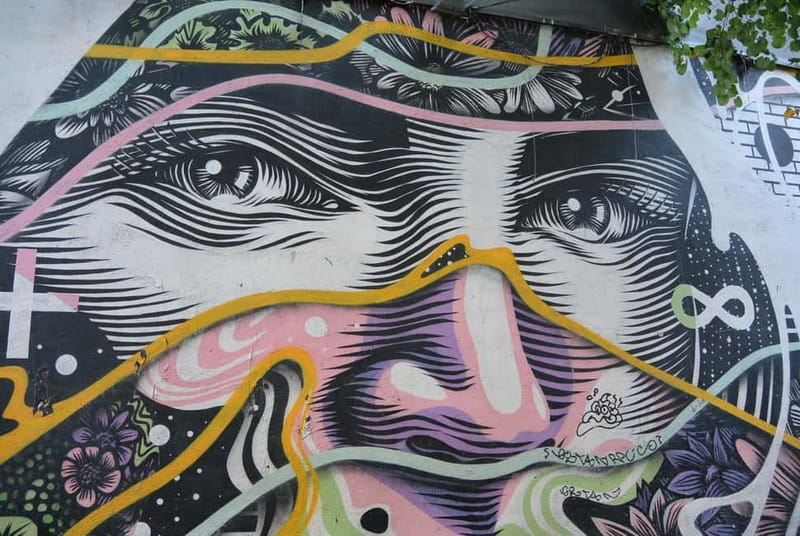
One particularly interesting detail is the protected signature of Madrid artist MUELLE. This is the kind of small feature that can easily disappear into the city unless someone explains why it matters. The stop is not only about photographing a large mural. It also asks you to look for an artist’s mark and understand its place in Madrid’s urban culture.
You will also pass streets connected with the area’s creative identity, including Fuencarral Street. The guide may point out different forms of work, from large-scale pieces to paste-ups and stickers. Bring a camera, but keep it ready for small details as well as big walls.
Malasaña is a good fit for you if you enjoy seeing how art shares space with ordinary neighborhoods. The drawback is that street art is not a fixed collection. The exact pieces you see can change, and the route may not deliver a neat checklist of famous works.
Chueca, Hortaleza Street, and color in the city
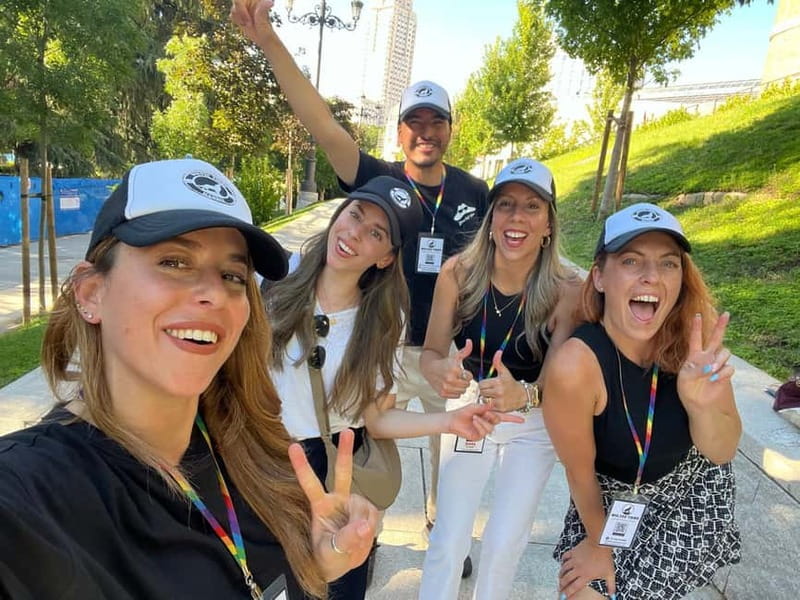
Chueca receives another 30 minutes. The tour description highlights the neighborhood’s colors and includes Hortaleza Street among the points of interest.
This part of the walk adds another layer to Madrid’s contemporary identity. Chueca is not presented simply as a backdrop for murals. It is treated as a neighborhood with its own tone, streets, and visual character. The guide’s job is to connect the art to that setting.
For you, this means the experience is more useful than a series of isolated photo stops. You can compare Malasaña and Chueca, notice how the streets differ, and see how artists work within busy urban spaces.
A practical point: the route is compact in time but not necessarily light in effort. Malasaña and Chueca together account for about an hour of the stated itinerary, and the walking between sections adds up. Wear comfortable shoes and avoid bringing anything that makes a two-hour city walk awkward.
Lavapiés and the older face of Madrid
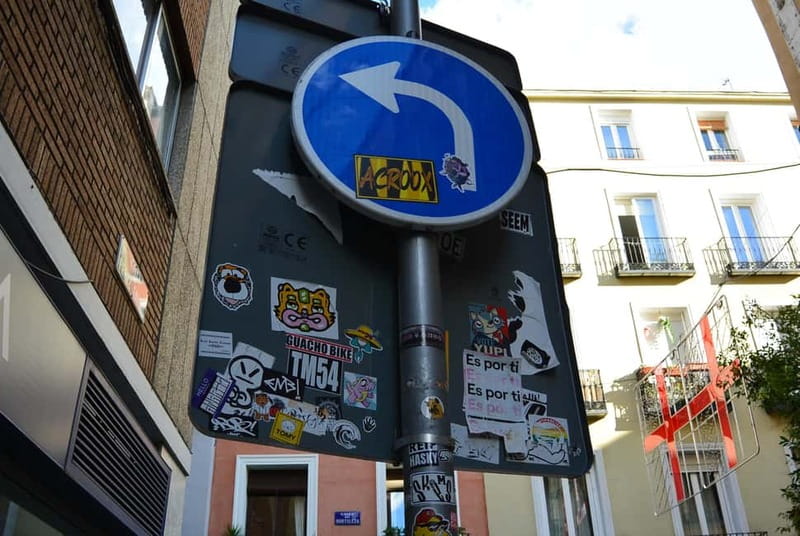
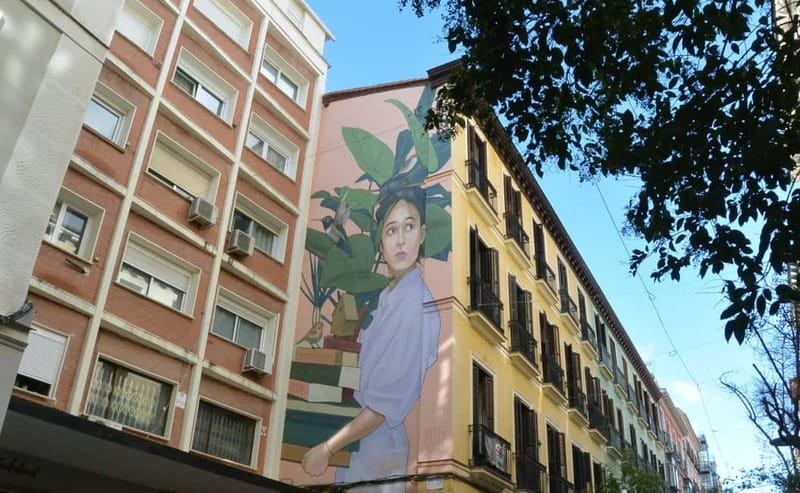
Lavapiés is described as the cultural heart of the city and one of the best examples of traditional Madrid culture. Its multi-story buildings and neighborhood character provide an important counterpoint to the newer art on the walls.
The supplied route lists Lavapiés among the included areas, while the timed itinerary later places the finish near Calle de la Magdalena. Since route details can shift, I would confirm with the guide exactly how much time will be spent in Lavapiés on your departure date. The area is an important part of the advertised experience, but the sequence shown does not give it a separate timed stop.
That small uncertainty does not erase Lavapiés’ value. If you want Madrid beyond the grand avenues, this is the section that should interest you most. You get older urban fabric, local streets, and contemporary works layered onto a neighborhood with a strong cultural identity.
The tour’s focus here also helps explain why street art matters. It is not only something created for an art fair or a photograph. It can sit beside homes, shops, and long-used streets, changing how people experience their surroundings.
Murals, paste-ups, mosaics, and urban sculpture
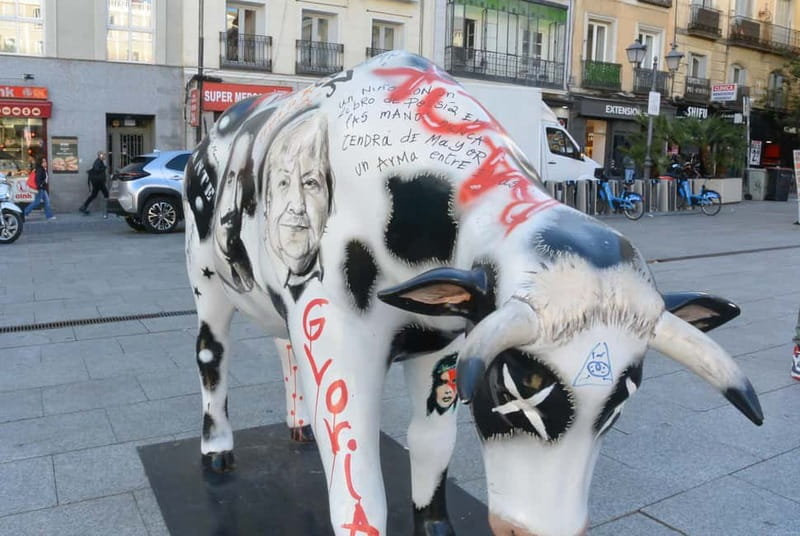
The range of formats is one of the best reasons to choose this walk. You are not limited to painted murals. The route can include paste-ups, urban sculpture, mosaics, stickers, and other work placed directly into the city.
Works connected with the Urvanity Art Fair and Calle festivals add a formal contemporary-art link. At the same time, local artists leave pieces in ordinary corners, where the work may feel less polished and more tied to the street.
Some art may be easy to photograph. Other pieces may be smaller, partly covered, or placed where you need the guide to point them out. That variety keeps the route interesting, but it means you should not judge the tour by the number of giant murals alone.
One participant particularly enjoyed the murals and an artist’s studio at the end of the experience. The studio should be treated as a possibility rather than a guaranteed stop, since it is not clearly listed in the timed route. Still, it suggests that the experience can sometimes move beyond public walls and offer a closer look at how artists work.
Pace, accessibility, and what to bring
The tour lasts two hours and is conducted on foot. One participant described the pace as relaxed and worthwhile, while another found the walking difficult and would have preferred a bicycle. Both points are useful. The guide may keep a reasonable pace, but the route still covers several central neighborhoods.
The activity is listed as wheelchair accessible. If you use a wheelchair, you should still confirm current route conditions with the provider, especially because street surfaces and access can vary from one street to the next. The tour data supports accessibility, but it does not provide details about toilets, vehicle transfers, or step-free access at every stop.
Bring:
- Comfortable shoes
- Comfortable clothing
- A camera
You do not need museum admission because the art is viewed outdoors. Entry fees are not included for any attractions or museums, but no paid attraction is required for the core tour.
Is the pay-what-you-think model good value?
The advertised price is $1.77 per person, while the tour is described as free and allows you to reward the guide at the end with whatever you think the experience was worth. In practical terms, the low booking price is not the full measure of value. You should plan to give the guide a tip if the tour helps you understand Madrid and find work you would have missed alone.
That model can be excellent for a budget-conscious visit. You reserve a place without paying the full cost up front, and you can keep your plans flexible with cancellation up to 24 hours before the start. You can also reserve now and pay later.
The tradeoff is that the experience may feel less like a fully packaged paid excursion. The route is short, stops are outdoors, and entry to museums is not part of the deal. You are paying mainly for the guide’s time, explanations, local knowledge, and route planning.
The overall score is 3.5 from eight ratings. That is a mixed result rather than a clear signal of failure or excellence. The strongest comments praise the guides, the relaxed pace, the murals, and the chance to see an authentic side of Madrid. The main negative point is walking difficulty, so your comfort with a city route should guide your decision more than the low price alone.
Who should book this Madrid walk?
I would choose this tour if you want an introduction to Madrid’s street art without committing half a day to a museum or a specialist art program. It suits first-time visitors who want to see Malasaña, Chueca, Gran Vía, Sol, and Lavapiés in one outing.
It also works well early in your stay. The guide can help you identify streets and neighborhoods worth revisiting later, especially if you like photography or contemporary art. The route gives you a useful first look, even if you later return on your own for longer photo stops.
I would be more cautious if you dislike walking, need frequent rests, or want a fixed list of guaranteed murals. The bicycle suggestion from one participant is worth taking seriously. This is a walking tour with art as its subject, not a vehicle-based sightseeing trip.
Should you book it?
Book it if you want local street art, neighborhood atmosphere, and a budget-friendly introduction to Madrid. The best parts are the range of art forms, the focus on artists such as MUELLE and Okudart, and the shift from Gran Vía’s grand scale to the streets of Malasaña, Chueca, and Lavapiés.
Skip it if walking is a concern or if you prefer indoor galleries and guaranteed exhibits. For most visitors who can manage two hours on foot, it is a sensible way to see Madrid from a less formal, more observant angle. Just wear good shoes and remember that the final tip is part of the experience’s real cost.
FAQ
How long does the Madrid Street Art Tour last?
The tour lasts two hours.
Where does the tour begin?
It begins at the door of Way Hostel Madrid, where the guide waits with the group.
Where does the tour finish?
The listed finishing point is Calle de la Magdalena, 23, Centro, 28012 Madrid, Spain.
Which neighborhoods does the tour visit?
The advertised areas include Malasaña, Chueca, Gran Vía, Sol, and Lavapiés.
Is the tour conducted in English?
Yes. The live tour guide language is English.
Is the tour wheelchair accessible?
Yes, the activity is listed as wheelchair accessible.
What should I bring?
Bring comfortable shoes, comfortable clothing, and a camera.
Are museum or attraction tickets included?
No. Entry to attractions and museums is not included, although the core street-art tour takes place outdoors.
Can I cancel the reservation?
Yes. You can cancel up to 24 hours in advance for a full refund. You can also reserve your spot and pay later.
Freshly painted around Spain
- Small-Group Graffiti Tour and Workshop in El Carmen★ 5.0 · 2 reviews
- Bilbao Urban and Street Art Walking Tour★ 5.0 · 2 reviews
- Barcelona Street Art, Graffiti and Tapas Tour★ 4.0 · 5 reviews
- Salamanca: Private Guided Street Art Walking Tour★ 5.0 · 2 reviews
- Private Barcelona Street Art Tour★ 5.0 · 2 reviews
- Barcelona | StreetArt Bike Tour Moco Museum★ 4.6 · 13 reviews
- Málaga: Street Art Tour in the Soho District★ 5.0 · 4 reviews
- Madrid: Private Grafitis/Street Art Segway Tour 2h★ 4.5 · 2 reviews
Madrid Street Art Tours, compared.
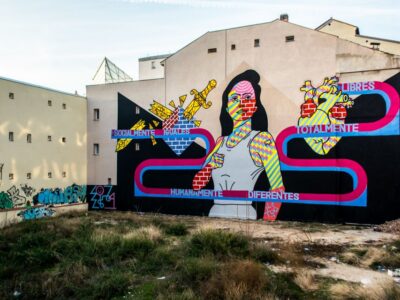
Madrid: Street Art Tour with Local Graffiti Hunter
Read our review →
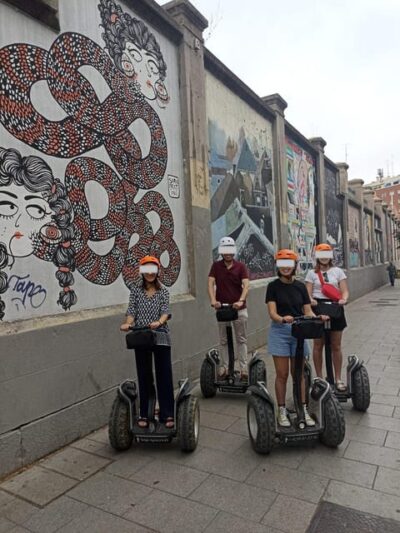
Madrid: Private Grafitis/Street Art Segway Tour 2h
Read our review →Browse the lists this tour appears in