
Review · JOHANNESBURG
Johannesburg: Street Art and Culture in Maboneng!
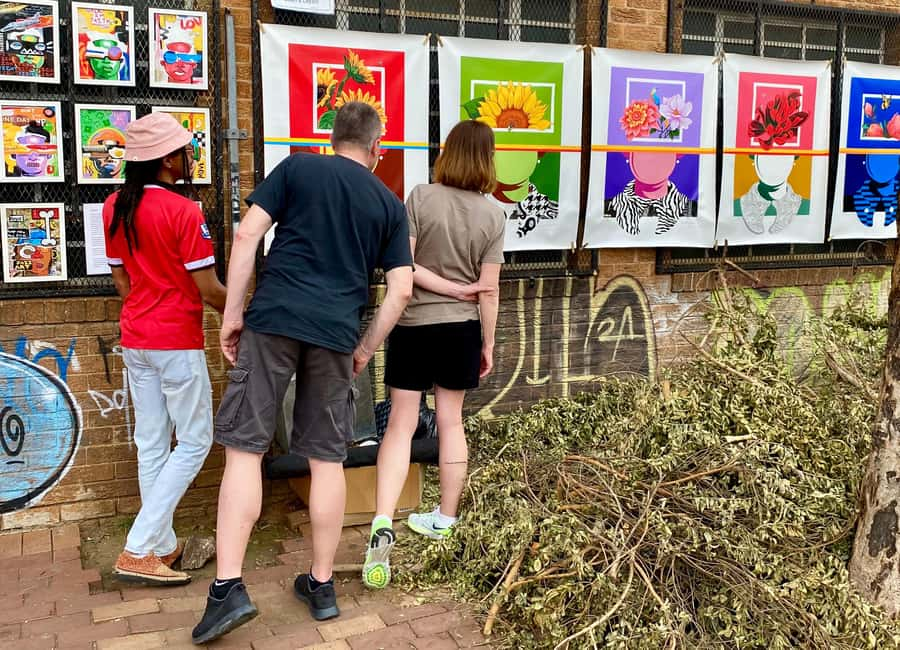
Maboneng’s best stories are painted on its walls. This two-hour walk links striking murals by artists such as ESPO Powers and DBongz with the neighborhood’s mining-era past, creative present, and uncertain future. You get more than a photo stop: you learn why the art is there and what it says about Johannesburg.
I like the local point of view, especially when guides such as Ayanda explain the area from personal experience. I also like the compact route, which fits art, galleries, shops, a café, and an alleged anti-apartheid hideout into one manageable morning or afternoon. The main consideration is that Maboneng is a real inner-city neighborhood, not a sealed attraction. Stay with your guide, use common sense, and expect street activity rather than a polished museum setting.
Key points to know before you book
- Coffee begins the walk: Meet inside Home of the Bean at the corner of Fox and Berea Streets, under the bridge.
- The art has context: The guide explains artists, symbols, local politics, and the changes that shaped Maboneng.
- The route includes more than murals: You visit Maboneng Arts Village, the Hideout Bar at Curiocity Backpackers, and a viewpoint.
- Local guides add the value: Ayanda is especially praised for his personal connection to the neighborhood, while Bonny, Kaiser, and Michael have also led tours.
- It is short but active: The tour lasts two hours and is made up of several walking sections, with time for questions and photographs.
- Bring spending money: Food, drinks, artwork, and goods from informal traders cost extra.
Why Maboneng makes a good introduction to Johannesburg
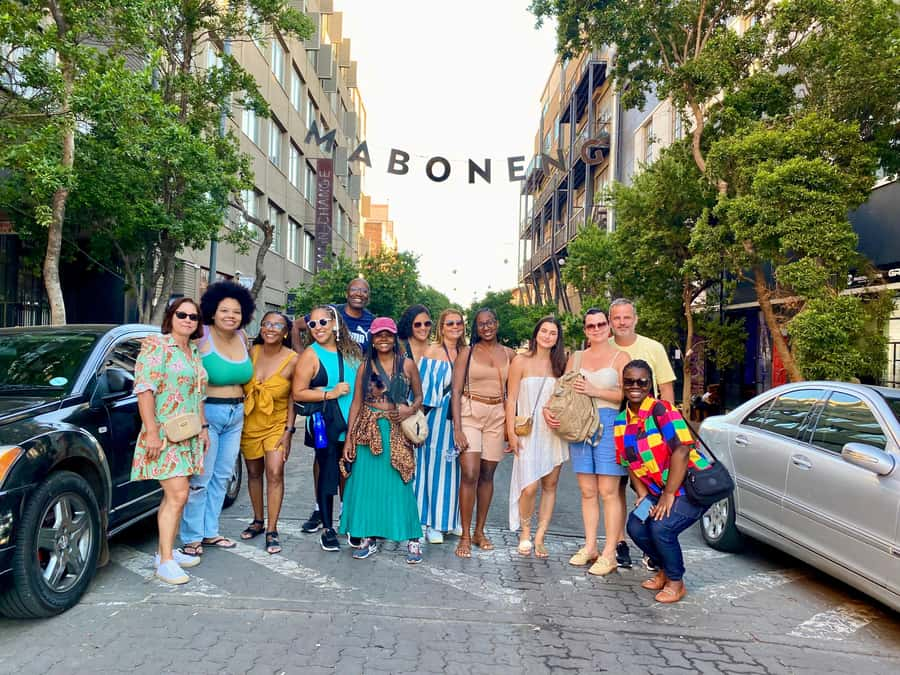
Maboneng means Place of Light, and the name suits its public art and creative energy. But the area is not simply a colorful backdrop for photographs. Its identity comes from several layers: old industrial buildings tied to Johannesburg’s mining economy, years of inner-city decline, and redevelopment that began around 2009.
That mixture gives the walk its purpose. You see how art can help change the public face of a district, while also asking who benefits from that change and how local residents fit into it. The tour treats Maboneng as a work in progress, not a finished success story.
I would use this experience early in a Johannesburg visit. It gives you a useful introduction to the inner city, South African urban life, local art, and the social questions behind neighborhood redevelopment. It also helps you read the city beyond its famous attractions.
The group setting appears to be intimate on some departures, with groups of two to four people reported. That matters here. Street art is easy to rush past, but a smaller group gives you room to stop, ask questions, and hear the background without competing with a crowd.
More Street Art Tours around the world:
- Medellin: Comuna 13 Graffiti Tour, Cable Car & Street Food
★ 4.8 · 9,046 reviews - CDMX: Xochimilco, Coyoacan, Frida Kahlo Museum & Murals Tour
★ 4.4 · 3,025 reviews - Amsterdam: Streetart Museum STRAAT Entrance Ticket
★ 4.8 · 2,137 reviews
Starting with coffee at Home of the Bean
Your meeting point is Home of the Bean, a café at the corner of Fox and Berea Streets, under the bridge. The building can look industrial from outside, so go inside the café if you arrive before the start time rather than waiting on the pavement.
The opening 15 minutes cover introductions and a safety briefing. You can buy a coffee before the walk begins, but food and drinks are not included in the $40 price. This is a sensible start because the café gives you a comfortable place to meet your guide and sort out any last-minute questions.
Your guide may be Ayanda, Bonny, Kaiser, or Michael, depending on the departure. Ayanda receives particularly strong praise for his command of Maboneng, his sense of humor, and his personal connection to the neighborhood. Several people also valued his help with practical matters, such as finding an ATM or arranging a nearby parking spot.
The operator communicates by WhatsApp or message about 30 minutes before the tour. Keep your phone available, especially if you are delayed or need help locating the café. If you are running late, contact the guide rather than trying to catch up alone.
Reading the first murals in Maboneng
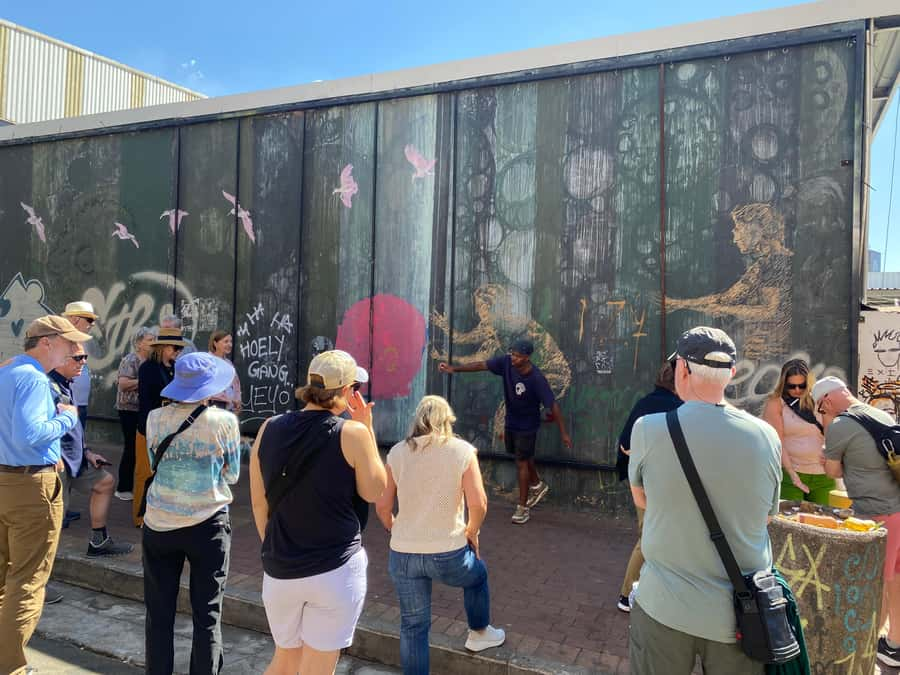
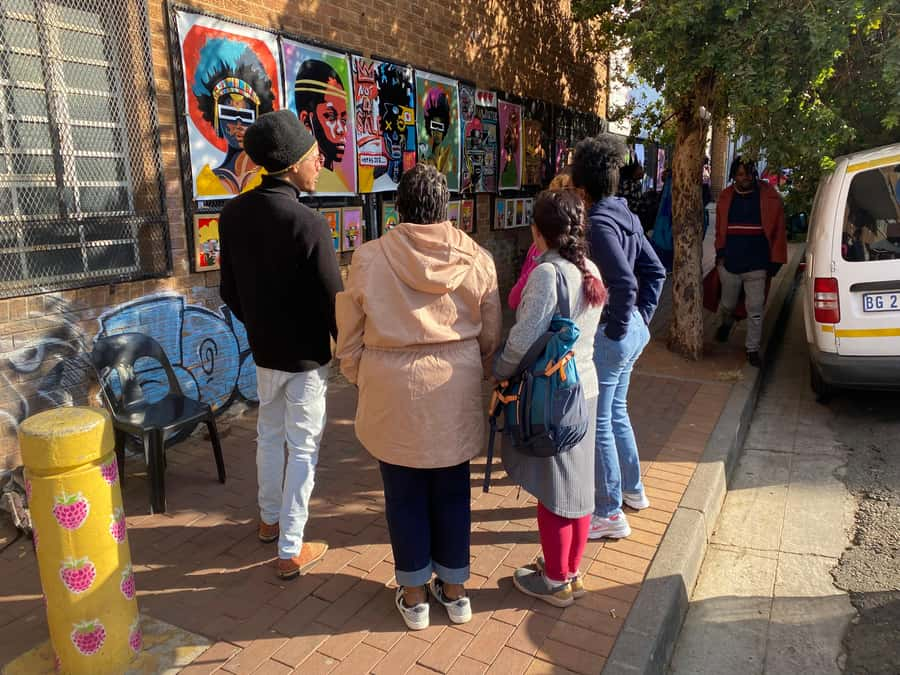
Once you leave the café, the streets become the main gallery. The guide points out works by local and international artists, including ESPO Powers and DBongz, then explains the stories and ideas behind selected pieces.
That explanation is the difference between a walk and a guided experience. On your own, you might see color, scale, and clever painting technique. With a guide, you can ask who made the work, why it was placed there, and how it connects to Johannesburg or South Africa.
The art also gives the guide a way to discuss subjects that might feel abstract in a classroom. You hear about identity, inequality, public space, creativity, and the tension between local life and outside investment. The strongest part of the experience is not seeing every mural. It is learning how to look at a few important ones.
Do not expect every wall to be in perfect condition. Street art changes, fades, and can be painted over. That is part of the point. The neighborhood is active and changing, so the exact works you see may vary over time.
You will have opportunities to take photographs, but the guide’s commentary is worth your attention. Ask questions if you want more detail about a specific artist or piece. The tour is conducted in English only, so a comfortable command of English will help you get the most from the discussion.
Maboneng Arts Village and the creative economy
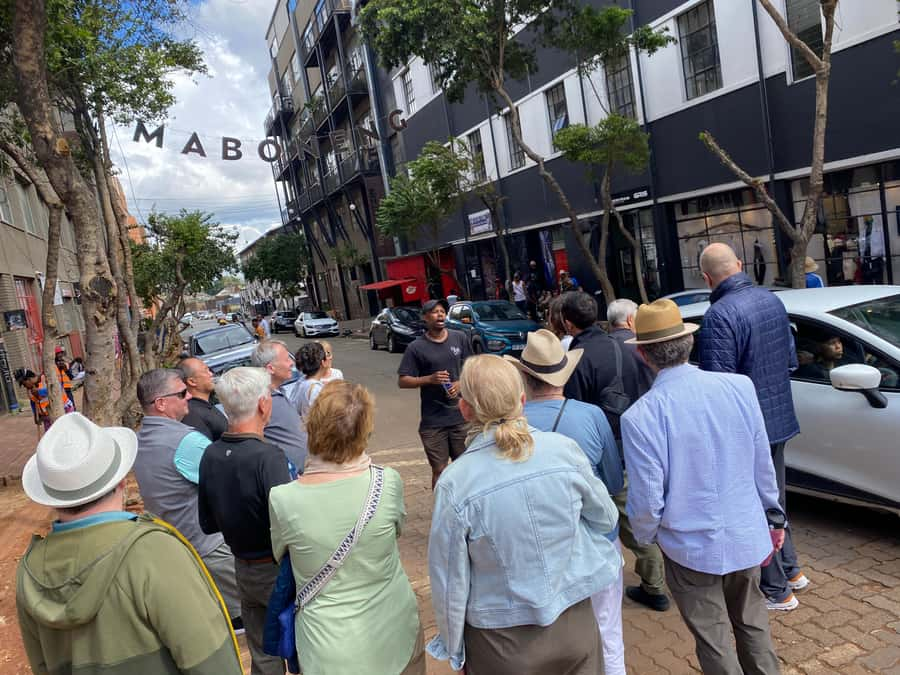
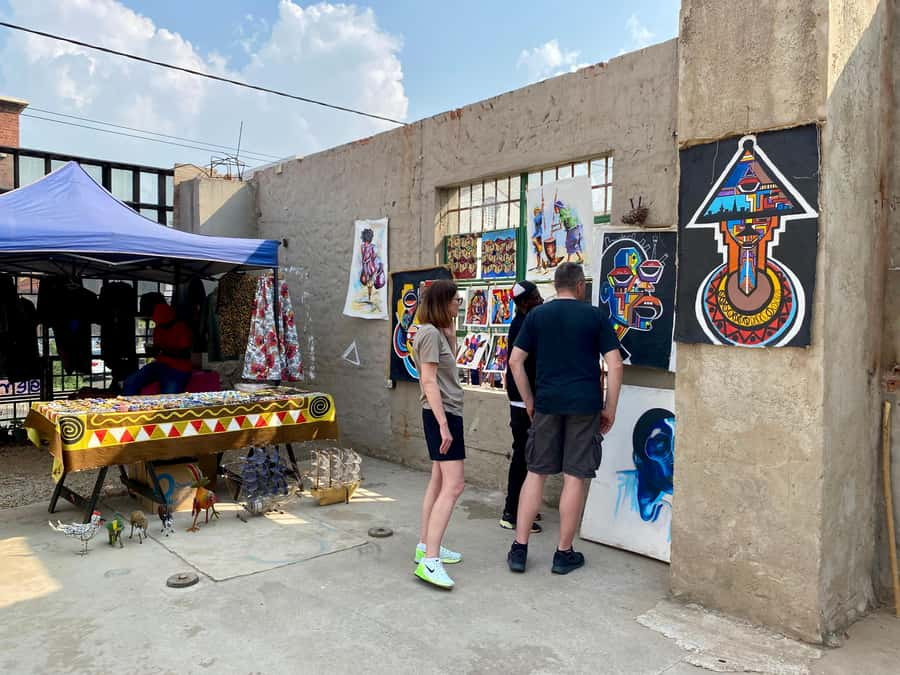
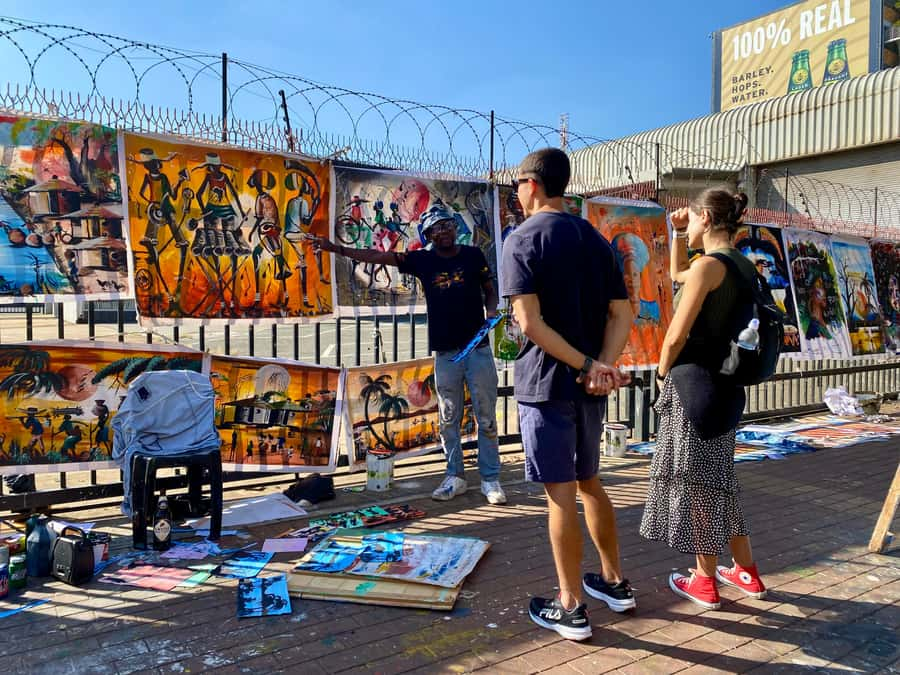
Maboneng Arts Village is one of the tour’s useful stops because it shows what happens behind the murals. It gives artists and makers a place to display and sell their work, while nearby galleries, curio stores, gift shops, and restaurants show how the district has built a creative economy.
This stop helps you connect public art with working artists. You may find pieces that appeal to you, but purchases are not part of the tour price. Bring cash or a card if you hope to buy artwork, crafts, or goods from local informal traders.
I like this part because it keeps the experience grounded. Maboneng is not only about large commissioned walls. It is also about people trying to make a living through design, food, retail, and culture. The guide can help you understand the difference between an art-filled district and an art district that supports local creative work.
At the same time, the redevelopment raises fair questions. Turning former industrial buildings into fashionable spaces can bring new business and public attention, but it can also change rents, access, and the character of a neighborhood. The walk addresses this evolution rather than presenting regeneration as a simple victory.
Same walls, a different way in:
- Belfast: Murals Taxi Tour
★ 4.9 · 2,047 reviews - Wynwood Graffiti Golf Cart Small-Group Tour
★ 5.0 · 1,646 reviews - London: Street Art and Graffiti Guided Walking Tour
★ 4.9 · 1,354 reviews - Lisbon: Street Art Tour
★ 4.9 · 1,324 reviews
The Hideout Bar and the weight of the past
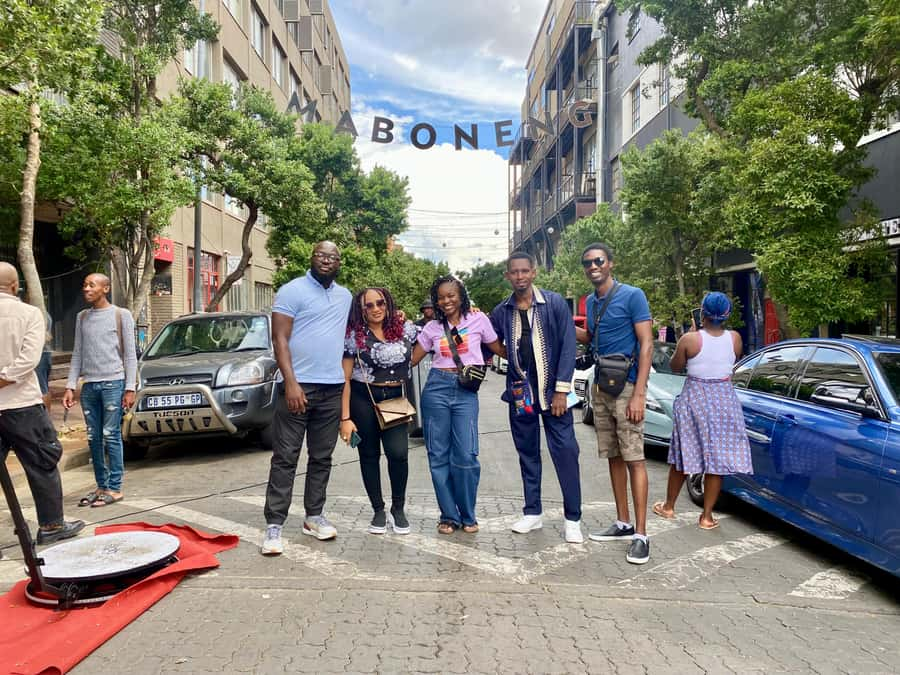
The visit to the Hideout Bar at Curiocity Backpackers adds a more personal historical note. It is described as an alleged hideout for Nelson Mandela and other anti-apartheid activists. The wording matters: this is a local story and a place with an interesting claim, not a formal national monument with every detail proven in the same way.
The stop gives your guide a chance to discuss apartheid-era resistance and the networks that helped activists move, meet, and remain hidden. It also shows how ordinary urban spaces can carry memories that are not obvious from the street.
This is one of the reasons I would not label the experience simply a graffiti tour. The art is the visible hook, but the substance comes from the connections between buildings, politics, local residents, and the city’s past.
If you expect a long museum-style history lesson, this is not that. The tour is moving on foot, and each stop is fairly brief. You get a clear introduction, then have the option to ask follow-up questions as you walk.
A viewpoint and the changing city around you
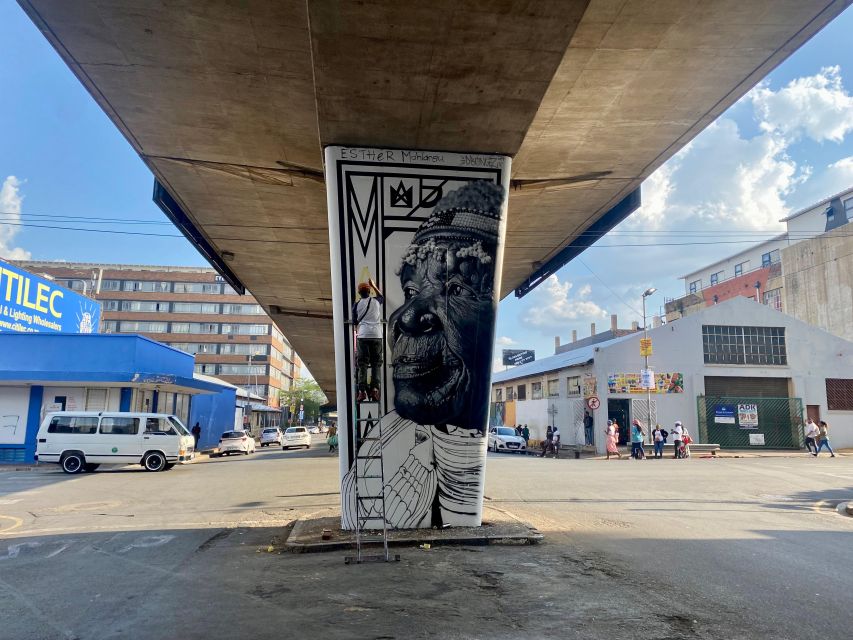
The route includes a viewpoint, with scenic views along the way. The exact outlook can depend on the day’s route and access, but the purpose is clear: you pause to see Maboneng in relation to the wider inner city.
That wider view helps explain why the neighborhood matters. Maboneng is not an isolated arts village. It is part of Johannesburg’s central urban fabric, with older industrial links, changing buildings, informal trade, new restaurants, and people who call the area home.
The walk continues through Maboneng after the viewpoint, with more street art and neighborhood detail before returning to Home of the Bean. The route is broken into several short walking sections rather than one long march. That makes the two-hour duration feel active without becoming an exhausting city hike.
Wear comfortable shoes. The experience is wheelchair accessible, but you should still raise any specific mobility needs when booking, since an urban route can include ordinary street conditions and busy public spaces.
Safety, street life, and what to expect
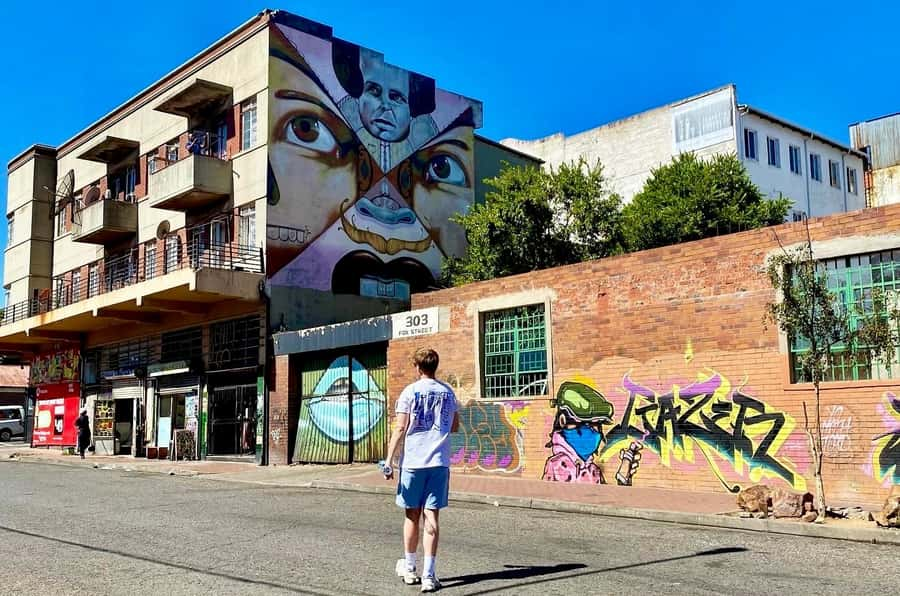
Safety is a fair concern for anyone visiting central Johannesburg. This tour does not pretend that the city is a theme park. You walk with a guide who knows the district, follows a set route, and can explain how to move through the area with awareness.
Many people particularly valued feeling secure with Ayanda and appreciated his familiarity with local residents. That local connection is useful, but it does not replace common sense. Keep valuables discreet, stay with the group, and follow the guide’s advice about where to walk and when to stop.
You will encounter street artists, informal traders, residents, and people going about their daily business. That is a strength of the tour, since you see Maboneng as a lived-in neighborhood. It also means the pace and atmosphere are less controlled than at a conventional attraction.
The tour is a good fit if you want direct contact with city life while still having guidance. It is less suitable if you prefer a quiet, carefully managed sightseeing route or want to explore every gallery at your own pace.
Is $40 good value for two hours?
At $40 per person, this is not the cheapest way to see street art. You could walk through parts of Maboneng on your own and spend nothing beyond a coffee. The value comes from what you would miss without context.
The fee covers the guide and entry to the places visited. Food and drinks are extra, as are purchases from artists, shops, and informal traders. You are paying for a compact orientation to a complicated district, not for a full-day attraction or a meal.
I think the price is fair for a first visit, particularly if you have limited time in Johannesburg. The guide helps you find works you may not notice, explains the artists, connects the district to the city’s past, and points out places you might not feel comfortable locating alone.
It is also useful for visitors with a short schedule. One person completed the walk before heading to the airport, and the two-hour format is easier to fit around other plans than a half-day city tour. Still, do not treat the short duration as a reason to rush. The conversations are where much of the value lies.
Free cancellation up to 24 hours before the start and a reserve-now, pay-later option make the booking less rigid. Those policies are practical if your Johannesburg plans are still shifting.
Who should book this Maboneng walk?
I would recommend it to first-time visitors who want more than a landmark checklist. It suits art fans, photographers, students, and anyone curious about how Johannesburg is changing.
It is also a strong choice for people who want a local guide rather than a large coach tour. The guides are praised for answering questions, adapting to the group, and explaining both the art and the broader city. Ayanda, in particular, is often described as articulate, warm, humorous, and deeply connected to Maboneng.
Families and older visitors can enjoy it too, provided everyone is comfortable walking on city streets for two hours. The route is wheelchair accessible, and the walking sections are relatively short, but you should still communicate any mobility concerns in advance.
You may want a different experience if your main goal is shopping, nightlife, or a long gallery visit. This walk offers brief visits and broad context. It introduces the district rather than allowing extended time at each venue.
FAQ
Where does the Maboneng street art tour start?
It starts at Home of the Bean coffee shop at the corner of Fox and Berea Streets, under the bridge. Wait inside the café if you arrive before the tour begins.
How long does the tour last?
The walking experience lasts two hours, including the café meeting and safety briefing.
What language is the tour offered in?
The tour is offered in English only.
Which guides may lead the tour?
Guides named for this experience include Ayanda, Bonny, Kaiser, and Michael. The guide depends on the date and departure.
Is the tour wheelchair accessible?
Yes, the activity is listed as wheelchair accessible.
Are food and drinks included?
No. You can buy coffee at Home of the Bean, but all food and drinks are at your own expense.
Can I buy art or goods during the walk?
Yes. You may find street artists and informal traders along the route. Bring cash or a card if you want to make purchases.
Should you book it?
Book this tour if you want a thoughtful first look at Maboneng, with street art as the doorway into Johannesburg’s politics, people, and urban change. The strongest reason to go is the guide’s local insight, especially if Ayanda is leading your departure.
Skip it if you want a long, quiet gallery visit or a fully polished attraction. Maboneng is active, uneven, and still changing. For $40, though, you get a practical introduction that would be difficult to match by simply wandering past the murals on your own.
Freshly painted around the world
- Xochimilco floating gardens, Coyoacan and UNAM murals★ 4.0 · 6 reviews
- Your Own Belgrade: Street Art and Hidden Gems Walking Tour★ 5.0 · 2 reviews
- Wynwood Walls Street Art & Neighborhood Walking Tour★ 4.9 · 9 reviews
- Vancouver: Street Art & Craft Beer Walking Tour with Tasting★ 4.8 · 14 reviews
- Zagreb Street Art Private Walking Tour with a Local Artist★ 5.0 · 12 reviews
- Urban Canvas: Osaka Street Art Bike Tour★ 5.0 · 10 reviews
- Vancouver: Street Art & Craft Coffee Walking Tour w/ Tasting★ 4.8 · 11 reviews
- UNAM: Murals & Revolution★ 4.9 · 8 reviews
Johannesburg Street Art Tours, compared.
Johannesburg: Maboneng Street Art & Culture Tour
Read our review →
Colours of Johannesburg: A Graffiti & Street Art Tour
Read our review →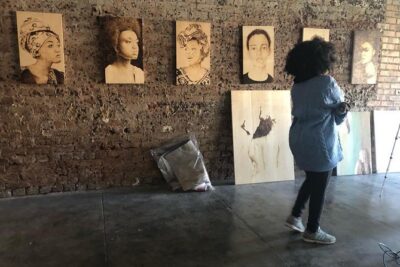
(Meet the Artist)Art Gallery & Street Art tour with lunch
Read our review →
Johannesburg Street Art & Museum Walking or E-scooter Tour
Read our review →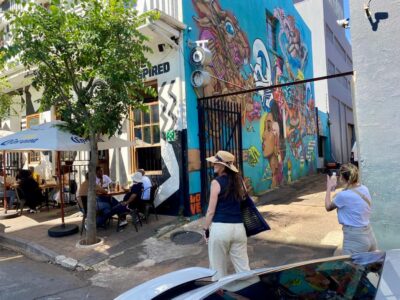
Johannesburg: Braamfontein Street Art & Culture Tour
Read our review →Browse the lists this tour appears in