
Review · ISRAEL
Discovering downtown Tel Aviv Street art and ancient Jaffa!
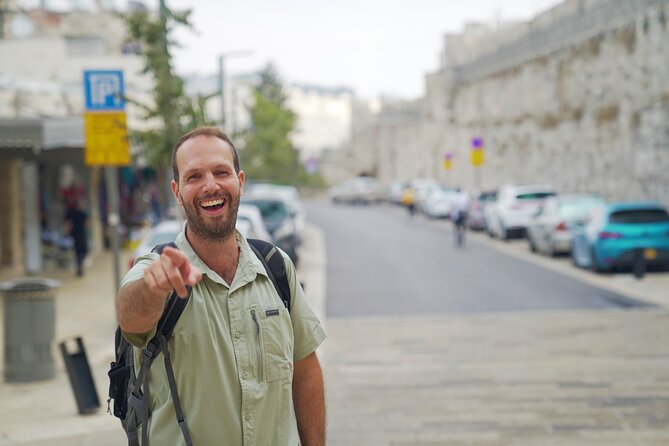
Tel Aviv’s street art is more than colorful paint on walls. With guide Daniel Rozalis, you use it to discuss Israeli society, public memory, politics, and daily life before walking into ancient Jaffa, a port city with about 3,000 years of stories. I like the unusual questions built into the route, including the city’s oldest graffiti and why a figure linked to the 27 Club was erased. I also like the clear contrast between modern Tel Aviv and historic Jaffa. The main drawback is that four hours on foot can feel demanding, and the tour needs good weather.
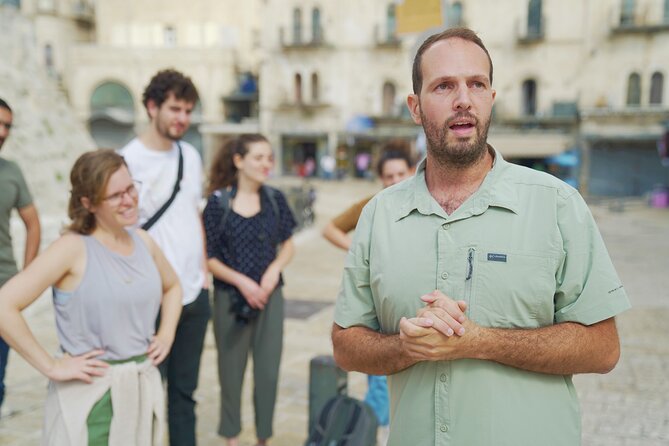
This is a private tour for your group alone, priced at $400 for up to 15 people. That can be fair value for a large family or group, but expensive for one or two people. Daniel is praised for being funny, organized, flexible, and warm, so you can expect a personal pace rather than a fixed group lecture.
Key points at a glance
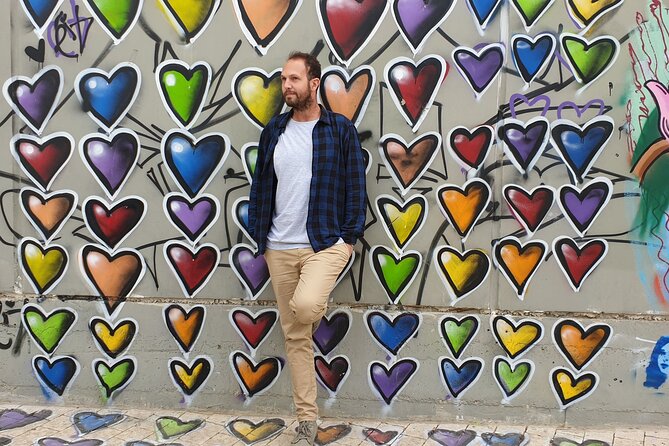
- Street art with a purpose: Murals and graffiti open discussion about Israeli society and current issues.
- Unusual stories: Look for the oldest graffiti in the city, erased figures, painting without permission, and a possible link between band-aids and PTSD.
- Two cities in one walk: Tel Aviv supplies the modern urban setting, while Jaffa brings ancient port history, biblical stories, and Jewish-Arab connections.
- Private format: Your group, up to 15 people, is the only group on the tour.
- Daniel Rozalis leads the walk: His style is described as funny, organized, flexible, kind, and highly engaged with Israeli history and culture.
- Useful ending point: The tour finishes at Jaffa Flea Market, a practical place to continue exploring or find food on your own.
Tel Aviv street art as a window into Israel
The first two hours focus on downtown Tel Aviv through its street art. That choice makes sense. A standard city walk can give you dates, buildings, and famous names. Art on a public wall asks different questions: Who made it? Who owns the wall? Why was it left in place? Why was something removed?
Daniel uses those questions to explain parts of Israeli society and the subjects that shape public conversation. You are not simply stopping to take photos. You are being asked to read the city through the work of its artists.
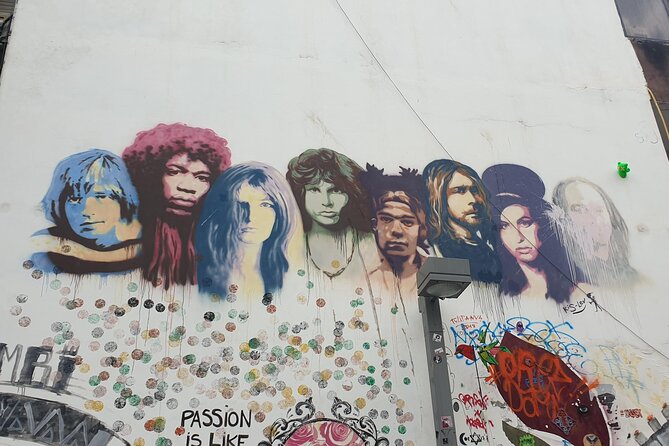
The route includes several unusual talking points. You may learn what is considered the oldest graffiti in Tel Aviv, and why a figure connected to the 27 Club was erased. The tour also looks at how artists paint without being caught by authorities. Another question asks if a band-aid can help with PTSD, suggesting that some works use simple images to address emotional wounds and public trauma.
I like this format because it gives the first half a clear purpose. Street art can sometimes become a hunt for attractive backdrops. Here, the images are used to discuss public life, memory, conflict, and the ways people express ideas when official channels feel limited.
The visual side still matters. The description makes clear that the walk is highly photogenic, so bring a phone or camera if you enjoy recording urban details. Just remember that the images are not the whole point. You will get more from this section if you pause for the explanation instead of treating each wall as a quick photo stop.
More Street Art Tours around the world:
- Medellin: Comuna 13 Graffiti Tour, Cable Car & Street Food
★ 4.8 · 9,046 reviews - CDMX: Xochimilco, Coyoacan, Frida Kahlo Museum & Murals Tour
★ 4.4 · 3,025 reviews - Amsterdam: Streetart Museum STRAAT Entrance Ticket
★ 4.8 · 2,137 reviews
What makes the street-art section useful
A good street-art walk should help you see more than you would on your own. Tel Aviv has plenty of painted walls, but without context you may not know which work matters, what has changed, or why a particular image has drawn attention.
This tour gives you a framework for looking. You can consider the difference between an authorized mural and a piece made without permission. You can think about who gets to speak in public space and what happens when authorities remove an image. Those are practical questions, not abstract art-school talk.
The focus on Israeli society also gives the route more weight. The tour promises discussion of hot topics and what is happening in Israel through the eyes of street artists. That means the content may be direct and serious at times. If you want only light sightseeing, this may feel heavier than expected. If you want a better sense of how local issues appear in public spaces, it is a strong match.
Daniel’s personality matters here. The feedback connected with this experience repeatedly describes him as funny, enthusiastic, organized, and easy to spend time with. One particularly useful detail is his flexibility. He is described as willing to adjust the route to suit a group’s needs and preferences. On a private walk, that can make a real difference.
The short transition toward ancient Jaffa
After the Tel Aviv section, the tour walks a short distance toward Jaffa. The change is the heart of the experience. You move from a modern city known for art, current debates, and urban energy into an old port with a long religious and commercial past.
The transition also gives you a simple way to understand the relationship between Tel Aviv and Jaffa. They are not two unrelated sightseeing stops. Jaffa supplies the older foundation, while Tel Aviv represents the newer city that grew beside it. Seeing both on the same morning or afternoon helps you understand their contrast.
The supplied details do not specify the exact walking route or the number of hills and stairs. You should still plan for a walking tour rather than a vehicle-based outing. Wear practical shoes, carry water, and allow enough time to move at a steady pace. The experience requires good weather, so conditions can affect the schedule.
Ancient Jaffa, biblical stories, and a living neighborhood
Jaffa is Daniel’s home, and that personal connection shapes the second half. He presents the old city through both history and daily life, moving from a port that is about 3,000 years old to a modern market.
The stories include Peter’s vision in Jaffa, recorded in Acts 10:9, and Jonah and the large fish. These familiar biblical episodes gain a physical setting here. You are not only hearing names from scripture. You are connecting them to an actual port city with a long place in religious storytelling.
The tour also addresses the meeting of Jewish and Arab communities in Jaffa. That is important because the old city is not presented as a frozen museum. Its identity comes from people, faiths, neighborhoods, trade, and changing urban life. The stated focus on Jewish and Arab synergy gives the tour a broader view than a simple list of ancient landmarks.
I especially like the promised contrast between modern Jaffa and its past. A historic district can easily become a polished backdrop, but the description points toward a place where old stories and present-day life share the same streets. Daniel’s role is to connect the two.
The second section lasts about two hours, matching the street-art portion. That balance is helpful. You do not spend a rushed 30 minutes in Jaffa after a long lecture in Tel Aviv. Each place receives enough time for explanation, questions, and a measured walk.
Same walls, a different way in:
- Belfast: Murals Taxi Tour
★ 4.9 · 2,047 reviews - Wynwood Graffiti Golf Cart Small-Group Tour
★ 5.0 · 1,646 reviews - London: Street Art and Graffiti Guided Walking Tour
★ 4.9 · 1,354 reviews - Lisbon: Street Art Tour
★ 4.9 · 1,324 reviews
Finishing at Jaffa Flea Market
The tour ends at Jaffa Flea Market on Olei Zion Street. This is a practical finish because it leaves you in an area associated with modern local activity rather than at an isolated landmark.
The market also completes the movement from ancient port to present-day neighborhood. You begin with historical Jaffa and finish among contemporary commerce. Lunch is not included, so this is a sensible point to continue independently if you want food afterward. The tour does not promise a meal or a market tasting, so budget separately and do not expect food to be part of the $400 price.
The listed operating hours are 8:00 a.m. to 6:00 p.m., Monday through Sunday, for the stated booking period. Those hours may help when planning the rest of your day, though the tour itself lasts about four hours. The meeting point is Elifelet Street 18 in Tel Aviv-Yafo, and the end point is the flea market.
Is $400 a fair price?
The price is $400 per group, with up to 15 people included. The value depends almost entirely on your group size.
For 10 people, the cost works out to $40 each. For 15, it is about $26.67 each. For two people, it is $200 each, which is a much bigger commitment for a walking tour. Solo visitors and couples should compare the personal cost with the benefit of having a private guide.
The private format has real value. Your group can ask questions, adjust the pace, and possibly shape some of the content around its interests. Daniel is specifically described as flexible about changing the route for a group’s needs and preferences. That is more useful for families, school groups, friend groups, and private celebrations than for people who simply want the lowest possible price.
You are also paying for two connected subjects rather than one. The first section explains modern Tel Aviv through art. The second links Jaffa’s port history, biblical associations, Jewish and Arab life, and present-day market culture. If you planned to pay separately for a street-art walk and a Jaffa history tour, this combined format could compare well.
The limitation is that admission to the stops is not the cost issue. Both sections list free admission, and lunch is not included. The price mainly covers Daniel’s time, guiding, planning, and private attention. That is worthwhile if personal interpretation matters to you. It is less attractive if you prefer to wander independently with a guidebook.
Who should book this walk?
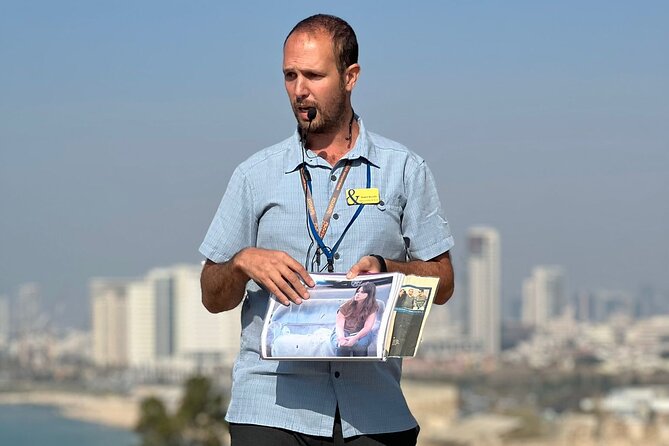
I would recommend it most strongly to people who want context, conversation, and a private pace. The subject suits adults interested in art, Israeli society, current issues, religious history, and the relationship between old and new cities.
It can also work well for families and groups with mixed interests. One person may enjoy photography, another may prefer history, and another may want to discuss contemporary Israel. The two-part design gives each person a different entry point.
Daniel’s warm and humorous style should help groups that do not want a stiff academic presentation. His background guiding across Israel, including Birthright groups, suggests comfort with visitors who may be seeing the country for the first time. The strongest praise centers on his ability to make history and culture feel personal, while keeping the experience organized and enjoyable.
You should think twice if you dislike walking, want a food tour, or prefer a quiet sightseeing route with little discussion of sensitive issues. The tour deals with Israeli society and current topics, so it is better for curious visitors than for anyone seeking only postcard views.
The route is described as suitable for most participants, near public transportation, and welcoming to service animals. No fitness level is specified, so ask Daniel about the exact walking conditions if stairs, heat, or distance are a concern.
Booking, weather, and timing advice
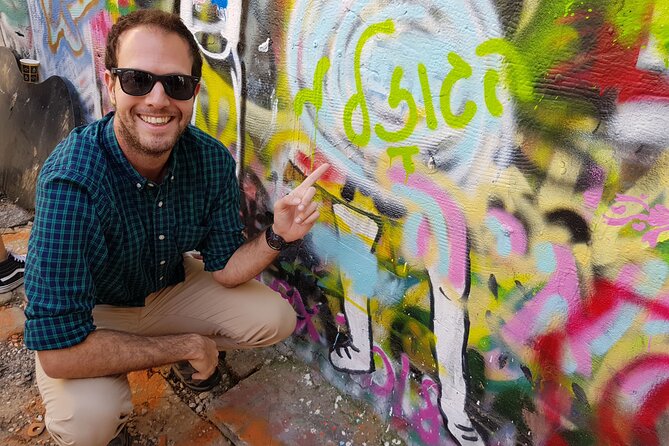
Confirmation is sent within 48 hours of booking, subject to availability. The tour requires good weather. If poor conditions cause cancellation, you are offered another date or a full refund.
You can cancel for a full refund up to 24 hours before the start time. Changes or cancellations made inside that 24-hour window are not accepted for a refund. Since the experience is outdoors and on foot, check the forecast before committing to a tightly packed schedule.
Allow more than four hours in your day if you want a relaxed meal or extra time at the flea market afterward. The stated duration is approximate, and a private group may spend more time on questions. Starting at Elifelet Street and finishing at Olei Zion Street also means you should plan your next stop from the end point, not the beginning.
Should you book it?
Book this tour if you want Tel Aviv and Jaffa explained together rather than as separate attractions. The strongest reason to choose it is the unusual mix: street art becomes a way to discuss Israeli society, then ancient Jaffa supplies biblical stories, port history, and Jewish-Arab connections.
The $400 price makes the most sense for a medium or large private group. Daniel’s reported strengths, especially his humor, flexibility, organization, and personal warmth, add value to a format built around conversation. For a couple, the cost is harder to justify unless private guiding is a priority.
I would choose it for a first visit when you want help making sense of the city’s modern identity and its older neighbor. I would skip it if your main goal is lunch, shopping, or a short list of famous sights. This is a thinking-and-walking tour, with plenty of visual material and enough history to give both Tel Aviv and Jaffa a clearer shape.
FAQ
How long does the tour last?
The experience lasts approximately four hours, with about two hours in downtown Tel Aviv and two hours in Jaffa Old City.
Where does the tour begin?
The meeting point is Elifelet Street 18 in Tel Aviv-Yafo, Israel.
Where does the tour end?
The tour ends at Jaffa Flea Market on Olei Zion Street in Tel Aviv-Yafo.
What is included in the price?
A licensed tour guide is included. The tour is private for your group.
Is lunch included?
No. Lunch is not included in the price.
How many people can join?
The $400 group price covers up to 15 people.
Is this a private tour?
Yes. Only your group participates in the activity.
Is the tour suitable for most participants?
The available information states that most travelers can participate and that service animals are allowed.
Does the tour require good weather?
Yes. The experience requires good weather. If poor weather causes cancellation, you are offered a different date or a full refund.
What is the cancellation policy?
You can cancel at least 24 hours before the start time for a full refund. Cancellations or changes made less than 24 hours before the start time are not accepted for a refund.
Freshly painted around the world
- Xochimilco floating gardens, Coyoacan and UNAM murals★ 4.0 · 6 reviews
- Your Own Belgrade: Street Art and Hidden Gems Walking Tour★ 5.0 · 2 reviews
- Wynwood Walls Street Art & Neighborhood Walking Tour★ 4.9 · 9 reviews
- Vancouver: Street Art & Craft Beer Walking Tour with Tasting★ 4.8 · 14 reviews
- Zagreb Street Art Private Walking Tour with a Local Artist★ 5.0 · 12 reviews
- Urban Canvas: Osaka Street Art Bike Tour★ 5.0 · 10 reviews
- Vancouver: Street Art & Craft Coffee Walking Tour w/ Tasting★ 4.8 · 11 reviews
- UNAM: Murals & Revolution★ 4.9 · 8 reviews
Israel Street Art Tours, compared.


Walking Graffiti Tour with Augmented Reality in Tel Aviv
Read our review →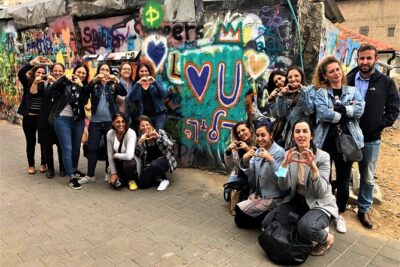
Browse the lists this tour appears in