
Review · BARCELONA
Street Art, Sculptures & Crime Stories Walking Tour – Barcelona
Barcelona’s best street art is not always on a grand avenue. It may sit beside a medieval wall, hide in a narrow doorway, or appear under your feet on La Rambla. This small-group walking tour connects those works with stories about crime, politics, local artists, and the changing face of the city.
I like two things right away. First, the route moves through four very different districts, from rough-edged El Raval to historic El Born. Second, guides Liliia and Leila bring more than art facts. They explain how the neighborhoods changed and offer useful tips for coffee, lunch, bars, and restaurants. The main drawback is the price: at $108.37 per person, this costs more than a standard city walk, so it makes the most sense if street art and local context are high on your list.
Key points to know before you book
- El Raval sets the tone: Expect social murals, political images, small pieces in doorways, and a story about a dramatic killing tied to local art.
- Four districts, one walking route: The tour links El Raval, La Rambla, the Gothic Quarter, and El Born in about two and a half hours.
- Art comes with context: You’ll hear about Joan Miró, Picasso’s early Barcelona work, local legends, optical illusions, and the city’s darker past.
- The group is capped at 15: That is small enough for questions and a more personal pace, with the possibility of a customized route.
- The finish is well placed: The tour ends in El Born near Ciutadella, a handy spot for continuing your afternoon.
- Plan for city walking: Snacks are not included, and the experience takes place outdoors across central Barcelona streets.
Why this Barcelona street art walk feels different
Many Barcelona sightseeing walks stay with grand churches, famous markets, and Gaudí buildings. This one looks at the city from street level. You follow art that can change, disappear, or sit quietly beside an old stone wall.
That matters because street art is tied to place. A mural in El Raval does not mean the same thing as one in the Gothic Quarter. The tour uses that contrast well. You see how artists respond to poverty, social tension, identity, public space, and the pressure of a changing city.
The route also mixes major works with modest details. You may stop for a large mural, then turn into an alley to examine a small stencil or mosaic. That variety keeps the walk from feeling like a parade of photo stops.
The experience is offered in English and lasts about 2 hours and 30 minutes. With no more than 15 people, you should have a fair chance to ask questions. It is also described as customizable for you and your group, which may help if your interests lean more toward graffiti, sculpture, local history, or photography.
More Street Art Walking Tours in Spain
- Barcelona: Raval Street Art and Graffiti Walking Tour
★ 4.9 · 60 reviews - Bilbao: Art District Walking Tour
★ 4.8 · 27 reviews - Granada: “Street Art & The Caves” Unique Guided Walking Tour
★ 5.0 · 27 reviews
El Raval: Barcelona’s rough-edged art district
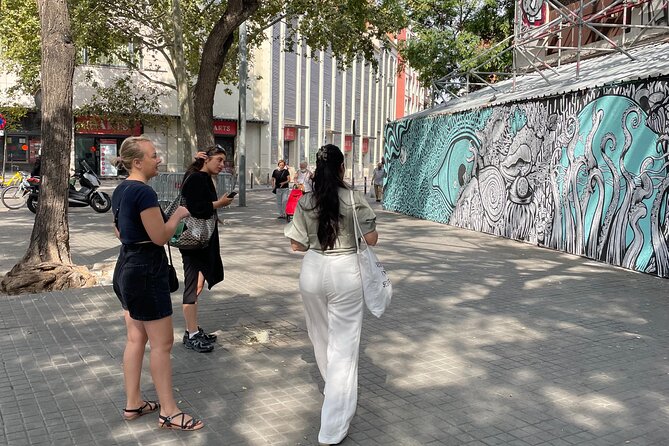
The tour begins at Carrer Nou de la Rambla, 105, in Ciutat Vella. From there, El Raval gives you the strongest sense of the tour’s purpose. This neighborhood has a rebellious reputation and a long record of social change. Its streets carry artwork about social struggles, local legends, and the area’s difficult past.
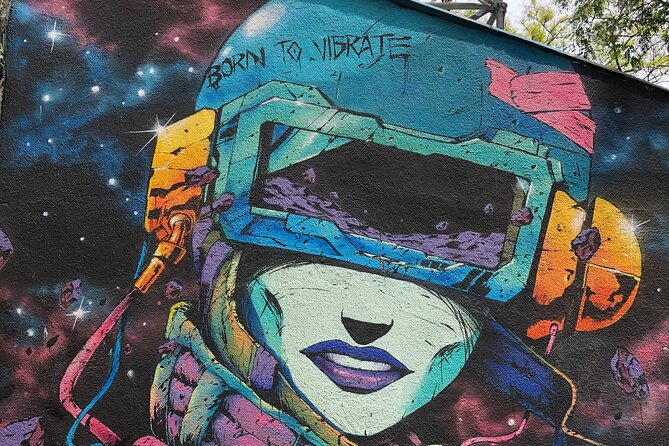
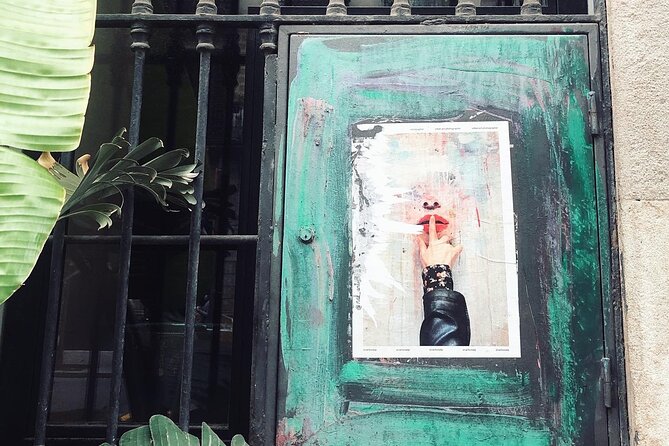
The guide points out large murals first, then smaller pieces tucked into alleys and doorways. I like this approach because it teaches you how to look. You are not simply led from one famous wall to another. You begin to notice scale, placement, materials, and the way a piece interacts with nearby buildings.
El Raval also brings the crime-story element into focus. You visit the site of a dramatic historical killing that inspired neighborhood art. That gives the murals a sharper edge. The stories are not decoration added after the fact. They help explain why certain images appear here and why the district has such a strong sense of place.
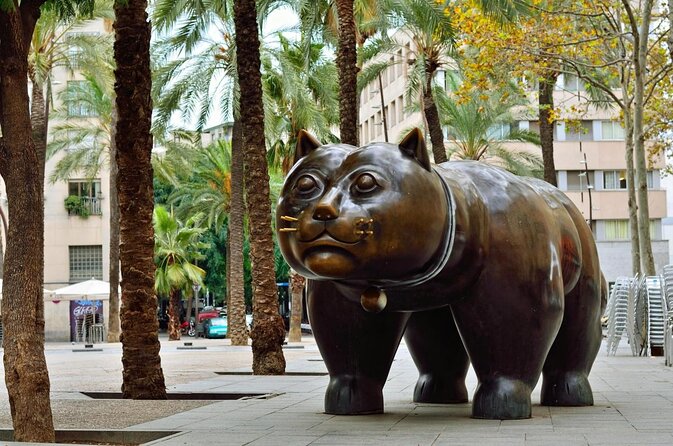
You will also see iconic mosaics linked with El Raval’s rebellious spirit. The art ranges from large public statements to small works that are easy to miss if you are walking alone. This is the part of the route most suited to people who want political street art, social commentary, and a less polished view of Barcelona.
Allow about an hour here. It is the longest stop, and that is sensible. El Raval supplies the most context and gives the guide room to explain how a former danger zone became a major cultural area.
La Rambla: Look down before you look ahead
The route then reaches La Rambla, Barcelona’s famous central boulevard. It is a very different setting from El Raval. Flower stalls, performers, theaters, and constant foot traffic make this a place where art competes for attention.
The key stop is Joan Miró’s mosaic set into the pavement. Millions of people pass over it, yet many never pause to look. The work adds an unexpected moment of color and design to a crowded public walkway. Your guide helps you see why this small pause matters.
The tour also includes philosophical street art by contemporary local artists. These works address identity, freedom, and life in the city. The point is not only to photograph them. You are encouraged to think about how art functions in a public place where people are always moving.
This stop lasts about 20 minutes. That is enough time to examine the art without pretending La Rambla is a quiet gallery. You should expect noise, crowds, and interruptions here. The reward is seeing how urban art works in a busy public setting rather than in a dedicated museum.
The Gothic Quarter: Old stone, new marks
The Gothic Quarter brings the sharpest visual contrast. This is Barcelona’s ancient core, once enclosed by medieval walls and shaped by Roman and Gothic building remains. Against that old stone, contemporary murals and installations can look almost confrontational.
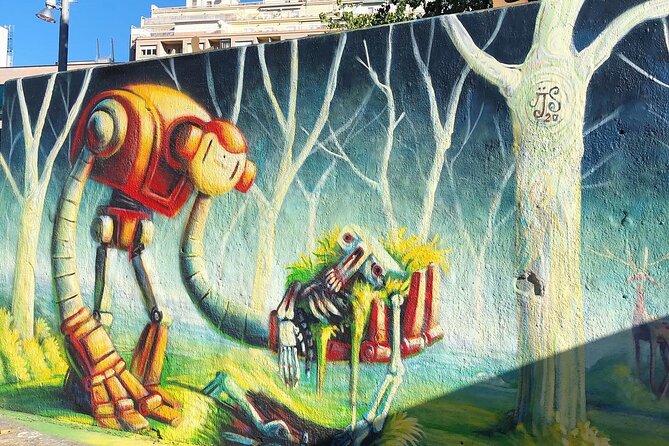
The guide seeks out modern pieces in alleys and courtyards, along with works that connect to medieval legends. Some art blends into the architecture. Other pieces create a deliberate clash between spray paint and old masonry.
The route also includes iconic work connected with Picasso’s early Barcelona years. This gives the stop a useful bridge between established art and street-level creativity. You are not looking at graffiti as a separate subject. You are tracing a longer artistic story through the city.
The Gothic Quarter stop lasts about 20 minutes. That may feel brief if you want a full architectural tour, but the focus here is the meeting point between old Barcelona and new public art. If Gothic churches, Roman remains, or detailed building history are your main interests, you will get only a taste of them. The tour is using the quarter as a setting for art, not replacing a dedicated old-city walk.
More Street Art Walking Tours in Barcelona:
- London: Street Art and Graffiti Guided Walking Tour
★ 4.9 · 1,354 reviews - Berlin: City Street Art Guided Walking Tour
★ 4.8 · 1,051 reviews - Naples Spanish Quarters Walking Tour Street Art, Folklore & Sweet
★ 5.0 · 797 reviews - Lisbon: Kickstart Street Art Walking Tour
★ 4.9 · 717 reviews
El Born: Optical illusions and watchful buildings
The final district is El Born, also known as La Ribera. This is where the tour shifts toward striking visual pieces and local legends. Once associated with medieval executions, the area now mixes historic sites, markets, galleries, restaurants, and public art.
One highlight is optical illusion work by internationally known local artists. These pieces play with perspective and make you question what you are seeing. They are especially useful for a walking tour because the effect depends on your position in the street. Step to one side, and the image can change.
You also stop at the famous staring building facade. Its windows and details seem to watch people as they pass. It is an odd, memorable example of how architecture itself can become part of a street-art experience. The building is not just background. It gives the neighborhood a slightly uneasy personality.
The route continues around Santa Caterina Market, known for its wavy, Gaudí-inspired roof. Murals near the market add color and energy to an area already shaped by food, shopping, and daily city life.
This section takes about 40 minutes, making it the second-longest stop. It is a strong finish because the art is easy to photograph and the neighborhood offers plenty of options after the tour. You finish on Carrer Antic de Sant Joan, 7, not far from Ciutadella.
What $108.37 buys you
At $108.37 per person, this is not a budget walk. The value rests in the guide rather than admission tickets, since the route uses public streets and does not include major paid attractions.
I would judge the price by your interest level. If you only want to see a few colorful walls, you can find plenty of public art on your own. If you want someone to connect the works with local crime stories, political themes, artists, neighborhood change, and specific historical settings, the fee becomes easier to justify.
The small maximum of 15 helps. A large group can make street art hard to discuss, especially in narrow lanes. A smaller group also gives you a better chance to ask why a piece matters, how the guide found it, or what to look for in a work that seems simple at first.
The tour also includes recommendations after the walk. Specific advice for coffee, lunch, bars, and restaurants can save time, especially because the route ends in El Born. That extra guidance adds practical value, though you should remember that snacks are not included.
The guides make the difference
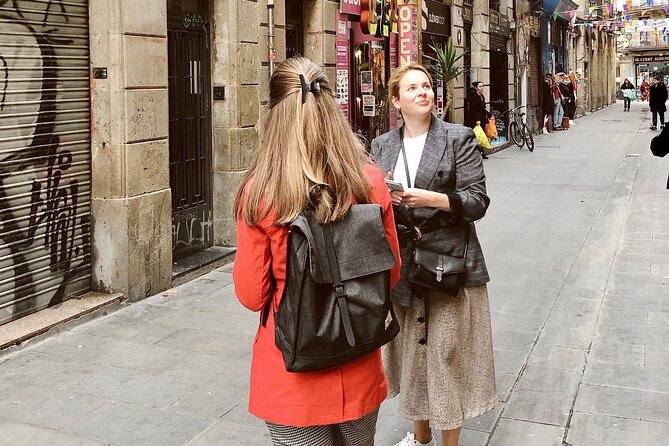
Liliia is repeatedly praised for explaining both art and Barcelona’s neighborhoods in a friendly, personal way. She is also singled out for useful food and drink suggestions. One especially helpful feature is her willingness to answer questions rather than rush through a prepared list.
Leila is also named as a professional guide. In one case, the group size fell to one person, turning the walk into a private experience. That cannot be guaranteed, but the maximum of 15 means the normal format is already more intimate than a large coach-style tour.
The best guide for this subject needs to do two jobs. They must identify the artists and works, then explain why those works belong in that particular street. The feedback points to both strengths, with special praise for local culture, history, and an unhurried pace.
Who should book this walk
I would recommend it most to:
- Art and design fans who want more than museum collections
- First-time visitors who want an unusual introduction to central Barcelona
- Repeat visitors who have already seen the main Gaudí sights
- Photographers looking for murals, mosaics, old stone, and odd architectural details
- People who enjoy social history, crime stories, and neighborhood change
- Small groups that prefer questions and conversation
It may be less suitable if you dislike walking in central city districts or want a quiet, formal art lesson. La Rambla and parts of the old city can be crowded. Street art also changes, so a work seen on one visit may not remain in the same form later.
Wear comfortable shoes and keep your schedule flexible around the 2.5-hour duration. Since no snacks are provided, eat beforehand or plan food after the finish in El Born. The route is near public transportation, and service animals are allowed.
You receive confirmation when booking. Most people can take part, and free cancellation is available until 24 hours before the start time. Changes made inside that 24-hour window are not accepted.
Should you book the Street Art, Sculptures and Crime Stories Walking Tour?
Book it if you want Barcelona explained through its walls, alleys, mosaics, and local stories rather than only through major monuments. The strongest parts are El Raval’s social art, the surprising Miró mosaic on La Rambla, the old-and-new contrast in the Gothic Quarter, and El Born’s optical illusions and watchful facade.
The price is the main question. At $108.37, you are paying for a specialist guide and a small-group format, not entry to attractions. For a casual look at graffiti, it is expensive. For a focused art walk with history, neighborhood context, and practical restaurant advice, it offers a more personal way to see Barcelona.
FAQ
How long does the tour last?
The walking tour lasts approximately 2 hours and 30 minutes.
What neighborhoods does the tour visit?
The route visits El Raval, La Rambla, the Gothic Quarter, and El Born, also called La Ribera.
Where does the tour start?
It starts at Carrer Nou de la Rambla, 105, Ciutat Vella, 08001 Barcelona, Spain.
Where does the tour finish?
It finishes at Carrer Antic de Sant Joan, 7, Ciutat Vella, 08003 Barcelona, near Ciutadella.
What language is the tour offered in?
The tour is offered in English.
What is the maximum group size?
The tour has a maximum of 15 participants.
Are admission tickets included?
Admission is included where stated in the tour details. The route mainly visits public streets and artworks, and no separate major attraction admission is listed.
Are snacks included?
No. Snacks are not included.
Can I cancel the booking for a refund?
Yes. You can cancel at least 24 hours before the start time for a full refund. Cancellations or changes made less than 24 hours before the start time are not accepted.
Freshly painted around Barcelona
- Barcelona Street Art, Graffiti and Tapas Tour★ 4.0 · 5 reviews
- Private Barcelona Street Art Tour★ 5.0 · 2 reviews
- Barcelona | StreetArt Bike Tour Moco Museum★ 4.6 · 13 reviews
- Barcelona: Insider Street Art Tour with Private Studio Visit★ 5.0 · 21 reviews
- Barcelona Street Art, Graffiti & Tapas Tour★ 5.0 · 5 reviews
- Barcelona | Street Art Bike tour★ 5.0 · 3 reviews
- Barcelona: Graffiti E-Scooter Tour★ 4.4 · 9 reviews
- Barcelona Art & Wine: Galleries, Studios & Street Art★ 5.0 · 26 reviews
Barcelona Street Art Tours, compared.
Barcelona Street Art and Graffitti Bicycle Tour
Read our review →
Barcelona Street Art Tour with Exclusive Artist Studios Visit
Read our review →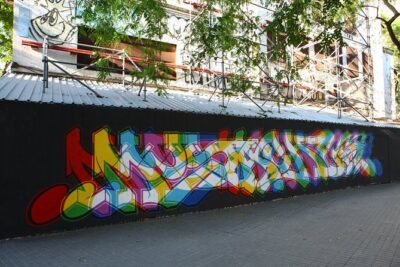
Raval Street Art and Graffiti Guided Tour in Barcelona
Read our review →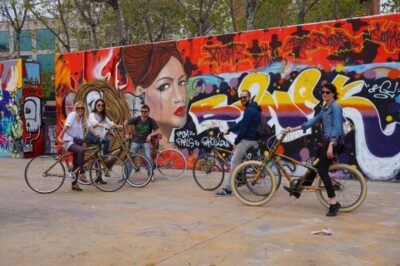
Barcelona: 3.5-Hour Street Art Tour by Bamboo Bike
Read our review →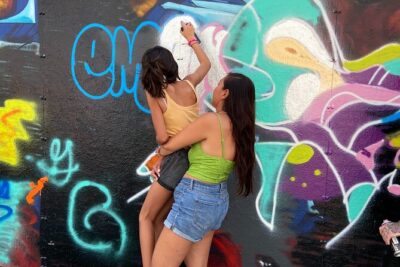
Private Barcelona Street Art Workshop with a Street Artist
Read our review →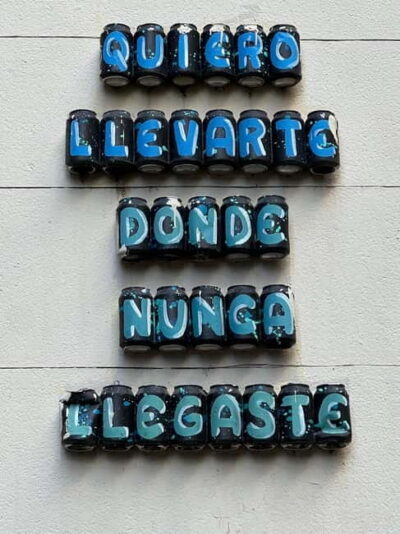
Barcelona Art & Wine: Galleries, Studios & Street Art
Read our review →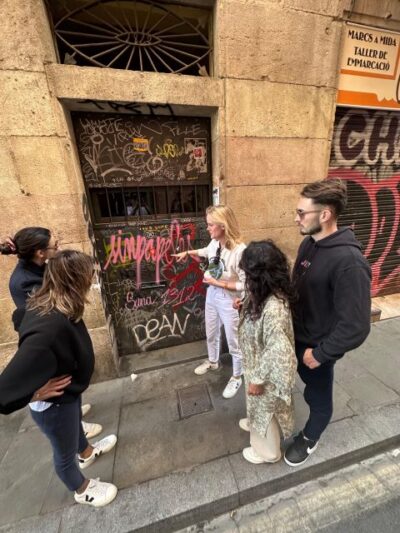
Barcelona: Insider Street Art Tour with Private Studio Visit
Read our review →Browse the lists this tour appears in