
Review · GERMANY
Munich: Street Art Bike Tour
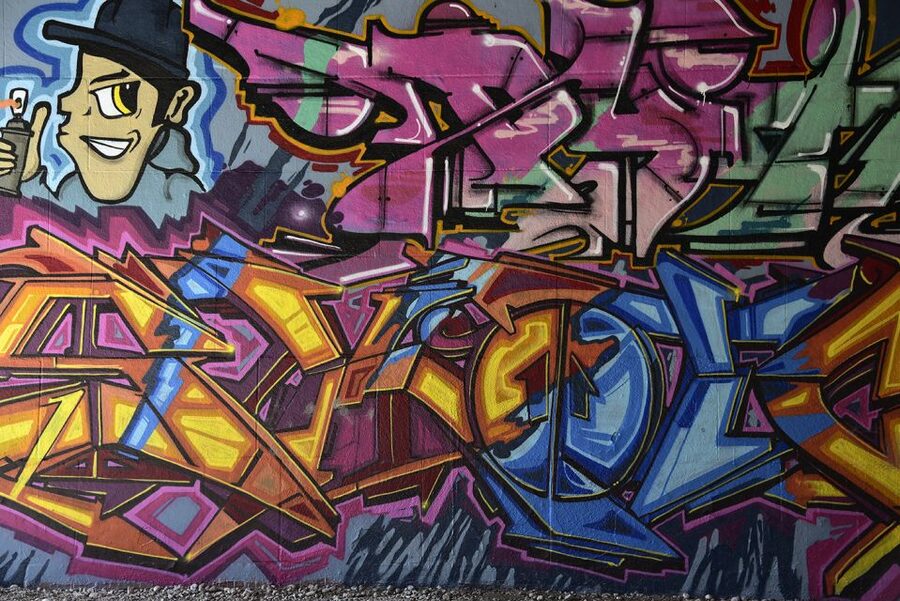
Munich helped launch Germany’s graffiti movement in the 1980s, a surprising fact in a city better known for polished squares, grand palaces, and tidy streets. This 210-minute bike tour takes you beyond the postcard center, following the Isar toward Giesing and the former slaughterhouse district to find murals, graffiti, and work by both old masters and newer artists.
I like the off-center route and the way the bike turns a scattered art scene into one connected outing. I also like the chance to hear how Munich became a graffiti mecca alongside New York. The main catch is the language: the listed tour is in German, and the nearly three-and-a-half-hour ride may feel long for younger children.
Key points at a glance
- Munich’s 1980s graffiti roots: Learn why this neat-looking city once drew graffiti artists from far beyond Germany.
- A ride beside the Isar: Follow the river and spot art placed away from the usual tourist paths.
- Giesing by bicycle: Reach a former working-class neighborhood that feels quite different from central Munich.
- A break by the railway bridge: Pause on a boat in the slaughterhouse district, adding an unusual setting to the route.
- Guide Ulrike’s patient approach: She has helped English-speaking families follow a German-language tour.
- A full 210-minute outing: Rental bikes and a guide are included, but plan for a substantial afternoon of riding and stops.
Why Munich is an unexpected graffiti city
Munich can look almost too orderly for a serious street art tour. The handsome historic center is carefully maintained, and the city’s public face leans toward elegant architecture rather than rough walls.
That contrast is part of the fun. Munich was an important center for graffiti in Germany during the 1980s, at a time when the form was still developing and artists were taking cues from New York. This tour gives you a chance to see that story through actual works around the city rather than through a museum display.
I like that the route does not treat street art as a quick photo stop. Your guide explains the history of graffiti and points out work by artists who helped shape the local scene, along with newer pieces. You get context for the colors, lettering, and large-scale forms instead of simply cycling past painted walls.
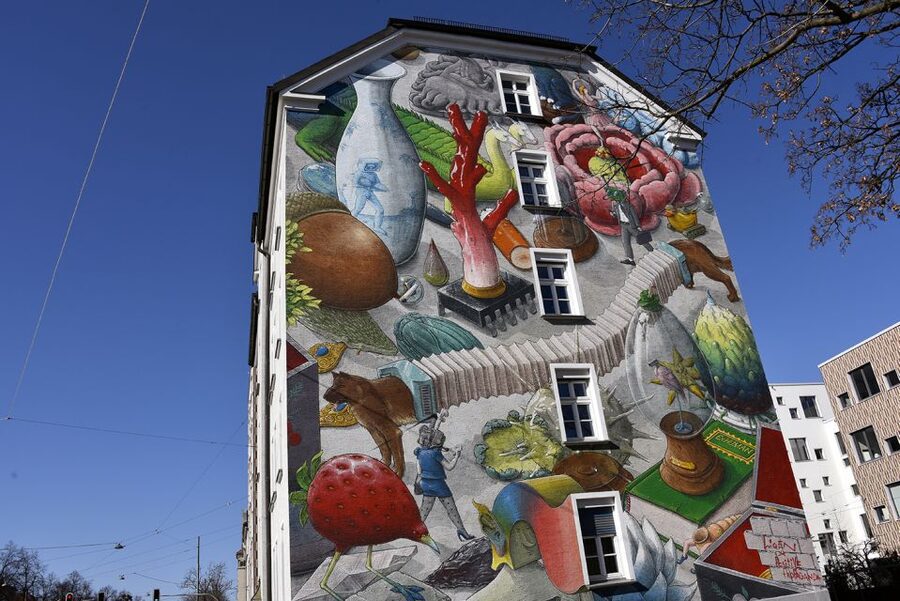
The art is not presented as a single tidy collection. It appears along roads, beside the river, in working neighborhoods, and around industrial areas. That scattered quality matters. You see how street art fits into the city rather than viewing it behind a ticket desk.
More Street Art Bike Tours in Germany:
- Cologne: Ehrenfeld Street Art Bike Tour
★ 4.9 · 105 reviews - 3-Hour Cologne Street Art Bike Tour in Small Group with Guide
★ 4.5 · 20 reviews - London Bike Tour: Landmarks, Secret Gems, Pub Stop & Street Art
★ 5.0 · 943 reviews
Starting at Marienplatz and leaving the center
The meeting point is in front of the Tourist Information Office at Marienplatz. Look for a guide holding a yellow street art tour sign with red letters. This is a simple meeting arrangement, but Marienplatz can be busy, so arriving with enough time to identify the sign is sensible.
The tour includes a rental bike, so you do not need to arrange one separately. The bike makes the route possible in a reasonable amount of time. Walking from Marienplatz to Giesing, the Isar, and the slaughterhouse district would take far longer and would leave less time for explanations and stops.
The first benefit of starting in the center is the contrast. You begin among Munich’s famous sights, then move quickly toward a side of the city many first-time visitors skip. That change helps explain why the tour feels different from a standard city sightseeing ride.
You should be comfortable cycling in an urban setting before booking. The experience is not listed as suitable for wheelchair users, and children under 10 are not permitted. A family with children aged 10 and 12 enjoyed the art and kept busy for several hours, but the younger child found the full length a little long. That is useful guidance: older children and teenagers may enjoy it, but do not assume every child will have the stamina for 210 minutes.
Following the Isar for art and atmosphere
One of the most appealing sections takes you along the Isar River. The river route gives the ride some breathing room after the city center, and it leads you toward artwork placed outside the main sightseeing circuit.
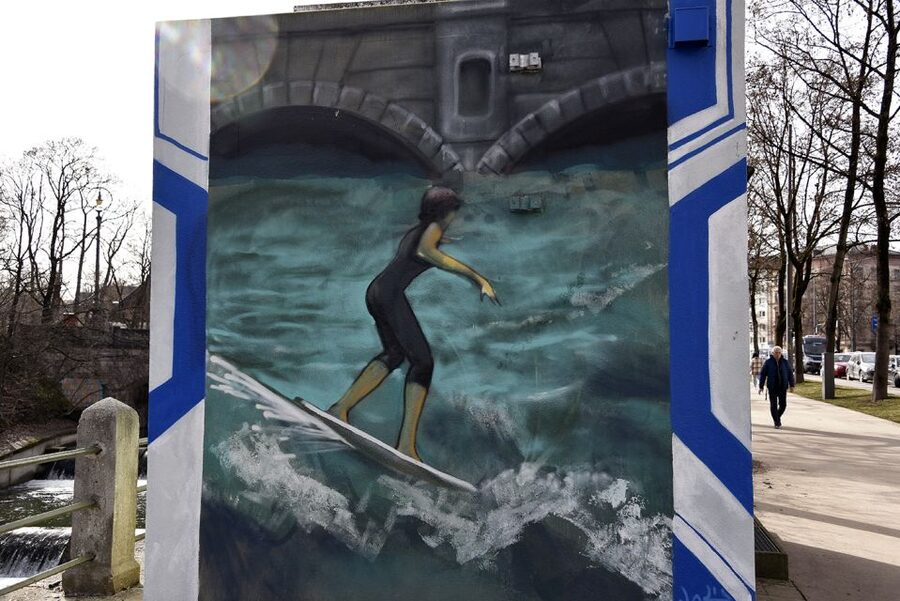
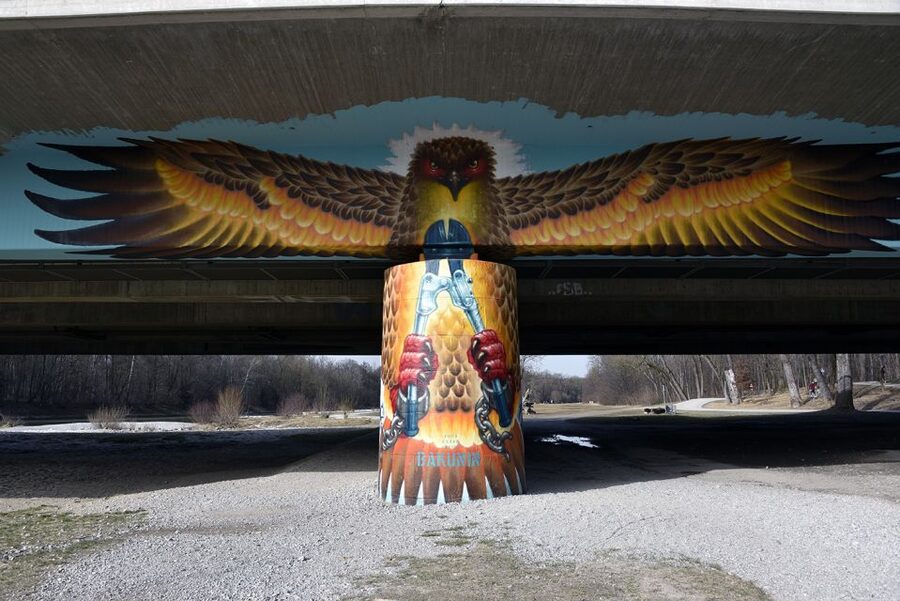
The Isar is important here not only for scenery. Artists have left their mark along and near the river, creating a different setting from the formal streets around Marienplatz. Your guide can connect the locations to Munich’s graffiti culture and point out pieces that you might easily miss on your own.
I like this kind of touring because the bicycle lets you cover ground without turning the experience into a bus excursion. You remain close to the walls, bridges, and neighborhoods. You can stop to look, then continue through the city at a useful pace.
Do not expect every stop to be a grand mural with an obvious subject. Street art includes different styles and levels of finish, and part of the point is learning how to look at the work in its setting. The guide’s explanation is especially important when a piece is less immediately clear or when its significance comes from the artist behind it.
Giesing, a working-class side of Munich
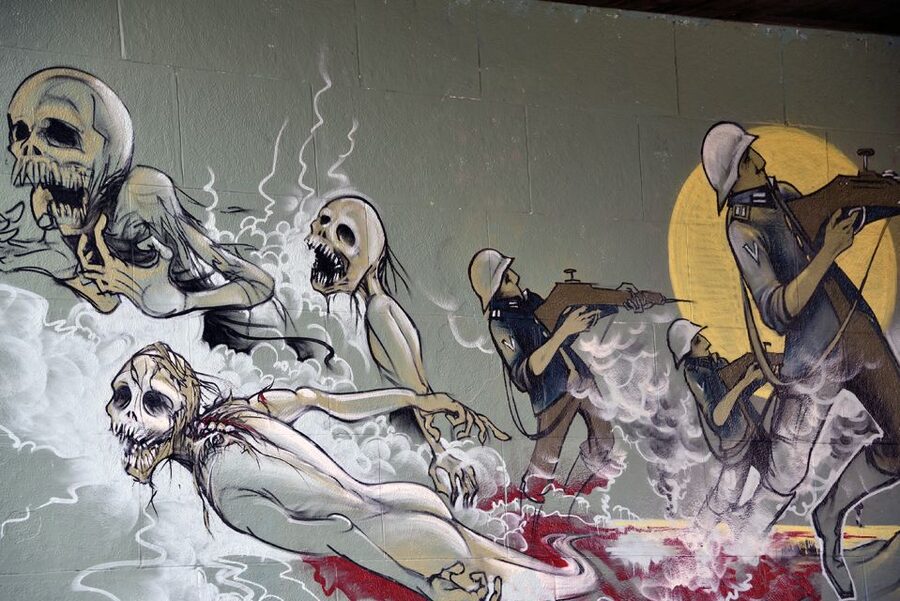
The route continues to Giesing, a former working-class neighborhood south of the center. This is one of the tour’s strongest reasons to book. You are not simply collecting murals. You are seeing a part of Munich that many visitors would not reach during a short stay.
Giesing gives the tour a social and local frame. The area helps you understand that Munich is more than its central squares, historic facades, and beer-hall image. The bike ride also lets you notice how the city changes as you move away from the center.
The description does not promise a fixed list of works, and street art can change over time. That is worth keeping in mind. You may see pieces by established artists and newer artists, but exact walls and conditions can vary. Your guide’s current knowledge of the route is therefore a key part of the experience.
The guide can also make the area easier to read. A good street art tour explains not just what is painted, but why certain neighborhoods matter to the culture. On this outing, that local focus is more valuable than a generic ride past a few photogenic walls.
More Street Art Tours around Germany:
- Berlin: City Street Art Guided Walking Tour
★ 4.8 · 1,051 reviews - Berlin: 3-Hour Street Art Tour
★ 4.7 · 778 reviews - Dresden: Neustadt District Street Art Guided Walking Tour
★ 4.3 · 333 reviews - Berlin Street Art Walking Tour – Off The Grid
★ 5.0 · 270 reviews
The slaughterhouse district and the boat pause
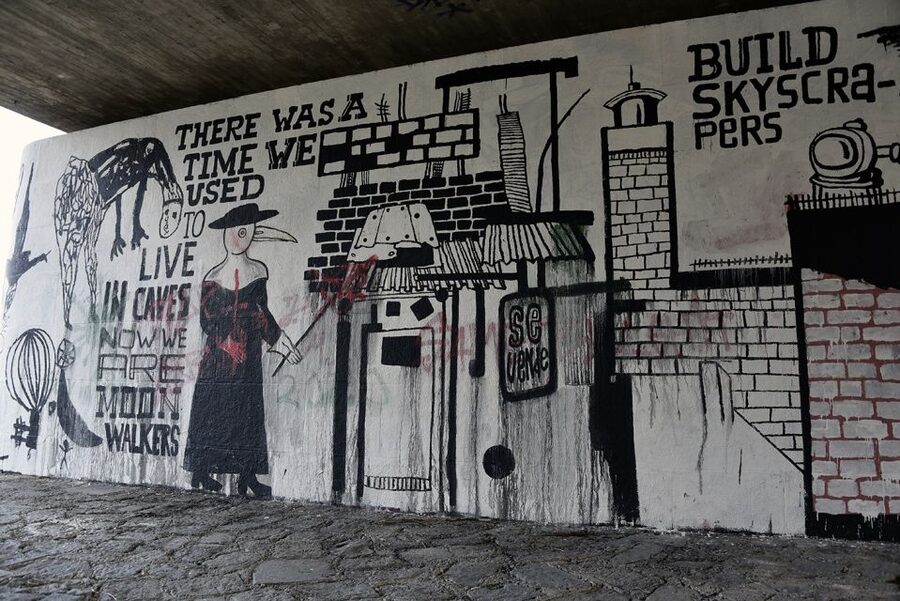
From Giesing, the tour heads toward the slaughterhouse district. The change in setting adds an industrial edge to the ride and keeps the route away from Munich’s polished center.
A particularly unusual moment comes here: you take a break on a boat at a railway bridge. It is a memorable setting for a rest, and it gives you time to absorb what you have seen without standing beside a busy wall or crowded street.
This stop also breaks up the length of the tour. Three and a half hours is a serious block of time, even when you are interested in the subject. A pause helps, especially for families and anyone who does not regularly spend several hours on a bicycle.
Still, the tour is not a short, casual spin. You should allow the full 210 minutes and expect the experience to be more active than a walking tour. Wear clothing that works for cycling and plan your day so you are not rushing to another fixed booking immediately afterward.
Old masters, newer artists, and useful context
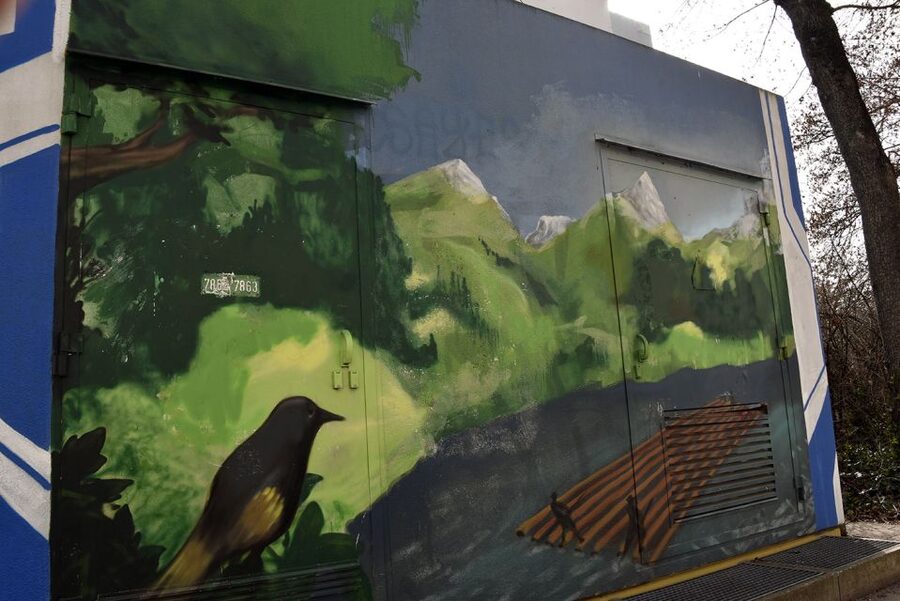
The tour covers artists who helped shape Munich’s graffiti culture as well as up-and-coming street artists. That mix is one of its best features. You are able to compare earlier work with newer approaches, rather than hearing a story that stops in the 1980s.
The guide’s commentary is central. The tour includes many facts about graffiti’s history, and the subject has enough local detail to reward questions. You can learn why Munich was once viewed as a major graffiti center alongside New York, then see the work in the neighborhoods where that culture developed.
The experience is listed in German. Guide Ulrike has led English-speaking visitors successfully by making an effort to explain the material, and she has been described as friendly, patient, and helpful. That makes the tour possible for some English speakers, but you should not book it expecting a guaranteed English-language presentation. If detailed English commentary is essential, confirm the language before paying.
The private-group option may be useful if you want more control over the pace or need a tour shaped around your own group. It may also make questions easier. The standard language information remains German, so a private booking does not automatically mean an English tour unless that is arranged.
How much value do you get for $40?
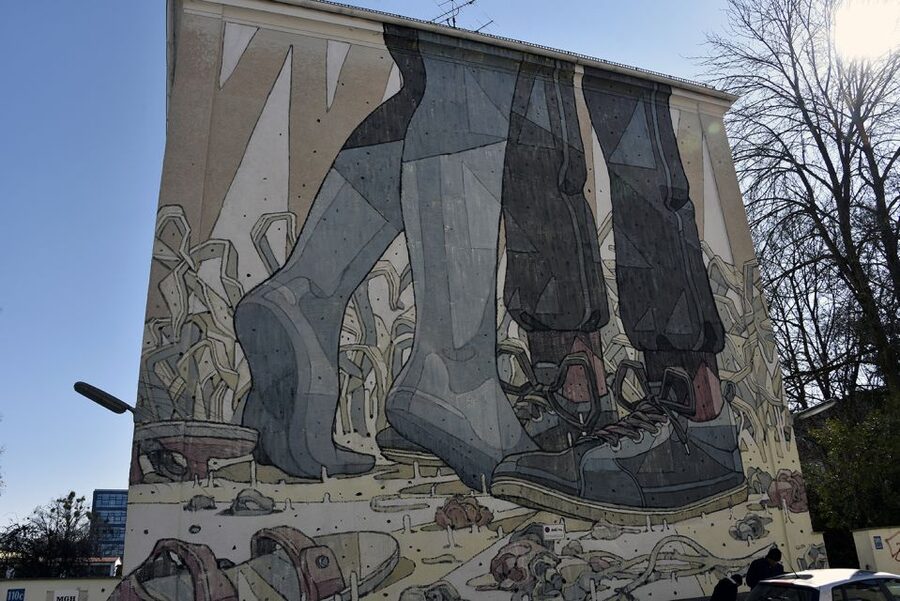
At $40 per person, the price is reasonable if you want a guided experience that combines transport, local history, and access to a less familiar side of Munich. The rental bike is included, which saves you the separate task and cost of finding one for a long city ride.
You are also paying for the guide’s route knowledge. Street art is easy to find in fragments, but much harder to organize into a meaningful half-day. Without guidance, you might see a mural and miss the wider story of Munich’s graffiti movement, the artists connected with it, and the neighborhoods along the route.
The value drops if you only want a quick look at murals or if you dislike cycling. A three-and-a-half-hour tour is too long for someone seeking a short city-center activity. It also makes less sense if your main goal is Munich’s traditional monuments, since the ride moves away from the standard highlights.
The overall rating is 4.6 from 66 reviews, which fits the tour’s strengths: strong guides, unusual locations, comfortable rental bikes, and a route that reveals parts of Munich many people would miss. The most useful caution is also clear: the length can test younger participants.
Weather, language, and practical planning
Rain can change the experience in an unexpected way. One rainy day turned a group outing into a private tour, which created a more personal ride. You should not count on that result, but it shows that weather may affect the group arrangement and the feel of the day.
The tour does not allow alcohol or drugs. Children under 10 cannot take part, and the activity is not suitable for wheelchair users. These are firm points to settle before booking.
Cancellation is flexible up to 24 hours before the start for a full refund, and you can reserve now and pay later. That helps if your Munich schedule depends on weather, since cycling beside the river is more pleasant when conditions cooperate.
Check the starting time before booking because availability changes. Bring enough time to reach the Tourist Information Office at Marienplatz, find the yellow sign with red letters, and get ready for a long ride. The supplied bikes are described as comfortable, but you still need to judge the outing by your own cycling comfort.
Who should book this Munich street art tour?
I would choose this tour if you have already seen Munich’s central sights or want an alternative to churches, palaces, and museums. It is especially suited to travelers who like urban culture, photography, local history, and neighborhoods that do not appear on every first-time itinerary.
Families can enjoy it, but I would book it for children who are at least 10 and comfortable with a long activity. The 12-year-old experience suggests that interest in graffiti does not always cancel out fatigue. Teenagers and older children may get more from the route because they can follow the historical and artistic discussion.
English speakers should make a language check before booking. Ulrike has helped English-speaking families follow the material, but the tour is advertised in German. If you are comfortable with some German and visual art does much of the work for you, that may be enough. If not, arrange clarification first.
I would skip it if you want a brief, effortless introduction to Munich or if cycling is uncomfortable for you. The route is active, and its value comes from the time spent reaching several districts rather than from one famous wall.
Should you book it?
Book this tour if you want to see Munich as a living city rather than only as a historic center. The Isar ride, Giesing neighborhood, industrial district, railway bridge boat break, and graffiti history create a full picture that a standard walking tour cannot provide.
The decision comes down to three things: German-language guiding, cycling comfort, and the 210-minute length. If those work for you, $40 is a fair price for a rental bike, a local guide, and a carefully connected route through Munich’s street art culture. If you need English throughout or want a shorter family activity, choose with more care or ask about the private option before booking.
FAQ
Where does the Munich Street Art Bike Tour meet?
Meet your guide in front of the Tourist Information Office at Marienplatz. The guide will hold a yellow street art tour sign with red letters.
How long does the tour last?
The tour lasts 210 minutes, or three and a half hours.
What price should I expect?
The listed price is $40 per person.
Is a bicycle included?
Yes. Rental bikes are included, along with the tour guide.
What language is the tour in?
The listed tour language is German. Guide Ulrike has also made an effort to explain the tour to English-speaking families.
Does the tour follow the Isar River?
Yes. The route includes a ride along the Isar River, where artists have left their mark.
Which Munich neighborhoods does the tour visit?
The route goes to Giesing, a former working-class neighborhood, and continues toward the slaughterhouse district.
Is there a break during the ride?
Yes. The tour includes a break on a boat at a railway bridge in the slaughterhouse district.
Are children allowed to join?
Children under 10 are not permitted. A 12-year-old found the tour somewhat long, while children aged 10 and 12 also enjoyed the art and stayed engaged for several hours.
Can I cancel the booking?
You can cancel up to 24 hours in advance for a full refund. Reserve now and pay later is also available.
Freshly painted around Germany
- Art Nouveau Meets Street Art in Munich (Max. 12 guests)★ 5.0 · 3 reviews
- Alternative Hamburg Private Alternative Street Art Tour★ 4.5 · 6 reviews
- Street Art Tour Dresden Neustadt★ 4.0 · 15 reviews
- Explore Cologne’s best Street Art Quarter★ 4.5 · 4 reviews
- 3-Hour Cologne Street Art Bike Tour in Small Group with Guide★ 4.5 · 20 reviews
- Graffiti Workshop Berlin with professional graffiti artists★ 4.0 · 4 reviews
- Open graffiti workshop in the Mauerpark in Berlin★ 5.0 · 2 reviews
- Alternative Berlin Private Tour with Jacob – Graffiti and Squats★ 5.0 · 6 reviews
Germany Street Art Tours, compared.
Dresden: Neustadt District Street Art Guided Walking Tour
Read our review →
Cologne: Ehrenfeld District Street Art Walking Tour
Read our review →
East Meets West: Berlin Food Culture & Street Art
Read our review →
Browse the lists this tour appears in