
Review · ITALY
Florence: Street Art Tour
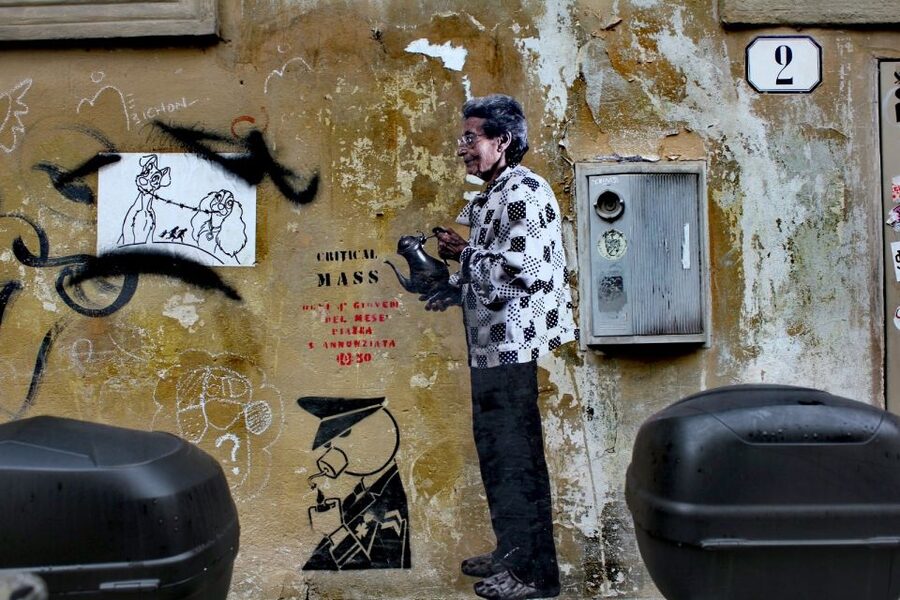
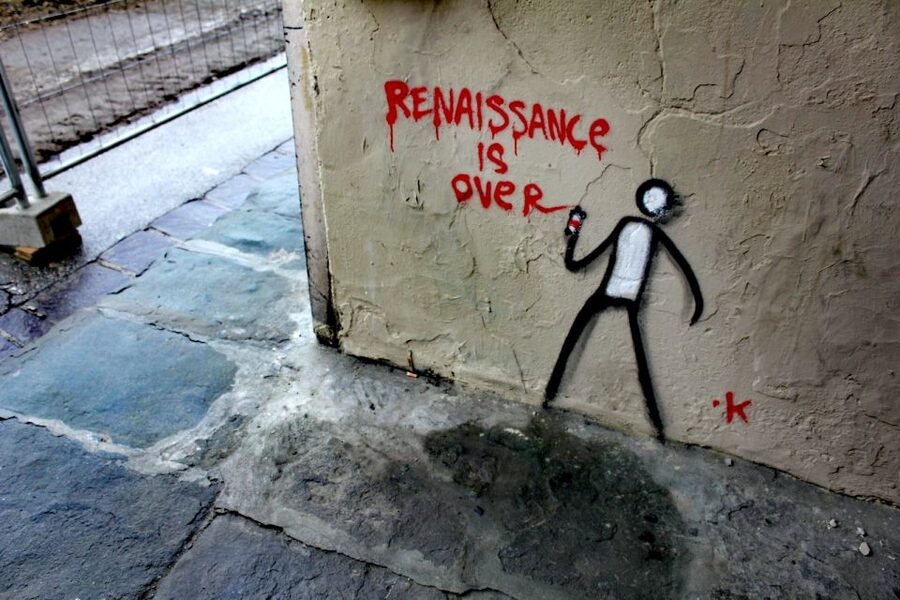
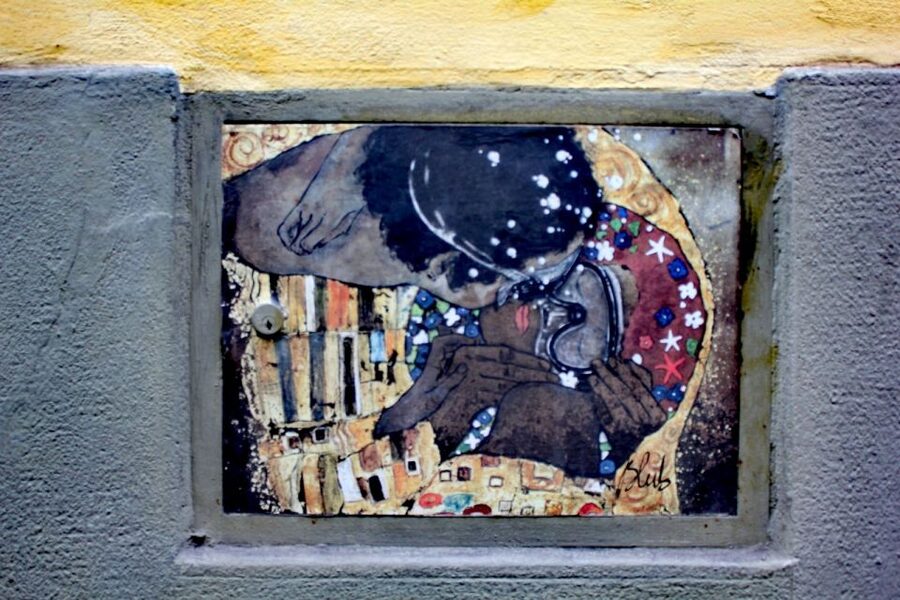
Florence’s art does not stop at the museum door. On this three-hour walk, you’ll read the city’s walls as a second gallery, finding cheeky tags, painted figures, and altered street signs among churches, palaces, and famous squares. The best part is the contrast: Renaissance Florence supplies the grand backdrop, while artists such as Blub and CLET answer it with sly modern work.
I like the way this tour gets you beyond the standard postcard route, especially along Via Palazzuolo. I also like the visit to CLET Studio, where street art becomes something you can study more closely rather than simply spot while walking past.
The main consideration is the art itself. Florence is not London, Paris, Barcelona, or New York, so you should not expect a wall covered in giant murals at every turn. You will walk for most of the three hours, and one past booking ended about a mile from the starting point, although the planned route is meant to return to the Duomo meeting point.
Key points to know before you book
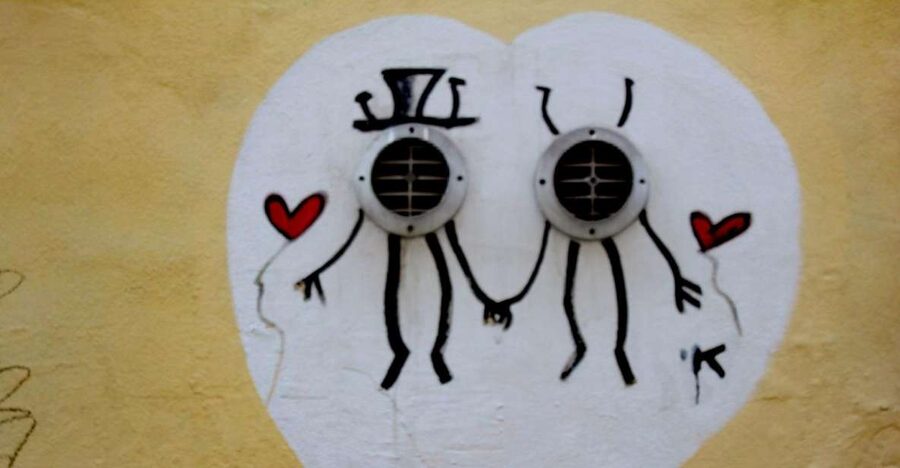
- The route links old and new Florence: You’ll see the Duomo, Santa Maria Novella, Ponte Vecchio, Piazza Pitti, and Palazzo Vecchio alongside contemporary work.
- Via Palazzuolo is a key stop: This less polished, more local-feeling street offers some of the tour’s strongest street-art context.
- CLET Studio adds an indoor art stop: You get time to see the work more closely and learn about CLET’s playful approach to familiar road signs.
- The tour is private: Your group does not share the walk with a large public crowd.
- Guide Alex has received especially warm praise: He brings together street artists, churches, bridges, and the city’s recent past.
- Expect constant walking: The route lasts three hours and includes several stops on foot, so comfortable shoes matter.
Florence’s second art gallery begins at the Duomo
Meet your guide in front of the central door of Florence Cathedral at Piazza del Duomo, 107. This is an easy place to find, though it is also one of the city’s busiest meeting points, so arrive with enough time to locate the correct door and your guide.
Starting here makes sense. The cathedral represents Florence’s familiar artistic identity: monumental, historic, and carefully preserved. The tour then asks you to notice another layer of the city, one made by artists working in the present.
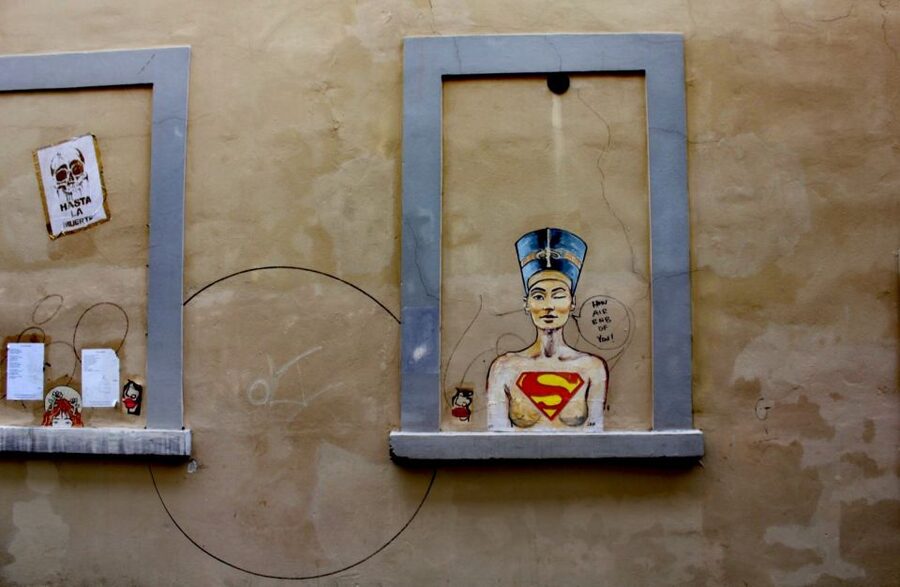
Your guide helps decode Italian graffiti, which can look like a blur of hurried letters if you do not know what to look for. The point is not simply to photograph a colorful wall. You’ll learn how tags, political comments, figures, and visual jokes can reflect local concerns and the personality of the artist.
A guide can also explain the difference between a quick tag and a planned artwork. That distinction matters in Florence, where a small sticker or painted sign may be more clever than grand. You may pass a piece without noticing it unless someone points out its placement, message, or connection to the surrounding buildings.
More Street Art Tours around Italy:
- Naples Spanish Quarters Walking Tour Street Art, Folklore & Sweet
★ 5.0 · 797 reviews - Naples: Spanish Quarters Folk Street Art w/ Sweets Tasting
★ 4.9 · 788 reviews - Graffiti art tour in Rome
★ 5.0 · 714 reviews
Santa Maria Novella adds a powerful contrast
The first scheduled stop is Santa Maria Novella, with about 15 minutes for guided sightseeing. The square and church give you one of the clearest examples of Florence’s old visual language, with formal architecture and a strong sense of place.
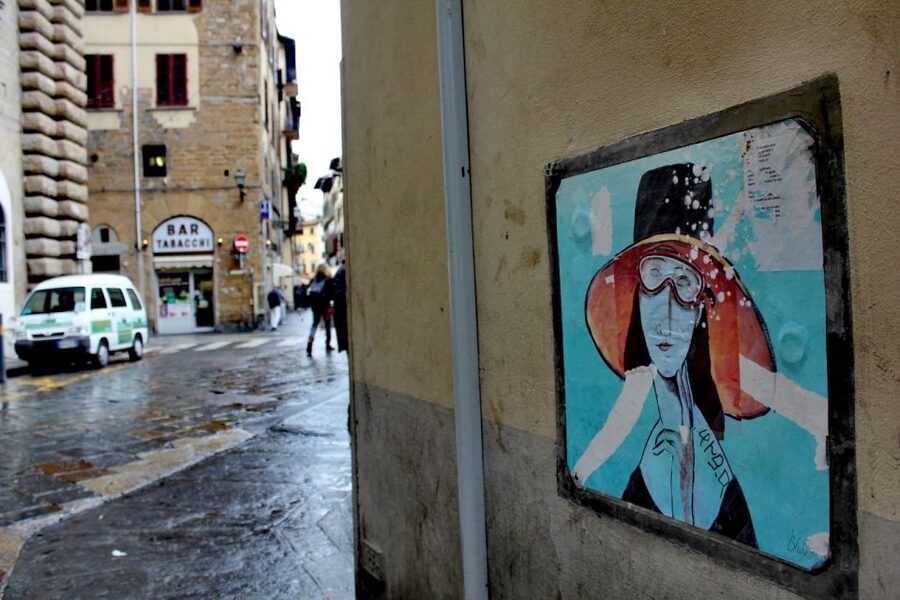
Against that setting, contemporary street art feels less like a separate attraction and more like an argument with the past. Florence has always used public space to show ideas about power, faith, identity, and civic life. Modern artists use walls, shutters, signs, and overlooked corners for their own messages.
This is also where the tour’s theme becomes clear. You are not leaving Renaissance Florence behind. You are learning to see how current artists respond to the same city that shaped Michelangelo, Botticelli, and Leonardo.
The stop is fairly brief, so do not expect a long church visit or a museum-style art lecture. Its value comes from the comparison between the square’s famous architecture and the smaller, less official works around it.
Via Palazzuolo shows a less polished side of town
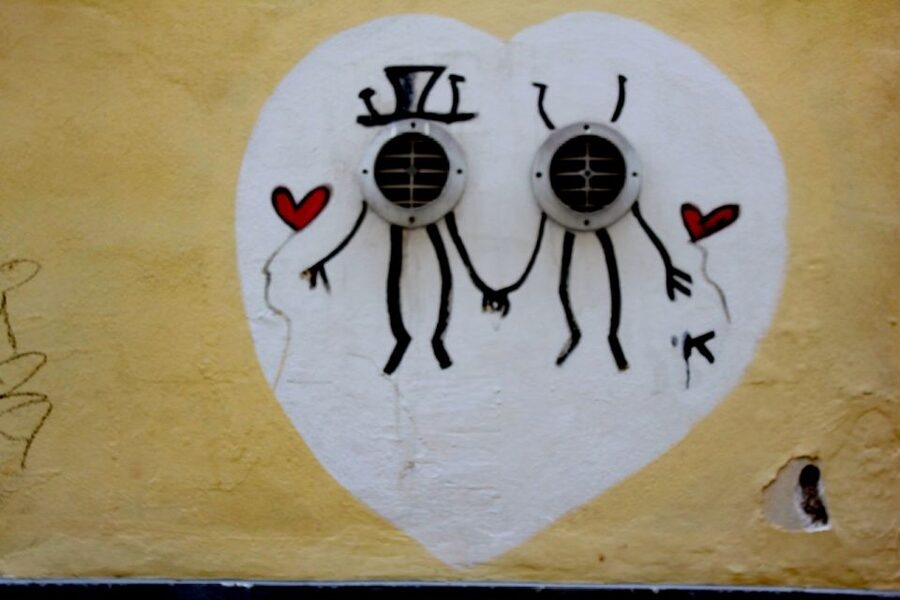
The tour then spends roughly 30 minutes around Via Palazzuolo. This is one of the more useful sections for anyone hoping to get off Florence’s most beaten path.
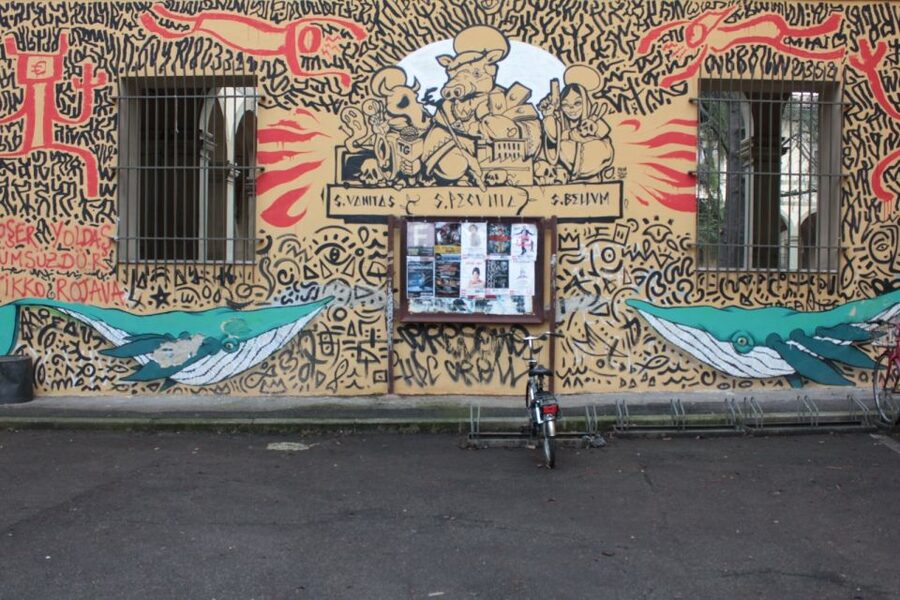
The street offers a different feel from the cathedral squares and grand palaces. Here, the art is more closely tied to everyday city life. You may see tags, painted images, and cheeky interventions that feel made for people who live and work nearby rather than for a sightseeing brochure.
This is also the part of the walk where you need to accept some uncertainty. Street art changes. Pieces can be painted over, removed, or damaged, and not every wall will contain a masterpiece. The guide’s eye is especially important here because the value lies partly in the explanation.
The tour’s description points to stories about society, politics, and recent history. That makes Via Palazzuolo more than a photo stop. It gives you a chance to ask how public art works when it has no official frame and no guaranteed future.
Ponte Vecchio turns the walk into a city tour
From Via Palazzuolo, the route continues to Ponte Vecchio, with about 15 minutes for guided sightseeing. The bridge is one of Florence’s best-known landmarks, so this is not an unknown corner. Still, it helps break up the street-art focus and gives you a chance to see how the city’s major sights fit together.
You’ll cross or view one of Florence’s defining bridges while continuing to look for the unexpected. The experience is not limited to walls covered in paint. The route also takes in bridges, churches, cathedrals, and historic public buildings, which helps explain why the contemporary work looks the way it does.
I would not book this tour solely for a detailed history of Ponte Vecchio. The stop is short, and the focus remains on the connection between public art and the city around it. Think of it as one piece of a larger walk rather than a full bridge tour.
Same walls, a different way in:
- Naples: Street Art, Wine and Food Tasting Walking Tour
★ 5.0 · 163 reviews - Naples Essentials: Monuments, Local Life & Street Art
★ 4.9 · 79 reviews - 4×4 tour of Orgosolo: Murals and typical lunch at the shepherd’s
★ 5.0 · 76 reviews - Rione Sanità tour among baroque, revival, street art & food
★ 4.8 · 59 reviews
Piazza Pitti brings grand architecture back into view
The next stop is Piazza Pitti, where you’ll spend about 15 minutes on guided sightseeing and walking. The square provides another strong contrast between formal Florence and the looser art found in side streets.
The Palazzo Pitti area is one of the city’s major visual anchors. After seeing smaller works in less polished settings, you return to a place built to impress. This back-and-forth is one reason the tour can appeal even if you are not an expert in graffiti.
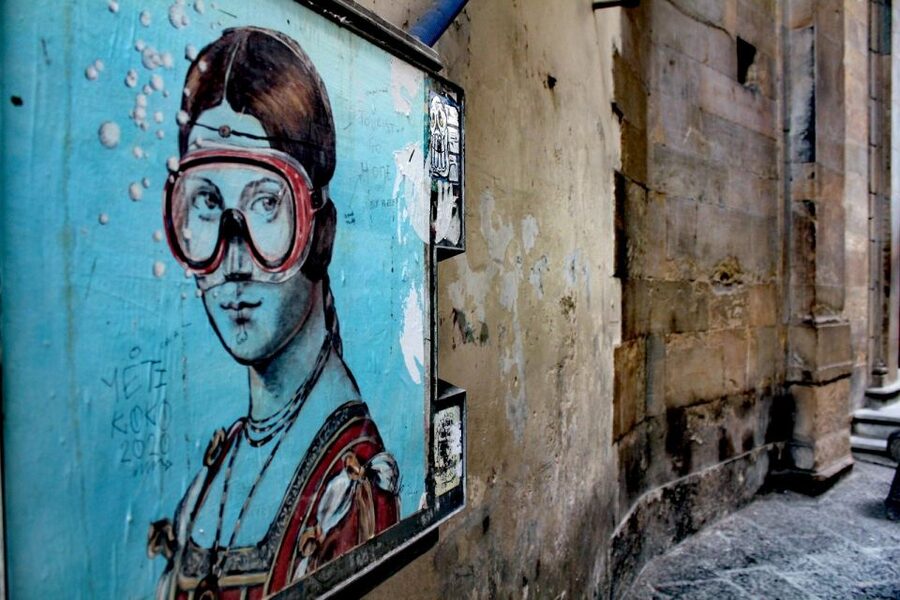
You’ll see how contemporary images sit within a city shaped by powerful families, public ceremony, and famous artists. The guide can help you notice that Florence’s artistic character is not frozen in the Renaissance. It continues through small, unofficial works that can be humorous, political, or quietly observant.
Again, the stop is short. If you want a full visit to Palazzo Pitti or its museums, plan that separately. This tour uses the square as part of a walking route, not as an entry ticket to the palace.
CLET Studio gives the street art a closer look
The indoor visit to CLET Studio is the most distinct feature of the route. You’ll spend about 30 minutes here, and admission to street-art workshops is included.
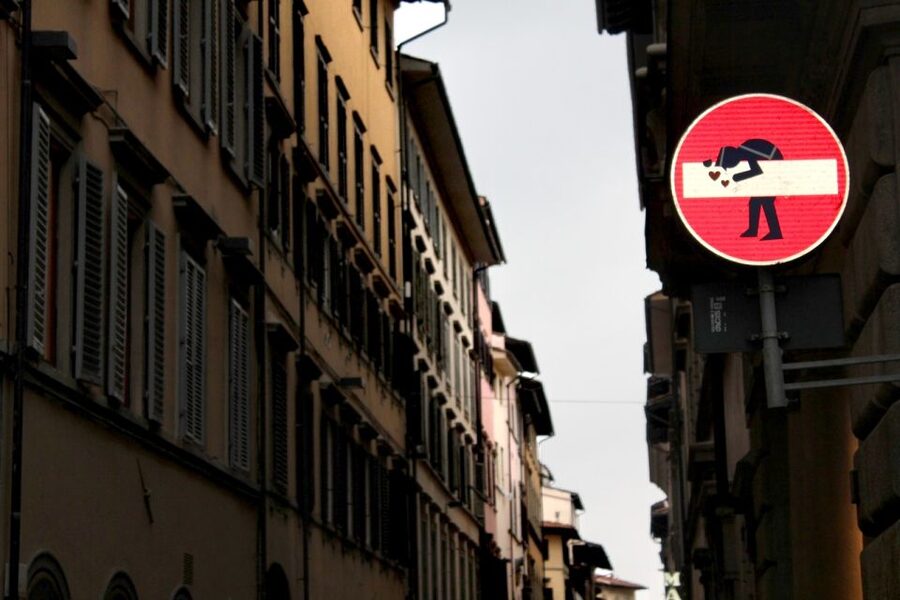
CLET is known for transforming ordinary road signs with removable additions that change their meaning. A familiar sign can become a visual joke or a small piece of social commentary. That work is especially effective in Florence because it interrupts the strict order of the historic center without destroying the sign’s basic purpose.
At the studio, you can look at this approach more carefully than you can on a street corner. The stop also helps explain how a contemporary artist develops a recognizable style and turns a simple urban object into an artwork.
One practical point: the tour may include opportunities to view art in local artist shops, and you may be able to buy pieces if you wish. Purchasing is optional, so you can enjoy the stop without treating it as a shopping requirement.
The CLET visit may be the highlight for you if you prefer clever design, political humor, and small-scale intervention to large painted walls. If your main goal is enormous murals, this experience may feel modest.
Piazza della Signoria closes the loop with old Florence
The final major stop is Piazza della Signoria, with about 15 minutes of guided sightseeing. This is an ideal place to finish the historical comparison because the square is filled with some of Florence’s most famous public art and civic architecture.
The Palazzo Vecchio area brings the Renaissance back into full view. By this stage, you have seen how current artists use walls and signs to make comments in public. In Piazza della Signoria, the city’s older art shows a more official version of public storytelling.
The route makes its point without needing a lecture: Florence has long used streets and squares as places for art, argument, power, and memory. The materials and artists have changed, but the city’s habit of putting ideas in public has not disappeared.
From here, the activity is scheduled to return to Piazza del Duomo, 107. Because one past booking finished roughly a mile from the original meeting area, I would confirm the exact end point with your guide at the start, especially if you have a car parked outside the center or a tight reservation afterward.
What three hours of walking feels like
This is a walking tour first and an art workshop second. You will move between several central districts, pause for explanations, and spend most of the time on foot. The listed stop times add up to more than two hours, leaving the rest of the three-hour period for walking between locations and examining additional works along the way.
Wear comfortable shoes. Florence’s center is compact enough to explore on foot, but three hours of steady movement can feel tiring after a morning of museums. The route is listed as wheelchair accessible, though you may still want to discuss the exact path and any preferred pace when booking.
The private-group format is useful here. Street art can be easy to miss, and a private guide can adjust the amount of time spent on a particular wall or artist. You can also ask questions about Italian graffiti, local politics, the artists’ methods, or the connection between a modern image and a nearby historic building.
The tour is offered in Italian, English, French, German, and Spanish. That makes it a practical choice for mixed-language groups, though you should select your preferred language when checking availability.
Is $198.25 per person a fair price?
At $198.25 per person, this is not a budget walk. Its value depends heavily on the size of your private group and how much you want a focused introduction to Florence’s current art scene.
You are paying for a three-hour private experience with an expert guide, access to street-art workshops, and a route that combines contemporary work with major sights. If you would otherwise book a separate city walk and still want help finding artists such as Blub and CLET, the price may make sense.
The cost is harder to justify if you mainly want to see a large number of dramatic murals. Florence has less of that kind of street art than cities famous for wall painting, and some of the pieces may be small, temporary, or easy to miss.
I would see this as a specialty tour rather than a standard Florence sightseeing bargain. It suits someone who enjoys the story behind public art and wants a personal guide to parts of the city they might pass without understanding.
You can reserve now and pay later, and cancellation is free up to 24 hours before the activity for a full refund. Those terms help if your Florence plans are still shifting.
Who will enjoy this Florence street art walk?
I would recommend it to you if you:
- Have already seen Florence’s main Renaissance sights and want a different angle.
- Enjoy graffiti, graphic design, public art, or contemporary illustration.
- Like connecting modern city life with older architecture.
- Prefer a private walk where you can ask questions.
- Want to see Via Palazzuolo and other streets beyond the main tourist circuit.
- Are happy with a route that includes famous sights but does not offer full museum visits.
I would hesitate if you expect a nonstop parade of giant murals or if you dislike walking for several hours. The tour also may not be the best first activity for someone who has not yet seen Florence’s major landmarks, since much of its appeal comes from comparing new street art with the city’s older art and architecture.
A guide named Alex has been especially effective at combining these themes, introducing local artists such as Blub and CLET while also pointing out cathedrals, churches, bridges, and Palazzo Vecchio. If Alex is available for your date, that is a useful detail to ask about, but guide assignment is not guaranteed by the activity information.
Should you book it?
Book this tour if you want Florence beyond the standard Renaissance checklist. The strongest parts are the thoughtful route through Via Palazzuolo, the connection between old and new public art, and the CLET Studio visit.
Skip it if your idea of street art means huge murals on every block. At this price, you should want interpretation, local context, and a private walk more than a simple collection of photo stops.
For the right person, this is a smart way to see Florence with fresh eyes. You’ll still visit the famous squares, but you’ll also notice the painted corners, altered signs, and small acts of visual mischief that keep the city’s art scene moving.
FAQ
Where does the Florence street art tour start?
The tour starts in front of the central door of Florence Cathedral at Piazza del Duomo, 107.
Where does the tour end?
The activity is scheduled to end back at the meeting point at Piazza del Duomo, 107. Confirm the exact return point with your guide, since one past booking ended about a mile from the starting area.
How long does the tour last?
The walking tour lasts three hours.
What places are included?
The route includes Santa Maria Novella, Via Palazzuolo, Ponte Vecchio, Piazza Pitti, CLET Studio, and Piazza della Signoria, with the walk beginning and ending near the Duomo.
Is CLET Studio included?
Yes. The tour includes a guided visit to CLET Studio, and entrance to the street-art workshops is included.
What languages are available?
The live guide is available in Italian, English, French, German, and Spanish.
Is the tour wheelchair accessible?
Yes, the activity is listed as wheelchair accessible.
Can I cancel the booking?
Yes. You can cancel up to 24 hours in advance for a full refund. You can also reserve now and pay later.
Freshly painted around Italy
- Art & Craft: Beer Tour with Street Art in Rome★ 4.5 · 6 reviews
- Torpignattara Photo Tour: melting pot, street art and politics★ 5.0 · 5 reviews
- Naples Murals Catacombs and Folklore Sanità District Tour★ 4.5 · 5 reviews
- Street Art of Spanish Quarters and Maradona Tour★ 3.5 · 3 reviews
- The Spanish Quarters, Street Art and Local Market Tour in Naples★ 5.0 · 23 reviews
- Private Street Art Tour: Exploring Milan’s Hype Neighborhoods★ 5.0 · 2 reviews
- Street Art&Urban Vibes in Milan’s Most Exciting Rising Areas★ 4.4 · 5 reviews
- Spanish Streets – Maradona Street Art & Murals★ 5.0 · 3 reviews
Italy Street Art Tours, compared.
Naples Spanish Quarters Walking Tour Street Art, Folklore & Sweet
Read our review →
Naples: Spanish Quarters Folk Street Art w/ Sweets Tasting
Read our review →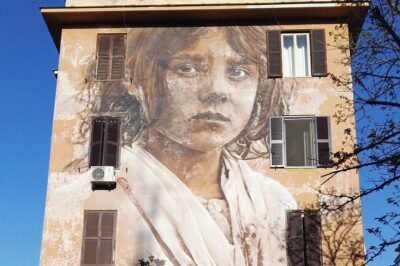

Naples: Street Art, Wine and Food Tasting Walking Tour
Read our review →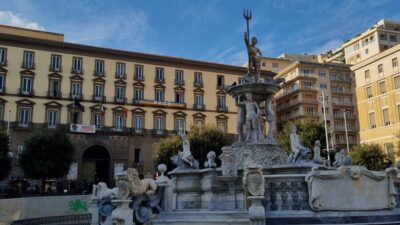
Naples Essentials: Monuments, Local Life & Street Art
Read our review →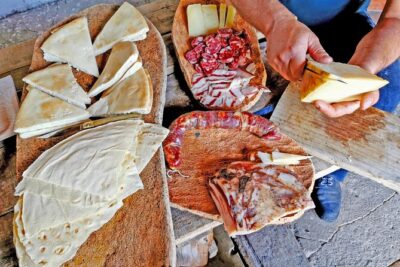
4×4 tour of Orgosolo: Murals and typical lunch at the shepherd’s
Read our review →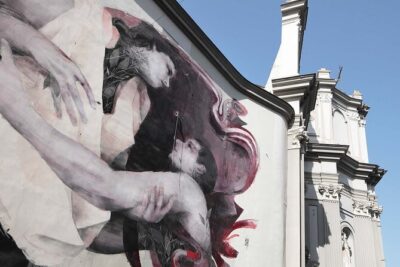
Rione Sanità tour among baroque, revival, street art & food
Read our review →
Naples: The Spanish Quarters, Street Art and Local Market
Read our review →Browse the lists this tour appears in