
Review · SPAIN
Ávila: Tour privado por Murallas y Casco Histórico
Ávila’s great attraction is easy to grasp the moment you meet it: a medieval city wrapped in a massive stone wall. This private walk takes you from San Vicente Gate through the old center, linking the fortifications with the churches, palaces, and people that shaped Ávila.
I like the way the tour combines the city’s military side with its religious one, especially the wall integrated into the cathedral and the Romanesque beauty of San Vicente Basilica. I also like the private format, which lets you organize the visit around your group and your available time. The main limitation is that the tour is in Spanish only, and two hours gives you a focused introduction rather than a full visit to every interior.
Key points
- San Vicente Gate start: Meet beside one of Ávila’s most important entrances and begin with the city’s defensive story.
- Medieval walls: See the towers and stone curtain walls that define Ávila’s identity.
- San Vicente Basilica: Look for Romanesque details, the crypt, and the sculpted cenotaph.
- Cathedral fortress: Learn how the Cathedral of El Salvador served both worship and defense.
- Santa Teresa connection: Visit the basilica built at the birthplace of Ávila’s most famous religious figure.
- Private value: The $188 rate covers up to four people, making the price more reasonable for a small family or group.
Beginning at San Vicente Gate
Your meeting point is beside the Puerta de San Vicente, one of Ávila’s key gateways. This is a useful place to begin because it gives you an immediate sense of the city as a fortified medieval settlement, rather than simply another Spanish old town.
From here, the guide connects the physical city with its major characters and monuments. The walk is designed as a story through Ávila, not a rapid checklist of buildings. That matters because the city’s appeal comes from the way its walls, cathedral, churches, and squares work together.
The tour lasts two hours, so you should expect a brisk but manageable walk through the historic center. Wear comfortable shoes. The supplied information does not specify the length of each stop or how much time is spent inside individual buildings, so think of this as a guided orientation with detailed attention to the main sights.
The private arrangement is especially useful if you are traveling with up to four people. You are not paying a per-person rate for a large group. At $188 per group, the cost works out to $47 each for four people, or more if you are a smaller party. That is not the cheapest way to see Ávila, but it can be fair value when you want a personal guide and a tightly planned route.
More walls, murals and painted streets to see around Spain:
- Barcelona Street Art and Graffitti Bicycle Tour
★ 5.0 · 361 reviews - Madrid: Street Art Tour with Local Graffiti Hunter
★ 4.8 · 270 reviews - Street Art Guided Tour in Madrid
★ 5.0 · 175 reviews
The Walls That Give Ávila Its Shape
The walls are the heart of the walk. You will admire their towers and stretches of stonework while learning why they have become Ávila’s defining monument.
The walls are not just a photogenic frame around the old town. They explain the city’s form and its history. The tour presents them as a defensive system, with the fortifications shaping daily life inside the city and helping preserve its medieval character.
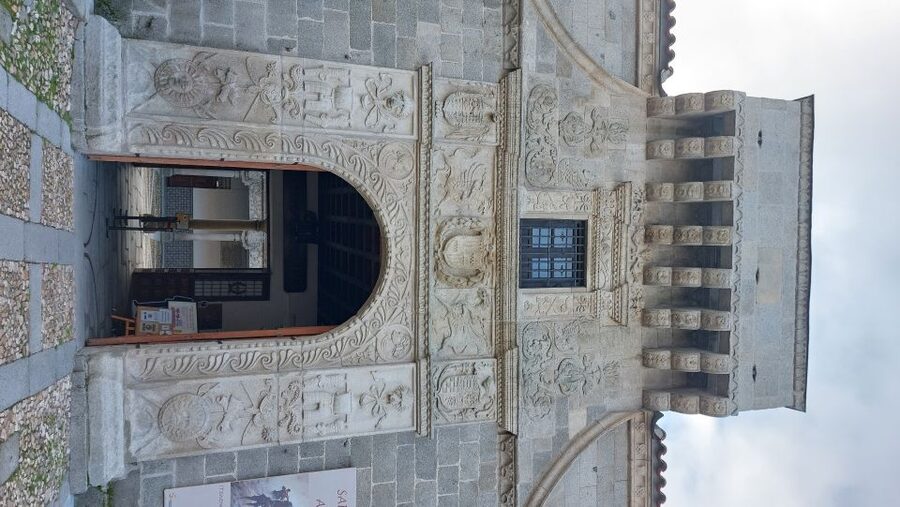
A useful detail is the link between the walls and the Cathedral of El Salvador. The cathedral’s famous cimorro, or fortified apse, is incorporated into the defenses as another tower. This turns the cathedral into more than a place of worship. It also became part of the city’s protection.
That mixture of faith and military planning is one of the most interesting ideas in Ávila. You are not looking at isolated monuments. You are seeing a city where religious buildings and defensive structures were designed to work within the same urban system.
The information describes Ávila’s walls as among the best preserved in Europe. The tour is therefore a good choice if you want to understand why the city is important before spending time on smaller details. Just keep in mind that this route is described as a walk through the walls and historic center. It does not specifically promise a walk along the top of the walls or a separate wall-entry ticket.
San Vicente Basilica and the Best of Ávila’s Romanesque Style
The Basilica of San Vicente is presented as the pearl of Ávila’s Romanesque architecture. Construction began in the 12th century, and the church became one of the most important temples in the medieval city.
Its exterior has a sturdy, almost defensive appearance. That first impression can be misleading. The tour draws attention to the interior’s light and beauty, along with the archaeological remains found in the area.
The route includes the crypt and cenotaph, giving you more than a quick look at the façade. A cenotaph is a monument honoring someone whose remains may be elsewhere, and here it forms part of the basilica’s visual and historical interest.
I like this stop because it gives the tour a clear architectural focus. The walls explain defense. San Vicente explains Romanesque religious design. Together, they show two sides of medieval Ávila without requiring a separate day of sightseeing.
The details provided do not confirm whether admission to the basilica is included or how long you spend inside. Ask the guide at the start if entering the church is part of the planned visit. If you care most about interiors, this is one of the places where that question matters.
El Salvador Cathedral, Where Worship Meets Defense
The Cathedral of El Salvador is described as the first Gothic cathedral built in Spain. Its tall, solitary tower gives the building a powerful presence, but the more unusual feature is its defensive role.
The cathedral’s cimorro is joined to the city wall. Instead of sitting apart from the fortifications, the cathedral forms part of them. The tour uses this feature to explain the double purpose of the building: a house of God and a piece of Ávila’s defenses.
That is a strong reason to visit this tour with a guide rather than simply photograph the cathedral from the square. The exterior can look severe, and the connection to the wall is easy to miss unless someone points it out.
The cathedral also adds a Gothic chapter to a walk that includes Romanesque churches and medieval military architecture. In two hours, you get a useful overview of several major styles and functions.
As with San Vicente Basilica, the information confirms the cathedral as a stop but does not state that interior admission is included. Plan on seeing and discussing the cathedral from the route, and clarify the entry arrangements if going inside is essential to you.
Same walls, a different way in:
- Barcelona Street Art Tour with Exclusive Artist Studios Visit
★ 5.0 · 152 reviews - Raval Street Art and Graffiti Guided Tour in Barcelona
★ 5.0 · 81 reviews - Barcelona: Raval Street Art and Graffiti Walking Tour
★ 4.9 · 60 reviews - Barcelona: 3.5-Hour Street Art Tour by Bamboo Bike
★ 5.0 · 56 reviews
Santa Teresa’s Ávila
The Basilica Casa Natal de Santa Teresa introduces the city’s most internationally recognized figure. The church is connected with the birthplace of Saint Teresa of Ávila, a major religious writer and reformer.
The tour does not treat Santa Teresa as a minor local figure. It places her within the larger story of Ávila and explains how her influence reached beyond the city and Spain. For many visitors, this stop provides the human focus that balances the stonework of the walls and churches.
Santa Teresa also helps explain why Ávila remains an important place for religious history. Her connection to the city gives the old town a personal story, not just a collection of monuments.
I would pay close attention here if you have an interest in Spanish culture, Catholic history, or the lives of major women in European history. The tour promises an introduction to her role, but it does not list specific rooms, displays, or interior exhibits. You should not expect a long museum visit based on the information provided.
Polentinos Palace and Ávila’s Military Story
The Palacio de Polentinos is described as the finest example of Ávila’s 16th-century palace buildings. It also has a direct connection with military life.
The building formerly housed the army quartermaster academy and now contains the General Military Archive of Ávila and an army museum. That gives the tour another angle on the city’s relationship with defense. The walls show medieval protection, while Polentinos Palace brings the military story into the 16th century and beyond.
This is a valuable stop for anyone who likes architecture with a practical history. It is not simply a grand residence. Its later military use gives the building a continuing connection to the city’s defensive identity.
The supplied details do not say that museum entry is included, so treat the palace as a guided exterior or city-center stop unless your guide confirms otherwise. If you want to visit the army museum at length, you may need separate time beyond the two-hour walk.
Finishing at Santa Teresa Square
The route ends in Santa Teresa Square, also called the Big Market. This is described as the nerve center of Ávila, a meeting place for local life and sightseeing.
Ending here makes sense. After the walls, basilica, cathedral, Santa Teresa site, and palace, the walk closes in a central public space rather than at another isolated monument. The square contains the Church of San Pedro, another important example of Ávila’s Romanesque architecture.
San Pedro gives the final stop a strong visual and architectural finish. It also reinforces the pattern running through the tour: Ávila’s major sights are close enough to connect in one walk, yet each adds a different piece to the city’s story.
Because the tour ends in a central square, you can use the remaining part of your day for your own plans. The activity does not provide onward transport, meals, or additional sightseeing, so you will be free to continue independently after the guide says goodbye.
What the Private Format Is Worth
The price is $188 for a group of up to four people. For a couple, that is a significant cost. For four people, the shared price becomes much easier to justify, especially if you value having a guide focused on your own group.
The private format also gives the provider room to plan the visit around your preferences and available time. The description says the company organizes private visits according to what your group wants to see and how long you have. That flexibility is useful in Ávila, where you may want to emphasize architecture, military history, Santa Teresa, or the city walls.
The guide language is Spanish. This is the most important practical filter. If you understand Spanish well, the tour can give you a more personal and direct way to explore the city. If you do not, you should not book expecting English commentary.
Specific feedback about the guiding is positive. Oscar is named as an excellent guide, and another booking praises the guide’s attention and the comfort of the experience. You cannot assume Oscar will lead every departure, but his name is worth requesting when you book if that matters to you.
The tour has a perfect rating from three published ratings, with particular emphasis on guide quality, attention, and comfort. That is encouraging, though the small number of ratings means you should judge the experience mainly by its route, Spanish-only format, private price, and two-hour length.
Accessibility and Practical Details
The tour is listed as wheelchair accessible. That is important for a historic city with substantial stone architecture, although the information does not describe the exact surfaces, slopes, or access arrangements at each monument. If you use a wheelchair, ask about the route and interior access before setting out.
Bring comfortable shoes. The walk includes several major monuments and the old center, so you should expect to be on your feet for much of the two hours.
Cameras are not allowed, according to the provided conditions. That is an unusual restriction and one you should take seriously. If taking photographs is a major part of your sightseeing, this experience may frustrate you.
Baby strollers are also not allowed. Families with very young children should plan accordingly before booking.
You can cancel up to 24 hours before the activity for a full refund, and the reserve-now, pay-later option lets you hold a place without paying immediately. Availability determines the start time, so check the schedule for the day you want.
Who Should Book This Ávila Walk
I would choose this tour if you have only a short time in Ávila and want a clear introduction to the city’s main monuments. It also fits families or groups of friends who can share the $188 fee and prefer a private guide to a larger public departure.
It suits you especially well if you speak Spanish and want to focus on the relationship between the walls, cathedral, Romanesque churches, military buildings, and Santa Teresa. The route gives you a good framework for returning to the places that interest you most.
I would think twice if you want a long, slow museum visit, extensive time inside each church, or commentary in English. The two-hour schedule is compact, and the available details do not confirm interior admission at the basilica, cathedral, or palace.
Should You Book It?
Book this private Ávila tour if your group has up to four people, you speak Spanish, and you want the city’s major sights tied together by one guide. The strongest reasons are the wall-to-cathedral route, the Romanesque focus, the Santa Teresa connection, and the flexibility of a private visit.
Skip it if photography, stroller access, or an English-speaking guide is essential. For the right group, though, $188 buys a focused introduction to one of Spain’s most distinctive medieval cities, with enough context to make the stone walls and churches mean more than a quick set of photographs.
FAQ
Where does the Ávila tour meet?
The meeting point is beside the Puerta de San Vicente.
How long does the tour last?
The tour lasts two hours.
What language is the tour in?
The live guided tour is in Spanish.
How much does the private tour cost?
The price is $188 per group of up to four people.
Is the tour wheelchair accessible?
Yes, the activity is listed as wheelchair accessible.
What should I bring, and what is not allowed?
Bring comfortable shoes. Cameras and baby strollers are not allowed.
Freshly painted around Spain
- Small-Group Graffiti Tour and Workshop in El Carmen★ 5.0 · 2 reviews
- Bilbao Urban and Street Art Walking Tour★ 5.0 · 2 reviews
- Barcelona Street Art, Graffiti and Tapas Tour★ 4.0 · 5 reviews
- Salamanca: Private Guided Street Art Walking Tour★ 5.0 · 2 reviews
- Private Barcelona Street Art Tour★ 5.0 · 2 reviews
- Barcelona | StreetArt Bike Tour Moco Museum★ 4.6 · 13 reviews
- Málaga: Street Art Tour in the Soho District★ 5.0 · 4 reviews
- Madrid: Private Grafitis/Street Art Segway Tour 2h★ 4.5 · 2 reviews
Spain Street Art Tours, compared.
Barcelona Street Art and Graffitti Bicycle Tour
Read our review →
Madrid: Street Art Tour with Local Graffiti Hunter
Read our review →
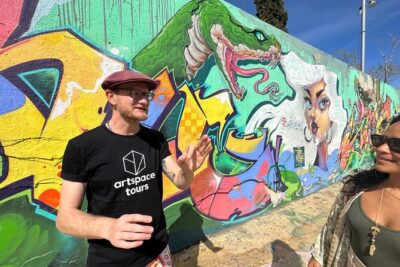
Barcelona Street Art Tour with Exclusive Artist Studios Visit
Read our review →
Raval Street Art and Graffiti Guided Tour in Barcelona
Read our review →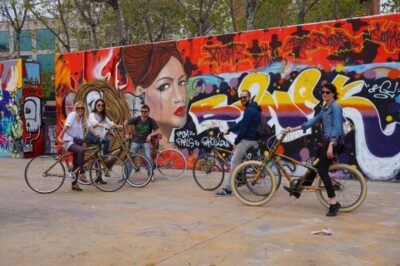
Barcelona: 3.5-Hour Street Art Tour by Bamboo Bike
Read our review →
Private Barcelona Street Art Workshop with a Street Artist
Read our review →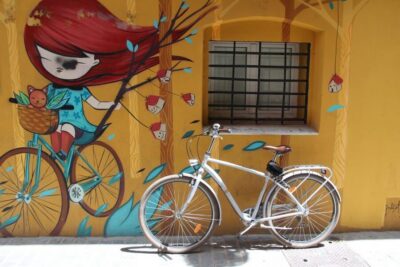
Valencia: Street Art Tour on Bicycle, E-Bike or E-Step
Read our review →Browse the lists this tour appears in