
Review · AUSTRALIA
Fremantle – Convicts, Culture & Street Art
Fremantle’s past is packed into a short walk: prisoners tried daring escapes, whale products moved through a limestone tunnel, and the port reshaped the city. This tour brings those stories together with street art, Indigenous history, and colonial landmarks, rather than treating Fremantle as just a pretty waterfront stop.
I like the small group, capped at 12, and the smart route from the civic center to the Cappuccino Strip. I also like that coffee or tea is included, while the guides, including Sanya and Ann, are singled out for their friendly, well-informed approach. The main drawback is pace: two hours gives you an excellent orientation, but only a few minutes at most stops and no extended visit inside Fremantle Prison.
Key points to know
- Fremantle Prison is part of the story, not a full prison tour: You hear about convicts and escapes, but the route does not list an admission visit inside the prison.
- The walk links old and new Fremantle: FOMO Freo, Walyalup Koort, street art, the port, and colonial buildings all appear along the way.
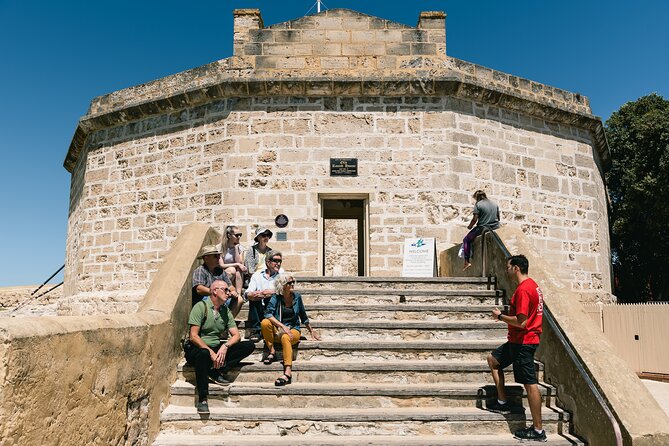
- The Round House is the city’s oldest building: It was also Fremantle’s first prison.
- Whalers Tunnel reveals an unusual slice of port history: The limestone passage once helped move whale products from the water to High Street.
- You finish on South Terrace: The famous Cappuccino Strip is a useful place to continue with lunch or coffee.
- The group stays intimate: A maximum of 12 people makes it easier to hear the guide and ask questions.
A two-hour introduction to Fremantle’s many layers
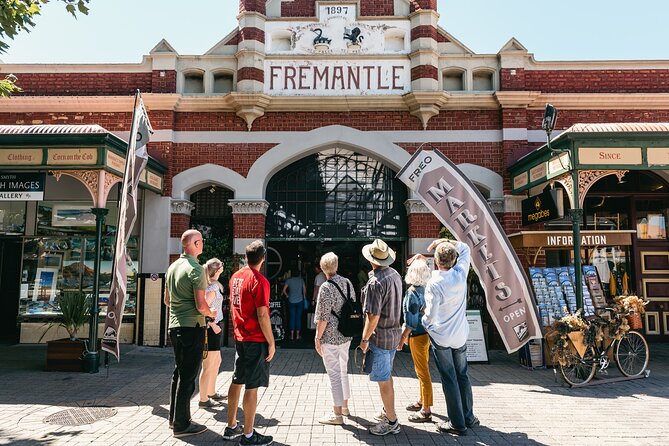
This is a walking orientation, not a museum marathon. You move from Fremantle Town Hall through the center, down toward the water, then back toward South Terrace. The route connects places that can feel separate when you explore alone.
That structure is the tour’s main strength. You get a quick sense of how Fremantle’s civic center, shopping streets, port, prison, beach, and café district fit together. The stories also move beyond the usual colonial material, with attention to Aboriginal history and the reshaping of the shoreline.
At $46.62 per person, the value depends on how you use it. If you want a private guide for every attraction, this is not that product. If you want a compact introduction that helps you choose what to return to later, the price is reasonable, especially with a local host and coffee or tea included.
The start time is 10:00 am, and the tour lasts about two hours. That makes it easy to fit into a day of sightseeing. You should still allow extra time before or after for Fremantle Prison, the Round House, the markets, meals, or the waterfront, since the walk itself does not provide long visits at each site.
More Street Art Tours around Australia:
- Melbourne Street Art Tour
★ 5.0 · 378 reviews - PERTH BAR+STREET ART TOUR: Hidden Secrets, Laneways + Good Times!
★ 5.0 · 183 reviews - Melbourne: Street Art Walking Tour with a Street Artist
★ 4.9 · 147 reviews
Starting at Fremantle Town Hall and Walyalup Koort

The tour begins at the Fremantle Visitor Centre at 155 High Street, close to Fremantle Town Hall. The opening five minutes are used for introductions and orientation.
That may sound brief, but it serves a useful purpose. You learn where you are before moving into the city streets, and you can get a quick outline of the day’s route. Since the tour ends in central Fremantle, you are not left at an isolated attraction or dependent on a return transfer.
The next stop is FOMO Freo, a modern hub in Walyalup Koort. It combines art, architecture, independent shops, food, and entertainment. The stop is short, around five minutes, so think of it as a way to read the new civic center rather than time to shop or eat.
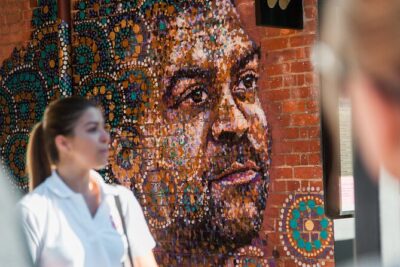
I like this early contrast. Fremantle is not only old stone buildings and convict stories. FOMO Freo and Walyalup Koort show the city’s current cultural and commercial life. You then pass through a pedestrian mall between the Cappuccino Strip and the renewed civic center, where recent street art and public improvements have changed the feel of the area.
The itinerary also takes you along a key trading street in the center of old Fremantle. The exact stop is brief, but the point is clear: streets here were shaped by business, movement, and the port, not just by grand public buildings.
Fremantle Ports and the work of C.Y. O’Connor
The walk then heads toward Fremantle Ports for about 10 minutes. Here, the guide explains the port’s construction in the late 1800s and early 1900s, along with the role of C.Y. O’Connor, the man associated with making the project possible.
This is one of the more useful history stops because a port explains so much about Fremantle’s identity. It connects trade, engineering, shipping, labor, and the city’s growth. Without that context, the waterfront can look like a pleasant place for a stroll. With it, you can see why this location mattered to Western Australia’s development.
Do not expect a port operations tour. The experience is about the story and the setting, not a technical inspection of working facilities. The 10-minute stop is enough for a clear explanation, but not enough for a long look at every part of the harbor.
Through Whalers Tunnel beneath the limestone
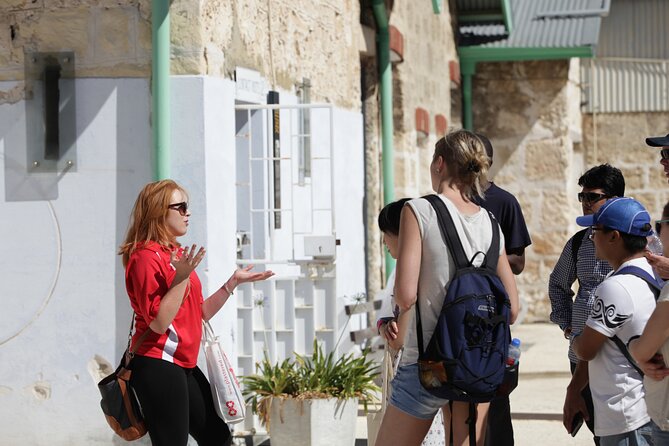
Whalers Tunnel is a short but memorable part of the route. The passage was cut directly into the limestone cliff to move whale products from the water’s edge to High Street. It has also been used for purposes beyond commerce.
The stop lasts about five minutes, which is enough to walk through and hear the basic story. This kind of place gives the tour some texture. Instead of hearing only about major buildings and famous figures, you see an ordinary piece of infrastructure that supported Fremantle’s trade.
The tunnel also shows how the limestone setting influenced the city. It is a practical passage, not a polished attraction. Wear sensible walking shoes and expect the route to include uneven urban surfaces and a moderate level of physical activity. The tour does not call for strenuous fitness, but it is not a seated sightseeing experience.
Same walls, a different way in:
- Sydney Street Art & Food Tour
★ 5.0 · 120 reviews - Brisbane Small Bars and Street Art Tour
★ 5.0 · 34 reviews - Street Food & Street Art, Backroads & Boroughs
★ 5.0 · 23 reviews - Fremantle: Convicts, Culture, and Street Art
★ 4.8 · 23 reviews
The Round House and Fremantle’s convict past
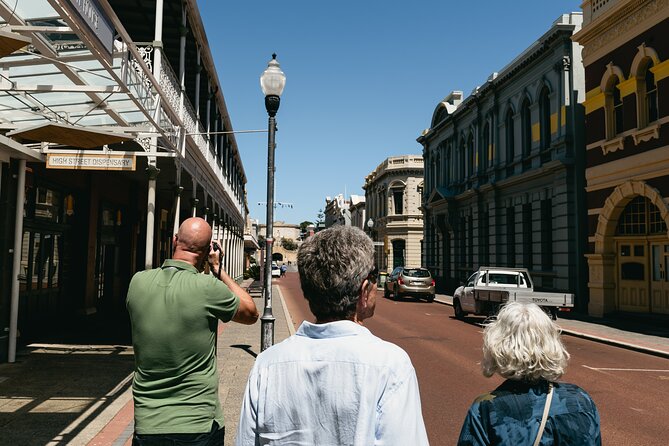
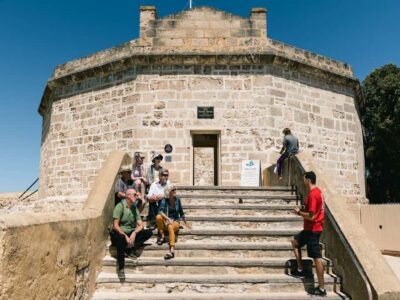
At the Fremantle Round House, you visit the oldest building in the city and its first prison. This is where the tour’s convict theme becomes most tangible.
The Round House is important because it connects early settlement, law, confinement, and the control of movement. The tour also includes stories of daring prisoner escapes, giving the colonial material a human edge. These are the kinds of details that can make a short walking tour more memorable than a string of dates.
The stop is listed at about five minutes. That is a significant limitation if you want a close examination of the building or a full interpretation of its history. The route gives you an introduction and a reason to return, but it does not replace a longer visit.
You should also note the distinction between seeing the Round House and visiting Fremantle Prison. Fremantle Prison is part of the wider subject and is named among the city’s key historic sites, but this experience does not list an entry tour inside the prison. If the prison is a priority, plan separate time for it.
Bather’s Beach and the first landing point

At Bather’s Beach, the guide points out where the first settlers to Western Australia came ashore. You may also climb onto what remains of the original timber-piled jetty.
This is a short stop, around five minutes, but it changes your view of the waterfront. You are not looking at a generic beach. You are being shown a landing point tied to the beginning of the colony’s European settlement.
The possible jetty climb adds a physical detail to the stop, though you should treat it as optional and follow the guide’s direction. The tour data does not promise a particular view, beach activity, or time to linger by the water. The value is the location and its story.
The stop also works well after the port and Whalers Tunnel. You have just heard how goods moved through Fremantle, and now you are standing near the shoreline where people and supplies first arrived.
Esplanade Park and the Aboriginal story of place
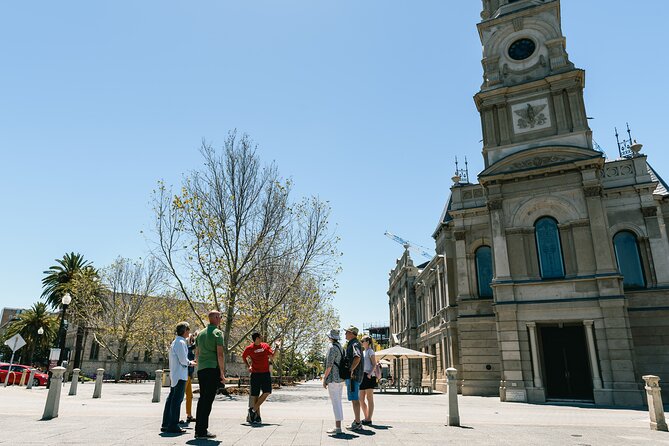
Esplanade Park provides about 10 minutes for the guide to discuss land reclamation and the Aboriginal history of the area. This is an important part of the route because it broadens the tour beyond Fremantle’s colonial buildings and convict tales.
The park’s story is not only about what was built. It is also about how the land itself was changed. Learning about reclamation helps you understand that the present-day waterfront is partly the result of human alteration, while the Aboriginal history places the area within a much longer story.
I appreciate that this subject appears as part of the main route rather than as an afterthought. The supplied information does not give detailed cultural content, so you should not book expecting a specialist Indigenous cultural program. Still, the inclusion matters, and the guide can place this section in the larger context of Fremantle.
The 10-minute stop is the longest listed point on the walk. That gives the guide a little more room to explain the park and its past, although the overall schedule remains brisk.
Finishing on South Terrace and the Cappuccino Strip
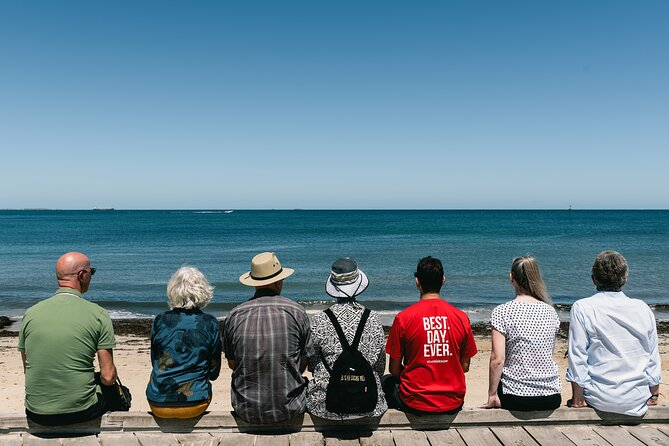
The walk ends on South Terrace, known as the Cappuccino Strip. This is a practical finish because you can continue your day with food, coffee, or more time in central Fremantle.
Coffee or tea is included in the tour, but the details of when and where it is served are not specified. Do not assume that lunch or other drinks are covered. Food and drinks are otherwise your responsibility, as are personal purchases.
Ending here also gives the route a pleasant balance. You begin among civic buildings and new public spaces, move through the port and old waterfront, then finish in one of Fremantle’s best-known dining areas. You can leave the tour with a basic map of the city in your head and decide what deserves a longer visit.
What the small group and timing mean for you
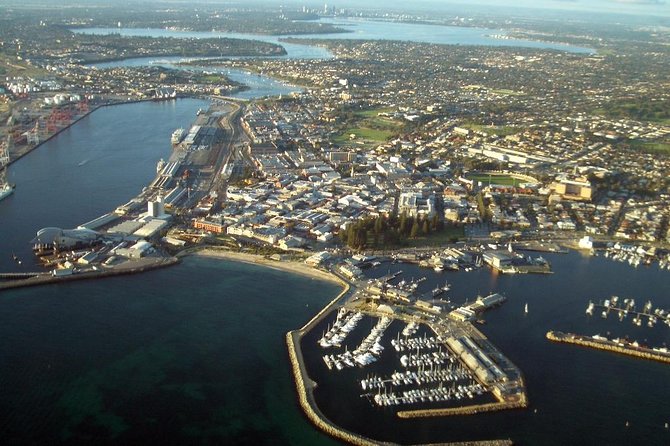
A maximum of 12 people is a real advantage on a walking tour. You are more likely to hear the guide clearly, stay together in busy streets, and ask a question without holding up a large crowd.
The short duration keeps the experience manageable. It suits a first morning in Fremantle, a port-of-call day, or a visitor who wants local context before exploring alone. The trade-off is that most stops last only five minutes, so the experience favors storytelling and orientation over detailed sightseeing.
The tour requires a moderate level of physical fitness. You will walk through central streets, a pedestrian mall, waterfront areas, and a limestone tunnel. Wear comfortable shoes, carry water, and remember that bottled water is not included.
A mobile ticket makes entry simple, and confirmation is provided at booking. The meeting point is near public transportation. Hotel pickup and drop-off are not included, so you need to make your own way to the Fremantle Visitor Centre.
Weather, cancellation, and the best booking strategy
This experience requires good weather. If poor conditions cause cancellation, you are offered another date or a full refund. The same applies if the minimum number of participants is not reached.
You can cancel for a full refund up to 24 hours before the 10:00 am start time. Changes or cancellations made inside that 24-hour window are not accepted for a refund. This matters if your Fremantle visit depends on a cruise schedule, changing transport plans, or uncertain weather.
The tour is booked, on average, 31 days ahead. That suggests you should reserve early if your dates are fixed, especially if you prefer the small-group format. You can still check closer to the day, but early booking gives you more room to adjust if the weather forecast changes.
Who will get the most from this walk
I would choose this tour if you are visiting Fremantle for the first time and want a clear introduction without committing to a full-day activity. It is also a good fit if you enjoy local stories, public art, old buildings, and city walks more than formal museum displays.
It suits couples, solo visitors, and small families with older children who can manage a two-hour walk. The compact group and local host should help if you like asking questions or prefer a personal feel.
I would hesitate if your main goal is a full Fremantle Prison visit, extensive time inside the Round House, or a detailed street-art tour. The route includes these themes and places, but it does not give them the depth of a dedicated admission tour or specialist program.
Should you book Fremantle, Convicts, Culture & Street Art?
Book it if you want to understand how Fremantle’s civic center, port, convict past, waterfront, Aboriginal history, and café district connect. The best features are the small 12-person limit, the unusual Whalers Tunnel, the Round House stop, and the mix of old and new city life.
Skip it if you dislike walking, need long visits at each attraction, or already know Fremantle well. At $46.62, it offers solid value as a guided orientation, especially with coffee or tea included, but you should budget extra time and money for the prison, meals, and any site you want to explore properly.
FAQ
Where does the tour start?
It starts at the Fremantle Visitor Centre, 155 High Street, Fremantle WA 6160, near Fremantle Town Hall.
What time does the tour begin?
The tour starts at 10:00 am.
How long does the experience last?
It lasts approximately two hours.
Where does the tour finish?
It finishes in central Fremantle on or near South Terrace, the Cappuccino Strip.
Is Fremantle Prison included as an admission visit?
No full admission visit to Fremantle Prison is specified. The tour covers Fremantle’s convict history and includes the Round House, the city’s first prison.
Is food included?
Coffee and/or tea are included. Other food and drinks are not included unless specifically stated.
How large is the group?
The experience has a maximum of 12 participants.
Can I cancel for a refund?
Yes. You can cancel at least 24 hours before the start time for a full refund. Poor weather or failure to reach the minimum number of participants may also result in an alternative date or a full refund.
Freshly painted around Australia
- Sydney Small Bars and Street Art Tour★ 5.0 · 14 reviews
- Melbourne Street Art Quest: Self-Guided Urban Story Game★ 3.5 · 3 reviews
- Melbourne Street Art Tour with a Local: Private & Personalized★ 4.5 · 3 reviews
- Hipster and Street Art Walking Tour★ 5.0 · 13 reviews
- Hidden Adelaide: Laneways and Street Art Tour★ 5.0 · 6 reviews
- Paint and Palate Street Art Tour with Food★ 5.0 · 21 reviews
- Sydney: Street Art & Small Bar Tour with Complimentary Drink★ 5.0 · 4 reviews
- Sydney: Street Art and Multicultural Food Walking Tour★ 5.0 · 19 reviews
Australia Street Art Tours, compared.
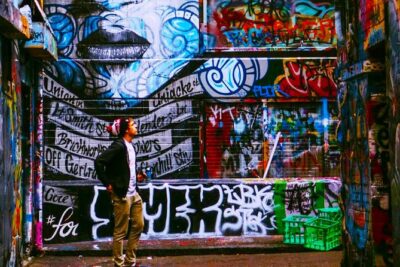
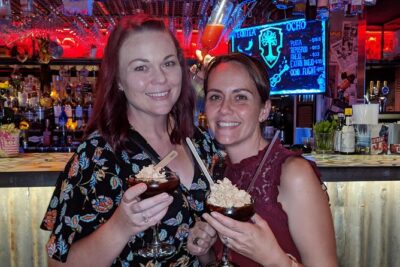
PERTH BAR+STREET ART TOUR: Hidden Secrets, Laneways + Good Times!
Read our review →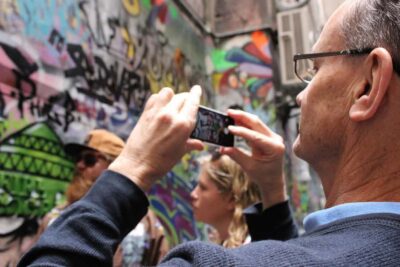
Melbourne: Street Art Walking Tour with a Street Artist
Read our review →

Browse the lists this tour appears in