Review · BELFAST
2 Hour Terror and Mural History Belfast taxi Private Tour
Belfast’s conflict is written across its streets, and this two-hour taxi tour takes you straight to the walls, murals, prisons, churches, and memorial gardens that explain it. You’ll hear about both republican and loyalist communities, including the personal experience of a guide who was shot during the Troubles.
I like the route’s clear West Belfast focus and its mix of public history with personal stories. The Peace Wall, Bobby Sands mural, Clonard Monastery, and Shankill Road give you very different views of the same conflict. The drawback is the tight schedule: most stops last only 10 to 20 minutes, so this is an introduction, not a slow museum visit.
Key points to know before booking
- Personal, balanced guiding: One guide has personal experience of being shot during the Troubles and presents both sides of the conflict.
- Nine significant stops: The route covers peace walls, Divis, Falls Road murals, Clonard, Crumlin Road Gaol, Bombay Street, and Shankill Road.
- A compact history lesson: Two hours gives you a strong overview, but little time for long walks or extended visits.
- Central pickup matters: Collection is offered within a 1-kilometer radius of Belfast City Hall, including the Leonardo Hotel Belfast area.
- Cruise passengers need a plan: Pickup is not available directly from cruise ships, though the shuttle bus stops near Visit Belfast and City Hall.
- High cost for a short tour: At $190.59 per person, the value depends on how much you want a private taxi format and concentrated local context.
Why this Belfast tour matters
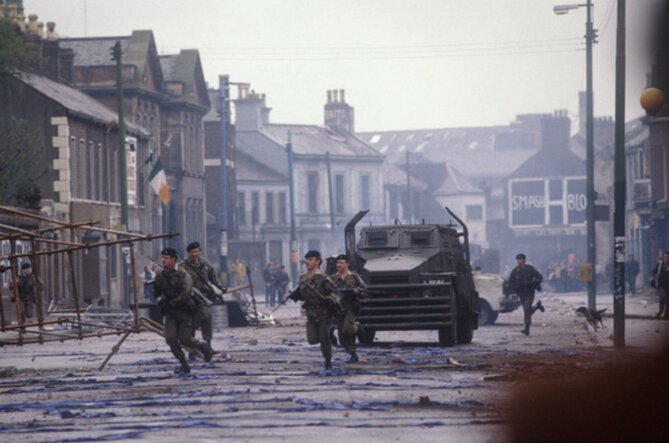
The Troubles are easy to reduce to a few dates and political labels. That misses the human scale of the conflict. In Belfast, a short drive can take you from one community’s memorials to another community’s murals, with a peace wall between them.
This tour helps you read that geography. You are not simply looking at colorful street art. You are seeing political statements, memorials, community identity, and reminders of violence on ordinary streets.
I like that the route does not stay on one side of the story. It includes republican areas around Falls Road and Bombay Street, then crosses to loyalist Shankill Road. That movement is important. You can compare the symbols, names, flags, and memories used by each community.
The guide is also a major part of the experience. One guide described for this tour was shot during the Troubles and offers a personal connection to the period. That can add force to the visit, but it also means you should expect serious subject matter. This is not a light sightseeing ride.
More Mural Tours in Belfast
- Belfast: Murals Taxi Tour
★ 4.9 · 2,047 reviews - Belfast’s Political Mural Taxi Tour
★ 5.0 · 1,180 reviews - Famous 1.5 hour Belfast Murals Tour
★ 5.0 · 477 reviews
The Peace Wall sets the tone
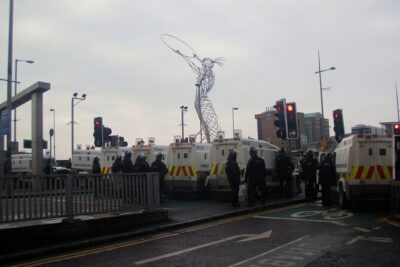
The first stop is Belfast’s Peace Wall, with about 20 minutes to look at the barrier, murals, and graffiti. The walls were built during the Troubles to separate Protestant and Catholic neighborhoods and reduce sectarian violence.
They are still striking because they show how physical division became part of daily life. Some gates still close at night, a detail that makes the idea of peace feel more complicated than a simple success story.
You’ll have time to take in the artwork and hear why the wall was built. The murals and messages reflect grief, anger, political belief, and hopes for reconciliation. They also show how the city continues to live with the marks of its past.
Do not expect an extended walk along several miles of wall. With only 20 minutes, this is a focused stop. The value comes from the guide’s explanation and the chance to see the setting in person.
Divis Flats and the pressure of Fort Apache
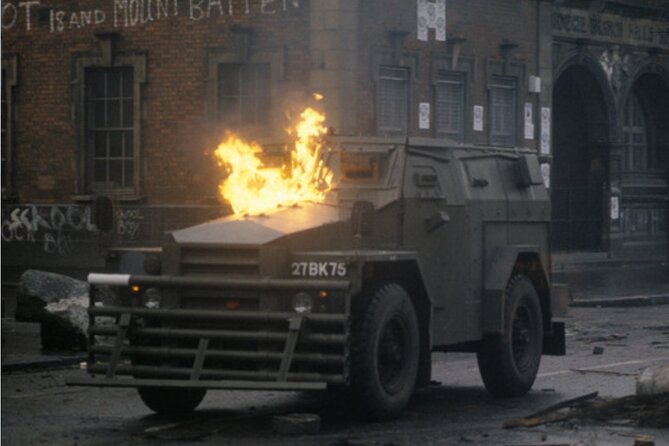
The 10-minute stop at Divis gives you a quick look at one of West Belfast’s most contested residential areas. The flats were built in the late 1960s and soon became linked to sectarian unrest and conflict with British security forces.
A British Army base was placed on the roof of the tallest building. It became known as Fort Apache, a name that captures the sense of a fortified outpost inside a residential complex.
That arrangement affected everyday life. A military position above residents brought surveillance and tension into the heart of the neighborhood. The stop is short, but it helps explain why the Troubles were not distant political events. They shaped where people lived, moved, and felt safe.
Since admission is free and the stop is brief, the guide’s storytelling does most of the work here. You might not have time to explore the flats on foot, but you’ll gain useful context for the murals and memorials that follow.
Falls Road murals, from global causes to Bobby Sands
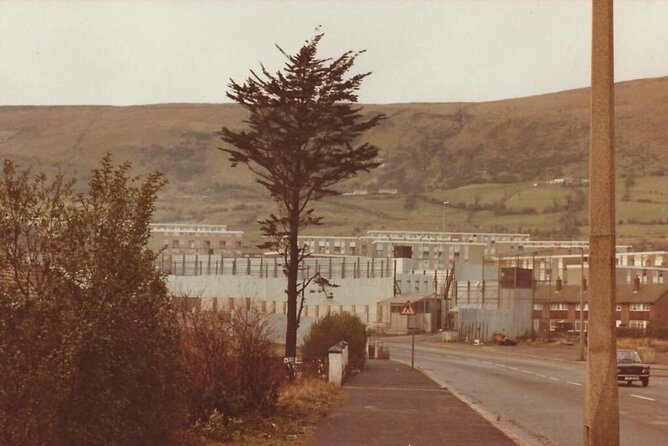
The International Mural Wall on Divis Street is one of the route’s most visual stops. You get about 10 minutes to see an ever-changing collection of murals linked to Belfast, human rights, resistance, peace, and international causes.
The wall connects local events with wider struggles. It shows how West Belfast’s political art has been used to express solidarity beyond Northern Ireland. Some pieces may change over time, so the exact display can vary.
Next comes the Bobby Sands mural on Falls Road, also for about 10 minutes. Sands was a member of the Provisional IRA who died during the 1981 hunger strike. During that hunger strike, he was elected as a Member of Parliament, making his death an especially powerful political event.
The mural is a major republican symbol. Your guide can explain why Sands remains important to many people in the area, while also placing his role within the violence and political conflict of the Troubles.
I appreciate that these stops are not treated as simple photo opportunities. The political meaning is the point. Still, the short timing means you should be ready to listen while taking in the artwork. If you want detailed discussion of every mural, you would need more time than this tour allows.
More Mural Tours in the UK
- Belfast: Private Black Taxi Cab Political Murals Tour
★ 4.9 · 425 reviews - Belfast Murals Taxi Tour
★ 5.0 · 341 reviews - Political Wall Murals and Peacewall
★ 4.9 · 247 reviews - Private Political History & Murals Tour Belfast
★ 5.0 · 182 reviews
Clonard Monastery and the work behind the peace process
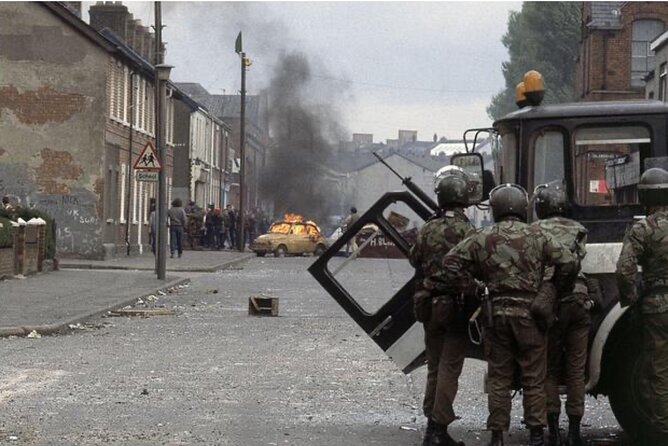
Clonard Monastery offers a different mood. The red-brick church was founded in 1896 and became important during the peace process because priests there helped open communication between opposing groups.
Father Alec Reid is the key name connected with the monastery. His behind-the-scenes mediation helped begin conversations that eventually contributed to the Good Friday Agreement in 1998.
You get about 10 minutes here. That is enough to understand why the monastery matters, but not enough for a long architectural visit. The appeal is less about sightseeing inside the church and more about learning how religious figures helped create channels for dialogue when formal politics had stalled.
This stop gives the tour needed balance. After the walls, armed groups, and memorials, Clonard shows another side of Belfast’s history: quiet negotiation, trust built slowly, and peace work carried out away from public attention.
A quiet pause at the Clonard Martyrs Memorial Garden
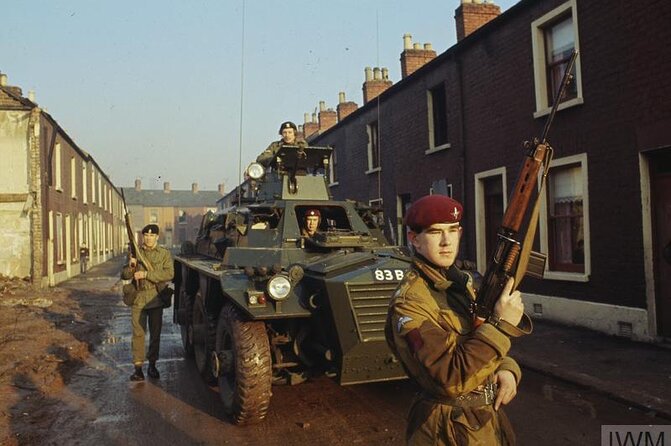
Adjacent to the monastery, the Clonard Martyrs Memorial Garden honors local people who died during the Troubles. Plaques and memorials sit in a peaceful green setting, creating a sharp contrast with the violence described at earlier stops.
The visit lasts about 15 minutes. That is a useful amount of time for a place designed for reflection rather than sightseeing. You can look at the names, consider the local cost of the conflict, and ask the guide about the community’s experience.
This is one of the more solemn parts of the route. The garden reflects a particular community’s losses, so it should not be treated as a complete record of every person killed during the Troubles. Its purpose is local remembrance.
That focus is valuable. Belfast’s political history can feel abstract until you are confronted with the names of people from one neighborhood. The memorial garden brings the discussion back to families and ordinary residents.
Crumlin Road Gaol links crime, politics, and punishment
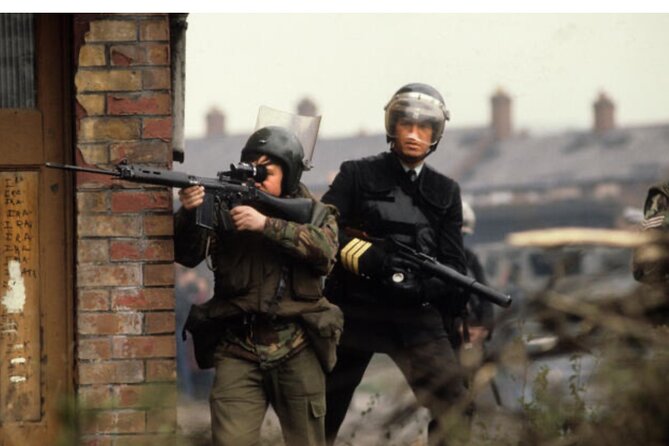
Crumlin Road Gaol and the old courthouse are among Belfast’s most recognizable historic sites. The prison held both criminal and political prisoners, including IRA members and loyalist paramilitaries.
During the Troubles, the jail saw escapes, hunger strikes, riots, and other events connected to the conflict. A tunnel linked the prison with the courthouse, giving prisoners a direct route to trials.
The tour allows about 10 minutes here, and admission is listed as free for this stop. You should think of it as an exterior and historical orientation rather than a full prison tour. The restored gaol offers a separate guided experience, but this two-hour route does not provide enough time for that longer visit.
Even a short stop is useful because it shows how the justice system became part of the conflict. The courthouse and prison were not just old buildings. They were places where political prisoners, security concerns, trials, and public debate met.
Bombay Street and the birth of the Provisional IRA
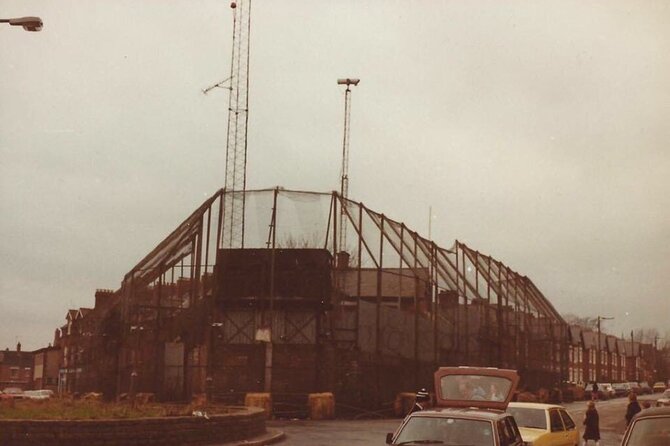
The Belfast Peace Lines stop focuses on Bombay Street in West Belfast. In August 1969, sectarian riots destroyed homes there and displaced many Catholic families.
The attacks contributed to the formation of the Provisional Irish Republican Army. Existing IRA structures were seen by some nationalists as unable to protect Catholic neighborhoods, leading to a breakaway group committed to armed resistance and Irish reunification.
You get about 15 minutes to see memorials and restored homes. The setting helps explain why the Provisional IRA gained support in parts of the nationalist community, even as its armed campaign caused great suffering.
This is an important distinction for you to keep in mind. Understanding why an organization emerged is not the same as approving of its later actions. A good guide should help you hold both facts at once, and the route is designed to provide that context.
Bombay Street also shows how housing, identity, and security fed the conflict. The story began with streets and homes, not just speeches and political institutions.
Shankill Road gives the loyalist side
The final major stop is Shankill Road, with about 20 minutes to view its murals and hear about its political past. Shankill is closely associated with loyalist identity and with groups including the Ulster Volunteer Force and the Ulster Freedom Fighters.
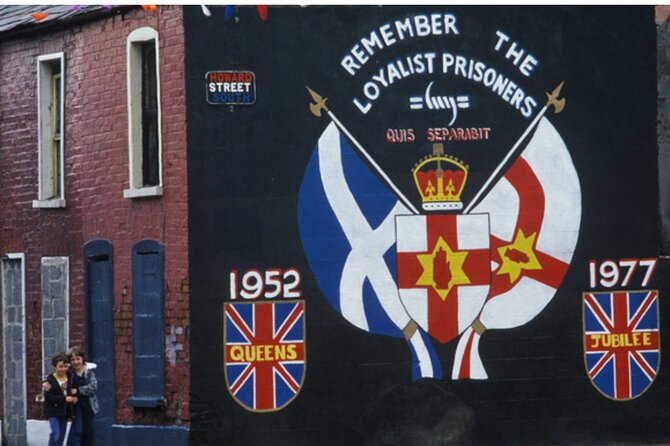
The murals here present a different view of the Troubles. They commemorate loyalist figures, events, and ideals tied to keeping Northern Ireland within the United Kingdom. After visiting Falls Road and Bombay Street, seeing Shankill helps you compare how both communities remember the same decades.
This is one of the strongest reasons to choose the full route rather than a one-sided political tour. You are asked to look at competing memories, not flatten Belfast into heroes and villains.
The murals can be powerful, but they may also be difficult for some visitors. Symbols connected with paramilitary groups and armed conflict require context. Listen carefully, ask questions respectfully, and avoid treating the area as a backdrop for casual photographs.
Is $190.59 per person fair?
At $190.59 per person, this is expensive for two hours. Parking is included, and you get door-to-door-style central collection, an English-speaking guide, and transport between sites. The price is easier to justify if you value a concentrated taxi tour with personal local interpretation.
It is less attractive if you want long visits, museum admissions, or a full day of sightseeing. Most stops last 10 minutes, and the tour does not include coffee, tea, or alcoholic drinks.
The advertised maximum is 25 people, while the experience is presented as a private taxi tour. If the size of your booking matters, ask how the vehicle and group arrangement will work before paying. The more personal the ride, the better the value is likely to feel.
Two hours also saves you time. You can cover sites spread across West and North Belfast without working out the route yourself. For a first visit, that efficiency has real value.
Pickup, timing, and practical details
The standard meeting point is the Leonardo Hotel Belfast on Great Victoria Street, with the tour returning there. Free pickup is offered within a 1-kilometer radius of Belfast City Hall, including collection at the front gates.
Cruise-ship pickup is not offered because the port is several miles outside the city center. If you arrive by cruise ship, the shuttle bus drops you near Visit Belfast, across from City Hall, so you can arrange collection from the City Hall front gates instead.
The tour is offered in English and includes a mobile ticket. Confirmation arrives at booking, and service animals are allowed. The route is near public transportation, and most people can participate.
Plan for a serious, fast-moving ride. Comfortable clothing and shoes make sense, even though much of the experience takes place from the taxi, because you will make short stops outside. Free cancellation is available if you cancel at least 24 hours before the start time. Changes or cancellations inside that window are not accepted for a refund.
Who should book this Belfast taxi tour?
I would choose this tour if you have limited time and want the political background before exploring Belfast on your own. It suits history students, visitors interested in modern politics, and anyone who wants to understand why Belfast’s murals and walls matter.
It also works well for people who prefer a guide to walking between scattered sites. The route moves quickly and covers both republican and loyalist areas, which gives you a more balanced starting point.
I would look elsewhere if you want a relaxed pace, extensive museum visits, or a cheerful city tour. The subject is painful, and the personal account of a guide who was shot during the Troubles may make the experience emotionally heavy.
Should you book it?
Book this tour if you want a compact, serious introduction to Belfast’s divided past and you value personal explanation more than formal museum time. The strongest features are the carefully chosen route, the inclusion of both Falls Road and Shankill Road, and the chance to hear a guide with direct experience of the Troubles.
At $190.59 per person, I would compare the price with your group size and confirm the vehicle arrangement. For a first visit, limited schedule, or cruise stop using City Hall pickup, it can be a practical way to cover a lot of ground. If you have several days in Belfast, you may prefer longer visits at Crumlin Road Gaol and the mural districts, then use this tour only if you want a guide’s personal account.
FAQ
How long is the Belfast taxi tour?
The tour lasts approximately two hours and returns to the meeting point.
Where does the tour start?
The listed meeting point is the Leonardo Hotel Belfast on Great Victoria Street. Pickup is also offered within a 1-kilometer radius of Belfast City Hall.
Can I be picked up directly from a cruise ship?
No. Direct cruise-ship pickup is not offered because the port is several miles outside Belfast city center. The cruise shuttle bus stops near Visit Belfast, across from City Hall, where collection can be arranged at the City Hall front gates.
What language is the tour offered in?
The tour is offered in English.
How many people can join the tour?
The maximum group size is listed as 25 travelers.
What is included in the price?
Parking fees are included. The tour also includes transport between the listed stops and an English-speaking guide.
Are drinks included?
No. Coffee, tea, and alcoholic beverages are not included.
Is admission to the listed stops included?
The Peace Wall is listed with admission included. Divis, the International Mural Wall, the Bobby Sands mural, Clonard Monastery, the Clonard Martyrs Memorial Garden, Crumlin Road Gaol, Bombay Street, and Shankill Road are listed without an admission charge.
Can I cancel for a refund?
Yes. You can cancel at least 24 hours before the start time for a full refund. Cancellations or changes made less than 24 hours before the start time are not accepted for a refund.
More Private Street Art Tours in the UK
- Belfast political history and mural unique private 90 min tour
★ 5.0 · 10 reviews - N0 1 Belfast black cab Irish and British mural 2hr private tour
★ 4.5 · 6 reviews - Belfast: Famous Murals Private Tour
★ 5.0 · 6 reviews - Private Belfast Mural & Giant’s Causeway Tour from Belfast (2 in 1)
★ 5.0 · 5 reviews
More Private Street Art Tours in Belfast
- 2 Hour Private Belfast Taxi Cab Tour of Troubles & Peace walls
★ 5.0 · 240 reviews - IRA Troubles Conflict Private Tour Museum Graves Murals and Political Analysis
★ 5.0 · 67 reviews - Award Winning Private 2 Hour Belfast Political Black Taxi Tour
★ 5.0 · 53 reviews - World Famous Private Belfast Troubles Taxi Cab Tour 2 Hour
★ 4.5 · 14 reviews
Freshly painted around Belfast
- Belfast history of terror & mural 1 hr express private taxi tour★ 5.0 · 3 reviews
- Falls road Murals Walking Tour with former prisoners★ 5.0 · 19 reviews
- 2 Hours Republican & Loyalist Mural Black Taxi Tour from Belfast★ 5.0 · 21 reviews
- 1 Hour Express Belfast Taxi/Cab Tour History, Murals, Troubles★ 5.0 · 17 reviews
- World Famous Private Belfast Troubles Taxi Cab Tour 2 Hour★ 4.5 · 14 reviews
- Belfast political history and mural unique private 90 min tour★ 5.0 · 10 reviews
- Private Belfast Mural & Giant’s Causeway Tour from Belfast (2 in 1)★ 5.0 · 5 reviews
- Belfast Cab Tour of Peacewalls, Murals and the Famous Titanic Slips★ 5.0 · 4 reviews
Belfast Street Art Tours, compared.
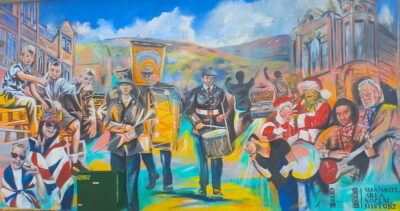
Belfast: Private Black Taxi Cab Political Murals Tour
Read our review →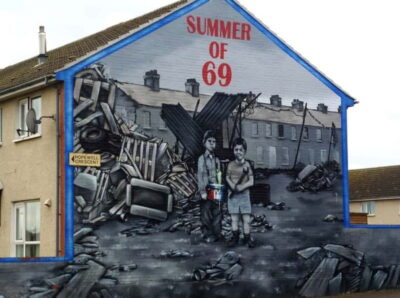
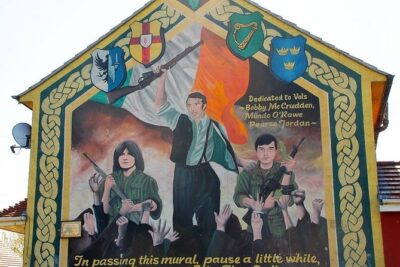
2 Hour Private Belfast Taxi Cab Tour of Troubles & Peace walls
Read our review →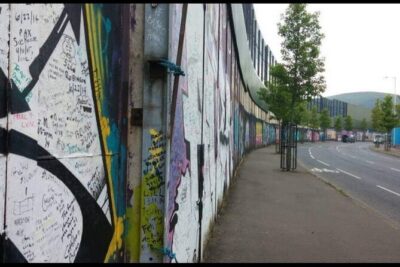
Private Political History & Murals Tour Belfast
Read our review →