
Review · BARCELONA
Barcelona: Insider Street Art Tour with Private Studio Visit
Barcelona: Insider Street Art Tour with Private Studio Visit
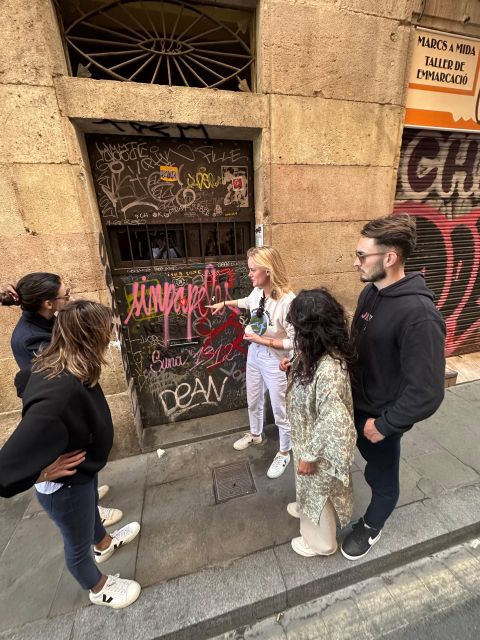
Barcelona’s best street art is not always on the main sightseeing route. This two-hour walk takes you from the Teatre Condal area through Paral·lel, El Raval, La Rambla, and the Gothic Quarter, then brings you into an artist studio where you can meet local creators. The most unusual part is not simply seeing painted walls, but learning how the city’s artists work and how pieces move from the street into galleries.
I like the artist-led interpretation and the chance to step inside a working studio. I also like the useful mix of graffiti, gallery art, and local tips, including suggestions for more art and music around Barcelona. The main drawback is time: two hours goes quickly, so this is an introduction rather than a full survey of the city’s street art.
Key points to know before you book
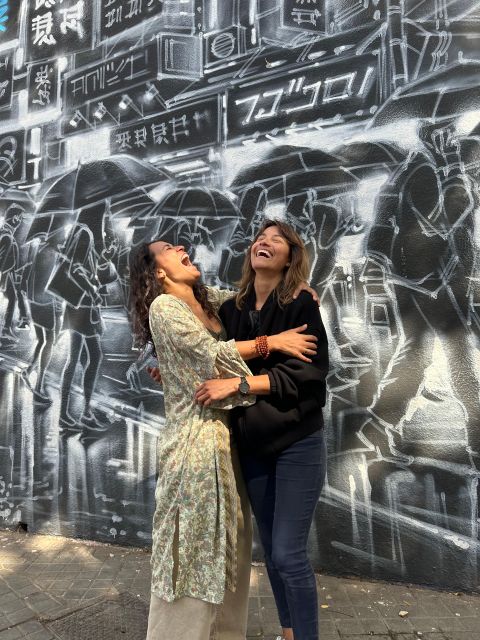
- Artist guides bring the walls to life: Guides are practicing artists or art historians, with named guides including Kat, Anya, Juan, Kate, and Luke.
- The studio visit is the unusual extra: You meet artists in their workspace rather than viewing only finished work outdoors.
- The route crosses several central districts: You see street art around Paral·lel, El Raval, La Rambla, and the Gothic Quarter.
- You learn the visual language: The tour covers tags, paste-ups, murals, graffiti styles, techniques, and urban sculpture.
- Canal Gallery connects street work with indoor art: The final stop shows how artists represented on city walls are presented in a gallery.
- The $33 price pays for access and interpretation: It is good value if you care about context and personal contact, not just a quick photo walk.
Why this tour shows you another Barcelona
Barcelona is famous for Gaudí, grand churches, food markets, and seaside walks. Street art gives you a different city, one shaped by changing walls, personal signatures, local studios, and artists who work outside the usual museum system.
You will not simply pass murals while someone points out their colors. The guide explains how to recognize tags, paste-ups, large murals, and urban sculpture. You also learn to notice technique and style, which helps you read other walls later in your trip.
That skill matters because street art changes. A work may be painted over, weathered, removed, or replaced. A tour based on a fixed list of famous pieces can date quickly, but an artist guide can explain the scene beyond one particular wall.
The route also shows how street art sits beside ordinary city life. You move through well-known parts of central Barcelona while looking at surfaces most people hurry past. That contrast is one of the tour’s strengths. You are still seeing familiar districts, but with a different purpose.
More Private Street Art Tours in Barcelona:
- Private Barcelona Street Art Workshop with a Street Artist
★ 5.0 · 34 reviews - Private Barcelona Street Art Tour
★ 5.0 · 2 reviews - Belfast: Private Black Taxi Cab Political Murals Tour
★ 4.9 · 425 reviews
Starting at Teatre Condal and walking along Paral·lel
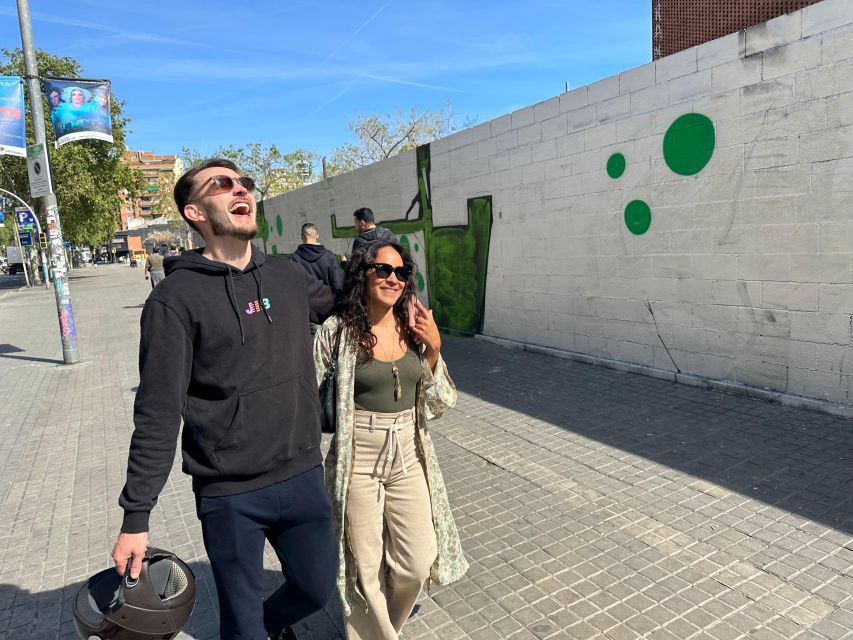
The meeting point is in front of the BINGO sign at Teatre Condal. This is a practical start. Cafés and shops are nearby, so you can use the bathroom or buy a drink before setting off.
The first listed stop is Av. del Paral·lel, 40, with about 15 minutes of guided explanation. This opening section gives the guide room to set out the basic ideas behind Barcelona’s street art scene. Expect to look closely rather than rush from one wall to the next.
Paral·lel is a useful place to begin because it connects entertainment, nightlife, and everyday city movement. The tour uses that setting to shift your attention toward urban art. You begin by learning what to look for, then apply those ideas as the walk continues.
The route is in English, and the guide keeps the experience interactive. That means you can ask about a piece, an artist, or a technique as you go. This is particularly helpful if you already know a little about graffiti and want more than a standard sightseeing script.
El Raval, La Rambla, and the changing street scene
From Paral·lel, the walk continues toward El Raval, with around 20 minutes spent walking through the district. This is one of the more useful sections for seeing how art fits into a lived-in neighborhood.
El Raval is not presented only as a backdrop for photographs. The guide helps you consider the wall itself, the placement of the work, and the difference between an official mural and an unofficial mark. You may also see how several styles occupy the same streets, from quick tags to more finished images.
The tour then reaches La Rambla for a short five-minute visit. La Rambla is one of Barcelona’s busiest famous streets, so this stop offers a sharp contrast with the quieter and less obvious art locations elsewhere on the route. You get a central landmark without letting the crowds take over the whole experience.
After La Rambla, the group walks through the Gothic Quarter for about 15 minutes. Here, the appeal is the collision of old streets and modern wall art. The guide’s job is especially useful in this setting, since you might otherwise focus only on the architecture and miss smaller works at street level.
Bring a camera, but do not spend the entire walk looking through it. The best benefit of this tour is learning how to see. Once the guide points out a style or technique, you may start noticing related work in the next street, then the next.
The private studio visit is the real difference
The studio visit separates this experience from a basic graffiti walk. Instead of ending after a series of outdoor stops, you enter an artist collective’s studio space and meet artists in person.
The supplied route describes another 15-minute guided stop at a less obvious location before finishing at Canal Gallery. The exact order can depend on the day, but the important point is the access: you are shown a working creative space and get to speak with artists themselves.
This contact gives you a better sense of the people behind the walls. You can ask about process, influences, materials, and the move from public work to private pieces. The information provided does not promise a set list of artists at every departure, so treat the studio visit as a personal encounter rather than a scheduled meeting with one guaranteed creator.
Several guides have received especially warm praise for making this part relaxed and open. Kat has been described as making people feel welcome while explaining the local scene in detail. Luke is noted for being approachable and passionate, while Anya’s background as an artist helped her explain the pieces clearly. Juan is also known for strong street art knowledge and good studio visits.
Those names matter because the guide shapes the day. This is not an audio tour or a simple route between photo stops. The quality of the experience depends on the person leading it, and the artist connection is one of the strongest reasons to choose it.
More Street Art Tours around Barcelona:
- Barcelona Street Art and Graffitti Bicycle Tour
★ 5.0 · 361 reviews - Barcelona Street Art Tour with Exclusive Artist Studios Visit
★ 5.0 · 152 reviews - Raval Street Art and Graffiti Guided Tour in Barcelona
★ 5.0 · 81 reviews - Barcelona: Raval Street Art and Graffiti Walking Tour
★ 4.9 · 60 reviews
Canal Gallery and the move from wall to gallery
The tour finishes at Canal Gallery. This stop adds an important layer because it shows how urban art changes when it enters an indoor gallery.
On the street, a work is part of the city. It may be large, temporary, exposed to weather, or surrounded by other marks. In a gallery, the artist has more control over the presentation, and the work can be sold, collected, or viewed in a quieter setting.
You meet the gallerists behind the space and see original works connected to the street art scene. That makes the tour more than a walk through public decoration. You get a look at the relationship between artists, galleries, and the city walls that first made their work visible.
If you are interested in buying art, this is a useful chance to ask questions without making a purchase part of the tour. If you are not a collector, the gallery still helps you understand how a street artist’s practice can extend beyond a wall.
The gallery is also a sensible endpoint. After learning the basic visual language outdoors, you can compare those ideas with finished works indoors. It gives the two hours a clear arc instead of a loose collection of stops.
What you will learn about graffiti styles
The tour covers several forms of urban art, including tags, paste-ups, murals, graffiti techniques, and urban sculpture. That range keeps the walk from becoming a search for one type of image.
A tag may look simple at first, but the guide can help you see it as a signature and a statement of presence. A paste-up has a different relationship to the wall because it is made elsewhere and attached later. A mural usually takes more time and space, while urban sculpture changes the experience from looking at a surface to moving around an object.
You also learn to compare lettering, scale, layering, and placement. These details help you tell the difference between a quick mark, a carefully planned image, and work that responds to the building or street around it.
This is where the tour offers value beyond a photo route. You leave with a set of questions to ask when you see art elsewhere: Who made it? How was it applied? Is it part of a larger style? Why was this wall chosen? What has been covered or altered?
You do not need prior art training. The guide’s role is to make the subject understandable, not to turn the walk into a lecture.
The $33 price and what you are really paying for
At $33 per person, the tour costs more than walking around with a free map and looking for graffiti independently. The difference is access and explanation.
You are paying for a live English-speaking guide, a planned route through several districts, entry into an artist studio, contact with local artists, and a visit to an urban art gallery. The included interactive map also gives you ideas for galleries, cafés, and other places to visit after the tour.
I consider that fair value for someone who wants a personal introduction to Barcelona’s art scene. The studio access is especially important. Without it, you could reproduce much of the outdoor walk on your own, although you would miss the guide’s local context and the conversations with artists.
The value is weaker if you only want a quick collection of colorful photographs. Two hours is not long enough to see every major street art area in Barcelona, and the route does not promise a complete catalogue of the city’s murals.
The flexible booking terms help if your schedule is still changing. You can cancel up to 24 hours before the tour for a full refund, and you can reserve now and pay later.
Who will get the most from the walk
This tour suits anyone curious about how Barcelona’s street art is made and presented. It is an especially good fit for:
- People who already make art or follow graffiti
- Families with older children interested in drawing and urban culture
- Visitors who have already seen Barcelona’s major landmarks
- Photographers looking for colorful walls and unusual details
- First-time visitors who prefer local creative scenes to a standard city walk
- Anyone who enjoys meeting working artists
It also works well as a surprise activity. One booking was arranged for a parent and son who were both interested in street art, and the studio conversations became a major part of the experience.
You should think twice if you dislike walking between districts, need a highly predictable list of famous works, or want a large museum-style presentation. The art scene is changeable, and the tour’s strength is personal interpretation rather than a guaranteed set of iconic images.
The activity is listed as wheelchair accessible. Since the experience moves through several urban areas, ask the provider about the exact route and studio access if you have specific mobility needs.
Practical details for a smooth morning or afternoon
The tour lasts two hours, so arrive ready to walk and start at Teatre Condal. Use the nearby cafés and shops before meeting the guide, since the meeting point itself is in front of the theater.
The tour is offered in English with a live guide. Group size is not provided, so do not assume a private departure unless you book a customized experience. Private options are available for groups, families, and special occasions.
Wear comfortable shoes and bring water. Those are sensible choices for any city walk, though the supplied details do not specify the exact distance or surface conditions.
Keep your schedule loose after the tour if you want to follow the guide’s recommendations. The experience includes an interactive map with galleries, cafés, and other places around Barcelona, and the guide may also point you toward more street art and music venues.
A phone or camera is useful for recording names, styles, and locations. Still, ask before photographing people or private studio work. The studio is a working space, not just a photo set.
Should you book the Barcelona street art tour?
Book it if you want access to the people behind the art, not just a list of walls. The combination of artist guides, outdoor work, Canal Gallery, and a studio visit gives you a fuller picture than a standard graffiti stroll.
At $33, it is a sensible buy for art fans, curious families, and visitors who want a less familiar side of Barcelona. The main limitation is its short length. If you want to cover every major street art district, you will need more time on your own afterward.
My practical advice is simple: choose this tour early in your Barcelona stay. You can use the map and the guide’s recommendations for the rest of your visit, and you will start noticing urban art in places you might otherwise walk straight past.
FAQ
Where does the Barcelona street art tour start?
It starts in front of the BINGO sign at Teatre Condal.
Where does the tour finish?
The tour finishes at Canal Gallery.
How long does the experience last?
The experience lasts two hours.
What language is the tour offered in?
The live tour is offered in English.
What neighborhoods does the route visit?
The route includes Paral·lel, El Raval, La Rambla, and the Gothic Quarter, along with additional less obvious locations.
Will I visit an artist studio?
Yes. The experience includes a visit to an artist collective’s studio, where you can meet and speak with local artists.
Does the tour include a gallery visit?
Yes. The route finishes at Canal Gallery, where you see original urban art and meet the gallerists behind the space.
Is the tour wheelchair accessible?
The activity is listed as wheelchair accessible.
What is included besides the guided walk?
You receive an interactive map with recommended galleries, cafés, and other interesting places to visit in Barcelona.
Freshly painted around Barcelona
- Barcelona Street Art, Graffiti and Tapas Tour★ 4.0 · 5 reviews
- Private Barcelona Street Art Tour★ 5.0 · 2 reviews
- Barcelona | StreetArt Bike Tour Moco Museum★ 4.6 · 13 reviews
- Barcelona Street Art, Graffiti & Tapas Tour★ 5.0 · 5 reviews
- Barcelona | Street Art Bike tour★ 5.0 · 3 reviews
- Street Art, Sculptures & Crime Stories Walking Tour – Barcelona★ 5.0 · 11 reviews
- Barcelona: Graffiti E-Scooter Tour★ 4.4 · 9 reviews
- Barcelona Art & Wine: Galleries, Studios & Street Art★ 5.0 · 26 reviews
Barcelona Street Art Tours, compared.
Barcelona Street Art and Graffitti Bicycle Tour
Read our review →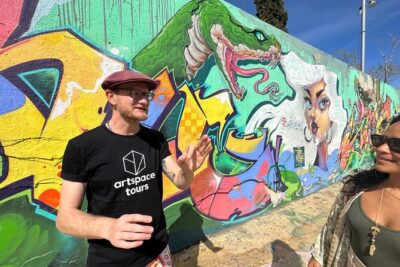
Barcelona Street Art Tour with Exclusive Artist Studios Visit
Read our review →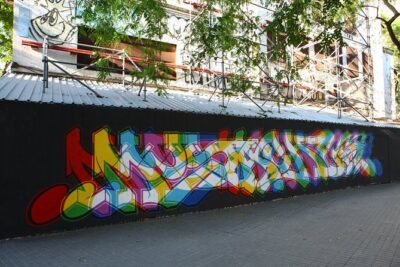
Raval Street Art and Graffiti Guided Tour in Barcelona
Read our review →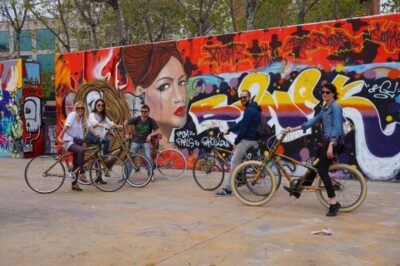
Barcelona: 3.5-Hour Street Art Tour by Bamboo Bike
Read our review →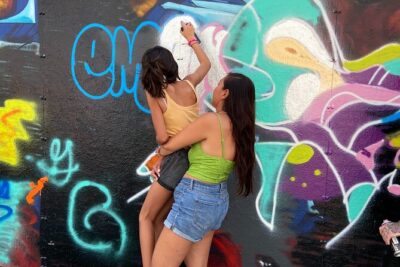
Private Barcelona Street Art Workshop with a Street Artist
Read our review →
Barcelona Art & Wine: Galleries, Studios & Street Art
Read our review →
Browse the lists this tour appears in