
Review · GERMANY
Art Nouveau Meets Street Art in Munich (Max. 12 guests)
Munich’s Schwabing is at its best when you look up. This tour brings you close to the district’s Jugendstil façades, then turns those floral lines and bold shapes into your own postcard designs. Philipp, an architect and official Munich guide, leads the walk and the creative work.
I like the small group limit of 12, which should make it easier to ask questions and study details without being swept along. I also like the clever change of pace: about an hour of architecture, followed by spray painting inside a heated shipping container at Bahnwärter Thiel.
The main drawback is the subway transfer between the two parts of the tour. You also need comfortable shoes, and the experience is not suitable for wheelchair users. At $42 per person, the price is fair if you want more than a standard walking tour, but less compelling if you only want to admire buildings from the street.
Key points to know before booking
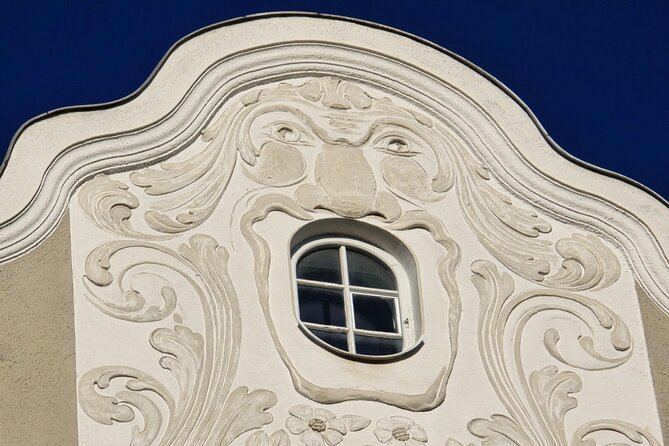
- Four façades become four postcard designs: You study selected Jugendstil details in Schwabing, then use stencils based on what you saw.
- Philipp combines two useful viewpoints: He is both an architect and a certified official Munich tour guide.
- The group is limited to 12 people: That suits anyone who prefers conversation and closer observation.
- The tour ends at Bahnwärter Thiel: The final activity takes place in a heated shipping container on a former castle-yard site.
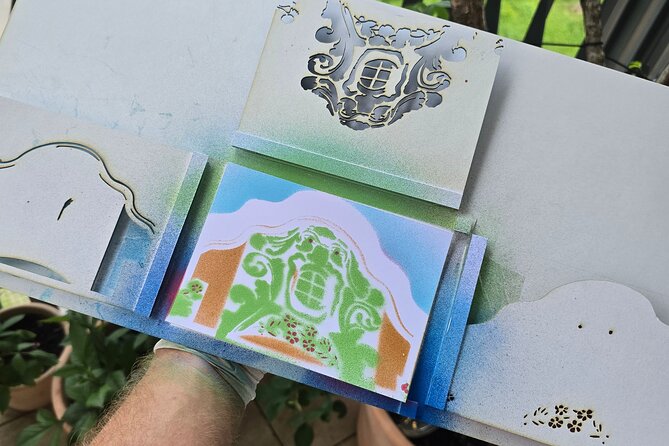
- All materials are supplied: Spray paint, stencils, postcards, envelopes, gloves, masks, safety glasses, and clothing covers are included.
- The meeting point is easy to reach: Start at Georgenstraße 7, about a 10-minute walk from Giselastraße station on the U3 or U6.
Why Schwabing is the right place to begin
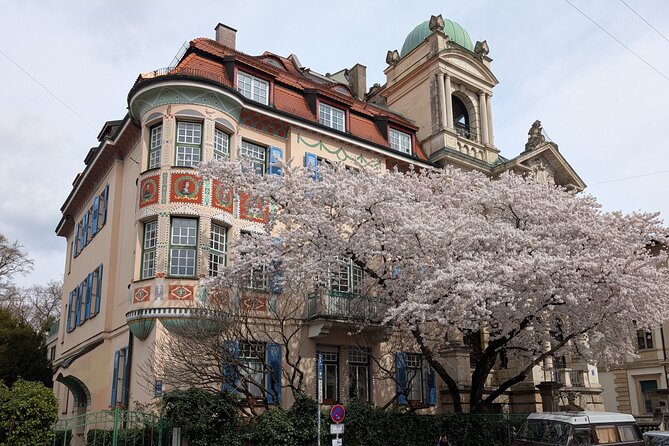
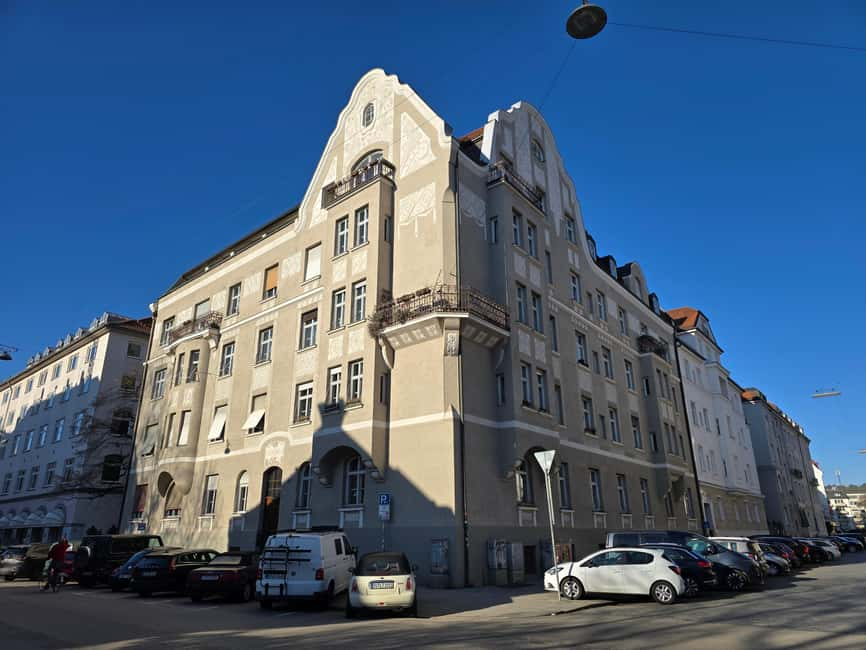
Schwabing gives this tour a strong opening because its streets connect architecture with Munich’s artistic past. The district was a bohemian quarter and a key setting for German Art Nouveau, known locally as Jugendstil. Here, the decoration is not just extra trim on an old building. It is part of the building’s identity.
You will look for the details that define the style: floral motifs, carefully shaped façades, and design ideas that reject plain, rigid building fronts. Philipp’s architectural training should help you read these features as choices rather than pretty background decoration.
That matters because Art Nouveau can be easy to miss. You may walk past a doorway, window frame, or curved line without seeing how deliberately it was designed. A guide who works as an architect can point out the relationship between the whole façade and the small details you later use in your artwork.
The tour also connects Schwabing’s buildings with artists such as Wassily Kandinsky and Paul Klee. These names give the neighborhood a wider cultural setting, though the focus remains on what you can see along the walk. If you enjoy art but do not know much about Munich, this is a useful way to connect the city’s streets with its creative life.
More Street Art Tours around Germany:
- Berlin: City Street Art Guided Walking Tour
★ 4.8 · 1,051 reviews - Berlin: 3-Hour Street Art Tour
★ 4.7 · 778 reviews - Dresden: Neustadt District Street Art Guided Walking Tour
★ 4.3 · 333 reviews
Starting at Georgenstraße 7
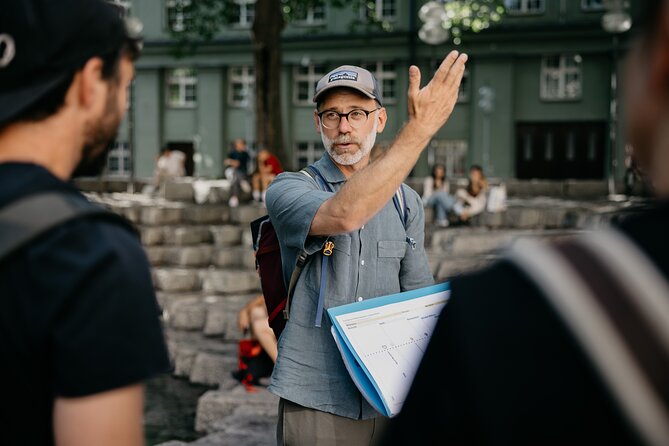
You meet Philipp in front of the entrance at Georgenstraße 7. He will be carrying a tablet over his shoulder, which gives you a clear way to identify him at the start.
The easiest public transport route is the U3 or U6 to Giselastraße station, followed by a walk of about 10 minutes. I would allow extra time for that walk, especially if you are unfamiliar with Munich’s subway system or want to arrive calm and ready to begin.
The tour lasts 150 minutes, but the first section is not a quick march from one address to another. The point is to observe. You will move through Schwabing with time devoted to façades, motifs, and the ideas behind them.
A maximum of 12 participants is a real advantage here. Architecture tours can become frustrating when a large crowd blocks the view or makes questions difficult. This format should feel more like a guided conversation, though the exact mood will depend on the group.
Four façades, viewed as working designs

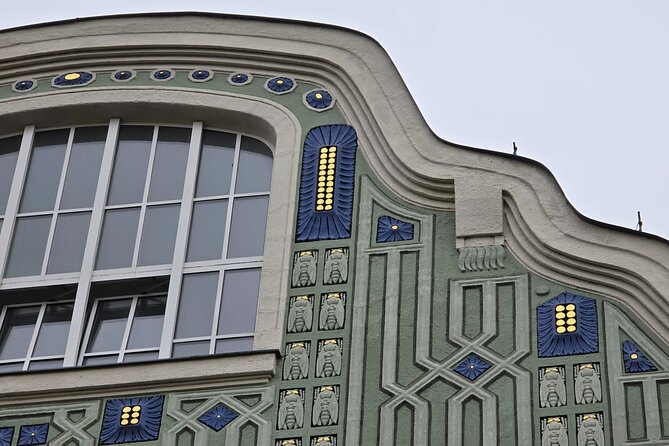
A central part of the walk is the close study of four outstanding Jugendstil façades. You do not simply stop, take a picture, and move on. You frame the buildings visually and pay attention to their distinct details.
That exercise gives the walk a clear purpose. You are gathering shapes, patterns, and lines that will return later as stencil designs. A curved plant form might become a bold graphic. A window detail might be reduced to a simple repeated shape. The activity asks you to notice how architecture can be translated into art.
I like this structure because it gives the sightseeing a second life. Instead of treating the buildings as isolated sights, you carry selected parts of them into the workshop. You also get a reason to slow down. Many walking tours cover more ground, but this one spends time looking carefully at a smaller number of examples.
You should not expect a full academic course in German Art Nouveau during 150 minutes. The experience is better suited to an introduction, a visual tour, and a creative project. If you already have a serious background in Jugendstil, you may want more depth than this format can provide. For most visitors, the mix of explanation and hands-on work should feel lively without becoming too formal.
From historic façades to Bahnwärter Thiel
After about an hour in Schwabing, the tour travels by subway to a contemporary artistic district on a former castle-yard site. Transportation between the two sections is part of the flow, but the cost of getting there is not included in the tour price.
This change of setting is one of the experience’s more interesting features. You begin with historic façades and end in a modern art setting. The contrast helps show that Munich’s creative life is not confined to old buildings and museum rooms.
The final stop is Bahnwärter Thiel, where the spray-painting activity takes place inside a heated shipping container. The indoor setting is practical, especially if the weather is cold. It also gives the final part a more informal workshop feel than you would get on a normal city walk.
You will receive safety glasses, protective gloves, masks, and clothing covers. Spray paint can be messy, so the protective gear is more than a minor detail. Wear comfortable shoes, and avoid clothing you would be upset to cover with protective layers, even though the provided equipment is meant to help keep you safe and clean.
Smoking is not allowed, and participation is at your own risk. The activity is designed for beginners, so you do not need prior spray-painting experience.
Same walls, a different way in:
- Berlin Street Art Walking Tour – Off The Grid
★ 5.0 · 270 reviews - Berlin: Graffiti Workshop at the Berlin Wall
★ 4.6 · 234 reviews - Cologne: Ehrenfeld District Street Art Walking Tour
★ 4.9 · 202 reviews - East Meets West: Berlin Food Culture & Street Art
★ 5.0 · 157 reviews
Making four postcards from Munich’s details
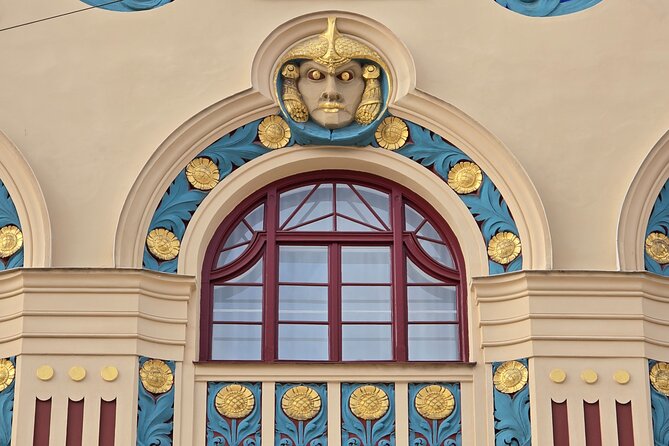
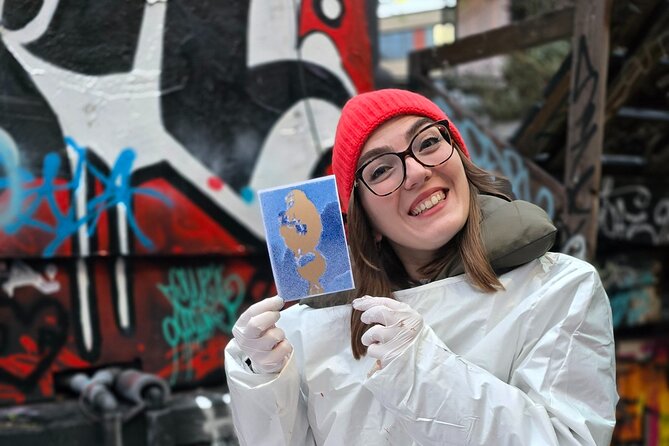
The workshop gives you four postcards to create, using stencils based on the Art Nouveau features seen earlier. Spray paint, stencils, envelopes, and the other supplies are provided.
The best part is that the art activity is tied to the walk. You are not painting an unrelated souvenir. You are taking something you observed in Schwabing and simplifying it into a design of your own. That makes the postcards more personal than a shop-bought card, even if your finished work is not perfectly neat.
Beginners should find the format approachable. Stencils offer structure, while the spray-paint process adds room for personal choices in placement and color. Families can take part, and art enthusiasts can focus on how an ornate architectural motif changes when reduced to a flat image.
You also receive a unique postcard depicting one of the tour’s highlights. That gives you a ready-made keepsake alongside the four cards you produce yourself. Envelopes are included, so the finished cards can be sent home or kept as small reminders of the tour.
Do not expect a long studio session. The workshop follows roughly an hour of walking, and the full activity lasts 150 minutes. You will have enough time for a relaxed introduction to the method and the four-card project, but this is not a professional printmaking class.
Philipp’s role as architect and guide
Philipp leads the experience as both a local architect and certified official Munich tour guide. That combination is useful because the tour depends on two kinds of explanation.
As a guide, he can place Schwabing in the context of Munich and explain the people connected with its artistic world. As an architect, he can draw attention to structure, ornament, proportion, and the way visual details work across a façade.
The strongest praise attached to this tour centers on Philipp’s preparation, friendly manner, and passion for the subject. That comes through in the design of the experience itself. The route, the four selected façades, and the stencil activity fit together rather than feeling like separate attractions placed side by side.
The tour is offered in English and German, with English, German, and Spanish listed among the available languages. If language choice matters to you, check the specific departure details when booking. A private group is also available, which may suit families, school groups, or friends who want a more personal format.
Is $42 a fair price?
At $42 per person, this costs more than a basic self-guided walk through Schwabing, but the comparison is not quite fair. The price includes a 150-minute guided experience, an architect’s perspective, a small group, a subway transition between two parts of Munich, the spray-painting session, protective equipment, four postcards, envelopes, and a keepsake postcard.
I see the value in the combination. You are paying for interpretation, materials, and a planned activity rather than only for access to a route. The guide’s careful preparation is important here, since the experience would lose much of its purpose if the architectural walk and the postcard designs did not connect.
The value is weaker if you have no interest in making art or if you prefer to spend your time inside major museums. You will also need to pay separately for food, drinks, and transportation to and from the meeting point. The listed subway transfer is part of the movement between sections, but the tour details do not include those transport costs.
For families and couples looking for a shared activity, the price is easier to justify. For solo visitors, it depends on how much you value a guided introduction and a souvenir you made yourself.
Who will enjoy this most?
I would recommend this tour to anyone who likes architecture but wants a more active format than a standard city walk. It is also a good fit if you enjoy street art, visual design, or small creative workshops.
Families should find the postcard project more engaging than a long talk about façades. Art students and design-minded visitors may appreciate the process of reducing elaborate Jugendstil decoration to simple stencil shapes. Beginners are welcome, so you do not need to arrive with drawing or spray-painting skills.
This may not suit visitors who need step-free access, since the activity is not suitable for wheelchair users. It may also be a poor match if you want a tour that stays in one district from start to finish. The subway ride and change of setting are part of the concept, but some people prefer a single compact route.
The tour is family-friendly, though the supplied information does not give a minimum age. If you are booking with young children, confirm age details before paying.
Practical advice for a smoother afternoon
Wear comfortable shoes. You will spend about an hour walking through Schwabing before moving to the workshop, and the meeting point requires a 10-minute walk from Giselastraße station.
Bring only what you need for the walk and creative session. Safety glasses, gloves, masks, and clothing covers are supplied, as are the spray paint and paper materials. Food and drinks are not included, so plan around the 150-minute duration if anyone in your group needs a snack or drink.
The meeting point is outside the entrance at Georgenstraße 7. Look for Philipp with the tablet over his shoulder. You can cancel up to 24 hours in advance for a full refund, and the reserve-now, pay-later option can help if your Munich schedule is still shifting.
The activity takes place partly outdoors and partly in a heated container. Comfortable shoes are the only stated item you need to bring, but a practical coat or rain layer may be sensible for the walk if the forecast is poor.
Should you book Art Nouveau Meets Street Art in Munich?
Book it if you want to see Schwabing through its building details, hear about its artistic connections, and finish with something you make yourself. The strongest reasons to go are the small group, Philipp’s combined architectural and guiding background, and the clear link between the four façades and four postcard designs.
Skip it if you want a major museum tour, a fully accessible route, or a walking experience with no public transport between sections. At $42, it is best viewed as a guided architecture tour plus a beginner art workshop, not simply a two-and-a-half-hour stroll.
For most visitors who like design and hands-on activities, this is a smart way to spend an afternoon in Munich. You leave with a better eye for Jugendstil and a few postcards that carry your own version of what you saw.
FAQ
How long does the tour last?
The tour lasts 150 minutes.
Where does the tour begin?
It begins at Georgenstraße 7, in front of the entrance to the building.
How do I reach the meeting point?
Take subway line U3 or U6 to Giselastraße station, then walk about 10 minutes to Georgenstraße 7.
Where does the tour finish?
The tour finishes at Bahnwärter Thiel.
What languages are available?
The tour is described as bilingual in English and German. English, German, and Spanish are listed as available languages.
Are the spray-painting materials included?
Yes. Spray paint, stencils, envelopes, postcards, safety glasses, protective gloves, masks, and clothing covers are included.
Is the tour suitable for wheelchair users?
No. The activity is listed as not suitable for wheelchair users.
Freshly painted around Germany
- Art Nouveau Meets Street Art in Munich (Max. 12 guests)★ 5.0 · 3 reviews
- Alternative Hamburg Private Alternative Street Art Tour★ 4.5 · 6 reviews
- Street Art Tour Dresden Neustadt★ 4.0 · 15 reviews
- 3-Hour Cologne Street Art Bike Tour in Small Group with Guide★ 4.5 · 20 reviews
- Explore Cologne’s best Street Art Quarter★ 4.5 · 4 reviews
- Graffiti Workshop Berlin with professional graffiti artists★ 4.0 · 4 reviews
- Open graffiti workshop in the Mauerpark in Berlin★ 5.0 · 2 reviews
- Alternative Berlin Private Tour with Jacob – Graffiti and Squats★ 5.0 · 6 reviews
Germany Street Art Tours, compared.
Dresden: Neustadt District Street Art Guided Walking Tour
Read our review →
Cologne: Ehrenfeld District Street Art Walking Tour
Read our review →
East Meets West: Berlin Food Culture & Street Art
Read our review →
Browse the lists this tour appears in