
Review · AMSTERDAM
STRAAT Museum – Museum for Street Art Amsterdam Admission Ticket
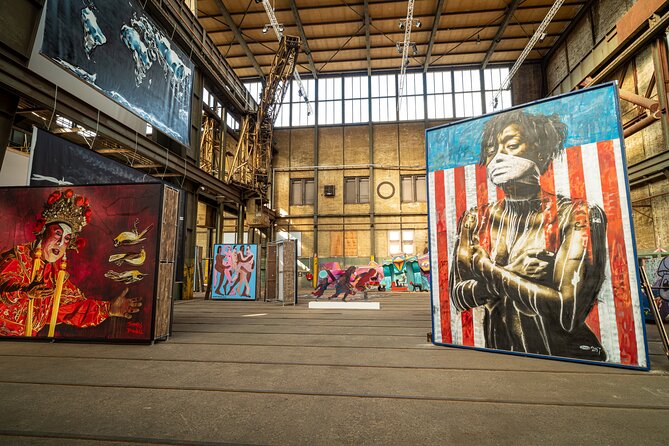
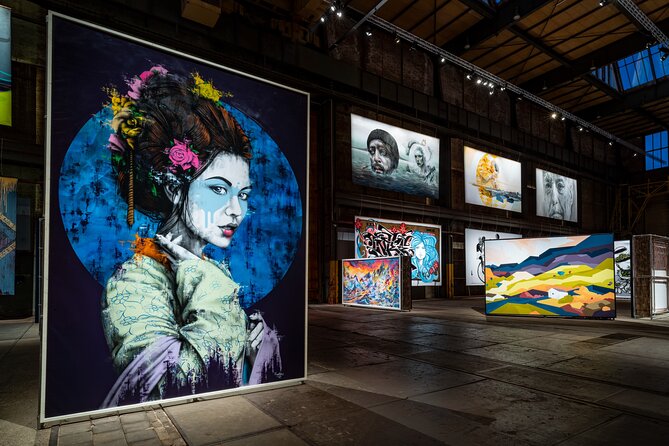
The best thing about STRAAT Museum is its scale. This is not a room of framed pictures. It is a huge former industrial warehouse where wall-sized street art surrounds you, often reaching from floor to ceiling. I like the ferry ride from Amsterdam Central Station and the chance to see NDSM Wharf, a former shipyard turned arts district. I also like that the museum presents about 150 works by 140 artists from 32 nationalities, so you get more than one local style.
The main drawback is the price, about $26.01 per person, which may feel high for a museum you can see in 45 minutes. The space is easy to reach once you understand the ferry connection, but NDSM is across the water, so a rushed schedule or a booking-time mistake can cause trouble.
Key points to know before you go
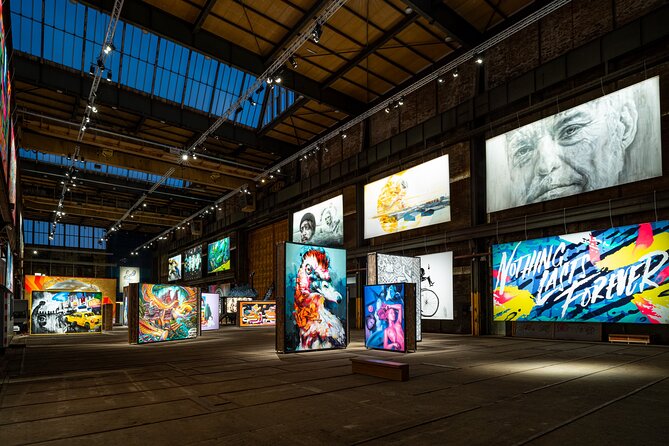
- Huge warehouse setting: Original industrial machinery and high ceilings give the art room to breathe.
- Global street art: See about 150 works by 140 artists representing 32 nationalities.
- Short free ferry ride: Travel from Amsterdam Central Station to NDSM Wharf by ferry, with the crossing adding a useful slice of local atmosphere.
- Flexible visit length: You can move through the main display in about 45 minutes, but two hours is reasonable if you read the stories and study the details.
- Good for creative families: Teenagers, young adults, and anyone drawn to graffiti, murals, and modern art have plenty to look at.
- Extra details inside and outside: Look for the film near the shop, the café upstairs, and the outdoor area where visitors can make spray-paint art.
Why STRAAT feels different from a normal museum
STRAAT works because the building matches the subject. Street art can look diminished when it is reduced to a small print behind glass. Here, the pictures are large, loud, and built for the walls around them.
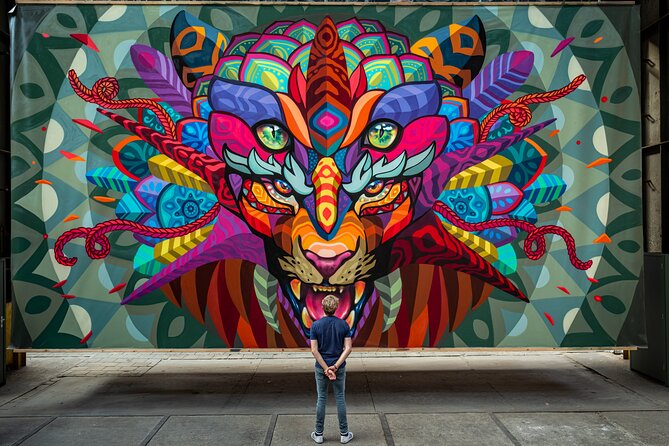
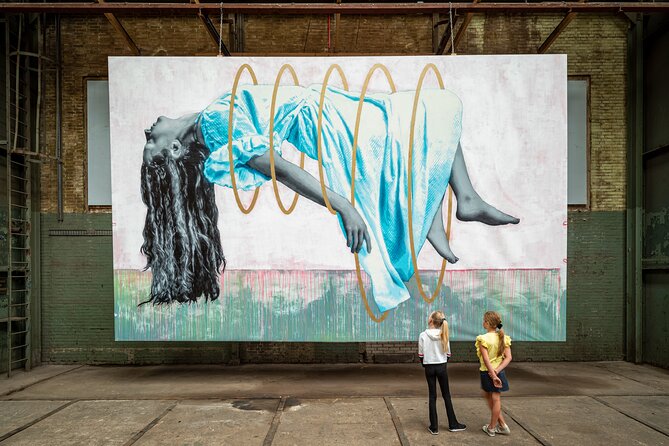
As you enter, expect color, oversized figures, bold lettering, strange creatures, political ideas, and many different painting methods. Some works may pull you in through sheer size. Others reward a closer look at faces, textures, symbols, and small visual jokes.
I like the way the museum lets street art keep some of its physical force. You are not simply looking at pictures of murals. You are standing in an industrial hall with art that uses the same scale and energy as the building.
The exhibition also helps you see that street art is not one fixed style. Some pieces are close to traditional graffiti. Others are highly detailed paintings, graphic compositions, surreal scenes, or thoughtful works built around a social message. The range makes the visit useful even if you do not normally choose contemporary art museums.
More Street Art Museums and Galleries around the Netherlands:
- Amsterdam: Streetart Museum STRAAT Entrance Ticket
★ 4.8 · 2,137 reviews - CDMX: Xochimilco, Coyoacan, Frida Kahlo Museum & Murals Tour
★ 4.4 · 3,025 reviews - Miami: Wynwood Walls, Galleries, and Murals Guided Tour
★ 4.6 · 171 reviews
The ferry to NDSM is part of the outing
From Amsterdam Central Station, you take a short ferry across the water to the NDSM shipyard. The ride is free, and the crossing gives you a change of pace from Amsterdam’s central streets.
This is one of the experience’s strongest practical advantages. You get a museum visit and a quick look at a newer cultural area without arranging a separate excursion. The ferry terminal is near the station, and the crossing is described as running about every 15 minutes, though you should still allow extra time for finding the correct departure point and walking onward at NDSM.
The ferry itself is not a sightseeing cruise, so keep your expectations sensible. It is mainly transportation. Still, the water crossing helps explain why STRAAT feels removed from the traditional museum quarter. You are heading to a former shipyard rather than another grand canal-side gallery.
NDSM is part of the experience, not just a place to sleepwalk through on the way to the entrance. The industrial surroundings suit the art, and you can spend a little time looking around the wharf before or after your museum visit.
Inside the former shipyard warehouse
The old warehouse is the star supporting actor. Its size allows the works to remain large, and the original machinery adds texture without requiring the museum to dress the building up too much.
That setting is especially effective for visitors who find standard galleries too quiet or formal. The museum feels open and physical. You can stand several steps back from a massive painting, then move close to inspect brushwork and small details. The large floor area also means you can often take photographs without feeling pressed against other people.
The industrial room is not merely a backdrop. It changes how you read the art. A work that might seem overwhelming in a small gallery feels more natural when placed on a wall several stories high. The building gives the artists room to work at the scale street art often demands.
The display is also useful for families. Teenagers and young adults can move at their own pace, and there is enough visual variety to keep the visit from feeling like a lecture. Adults who arrive mainly to accompany younger relatives may find themselves spending longer than expected with the art.
What you will see in the main collection
The museum presents around 150 artworks created by 140 artists from 32 nationalities. That number matters because it gives the visit breadth rather than a single artist’s point of view.
You can expect different approaches to color, line, lettering, portraiture, abstraction, and storytelling. One wall may use a direct, graphic style. Another may look almost dreamlike. A third may focus on a human figure or a social theme. The contrast helps you understand how broad the term street art has become.
The museum also tells the stories behind the art and the artists who helped bring street art into wider public attention. These details add value if you want more than a photo stop. They give context to the people behind the paint and help explain how work associated with public spaces reached museums and international audiences.
I would plan on at least an hour if you want to read the information and look carefully. A quick circuit can take around 45 minutes, but that is the minimum rather than the ideal. If you enjoy photography, compare techniques, or visit with creative teenagers, two hours can pass easily.
The space is bright and direct rather than delicate. If you prefer small, quiet paintings or historic European masters, this may not be your best museum choice. If you want scale, color, and modern visual ideas, it offers a clear change from Amsterdam’s more traditional collections.
More entry tickets around the Netherlands:
- Copenhagen: MACA Museum: Banksy & Street Art Entry Ticket
★ 4.5 · 142 reviews
Small extras that improve the visit
Do not hurry straight from the final artwork to the exit. The museum includes a café, a shop, and a film near the shop that is worth seeking out.
The café gives you a chance to look back into the warehouse from another angle. That elevated view can help you understand how the pieces relate to one another across the large room. It is also a practical place to pause if you have spent an hour looking upward and moving from wall to wall.
The café has been praised for its coffee, but I would treat that as a pleasant extra rather than the main reason to visit. You will also find cafés near STRAAT if you arrive before your entry time.
Outside, there is an area where people can practice or create spray-paint art for free. Since the work changes, it gives the visit a living quality. The main collection shows finished pieces, while this outdoor spot lets you see street-art activity in a more casual form.
That extra area is particularly useful with children and teens. It gives them something hands-on to do after looking at large works, though you should not confuse it with a formal workshop. The supplied information describes a place to make art, not a guided class.
How long should you allow?
The advertised duration is about one to two hours, but your ideal timing depends on how you visit.
If you are fitting STRAAT between other Amsterdam sights, allow around 90 minutes for the ferry connection, the museum, and a little time at the café or shop. A brisk art visit can be shorter, especially if you mainly want photographs and an overview.
If you read the artist information, watch the film, stop for coffee, and explore the outdoor spray-paint area, two hours makes more sense. Add extra time if you want to wander around NDSM Wharf.
The museum works well as a half-day plan when combined with the ferry and the surrounding area. It is less convenient as a quick stop between tightly timed reservations in central Amsterdam. The water crossing is simple, but it still adds a transfer that you cannot ignore.
One practical point deserves attention: the supplied opening information shows Monday hours of 12:00 AM to 5:00 PM for the stated operating period. The midnight notation is unclear, so check the hours for your selected date before setting out. Do not assume the Monday schedule applies to every day.
Is the $26.01 ticket good value?
At about $26.01 per person, STRAAT is not a bargain museum ticket. The value depends on how much time you give it and how strongly you respond to large-scale contemporary art.
For a 45-minute visit, the cost may feel steep. One critical assessment specifically found the museum expensive for the length of the visit, even while praising the art and the quieter atmosphere. That is fair. If your priority is seeing as many famous Amsterdam sights as possible, you may decide that another museum gives you more historical context for the money.
The calculation improves if you stay for 90 minutes or two hours. You are also paying for a distinctive building, an international collection, a ferry outing, and access to an arts district outside the usual center. The original machinery and huge walls are part of the experience, not just storage space.
I think the ticket makes the most sense for people who actively like street art, graffiti, murals, photography, or modern visual culture. It is less convincing for someone choosing a museum only because it is close to the central station or included as a quick rainy-day filler.
Pre-booking lets you choose a day and time, and the mobile ticket is convenient. The main booking risk is entering the wrong date or time. Check the confirmation carefully before you finish, especially if you are booking late at night for the following day. The booking problem described in the supplied material resulted in a ticket for the wrong date and no refund from the provider after the visit time had passed.
Free cancellation is available up to 24 hours before the experience begins. Changes or cancellations inside that 24-hour window are not accepted for a refund, so make your plans carefully.
Who will enjoy STRAAT most?
I would put this museum high on the list for:
- Teenagers and young adults who draw, paint, design, or follow street art online.
- Adults who want a break from Amsterdam’s historic museums.
- Families looking for a visually direct museum with room to move.
- Visitors who enjoy photography and unusual industrial buildings.
- Anyone who wants to combine art with a ferry ride and a different part of Amsterdam.
- Contemporary-art fans who like seeing many styles in one visit.
The museum may be a weaker match if you want guided commentary, traditional Dutch painting, or a compact central location. No guide name or live guided tour is provided here. The ticket is for entry, with the museum’s own information and displays supplying the context.
The experience is offered in English, and service animals are allowed. It is near public transportation, and most people can take part, but the available information does not provide detailed access notes for every part of the building. If you need specific accessibility arrangements, confirm them before booking.
My practical plan for visiting
I would place STRAAT on a day when I had some flexibility. Start at Amsterdam Central Station, take the free ferry to NDSM, and avoid booking the museum so tightly against another timed activity that a missed ferry creates a crisis.
On arrival, go through the main collection once without trying to read everything. This first circuit helps you understand the scale and pick out the works you want to study. Then return to the pieces that caught your eye, read the artist information, and look for the film near the shop.
Finish with coffee or a look at the outdoor spray-paint area. If you have extra time, walk around NDSM before heading back across the water.
You will get more from the museum if you resist the urge to photograph every wall immediately. Take a few wide shots, then look closely at technique and subject. The large works are made for photographs, but the small details are what make the visit last in your memory.
Should you book STRAAT Museum?
Book it if you want bold, large-scale art in an old industrial space and like the idea of adding a short ferry ride to your Amsterdam day. The strongest reasons are the international range, the unusual warehouse setting, and the freedom to see the museum at your own pace.
Think twice if you are watching every euro, dislike contemporary art, or have only a very short gap between central Amsterdam reservations. At $26.01, it needs more than a rushed 45-minute look to feel worthwhile.
For creative families, art-minded young adults, photographers, and visitors ready to see a less traditional side of Amsterdam, I would book it. Check the date and opening hours carefully, leave room for the ferry, and plan on about 90 minutes to two hours for the full experience.
FAQ
How much does admission to STRAAT Museum cost?
The listed price is $26.01 per person. The value is strongest if you spend 90 minutes to two hours exploring the collection and the surrounding NDSM area.
How long does a visit to STRAAT Museum take?
The approximate duration is one to two hours. You can move through the main display in about 45 minutes, but reading the artist information, watching the film, visiting the café, and seeing the outdoor art area can extend the visit.
How do I get to STRAAT Museum from Amsterdam Central Station?
Take the short free ferry from Amsterdam Central Station to the NDSM shipyard. The ferry is reported to run about every 15 minutes, and STRAAT is located at NDSM Wharf.
Is a mobile ticket available?
Yes. The admission ticket is available as a mobile ticket, and you can pre-book a day and time of your choice.
Can I cancel my STRAAT Museum ticket?
You can cancel for a full refund up to 24 hours before the experience start time. Cancellations or changes made less than 24 hours in advance are not accepted for a refund.
Is STRAAT Museum suitable for most people?
Most people can participate, and service animals are allowed. The museum is near public transportation, but the supplied information does not give full accessibility details for every part of the building.
Freshly painted around the Netherlands
- Rotterdam’s Street Art Private Walking Tour★ 5.0 · 2 reviews
- Private Highlights & Art Walking Tour: Markthal, Zadkine, Street Art and Depot★ 5.0 · 2 reviews
- Eindhoven: Self guided Individual Street Art Tour★ 4.0 · 2 reviews
- Street Art Walking Tour, private local Dutch guide★ 5.0 · 7 reviews
- 1,5 hour private guided Mural Street Art tour in Arnhem★ 5.0 · 5 reviews
- Alternative Tour Amsterdam | Drugs Story, Street Art & More★ 4.5 · 11 reviews
- Eindhoven: Self-Guided Individual Street Art Tour★ 4.0 · 4 reviews
- Rotterdam Street Art tour: Including specialised guide★ 5.0 · 5 reviews
Amsterdam Street Art Tours, compared.

Amsterdam: Streetart Museum STRAAT Entrance Ticket
Read our review →
Urban Adventures Amsterdam Bike Tour, Graffiti and Magnet Fishing
Read our review →
Amsterdam’s Hidden Gems and Street Art Bike Tour
Read our review →
Alternative Tour Amsterdam | Drugs Story, Street Art & More
Read our review →
Street Art Walking Tour, private local Dutch guide
Read our review →Browse the lists this tour appears in